Author: I. B. McGinty

  • Building A Safe – Part 1

    Here’s the background story – it was a dark and stormy night and I was canoeing with all of my firearms as we all do from time to time. All of a sudden a rogue wave came up and capsized my canoe, and I lost ALL of my firearms to the depths of the oceans. It’s a tragic story. Completely 100% true too. I’m still really bummed about it, so I decided I would build a safe for future firearms to cheer me up.

    I don’t have a traditional firearm safe, but I do have a couple of the green metal cabinets that you can lock. That’s always been good enough for me, but it means I need a closet or space big enough to house it all. For the last several years everything has been piled in a closet along with boxes and storage bins from the last move. I decided I was going to build a storage cabinet that I can lock everything inside, that doesn’t say “guns in here” to my guests. I can simply say “we keep some valuables in here, along with some important documents.” Plus I have a lot of wood laying around and I need to do something with it.


    My plan was to have it big enough to house both the big and small green metal cabinets, with a shelf area between the two. So I made a dado jig to cut dadoes in ¾ inch plywood for the sides and the back that would all be the same width and more importantly in the same spot.

    For the sides, I cut the dadoes with a router  then ripped the sheet of plywood in half to get the two sides.

    While I was cutting the rabbets along the edge the bit wandered out from the collet of my router and my rabbets ended up being deeper than I needed.  Turns out you should leave a little space between the bit and the collet, say ⅛ if an inch or so. Thank you Internet for that tip. So to fill in the void, I just glued some scrap wood into the rabbet –

    And then rerouted the rabbet –

    Next I glued the back, sides, and shelf together-

    But had to improvise with some of my clamps because I didn’t have enough of the right size. Well actually, I had plenty of 36 inch clamps, I just made the width 37 inches so I couldn’t use them (stupid math).

    So everything was going smoothly until I saw this –

    Oops. Fortunately the piece in the picture that is too long is actually too long so after a trim with the circular saw, another pass with the router, and some chisel work where the router couldn’t reach all was good. 


    More clamping and glueing for the top and bottom pieces –

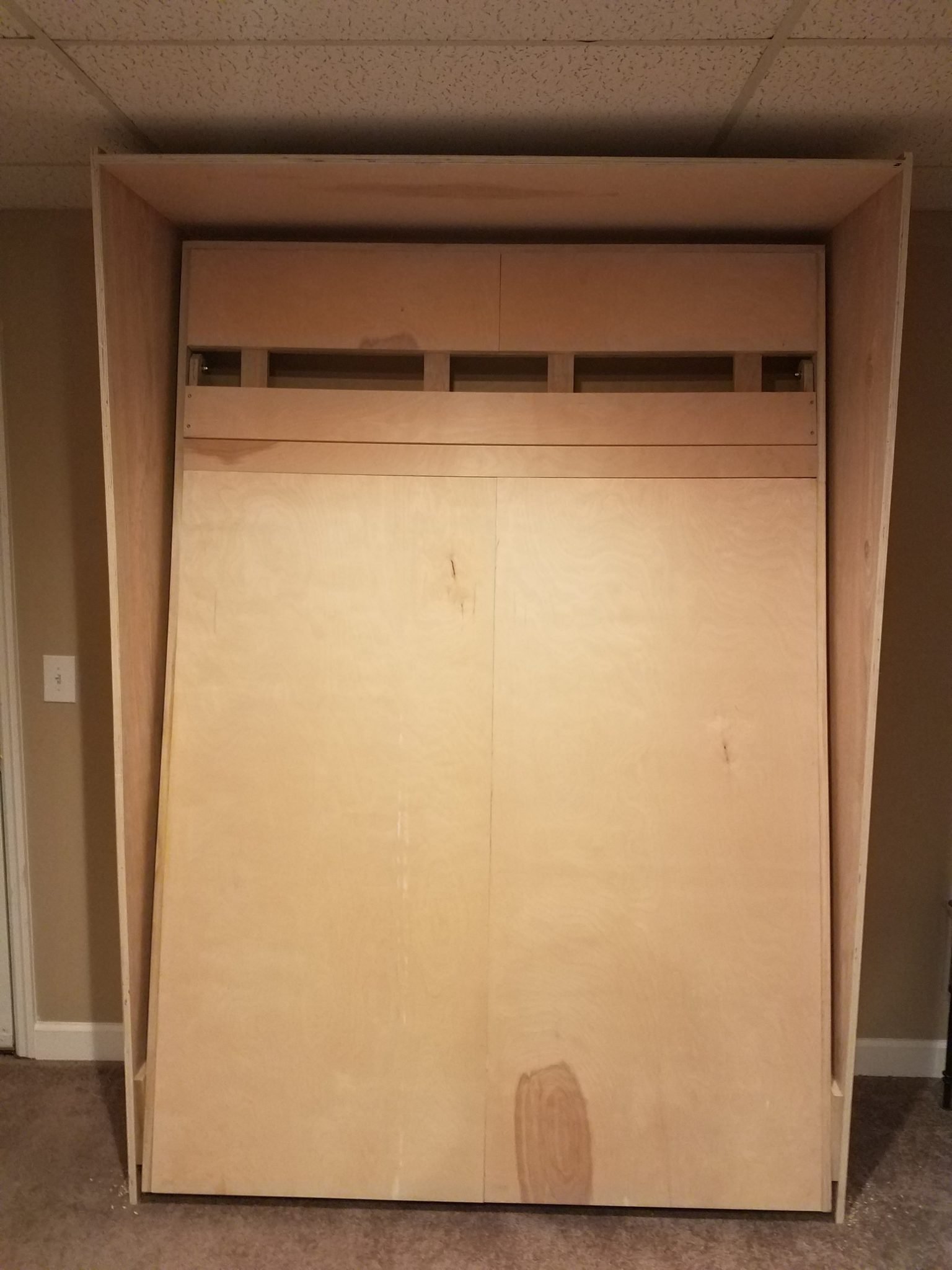
    And now for the final test –

    If you are not familiar with these green cabinets there are holes in the back to mount them to studs or something that will keep them from wandering off. The ¾ inch plywood wasn’t going to be enough so I decided to build a frame that I could lag bolt the cabinets to.


    I had a half dozen pine 1x4s that I glued together to make 2x4s –

    But I ended up gluing them together –

    Fortunately it was just a few drips of the squeeze out and they came apart pretty easily. When building the Murphy bed I used pocket screws, but decided I would do mortise and tenons for all of the pieces –

    I have a mortise machine which made that task easy, and each mortise only required a little bit of cleanup. I measured for the mortise and realized it was going to be shorter than I wanted, so I scribbled out the line and then redrew where I wanted it. I somehow still stopped at the scribbled line?

    For the tenons I just used a dado stack on my table saw and used a block plane and a chisel to get them to size.

    The 2x8s are located where the lag bolts for the cabinets will go, and the stile in the center is offset so I can screw some standards in for adjustable shelving. I added a base to accommodate some casters so I can roll it around –

    The bottom attached with some through tenons which I have never done before. I couldn’t use the mortise machine so I did these by hand with a drill and chisel. They’re not as clean as the machines mortise, and I should have used a backer to prevent chipping where the bit came through –

    I added some glue to fill in the void, plus I used construction adhesive to glue the case to the frame so it’s pretty sturdy –

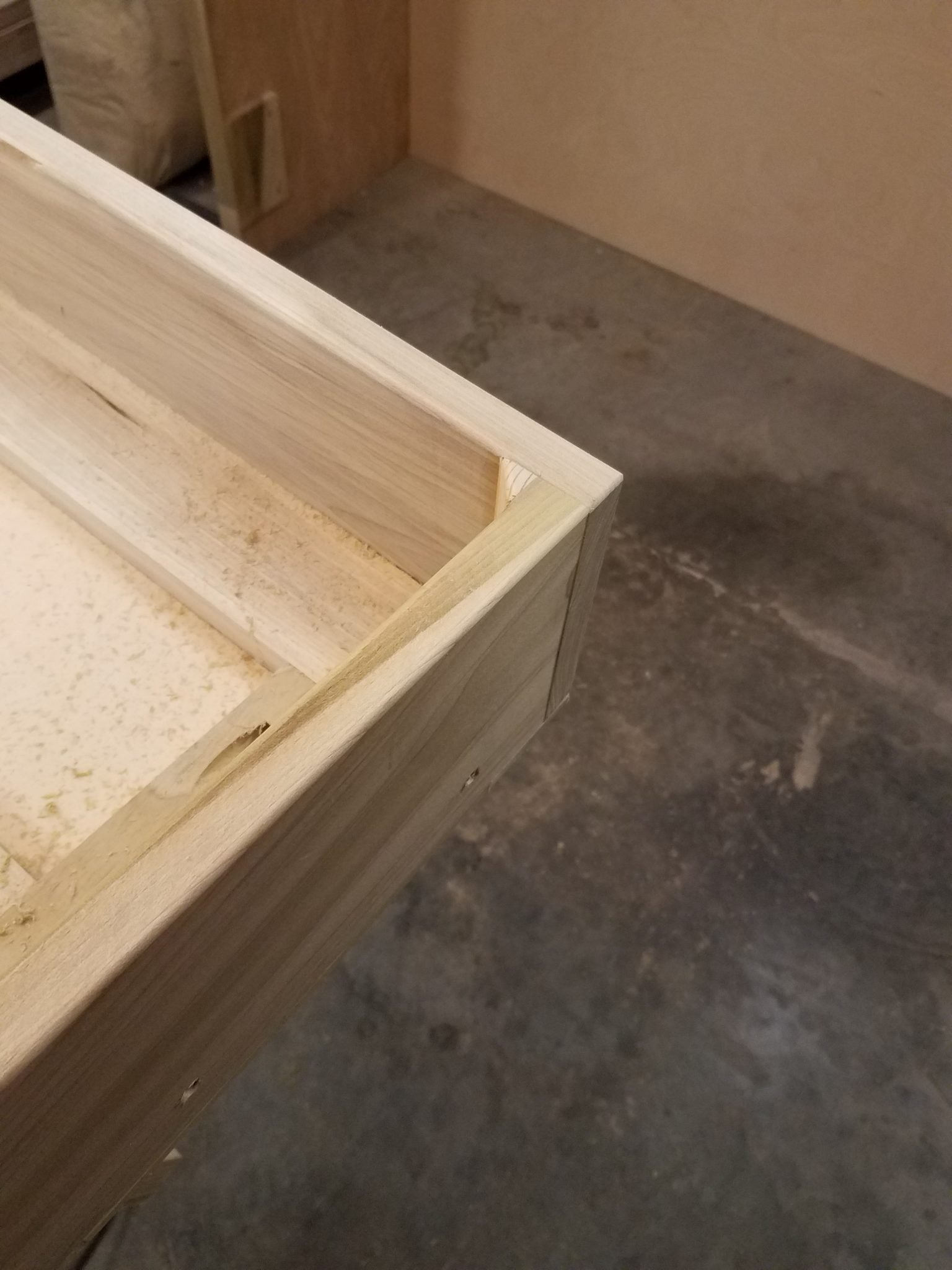
    It’s not exactly square and is off by about 1/8th of an inch in a couple of spots –

    The above picture shows the case sticking out a smidge from the frame. It’s not enough to be mad about, and I think if I built it differently and paid more attention to each piece I could have gotten it spot on.

    Part 2 will have the trim work, plus the door, and hopefully paint.

    Now what to replace my AR-15 with? The one I had used a composite lower from Cavalry Arms which is no longer in business. It had the iron sights and the handle, and I thought about buying one with a rail to mount an optic light a red dot or something. Any recommendations would be appreciated.


  • Violins of Hope

    A couple of years ago my mom asked if I would be interested in building a workbench for the Violins of Hope display that came to Nashville in 2018. The symphony (where she volunteers) organized it with the library.  Sure, why not. I like to build stuff and after meeting with those heading the project I had absolutely no idea what to build for them. So I did what I do best. I build something and hope they like it.

    A brief background in the Violins of Hope project from the Wikipedia page- “The Violins of Hope collection is a collection of Holocaust related string instruments in Tel Aviv, Israel. The instruments serve to educate and memorialize the lives of prisoners in concentration camps through concerts, exhibitions and other projects. The collection is owned by father and son team Amnon and Avshalom Weinstein, who are both violin makers.”

    My task was to replicate a luthier’s (fancy talk for violin maker) workbench like the ones the Weinsteins have at their workshop in Israel. Since money was tight (non-existent actually) I didn’t get to fly to Israel and visit their workshop. Instead I got to look at a few photos, and go from there. The only problem with the photos is they don’t really show the workbench. Instead they show the master craftsmen and the astounding number of violins in their shop. And really, does anyone want to see their workbench? Well, me actually. I figured it would look something like this –

    Next, I got to thinking about workbench theory – size, use, material, sturdiness, etc. This involved lots of research on the internet, of which only a small portion was beneficial. So I started with material and research on which woods are native to Israel, but are also available here in the United States and narrowed it down to cypress, cedar, and pine. Cypress is too nice, cedar is too fragrant and didn’t seem like the right choice so I picked pine. Easy enough. Home Depot here I come.

    I didn’t take as many pictures of this project like I normally would, but it started with giving everything a nice sanding. Not to make it smooth, but to get rid of the logos and stamps that were visible. Nothing says old workbench like a new Weyerhauser logo. Also, I figured nails would give it a nice detail, and I ran the 2x4s through the table saw to remove the rounded edges. This would make each board nice and square and make the bench look like it was made quickly using the cheapest materials around. After all, your time and money is spent on your projects not your workbench. Unless you are actually doing the old style woodworking with hand planes, bench dogs, and stuff like that. Then you want a sturdy bench. I don’t do that and I don’t think that is needed to build and repair violins.

    I used some screws to attach the legs to the frames in case it needed to be disassembled. Now I just needed to make it look old by darkening the wood.

    The museum curators wanted to be able to hang stuff from from the back so I attached this old sheet of pegboard I had laying around. 

    And then it was time to put a few coats of poly on it.

    And the final product…

    It went on display at the downtown branch of the Nashville library for a good 2 or 3 months. Lots of visitors came to see the display…

    …but also to look at the violins the Weinsteins have repaired.

    They made a little picture book and the workbench made it in…

    There is one violin that has a swastika and a Heil Hitler scribed inside of it that the owner likely didn’t know was in there. It was only discovered when the Weinsteins took it apart to repair it.  Did whoever do that wake up that morning and think about how he could be a dick that day? Christ, what an asshole. 

    The Nashville Symphony held a meet and greet for local luthiers that donated a bunch of the odds and ends for the display and the Weinsteins came and spoke at it. Afterwards I was riding in the elevator with the Weinsteins and the elder asked who made the workbench. We had a brief, but fun conversation about it and I felt honored that it was appreciated.

  • Murphy Bed – Part Two

    Here is where I left off with Part 1:


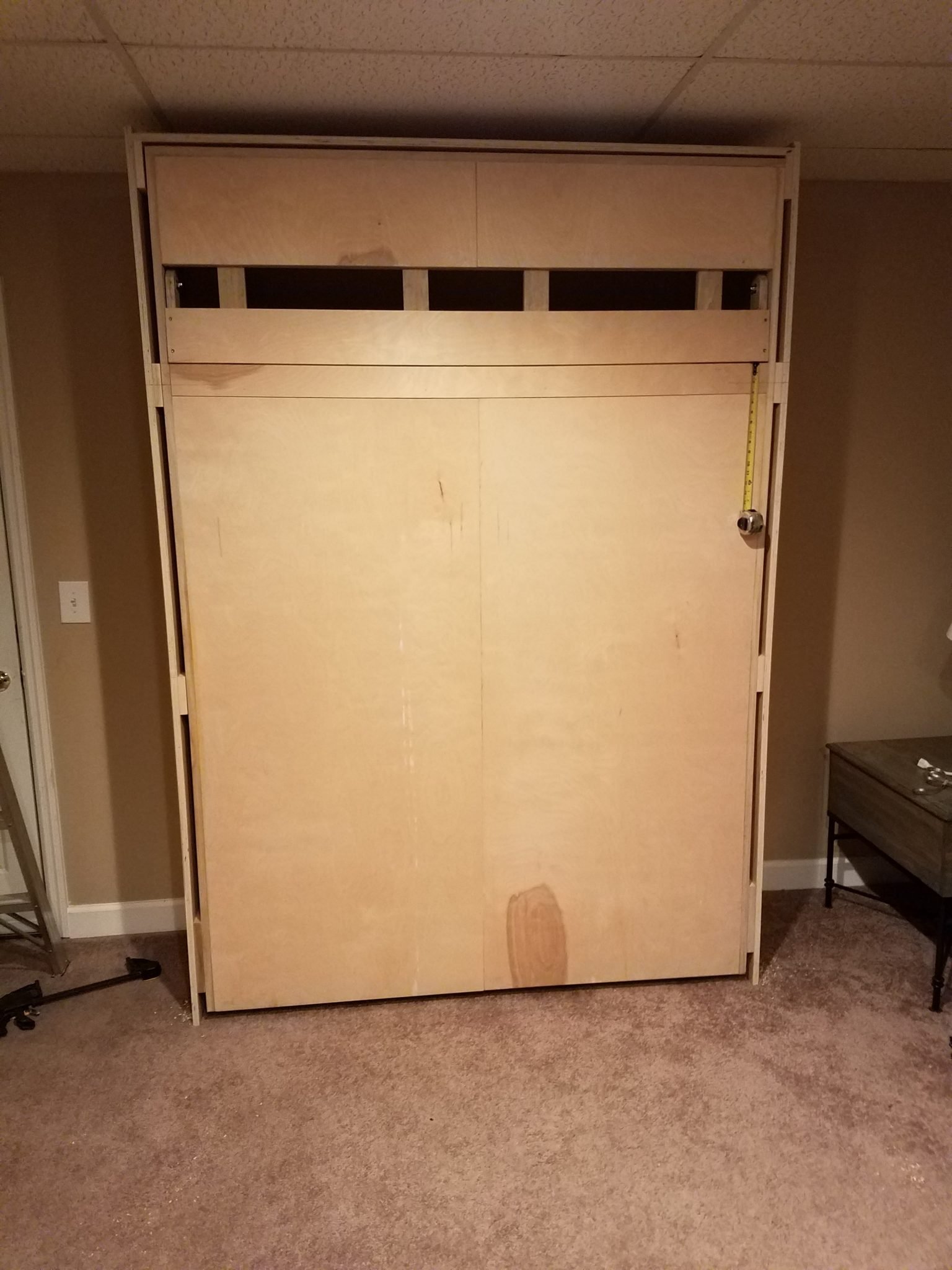
    Once I got the bed installed to the case I needed to make sure it went up and down without any issues. Here is the leg that swings out to support the feet when you lower it:


    Next I needed some stoppers to keep the bed from going inside the case too far:


    So now the face of the bed frame will sit flush with edge of the case:


    Now I can do the trimwork, which involved staring at it for a while. I decided I liked the panel look on the changing table I made so I wanted to replicate the square edges and lines. That involved ripping various widths of poplar down to ¼ inch thick, so I bought a bandsaw to make this task easier. I bought
    this WEN 10″ model and a ½ inch Woodslicer blade. The widths of the trim pieces are 1 ½ inches, 4 inches, and 6 inches. The saw handled the 1 ½ inch boards no problem, did okay with the 4 inch boards, but struggled with the 6 inch boards so much I ended up using my table saw instead. Here is the 1 ½ inch board:


    The motor just isn’t strong enough for the 6 inch boards, and wandered a lot with the 4 inch boards until I figured out a better technique. If I did this again I would probably cut them to 5/16ths of an inch and plane them down to ¼ inch. I figure this saw will be able to handle just about everything else I want to do, but If I ever get to where I’m resawing a lot of wood I will need to upgrade to something more powerful.

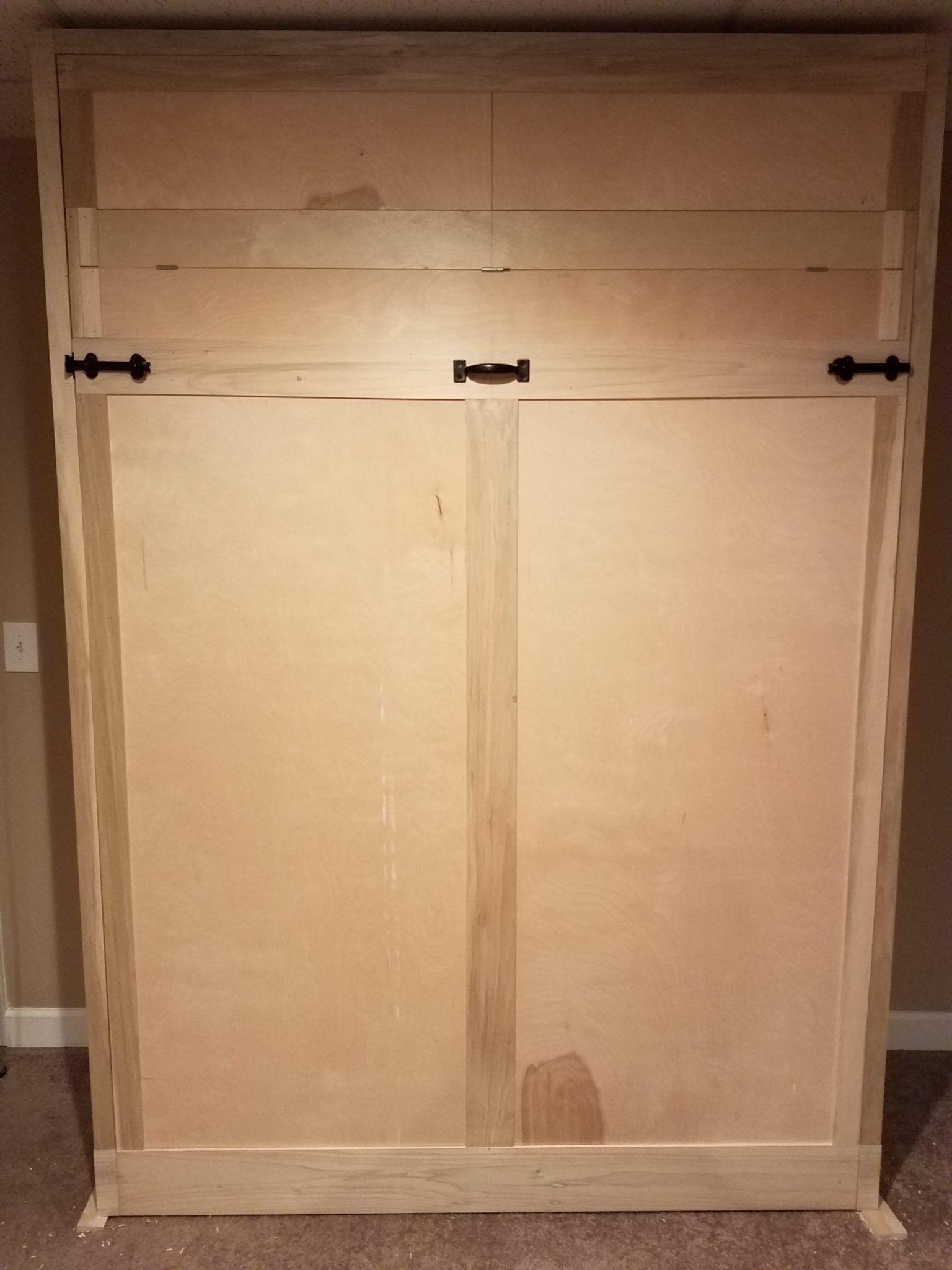
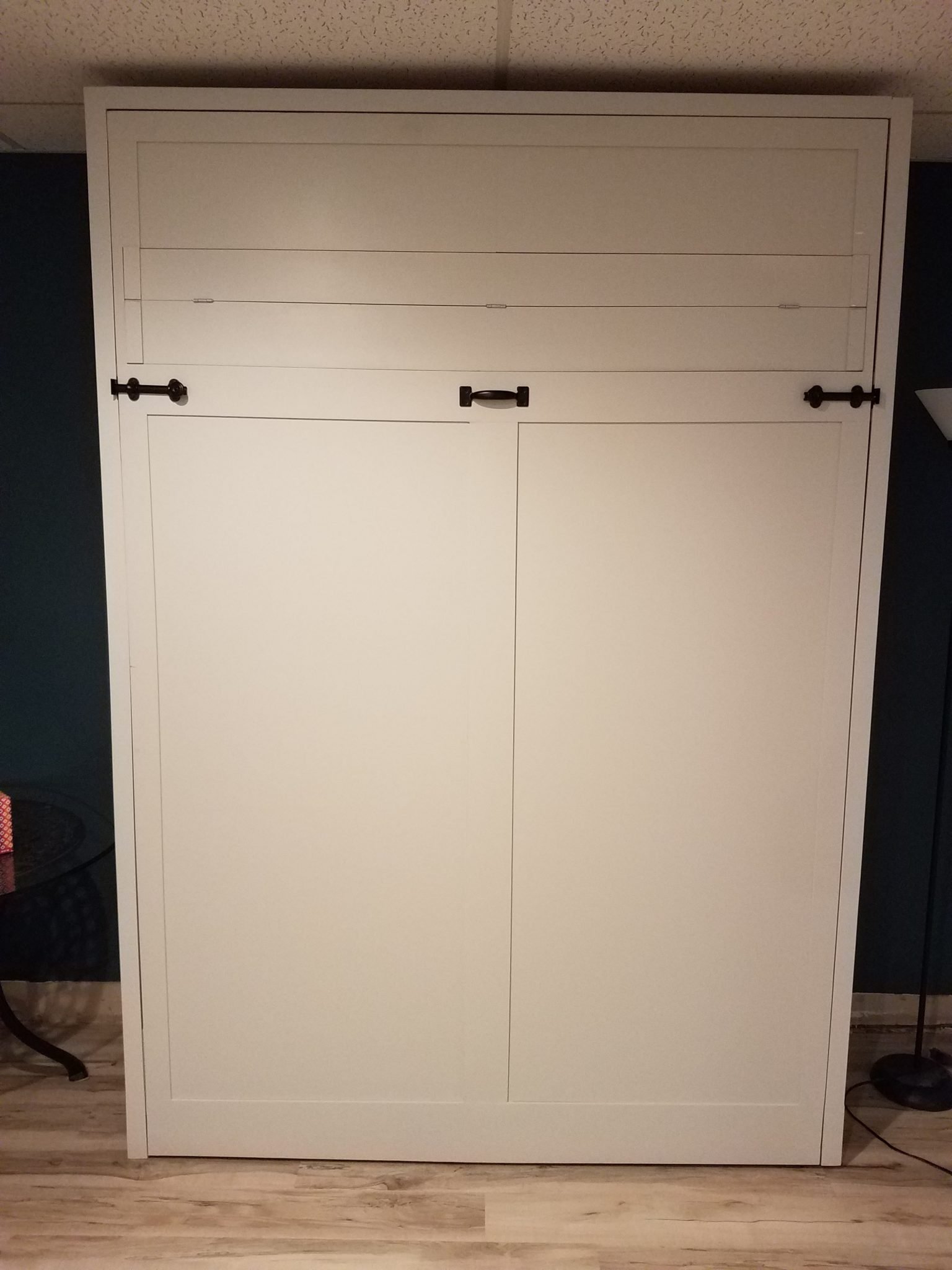
    Once I got everything cut, it was easy to get it nailed on with some ⅝” brads. I didn’t use glue, but in hindsight I probably should have as a few of the pieces popped off when I moved it to paint. Here it is ready to go with the latches on the sides and a handle in the middle:


    With everything installed I gave it a few test runs and there were only a couple of spots where the bed frame rubbed against the case. The frame needed some sanding and softening of the edges with a ⅛” roundover:


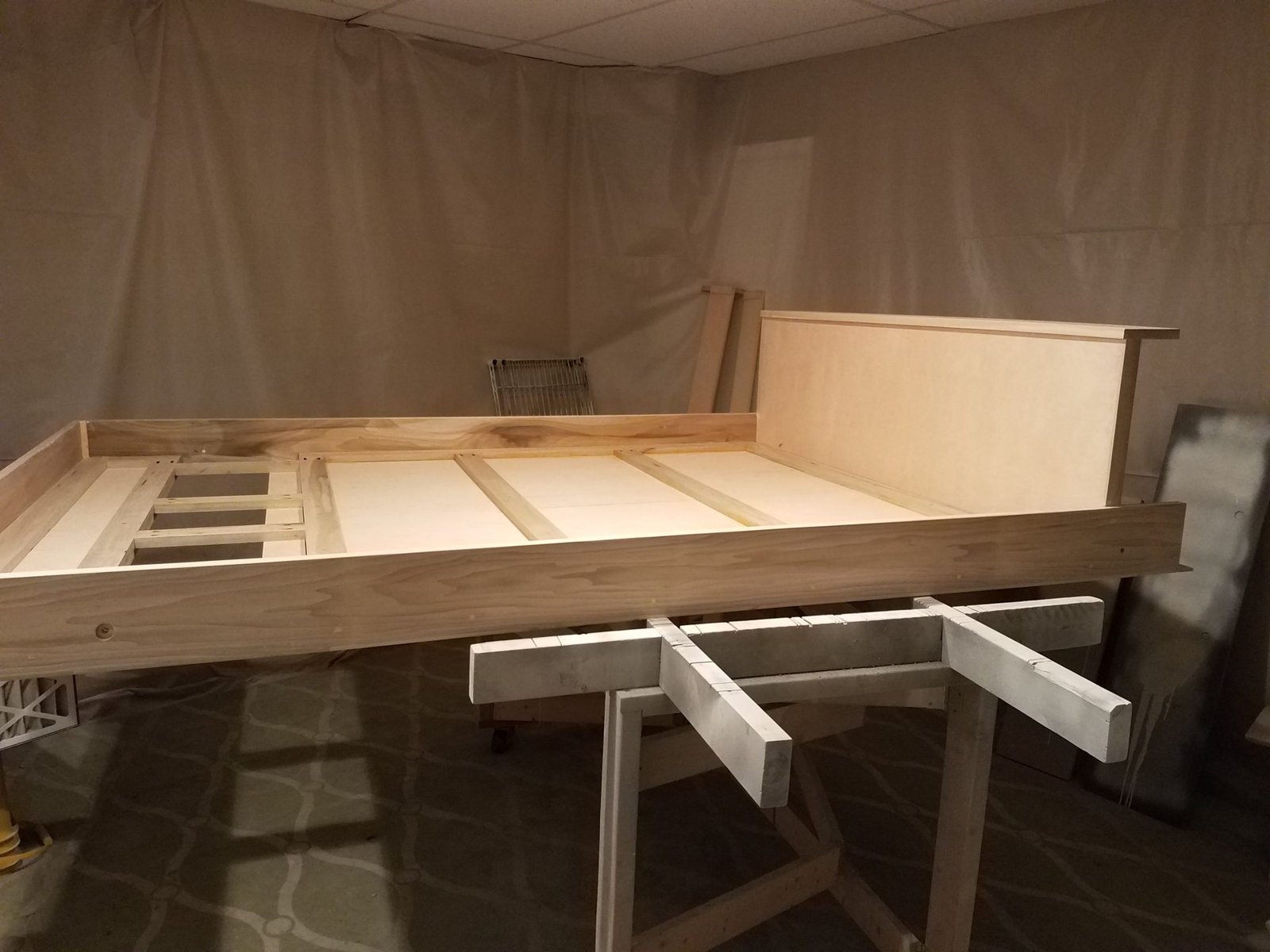
    Then I added a headboard and took it into the paint booth I set up in our basement:


    I draped some plastic on the walls by tucking it into the drop ceiling tiles, and used an old area rug to protect the nasty carpet. The area rug sat on the plastic and really helped seal all of the dust and overspray into the booth. Mrs. McGinty was a little skeptical about this idea, but I proceeded to man-splain all of this manly stuff to her and she eventually came around. Here is the first coat of primer:


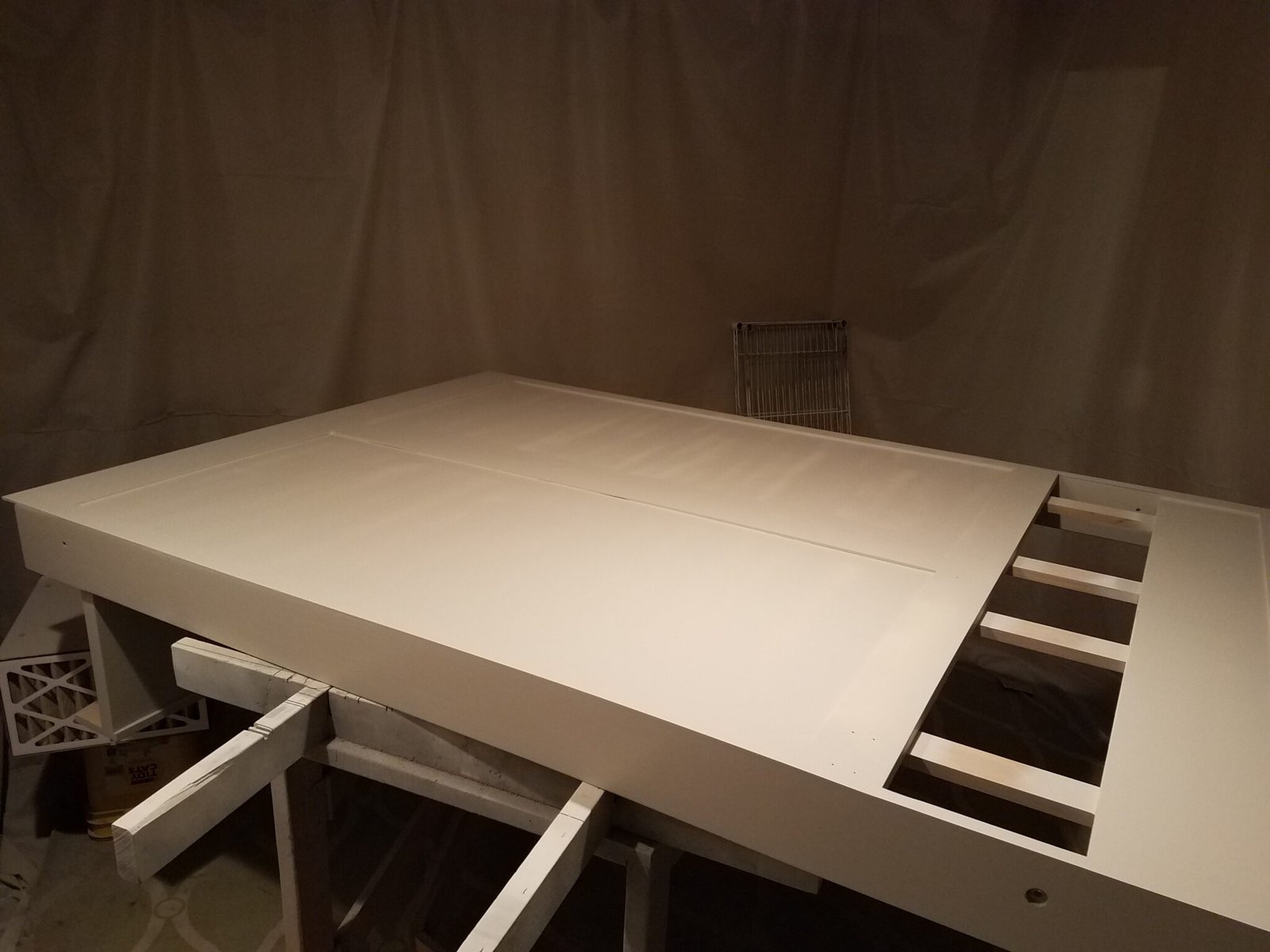
    My painting experiences have taught me that white paint needs gray primer, and gray paint needs white primer. That way you can see what you’re doing. I didn’t bother painting the inside since the mattress would be covering it up. After this side was painted, I flipped it over and painted the front:


    You’ll notice some streaks in the finish. I laid the paint on thicker than I normally would since the surface was flat. As the paint dried, the thinner spots dried first and affected the sheen. It’s noticeable when the light hits it at certain angles, but otherwise only my nit-pickyness can tell. I may stop by someplace that does commercial painting and ask for some free advice.

    The weather worked out so I was able to paint the case outside. It was a pain in the ass to move, mainly due to Mrs. McGinty lacking upper body strength and not listening to me, but I was also getting tired of working in it day after day. I finally got it all painted, hauled into the basement, and set up. I added a strap to hold the mattress to the bed frame when it is in the vertical position where the legs attach to the frame:


    At this point I realized it sits too low for my dad, so I bought a box spring to raise the mattress up about 5 inches. Perfect height. Then I proceeded to raise the frame up to check the weight, and realized the legs that support the foot end won’t properly close. After some profanity, I figured some blocks that raise the bed 2 ½” inches will be fine. Crisis averted:


    As an added bonus, the blocks create some space to hide contraband. Here it is with the mattress:


    And the final test…


    I used 4 inch lag screws to anchor it to the wall, hitting the studs solidly in 4 of the 6 tries. It’s solid, and my dad says he sleeps great on it so I’m happy with that.

    This was really a challenge to build due to the unexpected hurdles and the size.

    Sneak peak at my next write up:

    This was the display for the Violins of Hope here in Nashville last year. I built the workbench.