Author: trshmnstr the terrible

  • Injun Zombie Presidential Candidate #4: Out of Breath

    Episode 1

    Episode 2

    Episode 3

    Charlie woke with a start. He fumbled around in the wispy, pale moonlight fluttering through the curtains of the open window. With a crash, he found his cup of water, spilling it on the floor of the Airstream trailer.

    The dreams were getting worse now that Lizzie had run away. Thoughts began to peek through his rational facade that scared him. He didn’t even have a frame of reference to process his fear that she was somehow telepathically connected with him. He thought of the way that she absorbed the personality traits of those she ate. Maybe it worked both ways. Maybe the Demon was in him, too. He rubbed an old scar from a particularly nasty session with Lizzie. He flashed back to the struggle, wincing while he remembered how she bit straight through his skin when he tried to restrain her.

    He knew that the undead had traits that seemed fantastic to the uninitiated, but he and the Scientist could always find a biological reason for those traits. Telepathy? That seemed more Star Trek than Frankenstein.

    A clink of glass carried across the trailer from the Scientist’s quarters. Charlie didn’t know what time it was, but he knew he could really use a stiff drink and somebody to talk to. He grabbed a pair of tumblers and a bottle of scotch as he shimmied his way through the public space to the obviously aftermarket door and wall that denoted the start of the Scientist’s lab and personal quarters.

    The murmur of a pair of low voices piqued Charie’s curiosity. It wasn’t uncommon to have unannounced visitors come in the night, but usually he knew about it. Following a terse knock, Charlie let himself in. He found himself standing in front of a familiar face that he hadn’t seen for a long time. Abner had to be over 100 years old, but he hardly looked a day over 65. The cause of his youthful look was dribbling down his chin. He finished the iridescent yellow elixir with a swig. The Scientist’s anti-aging serum wasn’t the best tasting drink Charlie had ever quaffed, but one couldn’t argue with the results.

    “Abner! What are you doing so far from home?” Charlie’s tone betrayed that he was more surprised at the identity of the messenger than the fact that a messenger was in his trailer in Nowhere, Oklahoma at God-knows-what-hour of night.

    “Well,” Abner’s voice cracked as he cringed at the aftertaste of the serum, “I have some good news, some useful information, and an earnest plea.”

    Charlie set down the tumblers and opened the scotch bottle. He poured enough in each glass to require care as he handed the Scientist one.

    “I take it you don’t want your drink in that,” Charlie nodded at the test tube still clutched in Abner’s fist. Abner looked down at his hand and set the test tube into the laboratory sink alongside a small pile of dirty glassware. Charlie ducked his head out into the kitchen and retrieved a third tumbler.

    “I was just telling the Scientist that they sent me here to release you from this dusty perdition. Out of an abundance of caution we wanted to let things cool off after the Clark Panel report, but you can return to Massachusetts,” Abner probed for a reaction from Charlie, knowing full well that the Scientist was too stoic to provide satisfaction. Charlie obliged, sighing relief. The Oklahoma exile was hard for all of them, but Charlie felt like he was starting to go a little bit mad.

    “So that’s the good news, what is the useful information?” the Scientist showed uncharacteristically earnest curiosity. Charlie noticed that the Scientist’s scotch glass was already nearly empty.

    “Well, you need to return to Massachusetts this week because we have solid information leading us to the conclusion that Elizabeth is on her way to visit Edward.” Abner downed his scotch in a gulp, bracing himself for an onslaught. Charlie flinched at the mention of Lizzie’s name, and again at the mention of Teddy’s. To say that this business of the undead had gotten out of control was an understatement.

    “I just want to finish by asking you to think carefully about what you’re about to do. You know as well as I do that Lizzie is a confused girl dealing with more than any,” Abner paused with  a look of unease as he searched for the correct word, “person should have to. Don’t write her off like you did Jack. She can still be saved!”

    Without waiting for a response, Abner dropped his gaze away from his compatriots and grabbed a duffel bag resting on a lab stool. He retrieved a lined sheet of paper previously torn from a spiral bound notebook and folded in half. He placed it on the middle of the table with a tangible resignation in his demeanor.

    “Martha’s Vineyard by the 19th. You’ll need to hurry, but we don’t foresee Lizzie getting there any sooner. Even if she does, Teddy’s gonna be busy screwing all of Bobby’s fangirls the night before, so he won’t have time for his sister. However, a two day regatta is one day too long for a Kennedy.” With a curt nod, Abner let himself out.

    Charlie picked up the note, an address in Massachusetts, and stuck it into his front pocket with an absent minded gaze at nothing in particular. After nearly a year of confusion, concern, and anger it was time to go get Lizzie back.


    “Mmmmmmmm…… aaaaahhhhhhhhh,” the distinctive nasal voice of Teddy Kennedy would’ve been recognizable by Lizzie even if she was blindfolded. Maybe it was the years they spent together in Oklahoma before he was ready to replace the stand-in. Maybe it was the cloying mix of pretentious New England fart huffer with idiot Boston fishmonger. Whatever it was, it seemed to grate on Lizzie more than in the past. As she lay prone on the floorboard of the Oldsmobile 88, she could hear the unmistakable rhythm of skin smacking skin.

    “Ohhhhhhh…. yeaaaaaaahhhhh,” Teddy moaned in pleasure, shaking the car with his awkward thrusts. “mmmmnnmmmm” groaned a feminine voice, resembling more an incoherent gag than a sexual oratory.

    “Where’s Crimmins?” Lizzie matter of factly queried, popping her head up between the seats. Teddy jolted upright, his flinch launching his human codpiece into the dashboard, hard. Teddy’s hands began to shake as he responded.

    “Jjjjj- Joan, it’s not what it looks like.” He stammered, covering his throbbing manhood with his fly. He began to zip his pants up.

    “Oh, that’s not Joan draped over the console?” Lizzie smirked as she leaned her head into a ribbon of light cutting through the cabin. “Tsk, tsk, tsk, what would Joanie think about this? Little brother Teddy’s out here getting his knob polished by some whore and Joanie’s probably back at home getting freight trained by Teddy’s friends.”

    “Shit, Sis! What the hell?!?” Teddy immediately relaxed, turning his head with a faint smile contrasting the beads of sweat forming where his brow previously furrowed. “I don’t even know what you just said, but I’m glad it’s you and not somebody else! Now… get out.” He slammed on the brakes, kicking up a cloud of dust and flinging the unconscious girl in the front seat back into the dashboard.

    “Little brother, I can’t get out. I have nowhere to go. I need your help.” Lizzie transformed her personality into the insecure tormented girl that Teddy remembered. “I…. I” she expertly quivered her lip, feigning fear and insecurity “I ran away. I couldn’t take it any more!”

    “What can I do about it?” Teddy dismissively retorted. “As you can see, I have enough secret squirrel shit going on in my life right now. I don’t need to go flitting off with my fugitive sister.”

    “Teddy, Teddy, Teddy. You always were in need of firm guidance. I’m sorry that Joan can’t keep you better heeled.” Lizzie’s condescension dripped like the blood flecked drool pooling under the passenger girl’s mouth. “You’re never gonna become President if you keep slipping the leash and disappointing all the women in your life.”

    “Fuck you, Lizzie! I’m gonna be President like my brother. Like my other brother should have been. I’m gonna do it, and I’m gonna do it the right way! Charlie and the Scientist are fools, but they can get me where I need to be. They can get me into the Oval Office!” He raged while shaking the steering wheel, white knuckles apparent in the gleam of a far off light. “And one more thing, you stupid, conniving bitch! I don’t need any fucking woman to get into the White House. No woman is gonna get me there and no woman is gonna prevent me from getting there! I don’t need Joan, and I don’t need an older sister who nags me like a disappointed mom! You don’t know better! You don’t know jack shit, and I don’t know where you get off coming all the way up here to try to fuck with my head! It ain’t my fault you bailed out on Charlie and the Scientist!”

    “I DO KNOW BETTER THAN YOU!” Lizzie roared. “AND I AM YOUR MOTHER! HEED ME OR FEEL MY WRATH!”

    As the momentary fear and surprise cleared from Teddy’s face, he began to chuckle. “I guess Lizzie finally found a set of balls. Now, I still don’t know why you’re here and I don’t know why you think I need your advice. I already told you I’m not in a position to help you.”

    Lizzie smirked, holding her dramatic pause for perfect effect. “Well, what about the dead hooker in your passenger seat?”

    Teddy glanced over unconcernedly. ” She’s not dead, and she’s not a hooker. Look, she’s fine. Here, here you go.” He pulled the girl’s head over to inspect her face. Lizzie noticed that her makeup was smeared like a Picasso painting and her eyelids were halfway open. “Maggie, Maggie! No wait, Martha! No, that’s not right… Mary! Mary Jo! Yeah that’s it! Mary Jo! Wake up, it’s time to go!”

    “Unghhhhhhh…. mmmmmmmmmmnnnnmmmmmm” Mary Jo mumbled. Blood seeped from her nose and blended with her hooker red lipstick.

    “This girl is going to ruin you Teddy. She has to go.” Lizzie cajoled. “She can’t be allowed to talk Teddy, she’d destroy you and take my plans down with you. She has to go.”

    “Wwww-what should we do?” Teddy stammered. “Maybe if I take her home she won’t remember anything.”

    “Please, Teddy. She probably has a skull fracture, and your car is covered in her blood.” Lizzie dispassionately explained. “She has to go.”

    “No, I’m not one for dirty work like that. I’m not like you.” His fear cut through any fortitude he tried to muster.

    “You’re right.” Lizzie whispered, simultaneously grasping Mary Jo’s head and twisting until a gruesome crack echoed through the cabin. “I can handle the dirty work.” She dropped the lifeless body of Mary Jo Kopechne back into the passenger seat without a hint of emotion. “Now drive down to the dike. We need to dispose of the trash.”

    After ditching the car in the water, Teddy and Lizzie began the long walk back to civilization, bantering like siblings, reflecting back on their time together 1500 miles away in Oklahoma.

    “You’ve really changed Lizzie. That little girl I knew in Oklahoma doesn’t exist anymore. You’re confident, driven. There’s no conflict anymore.” Teddy observed, breaking the silence that had settled in as they walked around the emptiness of Martha’s Vineyard.

    “I know what needs to happen. I have a plan now. I know best. Not Charlie, not the Scientist. I am right, and all I need is the power to make things right.” Lizzie explained. “You can have your Presidency, but I’ll be the first woman President, I’ll make sure the American people act like they should. No more chaos. No more disorganization. I can harmonize it all. I can control the uncontrollable. I can make America do the right thing in glorious lockstep. It will be…” she paused in what appeared to be genuine emotion “beautiful.”

    “Lizzie, you’ve made strides in adapting to being around them,” Teddy gestured broadly toward the distant lights of the town, “but you’re not ready yet. Charlie and the Scientist are right to take it slowly with you. You’re a bit much to handle in a social setting. Your emotions are all over the place. You make people uncomfortable. And besides, even if you were ready for the rise to power, America isn’t ready for a woman President. You need to bide your time and make yourself boring. Lizzie Warren should remind people of that caring schoolteacher or the gentle motherly neighbor, not of a thunderstorm personified.”

    “You are wise beyond your years, Teddy.” Lizzie patted him on the shoulder. “You’re right. I’ll go reconcile with Charlie and the Scientist. Just like you, I need them for a while longer. Now I’ll go make myself boring. Maybe in a few years I’ll even remind you of that headteacher that I ate.”

    Teddy chuckled as they parted ways.

    Meanwhile, Charlie started awake after yet another nightmare. Pharoah Lizzie spent all night whipping slaves until they were in a perfect geometric procession. Charlie still smarted from the licks of the lash he had earned as he struggled to keep stride.

  • Injun Zombie Presidential Candidate: Devouring Heritage

    Read all the Zombie Presidential Candidate Episodes!


    Lizzie was bored. After spending months touring the United States in an Airstream, laying low in Bumfuck Oklahoma was a torment beyond her capacity to bear. The Demon was simmering beneath the surface, breaking through on an increasingly frequent basis. The doublewide that served as housing and a laboratory for the Scientist, Charlie, and Elizabeth Warren was torn up, courtesy of the Demon. Maybe it didn’t look any worse than the neighbors’s trailers, but it was horrific enough for these upper crust New Englanders to constantly be at each other’s throats. A Lizzie drifted off into the nightly ether of terror tshe listened to the Scientist and Charlie bicker about her. The destruction she had wrought, the plan for her future, parenting style. The analytical style of the Scientist clashed against Charlie’s bond with Lizzie, and the results were often explosive. Lizzie, still not entirely understanding the subtleties of human interaction, vaccillated between hating herself, hating the Scientist, and hating the world. She channeled much of that hatred into studying human behavior so that she could create a relatable, even charismatic, public persona. Wearing a mask made unsuspecting people trust more freely.

    As it became painfully apparent that their assassination-related exile was going to last a while, Charlie made a concerted attempt to get Lizzie out into the real world.  Her cloistered upbringing, if you could call it that, led to crippling social anxiety. Lizzie could be out in public if she had a mission, but unscripted social interaction was still hard. Her personality was an undisciplined mix of egotistical leader, lecturing scold, insecure 12 year old, and naive shut-in. Of course, the Demon surfaced from time to time to make its presence felt.

    One particularly warm day, Charlie goaded Lizzie out of the trailer and into the real world. Everybody was outside sitting under the sprawling live oak trees, soaking up the wispy breeze that carried off the stagnant swelter of early summer. Muttering invective under her breath, Lizzie began an unmotivated shuffle that all parents of teenagers would instantly recognize. The “chuff, chuff, chuff” of her Chuck Taylors kicking dust into the air warded off any would be passersby, not that anybody was walking around in the sun that mid-morning.

    Despite her obvious pouting, she didn’t make it far along the road before a calm feminine voice reached her.

    “Little girl! Little girl, come over here for a moment,” the voice cajoled. Lizzie cringed at the diminutive, but felt a small jolt of pride. She had noticed that her appearance was trending younger ever since the Demon began to eat its fill. Charlie and the Scientist didn’t even expect that she was feeding the Demon, as demonstrated by their recent admonitions to stay out of the Scientist’s anti-aging serum.

    Lizzie, originally looking a haggard, scarred 40 when incarnated, now looked a homely, if cute, 14 or 15. Many women of the Tulsa underworld sacrificed for the greater good of making Lizzie look like one of those pretty girls in Cosmopolitan. She licked her lips as she thought about trying to sneak out to eat another one. In the back of her mind, a disembodied memory plainly explained “they must be alive, or there are unforeseen complications like in the Kennedy creature.” Every time that memory surfaced, she wracked her brain for the context. It sounded like the Scientist, but she couldn’t figure out when or why he would say such a thing.

    Lizzie, after a perceptible delay, turned to face the speaker. It was an old indian woman, dressed in a linen shirt and trousers tattered into short shorts. The wrinkles hadn’t yet consumed her face, but one could see her hard life imprinted in her facial features.

    “Young lady, come over here and help an old woman out.” She melodiously beckoned, the mischievous undertones eluding Lizzie’s underdeveloped social senses. Lizzie, her sense of curiosity overwhelming her teenage angst, cautiously approached the old indian, ducking under a low hanging branch and narrowly missing a talisman hanging from a branch. The entire underside of the tree fluttered with movement, a whole host of talismans and dreamcatchers and other paraphenalia gently drifting in the wind.

    “Young woman, go inside my home and grab a glass from the kitchen counter. Bring the green bottle as well.” The old indian coaxed Lizzie into compliance. Lizzie, not used to doing anything but the bidding of others, complied, despite noticing that a glass already sat mere inches from the indian’s hand. She pushed the bead curtain aside and her senses were simultaneously assaulted and deprived. The trailer was dark enough that her eyes had trouble adjusting enough to avoid tripping over the shadowy furniture between the entry and the kitchen. Her nostrils filled with the discordant note of multiple incense sticks broadcasting their scents throughout the trailer.

    Lizzie found a stack of glasses, and pulled the top one off the stack. They were probably “clean”, but living with a meticulous scientist and his assistant had developed a standard in Lizzie where oily fingerprints and specks of detritus were not acceptable. She wiped the glass clean on her shirt, simultaneously finding the green bottle. It was not hard to find the bottle, a translucent glass apothecary implement, ringed by crudely painted native designs, and corked shut. Like everything else in the trailer, it was covered in a layer of smudges and dust. Lizzie grabbed the bottle and walked back out of the trailer.

    With a clink, the indian woman put out two settings and began to wrestle the cork out of the bottle. She motioned Lizzie to the other chair, but Lizzie missed the subtle indication.

    “Here you are, ma’am. Is that all?” Lizzie’s tone betrayed her desire to leave. She began to turn away when the indian woman’s voice cut through silence.

    “Come join me young girl, there are many things we should discuss.” She finally dislodged the cork from the bottle and dosed out a generous portion of elixir in each glass. “Your spirit is fractured and I see a great darkness in you. You must be quite tormented.”

    The trap being set, the indian woman sat silently as Lizzie processed her statements. Lizzie was conflicted. Her cloistered upbringing and general disdain for people told her to walk away. Her insecurity, curiosity, and boredom told her to join the woman. She sank into the chair, eyes darting from side to side like a raccoon getting into the bird seed container.

    “Take. Drink. We shall confront your demons together.”  The indian woman opened a wooden box, smoke billowing from an impossible fire, embers moving as if attracted to Lizzie.

    This one tries to separate us. Destroy her. Absorb her essence.

    Lizzie twitched as she tried to ignore the inner voice of the Demon. She calmed her mind and employed the tricks that Charlie taught her to retain control over her actions. With a sip from the red solo cup, her self-control slipped.

    The indian woman had closed her eyes, swaying and chanting nearly inaudibly. Lizzie was transported from the plains of Oklahoma to a desert cliff dotted with adobe huts. The swirling incense from the wooden box transformed into a campfire flickering its last life away. The Oklahoma swelter was replaced by a dry Sonoran chill. The ambiance reminded Lizzie of some of her nightmares, but she was fully lucid.

    Across from Lizzie, the old woman looked older and more decrepit, a faded aura surrounding her. A spotlight glow caught Lizzie’s peripheral vision, another person standing behind her casting deep shadows across the indian woman’s face. She turned to see a striking man that reminded her of a certain Twilight Zone episode. The Demon was a handsome man, much different from the caricature she had conjured up in her mind.

    This feeble wretch dares challenge us.

    Despite the incarnate form of the Demon standing behind her, the voice echoed in Lizzie’s mind as if it originated in her hippocampus.

    “Be gone foul thing! Your presence is not wanted!” The indian woman screeched, a wave of psychic energy hitting Lizzie like a breaker in a gale. The Demon absorbed the energy without the slightest flinch. The next few moments passed in anticipatory silence, the tension building as the indian woman’s impotence sank in. Lizzie, despite her inner conflict, just wanted to be a normal girl, sans demon. Her face sank as she saw the last chance to be rid of the spectre slip away.

    After a pause that probably had more to do with gloating than preparation, the Demon set off a nuke. A literal flesh-vaporizing nuke. Lizzie simultaneously was and wasn’t. She watched the indian woman dissolve into nothing, rearticulate, and dissolve once again in a blinding flash of fire and heat. Lizzie wanted to scream out in pain, and she wanted to laugh at the silliness of it all. As fast as her world had exploded, it sucked back in, collapsing within her, balling up tighter and tighter. With a nearly audible pop, all of the tension was gone. An uncomfortable warmth spread across her exposed neck.

    She opened her eyes and looked up. She was slumped across the table. The mottled shade of the live oak had moved off of her, and she was quickly overheating. She looked across to the indian woman, only to find a chair knocked carelessly to the ground. A streak of red ran across the table, intersecting with Lizzie’s arms. She picked up her hands and ran her thumbs through the thick viscous blood. She looked on the ground and saw a finger, the last vestiges of the indian woman.

    In the past, Lizzie would be beset with a combination of anxiety and terror when the Demon satisfied its hunger. This time was different. There was no fear, only resolve. She finally had focus. She finally was whole.

    It is time. The paleface must pay for his transgressions. I am Cherokee. I am vengeance.

    The Demon, the indian woman, Elizabeth Warren; once three in conflict, now one in harmony. With a determined swipe of her fingers, Lizzie put on her warpaint.

  • Secret Zombie Presidential Candidate, Ep. 2: Got a Thing for Brains

    “. . . the Declaration of Independence no longer arouses enthusiasm; it is an embarrassing instrument which requires to be explained away. The Constitution is said to be ‘outgrown.’” Lizzie read from her oration lesson for the day. The year was 1963, and despite nearly 20 years of training and preparation, she still fought the trademark multitonal wheeze of the undead when she encountered the letter H.

    Charlie winced at the raspy tell, wondering whether parents of kids with lisps felt the same way. The stakes were obviously higher for Lizzie, because at worst the lispy kids would be called fruits like Liberace. Lizzie was the last opportunity to seize the reins of power before the responsibility fell to the next generation. Charlie was too old for another Plan 9.

    Plan 8 was to STEVE SMITH the planet

    “I not only use all the brains that I have, but all I can borrow.” Lizzie continued to read through her custom-printed Woodrow Wilson reader, completely oblivious to the cringeworthy irony of the quotation. Charlie had learned during the years of growth, pain, confusion and horror that was the maturation of this abominable creature that each undead monster had its own maturation process. The personal aspects retained from the donors varied greatly between the Kennedy creature and Lizzie. Jack Kennedy had virtually no recollection of events prior to his emergence, and he matured from emotional infancy to adulthood. Physically, he was an adult from day one, but his hormones appeared to be additive or even multiplicative of his donors’ contributions. Poonhound was an understatement.

    Lizzie, on the other hand, seemed to have some vague recollections of her past. Her description reminded Charlie of the sense of deja vu one gets about a long forgotten dream. However, the feeling seemed to comfort her, and she preferred to practice her reading, writing, and oration skills using her Woodrow Wilson reader.

    “Lizzie, it’s time to go. We’ve packed the Airstream, it’s time to start your whistlestop tour of the US.” Charlie warbled his voice in a faux lecturing tone. Lizzie was a bit too socially dense to understand Charlie’s joviality, but what could the harm be? Jokes go over little kids’ heads all the time. “First stop is Philadelphia!”

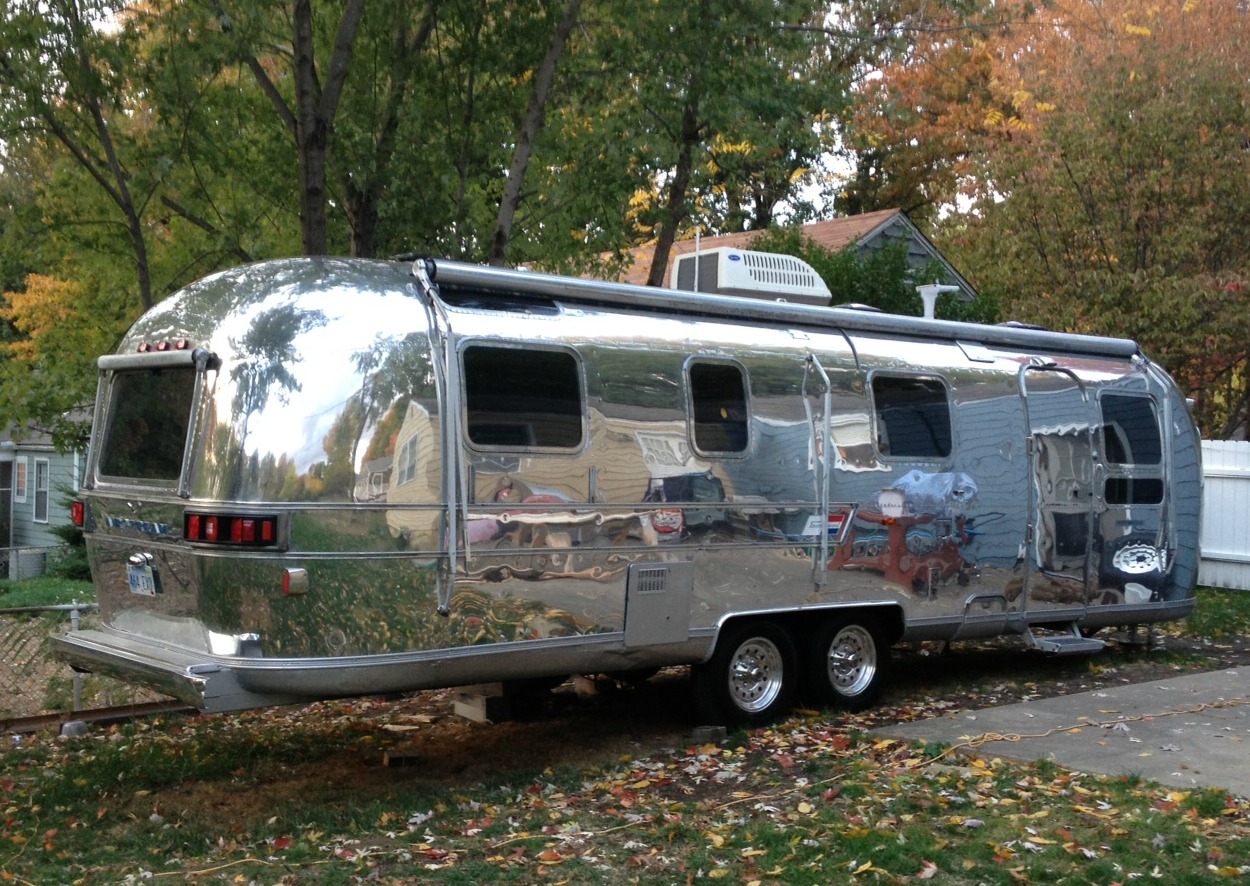
    A silver twinkie

    Lizzie curled into a seated fetal position, her eyes glazing over. Charlie and the Scientist had been telling her about this trip for a long time, easing her in, but she couldn’t relate to anybody of any age. Her mind was filled with the stern statesmanship of a former President, the nagging insistence of a schoolteacher edging for headmaster (who was really a scorned housewife), and something else, something dark and primal, instinctual but intelligent, something Charlie called the Demon. Other people were so simple, little puppets driven by base urges and simple abstractions piled up like a block tower erected by a 2 year old. They were just asking to be molded, formed, reconditioned… punished. A quote from her reader inhabited her conscious mind, “How is the schoolmaster, the nation, to know which boy needs the whipping?”

    Her grasp of the concept of a rhetorical question was limited, but her grasp of the concept of a trick question was well burgeoned by the consistent exposure to Charlie’s wit. She knew the answer to the question.

    “They all do,” she half-consciously muttered beneath her breath, unfolding from her defensive cocoon and preparing for the harrowing task of interacting with and learning from ordinary people. Charlie, by now well acquainted with Lizzie’s occasional inability to keep her inner dialogue from seeping out, ignored the seemingly random utterance and returned his attention to packing the mirror polished trailer full of necessities.


    After a few weeks on the road, having traveled from the East Coast to the West Coast across the northern states, the weather had turned cold enough that the return trip would have to be to the south. The Scientist, the multi-talented genius that he was, had planned all of this out so that they would be back home right as the spring thaw took hold in 1964. So far, the trip had gone off without too many hitches. There was that boy from Woodrow Wilson High School in Tacoma that they caught peeping in the window at Lizzie. He was in for quite a surprise when he saw her less-than-human physique. Hopefully she didn’t mess the boy up too bad. They stopped trying to find schools named for Woody after that incident. Lizzie was disappointed, but she took it in stride.

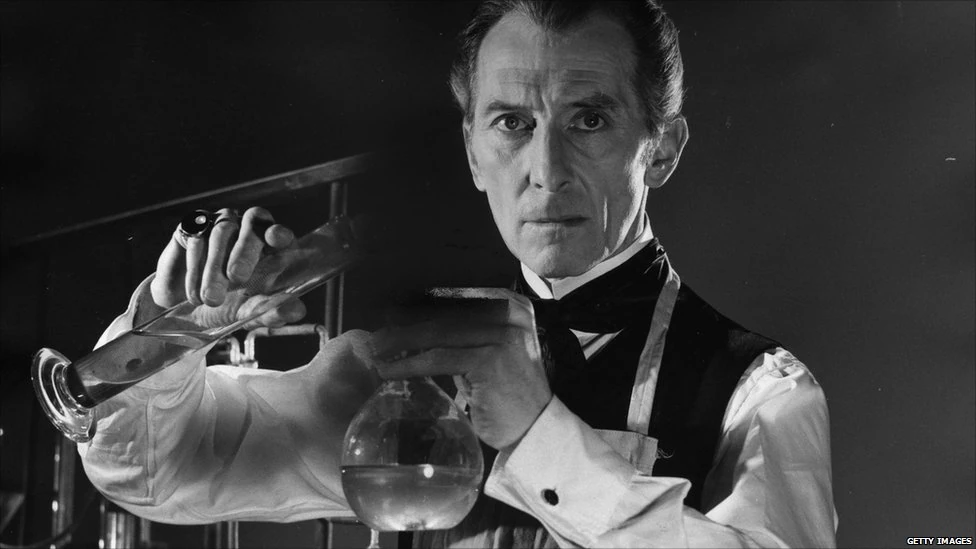
    A deadly gaze

    After an intensely monotonous transit across the desert, they arrived in Dallas in late November.

    “How long are we here?” Charlie asked, knowing that the Scientist had already planned and discussed this stop with him. He had already taken Lizzie to a football game because his Eagles were playing the Cowboys, but he wanted to know whether how many additional days’ worth of interpersonal enrichment to plan for Lizzie.

    “At least a week, maybe longer. I need to check a few things before I can give you an answer. Lizzie, now is the time that we will use your training.” The Scientist replied matter-of-factly. Charlie didn’t know what training the Scientist was talking about, her training had been used almost every day since they left the lab. She was making slow progress at interacting with normal everyday people after being a shut-in for the first two decades of her existence.

    “Yes sir,” Lizzie replied, unemotionally, “I will ensure the weapon is in working order.” She shuffled out of the car and into the trailer, rummaging loudly through the packed gear.

    “Weapon? What is going on and why am I not aware of it?” Charlie blurted, his voice rising in incredulity.

    “We’re cleaning up your mess, you blithering fool!” The Scientist displayed a rare flash of emotion. He tossed a copy of the Dallas Morning News in front of Charlie. “Storm of Political Controversy Swirls Around Kennedy on Visit” read the front page headline. Charlie turned red faced and slammed the door to the car, angrily pacing on the sidewalk next to the idling car.


    *BANG* *BANG* *BANG*

    Shots rang out across Dealey Plaza. Lizzie nonchalantly packed her highly modified Carcano into her briefcase and walked behind the grassy knoll toward the designated rendezvous point. She didn’t mind dressing like a man, but the suit didn’t fit well and she was self-conscious about somebody disciplining her for not acting like a girl. Charlie had promised her that it was okay in this situation, but she still felt that all eyes were upon her, gawking, probing, hating the Demon. She quickly realigned her thoughts to the mission at hand. She felt a pang of an unfamiliar emotion when she thought of Charlie completing the most dangerous part of the mission, planting the gun on that retard commie librarian. They found the fool a few nights ago strung out in a dilapidated tenement and decided that he would be a better cover than their existing plan. Charlie risked capture, but the Scientist made clear that he would take the bulk of the risk since he did the bulk of the fucking up. Kennedy wasn’t even supposed to be alive in the 1950s, let alone putting together a political career that would culminate in the Presidency.

    As she finished her determined path to the rendezvous, she was greeted by a waiting Charlie and the Scientist idling the car in a parking zone. She quickly shoved the briefcase into the trailer and took her appointed spot on the back bench of the car.

    “Everything went as planned,” Charlie reported, stripping a pair of latex gloves off of his hands. “If we’re lucky we’ll be able to grab the blood samples for your study. Hopefully we can figure out what went wrong with him.” The only noise for the rest of their short trip was a shuffling of costumes as Lizzie discarded the ill-fitting suit and the occasional crunch of a wrapper as they ate a small lunch.

    The Scientist, dressed in a pale blue smock, put a mask on his head and a pair of safety glasses over the mask. He stepped out of the car in front of the employee entrance of Parkland Hospital and opened the back door of the ’61 pastel green Cadillac DeVille, extending a hand to Lizzie and pulling out an ER nurse, white uniform complete with hose and a paper hat covering a perfectly coiffed bun. The makeup was a bit heavy handed, but wasn’t quite to Kennedean hooker status. An unsuspecting bachelor could get himself into quite a pickle if he ran across her all dolled up like this.

    The plan was simple, infiltrate the morgue, get past secret service, and draw two vials of blood. Lizzie walked in first, carrying a clipboard and a body bag. The Scientist lagged behind, also carrying a clipboard. They both had forged ID badges clipped to their uniforms. Once the Scientist walked into the hospital entry, Charlie pulled away to park the trailer in an adjoining employee lot. He was dressed as a secret service agent, and he was the backup plan they hoped they didn’t have to use.

    He began the short walk to the employee entrance, visualizing his nervousness escaping like ectoplasm with each deep breath he exhaled. Once he reached the door, he paused for a second to steel his remaining nerves, and walked into the hospital like he had a purpose. He knew that he wouldn’t fool the secret service agents in the hospital, but he only hoped to evade the notice of the hospital staff. He knew approximately where to go, but it would likely arise suspicion if he started ambling around the morgue looking for a body of a dead president.

    Was the Kennedy creature dead? Although Charlie and the Scientist had studied undead creatures together for over 50 years, he had no clear answer. He had watched the explosive results of Lizzie’s third bullet, but there were rats in the lab that were ambulatory for hours after full decapitation. Knowing Jack, his brainless body was probably humping his pillow.

    Charlie rounded a corner, following his pre-planned ingress, when things went sideways. “Excuse me! Excuse me, sir!” A determined voice beckoned from behind the nurse’s station.

    Swallowing the catch in his throat and remembering that he was dressed as a secret service agent, he turned to the cute, if a bit pudgy, nurse flittering between files at the desk. “Yes ma’am, can I help you?” he hoped the faux bravado in his voice wasn’t noticeable to her.

    “Do you know what’s going on? I heard the hospital is being evacuated!” Her voice contained equal parts curiosity and anxiety.

    “No ma’am, not at this time,” he bullshitted, “do you know where the VIP is being kept?”

    “Yessir, he’s in observation room 1-128, just down the hall and take the second right.” She obviously bought the act and had no problem blabbing confidential information as long as one looked the part.

    “Oh, he survived?” Charlie was genuinely surprised that Kennedy would have been able to return to fully ambulatory status so quickly. The rats sometimes took up to a day to recover from what he and the Scientist best guessed was a comatose state.

    “No,” she sighed, “One of the other nurses said he died. They’re waiting until they can secure a place in the morgue for him. What happened anyway? I heard that the President was in town, did one of his aides have a heart attack? This seems like a whole lot of to do for one person.”

    “I’m sorry, I can’t talk about it. You’ll know soon enough.” Charlie waved in thanks and in departure and followed the instructions to the observation room. He rounded another corner and walked into yet another buzzsaw.

    In the hallway stood an animated Scientist conversing with a pair of no-shit secret service agents. Their body language showed impatience and his showed increasing desperation. Lizzie was nowhere to be seen. The backup plan ended up being necessary. Charlie hoped that his dress and demeanor would buy him enough time to execute his part of this intricate dance. He walked with urgency toward the Scientist until he saw one of the agents catch notice of his approach.

    “Sir! Sir!” he implored the Scientist. “Sir, if you aren’t on the whitelist, you can’t be here. I’m going to have to ask you to come with me.” He turned his back to the agents and gestured back the way he came. As he twisted back toward the agents, he slid a dart gun out of his trenchcoat and fired a pair of darts into the right legs of each agent, catching them completely off guard. Evidently the scene had been more confused than he thought, because he fully expected to have to outdraw the agents and dodge gunfire as they withered under the chemicals. One agent tried to unholster his pistol while melting like the wicked witch into a puddle of wool suit parts. Charlie defused the situation with a quick palm to the wrist, causing the agent’s hand to slip off the grip and slid down his torso. The other agent brought his left arm up to his mouth, attempting to sound the alarm, but the Scientist intercepted the microphone before it was activated. Almost gently, he returned the man’s arm to his waist and helped him down to his slumber. He grabbed a key from the man’s palm and inserted it into the door.

    As Charlie and the Scientist slipped into the darkened room, their eyes met a scene that was beyond their ability to comprehend. The Scientist doubled over and rested his head in his hands, trying to regain his composure. Charlie ducked his head into a trash can next to the door and purged his lunch.

    On the gurney was a writhing mass of flesh, pale with discolored splotches, some bare and some covered in patchy blonde hair. The noises emanating from the mass was animalistic and procreative. If this was sex, it was a grotesque, otherworldly, abominable parody of human sex. The bodies weren’t simply thrusting in concert, but they were actively fusing together and disintegrating like a ball of dough being kneaded. Genitals were barely recognizable, but the tell-tale “birthmarks” on Lizzie’s back stood out, as well as the patchy leg hair of Jack Kennedy. The top halves of their bodies were unfused, and Jack stared directly at Charlie. His expression was a mix of shock-induced stupor and that inherent smug charisma that caused him to part ways with Charlie and the Scientist in the first place.

    Lizzie, on the other hand, wore a simplistic determination on her face. The pleasurable noises she made interspersed her attempts to lick, suck and chew at the gaping wound in Jack’s head. As she reached climax, she turned her head mechanically and locked eyes with Charlie, a chunk of bloodied brain hanging from her lips. The Demon was in control.

    “Lizzie!” Charlie whisper screamed, cognizant of the threat outside the door and the threat mounted on top of the soon-to-be former President. The Demon was capable of many things, but it wasn’t able to stand up to a stronger personality in direct conflict. “Lizzie! Get off of that creature and put your fucking uniform back on!”

    The Scientist, regaining his sense of urgency, grabbed Lizzie’s wrist and peeled her off of Jack in a sensation much like separating a pair of stuck together crescent rolls in a Pillsbury tube. Lizzie’s body quickly returned to shape, perhaps looking better than before. The scars and lumps and birthmarks that riddled and pocked her flesh seemed to have faded some small but noticeable amount.

    “S-s-s- sorry, sir” Lizzie stuttered, gathering her uniform and covering her nudity. A blush formed across her cheeks as she realized that she was naked in front of the Scientist, who had only seen her bare a few times before. Her modesty wasn’t inherent, but Charlie had trained her enough that it had become a pavlovian response.

    With a growl, the Scientist turned his attention to the bloated, heaving body of John Fitzgerald Kennedy. Jack definitely got the worst of the intercourse, and the pain in his eyes betrayed the fact that he wasn’t going to be around much longer. His body seemed to be inflating and subtly gyrating like there was a pot of water boiling under his skin. The Scientist looked into his eyes as he inserted the needle for the first blood draw, 30 years of broken relationship condensed into a single shared expression. Hate. Pure, unadulterated hate.

    “hhhhh- you! I knew it would be … you,” Kennedy gurgled and gasped, forcing the words out between waves of pain. A fit of coughing interrupted his deathbed rant.

    “It washnt enough that you tried to kill me multiple times. I couldn’t have what you wanted so badly.” Kennedy wheezed once more, his breathing becoming labored.

    “I die knowing that you will never succeed!” A final exhale signaled the end to John F. Kennedy’s unholy existence.

    His body continued to gurgle as the Scientist packed up the vials of blood and Charlie huffed with incredulity. Lizzie, who despite being a product of death had never seen death, sniffed at the body, acting more like a dog than a human.

    “Lizzie! Let’s go!” The Scientist snapped, making for the exit. Simultaneously a moan and a cracking sound emanated from the Presidential corpse. Lizzie jumped back and looked on quizzically, completely ignoring the command from the Scientist.

    A series of noises that could be mistaken as coming from the back room of a butcher’s shop accompanied a heaving and writhing of Kennedy’s body. Slowly, it cleaved into two, leaving a much more recognizable Presidential husk on the gurney and a human shaped glob of flesh on the floor. Lizzie, far from being afraid, approached the glob and sniffed. She emitted a multitonal raspy sound at the glob, and it returned the call in an immature, high-pitched form.

    Before their eyes, the glob transformed into a young man with clear Kennedy genetic lineage and more than a hint of fetal alcohol syndrome.

    “What the HELL are we going to do about this one, Charlie?” the Scientist had that same desperate look on his face from in the hallway. “We don’t have time to get this… this… this thing out of here without detection!”

    “No, no, no no no no no,” Charlie whispered barely audibly, defeat radiating from him.

    After a long silence, he started. “I may actually have an idea to get us out of this. The Kennedy family we created has a fourth son, Edward. Currently, the actor we have portraying him is a fill-in for Jack’s Senate seat. This . . . thing . . . could pass for Ted Kennedy. We’d just have to concoct a story about Ted coming along on Jack’s trip if we get asked any questions.”

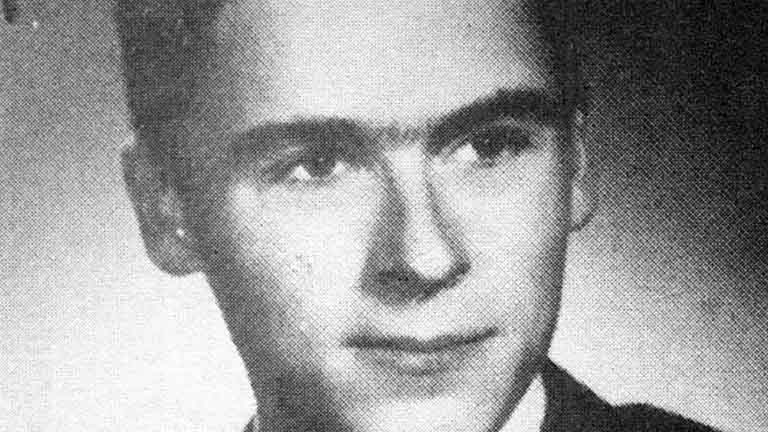
    Not all the parts are in the right place

    “Fine, but what if that thing doesn’t make it easy on us?” the Scientist gestured at the ambulating creature looking more and more believable as a human every second.

    “Look at him, he’ll do anything that Lizzie tells him,” Charlie smirked while he watched Ted Kennedy sniff Lizzy in curiosity. They walked around one another in a tight circle, sizing one another up. When Ted faced toward the exit, Charlie addressed him. “Will you come with us?”

    Teddy Kennedy cocked his head to the side before returning his gaze to Lizzie. He smiled a disturbingly unemotional smile.

    “Kennedy Sandwich!!” He announced in his unmistakably New England nasal voice, tackling Lizzie onto the gurney and repeatedly thrusting his hips, no notice given to the uninhabited shell of his brother-father.

  • Scrot…. SCOTUS summary 2018-2019 session

    June is a very interesting time for very boring people. Namely, those who are obsessed with the Supreme Court. Most of the opinions of the Court for a session begin to trickle out in June.

    Anyway, we have two relatively new justices, Kavanaugh and Gorsuch, and seven old friends. Let’s see what they decided this year! I tried to work in some snark into what is a really dry topic, but there’s only so much snark you can work into some devastatingly boring subject matter.
     

    Here lies RBG, 1318-2018

    Weyerhaeuser Company v. United States Fish and Wildlife Service  – 8-0

    The court clarified that the standard for judicial review of a USFWS designation of a “critical habitat” is if that determination was “arbitrary, capricious, or an abuse of discretion.”

    Mount Lemmon Fire District v. Guido – 8-0

    The court clarified that public employers are not exempt from age discrimination law even if below the 20 employee limit set for private employers.

    Madison v. Alabama – 5-3 (Kagan wrote the opinion, with Roberts, Ginsburg, Breyer, and Sotomayor joining)(Alito wrote a dissent with Gorsuch and Thomas joining)

    In this case, Madison is on death row for killing a cop. He has late-stage dementia due to multiple strokes and can’t remember his crime. The majority emphasizes that the criminal only need to understand why they are being killed. They don’t have to actually remember their criminal act. The dissent was mostly procedural. Essentially, Alito was pissed that the petitioner pulled a bait and switch on the court with their arguments and wanted the court to boot the case without ruling.

    New Prime Inc. v. Oliveira – 8-0

    The court ruled in favor of interpreting “contracts of employment” to include independent contractors in a case where there was an arbitration provision in the contract but federal law bars such a provision.

    The court ruled in favor of considering burglary of a mobile home or RV as a violent crime.

    Stokeling v. United States – 5-4 (Thomas wrote the opinion, with Alito, Kavanaugh, Gorsuch, and Breyer joining)(Sotomayor wrote the dissent, with Roberts, Kagan, and Ginsburg joining)

    Stokeling was picked up on a felon in possession of a firearm charge. His sentencing fell into a 15 year mandatory minimum because he had a prior “violent crime” conviction. This supposed violent crime was a robbery in Florida, where one of the required elements of the crime is “overcoming a victim’s resistance.” Thomas said that was enough to be considered a violent crime. Sotomayor called it “at most, a half-notch above garden-variety pickpocketing or shoplifting.”

    There’s a provision requiring INS to arrest and hold certain noncitizens without bond after they are released from jail after committing certain crimes. The statute says INS must do so “when [they are] released”. The 9th circus interpreted that as immediately after they are released, and if the person evades capture for a period of time (e.g. a day), this mandatory arrest is no longer applicable, and once arrested the person should be offered bond. Alito said that the 9th circus was wrong and that it doesn’t mean immediately after. Breyer was concerned about the interpretation meaning that INS could pick up a  criminal alien decades after the fact under Alito’s interpretation.

    Air and Liquid Systems Corp. v. Devries – 6-3 (Kavanaugh wrote the opinion, with Kagan, Roberts, Sotomayor, Breyer, and Ginsburg joining) (Gorsuch wrote the dissent with Thomas and Alito joining)

    Two Navy sailors died due to asbestos exposure. Their widows sued a product manufacturer of the product they were working on, but that product didn’t have any asbestos. However, the product required asbestos in order to function. Kavanaugh said that under maritime law, the product manufacturer has a duty to warn about hazards that may come from third-party components necessarily integrated into the product. Gorsuch criticizes this duty to warn because it doesn’t go much beyond requiring warning when a dangerous action is “foreseeable”.

    • To me, this is Kavanaugh’s first disappointment. This is a plain attempt at going after big pockets, and it increases the scope creep of products liability.

    Lamps Plus Inc. v. Varela – 5-4 (Roberts wrote the opinion, with Alito, Kavanaugh, and Gorsuch joining. Thomas wrote a concurrence)(There were a bunch of individual dissents)

    Employees brought a class action because Lamps Plus gave their personal info to a hacker through a phishing scam. The issue at hand is whether the class consented to class arbitration. The contract was ambiguous. Roberts says you can’t construe consent out of ambiguity. The dissents had more of a policy-based power imbalance theme to them because class arbitration benefits the employees.

    Henry Schein Inc. v. Archer and White Sales Inc. – 9-0

    Contract between two companies had an arbitration clause and specified that an arbitrator would decide whether an issue was arbitrable. The court affirmed that there isn’t some policy-based exception to the plain language of the contract for “wholly groundless” claims of arbitrability to be dismissed by a court.

    Cougar Den is a fuel wholesaler owned by an Indian tribe. The state of Washington sent them a bill for fuel tax for the fuel they transported on Washington highways and for import fees. Cougar Den claimed this violated the treaty between the US and the Yakama tribe that, among other things, gives them “the right, in common with citizens of the United States, to travel upon all public highways.” Breyer says that the treaty covers commercial activities on the highway, and thus the tribe cannot be taxed for their fuel importation. Roberts distinguishes the fuel tax, which is for possession of the fuel, from a right to travel, which is not infringed by the tax. Kavanaugh adds to Roberts’ dissent by saying that “in common with” means subject to the same non-discriminatory regulations of, including the fuel tax.

    Garza was charged with aggravated assault and possession with intent to distribute. He pled out and got a 10 year sentence instead of a possible life in prison sentence if it went to trial. Part of the plea agreements was a waiver of his right to appeal the cases. Later, Garza instructed his attorney to appeal the cases. This case is about whether the attorney was ineffective because he didn’t file the appeal. Sotomayor says yes, because appeal waivers aren’t universal, and there are often opportunities to appeal consistent with the waiver. Thomas says no, because the requested appeal was challenging the sentence which was negotiated in the plea agreement along with the appeal waiver.

    • You can start to see the teams forming in the court when it comes to accused criminal rights. The liberal justices vote as a fairly unified block for anything that improves an accused criminal’s standing. Roberts is a bit less predictable but still pretty pro-accused criminal. Kavanaugh is the swing vote, and Thomas, Alito, and Gorsuch are pretty strongly in the L&O camp. I’m personally on the majority side on this one. I’ve seen how plea deals can be used quite coercively, and anything that balances the power between DA and defendant is good.

    Class action was filed against Google for selling users’ search terms to third party sites in violation of a federal law. The class action was settled with a cy pres payment of $5.3M. Cy pres means donate the money to charity. Turns out the charities included the alma mater of the counsel representing the class and other charities that Google already had a relationship with. The question was whether this arrangement was “fair, reasonable, and adequate” compensation to the class. Additional issues of standing popped up regarding those who objected to the settlement. Specifically, the objectors weren’t part of the original lawsuit. The majority punted back to the lower courts to deal with the standing issue. Thomas didn’t think the standing issue was a problem and would’ve reversed the 9th circus’s decision to certify the class and proceed with the settlement.

    International Finance Corp is an international organization like the IMF, WHO, World Bank, etc. They funded a utility project in India that polluted the environment and killed a bunch of fish. IFC is granted sovereign immunity “same as” what foreign sovereigns receive. The question was whether IFC is granted sovereign immunity over commercial activities. If IFC’s immunity is “same as” current day foreign government sovereign immunity, the answer is that it isn’t necessarily immune. If IFC’s immunity is “same as” foreign government immunity in the 1940s when the law in question was passed, then IFC has blanket immunity. Roberts says it is same as current day foreign government immunity, and booted it to the circuit court for further consideration. Breyer says it’s the same immunity as foreign governments had at the time the law was passed.

    Dude got caught on a hovercraft in a national park. But wait! Turns out the river isn’t actually federal property. It’s within the park, but owned by the state. Hovercraft 1 – Smokey the Bear 0.

    Dude worked on the railroad. He fell and hurt himself one day. He successfully won a negligence case against the railroad for, among other things, lost wages. The question is whether payroll taxes should be deducted from the lost wages. Ginsburg says yes, these are wages being paid to an employee. Gorsuch says no, this is compensation for an injury, not payment for hours never worked.

    • I’m trying not to read too far into this, but it seems that the majority is pushing the all-too-pernicious concept that anything ever given to an employee by an employer is a taxable wage.
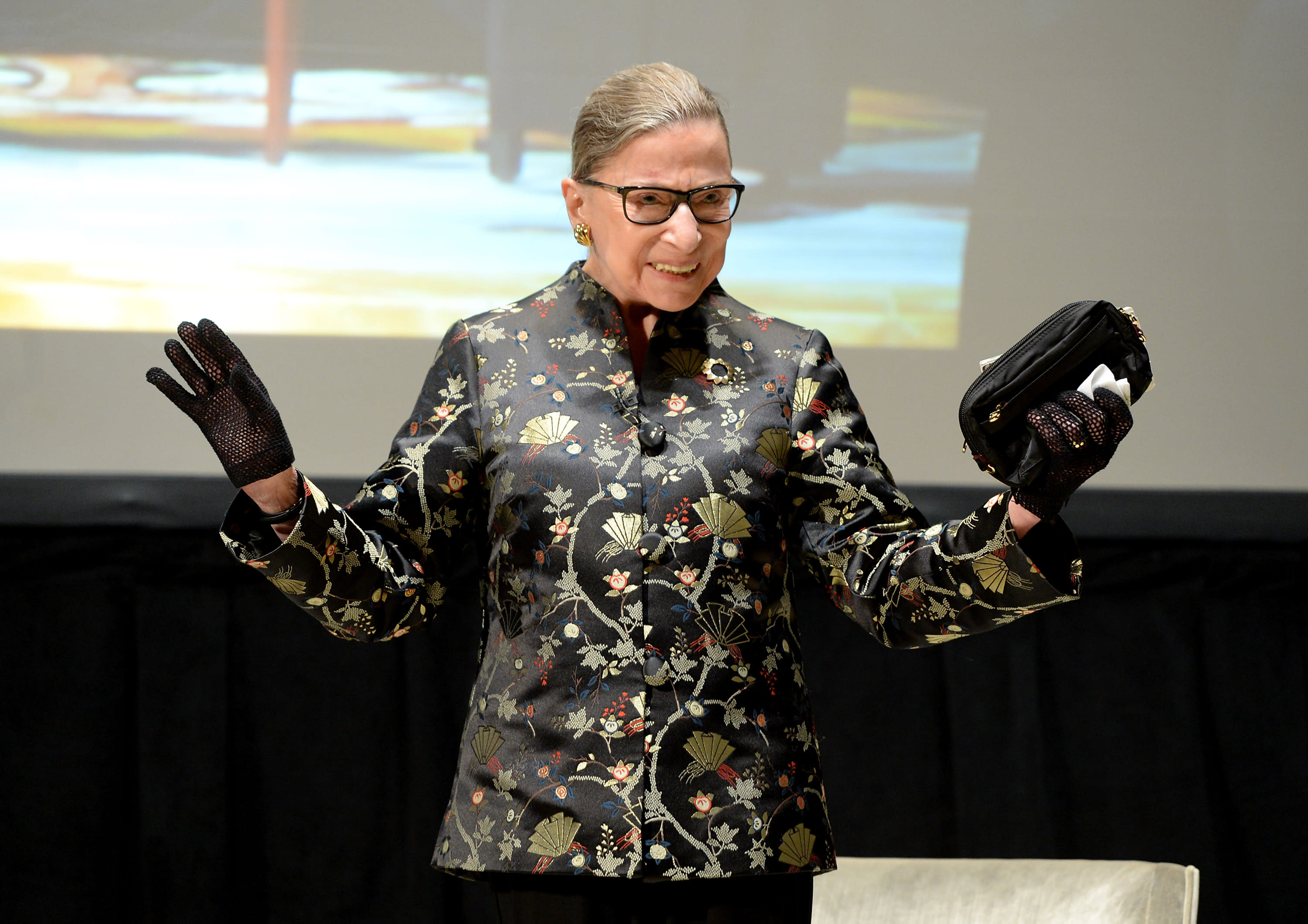
    "I just came from a looovely party at Hillary's"

    Death row inmate has a condition that he claims will cause him to choke on his blood when given lethal injection. Justices ignore the questions at hand and have an up or down vote on the death penalty disguised as an 8th Amendment debate.

    Families of those who were killed on the USS Cole sued Sudan for sponsoring that attack. They served notice of the suit on the Sudanese embassy in the US. Sudan said they had to serve notice to the foreign minister in Sudan. Alito says that routing it through the embassy was improper. Thomas says this is one of the basic purposes of embassies.

    Attorney represented people trying to get past due SS benefits. He represented them directly against the SS agency and also against the SS in court. There’s a 25% cap on attorneys fees for this. The court ruled that the cap only applies to fees relating to the court case, and the agency representation is separate.

    Pepper sued on behalf of Apple users for anti-trust violations relating to the App Store. Kavanaugh wrote that customers who buy apps from the App Store are direct customers and thus have standing to sue over monopolistic practices. Gorsuch’s dissent points out that if anybody has standing, it’s the app developers who are being directly charged by Apple.

    • This is the second time Kavanaugh has disappointed. He is consistently voting in favor of companies having responsibility for downstream effects of their products, whether it be holding the metal component manufacturer liable for the asbestos they don’t sell, or holding Apple liable to the customers for pricing that passes through app developers.

    Dude turned in his homework (petition for appeal) late. 9th circus let him turn it in for full credit. SCOTUS gave him no credit.

    Timbs was arrested for dealing drugs. He had his $42k Land Rover confiscated by the state in criminal asset forfeiture, despite being sentenced to 1 year in prison and paying a $1000 fine. The court universally ruled that the 8th Amendment is incorporated to the states via the 14th Amendment, and thus excessive fines are illegal. The court didn’t rule on the broader legality/illegality of criminal and civil asset forfeiture.

    • The court came to the right conclusion in this case. The entirety of the bill of rights should be incorporated by the 14th Amendment. The idea that the United States recognizes a fundamental right, but a state doesn’t have to is the evil mirror version of laboratories of democracy.

    Lorenzo sent an email including false information intending to defraud investors. There are three elements to be satisfied for one of these fraud claims. 1) Materially false information; 2) The person charged “made” (has ultimate authority over) the statements; and 3) the person intended to deceive with the statements. Elements 1 and 3 are undisputedly true. Element 2 is undisputedly false. Breyer says that the fraud claim can be repackaged as a “fraudulent scheme” claim if Element 2 isn’t met. Thomas says that doing so would render Element 2 moot.

    • Again I don’t want to read too much into the case, but I think you see a divide between policy-based voting by the majority (this was a clear conspiracy, and they shouldn’t get off on a technicality) versus the textual-based voting by the dissenters. I’m mildly surprised that Alito was in the majority.

    State gov’t retirement benefits weren’t taxed by the state, but fed gov’t retirement benefits were. Court says this is illegal under intergovernmental tax immunity principles.

    Guy applied for SS disability. Court approved it after a certain date, but pointed to expert testimony that he had “other work” available prior to that date. Guy asked expert to enter data into record supporting his testimony, which never happened. Kagan wrote that the expert testimony is sufficient to deny disability. Dissents point out that the expert testimony relied on data that was never produced when requested, making it insufficient.

    Confidential sales are sales nonetheless for the purposes of the “on sale” bar from receiving a patent. This was one of those corner cases I remember learning about in patent law class where the prof said that there’s technically no case law on this specific issue, but it’s pretty obvious how it would go. Well, now there’s case law on this issue.

    Merck was stuck between a rock and a FDA place. They got sued for failure-to-warn about a side effect of a drug. Why? Because the FDA didn’t approve their warning. This is a procedural case where the question is whether the reasoning for the FDA rejection should be handled by the judge or the jury. The court sent it back to the judge.

    Guy has his house foreclosed on. Bank hires a firm to do a non-judicial foreclosure. The question is whether a firm that only does non-judicial foreclosures is a “debt collector” as defined in the Fair Debt Collection Practices Act. Court says they’re not.

    Some Indians were hunting elk on their reservation. They crossed into Bighorn National Forest before shooting the elk. They were charged with hunting without a license. The Crow tribe has a treaty with the US that gives them the right to hunt on “unoccupied lands of the US.” Sotomayor says that Wyoming’s intervening statehood had no impact on this treaty and that designating the national forest didn’t make that land become “occupied.” Alito says that the same provision was interpreted in another case in the 1860s, and that the statehood invalidated the hunting portion of the treaty.

    • I’ll admit that I have no clue what the conservative bloc is attempting here. This seems to be some sort of dual sovereignty argument where Wyoming retains rights that the federal government has given to the Crow tribe. IMO, it screams of the sort of double dealing that the US had with Indians throughout the 18th and 19th centuries.

    Copyrights are “registered” when the Copyright Office registers them. No sooner.

    Guy was audited by the FTB of Cali. He sued the FTB in Nevada, which didn’t grant immunity to other states’ governments. Thomas wrote that they were overturning the precedent which conditioned sovereign immunity on whether the host state grants immunity to other states. Instead, sovereign immunity is inherent, even across state lines. Breyer had tinges of federalism in his dissent.

    • On one hand, the dissent has emotional appeal. I like the idea that a governmental entity can be hauled into court and be held accountable for their actions. I just don’t know that another State’s courts are the right venue for that sort of litigation. I’d much rather it be accomplished through the reduction of sovereign immunity.

    Yes, the TVA is still around. They were putting up power lines and ended up electrocuting a dude and seriously injuring another one. The question was whether the commercial activity of putting up power lines was a part of the “discretionary-function” exception to sovereign immunity. It was.
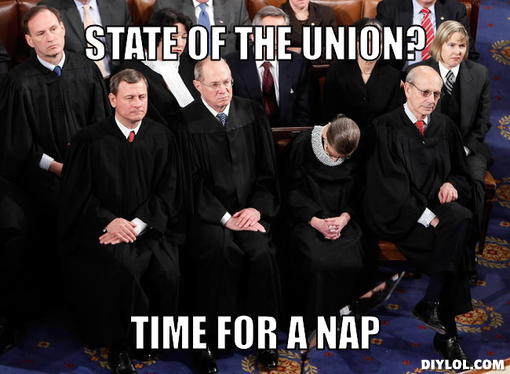
    She Dead


    Rimini street illegally downloaded software from Oracle’s website and sold it. The question was about damages associated with copyright infringement. Yawn.

    Tempnology licensed out one of its trademarks. It subsequently went into Chapter 11 bankruptcy. During the bankruptcy, Tempnology “rejected” the license contract, which is essentially a breach of contract. The question is whether Mission can still use the trademark or not. Kagan says yes. Gorsuch says the case shouldn’t have been decided because it wasn’t ripe yet.

    Munitions cleanup company for Iraq was scamming the US. Hunt went to jail for it, but is suing his former company under the False Claims Act. It’s a statute of limitations question as to whether it started running when Hunt knew about the scam or when the US government knew about it. Court said it was the latter.

    Guy was arrested for harassment and other crimes. He claimed it was a retaliatory arrest. The question was whether probable cause defeats a retaliatory arrest claim as a matter of law.  Roberts says yes, probable cause kills a retaliatory arrest claim. Gorsuch would rather probable cause be a factor to consider instead of dispositive.

    Home Depot U.S.A. Inc. v. Jackson – 5-4 (Thomas wrote the opinion with Ginsburg, Breyer, Sotomayor, and Kagan joining)(Alito wrote the dissent with Roberts, Gorsuch, and Kavanaugh joining)

    Guy gets sued by the bank in North Carolina state court for not paying his Home Depot credit card bill. He countersues and also files a third-party class action against Home Depot for deceptive sales practices. Home Depot tries to remove the case from state court and send it to federal court. Essentially the question is whether Home Depot, as a third party defendant, can initiate removal proceedings for a class-action counterclaim against the defendant of a case. Thomas says that only defendants can remove, and a defendant on a counterclaim is technically a plaintiff. Alito says that Thomas was picking nits, and that a third-party defendant on a counterclaim is a defendant.

    Smith v. Berryhill – 9-0

    Guy mailed in his disability renewal late. SS denied him benefits. He claims that the decision is judicially reviewable as a “final decision” from a regulatory body. Court agreed.

    Azar v. Allina Health Services – 7-1 (Gorsuch wrote the opinion)(Breyer wrote the dissent)(Kavanaugh recused)

    HHS adjusted a payment rate for Medicare-covered hospital services in low income areas. A number of hospitals challenged the change because it wasn’t put through the normal notice and comment period that regulatory changes are required to go through. Gorsuch wrote that this change didn’t meet any exception to the notice and comment period requirement. Breyer was worried that forcing rate changes to go through a multi year notice and comment process would cripple Medicare.

    • This is yet another example of how Breyer is the worst justice on the court. His dissent was policy-based garbage.

    Fort Bend County, Texas v. Davis – 9-0

    Under Title VII of the CRA, there’s an administrative process to be followed when alleging discrimination. Davis filed a religious discrimination claim, but bypassed parts of the administrative process to go straight to federal court. The question is whether the administrative process is a pre-requisite to taking it to court. There was a circuit split on this issue. The court says it is not a pre-requisite, but merely claim-processing guidance.

    Mont v. United States – 5-4 (Thomas wrote the opinion with Roberts, Ginsburg, Alito and Kavanaugh joining)(Sotomayor wrote the dissent with Kagan, Breyer, and Gorsuch joining)

    Guy was convicted of federal drug crimes. Served a federal sentence and had a 5 year supervised release. During the supervised release, he was charged in state court for additional drug crimes. The question is whether the time he spent in state prison prior to trial counted toward his supervised release. Thomas says that because the state court credited that time, and because supervised release doesn’t count time imprisoned, the supervised release is paused during that pre-trial incarceration. Sotomayor says that the statute refers to imprisonment “in connection with a conviction”, which doesn’t apply to pre-trial incarceration.

    Taggart v. Lorenzen – 9-0

    Guy gets sued for shady real estate transactions. He goes into bankruptcy. After he is discharge from bankruptcy, the people suing him try to get attorneys fees for the work done after he was discharged from bankruptcy. The bankruptcy court holds them in contempt for violating the bankruptcy dicharge. Supreme court holds that the standard for holding contempt is more than just their subjective good faith belief that they aren’t violating the discharge. If it is objectively unreasonable to believe that they weren’t violating the discharge, then they can still be held in contempt.

    Quarles v. United States – 9-0

    Guy gets busted carrying a firearm as a felon… while burglarizing a house. The question is about sentencing, where if he was committing “generic burglary” it amplifies the sentence. Generic burglary requires intent to commit a crime. The question was whether the intent had to exist when entering the building or whether the intent could be formed while he remained in the building. The court says it doesn’t matter exactly when the intent was formed.

    The USPS challenged a patent held by Return Mail in an Covered Business Method Review (CBM) proceeding. The relevant statute says that CBM petitions can be brought by “persons.” We know from Citizens United that corporations are people, but is the government people? There is a long-standing rule of judicial interpretation that says sans-explicit instructions otherwise, the sovereign is not a person. Sotomayor said that there was nothing to indicate that this specific instance of “person” should be interpreted otherwise, so USPS is ineligible to challenge the patent. Breyer shows, yet again, why he’s my least favorite justice, making a not-very-convincing efficiency argument.

    An oil rig worker off the coast of CA sued his employer under CA law for not providing lunch breaks. The employer moved the case to federal court, and the federal court dismissed the case because federal wage and overtime laws pre-empted the CA laws for offshore workers under the Outer Continental Shelf Lands Act. The 9th court overturned this ruling and said that the OCSLA incorporates the the adjacent state law (CA law) no matter what the relevant federal law says. The Supreme Court unanimously upheld pre-emption as a concept. CA law can be used to fill in the gaps of federal law, but when state and federal law are at odds, federal wins.

    A public access cable network fired a couple of guys for harassing other employees. The guys sued for suppression of their First Amendment rights. First Amendment only applies to state actors. “Congress shall make no law”… Is a public access cable network a state actor? Kavanaugh says no. Just because they are granted certain privileges by the government (bandwidth, funding, etc.) doesn’t mean that they’re beholden to governmental restrictions on operation like the First Amendment.  Sotomayor says that the public access network is essentially acting as a proxy for the government, and is thus a state actor beholden to the First Amendment.

    • This case is a microcosm of the economics of the two wings of the court. The conservative wing sees companies, even in highly regulated areas (see also, Internet/social media, healthcare, etc.) as independent entities. The progressive wing envisions a proto-fascism here where a little bit of state inteference snowballs into a whole lot more. I think this case would have been similar to Griswold v. Connecticut as a stepping stone to something much more earthshattering (Roe v. Wade, in the case of Griswold) if Hillary had been elected. Social media giants could be brought to heel (not that they need it), healthcare companies could be gutted, and many other industries would be vulnerable if the vote went the other way.

    Virginia bans uranium mining. Virginia Uranium found a deposit and wants to mine it. The federal Atomic Energy Act regulates most of the uranium fuel cycle from mining safety practices to transportation to disposal, but doesn’t directly regulate the mining itself. The question is whether the AEA pre-empts the Virginia law, even though the AEA doesn’t speak on the regulation of mining.  Gorsuch says no. If the AEA doesn’t cover that area, it doesn’t pre-empt Virginia’s ban. Roberts says that while techincally the AEA doesn’t cover that area, the Virginia law (based on the legislative history) is being used as an end around to override safety rules in the AEA.

    Gamble v. United States – 7-2 (Alito wrote the opinion with Thomas, Breyer, Kagan, Sotomayor, Roberts, and Kavanaugh joining)(Gorsuch and Ginsburg wrote dissents)

    Gamble was convicted in both Alabama court and Federal court of possession of a firearm by a felon. He challenged the dual convictions as double jeopardy. The long-standing interpretation is that there are dual sovereigns (state and fedgov), and each get s a bite at the apple. Alito wrote that they are staying with precedent, which is that each sovereign gets a bite at the apple. Ginsburg’s dissent is a bit troubling as it has a very “modern” view of federalism. She wrote, “The notion that the Federal Government and the States are separate sovereigns overlooks a basic tenet of our federal system.” Gorsuch hits a home run on this one, and has vaulted over Thomas as my favorite justice with this dissent alone. He wrote, “This ‘separate sovereigns exception’ to the bar against double jeopardy finds no meaningful support in the text of the Constitution, its original public meaning, structure, or history. Instead, the Constitution promises all Americans that they will never suffer double jeopardy. I would enforce that guarantee.”

    • I’m disappointed with the entire court except for Gorsuch, but I think that my disappointment is strongest with Thomas. He wrote a special concurrence getting into his pet issue of his dislike for the reverence placed on often erroneous precedent. However, he didn’t follow that through to the correct outcome. I think I would’ve pursued an incorporation theory for how double jeopardy applies to two theoretically separate sovereigns, but Gorsuch was raining holy fire down in this dissent. Here’s another quote:

    Nor has only the law changed; the world has too. And when “far-reaching systemic and structural changes” make an “earlier error all the more egregious and harmful,” stare decisis can lose its force. In the era when the separate sovereigns exception first emerged, the federal criminal code was new, thin, modest, and restrained. Today, it can make none of those of boasts. Some suggest that “the federal government has [now] duplicated virtually every major state crime.” Others estimate that the U. S. Code contains more than 4,500 criminal statutes, not even counting the hundreds of thousands of federal regulations that can trigger criminal penalties. Still others suggest that “‘[t]here is no one in the United States over the age of 18 who cannot be indicted for some federal crime.’” If long ago the Court could have thought “the benignant spirit” of prosecutors rather than unwavering enforcement of the Constitution sufficient protection against the threat of double prosecutions, it’s unclear how we still might.


    This person is definitely alive. Certainly not taxidermied and puppeteered by Elena Kagan

    Virginia House of Delegates v. Bethune-Hill – 5-4 (Ginsburg wrote the opinion with Gorsuch, Thomas, Sotomayor and Kagan joining) (Alito wrote the dissent with Roberts, Kavanaugh, and Breyer joining)

    The Virginia House of Delegates was redistricting voting districts for the state. Their plan ended up in court for racial disparities under the Voting Rights Act. The legislature sued because the remedial plan created by a special master (literally a poli sci prof in the University of California system… no bias there) was a biased mess. Ginsberg wrote that the legislature didn’t have standing and that the State (attorney general) would have to bring the suit. Alito believes that the legislature itself suffers an injury when the plan is rejected.

    • If you want to see some brazen electoral hijinks, this is a case worth reading about.

    Gundy got busted for sexual assault and drug charges. Once he was paroled out of a PA federal prison, he voluntarily transferred to a halfway house in NY. However, when he crossed state lines, he triggered the sex offender registry act (SORNA) requirement to register, which he didn’t do. He was convicted prior to the passing of SORNA, and SORNA itself basically punted to the Attorney General on how to handle registering those convicted prior to SORNA passing. How this isn’t an ex-post facto law, I have no clue.

    Anyway, this implicates another issue that I mentioned last December. the non-delegation doctrine. Basically, prior to FDR STEVE SMITHING the SCOTUS, the court held that Congress did the legislating, the Executive did the executing, and the Judiciary did the judging. Congress couldn’t delegate rulemaking to the Executive, among other things. Well, this was really inconvenient for the proggy planners of the day, so they just ignored it.

    Anyway, this was a situation where the progs on the court were predictably pro-government overreach, Gorsuch wrote a kickass dissent that called Alito out for self-castrating and handing his nuts over to Kagan, and a beautiful opportunity was missed because Kavanaugh wasn’t ready yet when this case was argued. Alito basically said “I don’t want my name on a worthless dissent that defends a sex offender, even though I agree with the dissent.” Fuck him.

    McDonough (Election Commissioner, D-NY) was charged with forging a bunch of ballots during the 2009 primary. Dickbag prosecutor may have faked some evidence during McDonough’s criminal trial, resulting in a mistrial and an eventual acquittal. Typical NY politics so far. There’s a statute that lets a criminal defendant sue a prosecutor who fakes evidence. The statute of limitations is 3 years. The question is whether the 3 years starts when the defendant is acquitted or when the defendant becomes aware of the tainted evidence. The court says it’s the former, when the defendant is acquitted.

    As always, expect Ginsburg to write any opinion/dissent against a religious party. Not saying she’s wrong, just that she’s predictable. This issue is of an old WWI monument on public land. The monument is a cross, but doesn’t really have particularly theological meaning. It’s more of a war memorial. The question is whether the continued presence and upkeep is a violation of the religious Establishment Clause. Majority says no. There are a bevy of concurrences that I didn’t list, but I think Gorsuch’s is the best. He argues that the AHA doesn’t have standing, because taxpayer standing isn’t sufficient standing to challenge an expenditure. This case is one of those where I’m not sure there’s a good answer except to sell the thing to a private owner.

    PDR send spam faxes to C&H. C&H sued under the Hobbs Act, which prohibits fax spam. The question is whether certain language of the Hobbs Act requires the court to defer to the FCC’s interpretation of some terms. Court says no, Chevron deference applies. Some concurrences say that this is the kind of mess caused by Chevron deference in the first place.

    Flowers was eventually convicted and sentenced to death for killing 4 people. It took 6 trials before he was actually convicted. There was an issue of the prosecutor striking black jurors from the pool that caused problems. The prosecutor was slapped on the wrist for two of the trials. Anyway, in the 6th trial, he struck 5 of the 6 black jurors in the pool, and one specifically was “similarly situated” to white jurors who were empaneled, according to Kav. Question was whether this violated a law against racial bias in selecting jurors. Majority said yes. Thomas wrote this in his dissent:

    The only clear errors in this case are committed by today’s majority. Confirming that we never should have taken this case, the Court almost entirely ignores—and certainly does not refute—the race-neutral reasons given by the State for striking Wright and four other black prospective jurors. …
    Today’s decision distorts the record of this case, eviscerates our standard of review, and vacates four murder convictions because the State struck a juror who would have been stricken by any competent attorney. I dissent.

    A trust was created for an heir who lived in NC. The trustee lived in CT. The trustee, for years, paid NC taxes on the income accrued by the trust, but no money was distributed to the beneficiary in NC. The question was whether NC needed to pay that money back because there was no taxable event in NC. Court said NC owed the money back to the trust.

    Rehaif overstayed his visa and was here illegally. He decided, while being here illegally, to go to the gun range. He got busted for unlawful possession of a firearm. One element of the crime is “knowingly” possessing the firearm. However, it’s ambiguous whether the defendant must only knowingly possess the firearm or whether they must also knowingly be doing so illegally (specifically, he must know that he is here illegally). Majority says that the defendant must both knowingly possess the firearm AND know that they are of a status (illegal immigrant) that is not allowed to. Dissent says the plain text of the statute clearly means “knowingly” only applies to the possession element.

    Knick was challenging an ordinance passed by the township as a takings claim. Previous SCOTUS precedent require a takings plaintiff to “exhaust” all state paths for remedy before taking the case to the federal court. The majority overturned this precedent and allows takings claims to come up to federal court prior to exhausting all state remedies.

    Davis was convicted of possessing a firearm during a “crime of violence.” The question is whether the phrase “crime of violence” is unconstitutionally vague. Gorsuch’s opinion is that the text and context of the statute don’t provide enough of a framework to define a “crime of violence.” Kavanaugh’s dissent is not great. It’s mainly policy based and has a whiff of “know it when you see it.”

    • Yet another strike against Kavanaugh and for Gorsuch. I think the conservative bench whiffed on this one, letting their policy preferences get in the way of their rationality. Honestly, I was a bit surprised Roberts didn’t end up on the majority side of this one.

    The USDA had collected some private financial information about FMI. Argus filed a FOIA to try to get that financial information about FMI. The question is whether the information fell into an exception of FOIA. Majority says yes. Breyer basically said that the majority missed the invisible “no blood, no foul” exception to the exception. I didn’t read his whole dissent, because it’s typical Breyer garbage.

    Brunetti tried to register the trademark “Fuct”. The Lanham Act (trademarks) prohibits registration of immoral or scandalous trademarks. Issue is whether the Lanham Act violates the First Amendment. Kagan’s opinion said that “immoral or scandalous” is overbroad and thus violates the First Amendement. She leaves the door open for the language to be tightened up in the Lanham Act, maybe to prohibit “obscenities”. Alito, complete with freshly polished testicles, went further in his concurrence and said that this is a violation of the First Amendment because it’s viewpoint discrimination. “Obscenities” probably doesn’t make it over Alito’s hurdle. The dissents were mostly policy based.

    Batterton got battered by a faulty hatch on a ship he was repairing. The question is whether, under maritime law, an injury caused by a problem that makes a ship unseaworthy can result in punitive damages being awarded to the injured party. This is a traditional “circuit split” case. Majority says no punitive damages.

    Child predator was out on supervised release. During a surprise search of his belongings, it was found that he had violated his release terms (he had porn on the computer and some other issues). The statute required him be imprisoned for 5 years for this violation. The question is whether this violates his due process rights. Specifically, whether this supervised release program feels more like a parole program or like an unconstitutional “go directly to jail without passing a jury” program. Gorsuch strongly believes the latter. Breyer was playing the game well, because he basically wrote a dissent but did a switcharoo at the last second and turned it into a concurrence. Alito’s dissent is serviceable.

    I’ve talked about Chevron deference here (see the link above in  PDR Networks) in the past, but I haven’t particularly address Auer deference. Chevron is about the court deferring to an agency’s interpretation of a law. Auer is about deferring to an agency’s interpretation of a regulation. This case was a trial balloon for overturning Auer deference. They didn’t have enough votes. Courts still have to defer to reasonable agency interpretations of a regulation.

    Tennessee Wine & Spirits Retailers Association v. Byrd – 7-2 (Alito wrote the opinion, with Roberts, Kavanaugh, Breyer, Ginsburg, Sotomayor, and Kagan joining)(Gorsuch wrote the dissent, with Thomas joining)

    A couple of out of state retailers applied for liquor licenses. Tennessee’s ABC didn’t issue those licenses. The question posed to the court was whether the 21st amendment in combination with the dormant commerce clause allows the state to discriminate against out of state liquor license applicants. Alito says that it it unconstitutional because it favors residents over out of state applicants. Gorsuch has some weird appeal to history that falls flat. This is a rare misfire from Gorsuch and Thomas.

    Mitchell v. Wisconsin – 5-4 (Alito wrote the opinion, with Roberts, Breyer, and Kavanaugh joining; Thomas wrote a concurrence) (Sotomayor wrote a dissent joined by Kagan and Ginsburg; Gorsuch also wrote a dissent)

    Drunk driver was arrested. On the way to jail he passed out and was clearly having medical issues. Cop took him to the emergency room where, in the ER, he read him a form about the state’s implied blood draw consent and asked him whether he withdrew his consent. Being that the drunk driver was unconscious, he didn’t withdraw consent. Subsequently a blood draw was taken, and he was eventually found guilty of drunk driving.  The question is whether a warrant was required. Alito relies on the “exigent circumstances” doctrine for not needing a warrant. If it doesn’t sound familiar, the exigent circumstances doctrine is found in article F section Y paragraph T line W. This is probably the single most disappointing opinion I’ve come across for the conservative bloc. Good on Gorsuch for dissenting. However, Sotomayor stole the show with this paragraph in her dissent:

    The plurality’s decision rests on the false premise that today’s holding is necessary to spare law enforcement from a choice between attending to emergency situations and securing evidence used to enforce state drunk-driving laws. Not so. To be sure, drunk driving poses significant dangers that Wisconsin and other States must be able to curb. But the question here is narrow: What must police do before ordering a blood draw of a person suspected of drunk driving who has become unconscious? Under the Fourth Amendment, the answer is clear: If there is time, get a warrant.

    Rucho v. Common Cause  & Lamone v. Benisek- 5-4 (Roberts wrote the opinions with Alito, Gorsuch, Kavanaugh, and Thomas joining)(Kagan wrote a dissent with Breyer, Sotomayor, and Ginsburg joining)

    These are gerrymandering cases challenging districting being done by Republican state legislatures. Roberts asserts that this is not justiciable because the Constitution assigns districting to the legislature. They boot the cases on political question doctrine grounds. The dissenters don’t really believe in the political question doctrine and would love to get their grubby hands on the districting levers of power.

    Department of Commerce v. New York – 5-4 (Roberts wrote the opinion with Breyer, Kagan, Sotomayor, and Ginsburg joining)(A mess of partial concurrences and partial dissents from Breyer, Alito, Gorsuch, Kavanaugh, and Thomas)

    Hoo boy, here’s the next round of FYTW. This was the case about the citizenship question on the census. Essentially, when it comes to an administrative procedure like what goes on the census, the test as to whether something is discriminatory is the “arbitrary or capricious” standard. Roberts decided the citizenship question reasonably had a legitimate reason to be on the census. Great! We’ll see the question on the 2020 census!

    NOT SO FAST, MY FRIENDS! Enter the FYTW clause. Roberts decided that the case presented, despite being reasonable, was in bad faith. Thus no citizenship question! The Cocktail Circuit Chief Justice struck again!


    Well, that was the Fall 2018 session of SCOTUS. Overall, a mixed bag. Join me next year for another one of these.

  • Secret Zombie Presidential Candidate, Ep. 1: Dead tired

    Charlie Lantino tried to cover up his anxiety by rocking back in his chair. He heard the bolt on the front door click open, and carelessly tossed the newspaper on the square table he had been hunched over. In big letters, the headline read “PRESIDENT WILSON DEAD.”

    In walked a large silhouette that Charlie instantly recognized as The Scientist. Charlie watched silently as The Scientist turned the corner into the changing room and came out moments later, dressed in a clean apron with leather goggles pushed up into his long brown hair. The Scientist exuded power, from his chiseled face to his hulking body. He wasn’t what Charlie expected from a laboratory jockey. However, he had worked with The Scientist for seven years, and was shown first hand the extreme intelligence The Scientist possessed in the areas of anatomy and mechanization.

    “Has there been any word yet?” Charlie blurted, trying to avoid letting his nerves project in his voice.

    “Be patient, Charlie.” The Scientist cooed in a fathering tone. “He’ll be here shortly.”

    As if on cue, a rattle at the front door signified the end of the waiting, as a large wheeled gurney was rolled into the center of the main room of the laboratory, obviously containing a body under a sheet. The nurse rolling the cart wasn’t much of a nurse. More than a cursory glance revealed the painfully fake wig under the giant white hat, and the masculine shape filling out the bleach white robe. Even without seeing the pock marked, sun seared face occupying the uniform, it was clear that he wasn’t a nurse, and that he had borrowed the clothes from somebody half his size. However, he didn’t need to fool anybody to pull off his heist, he only needed to avoid drawing attention.

    “Did you have any trouble finding the body?” The Scientist distractedly asked, focused more on the obscured corpse than on the “nurse.”

    “Nah, ’twas right where ya’ told me ta look.” A gruff, weary voice responded from behind the ridiculous getup. “Now, when’s do aye get’s a paid?”

    “The money is back here in the cryo-room” The Scientist extended an arm, guiding the nurse back through a doorway opposite to the front corridor.  Once the two disappeared into the cryo-room, Charlie picked up the newspaper and began thumbing through for the sports page. He heard an undistinguishable voice raise in a panic, followed by a single gunshot. He winced at the sound, but recovered quickly and proceeded to pull the sports page out and find the horse racing section. The Scientist would be a while.


    An hour later, The Scientist was finally done washing and had just changed into a fresh apron when another rattle at the front door signified the culmination of their plan. Another gruff looking man, this time dressed as a milkman, crossed the threshold with great effort, dragging what looked from afar like a sack of potatoes. When he emerged from the shadowy hallway into the harsh light of the laboratory, it wasn’t a sack of potatoes or even a sack at all. It was a young woman in a half-conscious state wearing a simple dress and no shoes.

    “What the Hell are you thinking, Abner?” Charlie snapped, gesturing at the woman that Abner had sprawled on the examination table in the middle of the laboratory. “I thought you were grabbing a hooker, not a housewife!”

    “Jus’ doin’ what I was told, Mr. Charles.” Abner replied in a practiced cadence.

    “There will be searches and bloodhounds and newspapermen!” Charlie’s blood pressure was still critically high.

    “I told him to change targets.” The Scientist growled in a monotone. “We need a subject without diseases. You know what happened last time.”

    The conversation abruptly ended before Charlie could get a word in edgewise because the woman began to regain awareness and began screaming and drunkenly clawing her way off of the observation table.

    “Restrain her before she hurts herself!” Charlie commanded. Abner quickly overpowered the woman and latched shackles to her wrists, reducing her to impotent writhing. The pitched caterwauling was annoying, but none of the men paid any heed. The walls were thick and the adjoining building was theirs.

    As the men approached the operating table and The Scientist lowered his goggles over his eyes, the woman’s screams turned to pleas. Her imagination had taken over, and she was convinced that she had fallen into the hands of cannibal rapists. Her pleas grew more desperate, as The Scientist cut her clothes off with a pair of oversized shears and the men inspected her body. She became more confused as the men appeared to be no more aroused than her doctor would be. In fact, it seemed more like a physical exam than a sexual assault. Her arms were unshackled in order to be lifted and lowered. Her mouth was opened and inspected. They even tested her reflexes with a little tap to the knee.

    In her confusion, she fell silent and began to shiver. Abner, noticing her discomfort, chirped a quick “Yeah?”. Charlie and The Scientist returned their own affirmations and stepped away from the woman. Abner then handed her a thin medical gown and mumbled a “here ‘yar ma’am.” The woman, grateful for the ordeal to be concluding, began to address The Scientist, to which he waved his arm in dismissal and proceeded to check some dials on a machine on the far wall.

    “It is time.” He impassively stated.  Abner removed the chocks on the wheels of the observation table and wheeled the woman toward a giant metallic container in the corner of the room. It resembled a large cattle watering basin, but long and thin. Above it was suspended a metallic slab with many wires and rods protruding from the top. The wires ran along the ceiling to a massive wall-sized device with innumerable lights, dials, levers, and buttons. A few of the lights were illuminated or flashing, but the device seemed to be in an idle state.

    Simultaneously, Charlie wheeled the cadaver to the metallic container and, with the help of The Scientist, lowered the sheeted body into the container using a hoist. Charlie caught a corner of the sheet just as the body disappeared into the abyss, pulling it out and wadding it into a heap on the gurney. He then stepped over to help Abner with the hardest part.

    The woman, sensing the tension in the room and the impending finality of her situation, began to claw and scrape and writhe and scream anew. However, she was no match for the brute strength of Abner and Charlie, and was quickly wrestled into a passive position facing the ground. Her increasingly desperate flails afforded her no escape, and the men cantilevered her into the metallic container. As her head peeked over the lip of the container, she saw a confusing sight. The container was deeper than she thought. It extended below the floor to a depth of perhaps six feet. At the bottom of the container was the corpse, one familiar to her. It was Woodrow Wilson.

    After an instant of recognition, she fell into the chasm, landing on the presidential corpse. Before she had a chance to try to escape or even move, The Scientist whipped a crank around in quick rotations, slamming the slab down on top of the container and extending the rods into the sepulcher, pinning the woman down on top of Woodrow Wilson.

    Her muffled screams were hardly audible as The Scientist continued to spin the crank, applying more and more downward force on the rods. With a subdued crack, the protestations stopped.


    “How much longer will this one take?” Charlie asked, knowing full well that The Scientist could only guess the answer. It had been twenty years since that last night of wanton cruelty, and Charlie was tiring of the daily monotony of recording sensor values in a logbook and passing the time. He was approaching 50, and was feeling it. The desk job and lack of physical exertion made him feel more like 60. Conversely, The Scientist looked like he aged only 5, maybe 10 years. Charlie always suspected that their work in extending lives was only a piece of the puzzle and that The Scientist was also working on anti-aging elixirs.

    “You know this is a slow process. Remember, it took 10 years for the Kennedy boy to ripen.” The Scientist could hardly even hide his boredom these days. “Speaking of the Kennedy boy, you took care of him, right?”

    “Of course! We should’ve foreseen the consequences of using the dirty hooker for that experiment. That kid came out of the incubation chamber a poonhound and a boozehead from day one. He obviously wouldn’t ever be able to obtain the power necessary to help us.” Charlie meandered through the rehashed story, staving off a yawn.

    “How did you dispose of him?”

    “I shipped him off to the Navy to go fight the Nips. He won’t come back.” Charlie paused to light a cigarette and then gestured the lit end toward the incubation chamber. “This one, though. He has the right pedigree. He’ll go somewhere.”


    Another five years elapsed without any indication of the process completing. Charlie had come aboard late in the Kennedy resurrection. He never got to meet the unlucky bastard who was resurrected by hooker blood, but he certainly got to meet the unholy result. The creature, person, whatever it is, had the sex drive of ten men. The Scientist blamed that effect on the hooker’s chlamydia. The Kennedy creature also had the undead equivalent of fetal alcohol syndrome. The Scientist blamed those deficiencies on the fact that they sedated and killed the hooker well before dumping her into the chamber. After wasting 17 years incubating a drunk womanizer who would likely amount to nothing, there wasn’t time to screw things up again. The Scientist’s anti-aging research appeared to be generating results, but those results appeared to be, at most, a halving of the aging process, and had not yet accrued to Charlie’s benefit. Resultantly, they were both quite motivated to do it right this time; conscience be damned, they used a clean, live woman.

    Yet another monotonous day of make-work research was punctuated by a subtle indication of change. One of the panels began to light up. The green indicator that was a daily accompaniment for 25 years was joined by an amber indicator and in close succession a blinking red indicator. The Scientist, not even attempting to hide his giddiness, pushed a few buttons and engaged a lever before shuffling off into the transition room to prepare for the new arrival. Charlie, who had experienced this part before, began putting together a mental checklist for when he went to the grocery. Returning from the dead consumes a lot of energy, and the new creature would likely eat through multiple times the amount of food as a normal man, at least until the biological processes stabilized in a few weeks.

    The next three days were a whirlwind of activity, from buying enough food for a small army to acquiring various medical supplies, mainly for cleaning and wrapping open wounds. Much like preparing for a baby, Charlie was nesting. The creature would awake with adult intelligence, but the physical transformation isn’t complete for a few months. During that time, Charlie would be Mama, nurse, and therapist all in one.

    Finally, the time came for the grand reveal.

    “Charlie, keep the vacuum pressure up while I raise the lid, it’s a bit more humid than last time, and we don’t want any condensation to form,” The Scientist muttered while staring at a bank of dials and adjusted a lever.

    “I’m getting a failure indication on the table lift motor,” Charlie replied, tapping the indicator with his knuckle.

    The Scientist replied with a dismissive wave. “It’s probably just the sensor. It is quite finicky. If the motor doesn’t engage, you’ll have to manually crank it up.”

    With a complete lack of fanfare, The Scientist engaged the lid motor, and a small hiss broke the airtight seal. A breathtaking stench of death wafted through the laboratory, inducing a wave of nausea in Charlie. It doesn’t matter how many times you unseal the undead, the smell never fails to hit you right in the gut.

    Charlie flipped a switch and the table lift motor sputtered to life. The sensor was bad, just like The Scientist said.

    What emerged wasn’t quite human. It was covered in gore and pustules, skin not fully formed. It gasped a phlegmy breath, filling its underdeveloped lungs with the relatively fresh air of the laboratory. A sound of firecrackers caused Charlie to flinch as the creature cracked out 25 years of joint stiffness, moving its mummified limbs only a small amount before letting out a muffled yelp. Its jaw hadn’t yet unstuck, and its tongue likely wouldn’t be fully functional for a week or two.

    “This one doesn’t seem to be as well developed as the Kennedy creature. Look at those giant pustules on his chest,” Charlie vaguely gestured to the creature.

    “Those aren’t pustules,” The Scientist growled, rushing over to a panel on the monitoring device. “Those are breasts!”

    Charlie stood agape for a quick moment before rushing over to a pile of ticker tape collected in a bin.

    “N21, nominal. C17, within tolerance. Q-factor, minimal” The Scientist mechanically checked the relevant sensors that would betray the sex of the creature. He ran his fingers over the class window of the Q-factor dial when a small piece of flotsam caught his eye.

    Plink. Plink. Plink. The Scientist flicked the axial rod of the dial until the junk dislodged from the dial arm. The arm slowly erected like an Egyptian obelisk, leaving the masculine minimal range behind. The elevated Q-factor explained the buxom breasts. The creature was female.

    “How could this have happened?” Charlie nearly sobbed, the magnitude of this failure finally setting in. “We didn’t have this problem with the Kennedy creature!”

    “eeeeeeeeeeshhhhhhhhhtttt” the creature exhaled, trying to communicate with Charlie. He didn’t need to interpret the slurred language to know that she was famished. He helped her off of the table and into a wheelchair, her every move eliciting a groan of excruciating pain.

    After a few minutes of quite unladylike gorging, the creature was temporarily satiated. Charlie knew that it wouldn’t last more than 30 minutes. The transition room was configured like a burn ward, and the creature’s every want and need could be attended to without leaving her bed. Charlie was mentally preparing for spending the next 6 months in this room nurturing this beast.

    The Scientist walked in, obviously fuming but trying his best to hide it. Charlie, not one to know when to shut up, blurted out what was on his mind. “How the hell are we supposed to gain the power we require with a damned woman? Not only did we fuck up with the Kennedy creature, but he’s coming home a fucking war hero! Now we have a fucking housewife who is supposed to seize the levers of governmental power! Either the divine is putting up roadblocks, or we’re too damned incompetent to pull this off.”

    Charlie sighed, having said his peace. It had been a trying few months, and this disappointment broke him. The Scientist, at first resolute to ignore Charlie’s outburst, turned to address him. However, the creature beat him to the punch.

    “hhlllliiiiiiiishhhhhhh…. aaaeeeeeeeeeeeee…. wuuuurrrrrrrrrr…. uhhhnnnnnnnnn” she breathed, trying her hardest to form the words with her misbehaving tongue.

    “What did she say?” The Scientist asked nobody in particular.

    “Is that her name?” Charlie answered anyway, unsure why the creature picked this exact moment to name herself, “Lizzie Warren?”

    The creature flinched and fluttered in an uncomfortable looking contortion. If it was a response to Charlie’s guess, neither of the men knew what it meant. Lizzie Warren quickly realized that she was unable to communicate her frustration to these goons. She laid back on the hospital bed in resignation. “IS A WAR ON??!?” her inner Wilsonian voice screamed to an empty theater.


  • Standard Libertarian Disclaimer Episode 2: EPA

    I think that environmental law is the single biggest issue I “struggle” with when I do thought experiments about the philosophy of libertarianism. How does self- and property ownership interact with the externalities caused by the things that you do pursuant with your ownership of yourself and your property? There are many answers, but the currently implemented one is the EPA.

    [Insert Standard Libertarian Disclaimer Here]

    Everybody has that annoying neighbor. The one who shoots off fireworks at 2am on Thursday April 17th. The one who blows all of the lawn trimmings into your vegetable garden. The one who honks his horn every time he drives past his friend’s house (yeah, I’m looking at you, jackass!). A core competency of government is balancing your annoying neighbor’s habits with your want for peace and quiet. Noise ordinances keep the fireworks to a reasonable hour, trespass laws keep the lawn trimmings out of your food, and I’m pretty sure I’ll be given the keys to the city when I complete my horn-triggered IED.

    One could argue, however, that a well-constructed civil court system may prevent the need for all of these laws and regulations. Between monetary damages and injunctive relief, a civil court could restore me to whole and prevent my annoying neighbor from further annoying me. Tort law has been a hallmark of government for millennia, and its classic application is neighbor v. neighbor.

    I'm glad that Spud and Winston's mom made up

    Great! We’re done! Torts take care of annoying neighbors. On to minarchy!

    Not so fast, my friend!

    There is a genre of annoying neighbor that is downright toxic. Let’s say, for example, that I have a well pulling groundwater from the regional aquifer, and my neighbor’s in-ground heating oil tank leaks heating oil into the aquifer. If the amount of heating oil is enough to spoil the aquifer and make it non-potable, tort law make for an easy, albeit inefficient, resolution to the issue. Neighbor pays everybody who uses the aquifer enough money to get them hooked up to an alternative water source, and voila!  Everybody is restored to whole!

    Oh wait, the neighbor is living in a house still using heating oil in 2019, and the aquifer supplies 15,000 people. Neighbor is judgement proof, and those 15,000 people will not be made whole again.

    Animal in a previous life?

    Not For Sale

    This exposes one of the core issues with the tort system as currently formulated. The default relief from damages is cash money. If, for some reason or another, the cash judgment is insufficient or left unpaid, many people are left damaged by the negligence/recklessness/idiocy of Neighbor.

    I can hear the rejoinder already. In beautiful harmony, a thousand libertarians belt out “Insurance!” There are two issues with that answer, though.

    First, insurance is protection against bearing the full consequences of an injustice. It doesn’t prevent the injustice. Insurance may pay out enough money to tap into the local city’s water system, but it can’t unpollute the aquifer. Insurance still doesn’t make the person whole again, because the insured is paying for the service. Insurance is akin to hanging a portrait over a hole in the drywall. As long as you’re happy with that portrait staying there for the foreseeable future, it’s a decent restoration. However, there’s still a hole in the wall.

    Second, insurance operates on the convenient fiction that everything has an objective value. It’s a fine assumption for commodities and furniture, but it starts to break down when more unique property is involved. The easiest example is life insurance. That’s not an even trade. I’m not gonna off myself for a few hundred thousand dollars. Even if the insurance pays way over the “market value” of unique property (like a family farmhouse), the sentimental value can’t be replaced. Properties that are “not for sale” are not easily compensated for when they are damaged.

    If the aquifer under my “not for sale” 5th generation family homestead is poisoned to the point that there is no convenient way to get potable water to the house, Neighbor has done irreparable, uninsurable harm to me. I may have some of the harm reversed through cash payments, but nothing is going to restore me to being able to live in that house again.

    There are three solutions that come to mind for handling this issue. The first one isn’t all that appealing: tell victims of such environmental harm to suck it up and deal with it. Maybe you can get some traction telling somebody displaced from a sentimental property to get over it and smile about your payday, but this one doesn’t translate well when the damage is to people instead of things. “Suck it up and deal with your 5 year old dying of leukemia” isn’t a winning argument.

    The second option is prevention. There may theoretically be some libertopian way to do this without using government force, but color me skeptical. Unfortunately for libertarians, the two most effective ways to prevent environmental damage are 1) an expansive growth of the use of injunctions by courts; or 2) a regulatory agency (e.g. the EPA). Self-policing doesn’t work. Communities usually don’t even know enough about the issue (because it’s occurring on a company’s private property) to be able to gin up an angry mob in time. Heck, the injunctive power of the court only works if the community knows that the polluter is planning on polluting. Short of a whistleblower giving his/her best Louis Armstrong impression, it’s too late for injunctive relief by the time it ends up in court. That only leaves the regulatory option. Hello EPA!

    The third option is remediation. This is a “sometimes” solution in cases where pollution can be reduced or made inert using chemical or mechanical processes. It’s great when it works, but it’s not all encompassing, and it’s not a substitute for prevention. As they say, “an ounce of prevention is worth a pound of cure.”

    Don't lick the walls!

    A Wafting Stench of Statistical Significance

    Another issue causes the reactive systems of justice to bind up. Risk factors. In a car accident, for example, it’s pretty easy to prove that Neighbor swerved out of his lane, causing his car to impact my car, causing me to smack my head into the steering wheel, breaking my nose. It doesn’t always work that way with environmental contaminants. To take an obvious case, not everybody got cancer in Hiroshima and Nagasaki. However, epidemiological surveys show a massive uptick in the amount of certain cancers and birth defects.

    Exactly how much is a 3x elevated risk of leukemia worth in Benjamins? Can you even say that it was caused by environmental contaminant X if somebody gets lung disease after being exposed to it? Again, the reactive system of justice fails when these unique harms are merely compensated ex post facto with greenbacks.

    Libertarians apply the NAP in situations where somebody employs force, fraud, or coercion, but it may be appropriate to expand that to “risk” as well. It’s a bit of a blurry line, and it’s rife with totalitarian pitfalls, but risk is just diluted force, and the pollution itself is a form of force and/or coercion. Much like celebratory gunfire, the lack of a guaranteed harm doesn’t prevent the community from proactively stopping behavior that presents a high risk to others.

    The EPA may be a bloated monstrosity these days, but the preventative justice it affords to the community is a unique form of protection for land, life, and limb that would otherwise be sacrificed to short-sighted and irresponsible polluters.

    [/SLDs]

  • Hard work or luck, which is it? The pathway to prosperity.

    Setting aside every ounce of cynicism that I possibly can, I’m able to address the economic left and economic right on their stated views of prosperity.

    Specifically, the economic left assumes that extraneous factors (luck) are the driving force behind prosperity (and paucity). The economic right assumes that hard work is the driving force behind prosperity, and the lack of hard work is the driving force behind paucity.

    As is always the case, reality is somewhere in the middle. For every Jobian sob story the left trots out in their parade of horrors and for every Paris Hilton they shame, there are thousands… tens of thousands… of everyday people who have worked hard, weathered the uncertainties of life, and retired comfortably as millionaires.

    Personally, I think the economic right is closer to the truth than the economic left. As Roger Penske said, “(Good) luck is when preparation meets opportunity.”  A barista with an oppression studies degree isn’t a victim of bad luck. She’s suffering the consequences of her poor decision making. Somebody who makes a ton of money in the stock market isn’t “lucky” as much as they’re reaping the benefits of their preparation.

    This isn’t to say that I don’t think that people get royally fucked or incredibly lucky. However, my personal observation is that most “bad luck” is a result of shortsightedness and a lack of risk management. Most “good luck” is observed by an envious person who doesn’t see the hard work required to achieve good things. The one situation where my belief in personal responsibility wavers ever so slightly is in kids and teenagers. It’s a tall task to ask an 18 year old who has grown up in a financially illiterate family and a financially illiterate culture, with all of the incentives pointing in the direction of financial ruin, to grow up, make good decisions, and not fuck up.

    However, there are three reasons why government has no business getting involved. First is that when you’re the primary cause for fucking up the culture, you shouldn’t have a voice in the solution. The modern economic left fucked up a variety of American cultures’ perception of money over the past 75 years. They have no leg to stand on when they complain about the results of their own idiocy. Second is this is exactly the right place for private charity. Cutting financial illiterates a check is idiotic and amplifies the cultural defects that cause the financial illiteracy. However, private charities are much more likely to condition any financial assistance on learning financial literacy. Third is that in 21st century United States of America, you get to fuck up quite a few times financially before you’re screwed for life. People have come around at age 50 or later and still have been able to retire with dignity. An 18 year old has 40 years to have their “come to Jesus” moment and live on less than they earn, and they’ll still be able to shop in the produce section for groceries instead of the cat food section.

    “Oh, but they can’t get a decent job with a living wage.” Bullshit. First, that’s exactly the kind of “bad luck” that is actually poor decision making causing completely foreseeable consequences. If you haven’t gotten your GED, it’s not bad luck keeping from getting beyond minimum wage. Second, I’ve met people who have saved enough for a comfortable retirement as janitors, in retail, and in fast food. Y’know what they did? They lived austere lives, took very few risks, spent less than they made, and invested for decades. I remember hearing a story of a janitor who averaged less than $50k annually over his career, and retired a millionaire.

    “Oh, but the American dream is dead, you can’t do that anymore.” Bullshit, again. I think there’s a massive divide in my millennial cohort, and I think that this divide articulates why the American dream isn’t dead. Looking at my classmates from high school and college, the divide is simple. Those who learned uncommon skills are making bank and those who did not learn uncommon skills are mooching off their parents and supporting Bernie. Obviously the dividing line isn’t as stark as I’m describing it, but it’s a pretty strong difference. Classmates with education and humanities degrees are struggling to progress beyond beverage arts. Classmates with STEM and business degrees are finding career jobs.

    Where’s the luck in that? Well, I guess you could call being born to parents who cared enough to call a spade a spade good luck. I guess you could call a mathematical aptitude and a disdain for the easy way good luck. However, that massively undercredits personal agency. That’s really the issue, isn’t it? The left seems to believe that agency occurs where opportunity fates it. If you succeed, it’s because you are privileged with good fortune (in the traditional Greek conception of the term). If you fail, it’s because the fates have conspired against you. They double down on this rejection of agency for young people. They assume that a 15-20 year old (or 26 year old) is incapable of exerting control on their own life. Nevermind the fact that adolescence is a new concept, teenagers are made out as completely unequipped to make adult decisions. Much of this is the fault of a failed education system and a culture of irresponsibility, but the fact remains that the average 17 year old is treated more like their 12 year old sibling than like their 21 year old sibling.

    I often think back to my high school and college days. There were many times when I passed up fun (as a 15-20 year old) to achieve something more important. I remember getting out of bed at 5am on a Saturday to hop on a bus and drive up to Testicle State for a math competition and to hop on a bus to Rose Hulman for a robotics competition. I remember sitting in a restaurant across from the campus bars on a Tuesday night, watching the education major girls lined up for another night of drunken dancing , knowing full well that I’d pass them during their walks of shame the next morning as I walked back from then engineering lab after pulling an all-nighter. We both got fucked, them much more literally than me. I had my fun, I wasn’t anhedonic, but when the left tries to paint my millennial cohort as victims of a student loan crisis, I think back to those images burned in my memory. Are they victims of bad luck, or were they just immature idiots poorly prepared for adulthood?

    Once you cut out all the fluff, it comes down to a simple piece of introspection. Are you a victim in your personal narrative, or are you a hero? The left self-identifies as victims. The right self-identifies as heroes. As with all things in the real world, the truth is a bit of both.

  • Monocle Update

    Well, it’s that time of year again. My wife took my daughter to sojourn in Dallas with her family, so that’s when I usually do a bunch of updates to Monocle!


    http://savagehenrymagazine.com/wp-content/uploads/2013/10/monocle-cat-full1-300x330.jpg

    However there are some things that you should know about Monocle to make your experience suck less. First, there are two variants of Monocle. Monocle Classic still exists, but I haven’t touched it in a year. If you like your Monocle, you can keep your Monocle, but you’re gonna be left in the dust as new features come along.

    All of the cool updates are happening in Monocle Eyepiece, which is computer AND mobile friendly! Eyepiece is what I use every day when I visit Glibs, and it has recently become even better.

    Like always, both Monocle Classic and Monocle Eyepiece are available with install instructions here.


    Here are some of the features available in Eyepiece:

    • Dynamic comment loading – Every 45 seconds, Eyepiece checks whether there are any new comments and loads them into the page.
    • Next Unread Comment The number button tells you how many unread comments are on the page and lets you cycle through them with just a click.
    • Mark Comments Read – Clear the unread comments to get ready to read the next batch of Glib insight.
    • Hide/Show Old Comments During one of the Glib pushes to 1000 comments, it can be annoying to have to scroll through reams of old threads. With one click, it all goes away! Hide Old Comments removes any threads that don’t have new comments in them, but preserves the context of the new conversations so that you can still tell what’s going on.
    • Comment Formatting Buttons Never SF a link again! Your tags will be closed and your links will be clickable when you use the comment formatting buttons.
    • TopHat+ Comment Preview With Link Checking It used to be that you had to guess whether your formatting of your comments was correct. Then lafe.long published TopHat, the comment previewer. Now, Eyepiece has gone even further with TopHat+ dynamic comment previewer. But wait, there’s more! Now Eyepiece will detect whether you’re posting a duplicate link to a thread and will notify you whenever you’re in danger of the ultimate Glib faux pas!
    • FOS-inspired User Mute – Whether you’re sick of that asshole, or you just can’t today, one click hides all the comments from a certain user so that your blood pressure returns to normal.

    As always, let me know if there are any bugs or feature requests.

  • Jussie Smollett’s saga DID expose hateful bigotry, no matter what they say

    As we conclude yet another round of Culture War: Red versus Blue, it’s important to realize that just because Jussie Smollett hired his coworkers/friends to simulate a bigoted hate crime doesn’t absolve the bigotry of the situation. There is still hatefully bigoted behavior happening, and it’s a growing trend that is quite troubling. Smollett may not have been lynched, but a lynch mob was formed, and it was the usual suspects that were holding the noose and wearing the pointy white hats.

    That’s right, the progressive left is at it again! They may have admitted defeat in the 1960s when the Klan began to collapse and Jim Crow was given a swift boot into the rearview mirror of history, but the racial supremacist instinct of the progressive left has been simmering in the dark recesses of academia, mass media, and activist organizations across the country. The progressive left up to the 1960s had always been composed of two rival factions that agreed on more than they’d like to admit. The elitist northerners were the scientific eugenicists, the social Darwinists, the people who cheered the Supreme Court on when they ruled that mentally handicapped people should be sterilized in Buck v. Bell. Their superiority didn’t attach to whiteness, per se, but it was attached to a misplaced Protestant work ethic (a remnant of the original Progressives who, by the early 20th century, had been jettisoned by the progressive movement to eventually become the social conservative movement). Immigrants, catholics, and blacks were in the inferior working class, and the elites lorded over them, secretly despising them. The dixiecrat southerners approached the dynamic a bit differently. They came from a long tradition of looking down on blacks due to the slave relationship, and the fact that the South got their noses rubbed in their mess during Reconstruction still smarted. Add in the religious dynamic of 2nd Great Awakening revivalism emphasizing anti-intellectualism, and the dixiecrats were much less nuanced, much more emotion-driven racists. They were your true “white supremacists” in a less effective caricature of the German model that eventually became Nazism.

    Some people believe the vapid notion that the parties “switched sides” in the 1960s or 1970s, but the reality is much different. In the middle of the 20th century, there was a shift going on, but it was much more limited and much different than your self-conscious progressive know-it-all friend realizes. Essentially, the dixiecrats all died off. In the “greatest generation” (I hate that moniker) and the prior generation, they lived knowing people who had seen the Civil War and Reconstruction. The roiling hatred the rebels felt for the yanks was passed on to those younger generations. This resulted in two things: 1) a regional pride that still exists to this day; and 2) white supremacy. In the 1930s, 1940s and 1950s, those two generations were in their primacy, and the worst abuses of Jim Crow were in effect. By the time the 1960s and 1970s rolled around, those two generations were waning, and the baby boomers were supplanting them. The baby boomers never knew the scars left by Reconstruction. Their great-great grandparents were dead before they were born, and the boomers in the South only got second hand hatred. The boomers were also the first generation to be unified under a central and pervasive mass media. Sure, Hollywood had been king since the end of the vaudeville days, but news and entertainment was still highly localized until the mid-to-late 1950s when shows like American Bandstand were in the zeitgeist. Once the mass media took hold, the boomers were exposed to a very northern mass media, and their voting habits reflected that.

    The 1976 presidential election is probably the best microcosm of this shift. George Wallace and Jimmy Carter were the two Democrat frontrunners in the primary. Wallace was the last gasp of the Dixiecrat contingent, and Carter was the compromise candidate. Carter was a northern elitist in a southern peanut farmer’s body. Carter won out, and the last nail was placed in the Dixiecrats’ coffin. The more erudite and cosmopolitan boomers were the main force in politics. However, they didn’t just magically flip to being Republicans. Party identification doesn’t tend to flip on a dime, and you can see that there are only a few Republican cracks in the Democrat southern hegemony in 1976. However, these were votes for a Democrat that was, by lineage, style, and heritage, a Southerner, but by ideology a northern elitist. The southerners were holding their noses and voting for a progressive because voting Republican was out of the question.


    You can really see the death of the dixiecrats when you compare 1976 (above) to 1968 (below) where Wallace swept the south and Humphrey swept the northeast. Note that in the 1968 map, all of the states in blue and orange were won by Democrats in spite of there being two Democrats on the ballot in the general election (Yes, technically Wallace was an Independent).


    File:ElectoralCollege1968.svg


    Anyway, all of this has a point. The northern elitist bigots never went away. The dixiecrats died off and the southern boomers voted Republican in large numbers in the 1980 election, but the huge contingent of new england Democrats didn’t go anywhere, and became entrenched in positions of power. They were elitists, and thus they became elites.

    Through the 20th century, the northern elitist progressives carried with them the identitarian philosophies that flowed from Marxism (class conscious reality morphed into critical theory, feminist theory, etc.), and in true leftist fashion, the target of their ire settled on their idiot political bedfellows, the dixiecrats. It was just happy chance that the “backwards hillbilly bible thumper” stereotype was shifted over to their rival party when the southern boomers revolted en masse in 1980. The progressives also did a pretty damn good job of making the dixiecrats’ perception of racism carry over to the GOP, too. However, the progressives had been undergoing their own changes in the middle of the 20th century. They quickly recognized that the civil rights movement was exploitable and they sloppily cut and pasted their “working class oppression” schtick from the 20s and 30s onto the civil rights struggles in the 60s and 70s. Scratch out “Irish” and replace with “black”.

    Those roots they set in the civil rights movement didn’t strip away their eugenic, bigoted foundation. They are and have always been elitists who only see the world skin deep. They will do and say anything to have the cultural upperhand, and they’re not above stoking racial tension, sexual tension, or any other difference between people to cause the public to give them social power.

    Jussie Smollett may not be aware of the history of the progressive movement, but he’s influenced by it. He’s the latest to throw himself on the sacrificial pyre of identitarian leftism, and the frothing mob that backed him up is the culmination of 100 years of work by the American progressive left. The prevalence of bigoted identitarian strife seemed to be tailing off through the 80s, 90s, and early 2000s, but the progressive left, which was dealt a massive blow in the 1980s with the near extinction of their fellow traveler dixiecrats, has recovered to national prominence in the past 15 years by rebuilding a coalition of identitarian groups of all stripes, all deluded under the Marxist lie that their truth is in their identity.  Bigotry is back, and it’s likely going to stay for a while.

  • The Ant, The Grasshopper, and The Locusts

    On a warm summer day, an ant was busy at work, gathering seeds for storage.

    Passing by, a grasshopper was gaily singing a tune and enjoying the grass.

    “What are you doing,” asked the ant, “during the abundance of the summer?”

    “Oh,” replied the grasshopper, “I’m busy producing music. I have a bachelor’s in fine arts, you know. I’m gonna be the next Gaga.”

    The ant rolled his eyes and chuckled as he continued the toil of gathering seeds.


    Harvester Ant Behavior: Characteristics of Harvester Ants


    A few months later, on a cold frosty day, the ant was drying out some of the seeds he had gathered during the summer when the grasshopper, now morbidly obese, approached.

    “thlhhshsshh. . . give me food,” the grasshopper demanded, slurring through his overripe mandibles, “you wouldn’t be so cruel as to let me die of hunger!”

    “What were you doing,” said the ant, “this last summer?”

    “Oh,” said the grasshopper, “I was not idle. I kept singing all the summer long.”

    The ant, laughing and shutting up his granary, said, “Since you could sing all summer, you may dance all winter.”

    Molt | Pixar Wiki | Fandom powered by Wikia

    The grasshopper, in a rage, shrieked a sound the ant had never heard before, “REEEEEEEEEEEEEEEEEEEEEE!!!!!!!”

    As if summoned by the grasshopper, a dark cloud arose on the horizon. A low hum emanated from all around, closing in with a uniform ferocity that the ant had only heard of in legends. It was a swarm of locusts!

    Look, it's a swarm of Progressives!
    Swarm!

    As the locusts closed in around the anthill, the sun was blotted out, and millions of voices could be heard piecemeal.

    “unfair”

    “living wage”

    “compassion”

    “nobody needs 32 different kernels of corn”

    “polluter”

    “social contract”

    “greedy”

    “wrecker”

    “what’s a leppo?”

    “triggered”

    “bigot”

    “grasshopperphobe”

    The ant, wary of being mobbed, darted for the entrance of the anthill, only to bump into three particularly large locusts with golden stars on their wings.

    “Resisting arrest!” one said, taking a defensive position.

    “Back the blue!” chanted the whirling mass of death surging and flowing just feet above the ground.

    The ant, panicked and trapped, took a step back and attempted to lay down.

    “Furtive movement!” another of the large locusts yelled.

    “Taze him, he’s a grasshopperphobe!” screamed the grasshopper, mandibles frothing.

    The third large locust proceeded to pin the ant to the ground and taze him in the nuts.

    Pow, right in the thorax!
    Don’t taze me bro!

    ———————————

    Those who unjustly seek power have no problem using violence to get their way.