Today my daughter came home from school and presented me with this work of art she began composing while on her lunch break:

I have never been prouder.
Uncle Sugarfree suggested it needs more bile, however. Happy Holidays!
Today my daughter came home from school and presented me with this work of art she began composing while on her lunch break:
I have never been prouder.
Uncle Sugarfree suggested it needs more bile, however. Happy Holidays!
Hello and welcome to Pie Ponders, in which Pie – that is me for those who destroyed too many neurons with alcohol– raises questions on various topics of great importance. As usual, this is not a fully refined post, but just some thoughts and ideas I throw to the commentariat, in the hopes of better arguments through crowdsourcing. On to it, then!
There is a major issue with most human’s views of the world. This was very well described by the Bastiat phrase “what is seen and what is unseen”. This has to do a lot with opportunity cost and a lot with much else. In general, it is easy to see things on the surface. It is harder to go a bit deeper, a few layers down. I would say it is easy to see the obvious, but the obvious is not always that clear. If you go down a road, you may not think enough of the road not taken. Except when the traffic is really bad and you wish you took another route, but that is not the point.
What brings these musings, you ask? Just a couple of stray thoughts… A popular thing among our friends on the left (yes, meaningless designation left wing, but generally sufficiently fit for purpose) is to claim that well why do libertarians complain of big government on the internet, if big government invented the internet. Or the smartphone. Or, in the end, whatever. Like most things these people say, this is stupid on multiple levels and I shall briefly go into it.
 Let’s start with the easier levels. Let us assume the premise, which is wrong and dumb, but let’s assume it. The government “invented” the internet. First, the government did not do shit, it took tax money and financed some scientist. Second, just because the government financed some things that work, does not mean most things governments do also work. Third, most of the R&D by government that is praised by the various lefties was done as part of military & defense research, one of the few areas where conservatives and non-anarchist libertarians see a clear role for the state. And probably one of the last areas they would seek cuts from.
Let’s go to the next level. Did the government really make the internet? No. Anyone with half a rational though on the issue realizes this. This excludes all left wing and some of the right. What is the internet? Spoiler alert: it is not a network or a communications protocol. The communications protocol is just one of many possible. The internet is every single website and piece of content created. This was not done by state agents. Tax financed researchers developed various networks and communications protocols. And most were unused and did not account to anything. The internet, like soilent green, is people.
Should we go to another level? Okay, okay, the internet is many things, but without that government funded research it would be a nonstarter. Ehm no. Was there no R&D before massive government involvement? Yes there was, most of the industrial revolution, early electricity and its applications, lights telephone, radio, airplanes and much more. At some point, the state increased its involvement, due to mostly war, and manage to crowd out some of the private sector. Would things discovered by tax funded R&D not exist without it? Off course they would. Those people innovating when working for state research facilities would have done so anyway. A lot less in taxes would mean a lot more private investments. Would private innovations stop suddenly in 1950? Why would things not be invented anymore? There was plenty of research in networking besides ARPANET.
Another stupid meme is one of showing a smartphone with components originating in government research like touchscreen and such. This is equally irrelevant. Sooner or later, those things would be invented outside government and there is no reason to think otherwise. Many things through history were invented independently, by various people in various places. If something that is a generally useful technology was not invented in a certain research facility in a certain year, are we to believe it would never again be invented?
To go back a bit, making a chip or a touch screen is not really what makes the modern smartphone. Making these things cost effective and widely available is. Making a phone for 1 million, why even government can do that. Soviet Russia had itself some discoveries in government labs – after all everything was government, but those ended up nothing or bad products.
So no, the government did not create the internet, the internet uses some things researched under a government program. Those things would have been researched anyway – maybe in slightly different forms, maybe worse, maybe better. But the internet is not a network or a communications protocol. The smartphone would be just fine without government, because researching a touchscreen is not what makes a smartphone and there is zero reason to believe it would not have been discovered anyway.
One can say war accelerated innovation, but one can also say government secrecy due to war slowed it down some. Also the massive cost and destruction of war, the lives – and potential inventors – lost in it, all these things surely put a damper on invention. In a more libertarian world maybe we would not have the exact same tech as today in all respects, but we would have something comparable. I think even better.
But my main curiosity is how do people end up thinking like this? Can anyone, looking at the history of private innovation, at independent discovery, at general human endeavor, think well this particular thing would not have been innovated without government? I do not see the logic of it. Are people so incapable of thinking that without government involved in X, something would be different but not inexistent? The US government financed some early airplanes. If the government financed ones would have been successful a bit earlier than the Wright brothers, would we say we would have no airplanes without government? Can anyone think that if Newton would not have formulated his theorems, no one would have until this day?
 These are the things that make me believe there is no real way to get common ground among people. If they truly believe that without government touchscreens would not exist. And this, off course, extends to any area of government intervention, healthcare, education and, probably everything these days. And if they think this, it means they do not understand that for everything government did that they see, there are unseen opportunity costs. While you can never truly know how things would have been if some factor or other was different, you can speculate. And you need to. Otherwise there is no critical judgement possible to things done. We don’t know what would have happened if the US pulled out of Afghanistan after 6 months, let’s say. But that does not mean one can never criticize the never-ending war.
Note: A preview from my upcoming autobiography, Life’s Too Short to Smoke Cheap Cigars (Or to Drink Cheap Whiskey.)
I’m the father of four daughters.
A wise man once said that daughters are God’s way of punishing us for being men. That may well be the case; I look at what passes for teenage boys today with a mixture of incomprehension and puzzlement. Fortunately, my daughters are now all grown, with three of the four married or on the way to becoming so, so these days I’m thinking of these things in a happy past tense.
But back in the day, I only had two simple rules for any would-be suitors of my daughters:
Those two rules worked out rather well. It doesn’t hurt that I’m not a small man, and that twelve years in the Army taught me indelible lessons in intimidating young men.
Years ago, there was nevertheless a time when the shoe was on another foot.
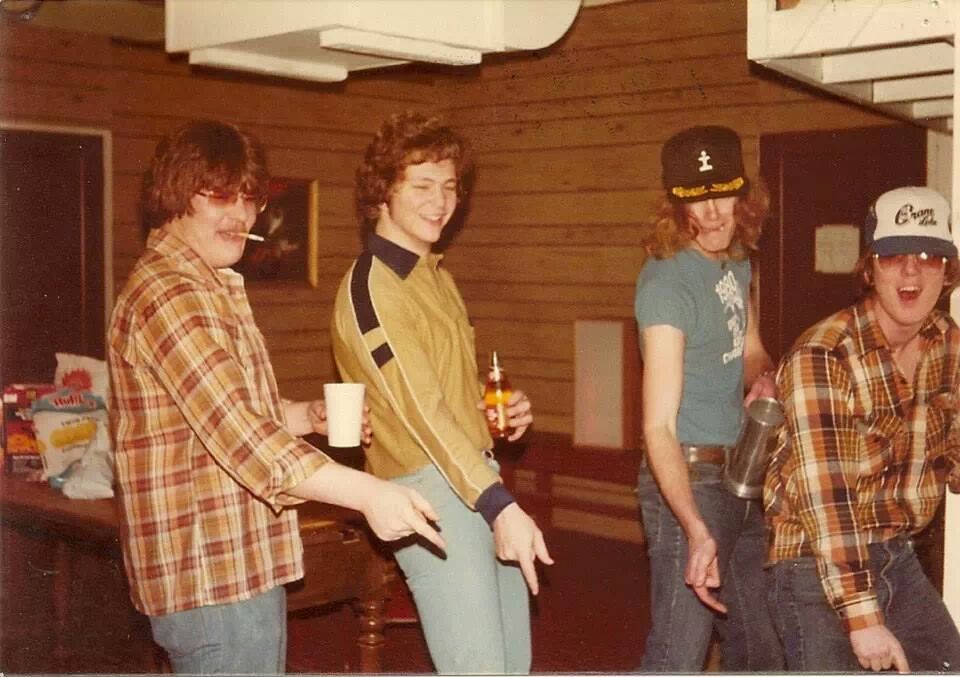
Picture if you will a raffish young fellow. A tall lad, long hair well past his shoulders, mirrored sunglasses, blue jeans with the knees worn through, worn long enough that the excess drags on the ground behind steel-toed engineer boots. A Buck knife in a sheath on the belt, and a well-worn black pocket t-shirt complete the picture of a young man who would not look at all out of place waiting in line for tickets to a Kiss concert.
That was me at 17. The embodiment of every father’s nightmares, standing there in size 11 black engineer boots.
Unfortunately for my friends and me, we were teenagers in an era when the typical father of a teenage daughter was well up to the challenge we posed. Take Mr. Walters.
Rhonda Walters was from a family with money, and Mr. Walters expected more of his daughter than a liaison with a longhaired woods bum. Still, Rhonda seemed to find me interesting; I certainly found her interesting. (Of course, being 17 and male, it’s more than likely I’d find something interesting about almost any female between the ages of 16 and 50.) Rhonda was cute, pert, leggy, had dark hair, dark eyes, and a tendency to dress in tantalizingly short cut-offs and tight T-shirts. Rhonda also showed every indication of interest in certain longhaired, raffish woods bum types. Namely, me.
The fly in the ointment was this: To get to take Rhonda out on a date, I had to be introduced to and interviewed by Rhonda’s father.
Mr. Walters had the kind of urban sophistication that I was totally unprepared to deal with. He also had a short fuse, a voice that sounded much like breaking boulders in the deepest recesses of a cave and fists the size of babies. What’s more, he had a deep, profound and abiding distrust and dislike for certain longhaired, raffish woods bum types. Namely, me. And that was only the beginning.
It all started one Friday afternoon, as I was leaning against my locker in the high school hallway, shooting the breeze with my hunting partner Dave.
“So, man, what’re we doing tonight?” Dave asked. “Want to go out to the river and catch some catfish? I’ve got a quart jar of chicken livers I’ve been leaving out in the sun all week.”
Tempting as that offer was, I had to demur. “Sorry, pal. Got a date.” I responded, with a knowing leer for emphasis. At that moment, Rhonda wiggled down the hallway, shooting me a big grin. “See you at seven!” She practically sang the words to me.
Dave gave me an incredulous look, once he tore his eyes away from the aft portion of Rhonda’s blue jeans. “Rhonda Walters? Oh, man, how did you ever get her to go out with you? She’s got class!”
The nerve! “You asshole! I’ve got class!”
“Slow class, maybe.” Dave said. “Low class, for sure! No way have you got enough class for Rhonda Walters. You taking her out in your car?”
“Figured on it.” I replied, uncertain now. I hadn’t thought of that one. My old Ford was somewhat on the shy side of respectable.

“Better try to borrow your old man’s pickup, bud. Rhonda’s used to nice stuff. That Galaxie of yours got rust holes you could drop a good-sized dog through, and you never did get the skunk smell outta the back seat. And you’d have to take all your fishing gear out of the back.”
Dave wasn’t a genius by any stretch, but he had me there. I suddenly remembered a can of catfish bait, my Grandpa’s own special recipe, which I had been fermenting on my dashboard for several days. And Dave wasn’t finished yet.
“Another thing, bud. You ever seen her Dad? Old man Walters’ got a lot of money, and he’s mean as the Devil hisself. He ain’t gonna like seeing someone like you showin’ up at the door.”
Crap. Dave was right. Much as I hated to admit it, Dave was right. My old Ford was out. On everything else, he had to be wrong. What father could resist someone of my wit and winning charm? I figured if I could solve the vehicle problem, I was in like Flint.
Funny how our illusions can be shattered so quickly.
Later that afternoon, at my folks’ place, my old ’66 Galaxie 500 “unexpectedly” suffered a breakdown – a breakdown facilitated by the simple expedient of yanking a couple of plug wires.
I burst into the house with the news. “DAD!” I shouted, trying to get a desperate edge in my voice. “The Galaxie is dead as a doornail, and I’ve got a date in two hours! You gotta let me use your truck!”
Dad’s pickup wasn’t the typical battered farm utility wagon common in Northeast Iowa in those days. A year earlier, Dad had found a newly rebuilt 1970 Chevy pickup, bright orange with a hand-made wooden bed, reworked ground-up by a particularly talented body shop. It was shiny, smooth, and clean, and Dad’s pride and joy. Dad reluctantly agreed. I imagine he was unwilling to stand in the way of true romance.
That’s how I came to be driving Dad’s bright orange pickup when I pulled into the Walters’ driveway that Friday evening. Visions of Rhonda in tight blue jeans assailed me; little did I know what was in store for me inside the front door of the expansive Walters residence.
A long driveway greeted me, followed by an equally long sidewalk leading to the massive, double door of white oak at the front of the Walters estate. A doorbell button loomed; this was surely the moment of truth.
I figured I was as ready as I’d ever be. I rang the bell. I wasn’t even remotely prepared for what happened next.
There were, in those days, certain conventions to be expected when a young man came calling on a family’s daughter. Those conventions involved the father meeting the young man at the door, upon which the intimidation and subtle threats began immediately. The Walters family broke with that tradition in a very significant manner.

Rhonda’s mother answered the door.
In that moment, I realized where Rhonda got her charm and good looks. Mrs. Walters was still on the sunny side of forty, tall, willowy, shining dark hair and a smile that doubtlessly brought many a man to his knees.
“Hello!” She breathed, beaming stunningly on me, bringing me metaphorically and immediately to my knees. “You must be here for our daughter! We’ve been expecting you. Come on in, Rhonda’s getting ready.”
At this tender age, I was still possessed of some instinctual knowledge that a teenage girl “getting ready” could take at least an Ice Age, I was prepared to wait; the late show of Animal House wasn’t for two hours yet anyway. I had planned for that, you see.
What happened next brought my euphoria crashing to earth. Mrs. Walters had ushered me through the living room, and her glowing smile turned on me again as she raised a perfectly groomed, graceful hand to indicate an open door. “If you want to wait in the study,” she purred, “You can chat with Rhonda’s Dad while you’re waiting.”
Well, I’d expected this, and had been through a few fairly uncomfortable interviews in living rooms, farm kitchens and barnyards before this. The normal process was a moment or two of more or less friendly intimidation, a required recitation of plans for the evening, of which we boys generally left out a few hoped-for details. I knew what to expect.
Or so I thought.
Mr. Walters was ensconced in his expansive study, behind a large oak desk. Reading glasses were perched on his nose; he was looking over some papers. Without looking up he motioned to a wooden chair drawn up to the desk. “Sit down.” He growled.
I sat uncomfortably for a few silent moments. Then Mr. Walters, finally, looked up at me.
It was amazing; at first, Mr. Walters had the usual expression, the usual frown of a loving father about to shrivel his daughter’s date. Then, as he took in my long hair, black t-shirt, the Buck knife at the belt of my badly worn jeans, his frown turned to a disgusted scowl. He dropped his reading glasses on the desk and leaned back in his chair.
“So,” he snarled at me, “You sure don’t look like much of a catch. Why in the world do you think you should be taking my daughter out?”
“Uh, well sir, I asked her, and she said yes?” I ventured.
Mr. Walters balled up a fist the size of a basketball and tapped it gently on the desktop. “She did, did she?” Suddenly he stood up and leaned over the desk.
“Listen, boy, you didn’t come to MY house to take my daughter out on a date. You came here to ask ME a great personal favor. That favor is taking my baby girl out in YOUR car, to God knows where, until God knows when, to do God knows what, and frankly you don’t look like someone I’d trust to find his way out of a shithouse. So, once again, why in the world do you think you should be taking my daughter out?” My pulse started to hammer in my temples.
“Sir,” I replied, having been taught from an earlier age how to address an older man not related to me, especially when asking a favor, “I may not look like much, but I’m a stand-up guy. I’ve got my Dad’s truck, and if I have it out late, he’ll kill me. I’m figuring I’ll take Rhonda to the Burger Five and to the movies, and we’ll be back by eleven-thirty, and you got my word on that.”
He regarded me with bloodshot eyes. My blood pressure was edging towards the redline.
“Eleven-thirty, eh?” He finally growled. “Well, boy, this is against my better judgment. You look pretty worthless, and I hear you spend most of your time bumming around in the woods with your delinquent buddies. The only reason I’m giving you a chance is because I know your Dad, and he’s as good a man as they come.”
Way to go, Dad! I was in!
The fist slammed down on the desk, rattling the windows and knocking several knick-knacks off the bookshelves behind me.
“But if you’re ONE MINUTE past eleven-thirty, or if I’ve got ONE REASON to think you’ve laid one finger on my girl, I’ll HAVE YOUR HIDE, boy, YOU UNDERSTAND THAT?”
“Uh, yes, sir…” I stammered.
He leaned closer, and snarled, “I mean it, boy, you better not be even a minute late, or so help me…”
At that moment Rhonda came in, a vision in a white silk blouse and tight black pants. “Oh, Daddy, are you giving him your mean act? Don’t worry about it, Daddy’s a big softie. He wouldn’t hurt a fly.”
I wasn’t convinced; if I’d been a fly, I would certainly have feared for my life. Mr. Walters continued to spike me into my chair with an angry glare.
“Well, go on. Eleven-thirty. Rhonda, eleven-thirty, not a minute later, you hear?” By this point, I had a fine sheen of sweat on my forehead, and at these words I bounded out of the chair. “Thanks, sir, we’ll be on time!” I assured Mr. Walters, with what I hoped was a calm, confident demeanor. Rhonda walked over to kiss her father on the cheek. I caught his sotto voce comment to her as she bent down:
“He’s worthless, Rhonda, I don’t know what you’re thinking.”
“Oh, Daddy, don’t worry.”
Mr. Walters wasn’t worried. I was worried. I was, in fact, feeling more like a fly every moment I spent in Mr. Walter’s presence.
We walked down the long front sidewalk, Rhonda happily describing something that had happened at school that afternoon; behind us, Rhonda’s Mom smiled and waved, and Mr. Walters glared, his eyes stabbing into my back like twin laser beams.
The rest of the evening went wonderfully. Dad’s pampered pickup purred like a kitten, and so did Rhonda; the local burger joint was up to standard, turning out piping-hot pizza burgers and fries; and we laughed all the way through Animal House. And, during the movie, Rhonda’s hand stole over and took hold of mine – and didn’t let go. Bliss! We even had time for half an hour of hanging out in the Safeway parking lot with the other kids. I even ended up leaning back against the bright orange side of the pickup, with Dave and the other guys glaring enviously at my arm draped comfortably around Rhonda’s shoulders as she leaned against me, laughing at all my horrible jokes.

There’s a moment in each teenage relationship where a line is crossed, a line between friends and boyfriend/girlfriend. Years later the two kids involved will still recall that moment, that first time that line is crossed; that happened on this night, right on Rhonda’s doorstep. Promptly at eleven-twenty-eight, I walked Rhonda up the long sidewalk to her parent’s house. She turned to me in the light from the bulb above the door.
“This was so much fun! I think we should do it again next week, don’t you?”
YOU BET! I thought in a loud internal shout, but instead suavely replied, “Yeah, I think we probably should.” I was slowly becoming aware of two glaring eyes peering through the front window curtains.
Rhonda leaned close, grabbing my shoulders and planting a warm kiss on my cheek. “I can’t wait. I’ll be looking forward to it all week.” The door suddenly popped open, and Mr. Walters stood imposingly framed in the light from the front room. He growled ominously, “Eleven-thirty.” Rhonda smiled sweetly at me as I stood, grinning like an ape, and then she turned and went inside. Her father shot me one last murderous look before he slammed the door.
As I walked away, one thought came to mind.
It was worth it.
Sadly, the relationship came to an end, as most teenage affairs do; in fact, the whole thing ended rather spectacularly, but that’s another story (and one I’ve already told here.) The lesson of Rhonda’s father wasn’t lost on me, though, and has served me well in later years, as the father of daughters of my own. In fact, it served me well the first time I faced a fidgeting, grungy young potential boyfriend in my own home.
I glared at the young man, as he stood there in his backwards-facing cap and baggy pants. Finally, after letting him stew a moment, I snarled at him:
“Listen, boy, you didn’t come to MY house to take my daughter out on a date. You came here to ask ME a great personal favor. That favor is taking my baby girl out in YOUR car, to God knows where, until God knows when, to do God knows what, and frankly you don’t look like someone I’d trust to find his way out of a shithouse. So, now, tell me why in the world you think you should be taking my daughter out?” I struggled to suppress a grin as the boy shriveled before my eyes.
Thanks, Mr. Walters. At long last, I owe you one.

California mother and serious writer Joanna Schroeder recently got her fifteen minutes of fame courtesy of breathless CNN reporter Sara Sidner. Why, exactly? You see, Ms. Schroeder is very, very concerned about the well-being of her teenage sons, as a good mother should be, and wanted to raise the alarm for other mothers of teenage boys to be aware of the insidious reach of right-wing propaganda. She valiantly warned her fellow naive do-gooders about the sinister extremist messaging being used to target youth, lest they be “drawn in by snarky memes.”
Words to watch for
Snowflake: used to mock people deemed too sensitive, especially about issues impacting minorities
SJW: stands for “social justice warrior,” a term used to mock civil rights activists
Sidner does offer the rote, perfunctory disclaimer that Schroeder “does not shun mainstream conservative thought,” yet curiously fails to provide any evidence of that, or any example of what constitutes mainstream conservative thought. This claim is completely and laughably undermined by the inclusion of the terms “snowflake,” and “SJW” in the sidebar list of forbidden speech.
Those terms have been part of conservative dialogue for years. National Review is the leading organ of that mainstream conservative thought which Schroeder claims to not shun, yet of which she is blissfully unaware. A quick web search of the National Review website yielded articles from early 2015 by James Lileks and Jennifer Kabbany with the contemporary usage of “snowflake” as a term for overly-sensitive, nominally adult humans. Rather prophetically, Kabbany’s piece is titled “The Death of College Humor.” The term “SJW” was first used by National Review in late 2015 in articles by George Leef and Katherine Timpf.
Those who use the phrase sarcastically, as most do, imply that the snowflakes’ sensibilities are impossibly delicate, and shatter when confronted with the horrible realities of the world, such as capitalism or people who are insufficiently troubled by the link between climate change and industrial lettuce production. –James Lileks
Four and a half years is forever ago in the age of internet and twenty-four hour news. Yet, somehow, concerned mother Schroeder and professional journalist Sidner both missed those and all the subsequent references in National Review and other conservative media. And all the serious, informed, and rational discussion about the chilling effect of speech codes, and the erosion of first amendment rights.
Words to watch for
Beta… Cuck…
Femenoid/femoid…
Redpilled…
Blood and Soil…
14 or 88…
((( )))…
That’s quite an impressive list that they have assembled, and some of them are actual white supremacist dogwhistles: “Blood and Soil;” 14; 88; and the “echo,” those three nested parentheses denoting the thing contained within is (((Jewish))). But it should be noted that the echo has also been coopted by Jews and is often used ironically. Schroeder is right to be concerned about teenagers using those phrases. But including the phrases “SJW,” “snowflake,” and “triggered” in that laundry list only fans the flames of hysteria and undermines Schroeder’s already dubious credibility.
The first word I heard was “triggered,” and that’s a tough one. You may hear this from your conservative uncle, and you may also hear this from a kid who’s getting a lot of alt-right messaging online, and that’s everyone’s too sensitive today. -Schroeder, CNN interview
About the term “triggering” – Schroeder seems unaware that the term was originally a legit feminist term, explained to us back in June, 2015, by Gillian Brown on that unimpeachably feminist website Everyday Feminism. That the term has been so thoroughly co-opted by relentless parody that she is only familiar with its ironic usage must be as disappointing to Schroeder as having her lack of familiarity with feminist rhetoric exposed.

Schroeder does grudgingly acknowledge during her CNN interview that not all those “words to watch for” are racist, but some are “gateways.” The slippery slope argument, hinted at. Just like Marijuana is a “gateway drug” and every person who takes a puff from a “reefer” will eventually end up a heroin addict. And then there is the slippery conflation of mere mockery with inevitable racism and homophobia, since according to the article the term Snowflake is used to mock people “especially [emphasis added] about issues impacting minorities.” SJW, we are informed, “is a term used to mock civil rights activists.”
These terms are being used to mock and push back against the speech police, wannabe censors and their enablers such as Schroeder. The whole point of “triggering,” in the original usage anyway, is the conflation of speech with actual physical violence. This is unacceptable to those of use in the Liberty community, and moral scolds such as Schroeder must always be seen as enemies of free speech.
People arguing love to throw around the expression “common sense” but due to the many differences of opinion we can safely say “There is nothing more uncommon than common sense.” Most people tend to think that their opinion is common sense – because how could it not be. It is a mostly meaningless term that sounds good superficially. We can very well throw in some meaningless quotes about if from a quick internet search like Common sense is nothing more than a deposit of prejudices laid down by the mind before you reach eighteen, which is probably not an actual quotation anyway, but what would be the point?
Just as meaningless and ill-defined as common sense, and equally chucked about in debate, is the notion of common good, which, again, superficially sounds nice. I mean what kind of antisocial monster is against the common good, the good of all? Well me apparently. Hitler and Stalin and Pol Pot on the other hand were all for the common good…
 Never forget the amount of totalitarianism, war, genocide, eugenics and other unpleasant bits of business that were committed in the name of “The Common Good” TM, because, being so unclear but pleasant sounding, it was always used by the ruthless to manipulate the masses into action. Just because your idea of common good seems, to you at least, shiny and pink and cool and innocent and well-meaning, it does not mean it is. And you should not try to impose your particular opinion as common, especially not at the point of a gun.
One cannot objectively and universally define the common good, even vaguely so. As such, it is a term that superficially sounds good, while its meaning can be manipulated in a probably myriad of ways in the interest of whoever wants a bit of the old power. I find few concepts as pernicious and dangerous as the common good, due to the very fact that is sound “right” to so many, and a cursory look at history will find many atrocities justified by it. This is especially true when actions are undertaken now for some common good which will arrive at an unspecified date in the future. Such a vague future achievement is often called upon to excuse use of force today.
Each human being is subjective. Each has a subjective view of his own good and of the good of society. There is quite rarely a wide consensus on this. How could there be? Some believe you can extrapolate a common good from millions of different subjective views on good, but then again some are often assholes.
Some of you may stop and wonder at this moment. Pie, you will say, you support ideas of objective morality, although that is also subjective, just like good. I do, but I see a difference between the two. My objective morality, what should be the basis of the law, is just a subset of the entire moral/ethics conundrum and is based on what seems to me a clear fact – that human beings are individual, independent beings. When these beings interact, conflict arises and it needs a way to be resolved, and the actual rules of conflict resolution should be as objective as possible. Because they are not about one person, they are about all people. And for me, something along the lines of the NAP are as good as it gets. This is why I am a libertarian.
The concept of common good is different. It has more complex moral judgements inside it that go beyond conflict resolution. It has specific goal of outcomes of multiple aspects of life. It imagines a certain world in which people behave a certain way, have access to a certain lifestyle, and do certain things. But when you look at it a little deeper, though you may be inclined not to as it takes time and there’s something rather good on TV – shows are getting crazy good lately, there is no clear notion of what common good might be, and even if you knew, it would be hard to predict if some policy or other would advance this „good”.
The so-called arrogance of the so-called elites, one of the things populist ideologies often exploit, is that they know better what is good for everybody, which is, obviously, horseshit. Maybe some don’t know what is good for them, whatever this may mean, but it’s their right to decide. One of the most insulting things politicians say of people who do not vote for them is that they vote against own interests, as if, for example, when you are not rich, it is always your interest to get hand-outs from others. Who knows what is best? I sure as hell don’t, probably not for me and certainly not for others, and I like to think I am above average in intelligence and information. How does a bureaucrat – who is most likely not above average intelligence – know better? Because, make no mistake, this is what the common good most often gets down to, government imposed things. Furthermore how can someone be considered incapable of choosing what is good for themselves, but at the same time perfectly capable of selecting the best politician -which also advocates for some definition of good or other?
This problem with “good” has been amply demonstrated through history, form heretics persecuted by religion, dissidents by politics; commitment or lobotomy in case of many psychological problems. Women were sterilized for the good of themselves or society by moralizing judges in the United States and elsewhere, women and children separated from families and stuck in orphanages and workhouses. People seem to think society evolved and this can no longer happen; or that if they are in charge, this would not happen; and I am supposed to take their word for it, or something. To be honest, I’d rather not take the chance. Remember, just because you want the best doesn’t mean you know what that is. Empathy is good to a point, but the road to hell is paved with good intentions. You may want to help but make things worse.
From a liberty standpoint, being a serf to the common good, to society, rather than to an individual, is still being a serf. That is what collectivist and people talking about the common good refuse to understand about libertarianism. Self-ownership is, for all intents and purposes, a much more objective measure than common good. Because self-ownership has clear boundaries and a clear definition- own your body as long as you respect the fact that others own theirs.
“I hold it to be the inalienable right of anybody to go to hell in his own way.” Robert Frost
Note: A preview from my upcoming autobiography, Life’s Too Short to Smoke Cheap Cigars (Or to Drink Cheap Whiskey.)
Young boys and fishing seem to go together like peanut butter and jelly. The problem is that fishing also goes along with fishhooks, like bologna and cheese. Worse still, fishhooks and perforated skin also seem to go together, like bulls and china shops.
My twelfth summer was the first in which I spent a lot of time out on the trout streams by myself, or with companions nearer my own age; always before that I had the benefit of a wise and beneficent father, who kept me from getting tangled up too badly in barbed, pointy objects of recurved steel. This summer, however, my main fishing companion became the thirteen-year old local miscreant and walking disaster, a fellow named Jon. Jon had recently attained the magic age of thirteen, and now possessed the assured wisdom of being, officially, a Teenager. His wisdom did not extend to extracting fishhooks, or even to preventing fishhooks from being emplaced in his (or my) anatomy.
Problem was that Jon was a bit clumsy; turning thirteen had come hand in hand with a growth spurt of vast proportions. Seemingly overnight he shot from four feet eleven to five feet ten, with hands and feet expanding to the size of canoe paddles. This was a recipe for awkwardness unlike anything we’d seen before.
A bright June morning found us making a three-mile hike through the hills to a favored spot on Bear Creek a mile short of the Upper Iowa River; smallmouth bass found their way up the large, slow creek from time to time, and fat trout lounged in the deep pools. Several of the large pools were favored fishing spots; we set up on the bank of one large, deep, still stretch, across from a limestone cliff face alive with chittering cliff swallows. Trout were rising in the early sunshine, and all was well with our world.
“I know just what to use,” Jon assured me, tying a #2 spinner to his line. This spinner had a triple hook on the tail and another right behind the spinner blade; Jon promptly got one hook in his thumb, and another in his index finger.
“Ow! Hey, help me out here!”
Jon wasn’t the sort to suffer in silence. A series of yelps, barks and shouts accompanied my efforts to extract the spinner from Jon’s flesh. As the positioning of the hook made it necessary to lean over Jon’s hand, all of the various epithets were directed into my left ear at the range of about twelve inches. What’s worse, Jon had a set of lungs that enabled people to hear him a good mile downwind; I was subjected to the approximate noise level of a jet airliner on takeoff.
“HEY!”
“OOOOWWW!!!”
“WATCH THAT!”
“WHAT ARE YOU DOING!?!?”
“AAAYYOOOOOOO!!!”
When I finally started to actually try to get the hooks out, things got worse.

The yelping, barking and shouting was heard at incredible distances. The caretaker at the Girl Scout camp about a mile off later reported hearing horrible sounds, as though someone was skinning a pack of wildcats, live. Old Amos Shepherd was tending a sick heifer when the caterwauling reached his farm three-quarters of a mile upstream. His dairy herd of Jerseys stampeded, no doubt thinking a pack of freshly skinned wildcats was closing in; the only way Amos saw to avoid being trampled was to grab a passing cow’s tail and hang on for dear life. Unfortunately for Amos, the Jerseys’ could run much faster than his 72-year old frame was equipped to keep up with; this resulted in his being practically airborne for the duration of the stampede. Folks living on the lower Bear Creek road were treated to the sight of a herd of Jerseys charging flat-out down the road, with a skinny old man joining in on the stampede, clinging on to one cow’s tail for dear life and running in incredible ten and twelve foot bounds.
After about fifteen seconds, during which we were unknowingly surrounded by panic and chaos, I finally worked the hooks loose and handed Jon back his spinner.
“Try to be a little more careful!” I admonished him. Jon rubbed his bleeding hand, wincing. “Don’t worry, I’ll get it” he assured me.
To his credit, Jon managed to get this spinner tied on without further incident. Stepping to the bank overlooking the pool, he let out a little line, drew his old spinning rod back, flicked it forward with a practiced flip of the wrist – and sunk the hook in the back of his head.
“AAAYYOWWP!”
Jon wasn’t the only kid to have difficulties wish needle-sharp fishhooks. We all faced the necessity of extracting a barb from one portion of our anatomies or another, sooner or later. And the worst of all fishhook injuries were, of course, not self-inflicted. No, for when you feel the hook sink into your own flesh, you can stop its progress; when someone else sinks it into your cringing soft tissue, you have no control over their mistaken belief that they’ve just tied into a four-pound trout.
And that brings me to Wimpy Neidert.
Every school seems to have a kid like Wimpy. Our version was, at twelve years of age, roughly five foot three, and just about as wide as he was tall. Topping the roly-poly frame was a pudgy, freckled, amiable face with Coke-bottle glasses, topped by a tangle of blistering red hair. Wimpy wasn’t often found along on our outdoor excursions; couches and television were more his forte, usually accompanied by a large bag of cheese puffs and a dozen or so cans of pop. In fact, Wimpy had difficulty walking farther than the distance from his parent’s house in town to the bus stop; he arrived at the stop red-faced and wheezing.
In other words, Wimpy wasn’t material for the Presidential Physical Fitness Program. Needless to say, Jon and I were a bit surprised to find Wimpy accompanying us on our annual trip to the Upper Iowa River for the early summer sucker run. Wimpy would have preferred to stay home, in fact, and eat cheese puffs while watching television; but a trick of history intervened.
Wimpy’s father and Jon’s dad were best friends. They had gone to school together, joined the Army together, went to Vietnam together, and were to that day frequently seen together imbibing cold beers in various local watering holes. Wimpy’s father wasn’t pleased with his son’s rotund frame and slothful outlook; as we discovered later to our chagrin, Jon’s Dad volunteered our services to take Wimpy out fishing, “to get him out in the fresh air.” Both Dads agreed it would do Wimpy good to tag along with us; we weren’t so sure. The sucker run was beginning, though; we had a nighttime outing planned to go snag suckers; it was too late to back out now.
And so it came to pass that late one Friday evening Jon and I were pushing our old bikes along the lower Bear Creek road towards the Upper Iowa, ambling along in the growing darkness as Wimpy puffed along behind us, astride his ancient coaster bike, accompanied by a host of groaning, creaking and squeaking sounds. Wimpy’s bike was making some noise as well.
It was close to ten o’clock by the time we arrived at the river. Jon and I were disgusted at the delay, but we waited patiently as Wimpy, gasping, parked his bike, arranged his fishing gear, and finally followed us down a fifty-yard trail, over a wooden style spanning a barbed-wire fence, and across a cow pasture to the river.
The surface of the river was as smooth as glass in the moonlight, the mirror-like surface broken here and there with the ripples caused by large white suckers cruising just below the surface.
The sucker run was an annual tradition. Every year, in spring and early summer, white suckers ascended smaller streams from the Mississippi to spawn. Living in the rich, silty Mississippi enabled some of the suckers to grow to prodigious size; ten-pounders were routine, twenty-pounders not unheard of. Since the single-minded fish didn’t feed much while spawning, we pursued them with snagging gear, heavy bait-casting rods with twenty-pound line, tipped with huge treble hooks cast inside lead weights. The trick was to cast past the ripples in the river, and bring in the hook in jerks, bouncing it along the bottom, hopefully to snag in the sides of a large sucker.
This, of course, was a recipe for disaster with Wimpy along.
We split up there on the bank of the river. Wimpy, still red-faced and wheezy, stayed put; I went upstream a hundred yards or so, and Jon opted to try his chances downstream an equal distance. Silently, in the darkness, we made our way to our fishing spots.
The night was cool, the stars twinkled overhead in the velvet-black sky, from the hill above the river a hoot owl called once, twice, and then dropped down the hillside to whisshhh by ten feet over my head. Magical evening. I cast and yanked, cast and yanked, and on my third try hooked into a reasonable sucker; in a few moments I had the six-pound fish flopping on the bank.

Downstream, Jon was having less luck. Repeated efforts yielded not one fish; at his chosen spot the water was a bit deeper, and the bottom-hugging fish left no revealing ripples on the surface. Not one to be defeated by a primordial fish with the brain the size of a chick-pea, Jon redoubled his efforts, yanking the hook vigorously along the bottom. A small crowd of cows started to gather behind him on the bank, their curiosity piqued by the spectacle.
In between, unknown to either Jon or me, Wimpy was finally beginning to enjoy the evening. His tackle box contained no fishing gear. Wimpy settled himself on the steep dirt bank, feet dangling over the water, and extracted from his box a bag of cheese puffs, a bottle of pop, a flashlight, and the latest Captain America. He had just settled in for a nice read when the bank gave way, landing him with a loud splash in the river.
Upstream, I heard the splash, and thought little of it. Cattle were grazing up and downstream from us; loud splashes are not uncommon when cattle are near water. Downstream, Jon heard the splash, thought, “beaver,” and noted the location in order to return with a few traps the coming fall. Wimpy landed in about three feet of water and came up spluttering. Then, with a panicked start, he noticed his cheese puffs bag floating away downstream on the current. Grunting his annoyance, Wimpy splashed away in pursuit.
As it would happen, Jon chose that moment to try another spot, a few yards upstream at the top of a steep bank where the river undercut the shore. The cows followed; cows rarely get any sort of entertainment, and so are easily amused, even at the sight of a boy trying to snag a sucker.
They were about to get the show of their lives.
Jon, on the high bank, couldn’t see the river well in the darkness. He hadn’t been able to see any telltale ripples before anyway, so nothing lost; he began anew his routine of casting and yanking, casting and yanking. A splashing sound intruded on his senses; he wrote it off as a cow. He wasn’t far off in that assessment.
Wimpy had pursued his cheese puffs bag downstream, finally catching up to it in a swirl of water where the river undercut a high bank. Reaching out a pudgy hand, he snagged the fugitive snack. An odd sensation then; something slowly slid up his left leg, feeling oddly like… like… twenty-pound fish line.
On the bank, Jon was bringing in his triple hook again, rod tip bouncing up and down in vigorous, slightly annoyed jerks.
Wimpy felt the line riding up higher, now past the knee. The full implications hadn’t sunk in yet; he froze in indecision.
Jon felt a slight resistance on his line. He lowered the rod tip, gave a slight yank, felt the resistance again.
Wimpy felt the line now past the thigh; he still hadn’t quite figured out what was going on. He was about to find out.
Jon grinned to himself in the darkness; visions of ten-pound suckers filled his head. He lowered the rod tip, took in a little slack with the reel, braced his thumb tight against the spool, and gave,
one …
mighty…
YANK!

The huge, lead-weighted triple hook leaped clear of the bottom of the river, gaining speed, propelled by the springy tip of Jon’s fishing rod, sped on its way by Jon’s young, strong arms, his muscles hardened by a youth spent tossing hay bales and wrestling dairy cattle. The line sang as it ripped clear of the water; the hook, still gaining speed, rose, sped towards its unintended target, to sink itself not in a ten-pound white sucker, but directly into the crotch of Wimpy’s cut-off painter’s pants.
Jon, feeling the hook hit something solid yet slightly yielding, leaned his weight into the rod to set the hook deep. And set the hook he did; two prongs penetrated deep indeed, ripping through denim and cotton to find the most sensitive portion of Wimpy’s anatomy, while the third ripped through to sink itself in the bottom end of Wimpy’s zipper, and to anchor itself there as though set in concrete.
No breaching whale ever rose from the water more impressively than Wimpy broaching from the Upper Iowa that night, propelled by the agony of the two needle-sharp prongs impaling the Neidert family legacy. On the bank above, Jon recoiled in horror, faced with what was either a red-haired, screeching whale broaching unaccountably from the shallow river, or a red-tipped missile fired from an unseen enemy submarine somehow concealed in the river. Jon engaged reverse gear and hit the gas; he proceeded exactly three feet before colliding with a curious Holstein.
The cow reacted as cows do, butting Jon in the small of the back with some force, sending him stumbling forward, over the bank, into the river; he went down the bank as Wimpy went up. Somehow, he had the presence of mind to hang onto his fishing rod. He landed in the river with a loud splash and surfaced just in time to be yanked back up the dirt bank face-first.
Wimpy had cleared the high bank in one phenomenal surge, and set off across the pasture, wailing in agony, trying to flee the impaling points. Before Jon could react, the line went taut, yanking him over the bank and dragging him through a thin line of trees into the open pasture.
Upstream, I heard the initial scream, followed by a series of splashes; I reeled my hook in and made for the open pasture myself. There I was greeted by an incredible sight.
Wimpy was charging across the pasture, screeching like a banshee; about twenty feet behind him was Jon, skidding face down through the pasture, hands clenched on his fishing rod. Wimpy hit the fence at the end of the pasture, rebounded with an audible TWANG from the barbed wire, and reversed course. Jon was carried along, airborne briefly in a half-loop as Wimpy set off for the opposite end of the pasture. Fascinated, the cows clumped along behind. I winced as I saw Jon dragged face down through a series of fresh cowpats. I had to do something.
“JON!” I shouted. “STOP HIM!”
Summoning a terrible strength from somewhere deep within, Jon managed to flip himself over, get his feet under him, and haul back on the rod. Wimpy fought like the lunker he was, but in the end a final yank from Jon stopped him, cringing and sobbing, in his tracks. Wimpy dropped like a poleaxed steer.
I approached cautiously. Wimpy was on the ground, moaning, both hands clasped over his nether regions. Jon was muttering words that would have earned him a clout from his mother as he knelt next to Wimpy; at first I thought he was examining Wimpy in concern for his injuries, but as I drew closer I saw that Jon was using Wimpy’s shirttail to clean cowpat off his face.
“Think he’ll be OK?” I asked Jon.
“If he has any kids, they’ll be stupid.” Jon replied.
“Big surprise there, huh?” I grinned at Jon. He flicked a bit off cowpat off his ear. The Holsteins gathered around, their eyes wide. They hadn’t had this much fun in years.
The journey home was less than pleasant. In the lead, Wimpy walked, or rather waddled, with shrieks of agony at regular intervals; neither Jon nor I professed the expertise to perform the necessary extraction. Jon followed, answering every shriek with a shouted imprecation. I brought up the rear, a good twenty yards back, the better to avoid Jon’s rather strong barnyard odor.
It took a long drive to town to the local Emergency Room to finally extract the hook and thus ensure the continuity of the Neidert line, but Jon and I weren’t there to see it. Breaking free as soon as we delivered Wimpy to his father at Jon’s house, we headed off to an upper stretch of Waterloo Creek near the Hooper farm for a bit of nice relaxing midnight trout fishing.
There, on the moonlit creek bank, all was peaceful. Jon looked over at me, grinned, and drew his rod back to cast. He flicked the rod tip forward briskly, lodging his spinner’s hook firmly in his left ear.
“OWWWW!!” Jon yelped. “Hey! Help me out here!”
I was already half-way home.
Hello Glibs, it’s been awhile, but your old Master of Scaremonies the Cryptkeeper is here to provide my annual superfuntimestory of the bestest holiday on my calendar outside of Halloween – Texas Frightmare Weekend! This article is *at least* five times as long as it needs to be, because I know you’re reading this at work and I’m trying to give you an excuse to not get back to that for an extra 10 minutes. You’re welcome. Do keep reading, though – there’s lots of cursing, lame jokes, celebrity stories, and a 40k reference for my fellow hyper-nerds. Plus I had fun last year with our game of, “There are so many links, I wonder which one of them randomly goes to a weird porn site?” that I decided to play again this year. Happy hunting!
To begin with, this shit has gotten completely out of hand. They sold out of Saturday single day tickets (est. attendance this year of 35,000), and the fucking hotel rooms sold out at the main venue within two hours of going on sale. We were able to snag a room at the last second because they caught some dude reserving 20 rooms and trying to re-lease them out at a markup. Thankfully the dumbass advertised them on the Facebook meetup page for the event, so the organizer cancelled his block reservation & they opened the rooms back up. My wife received an automatic update and we jumped on one. True story: we got the last one, and it wound up being a handicapped room. It was YUUUGE. Like twice the size of a regular room. What’s a fucking cripple need with all that space? Don’t they need less space? It’s not like they’re prancing about or have friends that they can invite up or anything else requiring room. Even the shower was much larger. Don’t just take my word for it, here’s a photo. It’s so big you don’t even get the edge of the bed in frame.

Now most, if not all of you, are probably mentally saying to me, “Gojira, we know that Texas Frightmare Weekend is always held on the first weekend of May. So why come this year, Dallas Fan Expo, the larger (50k+ attendance) pop culture, sci-fi, and comic book convention that used to be called Dallas Comic Con, moved its date to directly compete? Aren’t they targeting the same people?” Well astute reader, indeed that was the plan – of the FanExpo organizer. Here’s a little inside baseball for you, as was related to me by a buddy of mine involved in the whole sordid affair: FanExpo wanted to be the only game in town & approached the Texas Frightmare organizer, Loyd Cryer, about buying him out. He told them to fuck off and die in a fire (paraphrasing mine -ed). In what is possibly an act of pure spite, which is just my conjecture and in no way libelous, FanExpo moved their event to the same weekend. I think their big-shot corporate overlords thought that the nerdy public is one undifferentiated mass, and that being the larger event with more headline guests, they would draw interest and put a little bit of a beat-down on ol’ Texas Frightmare.
Turns out the Venn Diagram of people who are comic book and pop culture nerds, and people who are hardcore horror fans, does have overlap, but not nearly to the degree that the FanExpo jerks had hoped. I do fear, though, that this blatant act of separatism has resulted in some unfortunate battlelines being drawn and our two populations being given reason to resent and distrust one another. Thanks alot, FanExpo! If I ever see Jonathan Frakes on the street, I’ll fuckin’ kill him and leave a human turd on his forehead and a little note written on a cocktail napkin that says, “Defend Horror” written in his blood and pinned to his body with a little plastic sword along with some photos of those abused dogs from the SPCA commercials.
Interestingly, the above paragraph wasn’t just one long setup to a largely unfunny joke about murdering Will Riker. There really is a distinct difference between the two groups, and if you swing both ways, as I do [insert “Oh My!” George Takei gif], you notice it when surrounded entirely by one group or the other. By and large the horror crowd, where I spend more time, is more…enthusiastic…about ordering their lifestyle around their interests. They don’t just dye their hair, they have a shit-load of tats and piercings, dress somewhat raggedly, curse a lot more, drink a lot more, and are generally more “blue collar” types. They also skew distinctly more conservative. There are a lot more pro-2A shirts, and shirts making fun of liberals, at horror events, than shirts or patches with leftist slogans. Hell, I saw a couple of Confederate flag patches on vests this weekend, and nobody gave them a second glance. For all you aspies rushing to the comments to correct me that it’s actually the battle flag of Northern Virginia or whatever the hell, save yourselves the spittle-flecked outrage. When I say, “Confederate flag”, you damn well know what I’m talking about, so just simmer down and roll with it. If you promise not to be a ludicrous pendant, I’ll not purposefully replace the word “magazine” with “clip” in any future firearms articles I may write.
The thing is, I’m not sure why this is. This is a group of people who are obviously comfortable with, shall we say, non-traditional mores in terms of public behavior, modes of dress, etc., and yet they actually skew conservative. The sci-fi/comic crowd is overwhelmingly leftist, but they also are overwhelmingly just fat guys able to take off their blue TOS shirts at the end of the day and blend back into “regular” society. I can’t help but wonder why this is. I’m sure Ken Shultz has a theory that he’d like to expound on (just ribbing you in good nature, Ken). Joe Bob Briggs mentioned it during his panel, as well, so it’s not just me making shit up…this time.
So not as many photos this year, for which I apologize. If you haven’t read my past entries on this event, be warned: this is literally the only time of the year I take photos, so I cannot be assed to get good at it because I just don’t care. Anyway, even five years ago, when you purchased an autograph from a guest, it came with a selfie. Now every one of these greedy fucks charges an extra $10, except for a few who are cool.

I will note that they didn’t have glowsticks available at the after party again this year. I think our little art project that I showed you all photos of in the 2017 entry put the kibosh on that for everybody. At least I hope that’s why there weren’t any. I’d love to believe that my one merry band of assholes managed to ruin something for tens of thousands of people. It’d put me right up there with John Dillinger.
Great guests though, and great panels. We had Jeffrey Combs, who given his wonderful Star Trek roles would have been just as at home at FanExpo, but he’s also done great work in horror. I’m a huge Jeffrey Combs fanboy, so this was a special treat for me. We had Meat Loaf, who fell off the fucking stage at his panel and broke his collarbone. Looks great for his age, though, really. Jenna Jameson, on the other hand, does not. Her ass looked like a fucking tray table. I wanted to set my drink on it, then smack her hard in the face and see if the drink fell off. It doesn’t show up in google image search, oddly enough. Trust me, I wanted to add a picture. Traci Lords has aged a bit better, and Cassandra Peterson (better known as Elvira) I’d still drill like an out of control oil rig. The big guns were Sam Raimi and Bruce Campbell, along with Sam’s brother Ted Raimi. Robert Englund, Lance Henrickson, Tom Savini, and various other regular guests were in the house, as well as…Lee Majors! Scott Ian and Charlie Benante of Anthrax were also present, and the corpse of Tim Curry. Along with many other assorted peoples who had roles in some sequels or other.
Seriously though, I just felt bad for Tim Curry. To get “his” autograph, you had to give his handlers the merch, then they’d mail it back to you later, signed. Yeah, sure pal, I totally believe that’s a legit signature that you can’t do in front of me because reasons. They wheeled him around for his photo ops, and he was just sitting there all stroked out. I’m poking fun, but really, I feel for the guy. If you saw him, you’d swear they were only keeping him alive in a high-tech chair out of fear that when he dies the psychic beacon that emanates from him that provides the only known fixed point by which to navigate the warp will blink out and the galaxy will be rent asunder by Chaos. He looked that bad. Plus I saw them sacrifice a few thousand psykers to get him through the second day. They did it in Convention Hall B.
The year started off with a screening of Re-Animator on Thursday night, with Jeffrey Combs, Bruce Abbot, and Barbara Crampton (who, like Elvira, is still super do-able despite being old) in attendance to do a panel. They also had Kathleen Kinmont from Bride of Re-Animator, but really who cares about her. She does reappear later in our narrative in a humorous role, so that’s something I suppose. In addition to their panel at the screening, they had a panel during the main convention.

The panel was great in that, rather than just tell stories, almost the whole thing focused on the craft of filmmaking, particularly low-budget film making in the 80s. Without going into great detail, they spoke about the long days on low-budget shoots (14-18 hrs per day, as principal photography had to be completed in 18 days), and about how big name actors can get away with being aloof, but working in the nooks and crannies, the only way to get a good performance is for the actors to be completely emotionally available to each other in order to create instant chemistry. They mentioned that, as they all were coming from theater backgrounds, they got together at Barbara’s apartment for a few weeks beforehand to rehearse, which is a big no-no if SAG finds out about it because it constitutes working without pay. Jeffrey mentioned that sometimes having fewer resources forces the director and editor to make tighter, better choices, because when given infinite time and money, some people go overboard and don’t know when enough is enough. He also mentioned that, back when you had to actually film on, you know, film, low-budget productions would purchase things called “ends”. These were the chopped off leftovers of film reels after standard budget films were done using the reels. They’d cut off what was left and sell it cheap. So it was a great way to accumulate film on a tight budget, but you’d only be able to do like 3 minutes on each one and it was annoying to have to work through. As for the audience questions, it’s bizarrely awkward to ask a question to a woman whose tits & bush you just saw, along with her about to get eaten out by a revenant holding its own severed head between her legs (if you haven’t seen Re-Animator, stop what you’re doing and watch it now. It’s better than any Marvel film by x1000).
The Lee Majors Q&A was a bit depressing. Due to the way television contracts were structured back then, he never saw a dime from any Steve Austin merchandise, and indeed claims to have had no idea so much of it was ever produced until he started doing conventions. He spoke about the old snobbery that shut out television stars from film productions, and told a funny anecdote about how he loved Bill Shatner when he worked with him, but that Shat had a tendency to, “die to the balcony”. He explained that it’s theater slang for wildly over-acting. He also talked about how Andre the Giant, when playing sasquatch on the show, pissed in the suit all the time, which was super gross, but was also the nicest guy in person you could ever hope to meet, which was super great.
Joe Bob Briggs did a good panel, and spoke about the state of trash cinema and its relative place in modern film production vs. where it was when he got started way back when. He and I chatted a bit about small towns in west Texas. He didn’t think I’d know a few of the places where he’d lived, but I went to college in Lubbock, and so we shared some fond memories of a shitty place that is populated entirely by people who fail out of that college. Another really nice guy. Honestly, the only person who has ever been a dick to us after all these years that we’ve been going was Billy Zane. I still think that, much like Georgia against Texas this past year, Alabama against Oklahoma in that Sugar Bowl a few years back, or Florida against Louisville a few years before that, he just didn’t want to be there and therefore that magically excuses shitty performances.
We bought a few stupid things, like a full-size xenomorph skull

because I’m buddies with that vendor and he gave it to me for wholesale. There were some good costumes, but frankly the best ones were people who come every year, and I already took pictures of them and showed you all over the last couple of years. So below are some pics from this year, but not nearly as many. Karaoke on Sat. night was awful, like always, though everybody was in a good mood. Kathleen Kinmont showed up to rock out, but was wasted and happened to share an elevator with us back up to our floor. She was drunk enough that she didn’t stop singing or rocking out once off the stage – it went for the whole elevator ride. There were no infamous David Arquette episodes, however (fun fact: right before he got on stage that night, he bought me a beer at the bar. I didn’t know until later that he was supposed to have been on the wagon. Whoops). I’m also now turning it into an annual tradition to bum a smoke off of Lance Henrikson. Nice guy, but seriously, American Spirits? C’mon, Lance, I wanna see some fancy Hollywood cigarettes.
The year ended with the Sam & Ted Raimi with Bruce Campbell panel. It was really a treat. They’ve known each other since middle school, and told great stories about each other growing up. Sam busted Bruce’s chops constantly, and they told stories about all the things they did as they went around Detroit trying to scrounge up money to make Evil Dead. Sam Raimi has an annoyingly nasally voice, FYI. Anyway the highlight of the panel was, when half the room is raising their hand to ask a question, a particular person who was picked stood up and asked them their opinion on Mac and Me, a shitty 1988 E.T. knockoff. Now keep in mind, none of the panelists had a blessed thing to do with that abomination of a movie. Nothing. It was the non-sequitur from hell. They were so confused they didn’t even know what he was asking – Ted kept thinking he was asking about “mac and cheese”. The moderator even face-palmed and said under his breath but still audibly into the mike, “You get a chance to ask these guys a question and you ask about fucking Mac and Me?” and you could hear the exasperation in his voice. I mean it was bizarre. The questioner was booed down, and after the panel ended and I was waiting outside for my wife to use the restroom, Ted, Sam, and Bruce came out through that side hallway. They were still talking about that, making fun of the guy and wondering what the fuck he was talking about. Seriously, this is like getting to go back in time and pose a question to George Washington, and all you can come up with is asking him if he likes the new Prius body style.
So that was this years (mis)adventure. I was quasi-drunk for most of it and blew $1,500 in three days, but fuck it, that’s why I fight for $15. I look forward to updating you all on the event’s 15th iteration next year, if you don’t see me in the news for bombing FanExpo beforehand.


I have zero guilt about pointing out how awful compulsory public education is. Now, when I say awful, I don’t just mean bad like everyone else who’s lamenting the woes of publicly funded education in the aftermath of U.S. test scores being released; I mean it as a matter of morals. Forced state education isn’t just another item in a mind-numbingly long list of overfunded, underdelivering government institutions that swallow vast sums of taxpayer dollars while completely ignoring its original charter… like Congress or the Supreme Court, for example. No, compulsory public education is worse because it is an indoctrination center for our children’s minds, an obedience machine, that feeds and fuels the rest of the items on the above list of bad government, irrespective of whether it’s my list, or your list, or your neighbor’s list.
If anyone truly wants to fix what’s ailing America and make it a livable bastion of freedom into the future, it won’t matter what other arguments you make in the public square or what legislation We, the People, get our bought-and-paid-for politicians to finally push through to tinker with some other broken institution. None of that will matter one whit; it will be only a temporary band-aid on the sucking chest wound of the body politic until we destroy compulsory public education.
I know what you’re thinking: Don’t sugarcoat it, Dale; tell us what you really think.
I love learning; always have. I consider myself a perpetual student and tell friends and loved ones that the day I stop learning will be the day you all are kicking dirt over me. But that love of learning is exactly why I hate public education as it currently is constituted. When I graduated from Boston University in 1991, I told everyone I knew: “I swear to God I will never go to school again. I’m done.” Sixteen years of the U.S. education system had ruined my love for not just education, but learning itself.
Paul Lockhart’s brilliant essay-turned-book, “A Mathematician’s Lament,” explains how public education destroyed his favorite subject, mathematics, but it applies with equal force to all subjects. Indeed, one might well observe that Lockhart’s Lament is simply a slight-variant of the Gell-Mann Amnesia effect, in which a person reads the front page of the newspaper, noting to herself how completely wrong it is, only to turn the page and treat every subsequent story with complete credulity, as if they were somehow of a different specie. I don’t want to impute opinions to Lockhart that he doesn’t hold, but his introduction strongly implies that he recognizes public education hasn’t only ruined mathematics.
A musician wakes from a terrible nightmare. In his dream he finds himself in a society where music education has been made mandatory. “We are helping our students become more competitive in an increasingly sound-filled world.” Educators, school systems, and the state are put in charge of this vital project. Studies are commissioned, committees are formed, and decisions are made – all without the advice or participation of the single working musician or composer.[1]
Lockhart fleshes out this nightmare in the succeeding pages in satire worthy of Swift, finishing the scene with the devastating postlude: “Meanwhile, on the other side of town, a painter has just awakened from a similar nightmare…”[2] The critique repeats itself for that subject and it doesn’t take a genius to recognize that the same issues raised in the musician’s and painter’s nightmare apply with equal vigor to all subjects.[3]
I had a great personal experience with the Gell-Mann amnesia effect before I had even heard of the term. Over breakfast one day, I asked an older business associate about a long-form article I had read the day before; it concerned a subject that I knew he had extensive knowledge and experience with.
“What did you think of that story?” I asked, quoting the source.
“It was garbage – complete and total shit,” he said over bites of his breakfast burrito. I raised my eyebrows in response.
“Really?”
“I only know one subject really well and that author has no idea what he’s talking about.” I made an “Ahhh” face and dug into my breakfast.
“Let me ask you something,” he went on after a brief pause, “You ever read a newspaper or magazine article about a subject you know really well… like flying helicopters, for example?”
I thought for a moment.
“Sure.”
“Well? Were they ever any good? Did they accurately portray what flying helicopters was like?” I gave it some thought.
“Nah. Not even close,” I replied. Probably 90% of the stories I’d ever read that were about just being in the military fell into that category, as well.
“Then why do you assume that it’s only the subject that you know about that’s like that and not anyone else’s…?”
I sat there with my mouth open for several moments while that sunk in and changed my entire worldview on the press.
As Fate would have it, when I matriculated from BU with half an English degree and half an Engineering degree (and not in that order), notwithstanding my proclamation that I was done with formal education, I knew I was headed right back into another “education” pipeline as a newly commissioned Second Lieutenant of Marines. Like all new Marine lieutenants, I would spend the next 26 weeks learning how to be a basic infantry platoon commander and Marine officer at the aptly named “Basic School.” The acronym TBS (include “The” at the front) would get all kinds of wonderful student monikers, such as “Ticks, Bugs, and Snakes,” or “Time Between Saturdays,” a fair description of the general Monday thru Friday routine, with Sunday largely devoted to getting uniforms ready and prepping for the upcoming week’s field exercises, live fires, or patrolling, or – worst of all – hours spent sitting in the classroom getting lectured on everything from military administration (Marine Corps-style) to the German war machine’s blitzkrieg campaign to military customs and courtesies to how to write a fitness report, thus earning it my favorite nickname, “Thousands of Boring Slides.” Yet as bad as it was at “The Baby School” – and whatever justified criticisms can be leveled at military training and education – it was a considerable upgrade from what I had endured in the prior sixteen years.
First, I note that TBS had training, a necessary sanity-check and counterpoint to classroom education. There may be some merit to sitting in a classroom being force-fed hours of lectures, slides, and discussions about any subject, but those benefits are shadows compared to the benefits of hands-on training, particularly when the subjects are closely related.
As an example, when I went on to flight school, i.e. Naval Aviation Flight Training at NAS Pensacola, Florida, our first six weeks consisted of something called AI, Aviation Indoctrination. The best cultural reference I can call upon is “An Officer and a Gentleman,” except that all of us were already officers and had gone through Officers Candidate School, so we didn’t have Lou Gosset breaking our balls.[4] The altitude chamber and dunkers, swimming tests and obstacle courses, the boxing and academics, and all of that other fun stuff, however, was fairly well-depicted.
What they don’t show in the movie is the genuine interest our instructors had in wanting the students to learn the material. They viewed and treated us as fellow professionals who might be in the air with them someday, a not-too-ridiculous possibility. Most of our instructors were just there as a temporary duty away from the cockpit after a successful tour as a pilot. So, there is Huge Difference Number One between real education and academe. Universities and even high schools have raised ‘academic freedom’ to a deity-like status; tenure for professors is supposed to inure them from bureaucratic concerns, yet nothing could be further from the truth. Most academics have not even a nodding acquaintance with the practical application of whatever subject they’re teaching, as Lockhart notes – and this is, in my experience, even more prevalent, worse in every way, the higher one goes up the education ladder. Take a look at how many economics or MBA professors have a track record of successful business endeavors. How many are heading back out to ‘the real world’ after just 3 or 4 years of teaching? This also makes a huge difference in the relationship between teacher and student.
Our course on jet engines wasn’t only tons of pages of reading from a book and hours of lectures – although there were plenty of both of those. We also had two jet engines in our classroom, cutaways that you could rotate, and see the various sections and how they worked together: the intakes, combustion chamber, the stator vanes, compressor, the accessory gear box and where other components attached, the splined shaft that ran the length of the engine, etc. One of the engines was a very close cousin to the one that would be powering our training aircraft, the T-34C Turbo Mentor. Thus, we had not merely dry recitation of theory, but also hands-on experience with a no-kidding jet engine that we would see in a month bolted inside of our aircraft’s engine compartment.
One can, of course, point to a myriad of other factors that differentiate military training and education from “regular” everyday education of the citizenry, not the least of which is the ‘death’ factor. Military training at its core is about killing other people, who will likely be trying to avoid that fate and also to inflict it upon you; that has a tendency to sharpen the mind in ways little else can. The differences in education needs, however, are not as significant as one would imagine. First, there are many professions that are significantly more dangerous to life and limb on a daily basis than the military – (and no, the police isn’t one of them. Not even close. Firefighting usually doesn’t crack the top 30 either). Tree work almost always ranks among the deadliest professions on the planet. Underwater welding is also no picnic and the margins for error are razor thin, yet none of the aforementioned careers relies upon the model that we as a nation are currently inflicting upon our children to train and educate them for their future. Second, having put four daughters through a variety of education systems, from DoD schools, to very highly rated school systems in Boston suburbs, my takeaway from it was that they truly are about indoctrination, and in some cases, it’s not even subtle. To wit: when the last President was running for his second term, I had three daughters in high school together. ALL of them were mandated to read a sitting President’s autobiography and write a paper about it; the oldest would be eligible to vote in the upcoming election. Worst of all, the youngest wrote a paper critical of the autobiography, and got her worst grade in all of high school because of it. The other two were smart enough to regurgitate what their teachers had already made clear in class – and they were graded accordingly. I read all of the papers
Training and Education together are wonderful complements, facilitating learning, yet it strikes me now that the only training there ever was in public education took place in the arts: whether it was Music, Language, Art, or Gym class. (I purposely eschew the term ‘physical education’ for ‘gym’ because it is another one of those wonderful, modern malapropisms that is helping systematically destroy the English language). Vocational training has all but disappeared from high school and middle school. I know this because I’m old enough to have been in school when public education shifted from its Prussian roots of identifying who the laborers would be and who was destined for college – and therefore middle management – and schools instead became college-entrance mills, a pipeline for everyone, regardless of aptitude or even desire, to go to almighty college. By the time I was in high school in the mid-80’s, society had almost gotten to the point where we are now – where anyone who didn’t want to go to college was considered somehow a less than. Despite my best efforts, my four daughters cannot help but believe that anyone who does not go to college will shortly become part of the homeless population.
Ohmygod, you’re not going to college?! What will you do?? How will you even get a job?!
It is likely not surprising to anyone with a little history, or experience in that part of the world, that the Germans first established the public funding of compulsory education.
Utilization of the property tax to support public schools is an Anglo-Saxon tradition, in the history of the tax is inseparable from the movement for universal, compulsory, and free education that arose from the Reformation and constituted one of its greatest influences on Western culture. There was a nascent belief among the Protestant peoples, particularly in Germany and England, that universal education was necessary to ensure the welfare of the “state” in a period of rising secular nationalism, to assure that individuals could read and interpret scripture for themselves under the Protestant religious systems, and to ameliorate ecclesiastical and monastic control of education previously exercised by the Catholic Church.[5]
This experiment and tradition managed to transmit itself across the channel to the English, and also over the Atlantic Ocean to the early New England colonies. The Puritans in the Massachusetts Bay Colony passed the first compulsory education law in 1647. It called for every town of 50 families or more to have a schoolmaster and every town of 100 or more families to have someone who could teach Latin and prepare students for Harvard College, which had been established in 1636. (Just for perspective, consider that two years later the first printing press in the colonies was established at Harvard.)
The intent of the Act of 1647, called the “Old Deluder Satan Law,” was to ensure that every child could read the bible and knew the central tenets of their Puritan faith. The law got very little traction outside of New England, although the district system it established with local control over the curriculum would eventually come to be the model for the Nation – several hundred years later. It’s also worth noting that 45 years after the law was passed the Salem Witch trials took place in Massachusetts. So much for the merits of education abolishing ignorance!
But Dale, there’s proof right there that compulsory education has been a part of the Republic since the very beginning!
True enough – all manner of slavery was extant in the early colonies, but that’s no justification for its continued existence. It’s a naked appeal to tradition as authority. An interesting historical fact often overlooked by scholars to me, however, is that the early colonists established various legal regimes, done so under their authority as British Crown subjects, that continued ‘on the books’ as it were, even after the Declaration of Independence and Constitution had undercut or outlawed the foundational principles upon which these legal regimes rested. (‘Sovereign immunity’ is a good example of this).
In the case of compulsory education, the colonial law of Massachusetts rested upon notions of authority that emanated from the Crown, as the Divine Head of State, with his/her authority coming directly from God. The most radical notion in the Declaration of Independence was not that a group of subjects rebelled and declared their independence from a monarch – that had been happening for as long as there had been monarchs, both on the Continent and elsewhere – nor was it that “all men are created equal” and imbued with “unalienable rights.” Such notions had justification in the Bible and other significant religious and political movements prior to the Founding Fathers. No, the most radical political notion in the Declaration of Independence was that “Governments… deriv[e] their just powers from the consent of the governed” and furthermore, that ‘the governed’ could “alter or abolish” these forms of governance whenever it suited them to do so.
Compare that sentiment to the notion in the Old Deluder Satan Act that ‘the State’ could compel the citizenry of every town to (1) appoint someone to educate their children, and (2) pay for it out of their own pockets. And if one still insists that there is no conflict, or that the people of Massachusetts ‘consented’ to such a form of governance, that argument falls apart when run up against the First Amendment’s anti-Establishment clause 140 years later. Early colonial schools were not beacons of secular Enlightenment thinking, teaching scientific ‘truths,’ or other anti-religious curricula – they were explicitly religious indoctrination centers designed to ensure the continuation of the Puritan strain of religious thought.
Lest this seem like a mere academic argument in political theory, it’s worth noting that John Hathorne, the chief inquisitor during the Salem Witch Trials, was born in 1641. He would have been 6 years old when the aforementioned Law was passed. While I cannot find direct evidence of his attending the schools so established, there is significant circumstantial evidence of his having received an education under that system, given the prominence of his family in Salem and surrounding Essex County, and biographical evidence of his start as a bookkeeper, later land speculator, and then his having served as a significant political and judicial figure in Salem, Mass., and Essex County.
Oh, c’mon Dale, you’re using an extreme example, a strawman of what modern education really is to justify your hostility to it. You’re not seriously suggesting modern education is equivalent to the Puritan education model.
“Modern” education certainly didn’t begin with the Puritans, although the vast majority of states that eventually created their own compulsory education did so based upon the original Massachusetts Act of 1647, or upon land grants similar to the “Land Ordinance of 1785” by the federal government that established Ohio into 640 acre parcels, with a set aside for schools. Widespread adoption, however, of compulsory state education had to overcome a number of hurdles, chief among them being the unwillingness of the poor (and most everyone else) to pay the taxes necessary to fund the system. Again, it’s worth remembering that the early colonists were people who resorted to acts of war over a 2 pence tax on their tea, even though it actually lowered the price of British tea in the colonies from what it had been. That tax – the Townsend duty – was a subsidy to prop up the failing British East India Company, an early example of the kind of political cronyism that is rampant and openly accepted today. Back then, however, the colonists went to war with the greatest Land and Naval Force history had ever seen over the principle of “taxation without representation” and the British abuses of what they saw as their God-given rights.
The other reason that compulsory education was ‘on the books’ but largely ignored (until 1852 when Massachusetts passed the first mandatory state education law) was that most people lived in rural areas. Outside of the few ‘big cities’ of the day, most people lived on a farm where parents were the major source of education, and which consisted principally of the skills necessary for daily living: farming, hunting, and/or whatever trade a person’s father practiced to make ends meet. Finally, there was – and continues to be – the common agreement that education itself is a “good thing.” The average person would be hard-pressed to argue against education, much less to make the distinction between private education and publicly-funded education and to argue the merits of either. Thus, there was no public outcry in 1779 when Thomas Jefferson proposed a “two-track” educational system for “the laboring and the learned.” Indeed, that Prussian model held sway until late in my childhood. Jefferson received no clapback, nor did he get ratioed on Twitter, for observing that the education system for laborers might “rake… a few geniuses from the rubbish.”[6]
Given these realities, one has to wonder what it took to finally see widespread adoption of the Massachusetts Model: much like every other plank in the platform of Progressivism, it was spurred on by good old-fashioned racism and fear-mongering, of the exact same kind that animated state education in the first place. The attempt by the Puritans to ensure their ‘posterity’ against the Catholic church was adopted by the broader Protestant population of the United States after waves of Irish Catholic immigration in the 1840s. Over a million Irish immigrants came to the United States fleeing the Potato Famine in their homeland. In the decade from 1846 to 1856, roughly 3 million immigrants arrived in the New World. That number represented about 1/8th of the entire U.S. population – and those Catholic immigrants didn’t want their children being taught Protestant theocracy. Private Catholic schools began to pop up in larger numbers via private endowments and other funding mechanisms. The Industrial Revolution also put large numbers of people in cities and factory owners needed compliant workers. It is no coincidence that Horace Mann, considered by many to be the leading figure in the history of compulsory “free” education, when he was appointed head of the Massachusetts State Board of Education in 1837, had offers to supplement his meager state salary from the pocket of industrialist Edmund Dwight, among others.
The justification used in the 1840’s and thereafter in favor of compulsory education was the ubiquitous “for the children.” Specifically, “assimilation” of immigrant children. The New York streets were beset by gangs of kids who spent much of their free time in mischief and crime. Nor was it a happenstance that the Ku Klux Klan was a vocal supporter of compulsory state education acts into the 1920s that would ensure the “papists” would not change the character of the Nation. Lest this seem like character assassination by lumping in the KKK with education reformers, they were following in a tradition that included people like Thomas
Jefferson, who was also an ardent supporter of public education for the same reasons:
Preach, my dear Sir, a crusade against ignorance; establish and improve the law for educating the common people. Let our countrymen know that the people alone can protect us against these evils, and that the tax which will be paid for this purpose is not more than the thousandth part of what will be paid to kings, priests and nobles who will rise up among us if we leave the people in ignorance.
Jefferson wrote the above to George Wythe in 1786, a legal mentor and friend, while Jefferson was in Paris, commenting repeatedly on the problems he saw with the influence of the Catholic Church in education in France.[7] Indeed, Protestant anti-Catholic animus remains a staple in American public discourse, from John F. Kennedy’s run for the presidency in the late 1950’s to Congressional hearings over Supreme Court nominations as recently as last year.
Okay, Dale. Fine. Regardless of your historical point, you’re not seriously arguing that we should end free public education. Where will kids go during the day? What will happen to poor children who can’t afford education? What will they do all day?
Some will claim that I’m belittling the best of the arguments for compulsory public education, but the above questions are a fair summation of what I usually get in response to my occasional rants on public education to those who will stand still long enough to listen. It’s also not an unfair summation of all of the arguments offered in favor of compulsory education over the history of our Republic. I want to give them their due, but because there are so many implicit assumptions that underlie these questions, I’ll ask for a little indulgence and “back into” my answer and proposed solutions. In an attempt to give air to these concerns, however, I’ll note that the ‘horrible hypothetical’[8] of gangs of indigent kids running amok on the streets if they’re not in school is not without validity. As I noted above, it was one of the factors that helped make forced primary education in the U.S. a reality in the first place.
I’ll also add two anecdotes to that sentiment: first, my friends and I grew up on the streets of Providence, Rhode Island. I attended Oliver Hazard Perry Middle School on Hartford Avenue, right across the street from the Hartford Projects, the same school my mother attended when she was a child living in those same housing projects. We – meaning me and my knucklehead friends – were just one of many gangs of (mostly, latchkey) kids roaming the surrounding streets and neighborhoods causing mayhem, much like the guy on the All State commercials, as soon as school let out. Second, a well-traveled business friend of mine once observed that his standard for judging the likely criminality of a society, or even a particular section of it, was by how many young men he would see standing around on corners or walking the streets with nothing to do. Reams of studies bear this out, however uncomfortable that may be for the male of the species.
Now, before I return to answer this concern and others, let me begin with the most devastating takedown of the public education system of which I’m aware.

Data. Placed onto graphs.
The late Andrew Coulson of the CATO Institute did yeoman work on the subject of education and its costs, along with numerous papers and studies over decades of research. It really doesn’t matter how the numbers are graphed, however, what domain or range is used, whether they’re placed on the abscissa or ordinate line, because the underlying data is all the same: the costs of compulsory state education almost always go in one direction – up – and the product that is supposed to result, student test scores, or literacy rates, no matter how they are controlled or measured, always stay flat, or worse yet, go down. It doesn’t matter if it’s per pupil spending, or by percentage from a zero line (such as the start of the Department of Education), total dollars spent (hundreds of billions), if it’s fixed to 2009 inflation dollars, or 2013, or 1975, on and on and on. The data only shows one thing: no matter how much this country spends on education, the results show little to no impact.
None of this data tells the complete story, either.
Consider that the DoE isn’t judged by some independent body, like the American National Standards Institute, for example, or audited by an outside agency. In fact, the DoE actually gets to determine what the standards are by which it will be judged, what the curriculum will be, and it administers the tests through its agents (the public school system and administrators). Notwithstanding all of this, it still fails. It’s like a student being able to write the questions for his own test and then complaining its unfair when he can’t answer his own questions. Only in the government, however, could one fail so miserably after spending tens of billions of dollars, and then with an absolutely straight face, look into a camera and say, “We need more money.”
It’s not enough to show that test scores and literacy rates haven’t improved, though. Nor to show the depressing amount of money spent with flat achievement lines. That’s just the tip of the iceberg. The real tragedy is that none of the benefits that the most ardent compulsory education advocates told us would undoubtedly occur did; and none of the ills that they claimed would be solved were.
For a diverse nation, we share a remarkable consensus with respect to educating children. As reflected in polls and focus groups, Americans are nearly unanimous in their commitment to certain fundamental ideals: that all children have access to a quality education regardless of family income; that they be prepared for happy and productive lives; that they be taught the rights and duties of citizenship; and that the schools help to foster strong and cohesive communities. These are the ideals of public education.
One hundred and fifty years ago, a band of dedicated reformers declared that progress toward those ideals was too slow and proposed that a new institution be created to more effectively promote them. Led by Bostonian Horace Mann, the reformers campaigned for a greater state role in education. They argued that a universal, centrally planned system of tax-funded schools would be superior in every respect to the seemingly disorganized market of independent schools that existed at the time. Shifting the reins of educational power from private to public hands would, they promised, yield better teaching methods and materials, greater efficiency, superior service to the poor, and a stronger, more cohesive nation. Mann even ventured the prediction that if public schooling were widely adopted and given enough time to work, “nine-tenths of the crimes in the penal code would become obsolete,” and “the long catalogue of human ills would be abridged.”[9]
I can only imagine that the ghost of Horace Mann is spinning his grave like a cornish game hen on a spit powered by a gas-turbine engine. Let’s forget Mann’s hyperbole and limit ourselves to the ideals in the first paragraph and answering the questions I asked above, which are touched upon in Coulson’s first paragraph:
Have public schools eliminated gangs? No, they’ve simply extended their reach from the streets into the schools in the same neighborhoods.
Have they prevented crime? Not even close. It’s why we now have cops (er, SRO’s) patrolling inner city schools, metal detectors at the entrances, and turf fights by drug dealers in the hallways.
Have public schools produced an educated citizenry capable of understanding complex issues in a pluralistic society? It is hard to even write the question without wanting to stop and laugh.
In other words, none of the “horrible hypotheticals” that helped justify compulsory state education have been eliminated. Conversely, none of the supposed benefits of the ideals of compulsory education have been achieved… And we’ve managed to flush several nations worth of GDP down the toilet in the process.
None of this even begins to address school shootings, the outsized influence of teacher’s unions, the continuous degradation of curricula, the college-loan debt fiasco that is a direct consequence of the “everyone must go to college” mantra, the millions of unfilled jobs in the skilled trades, and a list of horribles that are in no way hypothetical, but entirely real and ongoing. NOW add in the taxpayer dollars that have been poured into this bottomless money pit, and an honest person can reach only one conclusion: the entire experiment has been a complete and total failure and one that was entirely predictable. Blow it up.
This failure is just another example of what Friedrich Hayek and other economists of the Austrian and Chicago schools would have called the failure of central planning. The idea that a school guidance counselor, or any government official, knows whether or not your 12 year-old son or daughter should go to college for some particular future career a decade hence imputes a level of sagacity and foresight to that person approaching Godlike omniscience. It is just one among many laughable assumptions at the heart of the entire compulsory education system. It presupposes that social engineers in government are qualified to make qualitative value judgments about your child’s future career from their limited interactions with that child – and several hundred others, too. Worst of all, you – the parent – are a mere witness to all of it, lashed to that ship, in fact, pressured by our entire brainwashed society into accepting its false premises.
I recently learned a new word: introjection. It’s when you unconsciously adopt the ideas of others. I was reading a wonderful book by Anthony De Mello called “Awareness” and he suggests that a good test to tell if you’re brainwashed is by your emotional reaction to someone attacking an idea that isn’t your own. If you defend it reflexively, that’s a pretty good sign that you’ve been brainwashed.
Now ask yourself this: do the things I say about public education offend you? Do you find yourself reacting emotionally, defending the system of which you were a part? Did you think up the idea of public education yourself? Now ask yourself if public education is really as necessary as you think it is.
Even if one argues that it was a necessary service in the 1700s, or 1800s, or even 1900s because of a lack of access to information, scarcity of the written word, or any other factor, does any of that hold true today? Even the most unfortunate children in the country have access to all of the world’s information on a public library computer, or, much more commonly, in the palm of their hand.
The solution to this problem – and many others – will require the abolition of state schools and a completely free market in education, but teacher’s unions and their grip on the political class – or should I say the grip their donations have on the political class – will never allow that to happen, so it begins with school choice, an incremental approach that will return education decisions and tax money to parents. Will it solve the problem for poor people? Not initially, but as has already been demonstrated, neither has the public school system. It’s not a satisfactory answer, really, and I understand that, but what we’re doing isn’t just “not working,” it is a blight on the country and a national embarrassment.
Consider this, though: if I had told you in 1985 that people living in housing projects would have cell phones comparable to the richest among us, tools that would be able to do everything that Captain Kirk’s communicator could (except vaporize bad guys) and shoot professional quality video and photographs – it would have been laughably absurd. Yet here we are living in that reality through the miracle of (relatively) free markets. It is long past overdue for this Nation to give markets a chance to deliver on the ideals of education that the State and its staunchest advocates and defenders have promised for several centuries and spectacularly failed to do.
Q.E.D.
[1] Paul Lockhart, A Mathematician’s Lament, p.15
[2] Ibid., p.18
[3] This includes science. Most notable among compulsory state education failures is what has been done to degrade science and turn it into politics: “consensus” – where we ‘science’ by vote. Because the subject itself is so vast, ranging from the replication crisis to Karl Popper (and the Irrationalists) to Daubert v. Merrell Dow Pharmaceuticals, I request a bit of indulgence and leave it in favor of its own separate post, so that this piece does not bog down and detract from the larger, broader point about education.
[4] The movie depicts AOCS candidates, whom we would occasionally see during our training. They kept us segregated largely, I believe, so we didn’t ruin those kids with kindness. After all, just a few years ago that had been us during our last college summer, enduring the roasting humidity of Quantico, Virginia, at Marine Officer’s Candidate School. We had a lot of empathy for them – and we hadn’t been simultaneously trying to learn to fly a plane!
[5] Walker, Billy D. “The Local Property Tax for Public Schools: Some Historical Perspectives.” Journal of Education Finance 9, no. 3 (1984): 265-88. http://www.jstor.org/stable/40703424.
[6] From: Notes On Virginia. viii, 388. Ford Ed., iii, 251. (1782.), as quoted in The Jefferson Cyclopedia, a comprehensive collection of the views of Thomas Jefferson, Ed. John P. Foley, Funk and Wagnalls Company, New York, 1900, page 275.
[7] “From Thomas Jefferson to George Wythe, 13 August 1786,” Founders Online, National Archives, accessed April 30, 2019
[8] Hat tip to my 1L Civil Procedure professor Mel Zarr, who first coined that phrase – and occasionally used it as a bludgeon against students. As in: “Ah. The old horrible hypo; without the position you’re advocating, the Republic will crumble.”
[9] Andrew J. Coulson, “Are Public Schools Hazardus to Public Education?” Education Week, April 7 1999, Vol. 18, No. 30
Booze reviews are a strange art. Well done, they can give the reader a fine impression of the liquid at hand. More often, the sound like pretentious nonsense. I usually avoid doing them, be it for wine or whiskey. When I give my opinion, I stick to what is clear. Be it tannin or acidity or peat or smoke or dryness. If I can sense some basic aromas I say so. But I limit myself to that because most aromas sensed in a tasting are quite personal. Two top sommeliers may not sense the same thing in the same glass. An Asian may feel other aromas than a European. So while it may be fun to see what others sense, when you go beyond a few things it is getting somewhat ridiculous and you are mostly making shit up. Especially due to fads that affect the tasters. There was a time in which almost every wine blogger in Romania had to smell lychee in white wines, while I had no idea what lychee smelled like.
I usually simply avoid giving my personal interpretation of faint aromas in alcohols. But for you, fair readers, I will do a proper review and I will stick my nose in the glass and taste the thing until, damn it, I find at least five different flavors.
Today I will be reviewing a few basic expressions of Islay malts. Islay is an island in Scotland which I will not describe at length. It has the usual Scottish things, bad weather, sheep, funny accents, the standard package. Where it is unique is in the number of distilleries and the quantity of malt produced on less than 250 square miles. And it is a special malt indeed, so much that it is considered a distinct, officially recognized region, one of five such regions in Scotland.
The whisky is known for peat smoke – the malted barley is dried using peat fires – and its salty briny taste due to being so close to the sea. Unfortunately, peaty whisky has grown in popularity in the last 10-15 years, as such the prices have increased while the quality not always. I blame market forces myself and probably hipsters. Also the Germans.
While for some it does not matter, I am going to be a snob about it and, besides aromas, positively view whiskeys that are non-chill filtered and natural colored. Because they are just better. I don’t see the point of putting caramel coloring in whiskey just because people associate that color with the drink. And while chill filtration removes cloudiness, cloudiness can be fun, start with a cask strength malt that is clear and get cloudy as you add some water. Also, it may or may not remove flavor.
I mentioned water because I generally favor higher ABV malts, and I like to drink a little and then add a bit of water for a small change in flavor and booziness. I generally drink my whiskey in a Glencairn glass and do not add ice or anything else. If you are the type to add mixers to whiskey, you disgust me and should be ashamed of yourself you goddamn lowlife.
Now to get to it, in no particular order. I will judge smell, taste, aftertaste and will include a from the internet section from more tastery tasters than my very own self.

Ardbeg 10
Bottled at 46%. aged 10 years in mostly bourbon casks, natural color unchill filtered
Nose: Peat some smoke – not that overwhelming – something herbal, something of the sea maybe brine maybe some seaweed. Maybe apple.
Taste: intense, something spice, some vanilla, peat, maybe apple or pear, some sweetness, something savory
Aftertaste: long with slight and pleasant bitterness, peat smoke and spice linger.
From the net : apple pear melon citrus bacon smoked mackerel almonds dark chocolate campfire cigar “bonfire on the beach in autumn” tobacco coffee ginger thyme and rosemary, gentian, juniper, kumquats, clams and sea spray and much much more.
Verdict: for me this edges Lagavulin by a hair, slightly rougher and less complex but bolder in the flavors it has.
 Laphroaig 10
40% I really prefer more
Nose: lots of smoke iodine leather seawater charcoal peat citrus
Taste: salty and peaty and iodine and something medicinal, a little sweetness, a little salty, a touch of spice and a savory note
Aftertaste: dry with iodine and a savory note, fairly long. again something slightly bitter
the iodine is what differentiates it
From the internet: Match sticks, sulfur, hay, and smoked salt blend together with the ripe sugar elements that define the spirit. mint pine needles camphor ginger vanilla tea sultana
Verdict: while I like it and will keep buying it for the price, it is bellow Ardbeg and Lagavulin for me. Could use higher ABV
 Lagavulin 16
43%, with coloring and chill filtration
Nose: as always peat and some smoke more subtle then Ardbeg or Laphroaig. Actually sort of smells like black tea. Complex. Some leather and tobacco. Something else nice I just can’t place. Damp wood is there.
Taste: Peat and oak some vanilla. smooth an complex with all flavors well integrated, less dominated by one or other. some sweetness salt and pepper. Unlike some that get sharper in the mouth this mellows towards the finish,
Aftertaste: Long some peat some dried fruit or other
From the internet: Orange pineapple brine Lapsang Souchong tea and pipe tobacco, fish boxes and kippers, laurel and light cereal, creosote, with hints of kelp and a little touch of iodine, Dried fruit, caramel, vanilla, bbq, sherried biscuits, savory, roasted almonds, baked apples,
Verdict: probably the most refined of the bunch, but pricier and lower ABV than ideal. I like it, but the Ardbeg slightly edges it.
 Kilchoman Sanaig
Bottled at 46% unchill filtered natural color, partly Oloroso partly bourbon cask 3-5 years old
Kilchoman is different from the rest and I am not sure it even has a standard expression. I chose Sanaig after carefully analyzing the different bottlings that exist and deciding to pick this particular one as it was the only one they had at the store. The distillery is as close as you get to boutique, it only began production in June 2005, and was the first to be built on the island of Islay in 124 years and it does the hipster things like using very traditional methods.
Color: natural
Nose: Little peat, a bit of smoke, dried fruit and vanilla.
Palate: Peat smoke and citrus with slightly spicy slightly sweet. Slight roughness to it but I like that
Finish: peat smoke and you can feel the sherry cask
From the internet: Pineapple chunks and white grapes. Hints of fresh coffee carry the earthy, subtly spicy peat. Toffee cubes. More light fruits (this time of the peach variety), with dark chocolate raisins and a whisper of red berries. Peat grows and grows, with a little black pepper too. juicy fresh rubber, fire charcoal, burnt branches juicy fresh rubber, fire charcoal, burnt branches
Verdict: This is, as the more astute glib would guess, rather pricey, especially given the young age. I am not sure whether I should recommend this or not. It is good malt but rather pricey for such a young thing. Basically, it is if you are willing to pay some extra for the small new distillery on the block. But I do not feel cheated while drinking it.

Caol Ila 12 bottled at 43%
Color: quite light and pleasant, but not natural. Chill filtration was involved.
Nose: herbal, grass, peaty, maybe a tad medicinal
Taste: some smoke, some peat, vaguely salty, slightly acidic, alcohol has a slight roughness to it.
Aftertaste: medium slightly spicy, faint peat, some vanilla
From the internet: Vanilla pair brine tar toffee smoke ash Rubbed peppermint leaves, damp grass, smoky. Oily, cigar leaves, smoked ham, hickory. Lemon peels at the harbor.Beautiful gentle salt spray on the coast, a smoldering fire. Beautiful honey sweetness, finest lemon sweet notes, a beautiful glow like a still burning out campfire, but without ashes, brown sugar, some thyme, of course, light salt, a little bit of white grapes,
Bowmore 10 dark intense
Bottled at 40%, chill filtered and a bunch of coloring added
Color – dark, too dark for a 10-year-old. Dark and intense… dark due to all the coloring pour in, intense in the most meh of ways.
Nose – starts faint but picks up fast, but for me not exactly pleasant. Some smoke but slightly disagreeable, some dry fruit
Taste – caramel, faint peat, some sweetness
Aftertaste – not overly complex
From the internet: I can’t be arsed
Verdict: Overall unimpressive for the price. I mean from this list this is the only one I would not recommend at all. it is OK and you can drink it, but at the price point, you can do a lot better. This is the kind I drink as the last drink of the night, when I want a bit of scotch, but I find drinking the good stuff is wasteful as I do not enjoy it fully.
 Islay Mist Delux
This is basically a cheap blend of undetermined Islay malts of undetermined age, somewhat peaty Scotch with an overall good flavor.
Nose: Vague smoke, herbal peat very discreet, barely there, some brine, something sweet
Taste: Peat is there and some sweetness, but not overwhelming, smooth enough though there is a slight alcohol burn, vanilla maybe? neah.
Aftertaste Surprisingly there is some there but no peat in it so kinda meh
Verdict: if you want something drinkable with some peat and for a hair under 20$ Americanese Moneys it is not bad…
Ranking:
Ardbeg
Lagavulin
Kilchoman
Laphroaig
Caol Ila
Islay Mist Delux
…
Bowmore 10 dark intense


