Category: Finance

  • What To Expect When You Are Expecting A Death

    Everybody wants to go to heaven, but nobody wants to die.

    ~ Unknown


    At least twice here at my home away from home someone has raised the prospect of the imminent death of someone close to the them and their concerns about what would follow.  Since this is what I do for a living, I’m an attorney with a practice limited to probate and trust litigation, I thought a primer on what occurs after death may be helpful.

    I’m licensed in California and haven’t practiced in any other state.  I have had plenty of contact with attorneys in other states.  What I discuss will occasionally have a different name in other states, but the substantive law seems to be pretty similar from one state to the next.  Needless to say, if you are actually dealing with a problem then speak with a local attorney.


    When You Know Death Is Imminent

    A terminal cancer diagnosis, hospice placement, or dementia diagnosis (barring divine intervention) is a signal the end is coming.  Depending on the condition, it may come fast or slow.  If your parent is still mentally competent and has the wherewithal, putting an estate plan in place or reviewing the existing plan is a good idea.  If that’s not the case, then now is not the time to prod Mom or Dad to put an estate plan in place or change the plan they have.  Every state has laws of intestate succession if there is no plan.  That’s gibberish for “since you didn’t put a plan in place, the government has one for you.”  I know I’m supposed to hate government, and generally I do, but having the government impose a plan when the soon to be departed didn’t is far better than letting the family club each other bloody over the estate.

    What you should do right now is find the estate plan, if there is one, and pertinent financial records.  All of this assumes Mom or Dad want some help and are willing to cooperate.  If they don’t then leave it alone.  Interposing yourself when it’s unwanted is an excellent way to cause a lot of stress during an already stressful time.  Want to cause a permanent rift with your parent or siblings? Keep trying to “help” when your help has been declined.  People aware of their impending end can be prickly.  Unless you think someone is trying to financially benefit themselves at your loved one’s expense, leave it alone if you’ve been told to stay out of it.

    If Mom or Dad will share the estate plan then read the trust, will, and durable powers of attorney to find out who is in charge in the event of mental incapacity and upon death.  If it’s you, then congratulations! You have an absolutely thankless road ahead.  A local probate judge has a sardonic joke.  “You know what’s the second worst job in the world?  Serving as trustee.  You know what’s the worst?  Serving as co-trustee.”  She’s right.  Having two people in charge usually makes things worse.

    If you are in charge then you will be amazed how everyone else in the family is suddenly an expert in medicine and finance while you are a bumbling oaf who doesn’t devote enough time, effort, or energy to the task at hand.  My jaundiced view is based on the cases that come into my office.  They represent the minority of families.  There are in fact families that help and support each other.  Let’s hope that describes yours.  And it’s worth noting, if you don’t want the job or can’t handle it then decline it.  You aren’t doing anyone any favors by taking a job you can’t or won’t do.  That’s another lesson from the rightfully aggrieved siblings I have represented over the years.

    If you are in charge in the event of death or incapacity, then scan a copy of the estate plan.  You will likely need more than one copy to provide to various entities as you go along.   You can be sure the hospital will lose the durable power of attorney for health care you gave them three times before and the bank will have misplaced the trust or certification of trust just before they give you the new account agreement to sign.  If you aren’t in charge, then while Mom or Dad are alive it’s very unlikely you have a right to see the documents.  Curious to know what you will inherit?  Wait.  When death comes all will be revealed.  Until then it’s Mom or Dad’s money and is going to be used for them.  At least it’s supposed to be but that’s a separate discussion.

    Whether you are serving as trustee or attorney in fact/agent under a durable power of attorney, keep track of every penny you spend.  Yes, I am being literal.  Keep every bill, receipt, invoice, bank statement, cancelled check, etc.  Expect to have to account for it later.  


    When Death Comes

    Stephen Franklin: It’s all so brief, isn’t it? Typical human lifespan is almost a hundred years, but it’s barely a second compared to what’s out there. It wouldn’t be so bad if life didn’t take so long to figure out. Seems you just start to get it right and then…it’s over.

    Ivanova: Doesn’t matter. If we lived 200 years we’d still be human, we’d still make the same mistakes.

    Franklin: You’re a pessimist.

    Ivanova: I’m Russian, doctor. We understand these things.

    “Soul Hunter” Babylon 5

    Dr. Steven Franklin and Lt. Commander Susan Ivanova


    Whether you are in charge (i.e. trustee, executor, or administrator) or not.  Grieve.  The day after your parent has died is not the time to call the attorney.  Depending on your family dynamics, religious beliefs (or lack thereof), family geography, and financial ability you will have to put some time into the disposition of your loved one’s remains and gathering family to do so.  You may have rituals around grieving.  Observe them if this is important to you.

    If you don’t, then take a tip from (((this))) lawyer.  Take some time to grieve.  I don’t care who you are or what your relationship was. You have feelings you need to address or process.  Was it a warm, close, loving relationship?  Then you probably have stories to tell and to hear.  There are tears to be shed and people to embrace.  Unless a foreclosure sale for the family home has been set, then the financial stuff will wait. Was the relationship distant and cold?  Your grieving is going to be different.  Grieving may not even be the right word. You still have some feelings to address.  Do it.  


    Getting Down To Business

    Money, money changes everything

    I said money, money changes everything

    We think we know what we’re doing

    We don’t know a thing

    Tom Gray

    “Money Changes Everything”


    All that stuff you’ve seen in movies from the 1930s is garbage. (I’m looking at you Ted S.)  The lawyer who drafted the will does not schedule a meeting with the entire family, there is no wood paneled room with a bunch of leather high back chairs, and there is no reading of the will.  Depending on where you live, there is a good chance the will is irrelevant.  Trusts have become the most common estate planning document in lots of places.  The higher the cost of probate the more likely a trust was used to avoid the cost.  A hat tip to Texas for making the costs and burdens of probate de minimus.  If you are in Texas and there is a will your probate will move quickly.  There are still good reasons to use a trust in there but I digress.

    If the trustee, executor, or administrator, does his/her/xer job correctly then you will get a copy of the operative document in the mail. In the Golden State (*cough* bullshit *cough*) a trustee is required to mail out notice to the beneficiaries within sixty days of being informed of the settlor’s death.  That notice identifies the trustee, provides their contact information, and tells the beneficiaries they have a right to request a copy of the trust.  Most of the time a copy of the trust is mailed out with the notice making life easier for everyone involved.  If it’s not, then make a written request to the trustee and/or the trustee’s attorney.  This doesn’t mean sending a text or an email.  Send a letter and keep a copy.  It’s exhibit one to your petition to the probate court if the trustee doesn’t send you a copy of the trust.

    If a will is the operative document, then the will must be deposited with the probate court for the county in which the decedent resided before their death and a petition for probate should be filed within 30 days if there is a need to open probate.  Attached to the probate petition is a copy of the will (if there is one) and it gets served by mail on all the beneficiaries.  Why do I keep saying executor or administrator?  Are the overlords paying me by the word?  By ZARDOZ, no.  The person in charge of the estate when there is a will is the executor.  The person in charge when there is no will is the administrator. Same position, same duties, same process, different name.  I blame the British.

    Whether you are dealing with a trust or a will, if it was written in the last few decades,then you shouldn’t find a lot of legalese in it unless it involves some significant tax planning or it was written by a kook (i.e. shitty attorney, paralegal with an inflated ego, or *shudder* a legal document preparer). If the document seems disjointed, contradictory, or otherwise incomprehensible for no good reason then I would check to see if Legal Zoom or Suze Orman’s horrible estate planning software is involved.

    It’s usually easy enough to read the document to see who is nominated to serve as trustee or executor and how the estate will be distributed.  If you really can’t tell, then get to an attorney.  There may be a genuine problem that needs to be addressed sooner rather than later.

    The large majority of the time the document itself is fine and anyone who can fog a mirror understands how this comes out in the end. What isn’t so obvious to anyone who isn’t in charge is what has to be done in order to get to distributing the estate.

    Regardless of the document, creditors must be addressed.  But you know Mom and Dad paid all their bills when they came in and had very simple finances.  Great.  Then things will go quicker if there is a trust.  Oh, by the way, Mom and Dad may not have been entirely forthcoming with you.  Credit cards are a form of debt even if they didn’t want to acknowledge it.  They paid their bill every month… or so you thought.  They paid the minimum and kept enjoying life as long as they were able.  That final hospital stay that Medicare pays for… it didn’t pay the whole thing.  Expect bills from the ambulance, hospital, and a slew of doctors to come in over the next few months. Surprisingly, mortgage holders don’t really care about the death.  They expect to be paid.  If they aren’t then they will go through the state specific foreclosure process.  

    What can the creditors get?  It depends on whether the debt is secured or unsecured.  If it is secured then the house, car, or boat is going back to the lender if the debt is unpaid.  Assuming there is equity to be preserved but a cash shortage, then if anyone can pay until the asset is sold they should.  The estate will repay them after it sells the asset and has cash on hand.

    If the debt is unsecured then it depends on how title to the estate property was held at the time of death and what notice was given to creditors.  If title was held by the trustee to the trust or solely in your parent’s name, then the trust or probate estate can be liable for the debts.  If an account at a financial institution was held in joint tenancy, pay on death, or has a designated beneficiary, then it is going to that person.  It doesn’t belong to the trust and it isn’t going through probate.  A creditor can try to chase it but unless there is a lot of money at stake they won’t.

    California has a very severe creditors claim process.  In probate, the executor or administrator is responsible for sending a creditor claims notice to all known or suspected creditors.  The creditor has sixty days in which to file their claim.  Miss it by a day and they are out.  No exceptions.  The creditor gets nothing.  There is an optional procedure trustees can use for the same purpose with the same effect.

    If the creditor does file a claim then the trustee, executor, or administrator has to accept it, reject it, or partly accept it and partly reject it. If the claim is rejected in whole or in part then the creditor can file a civil lawsuit against the estate for the amount they claim is owed.  If they don’t file within 90 days of getting the rejection of their claim, then they are barred from collecting.

    At this point, all the property has been gathered and creditors have been paid.  There is some net amount left in the estate.  Presumably, there are still attorneys fees to be paid (thank you state government) and the trustee, executor, or administrator also needs to be paid from the remaining estate.  There are two ways to get to distribution.  First, everyone who inherits can waive an account.  Second, an account can be provided and is usually subject to court approval.

    Whether to waive an account entirely depends on your level of trust and the transparency that’s been shown during the process.  I commonly advise clients who have at least a half way decent relationship to send out copies of all the underlying financial records to the beneficiaries and ask them to waive an account.  If they do waive then it speeds things up and saves everyone some money.  If they won’t waive then the expense and delay is on them.

    If there is going to be an account, then it only makes sense to petition the court for approval.  It’s the only guaranteed way to cut off liability once it is approved.

    With that done, the check is in the mail.  When you get it, you may also be asked to sign a receipt.  Attorneys who play it straight send out receipts that say exactly what you would expect.  Please sign here to acknowledge receiving these items of tangible property and a check for $X.  If that’s what you got, then sign the receipt.  

    That’s it.  You’re done.  Hopefully, everyone got along and the family relationships are no worse for wear.  


    I really appreciate Sloopy’s music links that somehow relate to the daily links. I’ll do my part to follow suit. This is more or less how I think about death.

  • Poll: How do you keep track of your finances?

    A few days ago there was a short discussion about tax returns and business finances.  I understand that a lot of folks (maybe most of them) who operate their own businesses use CPAs or other accountants.  How about keeping track of household finances?

    1. If you have a business do you use accounting services or do you keep track on your own?  If the latter, do you use a program like Quickbooks or Peachtree or something else?
    2. How about personal accounting? Again, software or pencil and paper?  Or do you not bother to keep track and just pay the bills as they come in?

    I’ve used Quicken for over 20 years.  I was looking to update my software (my version is 2009) but I see that Quicken has gone to a subscription service that costs about $40 per year and your data are stored in the cloud rather than locally.  I’d be interested in hearing if others have alternatives.

  • A Fist Full of Bullion

    As good glibertarians, I know none of you actually touch pocket change unless it is a gold coin minted in Galt’s Gulch.  However, I also know all good glibs have an orphan with them at all times to carry your coinage in a monogrammed satchel.  This short piece may give you tips to convey in your “Daily Instructions” to your change orphan on what coins to save and which to circulate.

    Coinage is as old as the concept of money itself. In fact, it is thousands of years older than script, and until relatively recently, the most valued script was tied to specie.  “In Specie is a Latin term describing the provision of an asset in its physical form rather than in the cash value of the asset.” (Merriam-Webster)  The most common forms of coinage since ancient times have been gold and silver with copper reserved for small denominations.  The same was true for the United States from 1793 until 1933 when FDR withdrew gold coinage and the death blow was in 1965 when LBJ effectively killed silver coinage.  Today all general circulation US coinage, except for the nickel is clad. Some “real” money is still in circulation and I have given my change orphan “Warty strict” instructions to locate it and present it to me so I can remove these coins from circulation for the bullion value.

    The US does still mint some silver and gold coins for collectors, but that coinage is not designed for general use so I will not discuss them. These gold and silver coins have nominal denominations making them legal for use- but if they enter circulation it is because of a FU in a bitter divorce or family members not knowing what the recently dead relative had saved.

    I also won’t be covering obsolete coinage, it is still legal tender*, but your orphan won’t be getting any 2 or 3 cent pieces handed to them at your local store.  So bellow for your orphan to “Bring me my change satchel most ricky-tic and then get prostrate in front of me NOW!”  Let’s examine what we may find.


    The Cent

    The cent has traditionally been made of copper and Abe Lincoln has been going strong on the obverse (front) of the cent since 1909.  Your change handling orphan will see plenty of these.  The three versions are the Wheatback (1909-1958), Memorial (1959-2008), and the Union Shield (2010-date).  There was a special 4 different design issue in 2009 for Abe’s 200th birthday.  Most cents can be just put back into circulation without a second thought.  Cents were copper from 1793 on, but since 1983 they are a minted with a very thin copper plate over a zinc (spit) core.

    However, I advise you inform your coinage orphan to save all copper cents.  The test is easy.  All cents minted in 1981 and before are copper (with exception of 1943).  Also test all 1982 cents by dropping them on something hard and listening to the sound made. A dull sound means it is zinc, a good clear ring means copper. If you can’t tell the difference- drop a cent from a copper year with any post 1982 cent-after a couple of drops, the difference will be clear.  A copper cent has a $0.018 melt value so copper cents have almost doubled intrinsic value.  (All melt values are from Jun 26, 2019)

    Wheatback cents have an even higher numismatic (coin collector) value than their intrinsic (bullion) value.  Older Memorial cents in a shiny copper state and with little wear also have a higher numismatic value.  Among the zinc (spit) cents, only the 2009 series have any numismatic value.

    Your orphan will probably not find a 1943 cent in circulation since they were steel with a shiny zinc covering.  If one is found it will be nearly black.  The War demanded required lots of copper and this was an experiment on saving copper which failed.  The coin was hated by the public because of the similarity to a dime when new and turning dark quickly.  This bad idea was ditched before the end of the year.  In 1944 and 1945 cents were partially made with melted down shell casings from training ranges in the US in order to free up “fresh” copper. It doesn’t make them more valuable, but are interesting to see.   If your orphan finds a 1943 copper or 1944 steel cent you are doing very well since these rarities are worth north of $1,000,00 for a 43 and over $100,000 for a 44.  I will be called a softie for suggesting it, but you might consider giving your change orphan an entire White Castle burger for finding such a rarity for you.

    The melt value of the current cent is 0.0067¢, but today the cent costs almost two cents to make, so make of that what you will.

    The Nickel

    TJ, the man and not the store, has been rocking the front of the nickel since 1938.  The nickel has remained a 75% Copper and 25% alloy since it was first minted in 1866.  The exception is during WWII. Then the nickel was  minted with 35% silver and 9% manganese.  More about this later.

    The modern nickel hasn’t changed much with two exceptions.  During the Lewis & Clark bicentennial years (2004-2005) each year featured two different reverses for the Corps of Discovery.  They have a slight numismatic value so you might want your orphans to hold them out for you, but then again you may not.  In 2006 the traditional Monticello reverse returned but the obverse changed to Jefferson facing the observer.  This didn’t change the value but changed the look.

    Have your orphan hang onto all 1942-1945 war nickels they encounter since their bullion value is $0.86.  They are easy to tell since they have large mint marks (P, D or S) above Monticello’s dome on the reverse.  (See picture above) War nickels also have what I would call a streaky or greasy look from their alloy. Your orphans may want to follow metal prices since the nickel may get the content changed because the bullion value hovers around the 5¢ face value.  The mint has experimented with several designs but can’t get one that meets lifespan tests while being recognized by vending machines.

    When I was a kid in the 60’s you would find an occasional “Buffalo” nickel (1913-1938) in the change.  If your orphan finds one you might want to pretend to smack them for having a counterfeit, but then smile at them since the coin is real. But odds are the date is worn off and it is only worth face value. (You would think that with 120 years of minting experience the mint would have known not to make the date the highest point on a coin, but with government employees watchya’ going to do?)


    The “Clads” or Former Silver Coinage

    From 1793 until 1965 dimes and larger denominations were minted with a 90% silver content. The debasement of coinage in 1965 stemmed from the value of the silver exceeding the face value of the coins starting in 1963.  By 1964 there were severe shortages of coinage since people were saving the coins for their bullion value and not using them.  When the same issue happened in the 1800’s Congress just made the coinage slightly lighter. The new lighter coins were the same design but with arrows by the dates. The “with arrow” coins returned to a face value slightly greater than the bullion value so they remained in circulation-problem solved.  In 1965 Congress went a new direction and just debased the hell out of coinage.  Henceforth dimes and quarters would be cupronickel and the half dollar was debased from 90% silver to 40% silver.  In 1971 the half dollar was further debased to cupronickel.

    The most important thing about the older bullion coins is that they still have an intrinsic value that far exceeds their face value.  Currently it runs about 11 times face value.  Your change orphan can tell these coins at a glance because of two key qualities: 1) they have an obvious different color of real silver vice the current cupronickel tone which should attract their eye.  (If there were any libertarian women they could instantly tell you the difference in look between silver jewelry and “silver” jewelry and be happy to explain it while beating you for trying to give them junk.); 2) silver coins have a single color side and cupronickel coinage looks like a copper sandwich.  If your orphan’s eyesight is less than optimal (why is he your change orphan then?) just note the date.  Save any dime or quarter minted 1964 or before.  Again, silver is worth 11x face value and clad is worth 5-8% face value.

    If your vending machine orphan notes a young lass running a coin through a vending machine over and it is rejected each time have them be a gentleorphan.  They should approach the lass and ask if they could be of assistance. Have the orphan examine the coin and offer to trade the lass a shiny new coin to replace the icky old silver coin that stands between them and their stale vending machine Poptart. One of the last silver quarters I found in the wild was obtained with precisely this bit of generosity.  (Yes, I told her, and yet her hunger was more important than silver to her.) That is correct, vending machines may take a credit card but do not recognize legal silver coins.


    The Dime

    While it is tempting to demand your change orphan never let you see the obverse of the FDR dime, scratch that.  I advise you to tell your change orphan to never let you see this coin.  The likeness of FDR has been polluting change drawers since 1946 without a significant change- boring.  Have them save all dated 1964 and before since they have a bullion value of $1.11, the rest should be kept away from your gaze and returned to circulation.

    “Two Bits” or the Quarter

    George Washington has had his slave owning, cis-heteronormative face on the quarter since 1932 but the reverse of this denomination has been a palette of history in 1975-1976 and since 1999. This is the most interesting coin currently minted by the US.  It is very common and you will need to give your change orphan clear instructions on which quarters to save and which to place back into circulation.  The first instruction for your change orphan I recommend is to save all minted in 1964 and before since their bullion value is $2.77. Now the instructions will become more personal.   The Washington quarter is on track to have over 100 different reverses since 1999.  On one extreme is “Fey! All coins minted since 1965 shall be immediately returned to circulation less the cruel stench of cupro-nickel befoul me.” The other extreme is, “Save and classify each quarter then lay them before me on baby seal skins so I may admire them as I snack upon a bald eagle egg omelet and quaffing champagne.”  I recommend having your orphan identify any quarters you may like and circulate the rest.

    The first change was for the Bicentennial celebration.  Special quarters, halves and dollars were struck with 1776-1976 on the obverse and a bicentennial themed reverse- the quarter had a drummer boy.  Then in 1997, over the objections of the Treasury Department, the Congress mandated the 50 State Quarters program.  Five states were featured each year, in the order of entering the Union. The program was later expanded to include the territories and DC.  Congress liked the program so much it basically repeated the program with the “America the Beautiful” featuring natural highlights (national parks etc.) starting in 2010 and running through 2021.  There are too many images to show, but here are links to the various reverse sides.

    https://en.wikipedia.org/wiki/50_State_Quarters

    https://en.wikipedia.org/wiki/District_of_Columbia_and_United_States_Territories_Quarters

    https://en.wikipedia.org/wiki/America_the_Beautiful_Quarters

    The interesting thing about the state program is that each state developed and nominated the design for “their” quarter.  The mint then tweaked the design to meet the demands of mass production.  Some states clearly put effort into it, others not so much.  (I’m looking at you Michigan, Texas, and Wyoming.) The current quarters run to lots of damn birds looking pretty much the same, but the Louisiana quarter has a very good image of a wild turkey in flight.  My only advice to my fellow glibertarians is that if a particular reverse is striking to you, go ahead and have your change orphan save your choices and keep the rest in circulation.  In addition, you may want to have your orphan quickly check to make sure no silver proofs are in your change satchel. Proofs are struck in silver on specially prepared blanks and double struck to bring out all the details. No proofs are released into general circulation, but my orphan found a proof Iowa quarter which I kept.  Evidence once again of a bitter divorce or a family not realizing what grandpa left to them in his will.


    Half Dollars

    This coin is rarely encountered in the wild. Because of that, it is one of the easiest denominations to find bullion coins when your change orphan gets one.  I really dislike the Kennedy Half Dollar because it is an unapologetic suck up to the cult of the imperial presidency.  The reverse is nothing more than the presidential seal.  The Bicentennial version at least has Independence Hall on the reverse. The 1964 mintage were HUGE because of the recent assassination and were saved by the millions.  I recommend saving them because they are 90% silver and contain $5.54 in silver.  From 1965-1970 the coins were debased to 40% silver but are worth a respectable $2.26 in bullion. From 1971-2001 the coin was struck in cupro-nickel.  Since then it is no longer minted for general circulation. If your orphan finds a recent year half is from a cut apart uncirculated set (matte finish) or a silver proof.

    The half dollar was a popular coin and in wide circulation until the 1963 coin crises.  The large quantity of silver made this denomination the first to leave general circulation.  Then millions of the new Kennedy dollars went straight into collections for several years.  With the shortages of half dollars in daily use Americans grew out of the habit of using them. The lack of coins in circulation meant vending machines stopped accepting them and the coin withered away.  But this long term lack of use is a good situation for a glibertarian.  When your minions do actual in the bank banking have them ask for a roll of half dollars.  Chances are decent your help will identify some silver coinage.  My monetary orphans have even found earlier (Ben Franklin and Walking Liberty) halves in a roll handed over by unsuspecting bank tellers as recently as three months ago. If there is nothing but Kennedy Halves in the roll, enjoy watching clerks look at your orphan with WTF? faces when they use these coins to purchase goods and services.


    Dollars or “cartwheels”

    The true “silver dollar” of lore was last minted for general circulation in 1935 (melt value $11.84) and will not be found in your change from the “Mexican Pot and Ass Sex Shop”.  Your orphan might approach you with an Eisenhower Dollar (1971-1978).  This coin features the patch from the Apollo 11 mission on the reverse (except for the Bicentennial version).  Make a quick check for of the side to see if it is a 40% silver collector version and smile benevolently since your orphan found a $4.84 bullion coin; if it is a copper sandwich, curse them mightily for wasting your time.

    If your change orphan has been hanging around Post Offices, NY, SF or DC subways and other suspicious locations, get them deloused and their rags promptly replaced before checking the change satchel.  Inside you may find the modern small dollar coins. There is actually a law mandating that PO’s and transportation systems accepting Federal dollars must have vending machines able to accept and disburse dollar coins. Among the usual coins there might be some coins that look like a slightly oversized quarter with an angry woman on the front and dated from 1979-1981 and 1999.  These are the Susan B. Anthony dollars. The “Susie” is one of the stupidest outpourings from the government.  The vending machine and casino industries desperately wanted a dollar coin that was better sized for their customers and the government responded by making 1,500,000,000 or so coins that were almost exactly the same size and color of the quarter.  Casinos, merchants and the public were not amused and the coin was rarely seen.  Even today store clerks curse me when my change orphan offers Susies in exchange for a good or service.

    Congress told the Treasury Department to try again with a “gold colored” coin and in 2000 the Sacajawea Dollar was released.  Unfortunately, it is a clad coin of little intrinsic value. Fortunately, the mint designed well and this coin is quite striking.  It is easy to use and tell from smaller coinage, with smart designs on both sides of somebody besides a president.  In the 18 years since the Susie was thrust upon the American people the vending machine and casino industries developed other solutions to the shortage of dollar coins so the new dollar coin never became popular.  Since this was an attractive coin, Congress mucked around again and decided to change the reverse each year starting in 2009. Now this dollar is the most PC coin the nation produces. Each year a new Native American theme is on the reverse.  While none of the designs will make your orphan gag from ugliness (yet), they aren’t as striking as the original eagle in flight. (2019 features “Native Americans and the space program”)  But the law since 2007 requires that 1/5th of dollars produced each year must be in coins- so these dollars are stacking up in vaults by the many tens of millions annually since demand does not meet supply.

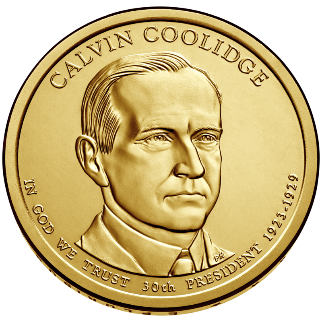
    The final coins that might emerge from the satchel are the Presidential Dollar coins. Why were these coins made? Because if a striking coin like the Sacajawea dollar isn’t being widely used it must be time to double down.**  In 2007 the new coins were released with four presidents a year until they caught up with the last dead president.  The reverse features the Statue of Liberty. The new coins caught fire like a water balloon and by 2011 there were 1, 400,000,000+ uncirculated coins stockpiled. So Washington (1) to Garfield (20) were released for circulation.  From Chester Arthur on the mint struck only smaller numbers (still around 10,000,000 each) for collectors.  These later coins are legal tender and occasionally found in general circulation as well.  Reagan was the last president on a coin. To satisfy my Glib heart, Jimmy Carter was never on a coin because of the requirement that the ex-president be actually dead. My orphan has found an occasional proof version of a presidential dollar and brought it to my attention.  They are worth about $2 each. So go ahead and circulate them freely since your tax dollars purchased hundreds of million extra.

    The GAO has published a report that if the Bureau of Engraving stopped making $1 bills and the country switched to dollar coins it estimates a savings of at least $5.5B over thirty years. With the billions of coins sitting in vaults and already produced I think that estimate is probably low. The vending industry is now fighting retiring the dollar bill because it invested heavily in adding bill readers to vending machines.

    That’s About It

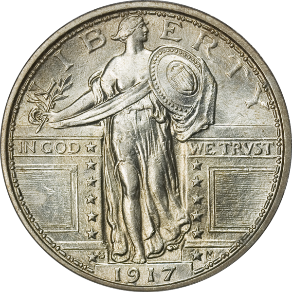
    One other place that I have found silver coins for face value or less have been estate sales.  Families often don’t know what grandpa was saving so coins appear in a variety of ways.  I once picked up eleven Standing Liberty quarters for five cents each because they were in a bowl as “movie prop money.”  The selling agent clearly did not know what she had in the estate.  Another time my ex came home from an estate sale with a few minor purchases.  A few days later I needed some change and found two silver quarters that she just got as change at the sale. Of course it was too late for me to go back and get more real quarters in change.

    The story of America’s money changing from representing Liberty as an ideal to a collection of small scale tokens of presidential worship is an interesting one and perhaps the subject of another article in the future.  Now please excuse me while I go swim in my collection of gold coins.

    Oh yeah.  Here are a couple of websites to help you determine the melt value of your American coinage.

    https://www.ngccoin.com/price-guide/coin-melt-values.aspx

    or

    http://www.coinflation.com/coins/basemetal_coin_calculator.html

    ———————————————————————————————-

    *The Trade Dollar (1873-1885) was a dollar minted for overseas use, primarily in China.  It was demonetized by Congress in 1876 to prevent their use in the US.  Congress re-monetized the Trade Dollar in 1965 when it was too late to matter.


    ** Not really.  The dollar and quarters programs rely upon seniorage to “make” money for the Treasury.  Quarters cost around 4 cents to make, but the Treasury sells them to the bank for 25 cents. That means the Treasury has a reserve of 21 cents per coin which in theory reduces the amount of funding required from Congress.  Collectors also create seniorage by removing coins from circulation and then they are not turned in as damaged for replacement.  During the quarters program alone collectors have created an estimated $6B in seniorage.

  • Hard work or luck, which is it? The pathway to prosperity.

    Setting aside every ounce of cynicism that I possibly can, I’m able to address the economic left and economic right on their stated views of prosperity.

    Specifically, the economic left assumes that extraneous factors (luck) are the driving force behind prosperity (and paucity). The economic right assumes that hard work is the driving force behind prosperity, and the lack of hard work is the driving force behind paucity.

    As is always the case, reality is somewhere in the middle. For every Jobian sob story the left trots out in their parade of horrors and for every Paris Hilton they shame, there are thousands… tens of thousands… of everyday people who have worked hard, weathered the uncertainties of life, and retired comfortably as millionaires.

    Personally, I think the economic right is closer to the truth than the economic left. As Roger Penske said, “(Good) luck is when preparation meets opportunity.”  A barista with an oppression studies degree isn’t a victim of bad luck. She’s suffering the consequences of her poor decision making. Somebody who makes a ton of money in the stock market isn’t “lucky” as much as they’re reaping the benefits of their preparation.

    This isn’t to say that I don’t think that people get royally fucked or incredibly lucky. However, my personal observation is that most “bad luck” is a result of shortsightedness and a lack of risk management. Most “good luck” is observed by an envious person who doesn’t see the hard work required to achieve good things. The one situation where my belief in personal responsibility wavers ever so slightly is in kids and teenagers. It’s a tall task to ask an 18 year old who has grown up in a financially illiterate family and a financially illiterate culture, with all of the incentives pointing in the direction of financial ruin, to grow up, make good decisions, and not fuck up.

    However, there are three reasons why government has no business getting involved. First is that when you’re the primary cause for fucking up the culture, you shouldn’t have a voice in the solution. The modern economic left fucked up a variety of American cultures’ perception of money over the past 75 years. They have no leg to stand on when they complain about the results of their own idiocy. Second is this is exactly the right place for private charity. Cutting financial illiterates a check is idiotic and amplifies the cultural defects that cause the financial illiteracy. However, private charities are much more likely to condition any financial assistance on learning financial literacy. Third is that in 21st century United States of America, you get to fuck up quite a few times financially before you’re screwed for life. People have come around at age 50 or later and still have been able to retire with dignity. An 18 year old has 40 years to have their “come to Jesus” moment and live on less than they earn, and they’ll still be able to shop in the produce section for groceries instead of the cat food section.

    “Oh, but they can’t get a decent job with a living wage.” Bullshit. First, that’s exactly the kind of “bad luck” that is actually poor decision making causing completely foreseeable consequences. If you haven’t gotten your GED, it’s not bad luck keeping from getting beyond minimum wage. Second, I’ve met people who have saved enough for a comfortable retirement as janitors, in retail, and in fast food. Y’know what they did? They lived austere lives, took very few risks, spent less than they made, and invested for decades. I remember hearing a story of a janitor who averaged less than $50k annually over his career, and retired a millionaire.

    “Oh, but the American dream is dead, you can’t do that anymore.” Bullshit, again. I think there’s a massive divide in my millennial cohort, and I think that this divide articulates why the American dream isn’t dead. Looking at my classmates from high school and college, the divide is simple. Those who learned uncommon skills are making bank and those who did not learn uncommon skills are mooching off their parents and supporting Bernie. Obviously the dividing line isn’t as stark as I’m describing it, but it’s a pretty strong difference. Classmates with education and humanities degrees are struggling to progress beyond beverage arts. Classmates with STEM and business degrees are finding career jobs.

    Where’s the luck in that? Well, I guess you could call being born to parents who cared enough to call a spade a spade good luck. I guess you could call a mathematical aptitude and a disdain for the easy way good luck. However, that massively undercredits personal agency. That’s really the issue, isn’t it? The left seems to believe that agency occurs where opportunity fates it. If you succeed, it’s because you are privileged with good fortune (in the traditional Greek conception of the term). If you fail, it’s because the fates have conspired against you. They double down on this rejection of agency for young people. They assume that a 15-20 year old (or 26 year old) is incapable of exerting control on their own life. Nevermind the fact that adolescence is a new concept, teenagers are made out as completely unequipped to make adult decisions. Much of this is the fault of a failed education system and a culture of irresponsibility, but the fact remains that the average 17 year old is treated more like their 12 year old sibling than like their 21 year old sibling.

    I often think back to my high school and college days. There were many times when I passed up fun (as a 15-20 year old) to achieve something more important. I remember getting out of bed at 5am on a Saturday to hop on a bus and drive up to Testicle State for a math competition and to hop on a bus to Rose Hulman for a robotics competition. I remember sitting in a restaurant across from the campus bars on a Tuesday night, watching the education major girls lined up for another night of drunken dancing , knowing full well that I’d pass them during their walks of shame the next morning as I walked back from then engineering lab after pulling an all-nighter. We both got fucked, them much more literally than me. I had my fun, I wasn’t anhedonic, but when the left tries to paint my millennial cohort as victims of a student loan crisis, I think back to those images burned in my memory. Are they victims of bad luck, or were they just immature idiots poorly prepared for adulthood?

    Once you cut out all the fluff, it comes down to a simple piece of introspection. Are you a victim in your personal narrative, or are you a hero? The left self-identifies as victims. The right self-identifies as heroes. As with all things in the real world, the truth is a bit of both.

  • Rich Dead Uncle I Didn’t Know I Had

    In my younger years, before the lottery was a thing, the only way to really win large sums of unearned money was from a dead relative.  As most of us liked our relatives, we did not want them to die.  Or at least, that was my experience.  Now that I’m a bit older my brother has a few cousins and such that when they pass I’m not flying home for the funeral if you get my drift.  Anyway, I used to use the formula, a rich dead uncle I didn’t know I had providing an inheritance.  Life is stranger than fiction, so it is little surprise to me last year that I found myself in almost that exact situation.

    My wife’s dad was Chinese.  His parents were part of the Chiang Kai-shek’s nationalist government and apparently were in the diplomacy game going back several generations at least.  The family, in general, has a colorful history.  Allegedly, the grandparents were around when Anastasia screamed in pain, to steal from the Stones.  As there is jewelry that’s been spread around amongst the cousins, supposedly traded by some Russian Princesses for Chinese Visas to escape the whole March Revolution thing.  The wife’s ring has been authenticated as being made by the jeweler who worked primarily for the Russian royal/noble families.

    There’s also the family tale that after WWII when the family was escaping the ancestral homelands and the Chi-Com’s, my wife’s grandmother almost had to smother my wife’s dad to death.  The family was hiding in a ditch, and dad-in-law who was an infant drew in a breath and was about to start crying so his mother had to cover his mouth and keep him from doing so, because if the family were found, they’d have at best been executed on the spot, at worst been put in some sort of camp.  Tough decision for a mother to have to make, but I guess you can always make another kid.

    After they escaped, part of the family stayed in Taiwan, and part of it spread out into Hong Kong, Canada, the US, and South Africa.  There’s a cousin who dated minor European nobility and then simply disappeared one day like 30-35 years ago and has never been heard from since.  There’s speculation that he was some sort of espionage agent, that he was kidnapped for ransom and then killed because the nobility wouldn’t pay up, or that he got sick of the Euro-trash bullshit and faked his death while financing it with money he scammed.  He’s sort of a family DB Cooper figure.

    It’s a different cousin that this is about though.  My wife didn’t even remember he existed.  He was an ‘Uncle’ that visited once when she and her brother were young, and then went back to his residence in Hong Kong and Vancouver, BC, Canada.  Basically, everyone forgot about him because he didn’t stay in contact.

    Turns out this was because he was a no-shit hearing voices psychotic who despite that had made enormous amounts of money.  He died intestate last year and we were notified because my wife, her brother, and two cousins of theirs are the only living relatives of his and thus they were in line to receive the money.  Like an 8 figures estate worth of money.  However, they were warned that they might not get all of it.  As my wife put it originally, “This could be anywhere from a nice dinner out to quit our jobs.” I was more bemused than greedy.  It’s a true windfall.

    Of course, even free money comes with strings and we found out what those strings were.  A woman named Vivian* was the strings and hoooo-boy was there some strings.

    Auntie Viv, as I began to sarcastically refer to her, was a piece of work.  Good old Uncle Kevin** [Sidebar: my wife’s father’s generation of kids all hated the commies so much that most of them who moved to America quit speaking Mandarin and named all their kids Anglo names for their first name.  My wife despite being fully half Chinese knows less than I do.  And most of them won’t travel to China because they may still be on lists somewhere and wouldn’t be able to come home] had gotten himself a younger lady.  She had moved in with him, and become his common-law wife.  Or so she claimed when it turned out Uncle Kev was dead.  It was a bit more complicated than that and thus ensued a year’s worth of haggling.

    See, when Uncle Kev passed away like Elvis (on the toilet) the health care agency guys he had hired to come in on a regular basis had found him.  They were there daily to make sure he took his meds and help him deal with a physical health issue he had as well.  The same 3 guys had worked for him for several years and they’d never so much as seen Auntie Viv.

    Because she had moved out several years before, which according to Canuckistani law meant she was no longer his common-law wife for purposes of divvying up the loot and taking his stuff.  So she tried to insist that she’d been living there just in a different part of the house from where the health workers had been.

    Our law-talking dude then discovered that when she filed her taxes, she’d listed a different address altogether.  So for her to pursue it in court, would mean admitting to tax fraud multiple times.

    So her story was then, well, Uncle Kev would sometimes not take his meds and would get violent.  Not directly toward her, but in general and so she left because she didn’t feel safe.  The other residence was her place to run to when Uncle Kev was hearing the voices telling him to do crazy shit and him destroying things to keep from obeying them.  She even cited a police report to explain it.

    Only, when the lawyer dug further, turned out, there was a previous police report where she’d gotten violent with Uncle Kev when she found out he had gotten himself fixed and thus all her attempts at not taking birth control to secure him a child were for naught.  See, Uncle Kev was crazy, but he knew it, and didn’t want to make a little psycho Kev with a woman he suspected may have had motives besides how gooshy he made her loins.  He’d ridden that rodeo before apparently.

    Eventually, she claimed that what she wanted was to establish a mental health charity with the money and that’s why she was fighting for.  And also to keep the house which she could use to run the charity out of it.

    So we made her a proposal; 1/3rd of the estate to her, 1/3rd to the charity, and 1/3rd to us.  She balked at first until her lawyer said, “Look, lady, this is the best offer and if you go to court you’re getting jack shit besides maybe a jail term for the tax fraud. They are being generous so you’re lucky none of them were close to him.  Take the fucking deal.”

    And that is how a Rich Dead Uncle*** I Didn’t Know I Had helped my wife and me pay off our house and set us up to retire much earlier than planned.


    *Not her real name

    **Not his either

    ***Not really an Uncle as described was more of a cousin who was old enough he seemed more like an uncle.