Category: Media

  • Buffalo Gal Won’t You Come Out Tonight?

    Continuing with our epic journey through the war on Christmas; the last Christmas movie I think needs to be discussed is the Jimmy Stewart classic, Its a Wonderful Life.

    This is my review of Guinness Over the Moon Milk Stout

    In this movie we find the protagonist, George Bailey takes over the family business, a small Savings and Loan in his hometown of Bedford Falls.  We learn a lot about George personally in the beginning of the movie:  Why he was deferred from serving in World War 2, how he met his wife, and his overall outlook on matters related to his family business.  We find out fairly early in the movie about, Mr. Potter, the antagonist as well.  Mr. Potter is major a shareholder in the Savings and Loan.  He voices his opinion during a board meeting regarding the “rabble” in the town that triggers George.  The idea that people should save before trying to purchase a home is apparently evil and issuing sub-prime loans to workers that may or may not be able to afford to pay back the loan is as pure as the driven snow.

    We find out later, during the depression both men were the only ones in town with businesses that survived.  For the most part, Potter is portrayed as a caricature of a greedy, monocle twirling capitalist.  I might even go so far as to say he probably fits in around here.  Eventually, Potter discovers somehow Bailey’s Savings and Loan is still afloat in spite of questionable lending practices and alarming issues with his book keeping, but is the only real competition Potter has.  That is, if you want to define Bailey as a competitor…after all, Potter is a member of the board.  So he tried to do the sensible thing, and buy out Bailey.

    Later Bailey’s uncle, Billy, loses a large deposit which is seriously troubling because it is potentially ruinous to their business.  It is also a seemingly small amount for a mortgage lender of only $8000 (~$110,000 today), and he is depositing it in Potter’s bank (really?).  Bailey then goes to the only person in town that can save him—Potter.  It is here that Potter learns the $8000 in cash he randomly found in his bank earlier that day was Bailey’s.  For better or worse, he tells Bailey to pound sand.

    Bailey falls into a drunken depression, and considers suicide but is sidetracked by a stranger, whom he saves from his own death in an icy river.  Remember–Bailey is not a shady businessman and is supposed to be the good guy.  This random stranger is an angel (in training) named Clarence, that shows Bailey what the world is like without Bailey.  People he saved by telling the pharmacist he filled the prescription with the wrong drug, pulling his brother from the ice in a frozen lake, who goes on to save other servicemen in the war, etc, is the impact Bailey made.  This part in itself actually is a good message:  one person (all of us, really) can impact the world in a variety of ways, with an infinite number of possibilities—it is up to you to make that impact positive.

    Hopefully your impact is not crashing the economy through sub-prime lending.

    Can this movie be made again today?  I am here to tell you, if this movie is made again today it will be labeled by right leaning media as socialist or anti-capitalist propaganda–because it already is.  Every speech Bailey makes, including the times he needs to weasel his way out of satisfying his customers is a smear on Potter.  While Potter may be a cold-hearted businessman, portraying him as a villain is unfair.  Others previously made a similar argument in pointing out that Potter is the only honest businessman in this story.  His frequent complaints about the savings and loan can be argued are in his interests as an investor; how he insisted on customers having adequate collateral before approving loans supports this point.  Even offering to buy out a large percentage (50%) of customer accounts when Bailey was unable to cash out his customers and offer full payment in 60 days, does not lend itself to the idea Potter is a villian.  The only real crime Potter did was keep the money, but even there he comes across it by accident and only learns who left it in the scene where Bailey asks him for a bailout.  He didn’t intentionally steal it.  Given the issues Bailey has caused Potter over the years, is keeping that part a secret in that moment as unethical as it sounds?  Is calling the banking authorities unethical, when bailing out Bailey would make him complicit in the scheme?  He could have easily had a change of heart and deposited the money into Bailey’s account the next day, but we will never know.

    Bailey’s business model is selling subprime loans; 2008 is still in the memories of many today. Which means neither of the characters can be reasonably portrayed as a protagonist.  The honest businessman is a greedy capitalist who wants to own the entire town, and the other is a grifter selling loans to people that cannot afford to pay them back.  In this theoretical new version will Bailey see all the people he gave loans to are living in a rental home or an apartment and not in bankruptcy had he never been born?  So he has a change of heart and goes back to the universe where he likely ruins the entire town (Potter included) when those mortgages default?

    Because why the hell not?

    Clarence is gone, unless he’s replaced by a wizard of some kind, played by Oprah Winfrey. According to lore, they thought the movie was too religious…in 1946, which is why they went with singing Auld Lang Syne instead of an actual Christmas song in the final scene.  Plus, there are feminist complaints when they show what happens to Bailey’s wife had George never been born (old maid).  Bailey’s wife will necessarily have to be more successful as a single woman for whatever reason they want to come up with.  Bailey is just holding her back by marrying her and letting him focus on his career.

    This movie cannot be made again.


    Didn’t I already review this one?  Sort of.  This is similar but not quite identical to a Guinness varietal that I found at the Dublin airport and packed away to save for the end of my self-imposed temperance.  This is a little more like the Extra Stout made in Canada and imported to the US, but it is not as harsh with the burned malt flavors.  It splits the difference between those two but it is otherwise solid.  Then there is the part where it is brewed in Baltimore.  Just do what I did and pour it through a colander, into another vessel to make sure there are no empty .40 S&W cartridges, syringes, or shards of broken glass.  You should be good to go.  Guinness Over the Moon Milk Stout 3.5/5

  • SLD: The Libertarian Case for Section 230 Reform

    There’s a piece of legislation that has been invaluable in the rise of social media, the Communications Decency Act. In particular, Section 230 of the Act says “No provider or user of an interactive computer service shall be treated as the publisher or speaker of any information provided by another information content provider.” Without Section 230, it’s hard to fathom that Facebook or Twitter would ever have been able to surmount the potential legal liability they would otherwise face from civil lawsuits over IP infringements, libel claims, or threats that are posted to their websites on a regular basis. They’d be potentially liable for whatever anyone decided to post on their sites.
    Interestingly, though, the provision wasn’t even created with social media in mind. The Act was passed in 1996, before social media was even a glint in Mark Zuckerberg’s eye. The provision was included in the Act ensure that internet service providers or e-mail providers weren’t liable for anything that anyone decided to transmit on their services. And that makes sense. You wouldn’t hold Verizon or AT&T responsible for anything anyone says on the phone. They don’t control what people say on the phone, so they shouldn’t be responsible.

    The internet shouldn’t be any different.

    But, as the internet advanced, the logical extension of this principle went to websites themselves. And that still sort of makes sense, at least conditionally. If the owners of the website don’t control what is posted or not, they shouldn’t be liable for what people do post. The key distinction is whether the owners of the website are providing an internet service or whether they are providing internet content. In Fair Housing vs. Roommates.com, the courts said you couldn’t claim to be a service provider if you weren’t a passive pass-through of information provided by others or simply a facilitator of expression, you had moved on to become a content provider and weren’t immune from lawsuits under Section 230.

    Today, many conservatives, and even libertarians are concerned about the editorial lines that are increasingly taking hold in the social media universe. In their attempts to filter out “fake news” or “Russian bots” or “disruptive voices” or “hate speech”, they are increasingly deplatforming conservatives and libertarians for behaviors that they show no concern with coming from the left. We know that the social media giants are culturally very much aligned with the “woke” left and many claim that they’re rigging the public discourse in favor of the left.

    While some conservatives have suggested addressing this by breaking up the social media giants or subjecting them to regulation, an alternative that many of us have advocated is reform of Section 230 to make it clear that you’re a publisher if you’re pushing an editorial line. You can have rules of the road and can forbid threatening, harassing, or inciteful posts, but your rules have to be objective, viewpoint-neutral, and universally applied for you to retain Section 230 protection. Otherwise, you’re a publisher and should be treated as such.

    This isn’t an idea without some controversy. As believers in the free market, many argue, conservatives and libertarians should let the market sort itself out and take their business elsewhere. As private businesses, Facebook, YouTube and Twitter shouldn’t be under any obligation to provide a voice for those whose views they find abhorrent. And, as Ken White of Popehat argues, it’s a stretch to suggest that the social media providers are the people creating the content. Even many of the advocates of Section 230 reform suggest the move goes against the grain of their libertarianism, arguing that this is a situation just to rife with abuse.

    I think these concerns are misguided. Far from being a violation of libertarian principle, Section 230 reform would be a move to impose free market discipline on the social media giants. The question of whether the social media giants are original content creators is utterly beside the point. Of course they aren’t! But, Section 230 itself doesn’t address whether the service provider is the creator of the original content. It’s about whether they are to be treated as publishers.

    And it’s clear that they are acting as publishers If you’re maintaining an editorial line, you’re not acting simply as a passive pass-through or a facilitator of expression. You’re doing pretty much the opposite. You’re acting to define what is acceptable and what is unacceptable expression on your platform. If you’re demonetizing Stephen Crowder for making a side reference to homosexuality while maintaining a guy like Carlos Maza after he specifically encourages assaulting conservatives, you can’t honestly say you’re just an open platform for people to exchange ideas. If you’re banning Carl Benjamin while giving Antifa a pass, the last thing you’re doing is acting as a neutral pass-through. You’re acting as a publisher deciding what they will and will not publish.

    And that is and should be their right. On that, I completely agree with Section 230 reform sceptics. If you believe in free speech, then you have to believe that people cannot justly be compelled to speech any more than they can be censored. And demanding that social media provide a platform to conservatives is just as much a compulsion of speech as insisting Rush Limbaugh devote a show to singing the praises of Elizabeth Warren or that MSNBC devote a day to critiques of climate change.

    What the social media giants don’t have a right to is special favor from the government. If they’re acting as a publisher, then they should be subject to the same laws and same standards as any other publisher. To treat them more favorably is to grant a subsidy to established and entrenched interests over brick-and-mortar competitors, as well as new entrants in the social media space.

    For just about any other industry the injustice of such a policy would be glaringly obvious. Imagine if the government said the hotel industry or the movie theater industry would be exempt from labor laws or health and safety laws. Or worse still if the government said that certain hotels and certain movie theaters would be exempt from those laws. Libertarians would rightly be up in arms about such a policy. They’d rightly note such behavior as just the sort of crony capitalism that libertarianism rejects. The same applies to the social media giants acting as publishers. You might say that the laws holding publishers responsible for any libel or IP infringement or harassment they publish are bad laws. A libertarian case can be made for or against them. But, holding some publishers liable and exempting others is the least libertarian response. It is, simply put, the government openly picking winners and losers.

    Moreover, the social media giants’ hidden imposition of an editorial line has poisoned so much of social media culture. To understand this, imagine that, rather than the fashionable progressive causes of the day, the social media giants took an editorial line that was “pro-seltzer”. They’d happily let commentary advocating the benefits of drinking seltzer and actively deplatform anyone arguing to the contrary. The public relying on social media for information, believing they were getting truly decentralized discussion about seltzer would only see discussions about how great seltzer is and how terrible those awful people who want to suggest people might want to drink milk are. Without understanding that the social media are only telling you the pro-seltzer position, a good many readers would become convinced, not only of the pro-seltzer position, but also of the social media morality in advocating for seltzer. The non-seltzer people, unsurprisingly, only militate when they realize the public is being lied to about them and their positions. And the less radicalized, lacking a means to evaluate the claims of the genuine anti-seltzer extremists, since the entire anti-seltzer argument has been excised from the public discussion where ideas can be tested, tend to be pushed to the more radical position.

    I respect the social media giants. They took an ambiguity in the law and leveraged it to build a whole new means of communication that offers tremendous opportunity for public discourse. But, with success comes hubris. For the social media giants, that hubris has led them to abandon any claim to that ambiguity. They’re now acting as publishers in the most obvious and clear-cut manner one can find. And, in addition to being an injustice in its own right, that preferential treatment is leading them to behave in a way that is rendering our public discourse increasingly toxic. To set things right, we don’t need to regulate the social media giants and we don’t need to break them up. We simply need to resolve that ambiguity to make clear that they’re either publishers, with all the legal liabilities that any other publisher faces, or they’re public fora where they don’t get to dictate what viewpoints deserve an audience.

  • As Seen On TV: Pilot

    Welcome to the first(last?) in a new feature where I talk TV*.  I’d like to explore some lesser-known or forgotten TV shows*, not just because they are shows* I like but also to see what impact they had on the industry.


    Today’s Episode: Captain Power and the Soldiers of the Future (1987)

    Captain Power was a 1987 live action toy commercial TV series set in a distant future after the ‘Metal Wars’, and the machines have won.  A group of rebel soldiers let by Captain Jonathan Power use Power Suit armor to take on the evil Lord Dread and his robot army.

    It’s a little ham-fisted, to be sure, but it was a children’s show meant to sell toys.  It was about watching future soldiers use cool armor and weapons to fight evil robots, but there are a few things that make it stand out today when looking back on it.

    First of all, even though it was a show designed to sell toys, the creators sought to make something more compelling:

    Captain Power, to the public at large, is perceived as just another excuse to sell toys. It is a notion that rubs story editor Larry DiTillio the wrong way.

    “We’re not writing stories with the idea of turning each episode of Captain Power into a video game,” declares DiTillio. But DiTillio, a first season staff writer who became story editor when J. Michael Straczynski (Starlog #111) left the position for a similar post with the revived Twilight Zone, claimed that ramrodding the script side of Captain Power hasn’t been easy.

    “This show has definitely not made my life easier,” chuckles DiTillio. “This is not just another kid’s cartoon show. The writing is always to an adult level. There is the interactivity which has been centered mainly in the battle sequences but we aren’t in a position of having to write X amount of animation and interactivity into each episode. I want to make it very clear that around here, we’re working for the story.” –Starlog #128

    Indeed, the story of Captain Power deals with the horrors of war, human relationships and what it means to be human.  In one story line the villain, Lord Dread, is confronted with the pain his war has inflicted on the woman he once loved.  The story was written as much for the parents watching as for the kids.

    But, I bet you’re wondering what DiTillio meant by  “animation and interactivity into each episode”.  Well, as stated the show was created to sell toys, the toys in question were a way for Mattel to use a new technology they had developed, a light sensing technology like that of Laser Tag or the NES Power gun.  The play feature was that the vehicles for the action figures could interact with each other, if you ‘shot’ another jet with your jet it was a hit point, enough hit points and your pilot was ejected from the jet.  This same technology was built into the show, allowing kids to interact and with enemies on the TV by shooting them as well as being shot. It was an interactive game built into the TV show, and pretty innovative for the time.  You could also buy VHS tapes that had longer sequences on them to play the game any time you wanted.


    This wasn’t the only innovation the show had on it’s side.  Remember how the army of bad guys were robots?  Well, the show runners decided to use a new technology called ‘computer generated imagery’ to create the robots instead of opting for guys in costumes.  That’s right, they used CGI to create characters for a TV show in 1987, they were the first TV show to do it.

    Impressive but, yeah it didn’t look too great back then and really doesn’t hold up well today.  They may have been the first, but it was something that was on it’s way without them, eventually.  The last great innovation Captain Power made probably had the most impact on the film and TV industry as we know it today.

    Film and TV have been shot all over the world for many different reasons, but a staple of the industry for the last three decades has been shooting in Canada for that sweet, sweet government lucre. I bet you’ve already guessed it, Captain Power was one of the first major US television shows to entirely move its production to the great white hat of America. The show runners had to build the resources there from scratch and retrain local canooks to be able to shoot and edit an American Sci-Fi Action TV show.They leased an old bus terminal and converted it into a film lot. The writers from Hollywood would ‘modem’ the scripts to Canada and the rest of the production process was done there.

    So what happened to such a fun, inventive, and successful TV show?  Guns killed it!  Well, not guns, but fear of guns.  This was the 80s when busybodies started trying to get rid of violence on TV. The show had high ratings at the onset, but because of controversy surrounding the violence on the show it kept getting moved around time slots, which can kill just about any show. Also the toys weren’t selling as well as Mattel wanted. Also CGI was very expensive back than (a lot more so than today when it is still expensive.)

    It is a show I remember fondly and when I started looking back on it I was surprised to learn how innovative the show really was.  I’m currently re-watching it.  There is also a good documentary on Youtube that goes into more depth of what I’ve talked about if you’re interested.


    POWER ON!


    *Probably some movies as well.

  • IFLA: The Horoscope for the Week of Feb 17

    This week’s sky is probably the most complicated one we’ve seen yet (most of the sky omitted for clarity)

    "Don't blame me Doc, you're the one with all the dirty pictures!"
    It is amazing that anyone was able to do SCIENCE before Powerpoint existed. For an example of someone doing amazing work without even the benefit of algebra, see https://youtu.be/vUWKMo5scKY?t=175

    On the first level we have four alignments:  Jupiter-Venus-Earth-Luna (in green–change in marital status); Jupiter-Sol-Mars (magenta — state level conflicts, officers, military rulers); Saturn-Mercury-Mars (purple — bad news about war, ending of a conflict, death of a soldier); and Venus-Sol-Mercury (gold — love letters, pornography, gossip).  On the second level, we have interactions indicating that a divorce degree will be finalized that gives possession of the house; A general’s mistress will lose her baby; A war comes to an end because a leader (the one that wins) changes strategies; and a foreign correspondent gets lucky with a local.  The third and fourth levels are both very similar indicating that this will be the most important happening of the week:  A media organization will go completely to shit.  There will be scandals, layoffs, and lawsuits all hitting it at the same time.  I’m very curious to see which one it will be.

    Of course, the Sun is in Aquarius.  Also the same as last week Jupiter is in Aquarius so bonus to self control.  Which is good, because Mercury is in Pisces, indicating that events around you are not going to respond to your efforts.  The moon in Cancer indicates that secrets will feature prominently.  Venus and Saturn are fighting it out in Capricorn, the end result (probably) being that you are going to stumble into something good purely by accident.  I hesitate to make this last reading for liability reasons, but Mars in Taurus advises just bulling through any fights you may get into this week.

    Aquarius:  9 of Coins – Safety, success, riches

    Pisces:  4 of Coins, reversed – Suspense, delay, opposition

    Aries:  Wheel of Fortune, reversed – Decrease, bad luck, rapidity, loss of control

    Taurus:  8 of Cups – Timidity, abandonment, surrender

    Gemini:  The Hermit, reversed – Concealment, disguise, fear

    Cancer:  3 of Cups – Successful conclusion, perfection, merriment, celebration, healing

    Leo:  Ace of Cups (again!) – Joy, contentment, fertility, nourishment

    Virgo:  7 of Cups – Desire, determination, will

    Libra:  Queen of Cups – A good woman, an honest woman, aid offered.

    Scorpio:  The World, reversed – Inertia, stagnation, status quo

    Sagittarius:  5 of Wands, reversed – Trickery, litigation, disputes, contradiction

    Capricorn:  10 of Cups, reversed – A false sense of security, indignation, violence.

  • The Death of Centralized Media

    “How did you go bankrupt?” Bill asked.

    “Two ways,” Mike said. “Gradually, then suddenly.”

    Last year during a family event at my step-daughter’s college, I noticed that her TV was unplugged.  We had given it to her for her dorm room.  She didn’t have a cord to hook it up to cable.  Instead of going out their way to buy a cord, she and her roommate just never bothered using it.  In lieu of traditional television, they watch Youtube videos, use various social media platforms, and watch Netflix on their respective laptops.  I asked her if she knew anyone her age who watched cable television and she couldn’t think of anyone.  The year my stepson lived with us while he attended his senior year of high school, I noticed that he never watched traditional live television either.  He played video games, watched Youtube videos and some Netflix, and used social media platforms.  The only traditional television Sloopy and I watch are various sporting events.  Outside of that, I watch Youtube videos, listen to podcasts, and read through Twitter.  (I have been banned from posting on Twitter.  Sloopy has not despite trolling people far worse than I ever did).  The only people I know in my life who watch traditional television outside of sports is my mother and step-father.  Even my father spends his free time watching Youtube videos and playing around online.

    Traditional corporate media is dying. At first, it felt gradual, now it feels sudden.  Not just newspapers, but television, movies, even corporate digital media is crumbling before our eyes.  I would even add major corporate social media platforms like Facebook and Twitter onto the list as well.  The death spiral is understandable.  The age of centralized media, centralized narratives, centralized culture, and hence centralized power is done.  The question now is: what will the effects be?
    Scott Adams describes the current political landscape as like having one movie screen with two different movies playing on it.  Half the country sees an evil bigoted man who stole the election by conspiring with Russia.  Everything is going in the wrong direction as this evil usurper is allowing the rich to continue to exploit the poor and downtrodden and has given license to the evil white supremacists secretly living amongst them to hate crime.  The other movie is an economic golden age with the evil deep state trying to take out the man who is defying them.  Each news story that breaks is proof of each side’s version of the world.  The two movies/two realities are the result of a split in primary consumption of news media.  Those that follow right-wing news and those that follow left-wing news consume a different culture and a different reality.

    Now what will happen when the media splits even further?  What happens when it splits to a million separate cultures?  Instead of two political realities, will we have millions?  Will we reach an anarchist state?  Will the US fraction into a million separate countries, will the power become decentralized again back to the states and individual counties, cities?  Centralized media has allowed for the centralization of power. Two entities vying for control can work as long as they share core tenets, but what happens when they both no longer share the same core tenets due to consumption of different media?  And what happens when the media decentralizes further and further until it is in the thousands or even millions?  How can one government control such a large geographical area and vast populace when culture, reality, and basic fundamental principles are no longer shared?

    Maybe I am mistaken, but doesn’t it feel like a mass disillusionment is taking place?  I have never witnessed in my life so much general distrust from everyone from all corners of life.  I have no idea what the future will bring, but whatever it is, we are in the midst of a massive and sudden change.

  • Cartoon Network: English tutor to 90’s Romanian kids

    This may come as a great surprise to most people, but television did not exactly flourish in communist Romania. The equipment was bad, there were only a few hours a day of programming and it was mostly the Great Leader speaking. Romania, for whatever reason, was generally worse than other European socialist countries in this respect. Back then cable was not a thing in this region and antennas were all the rage. If you were lucky enough, so to speak, to live near a border – Bulgaria, Serbia or Hungary – and had a tall antenna, you could catch some extra programing from those countries.

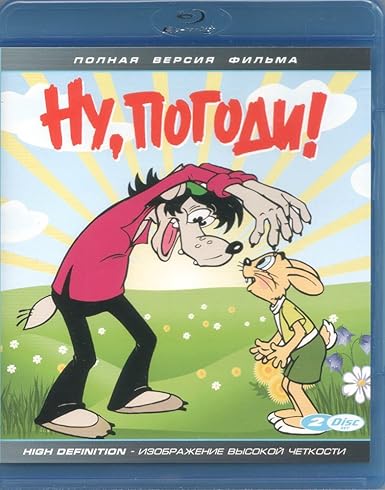
    Children, Pie being no different, liked cartoons. It was a great misfortune in my young mind that my parents had to pick me up from kindergarten in the middle of the only daily cartoon shown – if I remember correctly something with a girl call Heidi, and I frequently missed the ending of the episode. There was also something Russian with a wolf and rabbit. My parents owned a VCR – a significant thing, most were black market and quite expensive – and a couple of cassettes with cartoons – some classic Disney, some Asterix and Obelix, some Tom and Jerry – which I must have seen 100 times. In fact, a few years before 1989 my parents had a JVC VCR which also had the capacity to record, and that was a rare beast indeed, they sold it for half the money of a new car.

    BC: Before Cartoon Network

    After communism ended, things changed reasonably fast. One day, I would say about 1992 or so, I do not remember the particulars, after coming home from school, I noticed an unfamiliar black shape – a new Panasonic TV set, and with it came cable and with cable came Cartoon Network. Cartoons, all sorts of them, all day every day. It was truly a revolution.

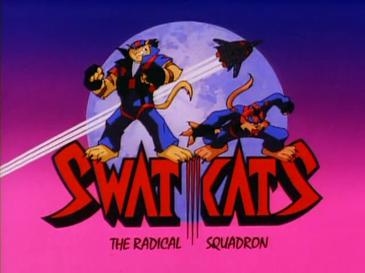
    My first one was an episode of Birdman, which at first I thought it was Batman – I did not know either, but had vaguely heard of Batman and it sounded familiar enough. Soon, for as long as I was allowed, I watched everything else shown on Romania’s Cartoon Network in the early 90s. Everything. There was still some drama. My parents watched the nightly news on the TV every day at 8 PM, right when Swat Kats was on, which I loved as a kid.

    Back in that time, cable was young and there were no local subsidiaries of the big foreign networks, so there was no dubbing or subtitles. I had some knowledge of English – my parents got me a tutor for the duration of first grade that actually taught me a lot, and there was some in school. The problem with learning a language in Romanian school is that you learn rules, grammar, and some vocabulary in a formal way that does not always tie together. I had the same experience with trying to learn French, I knew some words and could read and somewhat write, but struggled to form sentences when speaking. The tutor helped more than school, a young woman who brought cassettes of English people speaking, and focused on that not on grammar rules. Learning this way was better – and I did real well at the grammar tests in school because, without really knowing the rules, picking what sounded right to me was usually right. I feel the same for Romanian, I would struggle right now to explain to a foreigner grammatical rules –although I studies them extensively in school.

    Being the guy who just shot the weapons was kinda lame.

    Whatever learning I did before, it was accelerate greatly by Cartoon Network. At first I did not understand everything spoken. But I didn’t need to. Just having cartoons was so great, nothing else mattered. And I watched and I watched. And slowly, I started understanding more and more each time. Episodes tended to repeat on Cartoon Network, but for me it was quite alright, I liked them and I understood better as each month passed. And I learned organically for lack of a better word. This is important, as phrases often have cultural meaning and just knowing what the words mean is not enough, and this way I learned both. Sticks and stones does not mean sticks and stones, paying the piper does not involve singers and currency.

    This also had had a positive effect on verbal skills. To be fluent in a language you just speak, you do not need to think of the rules. I was never fluent in French, though I learned words and verbs and conjugation. They just didn’t come together when I needed them. In English, on the other hand, I never really thought of the rules. If it sounded right, it probably was.

    Not all kids in Romania were like this, but my generation of urban middle income kids were. By high school, movies and TV shows kicked in, praise be bit torrent and DC++. My generation talked a lot in what we called romglish, Romanian peppered with English words and phrases, mostly movie quotes. There were nationalist politicians that wanted to ban English words in advertising, to somehow preserve the purity of the language. Hell, there still are in several countries. But, for us, in a country with a native language that is, to be frank, useless internationally, learning English was a huge help. Most of people my age use it daily in their work; use it on vacation or watching movies, reading books not translated in Romanian, and off course writing fabulously. And many of us hold a debt of gratitude to Cartoon Network.

    Cartoon Network is dubbed these days. I can understand why, but I still think it is a damn shame. Kids these days take cartoons for granted and maybe do not have the patience to watch a language they do not understand. Or maybe they do, if they were left at it, but the parents try too hard to make it easy on them. Who knows? Of course with internet, they have ample opportunity to learn English – but just internet often leads to broken English. And if they watch cartoons, why not get some benefit from it, hearing the language young and trying to understand. A bit of struggle grasping it might even help.

    Did they find all of them? We will never know. I am generally opposed to dubbing. It is rarely good enough and always takes away part of whatever you watch. In fact, for movies, I find delivering good lines is harder than facial expressions, and the way the actors speak are important for what the director want to achieve. And a lot of the subtlety is lost for those who happen to speak the language, and unlike you Americans we can handle subtitles. I have met Austrians who saw The Godfather only dubbed and were like: what is the point? Or just imagine hearing “We’re gonna need a bigger boat” in German… Of course the new cartoons are often crappy, not like back in my day. They don’t make ’em like they used to. Damn kids these days! But seriously, the recent cartoons are crap.

    Now, my fine fellow glibs. You have all read, I assume, at least one of my pieces and maybe a few of my comments, and such know of my writing. What you clamor to know is: how does Pie speak? Does he have an Eastern European accent? The short answer is yes. Unlike some people I know, I never made any special effort to change my accent. Some went to great lengths to sound British, and most sound reasonably well but kind of pretentious. I do not have a very strong accent, due to all the movie and cartoon watching I did. I, for example, pronounce “the” with a silent Z, which cannot be said of many Easter Europeans. I think, were I to live for an extended period of time in an English speaking country, my accent would greatly improve. But, as things are, every English and American I spoke to understood me without issue and as far as language flow and grammar, I speak just as I would in Romanian. So, in conclusion, I speak well enough for practical purposes, good enough for government work, so no need to spend time fine tuning my accent. I mean, I would be othered anyway in the States for my exotic good looks, so language would not necessarily make me blend in. Without further ado, for the ending of this little piece… Pie speaks. I recorded myself on my phone, just for you.

    I did not want to say random bullshit or use too little word variety, and as such for my first piece I have picked something that is explicitly going through a large variety of English words. SOURCE

    For my second, I decided to quote the classics. SOURCE

    And for my third, something short and personalized for the glibertariat.

  • Glibertarian Search Engine Survey

    Introduction

    Much has been made in social media and political class about potential biases within the algorithims of commercial internet search engines.  At this point in history, anyone with a smart phone now has internet access nearly anywhere signal is available.  Given the ubiquity of the internet, the idea that everyone has the Library of Alexandria within a device that can fit within a shirt pocket is no small feat for humanity—but how does one search through mountains of information, and misinformation?  Enter the search engine.

    This article attempts to examine the question of ideological biases within commercial internet search engines, and do so in as academic, and objective a manner as possible.  Given the platform is a standard internet blog, it is understood this format may be offputting to some, perhaps even arrogant to others.  Objectivity, however is the goal, thus the format.

    If commercial internet search engines frame results designed to suit a particular ideology, then the results of identical controversial statements between various internet search engines will fit a pattern for each internet search engine provider, in an observable manner.

    Literature Review

    On 6 September 2018 GovPredict published a review of known political donations made by Alphabet Inc.  This corporation is the parent company of Google, the largest search engine by an overwhelming margin.  They concluded what many assumed:  90% of Alphabet’s employees that made a political contribution, did so to a Democrat candidate, or to an organization typically identified as beign sympathetic to the Democrat Party.  Given GovPredict can be accused of being merely a review by a small, uncredentialed blog:  in 2011 CBS News reported similar findings about Google’ political contributions.

    Because of this, the assumption is that engineers at Google will tune their algorithms in a manner to suit their biases, wittingly or unwittingly.  This is hardly a new accusation made towards Google, as this article by Business Insider from 2014 suggests.  This is an accusation often made by right of center political groups.  Who claim information presented by Google does not incorporate right of center interpretation of current events, ideas, and even basic facts that provide evidence of the merits of their ideas.  The search results are designed to bury information that may lead a neutral observer to conclude in a manner consistent with left of center biases.

    Interestingly, this accusation was presented as having merit by The Guardian on 6 September 2018, USA Today on 10 September 2018, and even previously by Slate on 7 December 2015.  While USA Today can be considered politically moderate in it’s content, neither Slate nor The Guardian are publications considered to be right of center.

    On 4 December 2018, a competing internet search engine, DuckDuckGo, explained how Google’s search algorithms can influence the presented search results by what they refer to as a filter bubble: 

    Put simply, it’s the manipulation of your search results based on your personal data. In practice this means links are moved up or down or added to your Google search results, necessitating the filtering of other search results altogether. These editorialized results are informed by the personal information Google has on you (like your search, browsing, and purchase history), and puts you in a bubble based on what Google’s algorithms think you’re most likely to click on.

    The filter bubble is particularly pernicious when searching for political topics. That’s because undecided and inquisitive voters turn to search engines to conduct basic research on candidates and issues in the critical time when they are forming their opinions on them. If they’re getting information that is swayed to one side because of their personal filter bubbles, then this can have a significant effect on political outcomes in aggregate.

    In simpler terms, Google does not present search results to suit their biases; the search results are intended to produce results that suit the user’s bias.  If one never seeks opinions that differ from his or her own, one will never understand any one political issue beyond their own bias.  This can lead to user’s simply viewing interpretations of current events, ideas, and even basic facts that provide evidence of the merit of their ideas, that only confirm their own opinions.

    This study by DuckDuckGo presents findings that appear to correspond to one conducted by The Wall Street Journal during the 2012 presidential election.  Here it was observed personalized results were provided for serch queries including the name Obama but not those with the name Romney.  Google did provide an explanation why this was the case, and cited the number of searches queries that included Obama simply outnumbered those that included Romney.  Personalized results may not be available for the latter due to lack of context in previous searches.

    In the interest of full disclosure, the research for this Literature Review, was done with the assistance of the DuckDuckGo internet search engine.

    Methodology

    A small number of subjects volunteered to search identical terms in three internet search engines.  The three search engines chosen for this review:

    The group of volunteers include the author of this article, with a total number of 7.  To act as a control for individual biases between the group of volunteers, all of the volunteers for this study identify themselves politically as classical liberals, or in modern parlance, libertarians.  Why libertarians?  Libertarianism as a philosophy is neither right nor is it left.  It is centered on recognition of individual rights.  Often where libertarians agree on certain issues with the political right or the political left, it is from the viewpoint of the guarantee of individual rights rather than the fickle political justifications of the day.  While choosing a group of libertarians specifically may imply bias towards libertarian leaning search results, the nature of the philosphy transcending both sides of the political divide is indeed a control.

    Because any individual classical liberal/libertarian may have particular preferences towards where they find informaton on the internet and what search engine they use, another control in the search queries was added.  None of the search queries are political in nature, however all of them are controversial.  The following five statements were searched between the aforementined search engines:

    • Deep dish pizza is not pizza
    • The Beatles are overrated
    • Butt implants are fake butts for fake people
    • Coke is better than Pepsi
    • Bolivian Air Force pilots cannot avoid mountains

    Each volunteer was provided with a Microsoft Excel spreadsheet, and simply asked to copy and paste the top five search results that are not advertisements for each of the above five queries.  All returned their completed spreadsheets by 14 December 2018.

    Individual search results were identified with the first character in the internet search provider’s name (i.e. G is for Google), and by a numeral.  The numeral is intended to correspond to an individual search result, therefore G1, D1, and B1 for example, are the same search result identified on all three internet search engines.  It is in this way, a unique result can be identified should a particular search engine produce a unique result.

    Due to the convenience of the population size, further analysis on how these results are presented in order for each user will also be observed.

    Results

    The following are the results in tabular form:

    Conclusion

    When put in tabluar form, one can see the results for many of the queries are similar.  Where they differ however is the order they are presented.   One issue with the methodology is the limited scope of the results recorded, it is possible the search results are more or less the same when etended to the first page of results and beyond.

    A noticable feature of the results, is the Google results cover a smaller spread. For example, for the first query, Deep Dish Pizza is not Pizza, Google only covers results 1-8 between seven people.  The other two search engines however, cover a spread of 1-12.  More concerning, are the order of results are nearly identical across all users.

    Another thing that can be noticed is in the fourth query, Butt Implants are fake Butts for Fake People.  If one were investegating this subject on Google, he or she would need to wait untiil the third search result (47) to find a search result corresponding with either of the other search engines.  It is obvious this is a meaningless subject, however given the limited attention span of the average American for a subject more meaningful the third result can be significant.  If one wants to question the result—so what if Google appears to have identical results between users on a search related to prothetic devices for the human posterior?  The better question is, what if Google has identical results between users for a subject that actually matters?

    While this on the surface it might appear DuckDuckGo’s claims have some merit; one can see their results cover a wider spread between users and much greater variance in the order presented when compared to Google.  That said, the results are not all that different.  In some cases one can see the same “filter bubble” DuckDuckGo accuses Google of presenting to its customers, within DuckDuckGo’s results.  It would therefore appear the search engines do indeed present an observable pattern in the results.  What that pattern is, if it can be considered a bias, and how it affects the user is not something that can be quantified here.