Christmas is over, thankfully. Which means December’s theme of our thought experiment on Christmas movies must be over right?
Right?
This in my review of Weihenstephaner Korbinian Double Bock.
The problem with Christmas movies is a lot of people make the mistake of assuming a movie is a Christmas movie simply because it takes place during the Christmas season. Which is how we get articles such as these explaining why Lethal Weapon is a Christmas movie now. There is nothing wrong with watching it in order to celebrate your preferred winter solstice holiday, however I personally don’t think it is a holiday movie. The article’s author seems to focus on red imagery in the background, like fire trucks, clothing, and Rigg’s red ear protection at the shooting range (they aren’t headphones…way to journo there journo-person). All of which seems coincidental if anything. Rigg’s suicidal tendencies and reckless behavior aren’t driven by Christmas either, they’re driven by him being a widower and PTSD from Vietnam. Anybody spending any meaningful time around combat Vets knows they contemplate suicide on any given day, triggered by even the most innocuous of things…Finally, the time of year is not integral to the plot the way it is in Die Hard.
Similar to how Trading Places is not a Christmas movie. I would however argue it is a New Years movie, primarily because New Years is supposed to be a time of self-reflection and new beginnings. Something every character experiences in this film.
In this classic comedy we find Randolph and Mortimer Duke, two multi-millionaire owners of a Philadelphia based commodity exchange, who constantly get into petty squabbles between each other. This one in particular is a Nature vs. Nurture (pardon the shaky cam) argument, where they propose a practical experiment with a small wager. They take one of their employees, Louis Winthorpe (Dan Akroyd) and switch his place in the world by ruining his life. They find a reason to fire him to take away his livelihood, evict him from his Duke brother-owned home, frame him as a petty thief at his gentleman’s club to take away his social circle, and frame him for drug possession which leads to an arrest with the kicker of sending a hooker (Jamie Lee Curtis) to pick him up from jail when his fiancée arrives to bail him out. His life is ruined in short order, and the hooker, Ophelia, is the only person willing to assist him. In exchange, they find Billy Rae Valentine (Eddie Murphy), a street hustler/con-artist whom the Duke’s met previously. They hire him, give him basic instructions on how to do Winthorpe’s job, and give him Winthorpe’s old home. Both men know nothing of the experiment, nor do they know anything other than their own experiences at opposing ends of the social hierarchy.
The result? Valentine makes the Dukes a fair payday with his reasoning for setting the price on pork belly and impresses them with his diligence and eagerness to learn, while Winthorpe attempts to frame Valentine for drug use at the Duke’s Christmas party. Neither man however is truly changed as Winthorpe steals, of all things, a smoked salmon (these are not cheap) from the party, and Valentine pockets a joint from Winthorpe’s stash.
Valentine overhears the Dukes discussing their experiment. Where they effectively ruin one privileged man’s life turning him into a petty criminal, and turn an unprivileged man’s life of destitute into one of prosperity—within a few weeks time. People are essentially products of their environment, and the Duke brothers agree success has little to do with pedigree. The Dukes decide they have little use for either man, plan to eventually fire Valentine, and leave Winthorpe in his personal Hell. They settle their wager of…
…$1.
Valentine informs Winthorpe of the plot, and with the aid of Ophelia and Winthorpe’s old butler they plot revenge on the Dukes. They learn the Dukes are expecting a report on that year’s orange harvest and with that information plan to adjust their investments to corner the market on orange futures ahead of the report’s release. They also learn the report is on a train to New York with the Duke’s associate on New Year’s Eve. They subdue the associate, and replace the real report with a fake one.
Then they go to the New York Stock Exchange with the report in hand and short orange commodity futures ahead of the report’s release. The Dukes on the other hand with the false report took the opposite approach, purchased orange futures with the expectations prices will rise and were ruined in the process. After the market closed, Winthorpe and Valentine make a scene on the trading floor mocking the Dukes by settling a bet they can get rich making two really rich guys poor, in the amount of…
…$1.
::Insert STEVE SMITH joke here. By insert, mean…ah, screw it::
Can this movie be made again? Not without insufferable social commentary at every corner. If somebody makes this again, they have an obvious analogue with the Dukes being the Koch brothers. They have an obvious place to add in soliloquies on privilege, capitalism, Al Franken, race, poverty, feminism, the N-word, butlers, illicit drug use, operas, suicide, manicures, sex workers, black markets, blackface, on-screen nudity, and being raped by a gorilla.
Yeah…about that last part. The funniest parts of this movie are on the train on New Years Eve, and is almost entirely humor playing on racial and ethnic stereotypes. Not to mention a man being raped by a gorilla. I refuse to speculate on how they can update this movie, because I refuse to give idiots stupid ideas.
They don’t need my help.
This beer is not Swedish, but we all knew that. It is a Doppelbock which is a dark German lager. It is rather nice and made in the manner which we all expect from people that are not Swedish. This is a family friendly site, so I am afraid this is the best I can do.
Happy New Year. Weihenstephaner Korbinian Double Bock: 3.8/5
I have to confess to being interested in politics, perhaps unhealthily so. I wasn’t always. It wasn’t like I had some childhood fascination with my local senator. In truth, I think I’ve only ever voted in one Presidential election. (I may have voted for Perot, but I can’t honestly say for sure). Which is a nice way of saying that the current election cycle is a nightmare for me,* as it is for many thinking and principled Americans. It feels like the devolution of our country. To those who see politics as the public barometer of the state of a Nation, it feels like a forceful bellwether of decline, the dying gasp of a once great and moral Country.
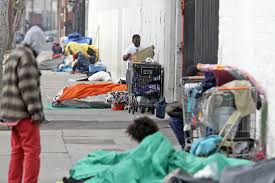
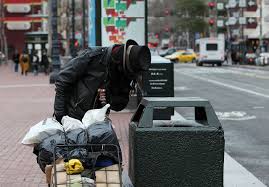
We’ve all seen the man at the liquor store beggin’ for your change
The hair on his face is dirty, dreadlocked and full of mange
He asked a man for what he could spare with shame in his eyes
“Get a job, you fuckin’ slob” ‘s all he replied
[CHORUS]
God forbid you ever had to walk a mile in his shoes
‘Cause then you really might know what it’s like to sing the blues
Then you really might know what it’s like…
I had occasion to find myself in South Bend, Indiana, (yes, the one where Notre Dame is) for work. Driving up and down a particular main avenue running some errands, I noticed a man standing on the corner near the onramp to a highway. He was disheveled, though not too badly, and holding the ubiquitous sign that told his (alleged) story: “Homeless and I need to feed my family” read the message in red paint on the cardboard. I passed him in the afternoon without too much thought, though the prevalence of veterans among the homeless always makes me hesitate and ponder long after I’ve passed. Sometimes, if the timing is right, I’ll give what I can or have on me, though not always. I would imagine I’m like most people in both my thoughts and deeds with regard to the homeless. Perhaps better than some, certainly worse than some others. I’ve worked the odd soup kitchen or two for a church function or for a community service project that my kids had to and I rolled along.
Albert Jay Nock was a brilliant and radical philosopher of the early 20th century. Born in 1870, he lived to see the First World War and died just as the Second one ended in 1945. One of his more well-known and seminal works was “Our Enemy, The State.” Finished and published during the height of FDR’s “New Deal” in 1935, Nock believed that the most effective form of government, and protective of individual rights, was the tribal “anarchism” of the early Native Americans. In an earlier work, titled simply, Jefferson, Nock argued that Thomas Jefferson was a firm believer that the smallest possible governmental units, or wards, allowed the people to, in Jefferson’s own words, “crush regularly and peaceably the usurpations of their unfaithful agents.”
Nock’s later work in Our Enemy, The State focused on the difference between the spontaneous “social power” of individuals coming together for common cause and the forceful usurpation of social power by “State power.” His central thesis was set forth very clearly in the early part of the book and, in three short pages, Nock compels even the casual, disinterested, or even adverse reader to reconsider their entire understanding of State intervention in human affairs.
One might wonder just what the hell all of this has to do with an (apparently) homeless guy standing on a corner in South Bend, Indiana, in mid-October, as I drove by him more than once over the course of several hours. Fair question. Let me convince you by pointing to one of the most trenchant parts of Nock’s argument that stuck with me:
…just as the State has no money of its own, so it has no power of its own. All the power it has is what society gives it, plus what it confiscates from time to time on one pretext or another; there is no other source from which State power can be drawn. Therefore every assumption of State power, whether by gift or seizure, leaves society with so much less power. There is never, nor can there be, any strengthening of State power without a corresponding and roughly equivalent depletion of social power.
Our Enemy, The State, p. 5 (emphasis added).
The thesis seemed interesting to me, but I wasn’t quite sure what Nock meant by “social power” versus “State power.” I thought I quite understood the latter, but I wasn’t quite sure what the former was. Nock’s examples left me with a permanently-altered view of government attempts to intercede to “help” the citizenry. Nock provided two (then)-contemporary examples to illustrate his point more clearly.
…it follows that with any exercise of State power, not only the exercise of social power in the same direction, but the disposition to exercise it in that direction, tends to dwindle. Mayor Gaynor astonished the whole of New York when he pointed out to a correspondent who had been complaining about the inefficiency of the police, that any citizen has the right to arrest a malefactor and bring him before a magistrate. ‘The law of England and of this country,’ he wrote, ‘has been very careful to confer no more right in that respect upon policemen and constables than it confers on every citizen.’ State exercise of that right through a police force had gone on so steadily that not only were citizens indisposed to exercise it, but probably not one in ten thousand knew he had it.
(emphasis mine). We discussed the idea of a citizen’s arrest in law school, but I couldn’t and can’t recall much of what was said. My initial reaction reading Nock was to recoil at the thought that we all had the same powers of arrest as against each other as any officer of the law does, but then again, how much of the current problems in troubled neighborhoods stems from the fact that the local citizens who live there have abandoned even the most modest attempts at reducing the crime, violence, poverty, homelessness, drug abuse, etc., in their neighborhoods? The rejoinder is that the people are not armed and the drug dealers and gangs are and thus the people are at a distinct disadvantage, and hence comes the justification for military-grade police forces armed as well as or better than combat troops for the national defense; yet aren’t their some fundamental factors missing from that analysis? If the drug dealers and gang members inhabit those self-same neighborhoods, who is giving them succor? How do they put their heads on their pillows at night and feel secure in these same neighborhoods where they prowl and prey? These are, perhaps not coincidentally, the very same issues that confronted me while I was in Afghanistan, attempting to “police” a particular area that was rife with terrorism (and narco-traffickers, as well). I’ve watched many a frustrated military member talking to village elders asking, “Why are there rockets being launched from this area at our base every week? How is that happening?? Where do these people come from and sleep??”
Upon careful inspection, what one finds is: first, the police do not actually live in the same neighborhoods that they patrol. In point of fact, they live in suburban outposts, miles and miles from the streets they pass through in their cars, as distant from the citizenry they supposedly serve and protect as they are from the gangs they are supposed to be interdicting. A lot of that is economics and has to do with the pay disparity between cops and the average inner city neighborhood they’re patrolling. Second, the people are at an “arms disadvantage” specifically because the State has disarmed them! It is a well-established historical fact that modern gun control suddenly became vogue during the late-1960s after armed blacks showed up to the California State Capitol armed with – (gasp) – “assault rifles!” (and shotguns, and pistols, as the above-linked article notes). As an aside, Clayton Cramer, a software engineer, does about as good a job as a law professor could in explaining that virtually ALL gun control laws have been racist in their origins and intent. This might seem self-evident when one considers that the right of a freeman to own weapons goes back to the days of sword ownership in England. If not still convinced, the Supreme Court made this explicitly clear in Dred Scott v. Sanford, 60 U.S. 393 (1857). Yes, that Dred Scott. The case itself should be required reading as a part of any basic civics course because of just how many incredible statements of historical significance for Constitutional law are in it – including statements by the Court about what defines a “citizen” and the Congressional power to “naturalize;” the right of states to admit immigrants, the status of descendants of slaves in free states vs. those of native Americans, the limits of judicial construction, and more – but of paramount importance for this discussion is what the Supreme Court used as one of its Constitutional justifications for finding Dred Scott could not sue for his freedom:
More especially, it cannot be believed that the large slaveholding States regarded them as included in the word citizens, or would have consented to a Constitution which might compel them to receive them in that character from another State. For if they were so received, and entitled to the privileges and immunities of citizens, it would exempt them from the operation of the special laws and from the police regulations which they considered to be necessary for their own safety. It would give to persons of the negro race, who were recognised as citizens in any one State of the Union, the right to enter every other State whenever they pleased, singly or in companies, without pass or passport, and without obstruction, to sojourn there as long as they pleased, to go where they pleased at every hour of the day or night without molestation, unless they committed some violation of law for which a white man would be punished; and it would give them the full liberty of speech in public and in private upon all subjects upon which its own citizens might speak; to hold public meetings upon political affairs, and to keep and carry arms wherever they went.
Dred Scott, 60 U. S., 416-17.
To return to Nock’s point about social power and state power, what has happened in inner city black, and other minority, neighborhoods more broadly, is that the state has systematically usurped the “social power” – and the ability to wield it – that was originally resident in most neighborhoods and replaced with state power, which is only intermittently there “on patrol,” but not resident in that area.
If you’re still not sure about Nock’s thesis, he provides many more examples that will shock the modern sensibility about how this country used to work.
Heretofore in this country sudden crises of misfortune have been met by a mobilization of social power. In fact — except for certain institutional enterprises like the home for the aged, the lunatic asylum, city hospital, and county poorhouse — destitution, unemployment, “depression,” and similar ills, have been no concern of the State, but have been relieved by the application of social power. Under Mr. Roosevelt, however, the State assumed this function, publicly announcing the doctrine, brand new in our history, that the State owes its citizens a living.
Students of politics, of course, saw in this merely an astute proposal for a prodigious enhancement of State power; merely what, as long ago as 1794, James Madison called “the old trick of turning every contingency into a resource for accumulating force in the government”; and the passage of time has proved that they were right. The effect of this upon the balance between State power and social power is clear, and also its effect of a general indoctrination with the idea that an exercise of social power upon such matters is no longer called for.
Our Enemy, p. 5.
Nock’s second example involved natural disasters and this is a matter I have given some thought, particularly in light of the revelations regarding the Clinton Foundation’s actions in Haiti.
It is largely in this way that the progressive conversion of social power into State power becomes acceptable and gets itself accepted. When the Johnstown flood occurred, social power was immediately mobilized and applied with intelligence and vigor. Its abundance, measured by money alone, was so great that when everything was finally put in order, something like a million dollars remained.
If such a catastrophe happened now, not only is social power perhaps too depleted for the like exercise, but the general instinct would be to let the State see to it. Not only has social power atrophied to that extent, but the disposition to exercise it in that particular direction has atrophied with it. If the State has made such matters its business, and has confiscated the social power necessary to deal with them, why, let it deal with them[!]
Id.(emphasis added)
I think the power of this example is that it has been repeatedly demonstrated through the modern era, considering the string of well-publicized failed federal disaster relief efforts through FEMA. A fairly comprehensive history of US disaster relief efforts proves the exact point that Nock was trying to make. Over time, as the federal government has increasingly intervened, local disaster relief efforts have tailed off and, in the ultimate slap-in-the-face, have even been prohibited and physically turned away by FEMA, most notably during the Katrina debacle in New Orleans.
Nock’s final example of this diminution of social power was the one that stuck with me, though. Writing during the horrors of the Depression, Nock opined:
We can get some kind of rough measure of this general atrophy by our own disposition when approached by a beggar. Two years ago we might have been moved to give him something; today we are moved to refer him to the State’s relief agency. The State has said to society, “You are either not exercising enough power to meet the emergency, or are exercising it in what I think is an incompetent way, so I shall confiscate your power, and exercise it to suit myself.” Hence when a beggar asks us for a quarter, our instinct is to say that the State has already confiscated our quarter for his benefit, and he should go to the State about it.
Id.
Humor works best as a vector for Truth.
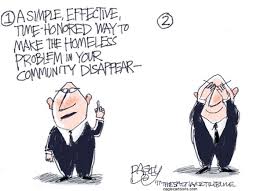
And NOW we come back around to our homeless man on the street in South Bend, Indiana. (And Thanks! for sticking around).
As I drove by him for the final time, it was past sunset, but not quite fully dark yet. He stood there in the same place holding the same sign. I couldn’t even tell if he had moved. I started to reach for my wallet but then the light turned green, so I accelerated away, leaving the man dwindling in my rearview mirror.
“Aaaaahhhh….” I looked in the mirror as I went under the overpass, headed toward the comfort and warmth of my hotel. It was a rather warm October night, one of those last gasps of Summer before Fall fully settles in, he’d be alright… I thought of Nock’s words. “Fuuuuuck….” I muttered, rubbing my chin.
I made an abrupt U-turn like any person who learned to drive in Rhode Island would, went past him, “banged another U-ee,” and there I was – and there he was – still holding his sign. It wasn’t the nicest part of town, but it wasn’t the worst, either. All I had was a ten and twenty dollar bill in my wallet.
While stopped at the light, I looked left quickly where another car had pulled up to the light. There were three young black kids, all teenagers, ranging from perhaps thirteen to seventeen. The car was a bit dented up and they were watching me as I fumbled with my money, then tried to find the window unlock button in my rental car. I finally managed it all and motioned the man on the corner over; I handed him the ten as he leaned in my passenger window. He didn’t see it at first in the dark, but as he stepped back he said, “Oh My God, thank you. Thank you!” He started to walk away and I could hear his voice crack as he said: “I’ve been standing here for hours…”
“I know,” I started to say, but it died on my lips. I’d driven by him all those times…
I looked left and the three black kids were holding their thumbs up. The young kid in back was clapping. I just shrugged sheepishly. Then the car door opened and for a moment I thought, “Aw, fuck. Here we go. He’s going to ask for what I have left.” Then it became clear as I looked at the car it was because the window wouldn’t roll down. The teen leaned out and yelled: “I wanted to give him something, but I don’t have any money!”
“Well…good on ya.” I said back. I couldn’t think of anything clever to say. “He needed that more than I did,” I yelled. “And I had it, so…” They smiled, waved, honked, and drove away as the light changed.
And that was it.
At a time when our country is rife with divisions over political parties, where we are told which lives matter, where we are no longer allowed to speak without fear of retribution if someone should be offended, where “hate speech” is now all the rage, and where I am told a car full of black teens should concern me because they are “superpredators,” where statisticians write papers claiming that abortions of black kids have helped drive down crime rates, where 1 in 4 or 5 or 7 homeless folks are military veterans, I think the “soft revolution” is what I now hope for…
I hope that people will recognize that we all could and would be far more inclined to be charitable to our fellow man if we got to keep a little more of our hard earned money, if our government wouldn’t tell us that IT is the ONLY possible solution to our problems, and if we all decided to simply act more charitably toward our fellow man – to take back our “social power” instead of waiting for the State to fix whatever the need is of the moment. Individual US citizens gave $258 Billion (yep, with a “B”) in 2014 – a record. At a time when the economy isn’t exactly humming. We should be proud of that, but how much better could we do if we got to keep more and decided to “just do it” ourselves, locally?
Regardless of which shitheel gets elected, we should ignore their grand plans to “cure” _______ (drug use, poverty, racism, school shootings, or whatever the issue du jour is) and start exercising our social power. We don’t need to be told what the right thing to do is. We don’t need government to tell us to be kind to one another.
We need to realize that we have to be the change we seek in the world and start doing it in the small ways that we can. Maybe eventually we’ll figure out we don’t need a three or four or five-letter federal agency to fake like it’s doing something while it hands out contracts to favored political donors and the people who really need help go wanting. Else I fear we risk continuing to ignore those in need among us because we have the excuse that “someone else” – like some bureaucratic agency or even the police – is going to do it. They’re not and they never have – and even if they did solve a problem, when was the last time you heard of some federal agency announcing that it had accomplished its purpose and thus was folding up so as not to waste taxpayer money? I won’t hold my breath waiting for the numerous examples…I’ll just try to exercise Nock’s social power to make the world around me a little bit better.
*This post was originally written in the lead-up to the 2016 election.
One day I went to a restaurant/bar that my sister worked at in college. She was just paying her way, and I really just showed up because I didn’t have much anything better to do after work and it didn’t make sense to drive home if I was just going to have to drive back out again to pick her up. So I ordered a beer and told her to bring the check with her. Under the gratuity tab I wrote:
$0.00 HA!!!*
This is my review of Brasserie Caracoule Nostradamus Belgian Brown Ale
Earlier this summer, this article from Politico ruffled a few feathers. It is an editorial discusing a piece of legislation that will not only raise the nation minimum wage to $15, it also contains a provision that will eliminate tipping.
There’s another provision in the legislation—eliminating the subminimum tipped wage—that corrects a wrong that goes much further back than the previous federal minimum wage increase. For workers regularly making more than $30 a month in tips, employers can currently pay as little as $2.13 an hour. That subminimum wage has been frozen at this level for decades. Should the Raise the Wage Act pass the House, it will mark the first time that either chamber of Congress has moved to eliminate the subminimum wage, which not only deepens economic inequalities but also happens to be a relic of slavery.
I suppose that makes it problematic the most racist president in American History happens to carry a bunch of $20’s in his back pocket specifically for tips–and it is. He is supposedly a billionaire, I expect $100’s. Chances are pretty good he made a fortune in the hospitality industry and knows those workers are often motivated to work hard if he tips well.
Should’ve shown more leg
Is the United States emblematic of it’s underlying racism by perpetuating a tipping culture in the services industry? Lets check in with the supposed most perfect country of them all, and an actual racist country and see if there is a tipping culture there…I guess they showed me. Or did they? Chances are the most reasonable explanation for such a disparity between these two countries is—its complicated. After all, in Japan tipping is considered rude.
Here’s my problem: I happen to be a person of color, and while I have experienced casual racism on occasion nobody is lynching me. From the “inherently racist society” standpoint, sometimes somebody will say something stupid. To be honest all it really tells me is that person is an idiot, if all they are doing is saying stupid things there is no sense in letting that affect my mood. From the “inherently racist society therefore racist government” standpoint, some Janet Reno type is not sending anybody to kick down my door, and take me back to where I came from. Yes, immigration raids are a thing, but given that I’m a natural born citizen that’s not really a concern for me. Besides, that’s more a symptom of a our quasi-eunuch culture that practically begs for an enormous overbearing bureaucracy to step in, and make things all better…
The worst I normally experience is from other Mexicans, who assume I primarily speak Spanish based entirely on appearances. Let’s face it, if I put on a Panama Hat, tuck in a collared shirt, and walk around a bit somebody is going to ask if I need hands on my hacienda. Its a look I pull off.
That said, the only way we can fix this is for some to recognize society has moved on from sins of the past. Was it bad? Absolutely. Is it a custom with roots in an unsavory part of history? Okay fine, yes. Is it a custom that continues to be justified by this unsavory history? No, it absolutely is not. We tip because we know some occupations do not make a particularly affluent living, but it is a living because the expectation is the service they provide can be rewarded IF it is exemplary. Failure to provide said service in even an acceptable manner, will result in the employer to fire said employee because that service is not particularly difficult and a replacement is easily found.
People making this argument against tipping culture, conveniently forget the owner of the establishment also loses if the service is bad. The food may be fantastic, but it doesn’t do anybody any good if I am staring at my empty water glass because I am not presently eating that fantastic meal. If I should leave, nobody gets paid and the owner is stuck with the cost of the unserved food. Repeat this process for a year and none of the servers and the owner are without work—because the restaurant is out of business. But servers in Europe are paid without tips… In my experience, the service and food in France sucked, the service in England and Ireland was good even if the food also sucked. Guess which countries I was expected to tip?
Want people to move on from our racist past? Stop trying to scour every single aspect of culture and society in an attempt to root out a nearly extinct boogeyman. The rest of us moved on, perhaps you should too.
Is this beer any good? Hell yeah it is. It is similar to red label Chimay but does not bear the Trappist mark for those that prefer Catholics not fly their freak flag. Not quite as good. What? Did you think I was going to yammer on about Nostradamus?
In the year the emperor’s robe turns ablaze. Drink will spill. The libation bearing my name, flows to enhance the good times they will.
How is that? Brasserie Caracoule Nostradamus Belgian Brown Ale 3.8/5
*Relax, I had $2 in cash on hand and left it on the table. Not enough to pay for the beer, but plenty for a tip. Why wouldn’t I tip my own sister?
Progressives, typically academics, as well, often labor under the delusion that they can mask their slimy, bile-coated race-hatred with verbosity. Indeed, the laconic honesty of a simple racial or ethnic slur hurled in impotent rage seems refreshing to utterly craven attempt at slur through obscurantism.
What rankles the most, however, is that not only will Blake continue to build a career out of dehumanizing black and brown folk who don’t march in lockstep with his radical left-wing societal and political views, but he will continue to be well-compensated for serving as hatchet-man for the vastly majority-white CNN editorial board by running interference for one of their newest poster-children, Rashida Tlaib who, to the delight of progressive media,has helped to successfully bring Jeremy Corbyn ‘Wolf-Who-Cried-Boy’-style antisemitism to American politics. Blake represents just one member of a brigade of CNN’s house, ahem, ‘slaves’ that at the order of their paymasters rushed to spew racial grievance and divisiveness all over its Op-Ed page in a frantic attempt to steer their narrative out of its nosedive after Tlaib beclowned herself at Michael Cohen’s first appearance before the congressional committee by unwittingly insulting the (Democratic) chairman’s “best friend,” which prompted Elijah Cummings to speak eloquently against the identity politics trafficked by this newest crop of elected sea-monsters that make up the progressive wing of the Democratic Party.
And this dusty ass lookin’ motherfucker has the balls to call Patton a ‘token Negro’? This is all I have to say about that, and notice I took only 290 words to say what I could have said in two.
I personally did not watch President Trump’s address. As it turns out, Tuesday is a gym day and I was not going to watch it anyway. A physical impediment strikes me as a foolhardy expendeture because where there is not a long stretch of desert, a mountain range, a wide river patrolled by Texans, or generally something else that is going to kill you before you reach civilization, there is already something there. I travel to Mexico at least twice a year, believe me the fence is already there. This is entertaining to watch however, as the amount of money they are quibbling over is a trifle compared to the overall federal budget. While the effectiveness of a wall or fence is debatable, the amount of money is small enough compared to budget to not matter yet large enough the average person will never see in their lifetime. I also find declaring a national emergency to fund it as a needless power grab, that will bite team red in the ass later on.
That said, the winner of this wins in terms of optics only. Personally, I think Trump is going to get the funding or something resembling it for two reasons:
1 – Unfortunately, government employees are a team blue constituency…
OBEY
2 – While the jokes on social media centered around the team blue response being akin to Bond villians or your parents staying up to yell at you because you came home after curfew….for me something else came to mind.
The loser in these things always seems to be the one that looks like the bigger asshole and lets face it, Trump is blessed by his enemies. As much as I dislike the 33 dimensional chess argument, one might ask why did Trump not try to pull this before?
What? Pull this on Paul Ryan, and be the bigly man that kicks a puppy?
This is my review of Clown Shoes Brewery North of Sonora:
This reminds me of a story…
In the beginning, there was the Treaty of Guadalupe-Hidalgo, this marked the end of the Mexican-American War and resulted in the map looking almost like it does today with one exception. Due to lobbying efforts from the railroad industry; because of the Gadsden Purchase in 1853 the map now looks like it does today. I spoke of this before; it is when my family became American but this story is not about me. This story takes place on August 27, 1918 and is called the Battle of Ambos Nogales.
You think the border is open now…
Prior to this incident, Nogales was a single town between two countries, and today in a sense it still is. Back then though there was no fence. There was a street called la Calle Internacíonal or International Street with the exact border being marked by an obelisk. I have driven on it myself, and crossed it more times than I can remember.
At the time US Customs allowed residents of Nogales, Son to walk across the street and purchase food and other goods from Nogales, AZ. Tensions between the two countries became strained due to the Zimmerman Note. You might recall that from your American History class. The conspiracy was Germany wanted to bring Mexico into the War against the United States. Hopefully, by the time this article goes live that link comes without the disclaimer about the government shutdown… To account for the frequent crossings, US Customs issued passes to residents of Nogales, Son. The Mexican government also followed suit resulting in a confusing process—to cross the street.
This incident began when…
[…]a carpenter named Gil Lamadrid was walking back into Mexico. As he crossed the border, a U.S. Customs Inspector ordered him to halt, curious about the large parcel he was carrying. Only a few feet away, Mexican customs officers directed him to ignore the summons and continue into Mexico. Gil Lamadrid became confused and hesitated as the two competing groups of customs agents shouted instructions to him. At this point, a U.S. Infantryman raised his Springfield rifle to encourage his return. In the midst of the ensuing commotion a shot was fired, and the carpenter dropped to the ground.
Thinking that the man had been shot, a Mexican Customs Officer grabbed his pistol and opened fire on the U.S. guards, wounding an army private in the face. A U.S. Inspector drew his revolver and returned fire, killing two Mexican Customs Officers. Shaken but unhurt, Gil Lamadrid jumped up and sprinted down a nearby street. As the sound of gunfire rattled the neighborhood, citizens on the Mexican side of the border ran to their homes and picked up rifles to join the Mexican troops
In response, the famous 10th Cavalry was deployed to the town….where enlisted were not allowed in a few establishments in Nogales, AZ. If you ever go to Nogales, you will notice it is sprawled across several hills. Perfect for guerilla warfare. A white flag was eventually raised on the Mexican side of town around 5:45 PM but shots were still fired until 7PM. It resulted in the death of the mayor of Nogales, Son who attempted to stop the violence by walking on International Street with a white hankerchief tied to his cane to plead with both sides. Him along with 129 other Mexicans and 4 Americans. With an additional 330 wounded.
Later both sides decided the only way to keep this from reoccurring was to separate both sides, and other towns quickly followed suit. At the cost of what was then, $5000 ($80,250 today), a fence was errected between two sides of a town split between two countries.
Paid for in part by Mexico.
Now this beer is interesting because it is flavored with agave. Making it rather sweet, too sweet perhaps but they call it a porter so it sort of works. There is also some vanilla worked in there somewhere and it is aged in rum barrels resulting in something you will want to share with somebody else, a neighbor perhaps, so you at least are not alone in the experience. Fitting, but given the price tag one that I am not likely to buy again. Clown Shoes North of Sonora: 2.9/5.

 In this classic comedy we find Randolph and Mortimer Duke, two multi-millionaire owners of a Philadelphia based commodity exchange, who constantly get into petty squabbles between each other. This one in particular is a Nature vs. Nurture (pardon the shaky cam) argument, where they propose a practical experiment with a small wager. They take one of their employees, Louis Winthorpe (Dan Akroyd) and switch his place in the world by ruining his life. They find a reason to fire him to take away his livelihood, evict him from his Duke brother-owned home, frame him as a petty thief at his gentleman’s club to take away his social circle, and frame him for drug possession which leads to an arrest with the kicker of sending a hooker (Jamie Lee Curtis) to pick him up from jail when his fiancée arrives to bail him out. His life is ruined in short order, and the hooker, Ophelia, is the only person willing to assist him. In exchange, they find Billy Rae Valentine (Eddie Murphy), a street hustler/con-artist whom the Duke’s met previously. They hire him, give him basic instructions on how to do Winthorpe’s job, and give him Winthorpe’s old home. Both men know nothing of the experiment, nor do they know anything other than their own experiences at opposing ends of the social hierarchy.
 Valentine overhears the Dukes discussing their experiment. Where they effectively ruin one privileged man’s life turning him into a petty criminal, and turn an unprivileged man’s life of destitute into one of prosperity—within a few weeks time. People are essentially products of their environment, and the Duke brothers agree success has little to do with pedigree. The Dukes decide they have little use for either man, plan to eventually fire Valentine, and leave Winthorpe in his personal Hell. They settle their wager of…



 At the time US Customs allowed residents of Nogales, Son to walk across the street and purchase food and other goods from Nogales, AZ. Tensions between the two countries became strained due to the Zimmerman Note. You might recall that from your