Today my daughter came home from school and presented me with this work of art she began composing while on her lunch break:

I have never been prouder.
Uncle Sugarfree suggested it needs more bile, however. Happy Holidays!
Today my daughter came home from school and presented me with this work of art she began composing while on her lunch break:
I have never been prouder.
Uncle Sugarfree suggested it needs more bile, however. Happy Holidays!
John 3:16: For God so loved the world, that he gave his only begotten Son, that whosoever believeth on him should not perish, but have eternal life.
But … why?
The core tenet of Christianity from the git-go has been that Christ died to atone for our sins, which satisfies both justice and mercy.
But … how?
I have never been quite clear how the torture and murder of a completely innocent man does anything at all for justice or mercy.
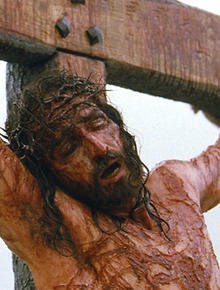
Once upon a time when I was a wee lass, about 8 or so, I was getting ready to be baptized a member of the Church of Jesus Christ of Latter-day Saints. Eight is the age of accountability, when a person knows wrong from right. One thing we do is to make sure our 8-year-olds have a good understanding of the Atonement of Christ. Well, we try. I’m not sure that is possible with every 8-year-old, but it sure worked a treat on me.
 Did I know? Did I understand? Oh,
 hell by golly, yes, I did. And I didn’t like it. Not one bit. Though I could not articulate it and I wasn’t nearly as willing to be shocking as I am now, I knew exactly what it meant:
8-year-old me: Every time I sin, Jesus can feel all the pain of his crucifixion again.
51-year-old me: Every time I sin, I am contributing to the torture and murder of an innocent man.
Narrator: Then she went to a Southern Baptist private school for 9 years.
8-year-old me listening to …
Mormons: We’re all going to one of 3 levels of heaven and the worst one is totally awesome. But you don’t want that; you want the best heaven, so forget those other two. You’re better than that. You don’t want to be with those trashy losers in the lowest of heavens, so you need to work for it. Hard. “Be ye therefore perfect, even as your Father which is in heaven is perfect.” — Matthew 5:48
Baptists: All you have to do to go to heaven is accept Christ into your heart as your personal savior. How big your mansion is on your street of gold and how many jewels you have in your crown depend upon your works, but you don’t have to work at all if you don’t want to. But if you don’t accept Christ as your personal savior, you’ll burn in an eternal lake of fire. “But what about murderers?” If they say the prayer to be saved, they’re good. “But what about the kids in Africa who never heard of Jesus?” Collateral damage, sorry.
Yet I have been assured from the cradle by both Mormons and Baptists that God loves me. Yay me. I have the privilege of being loved by a Deity who is so cruel that he set up mutually exclusive commandments: Do not eat of the tree of the knowledge of good and evil and you must also be fruitful and multiply.
Oh, yeah, I got dunked understanding all this and I followed the logic all the way to its end and it was way too painful to contemplate, so I towed the party lion for years and years and years.
I hated Baptist theology for leaving all those poor ignorant bastards out in the cold with no mercy, while murderers could say a little prayer and go to heaven.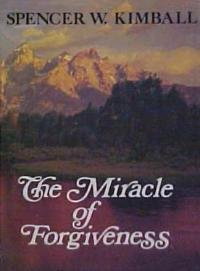
I hadn’t yet been able to articulate what I hated about Mormon theology that required perfect behavior (from people whose very purpose is to fail and learn) with no mercy, and the people who didn’t swear, didn’t smoke, didn’t drink, and followed ALL the rules, got to go to the finest of heavens no matter how good in heart they were.
Mormons: God loves you enough to bless you when you obey his commandments. By the way, here’s a list of the rules. Be perfect and you will get ALL the blessings. Bonus! You won’t have to go to that trashy heaven where all the trashy people are, which might as well be hell.
Baptists: God loves you no matter what you do, as long as you’re saved. Sorry to all the murder victims out there who won’t see their murderers punished. You won’t care once you’re dead and living in a nicer mansion than your murderer. Sorry to all you folks who never heard of Jesus. We’ll feel sorry for your eternal suffering from above.
Mormons have no mercy.
Baptists have no justice.
Narrator: And the little girl stomped her foot and screamed, “IT’S JUST NOT FAIR!”
So here we go …
Over the years I have grown in my faith in the Heavenly Parents [hereinafter referred to as Deity] and their love for us, no matter how many times I fall prey to the “I’m being punished for not following ALL the rules” mindset. I have grown in my faith that the Deity are all powerful, all seeing, and all knowing.
But there’s the rub. Why would an all-powerful, all-seeing, all-knowing Deity need to send their only begotten son to atone for our sins? Why would an all-powerful, all-seeing, all-knowing Deity need their only begotten son to judge us in the last day to decide our eternal fate?
I was thirty-something before I could bring myself to ask this question, though it had been simmering in my mind since I was 8. It was a very painful question to approach, even as delicately as I did. It was an even harder question to form into words to myself. And it was hard as hell all get-out to actually say it out loud and explain my reasoning to somebody. Half my literary oeuvre is dedicated to pondering this topic. By the time I asked the question so baldly in a book, it just made me angry.
This is the question I can’t answer and haven’t been able to get a satisfactory answer from any Christian of any stripe:
Why would an all-powerful, all-knowing, all-present Deity need an intercessor between them and their children to administer justice or grant mercy?
In 1672, 69-year-old Roger Williams clambered into a skiff and rowed, solo, twenty-five miles down Narragansett Bay to publicly debate several Quakers. It was an action typical of Williams who was never afraid to put his beliefs into action. Williams was a fascinating character for multiple reasons, but in this piece I would like to explore his ideas of religious toleration, formulated in the first half of the seventeenth century, long before the Enlightenment forced such debates into a wider public sphere.
Williams was born c. 1603 in London, graduated from Pembroke College, Cambridge 1627, and took orders in the Church of England. However, while at Cambridge, Williams embraced Puritanism which would have had a detrimental effect on his career prospects had he stayed in England. But, in 1630, Williams and his wife Mary (they married in 1629) decided to immigrate to New England. The couple were part of the so-called Puritan Great Migration, precipitated by the crackdown on Puritans initiated by Charles I and William Laud.

By the time Williams arrived in New England, he had embraced Separatism, a more radical subset of Puritanism. Most English Puritans believed that, although the English Reformation had not gone far enough, the Church of England (CoE) was a true, albeit impure, church which God could yet purify. Separatists, however, believed the Church of England was not a true church and could not be redeemed (FWIW: the Pilgrims of Plymouth were Separatists; the much larger number of Puritans who settled at Massachusetts Bay were mostly non-separatists).
Even for a Separatist, Williams was a radical. He believed that all those who wished to be members of the new pure churches in New England must publicly repent of their past involvement with the CoE and declare they would never be involved with it again. All ministers who had served in a CoE church in the past had to renounce this involvement. In fact, insufficient separation from the CoE led Williams to turn down invitations to pastor in Plymouth and at Boston’s First Church. However, in December, 1633, Williams accepted an invitation to become pastor-teacher at Salem, Massachusetts a church largely comprised of Separatists.
Williams’s tenure as pastor at Salem was riven with turmoil. Space does not allow for the details to be provided here, but Williams’s public pronouncements precipitated first a rhetorical conflict between Salem church and the rest of Massachusetts and then between the Salem church and Williams. Eventually the church dismissed Williams as their minister and the Massachusetts government banished Williams from the colony in January, 1636 (Massachusetts eventually rescinded Williams’s banishment – in 1936!).
Williams and a handful of followers founded Providence Plantation later in 1636 on land granted to them by the Narragansett sachems Canonicus and Miantonomi. The small band of Christians created a “compact” for self-government. Part of it read: we…submit ourselves in active and passive obedience to all such orders or agencies as shall be made for the public good of the body in an orderly way, by the major consent of the present inhabitants…only in civil things.
This compact is one of the first indications we have that Williams’s interpretation of the bible and godly authority had begun to change. To some extent, Williams new thinking was an extension of his separatist views. Williams desperately wanted to be part of a pure church, one founded by an ordained minister. So far, so good. But, as Williams theology evolved he came to believe that true ordination could only be passed down from Christ. At the same time, Williams believed that Constantine’s Edict of Milan in 313 had terminated the true church (under this interpretation, the Catholic Church was a false church) and true ordination. Thus, there could no true ministers, and therefore no pure churches.
Mainstream Puritans believed that their “purified” churches were true churches, planting Christ’s kingdom in the world, and that the cause of Christ’s kingdom could be advanced by harassing, or even making war on, ungodly weeds which threatened to overrun the kingdom. Williams, however, believed that God’s kingdom would only come when God sent new apostles (probably at the time of the millennium) into the world. In the interim, therefore, godly plants had no business harassing ungodly weeds. This would lead Williams to reject the idea that orthodoxy could be enforced by the state.
As Williams grappled with his evolving theology, he was also confronted with political problems. In 1643, Massachusetts Bay attempted to extend its authority over Providence. Williams set sail for London seeking an official charter for his settlement. This was granted to him in the form of a parliamentary Commission for Plantations in 1644 and he prepared to return to New England. But, before he set sail, he published one of the finest statements on religious toleration, The Bloudy Tenent of Persecution for Cause of Conscience. So radical was Bloudy Tenent that the English government ordered it burned.

While the pamphlet contained much of Williams’s new thinking on the church, it was his ideas on the intersection between the church and state which libertarians should celebrate. As with other Puritans, Williams believed that the coming of Christ to Earth had created a gulf, a division, between what had gone before and what came after. But, while most Christians believed that the non-ceremonial aspects of Old Testament law should still be enforced by the state, Williams argued there was no such thing as God’s political kingdom on earth and that no modern nation possessed God’s authority to enforce religious law. Williams argued that it was impossible that God would give civil government—made up of sinful people—authority over the church on issues of religious practice.
And then Williams made the point that should bring warmth to even cold, black, libertarian hearts. He argued that civil peace was not disrupted by religious dissent and debates over religion but by the use of state power to suppress dissent and debate. He wrote: the blood of so many hundred thousand soules of Protestants and Papists, spilt in the wars of present and former ages, for their respective consciences, is not required nor accepted by Jesus Christ the Prince of Peace…enforced uniformity [of religion] is the greatest occasion of civil war, ravishing of conscience, persecution of Christ Jesus in his servants, and of the hypocrisy and destruction of millions of souls.
Thus while Williams criticized Catholic Mary (r. 1553-1558), he also criticized Protestant Elizabeth (r. 1558-1603) for her persecution of Catholics. Williams did not even believe it was necessary that civil rulers be Christians. In a second work published in 1652—Bloudy Tenent Yet More Bloudy—he argued that Jews, Catholics, and Muslims could be good civil rulers.
To be clear, Williams was no anarchist, nor even a libertarian. He was after all, a man of the seventeenth century and firmly believed in the need for a civil government, as practiced in Rhode Island. But religious toleration continued to be adhered to (religious anarchy in the colony was further aided and abetted by the teachings of two other dissenters, John Clarke and Samuel Gorton). Baptists and Quakers, both banned from New England, settled in the colony. In 1658 a small Jewish congregation was formed in Newport and French Huguenots settled in East Greenwich in 1686. Rhode Island was certainly not a kingdom of religious peace. There were harsh words and harsh writings aimed at other religions. Both Gorton and Williams left/were kicked out of churches they founded. For many outside the colony, it seemed a place of lawlessness. As a Dutch Reformed minister in New Netherland wrote, Rhode Island was a place where all kinds of rabble live and which is nothing but the latrine of New England; all the bandits of New England retire thither. But, there were no arrests, violence, or punishment in religious matters. Without the civil power involved in running religion, there was no need for the civil power to arbitrate religion.
Tolerance also played out in other ways: in 1647, representatives from the four main towns in the colony agreed on laws banning witchcraft trials, imprisonment for debt, and removed capital punishment for many crimes. Rhode Island even passed a law banning slavery in 1652 although it was only enforced fitfully and then for no more than fifty years (although one of the earliest mainstream voices of abolition was that of Samuel Hopkins, Congregational minister in Newport, Rhode Island from 1770-1803).
The anecdote I began this piece with says it all. Williams believed Quakers were false prophets and heretics, guilty of all kinds of crimes against God’s truth. But the way to deal with heresy, even at 69, was to get in a boat and go to a public debate. It was most decidedly not to call down the power of the state on those with whom one disagreed.
Further Reading:
Full text of Bloudy Tenent
Barry, Roger Williams and the Creation of the American Soul (Viking, 2012).
Field, “Roger Williams, Parliament, and Providence,” New England Quarterly September, 2007.
Goodman, “Banishment, Jurisdiction, and Identity in Seventeenth Century New England,” Early American Studies, Spring, 2009.
Hall, Separating Church and State: Roger Williams and Religious Liberty (University of Illinois Press, 1998).
James, “Ecclesiastical Authority in the Land of Roger Williams,” New England Quarterly, September, 1984.
Lovejoy, “Roger Williams and George Fox: The Arrogance of Self-Righteousness,” New England Quarterly, June 1993.
