Category: Science

  • Chapter 19: Working Behind the Scenes

    Executive Order 13139, which implements 10 U.S.C. § 1107, clearly states that the requirements it incorporated from the statute are for internal management only and confer no right enforceable by any party against the United States. E.O. 13139, §6(b).  Additionally, Secretary of the Navy Instruction 6230.4 of 29 April 1998, which implements the Department’s anthrax vaccination implementation program states that the anthrax vaccine is a FDA-licensed product and not an IND requiring informed consent for its administration.[1]

    “Someone from the editorial board will be down to get you and bring you up to the Boardroom in a minute,” the secretary smiled politely and then went back to answering the telephone, no longer concerned with my presence. I looked around the foyer of the Army Times Publishing Company.  It was a large, open-air affair. Just past the circular receptionist’s desk there was a staircase leading to the upper floors. Beyond that the ceiling opened up all the way to the top of the building and I could see people moving on the upper catwalks, worker-bees in the hive. Off to my left was a hallway that disappeared out of view, with an elevator at the beginning where it opened into the foyer.  To the right looked like a glass-enclosed company store with the usual assortment of sweatshirts, tee-shirts, and coffee mugs with the company logo on them. Army Times published a newspaper dedicated to each service, with the imprint Marine Corps Times, Navy Times, etc. The papers were widely read and respected in each service. I didn’t know how it had happened, but my friends had gotten us a meeting with the Editorial Board of the parent company.

    The door behind me came open and I could feel the cold December air blow in. I played with the zipper on my flight jacket, trying not to fidget. A Marine officer in uniform should not appear nervous. An older gentleman walking by with a long-sleeve tee-shirt with the company logo smiled at me.

    “How are you today, Captain?” He was looking at the leather patch with the wings on it on the front of my jacket.

    “Fine, sir. Thank you.” I flipped my fore and aft cap around in my hand and then looked at my watch. I was forty-five minutes late but the receptionist told me when I asked that the meeting had gotten a late start. I hoped my part hadn’t come up yet. I started thinking that maybe I should have brought my briefcase in with me. Right then a young black woman appeared from the stairs and looked at me for confirmation.

    “Captain Saran?” I nodded. “Come with me, please.”

    “Thank you,” I responded and followed her up the stairs. As we turned for the second flight I saw a familiar face. Colonel John Richardson, United States Air Force Reserve, was coming down the stairs in a light blue power-suit. He smiled and stuck out his hand.

    “Great to see you, Dale, traffic was terrible, huh?” We shook hands as he reached my step.

    “Meh, just sick as a dog. I would have stayed home had my boss not made me go in this morning.” I tried not to whine but I felt like crap. My wife and four girls were all sick at home with some kind of stomach virus that had everyone throwing up, including me. I had gotten back from the hospital with my wife the night before at 2:00 am and I still felt weak and achy.

    “Well, go on up,” he said. “Lou is on right now, then Russ, then you. Are you sure you’re still okay doing this? You know you don’t have to?”

    “No, JR, I’m fine. I just don’t care anymore. Lou and I talked about my status and the relevant instructions. This is a freely made decision. Sometimes a man’s gotta stand up and be counted.” Though he was quite senior to me, I had come to know and think of him by his nickname from our many e-mail chats.

    “Okay,” he nodded reassuringly. “I’ll be up in a minute.” JR turned and continued down the stairs.

    “Great,” I answered with more enthusiasm then my body had in it.

    It wasn’t bravado, nor some inflated sense of honor; I felt comfortable talking to John Richardson about such matters as personal honor and integrity. All of the members of our small band had incurred significant professional risks and opprobrium already in order to bring the flaws and illegality of the anthrax program to light. I couldn’t very well be a part of their group and not be willing to stick out my neck. They had all done a lot more.

    My guide and I reached the top of the stairs, turned left, and I could see a set of large oak wooden doors. As we got closer, I could see a little placard that read “Main Boardroom.”

    “Here you are,” the young lady said and turned away as I reached for the door. I could hear voices. I wanted to make as unobtrusive an entrance as possible so I turned the doorknob slowly and tried to slip in.

    I took in the room with a glance. There were two groups of people – ours and theirs. About seven or eight reporters and editors on the far side of a long meeting table, none of whom I knew or recognized. Everyone had a placard identifying them, but I didn’t have time to read each one. Behind “them” was a bright light with an umbrella behind it and a photographer taking pictures. On “our” side of the table there were five men, three I knew, two I guessed at their identities by our email correspondence. ‘Lou’ Michels – actually J.J. Michels, Lieutenant Colonel, USAFR, attorney-at-law, as well as partner at McGuire, Battle, and Woods, whom I had met at David Ponder’s Congressional testimony – was speaking intently.

    “Hey, Dale! Come on in,” he waved me in without breaking stride. “Hey, Lou” I replied and started to take off my coat, heading for the seat on his left, farthest from the door.  “So again,” he went on, “the informed consent issue is completely separate from the issue about whether or not the vaccine is safe and effective.” As I reached the seat beside him and slid into it, I could feel people on the other side of the table watching me. The photographer started snapping pictures of me.

    I am not impressive in uniform, but I had a few “been there” ribbons from when the squadron I was with rescued Air Force Captain Scott O’Grady from inside Bosnia-Herzegovinia in 1995. Atop the few ribbons I had was a set of gold Naval Aviator’s wings. I could tell the reporters on the other side of the table were curious about where I fit into all of this. Not wanting to appear self-conscious, I swiveled my chair to face Lou as he spoke. I could hear the shutter of the camera clicking. I could only imagine what my boss was going to think if a color photo of me showed up in the next issue of Marine Corps Times. I began to wonder if I should have agreed to do this after all. I was just snapping into my new job as a prosecutor and here I was (still) playing defense attorney – to the media, no less, against the entire U.S. military.

    I listened attentively, even though I had heard Lou make this argument before Congress and I had made a more detailed version of the same one to a judge on several occasions myself. Lou Michels is a seasoned attorney at a prestigious law firm and a former active duty Air Force officer. He is articulate and confident when he speaks, particularly on the legality of the anthrax vaccine. Although I was a Captain and he was a Lieutenant Colonel in the Reserves, I had come to think of Lou, and all the members of our group as a kind of Robin Hood and His Merry Men-like affair. There was JR who was the most senior of all, a full bird Colonel; Tom “Buzz” Rempfer, a Major, Air Force Academy graduate, F-16 and A-10 pilot; Russ Dingle, also a Major and A-10 pilot, and Redmond Handy, another Colonel. Despite the fact that I was by far the junior member of the group, it all felt quite easy and natural. I was conscious of my place in the hierarchy, but certainly not anything like a chain-of-command. Perhaps it was because more than a few of us were former pilots and pilots have a long history of being somewhat less conscious of rank and more conscious of ability, a byproduct of the nature of aviation.

    “It’s like Rogaine,” Lou continued on, “which has some particular relevance to my own situation,” he added parenthetically, looking upward with his eyes toward his own hairline. I noticed for the first time that he had a small patch of thinning hair on the back of his head. “It was originally licensed by the Food and Drug Administration as a blood pressure medication. Now, during some of the trials they determined that it would grow hair on a billiard ball. Notwithstanding the fact that it was already licensed, they had to go back and get a change in the license because of the change in the purpose for which it was going to be used.” He paused for that to sink in. He looked around the table at each of the editors and reporters, the shutter of the camera clicked away. “That’s the law for getting medications legally approved. It is even more imperative when it involves biologics like vaccines.”

    Lou went on for a while longer, hitting the high points of his brief and then excusing himself. I knew he had another meeting to attend at his law firm. We had talked on the phone the day before and everyone knew what their role was in this presentation.

    Russ Dingle, Major, USAFR, went next. He gave a presentation of how the vaccine was, by the definition in the FDA regulations, an “adulterated product” and thus should not be allowed to be shipped in interstate commerce. I had not heard his presentation and I had not met Russ before, except to exchange a few emails over the previous nine months. His knowledge of the company that makes the anthrax vaccine, BioPort, Inc., was unmatched. The reporters asked questions and Russ always had an answer and could cite to the document from which he got it. I was known among my colleagues for being able to pull legal case cites out of my ass on demand, but Russ made me envious.

    I had read all of the FDA inspection reports, but he obviously had access to information that I had never even guessed at. John Richardson had told me that he and Russ had been going through twenty-six boxes of information that they had gotten access to from the House Committee on Government Reform. Russ appeared to have memorized all twenty-six boxes. When he started describing how BioPort’s predecessor in interest, Michigan Biologic Products Institute had added two fermenters to its production line without FDA approval, then added two more and removed the original fermenter from the production line, I felt like my defense of David Ponder and Jason Stonewall had been inadequate.

    As I listened to Russ detail the failed inspections – the dripping paint into production vats, contaminated product lots containing other medicines like penicillin in them, and a list of other egregious quality control violations – the anger and frustration of nine months of defending David ponder and Jason Stonewall welled-up in me. Even worse, the Navy-Marine Corps Court of Criminal Appeals had denied our writ-appeal of the judge’s ruling on our motions. I had until today to submit an appeal of the NMCCA decision to the highest military appellate court, the Court of Appeals for the Armed Forces, one step below the Supreme Court of the United States. My turn was approaching, so I tried to focus and make sure I maintained the momentum in our joint presentation. I  also knew I had to control my mouth; the Judge Advocate General (JAG) Instruction that controls the conduct of Navy and Marine Corps attorneys had strict limits on what attorneys could say to the press and I still technically had pending cases on this issue.

    As a practical matter, most Judge Advocates (myself included) avoided the press completely and referred any questions to the Public Affairs Office (PAO). I was cognizant of the Code of Professional Responsibility for lawyers that also prohibits using the press to influence the outcome of a court. I had just moved to Quantico, Virginia, and, due to my daughter’s health problems, I was now working as a prosecutor in the Office of the Staff Judge Advocate, Marine Corps Base Quantico, Virginia. I didn’t think my new boss, a long-time Colonel, would be particularly enthused to see my name popping up in the Marine Corps Times bashing the government’s anthrax program.

    An Air Force doctor, Captain John Buck in Biloxi, Mississippi, had requested me to be his Individual Military Counsel (IMC) and that request had been denied by my bosses – they had good legal reasons, but in my heart I had hoped that they would carve an exception and let me do it. It dawned on me that perhaps I had become too personally involved with the anthrax issue and that it might be affecting my judgment as a lawyer, but I had been over that ground both in my own mind and with my clients many times.

    “And that’s the vaccine that the Department of Defense is making your service members take, under threat of imprisonment,” I heard Buzz saying. He and Russ had been thrown out of their Connecticut Guard unit over the Anthrax Vaccine Immunization Program (AVIP). Tom looked nothing like what I had imagined. He was young, lean, and a poster-boy for an Air Force pilot. I had pictured him much older from my conversations on e-mail with him.

    “And now,” he went on, “Captain Dale Saran, U.S. Marine Corps, will brief you on some of the current anthrax cases and their status. Dale,” Tom turned to me and winked.

    “Thanks, Buzz,” I answered and turned to my section in the briefing book that John Richardson and some of the others had put together the previous few days. I looked up at the reporters across from me. I tried to ignore the photographer snapping pictures. I could handle my portion of the brief any number of ways. Cool, dispassionate, the quintessential picture of a lawyer. A bit of an act for me, as I am a much more direct and blunt naturally, but I was trying to gauge my audience. What would be most convincing to a group of reporters? I could be more intense, somewhat exasperated at the situation my clients find themselves in. I decided against that – the last thing I wanted to do was come across as histrionic. I had thought a lot about this moment and had never been able to arrive at a decision. I decided to just start speaking and see where it took me.

    I cannot remember exactly what I said, but at one point I recall answering some questions about the status of our appeal.

    “This is nothing new,” I blurted out. There was silence from the other side of the table. “I invite any of you to look at the history behind the current version of Title Ten, section eleven-oh-seven.” And then I launched into my argument. I could feel myself heating-up as I recounted the use of the investigational and experimental drugs on troops prior to and during the Gulf War. I explained how the Food and Drug Administration had struck a deal with the Department of Defense to grant a waiver to allow these drugs to be used on service members without telling them what was being used on them. I recounted the withdrawal of this waiver and the reports of Gulf War Illness. I spoke forcefully, passionately, without consideration for what the ramifications might be to me. I spoke The Truth as I had come to know it in the past year defending my clients.

    I took a breath and looked around. Tom Rempfer and my cohorts were looking at me, waiting for more. I gathered myself, the calm after the storm.

    “That is exactly why this statute was passed, to prevent these types of things from happening again, to prevent another Gulf War-type Illness.” There were some questions. I answered and eventually Tom or someone else picked up a thread and my turn was done. I had so much more I wanted to say. I wanted them to know The Truth, The Whole Truth, as I had come to know it down to the marrow in my bones.

    I looked at my watch. Shit! I thought. I still had to get to CAAF in downtown D.C. and turn in Petty Officer Ponder’s writ-appeal of the NMCCA decision rejecting our request for extraordinary relief. I had to go.

    I listened for a while and slipped out at an appropriate time, saying my goodbyes by touching each man’s shoulder briefly as I passed on the way out. I was proud to have been invited to be a part of their panel.

    Outside the snow was beginning to fall more heavily. I started our family minivan and quickly got into the flow of traffic inbound on I-395 for the District. I had a writ-appeal to finish typing on my laptop and I didn’t have much time to get it into the Court.  With the NMCCA decision, the stay on our court-martial had been lifted. Although David Ponder had come home to Mississippi and his wife and son, Jason Stonewall and Vitolino Arroyo were still in Okinawa, six months after their unit had left and returned to Camp Lejeune, North Carolina, and all three were facing the brig unless I got a higher court to listen to me and overturn the lower appellate court. I looked at my watch again.  Suddenly that stay – and the nail in Kolomjec’s door on Okinawa – seemed a very hollow victory.

    [1] Ponder v. Stone, 56 M.J. 613 (NMCCA, 2000)

  • Chapter 18: The Walking Wounded

    One year ago today, I was stationed in Dhahran, Saudi Arabia. I received my fourth anthrax vaccine. That’s when my problems began. Until that point, I weighed 175 pounds, 5’9″, excellent physical condition. That night, I had a raging fever and my physical condition continued to deteriorate over the next couple of weeks. During that time, I lost facial hair, my testicles shrank to the size of a peanut – the right one that I could find. I had rapid weight gain, mainly in the form of subcutaneous fat, suffered mood swings, had severe groin pain, and I lost muscular strength. I went from a normal workout bench press of 280 pounds to less than 100, and that was in the space of less than two weeks . . .

    As I got ready to leave Saudi Arabia in May, I visited with a new flight surgeon. He reviewed my records and he noted the strong link between a shot on one day and being ill the next. He also directed that I put in a VAERS report at an Air Force medical company co-located on that same compound. I wrote up the report, I walked over and an Air Force – a senior Air Force doctor came out and blocked the report. He scrawled across the back of the page that he did not think they were related, that I needed to see a urologist, and if the urologist concurred then he’d go ahead and file the report. Had he asked, or had he looked at my records, he’d see that I’d been under medical care, specialist care, for over six months.[i]

    “Sir, they’re saying that they’re not going to let me come there to testify.” David Ponder’s voice echoed over the phone. I waited to answer.

    “Listen, don’t worry. Jen’s calling Beth Clay on the staff of the House Government Reform Committee. I’ll get hold of someone there. Believe me, your command isn’t going to take on a Congressional committee.” David Ponder had been invited to testify before the House Committee on Government Reform. He was calling from Okinawa.

    “I hope not, sir.” Although we had gotten the stay, David was still worried that he would be left in Okinawa. This was because members of his command had told him that he would be left in Okinawa until the stay dissolved and/or the case was resolved, even though his unit was preparing to return from its seven-month deployment in the first week of October 2000.

    Coincidentally, in the first week of October 2000, the House Committee on Government Reform was holding another hearing on the anthrax vaccine program. The Committee had already issued an extraordinarily condemning report in April of 2000, after some eight or nine hearings. Specifically, the report was critical of DoD’s media campaign against members who refused to accept the vaccine and it called for a moratorium on the entire program. In an interesting comment on the state of military-civil affairs, Marine Major General Randall West, a Cobra pilot of some repute and point man for the AVIP, immediately held a press conference rebutting the Committee’s report. It was surprising, and disturbing, to hear a senior military officer criticizing a committee of Congress because of its disagreement with a DoD program.

    “Don’t worry, David. We’ll get you here.” I said it with more conviction than I felt. I was in my house in Quantico, Virginia. I had to leave Okinawa early because of medical needs for one of my daughters. The Marine Corps had been fairly accommodating in sending me to Quantico to be near appropriate medical care, but it meant I had been removed from defense. I was now a prosecutor, while retaining my anthrax cases that were subject to the stay.

    “It’s hard not to, sir.”

    “We’ll get you here.” If David’s command didn’t send him, I wasn’t sure what I would do. David’s wife, Jennifer, was very active in lobbying for David with Congressional members. I hoped she would be able to put some pressure on a representative who would in turn put the heat on David’s command. I was already way over my head. An appellate stay was above my paygrade as a Captain, but General Officers giving press rebuttals to Congressional reports was way, way out of my depth.


    When I was detailed David Ponder’s case in Okinawa, my first thought was to deal it out quickly and move on. As I learned more about 10 U.S.C. §1107, I was shocked, but excited, as a defense attorney. I never really focused on, nor was it particularly fruitful for me to argue in court about the safety of the anthrax vaccine. I myself was skeptical of people reporting adverse reactions. Sitting in the Rayburn Building on October 5, 2000, in a chair right behind David Ponder, I had a change of heart. I watched and listened to human tragedies. One woman, the wife of BioPort worker Richard Dunn, explained how her husband died from a systemic reaction to the vaccine.  The coroner for Ionia County, Michigan, announced that Richard Dunn had inflammation throughout his body as a reaction to the vaccine. Mr. Dunn had taken his eleventh shot of the anthrax vaccine in May. He died on July 13, 2000. Richard Dunn was required to take the same shots as service members, as well as annual boosters, because he cared for some of the animals at BioPort.

    Immediately after the coroner’s statement, BioPort issued a general denial, including a claim that they had never heard anything about such reactions at the plant.  This statement was hard to square with the testimony of Mr. Dunn’s wife, who claimed that BioPort actually called several times to see how Richard Dunn was doing and called doctors for him. Either way, her testimony and the coroner’s finding was significant for me because it offered some legal hope for David Ponder, Jason Stonewall, and Vittolino Arroyo.

    Part of the basis for the judge’s ruling in our cases was that we had been unable to show any serious adverse reaction to the vaccine that would justify someone refusing the shot. As I listened to some of the stories of people on the panel, I realized that there were some seriously injured people. One young man, who had begun to have lesions that looked like burn marks all over his body immediately after he received a shot, testified about how he had lost his vision and continued to have medical problems. Incredibly, his father had served in the Army also in Vietnam and had cancer from the defoliant Agent Orange. An Army Major, John Irelan, detailed how Air Force doctors had refused to connect his illness with anthrax and blocked his filing of a VAERS form.

    This refusal of military doctors to even acknowledge adverse reactions was a common theme that I heard repeated by many servicemembers. It was disturbing because it allowed Major General West, in the panel that followed ours, to claim that “of all the people that were here today, there was only one person that has a medical diagnosis that directly links it to vaccine.”[ii] In other words, if military doctors do not diagnose it as anthrax related, then it’s not anthrax related, and therefore there really aren’t that many adverse reactions. Even responding to the coroner’s report finding a systemic reaction to the vaccine General West claimed that “[t]here are other medical experts who believe it [the death] was not [AVIP connected].”[iii] It became clear to me the military wanted it to be a battle of experts and the DoD could always trot out its own medical personnel and how could anyone gainsay them, given the classified nature of DoD vaccine research? And who would dare to question a doctor’s impartiality or medical opinion, even though they were essentially under orders and saying what their employer wanted them to say?

    This is yet another sordid aspect of the anthrax program – the compromise of military medical professionals in service to a corrupt and illegal DoD vaccine program. Report after Congressional report and inquiry after Congressional inquiry reveal that military personnel were not told required information about vaccines or medications, and worse yet, told only that they had to take it. Congressional and GAO reports detail this repeatedly, from the Gulf War’s use of investigational drugs to failed recordkeeping attempts in Bosnia with the encephalitis vaccine. The anthrax vaccine was no different, in large part because the DoD, from the program’s inception, made it a “commander’s program.”[iv] This oft-repeated phrase transformed the medical officer from an independent expert bound by his profession’s ethical rules to provide medical care to servicemembers into a Commander’s staff officer responsible solely for ensuring that the “commander’s program” is carried out, with such trivial consideration as laws or medical ethics thrown in the garbage. Medical officers were given nothing more than talking points around the AVIP, entirely from DoD briefing slides and a DoD website. When I cross-examined the Group Surgeon for Third Force Service Support Group, he acknowledged this was explicitly the case, all while still defending the program.

    During the government’s direct examination, the doctor made broad, sweeping pronouncements about the AVA’s effectiveness against aerosolized anthrax. When I questioned him about the manufacturer’s IND application filed in 1996, he was unaware of it. His answer was that there “may be some political ramifications why they filed that. I don’t know.”[v] I questioned him about the rhesus monkey studies using the AVA and his knowledge of them.

    Q:   . . . have you read the actual results of the study?

    A:  I haven’t read the actual study.

    Q:  Well how do you know then that it is what you said it is? What is your testimony based upon?

    A:  Based upon the briefing sheets that I get. I also looked at the DoD anthrax website which is information that we have –

    What was interesting to me about the exchange wasn’t just his ignorance about the most basic aspects of the vaccine or the program, but was that people refusing the vaccine, who are still patients like any other patient, were now “they” and the doctor and the DoD were “we.”

    This is what happens to those who refuse. Even doctors, who should appreciate more than anyone patient fears about taking shots, had become zealots in defense of the anthrax program. In no other medical treatment regime do we find doctors in lockstep with a military commander about the nature of a medication or treatment. The DoD and military leaders were not providing briefing slides or medical information about Hepatitis B, for example. Or Japanese encephalitis. In those cases, the commander relied upon the expert advice of the doctor to advise the commander of the need for a particular treatment or medical intervention. Somehow with the AVA, however, the entire process was reversed. The histrionic portrayal of the biological warfare threat was such that commanders were now in the position of advising doctors about the necessity of treatments and, more importantly, about the history, background, and safety of such treatments. Had the doctor at Stonewall’s trial looked in a basic microbiology textbook, he would have found that among thirty-six vaccines, the anthrax vaccine was the only one listed under the category “special immunization and experimentation.”[vi]

    Unfortunately, military doctors, non-warriors in a warrior culture, found in biological warfare a chance to be in a position heretofore unheard of for military doctors, as a kind of “biological warfare intelligence officer,” using their medical expertise to advise commanders about the “threat” from disease via biological attack. In the past, the threat from disease was no different for the military than it was for the civilian population and the military doctor’s role was much like a civilian doctor’s: treat people for illness and injury, using preventative medicine to the extent possible. In the Gulf War and post-Gulf War, doctors became special advisors, responsible for ensuring that a vaccine – now considered a part of “total force protection” – was administered to the troops, no matter what. Military doctors stepped all too willingly into this role, abandoning professional objectivity in an effort to be “part of the team.”[1]

    The media bombardment surrounding the anthrax threat allowed doctors to convince themselves of the necessity for their involvement. If it is psychologically understandable, it is still professionally inexcusable. Doctors have an ethical duty to their patients outside of their job as officers, just as lawyers do to the law. If a commander told his staff judge advocate that he was contemplating murdering innocent civilians, then the lawyer would be obligated not simply to advise the commander not to do it, but to stop him from completing such unlawful action or to turn him in for the violation if he went forward. George Annas, in his excellent article on this subject, addressed this question with respect to military doctors.

    What should physicians in the military do when asked to administer investigational agents without the informed consent of the soldiers? Even if such administration is legal . . . it is unethical and following orders is no excuse for unethical conduct, even in combat. It would seem that the only justification a physician could have for participating in the administration of experimental or investigational agents without consent is that the physician sincerely believes that the agents are therapeutic under combat conditions. This is a difficult position to defend, because war does not change the investigational nature of a drug or vaccine. Such a decision would also be contrary to military regulations, which state that although a serviceperson must accept standard medical treatment, or face court-martial, soldiers have no obligation to accept interventions that are not generally recognized by the medical profession as standard procedures.

    A related question is whether the military physician is primarily responsible for the health and well-being of the soldiers under the physician’s care (as in civilian life) or must subordinate the medical interests of the soldier-patients to the military mission. Remarkably there is no written policy or standard view on this question in the military. This issue deserves critical attention in peacetime, because it is not susceptible to rational thought during wartime. An unequivocal policy upholding traditional patient-centered ethics, although not legally required, seems the most responsible position for U.S. military physicians to take.[vii]

    Unfortunately, there still was no unequivocal policy by the respective service Surgeons General on the military doctor’s role. In the case of the anthrax vaccine program, it is important to realize that we were not at war. The rule regarding informed consent has gone from the Nuremberg Code’s absolute position, to Desert Storm’s wartime exigency, to the peacetime potentiality of terrorism. This happened with very little scholarly or public debate and notwithstanding the harms suffered by World War II, Korean, Vietnam, and now Gulf War veterans from investigational treatments administered without informed consent. Mr. Annas, who holds a law degree and a Master’s in public Health from Harvard, testified before the FDA rulemaking committee regarding the Rule 23(d) waiver.

    In December 1995, I was invited to participate in a meeting on Rule 23(d) sponsored by the Presidential Advisory Committee on Gulf War Veterans’ Illnesses. During the meeting, DOD representative continually referred to American soldiers as “the kids” and the responsibility of DOD to protect “the kids.” I probably waited too long to tell him that I found this offensive, but he apologized for his choice of words. Nonetheless, the words are telling. Rule 23(d) treats American soldiers like kids and applies the basic rules for research on children to them with regard to consent – someone else makes the decision for them because they are seen as too immature to make it for themselves. For an adult this is always an affront to human dignity and disrespectful of personhood. In this regard, Rule 23(d) is a mistake and an aberration.[viii]

    This reference to soldiers as “kids” has another, more subtle, persuasive use.  While Mr. Annas viewed the use as derogatory with respect to consenting adults, it also conveys to the listener that the speaker is seeking to protect children, and who could possibly argue that protecting children is not a worthy cause? Of course, as Mr. Annas pointed out, military members are hardly children.

    Mr. Annas was also troubled by the DoD’s insistence that keeping the waiver of Rule 23(d) in place was “consistent with law and ethics.” As he notes,

    Soldiers are not pieces of equipment. They have numbers, but they retain their humanity and basic human rights. DOD should have exercised a third kind of courage – the courage to admit its mistake – and asked FDA to rescind Rule 23(d) and removed this pointless blot on our military laws. Instead, when Public Citizen petitioned FDA to revoke the rule in 1996, DOD supported continuing the waiver of consent rule as “fully consistent with law and ethics.” In mid 1997, FDA asked for public comments on what should become of the rule. The answer remains simple: it should be rescinded because it violates every code and ethical principle developed since World War II to regulate research with human subjects, and it is unacceptable to permit commanders to turn soldiers into research subjects.[ix]


    Endnotes

    [1] This phenomenon is by no means limited to doctors. I have noticed many other non-combatant staff advisors guilty of doing the same thing, abandoning professional doctrines in an effort to please commanders and “get the job done.” Lawyers who serve as Staff Judge Advocates are known for this, frequently acting as if they are the personal attorney of the Commander. I have sat in classes given by senior judge advocates, more than one, who have stated that “the challenge is not just to tell the Commander what the law is, but to find a way to allow him to do what he wants, to fit that within the law.” I call that spin. Better to tell a commander that his actions are unlawful, defend that position if it is honestly held, and suffer the consequences than to prostitute one’s legal opinion and engage in some scholarly rationalization to justify going along with the commander.

    [i] Testimony of Major Jon Irelan, US Army, before the House Government Reform Committee, Oct. 5, 2000.

    [ii] Testimony of MGen Randy West, USMC, before the House Government Reform Committee, Oct. 5, 2000.

    [iii] Id.

    [iv] “Department of Defense Anthrax Vaccine Immunization Program AVIP: Unproven Force Protection,” Report of the House Comm. On Govt Reform, Apr. 3, 2000, p.3.

    [v] Testimony of Cdr Gregory Chin, USN, in U.S. v. Stonewall, record at p.81.

    [vi] Principles and Practice of Infectious Diseases, 4th ed., p. 2770 (1995).

    [vii] George J. Annas, “Protecting Soldiers from Friendly Fire: The Consent Requirement for Using Investigational Drugs and Vaccines in Combat,” Amer. J. of Law and Medicine, Vol. 24, Jan. 1, 1998.

    [viii] Id.

    [ix] Id.

  • Glibertarians.com LITERALLY DESTROYS Eric Swalwell with FACTS and LOGIC

    Introduction

    Is this the dumbest thing we do here?  No, not at all.  You see reader, progression of culture is driven by those that exist on the fringe of polite society.  Quite frankly this site was built upon pillars known as The Hat and the Hair.  There is nothing more fringe than the idea the actions of a semi-mindless automaton named Donald Trump being dictated by the sentient headgear he is wearing at the time.  Using sound experimental methodology to recreate sounds in an effort to test the hypothesis this was not the sound of a congressman producing flatulence is not beyond this site.  Indeed, to do so with a straight face while reviewing beer, therefore is most certainly something you can only find on Glibertarians.com.

    This is my review of Samuel Smith’s Welcome Winter Ale.

    This whole thing was prompted last week when MSNBC interviewed Rep. Eric Swalwell regarding the first day of the “impeachment inquiry”, who appeared to flat loudly on live television.  Roll Tape…

    Naturally, the internet did what it does best and give MSNBC more attention that it could possibly gain on the merits of their own content.  In response to the reaction from the internet suggestions were made as to what was the sound.  Specifically, MSNBC said it was a mug off-camera being dragged across a desk within range of the microphone.  Swalwell himself, also denied the sound was flatulence.

    Hypothesis

    If the sound in the background of the original interview is a mug being dragged across a desk, then dragging a mug across a desk will produce a sound similar to flatulence.

    Methodology

    Three tests to drag a Glibertarians Beer Stein (available the WordPress Store) will be performed with a video and audio recoding each test.  This is not only in essence, a ceramic mug, it is a particularly large ceramic mug.  The first test will be a simply drag across part of the desk immediately in front of the mousepad that has made an appearance on multiple occasions on this site.  The second test will account for the possibility the mug was dragged on a corner.  Finally, the third test will be much like third test, except more pressure will be placed on the mug that the first test.

    Results

    .
    .
    .

    .
    .
    .


    Discussion

    In none of these tests, did the sound produced by dragging the mug across a desk sound in any way similar to the sound produced in the background of the MSNBC interview with Rep. Eric Swalwell.  While it can be argued or denied the sound was flatulence, the explanation the sound was produced by a mug being dragged across a desk is not supported by the results of this experiment.

    Conclusion

    Don’t piss on my leg, and tell me it’s raining, MSNBC.


    Samuel Smith typically makes good beer.  This one is brewed and sold once a year apparently, and I managed to find it at Trader Joe’s for a very reasonable $4.  It is a traditional English ale with a twist…they hopped it.  What?  Don’t run away!  It’s not like that.

    No, seriously it’s not.  It winds up being quite balanced between the usual bready malt, Golden, and Fuggle hops.  Get it while its available.  Samuel Smiths Welcome Winter Ale 3.7/5

  • Chapter 15 – The Stay

    “Well, if they’re going to issue the stay at all, now would be a good time! I mean, if no stay today, by tomorrow night my guy is eating with the big metal spoon, if you know what I mean.” I’m on the phone to appellate defense in Washington, D.C. I look at my watch. The digital face reads 00:31. Ten-thirty in the morning east coast time.

    “Alright, bye.” I hang up. I’m looking at documents, but I’m not really seeing anything – David Ponder’s record book, letter from his wife, character statements, and I’m trying to imagine how I’m going to defend him tomorrow. I’ve got one last motion that I’ll bring at the close of the government’s case. One last grasp that has a sound basis in law, but the judge will deny it, at this point. It’s a technicality.

    From the beginning I’ve had the sense that they have mischarged the offense, perhaps intentionally. The prosecution has charged it as willful disobedience of a superior commissioned officer. Under the UCMJ, that has a stiffer penalty than the more general charge of violating a lawful general order, such as the order from the Secretary of Defense, to take the anthrax shot. The government has charged it as violating the specific Navy Lieutenant’s order, but there is an old case that stands for the proposition that merely repeating a higher order can not make an orders violation the more egregious willful disobedience of a superior commissioned officer. It is called the “ultimate offense doctrine,” but it probably isn’t going to work. Nothing else has.

    I’m tired. I haven’t slept much, I need a shave, and my back is killing me from my tiny desk chair at home and my broken desk chair at work. I need to get David’s sentencing case together, review my opening statement and closing argument, and make sure all of the documents are in my case file, with necessary copies for each of the jurors…

    My head nods and I realize I’ve drifted off at my desk. I look at my watch and see it’s 2:33 am. I rub my face and decide to take a walk.

    The building is dark and empty, except for me and the feisty Okinawan cockroaches. I stroll the dark corridors, my sneakers making a light tread on the tile. I stretch my arms over my head as I walk to the entrance. Out the window, the open field beside our building is dark. I can barely see the slope that I know rises up to a road that runs next to the next set of office buildings and the barracks.

    I hear the phone in the clerk’s office ring, but there’s nothing particularly unusual about that at this hour because of the time difference; people frequently fax documents from the States during our nighttime in Okinawa. The fax ticks away, a counterpoint to the flying bugs banging into the glass on the door and the light just outside of it. Tick-tick-tick. In seven hours, David Ponder is going to be facing a jury, and likely going to jail. Unless that fax. . .

    I walk hurriedly to the defense clerk’s office and go to the fax machine behind the clerk’s desk. Letter-sized sheets are spitting out, face down. I grab one and flip it over to see if it has anything to do with me. The cover sheet is from the Washington Navy Yard. I grab the whole stack while more keep sliding out.

    My eyes flick over the words.

    “YEAHHHHHHHHHHH!!!!!” I let out a guttural yell that echoes throughout the empty building. “Can you feel that, huh!?! Baby, can ya’!?” My best Ace Ventura, hips thrusting, fist pumping. I want to cry with relief. We beat the clock by seven hours. I’ve kept my promise to David and his wife, to Jason Stonewall, and Vittolino Arroyo. We have a stay from the Navy Marine Corps Court of Criminal Appeals. No one’s going to jail tomorrow.


    I take my time packing up and make a few copies of the stay. Before I leave, somewhere near 3 am, I take a ten-penny nail and hammer the stay to the prosecution’s office door. I don’t do it right through the middle, however, because I’m still a Marine Officer and someone might bitch to the CO about a nail in the door. I hammer the nail just deep enough to look like someone was careless; but not all the way through the door, for example. I also place the nail an inch or two above the middle of the sheet, close enough to the top of the sheet that it doesn’t look like it was intentionally in the middle, but far enough down that someone will have to either rip the paper in half to get it off or pry out the nail. It’s an asshole move, to be certain, but I know it might be all the satisfaction I’m going to get in the long run, so I indulge myself. It’s the little “fuck yous” that matter in life. It won’t be the last laugh, but it’s enough to make me smile as I walk to my car for the drive back to Kadena Air Base officer housing and my wife and four daughters.

  • What’s up, Doc?

    The Moon, Jupiter, Jupiter’s moons through a binoculars-October 2019


    Editor’s Note: Some photos may be enlarged by clicking on them.


    Well, after the “downer” tone of my last piece, this piece will look up and away. The night sky captured the imagination of our ancestors. Every known culture has used the sky to capture reminisces of some of their tales. Every week Not Adahn pitches us on how the stars foretells our futures. But in the modern world many of us have lost our connections to the wonders of the night skies. We can go inside where it is warm and well-lit and we can amuse ourselves in ways that were undreamed of even 50 years ago. Our cities have also robbed the night sky of the ability to grab our attention. Ambient light obscures our chance to even see what is visible. None of this is bad. Warm, lit evenings with plenty of food and entertainment has been a goal of mankind for thousands of years. But sometimes you may wonder “What is that light up there in the night sky?”

    You can observe the night sky year round but the summer and fall are easier times to break the problem of not seeing the night sky. During the summer the night sky faces to center of our galaxy and the night sky has lots of things to look at. The evenings are warm. The autumn in some ways is even more favored because many people hunt and are arriving at dark locations away from cities before dawn and remaining until well after sunset. Others are out for morning or evening walks and night clings longer so the opportunity to see the night sky is more easily presented.

    This article is for the casual sky observer. I assume the readers have no precision telescopes, special software or the other equipment that serious amateur sky observers use. If you have an internet connection (if you don’t you’re not reading this anyway), working eyes, binoculars, maybe a spotting scope or a kid Xmas gift grade telescope* you have all the equipment you need.

    (* This is a smaller refraction telescope with no electronics and generally with pedestrian quality lenses. Typically they have low magnification around 35X and higher magnification around 80-90X.)

    What will you see when you look up? Stuff. Most of which is beyond the care and concerns of humanity. Some of the stuff is from mankind and can be humbling to see it whiz along. Some of it is our neighbors. The rocky or gassy planets which formed around us. Maybe you’ll see a visitor from the icy far suburb of the Solar System. I guarantee that you’ll see our companion orb. With patience and luck maybe you’ll see reminders of the power of the universe to alter life, planets or entire star systems.

    One word of warning. What you will see in with your own eyes is one sense, disappointing. You won’t observe the rich colors, incredible details and literally otherworldly viewpoints in the best images released by the elite observatories, NASA, or the ESA. But that will be more than made up by the fact you will be seeing the objects first hand with your own eyeballs and mind. You will be able to combine the seen with the presented and hopefully be able to better enjoy both.

    What do you need to observe the night sky? 1) A night without solid cloudiness.; 2) Your eyeballs at a minimum; 3) Something to tell you what is out where and when. (More in a bit); and it helps if 4) you have some type of optical aid. This doesn’t need to be a $10,000 telescope. It can be a decent pair of binoculars, a kid xmas present type telescope, a spotting scope, or even a decent rifle scope. The more magnification and light gathering ability device has the more detail it will enable you to see. It will also help if you give your eyes some time to adjust to the night away from lights.

    This scribbling will be broken down into Solar System sky objects and manmade objects. I’ll try to keep the jargon down so as the Hitchhikers Guide advises, “Don’t panic”. So let’s head out to the deer stand, or out for the evening walk, and make sure to look up from time to time.


    The Solar System and Manmade Sky

    Let’s start with the easy stuff in our immediate neighborhood of the universe. The Sun, Moon, planets, comets, manmade stuff and others. Seeing these objects rates from really easy to challenging (or lucky). For the most part these things are bright, it is easy to observe their movement, and they show details even with the most basic binoculars or scopes.


    The Moon

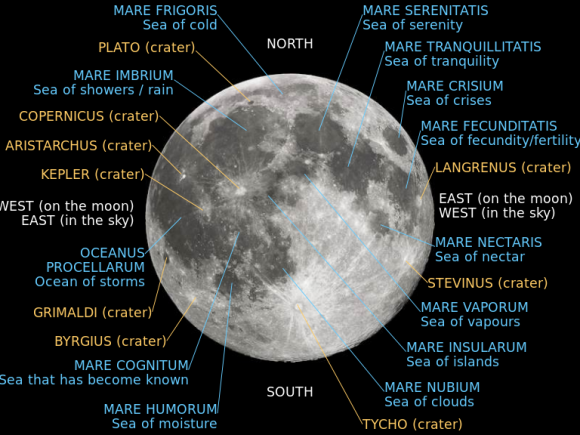
    This is the earliest known night sky object and for the most of a month it takes no great skill to find it, even in a city. The Moon is a delight to observe as the terminator (line of light and night) crosses the lunar surface. The area around the terminator is full of shadows which allows surface features to “pop” into view. Mountains thousands of feet tall cast their shadows miles deep into the cooled lava “Sea” that surround them. Large craters will have bight rims with inky black interiors, and occasionally you’ll see the top of a crater’s central peak poking into the sunlight from the dark void.

    So when is it best to observe the moon? Any time you can see it, except for the 4 days or so around a full moon. During that period the moon appears flat because the light doesn’t cast noticeable shadows
    Through binoculars or your scope the view changes by the hour as the edge of the night rushes along the surface. One cold, dark, and clear pre-dawn in Montana I got into position and waited for daylight and the elk. While I tried to stay, warm, quiet, and unscented I had a great view of the terminator and as I looked at the moon through my binos I caught the moment the sun rose high enough to pass through a breach in a crater wall and send a narrow beam of light spilling across the crater floor.

    Even with no optics the face of the moon changes between nights. If the moon is already up at sunset, you are approaching the full moon. If at sunset, it is the full moon. If there is a noticeable period between sunset and the moon- the moon is waning. Finally if the moon is bright and high in the sky around noon, it is about a week to no visible moon. AKA- the new moon.

    Fun fact about the Moon. Because of a small wobble in the lunar orbit an Earth observer over time can see almost 60% of the lunar surface as the wobbles (libration) let us peek around the corner of the Moon. Also, most lunar sea surface material is about the same color as a middle aged asphalt parking lot.


    The Moon’s features seen through binoculars


    The Sun

    In short don’t look at the sun without eye protection.  Especially now since even there are very few sunspots to see (aka solar minimum).  Welding goggles are not usually dark enough to protect you since most commercial welding goggles are a level 12 darkness and the sun requires level 14.   Small “XMAS Telescopes” usually come with a “solar filter” which can be used with the lowest power lens configuration.  In other times you can carefully observe the Sun’s face for sunspots.  Right now the risk is probably not worth the view.  But, unless you have specialized equipment, the Sun is best observed online from a solar observatory website.   There are three exceptions to this: solar eclipses, planetary transits, and the green flash.  I’ll discuss solar eclipses later.

    Planetary transits are the rare occasions when Mercury or Venus actually are seen crossing the face of the Sun for a few hours.  Because the planets don’t follow the Solar equator the geometry required for the Earth to experience this view are few and fleeting.   The last transit by Venus was June 5, 2012 and was fun to see.  The next will be December of 2117.  A Venus transit was how the atmosphere was discovered and that led to a rush to have observing sites around the world in 1769.  Today science has moved beyond transits for scientific purposes but watching the progress of a planet across the face of the Sun puts the scale of the Solar System in perspective.  While my bet is that I’ll miss 2117 transit of Venus, I am holding out hope for the Mercury’s November 11, 2019 transit of the Sun.  The transit will be visible from all of North America and much of Europe. Japan, you’ll have to catch it online.  I live near an east facing beach so I’ll be able to experience it at dawn.  What you’ll see is a black dot that moves across the face of the Sun.  This website will provide you the information for your location including where on the solar disk you will see Mercury.  If you miss this transit your next opportunity will be November 13, 2032.


    Venus Transit 2012


    To observe the “green flash” you need an unobstructed view of a flat horizon at sunset or sunrise.  It works best if you use an ocean or a Great Lake.  I have heard people have seen the “green flash” on the Great Plains, but I had no luck when I lived in the KC area.

    A “green flash” occurs because the atmosphere acts like a prism and just as the solar disk disappears (appears) at the horizon the prism causes a 1-2 flash of green to appear at the top of the solar disk.  Again, a fun thing to see if you are aware and lucky.


    Green Flash over Pacific Ocean


    Jupiter

    In the current night sky at sunset Jupiter reigns.  Venus is usually brighter but right now it is close to the Sun and hides in the glare of sunset.  In contrast if you look west of south after sunset the largest planet with be the first “star” to come out and remains the brightest object in that part of the sky.  With the naked eye Jupiter is very bright silver white “star”, while through even the smallest binoculars it appears clearly as a disk instead of a point of light like a star.  You can do a quick check if this.  Find Jupiter and check it out.  Now make a closed fist and extend your arm.  Place it just below Jupiter and look at 5 o’clock. That bright red star is Antares. Now look at Antares in your binos.  Antares is the 15th brightest star in the sky.  It a red super giant of about 12 solar masses only about 550 light years away and if it swapped places with the Sun it would fill the Solar System until midway between Mars and Jupiter.  It is truly big. Even that close and big Antares is a mere pinpoint of light.  Every major planet is clearly a disk and not a point of light. (See opening picture)

    In a dark location with good binos (with large front lenses to gather light) you can see Jupiter’s four large moons.  They appear as distinct “stars” along Jupiter’s equator.  With any scope these stand out.  Depending where they are in their orbits you can see up to four of the moons Galileo discovered.  All four are fascinating for their own reasons, but the inner two moons (Io and Europa) move so quickly that observing even an hour apart will reveal clear movement.  With a scope as well you’ll be able to make out some of Jupiter’s banding which look like brownish stripes north and south of the equator.   Jupiter takes about a year to move one zodiacal constellation.  So once you find it, it’ll be easy to follow.


    Jupiter and four largest moons through a small telescope


    If you look at Jupiter or Saturn near the horizon you may be tempted to say, “WTF Double Eagle?  Either you lied about where the moons (rings) are, or the planet tipped over.  Not to fear. This is just an optical illusion because you are essentially looking sideways at the planet.  Look closer to when it is at the highest point it’ll reach in the night sky (AKA zenith) and things will appear normally.

    Fun Fact: The gas giant Jupiter rotates so rapidly (a day is about 12 hours) that even though binos it visibly bulges along the equator.


    Io eclipse on Jupiter’s southern hemisphere from Juno pass Sep 2019


    Venus

    Venus is the Earth’s nearest twin in size and our closest planetary neighbor on average.  (Depending on locations in their respective orbits both Venus and Mars can be closer on any given day.) Because Venus is closer to the Sun it sometimes appears in the morning and other times in the evening (aka Morning and Evening Stars) and can never appear all night like the plants farther from the Sun than us.  Venus is even brighter than Jupiter and at peak times on moonless nights can cast a faint shadow.

    Unfortunately, Venus is not a fascinating view through your optics.  It appears as a silvery disk but with no moons so you don’t get the obvious movements as the moons parade around Jupiter.   The only real trick Venus will display for you is that it goes through phases like the moon, less a “full” Venus.  The fuller Venus appears, the farther it is from Earth; and the more crescent it appears, the closer it is. Because of this, the apparent brightness of the planet remains fairly constant.  A crescent Venus is noticeably larger in your optics than an almost full Venus.

    Venus is not much of a visual treat right now since it just passed behind the Sun.  It sets within minutes of the Sun and is not visible to the casual observer.  In a few months it will return to easy visibility.  In fact, Venus can be seen during daylight hours and is sometimes reported as an UFO near the Sun.  Here is how and where Venus will appear after sunset for the next few months.

    Venus phases and location late 2019


    Fun Fact: Venus’s surface runs about 900F and the atmosphere is so dense that the pressure at the surface is the same as the deepest parts of the Marianas Trench.  The odd thing is that the planet rotates so slowly that a Venusian day is longer than a Venusian year.


    Venus surface in true colors from USSR Venera 14


    Saturn

    Saturn is the third brightest planet and is brighter than almost every star.  As a bonus, now it is near Jupiter in the evening sky so it is really easy to find.  To find Saturn locate Jupiter.  Using the same closed fist stretched out arm technique, go left a bit over two fists and up slightly (10 o’clock position).  That yellowish star is Saturn.  Through even a small scope Saturn will grab your attention because the rings are right there and easy to make out.  (Most binos make Saturn look like a yellowish football.  If you have high quality lenses and steady them against something you can just make out the rings in good conditions.)  Saturn and Jupiter are slowly closing together so over the next months they will be easier to see together. In December 2020 they will appear to almost touch they will be so close together in the night sky (AKA conjuction).

    Saturn’s rings are “open” and easier to see now.  In fact even a cheap telescope will reveal that there are “rings” and not a ring.  As the years continue on we will move more in line with the rings and they’ll almost disappear.  Then they’ll open to the other side.  (14 year cycle).  It takes a bit over two years for Saturn to move between constellations which is why Jupiter will “catch up” next year.

    Saturn through low power scope in poor conditions


    Fun Fact: Gallieo was the first to observe the planets though a telescope and discovered Jupiter’s moons and phases on Venus.  He could only make out that Saturn bulged and it was a later scientist who discovered the nature of the rings.  The rings are almost all small pieces of water ice ranging 1cm to 1M in size and the most visible rings are ~63,000 km wide, but only 10-30 meters deep.


    Night side of Saturn from Cassini. Earth visible at 10 o’clock through the rings.


    Mars

    Mars may not be our closest neighbor planet, but it is the most “earthlike” neighbor with seasons, clouds, snow, occasionally running water, and hosts of other similarities.  In the night sky Mars is an odd duck because it zips through the constellations (a Mars year is 687 Earth days) and changes brightness and apparent size dramatically over a short period of time.  Right now?  It is so close to the Sun it is hidden in the glare.  Come March it’ll escape the Sun’s glare to appear as a bright red point of light around dawn.  By as the months go on the distance between us and Mars will fall until October when we will be only 0.4 AU apart and Mars will be bright bloody red and one of the brightest objects in the sky.

    Mars through a year with the moon for scale.


    Through your binos or spotting scope Mars appears a red disk (Mars’ surface is covered with rust colored rocks).  As the months go on the disk will get larger and the white polar cap will become easier to see.   You need to keep your eye on Mars because it crosses constellations about every other month unlike the dawdling Jupiter (1 per year) and Saturn (1 every other year).  It also spends part of the year “going backwards” as the Earth catches up as it passes the planet.

    Fun Fact:  It has the largest known mountain, Olympus Mons, which is visible through a moderate sized telescope.  It was discovered on Earth in the 19th Century and named Nix Olympia but it was an unknown object. It took until Mariner 9 orbited in Mars in late 1971 to determine what it was.  Olympus Mons is a shield volcano that stands 14 miles high above the base and covers a surface area almost equal to the size of France.  In comparison, Mauna Kea in Hawaii is the tallest volcano on Earth and rises only 6.3 miles from the ocean floor to the summit.  Olympus Mons weighs so much that it has deformed the crust and sits in a 2km deep depression surrounding mountain.


    Curiosity photo of Murray Butte 2019.


    First photo from the surface of Mars July 1976.


    Mercury

    For your basic sky observer Mercury is like Venus but more so.  With a year of only 88 days it rapidly transitions between the morning and evening sky.  Because it is closer to the Sun it never gets far from the horizon.  But sometimes when you are out and the day is transitioning a “star” is seen low in the sky.  If the time of the year is right you are looking at Mercury.  Through our optics it appears as a small oddly shaped disk or crescent similar to Venus but much smaller. See “Transits” (above) to take advantage of the rare opportunity to watch Mercury cross the face of the Sun.

    Fun Fact: Mercury is smaller than some moons.  Both Ganymede (Jupiter) and Titan (Saturn) are all larger than Mercury.  Ice has been detected in several craters near Mercury’s poles in pockets that are perpetually in darkness.


    The Outer and Minor Worlds

    How about the rest of the solar system?  The planet Uranus is dimly visible to the naked eye in a dark location and “good seeing”.  (“Good seeing” is a dark night with little to no wind and a steady temperature gradient through the atmosphere so the atmosphere is moving very little.)  But for the casual observer Uranus is best seen when it is near an easier see thing.  During a lunar eclipse in 2014 Uranus was right below the moon and any observation of the moon meant you couldn’t miss a gray green disk.  That disk was Uranus.  My suggestion is don’t try and find Uranus without the aid of an easy object nearby.  Many websites will be happy to let you know when these days are approaching.


    Total lunar eclipse and Uranus 2014
    (Uranus at 5 o’clock)


    Fun Fact:  Early in the Solar System Uranus was smacked by another object near the same size.  Now it rotates on the side and essentially rolls around the Sun.  Uranus was not recognized as a planet by early astronomers and shows up as a “star” in several sky maps.

    Neptune is invisible to the naked eye but like Uranus can be found with optics when it is near something else.  One morning when I was out before dawn getting into position for a turkey hunt Neptune was near the crescent Moon.  In my binos I could make it out as a very small bluish disk.  Even with a small scope that is the best you can hope for.

    Neptune through small telescope


    Fun fact:  Neptune was discovered by two astronomers independently doing the math on small perturbations of Uranus.  It has been visited only once by an Earth launched space probe.  Voyager 2 passed by the planet in 1989.

    The dwarf plant Pluto.  Forgetaboutit.  Even through the largest earth based scopes Pluto is a speck of light that can only be made out by how it moves over several nights.

    Fun Fact: With a very elongated orbit, Pluto actually moves inside of Neptune’s orbit for 20 years every orbit (248 Earth years).  The last time it did so was 1979-1999 ce.

    The dwarf planet Ceres is another dwarf planet but is more conveniently located in the asteroid belt between Mars and Jupiter.  Under almost perfect conditions it can be made out as a dim star.  It is not worth the effort to find unless you start getting hooked by amateur astronomy.


    Eclipses

    I’ll discuss only the two most common, solar and lunar.  Solar eclipses only take place during a new moon, because that is when the moon is directly between us and the Sun.  Because of the tipping of our orbits it is only sometimes the Moon’s shadow crosses the earth’s surface.

    The next totality that will cross the US is April 8, 2024 and totality will cross Texas and cross west of the Appalachians through eastern NY and curve into eastern Canukistan.

    Solar eclipses – North America


    Lunar eclipses only take place at a full moon and only sometimes for the same reasons.  But since the earth’s shadow is so much larger the area for observed totality covers a larger part of the planet and for a longer time.   As the bulk of the Earth’s shadow hits the face of the moon it starts turning dark, usually orange-ish, but rarely black.  This is because our atmosphere always bends some light through.

    The next lunar totality for the US is January 21st.  The mainland will be in position for the entire thing, while on my island hideaway the moon will rise a bit before totality and I’ll get to observe the rest.  Convenient and warm for me, if not for some of you.

    Occultation

    These are when one object crosses in front of another.  It is the astronomy equivalent of the saying, “Standing there makes you a better door than a window. “  Almost all of the most visible of these events take minutes to a few hours and cover a fairly small portion of the surface of the Earth.  There are websites that highlight the most noteworthy of these.  No real science to be learned, but they are fun to see.  Watching a planet disappear and reappear from behind the moon is a kick.  Visible from naked eye to scope.

    Saturn about to go behind the Moon 2014 through small telescope


    Meteors and Meteorites

    A meteoroid is a small bit of metal, stone or a metal/stone mix in space. A meteor is a meteoroid burning up in the atmosphere.  A meteorite is a meteoroid that makes it to the surface of the Earth.  The average visible meteorite was the size of a marble when it hit the atmosphere.  Most meteoroids burn up at 75-50 miles above the Earth.

    Seeing a meteor is a matter of chance and luck.  You can improve your odds by watching after local midnight so your chunk of Earth is facing our direction of movement.  The other way is to watch during known periods of “meteor showers”.  (See a good website for info.) These are the times when the earth passes through the orbital paths of larger comets and sweep up the dust and small objects left behind comets in their flight.  If you get really lucky you can watch a fireball which is a larger meteor burning brightly. Sometimes they leave a visible smoke path, or even break apart into multiple pieces while you watch. The best fireball I ever saw was one early morning in 1992.  We were out for the Javalina hunt. I had left camp and was walking up a hill to get into position when the hill in front of me blazed white and I saw my shadow.  I quickly turned around and saw a huge fireball traveling across the sky.  As I watched it broke into 4 pieces and kept going, eventually blinking out far to the southwest.  The light from the still hidden Sun caught the smoke and lit it up in the pre-dawn sky.  I thought it was space debris but when I checked with the local observatory a few days later they confirmed it as a meteor.

    Fireball meteor


    As much as many of us hoped for the “Sweet Meteorite of Death” in 2016 and will do so again in 2020 the odds are small that the next extinction level meteorite strike will happen then.  You can play around with this website and find how your very own SMOD will impact you.  Have fun with it.  Can you design the next KT event?

    Fun Fact: The change of definition from meteoroid to small asteroid was formally defined only in 2017.  A meteoroid is grain sized to one meter in size. Smaller size are micrometeoroids and larger are small asteroids.

    Comets

    Here is Comet 1A.  Comets are dirty snowballs left over from the formation of the solar system.  Well outside of the planets there is a large cloud of dust and ice stretching out over 100,000 Astronomical Units (AU = roughly the distance from the Sun to the Earth).  This cloud is known as the Oort Cloud and is the home of the comets.  Passing objects and stellar events give the cloud gravitational nudges and some of these nudges eventually result in a dirty snowball to start to fall into the Sun’s gravity well.  (It may take millions of years between the nudge and the solar pass.)  Those snowballs which come in close to the Sun start to warm up and give off ionized gas and dust.  These are known as comets.  Every year dozens of comets are found and most remain faint and fuzzy telescope objects, but every few years (on average) a comet becomes a bino and naked eye object.  About once a decade a comet will shine bright and luminous thus becoming a spectacular sky show.  Since most bright comets take a long period to orbit the sun their arrival is a once in a lifetime event.  Even Halley’s Comet takes 76 years per orbit so at best you might get two chances to see it.  Spectacular Comet Hale-Bopp passed within 1 AU of Jupiter so the orbit was considerably shortened.  If you are around in 4380ce Hale-Bopp should put on a good a good show.

    Right now the night sky doesn’t feature any worthwhile comets for the casual observer.

    Comet Wirtanen- average visible comet Nov 2018


    Comet McNaugt in daylight Jan 2007


    Aurora

    Aurora form when Solar Wind particles hit the Earth’s magnetosphere and then ionize.   Lower energy particles are blue and green while high energy particles display red. The map shows the band of common occurrence over North America.  Especially energetic solar storms can result in red aurora appearing throughout the continental USA.       More here: https://en.wikipedia.org/wiki/Aurora


    Manmade Stuff

    There is a bunch of it up there, so much in fact that some areas of prime “real estate” are getting downright crowded.  Most manmade stuff is not easily visible to a casual observer, but some of it is.  The biggest and brightest object is the International Space Station (ISS).  This is my recommendation to try and find first.  It is BRIGHT, moves relatively slowly and is impressive.  It is often mistaken for an airplane heading to a nearby airport.  When you see the ISS, you will know you saw it.  Conveniently the nature of the ISS orbital parameters means that it will be visible for multiple days from your location before it goes dark again.  The ISS will be visible from your location during passes for several hours before dawn and after dusk.  I recommend using Heavens-Above.com for finding your visible passes.  (More info below).  For other satellites a find a dark location on a night with no moon.  Watch and you’ll see small lights than are too small to be passing planes moving along.  If you are ambitious yu can use Heavens-Above.com Db to find specific satellites.

    If you are near Commiefornia or the Floridaman Atlantic coast you can occasionally see launch vehicles heading to orbit.  It is impressive to watch a small object at the head of a rapidly lengthening cloud as it is gaining speed and altitude. After the vehicles cross the sky you can watch the remaining gas plumes be twisted by the winds alofy.  They often make surreal shapes with transient splotches of the spectrum. Both the Kennedy Center (FL) and Vandenburg Air Force Base (CA) will publicly announce non military launches to the public.  Most military launches may get only a few minutes, or no, public announcements.


    ISS passing in front of the moon. Time of transit less than two seconds.


    A Smattering of Websites

    There are scores of astronomy related websites out there.  In fact, there are more potential websites for you to visit than the number of fleshy globes that Q offers for viewing to the Glib community each month.  But here are a few websites that are easy to use and are geared toward the interested general public.

    Astronomy Picture of the Day.   You might as well visit it since your tax dollars pay for it.  This is a great site which features just what the name says.  Each picture has a clear description of what you are seeing.  The photos origins are diverse (in the good sense) from NASA, other space agencies, observatories from across the globe, and from amateurs sending in some incredibly artistic works.  The archive goes back to the mid 1990’s.  This has been my first website daily since 1997.

    EarthSkyNews.  This organization covers what is going on for the general sky observer.  You can sign up for a free daily email newsletter.  It has observing updates, news from space, photos, and only a small touch of occasional “climate change” stuff.  They also keep your subscription information tight.  I can’t think of a time when I got unsolicited emails that would have come from them selling my info.

    Heavens-Above.  This is a serious but easily accessible site. It is “THE” public website to track satellites, get sky charts, past and future night skies etc.  When you first visit this site note the upper right corner of the page.  There is a box there. Open it and set your location from a database.  It will not change all the data for your location and remember it.  Look down the left side and the ISS is highlighted.  Click on it and it will give you the visible passes for the next 10 days.  Click on the day and BINGO, there is a sky chart for that pass.

    Keep following down the left side and you get to the astronomy portion with easy to use interfaces.  You want to see what was going on the sky at the moment of your birth?  Just put in the data and there will be the sky for that time.  Want to see the sky for 4th of July 3000 years ahead?  It is there.

    These three websites will serve a casual observer.  There are hundreds of other websites out there from the USG, other governments, private organizations and amateurs. If there is interest after this article I can do a “Part Two” with easy to observe deep sky objects.   With just binos, or in some cases a deep dark sky, you can observe a host of objects, including a galaxy that will one day crash into our own.


    [No photos in this article are mine.]

  • Chapter 14 – Secretary Cohen’s “Four Points”

    In December of 1997, the anthrax vaccine manufacturer was shut down and could not manufacture anything related to the AVA. Notwithstanding that hurdle, Secretary of Defense William Cohen announced that before the mandatory program would begin, it would have to meet four prerequisites:

    1. Supplemental testing, consistent with Food and Drug Administration standards, to assure sterility, safety, potency and purity of the vaccine;
    2. Implementation of a system for fully tracking personnel who receive the anthrax vaccinations;
    3. Approval of appropriate operational plans to administer the immunizations and communications plans to inform military personnel of the overall program;
    4. Review of health and medical issues of the program by an independent expert.

    (My emphasis added). One cannot help but wonder why condition number one would need to be in place if the DoD was confident in the safety and potency of the AVA, as it had started saying publicly. In fact, this appears to have been nothing more than a media campaign to assuage fears because none of these four “prerequisites” were ever met before the program kicked off, which is exactly why the manufacturer had been shut down in the first instance. Each of these factors revealed fundamental flaws with the program from its inception.

    With regard to point 1, “supplemental testing” may well have been the worst idea for the DoD could have ever come up with because what it demonstrated, unequivocally, was failure of lot, after lot, after lot of the vaccine.[1] One of the first findings in CBER’s February 1998 inspection was that “there is no validation of the length of time sublots are held until they are used in a lot. Sublots have been held longer than three years prior to use. There is no stability data to support this hold time.”[i] Lest this seem picayune, consider a little more history of one particular Sublot:

    Sublot AV456 was produced . . . in 5/95 [and stored] until 3/97 at which time it was transported to the formulation room . . . with other sublots to make FAV039. Here it was discovered that AV456 was contaminated with mold, and it was destroyed.[ii]

    While some may say that the fact that it was caught is good news, it ignores the other, older sublots where mold or other impurities were not caught. One finding (among many like this) is particularly noteworthy:

    Lot FAV023 was filled on 12/13/93 and passed a potency test on 3/29/94. It was submitted for redating on 4/2/97 and was placed in the stability program (zero time) at the same time. It is reported as failing potency on 4/2/97. It was tested again on 8/12/97 and is reported as failing potency. A fourth potency test conducted on 10/6/97 is listed as passing by 0.01. There is no investigation into the original result and justifying the additional testing.[iii]

    This finding is most disturbing because it indicates a testing regime that ignores negative test results – twice! – and somehow chooses to validate a subsequent positive after two negatives. How can one know which test result is correct with two failing and two passing results? And how many people would like to line up, roll up their sleeve, and take their shots from that particular vial of the vaccine? Stability testing of biological products is crucial because of the possibility for these products to break down over time. Note that this lot was “filled” in 1993. Four years later it passes a test by .01 after having failed twice previously. This particular finding is in no way isolated: Lots FAV 010, 011, 018, 021, 022, 025, 028, 040, 041, 042, 043, and 044 all had at least one failed potency test that was not investigated and then a passing result was somehow chosen over the negative one.

    FAV016 has its own uniquely disturbing history.

    Lot FAV016 had 6579 vials rejected due to particulates during post-filling inspection. These particulates were not identified, nor was an investigation conducted. The batch was released.

    Someone, somewhere, had unidentified “particulates” injected into them. As a practical aside, one has to wonder how those individuals will get VA compensation if they have an illness as a result of this contaminated product being injected into them in light of the DoD’s positions that there had only been 74 adverse events from the vaccine.

    The list of violations goes on and on and includes several different lots being tested and found with such contaminants as “penicillum species” – a danger to anyone allergic to penicillin; cladosporium – a fungus that can cause infections leading to “rough skin, black lesions on the hands, and sometimes a brain abscess”; altenaria – a fungus that can cause dermatitis in humans; micrococcus – a contaminant that is relatively harmless to humans; staphylococcus saprophyticus – a significant cause of urinary tract infections; staphylococcus epidermis – a significant cause of opportunistic infections, usually for those with some skin puncturing, such as needle/IV intrusions, medical appliances, or surgery; and staphylococcus capitis – another infection causing bacteria.

    Despite all of these findings and more in February of 1998, the program was launched on May 15, 1998, with Secretary Cohen claiming, with a straight face, that “all conditions for implementing the anthrax vaccination program for the total force have now been met.”[iv] There is simply no possible way Secretary Cohen could have said that in good conscience if he was aware of the inspection results in February. And given everything going on around the program, it is impossible to imagine that he didn’t know – because he manufacturer “voluntarily” shut down for “renovations” in January 1998. In reality it shut down as a result of the Notice of Intent to Revoke letter by the FDA, otherwise the February inspection results would have resulted in the facility’s license revocation.

    The second condition of the program was tracking of immunizations. Two DoD briefers talked extensively on November 6th, 1997, about a new program that would be used to track immunizations and of the terrific job the new system had done in Bosnia.[v] At a March 1998 Senate Armed Services Committee hearing, however, Dr. Randolph Wykoff, the Associate Commissioner for operations at the FDA, and Mark Gebicke of the GAO, pointed out that the Bosnia experience left a lot to be desired, particularly of the tracking of immunizations under an IND protocol for an investigational encephalitis vaccine.[vi] In fact, one report used the word “abysmal” to describe it.[vii] Once again, the Assistant Secretary of Defense for Health Affairs promised to get better, but also talked about a new procedure for getting relief from the FDA from the requirements of an IND.  The FDA associate director maintained that the “FDA firmly believes the IND process, as defined in our rules and regulations, is sufficiently flexible [for DoD’s needs]. Additionally, FDA is convinced the Department of Defense has the scientific, clinical, and logistic capability necessary to comply with the requirements of the IND process.”[viii] Evidently, however, they could not and did not do it in Bosnia. A GAO report issued the same day stressed the importance of being able to track vaccine immunizations in order to ensure “that (1) sufficient supplies of vaccines will be available at the various worldwide immunization sites; (2) vaccines that are older than their 1-year shelf life are destroyed; and (3) records of vaccines received, administered, and destroyed are kept to allow for monitoring and tracking.”[ix] Worse yet, the GAO found that during the “Bosnia deployment in 1997 . . . DOD could not account for more than 3,000 (20 percent) of the total number of doses sent to Bosnia.”[x]

    Requirement number three was that there would be approved operational plans to communicate to service members about the anthrax vaccine program. Whatever the operational plans were, in May 1999, the Department of the Air Force circulated a memo to its judge advocates, specifically defense counsel, telling them that “a small number of military members have refused to follow their commander’s direct order to take the [anthrax] vaccine” and that the cause of their fear in taking the shot is “misinformation obtained from web sites set up by special interest groups[.]”[xi] This was a frequent refrain of the DoD, in front of Congress and in the press. The memo also points members to the DoD’s own website, which was established after the program had begun, in order to “counter” in DoD parlance “internet misinformation.” Evidently then, in March of 1998, when the program was about to begin, prong number three hadn’t been met, either.

    It is worth noting that the Army’s AVIP Agency existed solely for the promotion of the anthrax vaccine. It was budgeted at $74 million over a six-year period (FY99-FY05).[xii] No other military medicine program has ever needed to be forced on servicemembers with an orchestrated campaign of this type. William Arkin, a defense writer and former Army intelligence officer observed that “. . . this is the Pentagon versus its own service members. It is a depressing window into the breakdown of discipline and basic confidence in the political and military leadership. That has nothing to do with the Web.”[xiii]

    Criterion number four probably cost the DoD as much credibility (if one can say it had any to begin with) as number one. It would be comical were it not for the stakes involved. Secretary of Defense Cohen announced that there would be a “review of the health and medical aspects of the program by an independent expert.”[xiv]

    Doctor Gerard N. Burrow was the doctor who allegedly reviewed the program at the request of Deputy Secretary of Defense Rudy DeLeon. Dr. Burrow concluded that “[t]he anthrax vaccine appears to be safe and offers the best available protection against wild-type anthrax as a biological warfare agent.”[xv] Unfortunately, Dr. Burrow is a professor of gynecology at Yale University School of Medicine, a specialty that one would not normally associate with some expertise in weaponized anthrax toxins. When that unfortunate snippet from his CV leaked out, Dr. Burrow was subsequently asked by Congress to testify about his review at a 29 Apr 1999 hearing. He declined to appear. Instead, in a 26 Apr 1999 letter to Representative Christopher Shays (R-CT), Burrow stated that

    “[t]he Defense Department was looking for some [sic] to review the program in general and make suggestions, and I accepted out of patriotism. I was very clear that I had no expertise in Anthrax and they were very clear they were looking for a general oversight of the vaccination program.”[xvi]

    The DoD’s claims of misinformation on the internet had a particularly hollow ring in light of its blatant lack of honesty and candor in having something as simple as an independent review conducted. Nothing was ever done about this lie that was foisted off on American servicemembers. No one has ever been taken to task for this laughably blatant fraud perpetrated on U.S. military members and the broader American public.

    Thus, in the end, the DoD’s four-point plan to reassure the public and servicemembers of the safety of the anthrax program – as a prerequisite to beginning inoculation – was nothing more than a PR campaign that ultimately cost the DoD credibility that it did not have to spare. As the truth came out, and was certainly made available on the internet and elsewhere, the DoD’s cries of “misinformation” went unheeded. Service members on active duty and in the reserves began to refuse or leave the service rather than take the anthrax shot.

    If the DoD’s actions appear incredible, the FDA’s inaction is equally baffling.  The FDA is charged, under the Administrative Procedures Act, with the duty and authority to regulate, among many other things, the safety of drugs and biologic products. The FDA has had no hesitation in cracking down on manufacturers who do not comply with its regulations or decisions. The cases in the D.C circuit are legion with the FDA disciplining manufacturers who try to market a drug for a purpose not clearly delineated on the approved labeling or who otherwise fail to comply with IND protocols.[xvii] For some reason, however, in the case of the AVA, the FDA had an absolutely incestuous relationship with the DoD, a third-party who was NOT even the manufacturer! Letters were exchanged between the two agencies regarding non-compliance with IND protocols after the IND protocol was not properly administered in Bosnia. At the March 17, 1998, hearing, the following colloquy took place on this issue between Senator Rockefeller and Dr. Wykoff, the FDA’s associate director for operations.

    Rockefeller:  . . . It’s also not clear to me that FDA’s shoes are entirely clear or clean on this matter. In fact, some would say lax.  I think that FDA and DoD have been exchanging letters about all of this for some months now. And the fact is that seven years after the Gulf War, the situation is still not resolved. If DoD does not adequately answer FDA’s questions with respect to these matters and others, what is FDA going to do about it?  . . . And why, for example, was it necessary for the Presidential Advisory Commission to address the waived informed consent matter six years after the end of the war? So I put to you what FDA would recommend and would do if DoD does not come in compliance more?

    Wykoff:  . . . We have tried very hard to make sure that they are absolutely clear what our rules and regulations are and what our expectations are. We believe that they understand that. We believe that they have the capability of complying with all of our IND rules and regulations. As to whether they will comply in the next deployment situation, obviously we can’t predict that.

    Rockefeller: And if they don’t, is there anything that you can do about it?

    Wykoff: Yes, sir. Obviously, there are a range of options that we have. We would have to determine what the specific concerns are. That drives what are specific actions would be.

    Rockefeller: What are some of the options?

    Wykoff: Well, as we interact with any trial sponsor, we learn more about their ability to conduct IND trials, we would be more or less willing to grant waivers or exemptions to particular requirements.  We could hold them to more – all of the requirements as outlined in the rules and regulations – based on their performance.[xviii]

    It boggles the mind to think that the first words out of the FDA’s mouth are talk of waivers for non-compliance with regulations, particularly in light of DoD’s history in this area. There was, and is, a clearly documented squeamishness on the part of the FDA to step in and bring the DoD into compliance. In downright shocking testimony before a House Committee, Dr. Kathryn Zoon of CBER was questioned by Rep. Christopher Shays (R-CT) about the FDA’s regulatory responsibility.

    ZOON: This is a licensed vaccine. If a physician uses it or DoD uses it, that does not really fall under our jurisdiction.

    SHAYS: So it’s your statement before us now that if DoD doesn’t abide by the protocol, you have no responsibility? That you have set out a requirement? Who is responsible then? Who’s going to make sure that DoD abides by the protocol, if you don’t do it?

    ZOON: We don’t have the authority.

    SHAYS: I can’t believe – I just want to say, Dr. Zoon, I cannot believe that you have just said under oath that you do not have the responsibility to deal with this issue or the authority. You said you don’t have the authority.

    ZOON: I said – yes, that’s correct.

    SHAYS: That is your testimony.

    ZOON: We don’t have the authority.

    SHAYS: Well then who is going to protect our men and women if you aren’t going to do it? Who? Who has the authority?

    The tricky part of this testimony is that it is partly correct. The FDA does not regulate end-users of a product, normally. That is, they do not tell an individual doctor, for example, that he cannot use a drug off-label. Two important caveats to that “normal” example, however. First, the normal patient can’t and isn’t being compelled by their doctor to take anything; they can decline, and they can also sue if something happens as a result of the doctor’s malpractice. A military member has neither of those options. Second, and more directly on point, if the end-user is participating in a clinical protocol, then the FDA does regulate that user. Thus, the DoD’s participation in BioPort’s IND application in order to get an indication against aerosolized anthrax should make them subject to FDA regulation, just as the DoD was during the Gulf War when applying for a Rule 23(d) waiver. FDA’s willingness to accede to DoD’s interpretation essentially allowed the DoD to completely slide on their responsibilities. Some lawyer’s or regulator’s intentional misinterpretation of the FDA’s own regulations resulted in an open abdication of the FDA’s regulatory role over the AVA.

    FDA officials have repeatedly acceded to DoD doctors’ interpretations of the anthrax vaccine label, as well. This is an absurdity, particularly appalling in light of the DoD’s involvement in the manufacturing process. The DoD fundamentally became a manufacturer, for all intents and purposes, and the FDA looked the other way, hiding behind the fiction that the DoD was an “end-user” when convenient. The DoD was involved from the very beginning in the development of the anthrax vaccine. Additionally, when problems arose with the manufacturer, the DoD sent in its own ‘inspection’ teams to ensure the supply of the vaccine. The DoD had paramount liens on every piece of equipment that the manufacturer has. A GAO report in June 1999 found that

    DOD has made a significant investment in renovating BioPort’s biologic facility to meet the military’s requirements for anthrax vaccine . . . Since 1988, DOD has provided about $112 million in contracts, including options, to help ensure the viability of the anthrax vaccine biologic facility. As shown in figure 1, DoD’s contracts provided monies to (1) produce the vaccine, (2) renovate and expand the production facility, (3) provide various support services, and (4) purchase equipment to enhance production capacity. DoD has also provided contract terms and conditions to help ensure the success of the anthrax vaccine program. For example, under Public Law 85-804, which allows for government indemnification of contractors for unusually hazardous risks, DoD indemnified BioPort against product liability. In addition, DoD agreed to allow the company to sell up to 200,000 doses of anthrax vaccine to others, using government-furnished equipment rent-free, after DoD’s requirements are met.[xix]

    Amazingly, this is chump change compared to what the Defense Contract Auditing Agency found in 2000! That report led to an Inspector General Investigation. Notwithstanding numerous audits that found that the company was not financially viable, BioPort requested contract amendments that included $1.28 million in bonuses for senior management that amounted to 109% of the managers’ base salary. This was deemed an “unreasonable expenditure” by the DCAA in light of “BioPort’s current financial condition.”[xx] Okay, so someone disapproved, right? Well, sort of, because the manufacturer had almost no real financial incentive to produce an FDA approved vaccine under its contracts with DoD to begin with: the contract paid the manufacturer 90% of the contract price before the FDA ever inspected the vaccine. Yes, read that again.

    Put another way, BioPort only got paid 10% more for the product being approved by the FDA. At one point, the Department of Justice was looking into criminal charges as some $6 to $8 Million of the money provided to the manufacturer was unaccounted for.  Additionally, the fact the former Chairman of the Joint Chiefs of Staff Admiral William Crowe was a co-owner of the facility, as well as Dr. Robert Myers, (formerly of MDPH and MBPI) can hardly escape attention. Crowe was the first senior military officer to have come out publicly in support of then-Democratic party candidate for the Presidency, Arkansas governor Bill Clinton. While both Crowe and Myers disavowed any “inside” preferential treatment from the DoD, one must wonder if the decision to award BioPort the contract had anything to do with either’s presence as an owner. Finally, emails from inside the DoD suggest that the agency actually had its own people “on site.” During hearings held by Representative Christopher Shays in May 1999, an email was sent from Brigadier General Eddie Cain, the Director of the Joint Program Office for Biological Defense, to an Army Colonel John V. Wade. In the email Cain warned that “[I]f you think Congressman Shays was critical of the current relationship between FDA & DOD, wait until he finds out that DOD is calling the shots on-sight.” [sic][xxi] When this email surfaced during the court-martial of Air Force Captain (and medical Doctor) John Buck, the FDA had “no comment.”

    The FDA has, for whatever reasons, backed down from the DoD to the point that after the warning letters, the notice of intent to revoke, and a failed inspection thereafter, the agency still withheld pulling the manufacturer’s license because the DoD interceded on behalf of the company. In a June 25, 2000, interview with the Vancouver newspaper The Province, Mark Elengold, the Deputy Director for CBER, explained what happened.

    The FDA held off pulling the licence, in part because it would have left the U.S. Department of Defence [sic] – which had just announced that all soldiers were to receive anthrax vaccine – with no domestic source.

    “This is a one-source product so we tend to try to work with firms and put additional monitoring steps in to avoid revoking the licence,” said Elengold.  The prestigious British medical journal Lancet reported at the time that ‘a plea from the Pentagon has prevented an ‘eleventh-hour’ closure of the only U.S. producer of anthrax vaccine,” according to an e-mail to DND [DOD?] medical headquarters in February 1998.

    Elengold confirmed the Pentagon sat in on a crucial call to the company in which he discussed revoking the licence.”[xxii]

    Electronic mails surfaced in and around 2000 show not only did the DoD convince the FDA not to revoke the license, but DoD also attempted to bully both the manufacturer and the Government Accounting Office at the same time. In one e-mail, a Pentagon official discusses how other agency supervisors were urging the U.S. Food and Drug Administration and the manufacturer of the vaccine to release lots that had been held up for scrutiny by them (the FDA). This despite Secretary Cohen’s public insistence on supplemental testing to ensure safety of the vaccine, one should remember.

    On Feb. 22. 1999, Dr. Michael Gilbreath, a civilian Pentagon biological defense employee sent an email to U.S. Army Brig. Gen. Eddie Cain, then Director of the Joint Program Office of Biological Defense (JPOBD). Gilbreath wrote that he had “received information this morning from BioPort that individuals within the DOD contacted them and threatened that DOD would circumvent BioPort and contact the FDA regarding availability of anthrax vaccine lots currently under review at the FDA . . . Any such actions by DOD would be inappropriate.”[xxiii]

    E-mails also reveal that the Pentagon was having trouble countering the U.S. General Accounting Office’s assertion that the vaccine is improperly licensed, and that it has not been proven safe and effective. Cain indicated in one e-mail that then Secretary of Defense William Cohen would be writing to the GAO, whose findings have consistently gone against the Pentagon, to protest “the expertise put on this (vaccine) project” by the watchdog agency.

    “If we cannot answer these questions, we (DOD and the Administration) are in big time trouble,” Cain said in the May 3 e-mail. “…We are digging ourselves a hole that will be too difficult to crawl out of.”[xxiv]

    The FDA also stood by when adulterated vaccine was shipped to the Canadian military and when 59 Marines were given shots from expired lots of the vaccine.[xxv] The FDA’s complicity with the DoD’s actions has left service members with no recourse but to either take the shot, be court-martialed for refusing, or leave the service somehow if their commitment allows it. If the service member simply will not take the chance on the vaccine’s safety, the penalty for refusing is court-martial with a certain conviction. Military Judges simply would not hear that the vaccine is investigational, nor would they even allow service members to present that information to a jury. The FDA’s refusal to act leaves the judge with an out: if the FDA thought it was investigational, why wouldn’t they just issue an opinion to that effect? Worse yet, some military judges would not wade through the necessary materials in order to understand the FDA regulatory process and what an IND is, or they would find that the Secretary of Defense’s actions were in legal parlance “non-justiciable” disputes between “co-equal branches of government.”

    The member who fights will be convicted and punished. When an Air Force Doctor, John Buck, tried to submit evidence that the specific lot that he was to have received, FAV044, was subject to a recall because it was expired, the judge did not allow the evidence to come into court. The only option left for service members was to resign quietly, leave at the end of a service obligation, or fight behind the scenes to ensure that the law is followed. That is what a group of persistent officers had been doing from the word go.

    Endnotes

    [1] It would take up too much space to detail all of the failed lots, for their various reasons during the February 20, 1998, CBER inspection on the lots of AVA. Some of the more egregious violations are listed. See CBER Inspection report dtd 2/20/98 for a complete listing.

    [i] FDA Form 483 Inspectional Observations Feb. 4-20, 1998.

    [ii] Id.

    [iii] Id.

    [iv] May 15, 1998, SecDef memo.

    [v] Nov 6, 1997, background briefing

    [vi] Mar 17, 1998 Senate Hearing, Committee on Veterans Affairs Holds Hearing on the Nomination of Togo West as Secretary of Veterans Affairs and on U.S. Biologic Vaccines for Gulf War Veterans.

    [vii] “Abysmal” tracking job quote ????

    [viii] Id.

    [ix] GAO Report T–NSIAD-98-83 p.8 (March 17, 1998).

    [x] Id.

    [xi] 18 May 99 AF memo

    [xii] Charles Cragin, PDASD Reserve Affairs, testimony, 3 Oct 2000.  See: http://www.house.gov/reform/hearings/healthcare/00.10.03/cragin.htm

    [xiii] William Arkin, “Bugged by the Net”, Washington Post online, 27 Sep 1999.  See: http://www.washingtonpost.com/wp-srv/national/dotmil/arkin092799.htm

    [xiv] AVIP Impl ltr 18 May 98

    [xv]  See: http://www.defenselink.mil/other_info/burrows.html

    [xvi] Id.

    [xvii]

    [xviii] Mar 17, 1998 Senate Hearing, Committee on Veterans Affairs Holds Hearing on the Nomination of Togo West as Secretary of Veterans Affairs and on U.S. Biologic Vaccines for Gulf War Veterans.

    [xix] GAO Report GAO T-NSIAD-99-214,  (June 30, 1999)

    [xx] IG Report dtd March 22, 2000.

    [xxi] Dave Eberhart, Stars and Stripes.  May, 2001.

    [xxii] Ann Rees, “Their Dangerous Dose”, The Province [Vancouver, Canada], 25 Jun 2000

    [xxiii] E-mails Suggest Pentagon Pressured FDA On Anthrax Vaccine, Thomas D. Williams, Hartford Courant, May 17, 2001.

    [xxiv] Id.

    [xxv] See Most Dangerous Dose (Canadian article on vaccine) and GAO report on Marines T-NSIAD-00-36.

  • Chapter 11: United States v. Stonewall, July 2000

    “Are you ready?’  Justin and I collected our paperwork. I had defended Marines and sailors facing a lot more time or charged with much more serious crimes, yet I was more nervous than I had ever been before walking into court.

    “Hope so.” I muttered. I did not have my usual confidence. It wasn’t because I didn’t believe I would give a good presentation, or that the law and facts weren’t on my side – which is the norm in criminal defense. It was because I knew that it wouldn’t matter. I had reached the inevitable conclusion that no matter what I did, the judge was not going to find the order to take the anthrax vaccine unlawful or, even a lower standard, allow us to overcome the government’s presumption of lawfulness and get in front of a jury. It simply wasn’t going to happen.

    “Are you ready, Lance Corporal Stonewall?” I turned to Jason Stonewall, who sat in the chair, hands folded in his lap. He had a slight, beatific smile on his face. Jason Stonewall had four plus years of college and was a bright young man; he also had a sterling reputation as a machine-gunner. He believed in the Marine Corps, in its officers, and in its legal system.

    “Yes, sir!” He stood up. Whenever Stonewall spoke, he reminded me of Cuba Gooding, Jr. He looked a bit like the actor except that Stonewall was broader in the face and chest. His voice even had the same raspy quality. I once told him this and he laughed.

    “Captain S,” Stonewall began, “if anybody was ever ready for this argument, it’s you.” I wanted to say thank you, but I just smiled in return, the pinched kind, the one I knew I used to avoid having to say anything inadequate or lie. Lance Corporal Stonewall also believed in us – in Justin and me – so completely and that was what disturbed me the most. I felt like an actor in a badly written play.

    “Let’s go.” We headed to the courtroom.

    We took our seats, me on the inside, closest to the opposing counsel and the judge, Justin at the far end of the table, with Stonewall in between us. Just yesterday we had sat here with our expert witness, Doctor Michael Cohen, on the stand, explaining the microbiology of the anthrax vaccine in detail. While his testimony helped, it hadn’t won the day, which we knew anyway. Mike Cohen wasn’t an anthrax expert. In fact, when he first walked into my office, I pegged him as something else entirely. He had a briefcase and an inquisitive manner and he had read about my court case involving Petty Officer Ponder.

    Reporter, I had thought, except something was a bit…eccentric about him. After a bit of conversation, I finally figured out he was a scientist and felt guilty. I could easily have been Mike Cohen had it not been for choices earlier in my life. I once wanted to be a research scientist and had spent the summer between my junior and senior years of high school studying astronomy at the University of Georgia under the Director of the Astronomy and Physics Department.  Later, I submitted a paper based upon that research to the annual Westinghouse Science Talent Search. I came in the Top Forty in the Nation and was invited to Washington, D.C. to compete with 39 other students for some serious scholarship money. I learned two things at that week-long competition: first, that there were some incredibly smart high school scientists out there(!); second, I was not cut-out to be one of them.

    Mike Cohen reminded me of some of those students. Incredibly intelligent, knowledgeable about his chosen subject matter, but not necessarily able to communicate it outside of the circle of academia to the layperson. Mike had come through when the court refused all of our experts from the states to come testify. A biology professor at the University of Maryland, he had his Ph.D. in microbiology and had offered his help in Petty Officer Ponder’s case because of his belief that the anthrax vaccine was not properly made, nor safe, and nor based upon scientifically valid data. He had Marines in his biology class who had adverse reactions form the vaccine and as a scientist, he had to investigate. I was grateful for his help, but he was just another actor in the U.S. military’s comedy of errors.

    “All rise,” Captain Kolomjec intoned as the Judge came in.

    After getting through the preliminaries, Judge Stone got down to business.

    “Okay. Let’s talk about who should begin first. It is, after all, the government’s motion in limine, but the defense has the burden of rebutting a presumption in the government’s favor. I think we could probably cut to the chase and let the defense go first, given that presumption, unless either party objects.”

    There were no objections. Major Stone turned to me.

    “Sir, you have the floor.”

    I stood up and moved out away from our table and out into the well, the middle of the courtroom.

    “Thank you, sir. First, I would like to point out where we are and where we are going. The government has a presumption in its favor, a rebuttable presumption, which is not impossible to overcome. The defense need only put on enough evidence to overcome that presumption in order for the accused, Lance Corporal Stonewall,” I turned and gestured to Jason, who looked studious with his glasses on, “to get his day in court.”

    “What’s the quantum? I mean, clearly you can rebut, but what is the quantum of evidence required?” Thankfully, I had looked into this. My law school civil and criminal procedure professor had prepared me well.

    “Sir, the case law isn’t clear that it’s a preponderance, but it would certainly seem contrary to notions of fairness if it were beyond a reasonable doubt. Having analyzed this–”

    “Well, is it just some evidence? A scintilla, as it were?”

    “Sir, it is the defense’s opinion that procedurally this is like a motion for summary judgment in the civilian legal system. The government has essentially asked you to find that there are no genuine issues of material fact with respect to the lawfulness of the order and that the accused therefore has no right to get into court at all, sir. Thus, we find ourselves procedurally, in a similar situation to a motion for summary judgment.” I waited for the Judge’s reaction.

    “In reverse, you mean.” He caught right on. That’s what I liked most about Judge Eric Stone.

    “Exactly, sir – in reverse. Therefore, if the accused can show there is or are genuine issues of material fact, then the case should be allowed to go forward. Support for that, sir, comes form the case of Unger versus Ziemniak, which we think is a propos of our current circumstances.” I paused a moment to see if he was following, and as I gathered myself for the crux of this first part, Justin quietly slipped a copy of the Unger case onto the podium for me. Thank you, I mouthed silently, as I tuned to pick it up from the lectern behind me.

    This was the most clever play I had, something I had labored over, discussed with other lawyers, researched, and thought was the one chance we had to win this case. I would never be able to convince the judge straight up to say the order was illegal. It would throw the entire Anthrax Vaccine Program into disarray. A military judge in some obscure outpost on the edges of the Empire – Camp Foster, Okinawa, Japan – was not going to invalidate the entire DoD Anthrax program. I thought I was good, but I wasn’t that in love with my arguments. No, instead, I was simply trying to get the judge to give me one, small thing: let me put what evidence I had before a jury. I might not trust “the system” to get it right, but I did trust military juries. Even though I had only a few months as a lawyer, I had interned as a prosecutor, been a legal officer in my squadron, and been an officer for almost ten years. That experience convinced me of one ineluctable fact: Marines, especially on juries, want to do the right thing and will do so regardless of what it means to broader equities, if they’re allowed to see the evidence.

    I just needed to convince the judge that we were entitled to an opportunity to at least put on some evidence to a jury.

    “In Unger, sir, a female Navy Lieutenant refused a mandatory urinalysis test. Appellate case law by then had made clear the validity of the order to submit to a urinalysis in the military. There was no question about the validity of that order. Such orders had already been challenged on Fourth Amendment and a number of other grounds and failed.

    Lieutenant Unger specifically challenged the validity of the provision in the military’s urinalysis program – in the written order – that required direct observation of the act of urinating into the cup. She filed a motion that the order was unlawful as a matter of law. The trial judge ruled against her and she took an extraordinary writ, an appeal of the judge’s decision, all the way to the Court of Appeals for the Armed Forces.” Judge Stone was leaning forward, squinting, and appeared genuinely interested… or so I hoped.

    “Interestingly, sir, CAAF decided against Lieutenant Unger on the lawfulness of the order. The Court said, as we would all expect, that the order was lawful. However, the Court did not dismiss her claim. Instead the Court found, essentially, that there still existed ‘genuine issues of fact’ about the circumstances under which she would be required to take the test that a jury might find violated her statutory and Constitutional rights. The Court pointed out, for example, while direct observation might be lawful, if the direct observation were required by a male, that might be an “unreasonable” seizure under the Fourth Amendment. Or, if the order in question had a procedure or was being conducted such that the observer was required to watch from within 18 inches, their face, um, right there, as it were,” I held up my hands as if I were a Hollywood director framing a shot, or at least like I had seen other people mimic, “then the Court noted that a factfinder might conclude that was unreasonable.” I had gotten through that entire exposition with no disagreements, no argument from the Bench, which could mean one of two things – either he agreed or didn’t care.

    “This is exactly where we find ourselves today, sir. The defense has, under four prongs I will address in a moment, put forth sufficient evidence to show that there exist genuine issues of material fact about the lawfulness of the order. Like Lieutenant Unger, the process under which the shot is given could be viewed by a finder of fact as unlawful because of matters that the defense has submitted. This does not mean that we will win at trial. It might be that a jury decides, after hearing the defense evidence, that it still was lawful and therefore we lose. But for the purposes of this motion and whether you should find that as a matter of law the order was lawful, there exist genuine issue of material fact about the lawfulness. I would like to turn to those matters now.” Still no disagreement, so I ploughed on.

    “First of all sir, we turn to 10 USSC, section 1107.” I was warmed up now and somewhere I still believed that a military judge, this military judge, might do the right thing. Justin put the statute in front and sat back down.

    “Sir, there is no straight-faced argument that the anthrax vaccine is not an investigational new drug or a drug unapproved for its applied use. Those are the words of the statute. If it is either an IND or a drug unapproved for its applied use, then there is a real question about the lawfulness of the order to take the shot. You have, sir – the defense has given you in previous submissions, the 1996 application by the manufacturer of the drug that requests an amendment to the existing license to get an indication for aerosolized anthrax. This is presumptive – conclusive evidence, I would say – that the drug is an IND.” I paused and Justin slid the affidavit of Mr. Sammie Young onto the podium, another gift from Lou Michels and several other persons who were involved in fighting this back in the states. Sammie Young had been Deputy Director of the FDA during the time that AVA had been licensed and the procedures for licensing a vaccine had been developed. He simply couldn’t believe that the FDA had given the DoD a pass on the whole issue.

    “The idea being why would the manufacturer put it in an IND status if you yourself, if the manufacturer, didn’t think it was an IND,” the military judge supplied.

    “Exactly, sir. Also, it’s an IND because, as you can see from the affidavit of Mr. Sammie Young, former Deputy Director of the FDA, that once a company submits an IND, the drug becomes an IND thirty days after the submission when used for the purposes listed in the IND. Thus, one of the listed reasons for the IND is an aerosolized indication, if it I being used for an aerosolized indication, it’s an IND. Period.”

    “Okay,” the judge held up his hand, “suppose I agree with you.”

    “Yes, sir.” Suddenly this seemed to be going too well and I was wary. I had never had a time, in any real or mock proceeding where a judge began with “suppose I agree . . .” or “suppose I grant your point . . .” that ended particularly well.

    “…That it’s an investigational new drug in accordance with 1107. I mean, you can put on, it appears, a lot of evidence on that and it may in fact, be the case. What I’m really interested in is why should this accused be able to, in law, use 1107 in a military court-martial?” There was a strange moment after that question, of complete Zen-like clarity, where I saw exactly where this was all leading, but my mind simply refused to acknowledge it. I had only had two of those moments of satori, of seeing into the heart of things, in my life. The first was as a troubled teenager, not long after I had run away from home, but the second one was the only other time in my life where I could recall a moment, a specific, measurable instant, where my mind simply refused to accept what I could see was about to happen: that other time, I was in a hover at one-hundred and fifty feet when the second engine on my helicopter quit and we started to lose turns on our rotor head and fallout of the sky. I felt connected across time in that instant in the courtroom, and then my mind walled it off.

    The judge must have caught that something was wrong.

    “I don’t mean to cut you off, but –”

    “No… No, sir.”

    “Your evidence in support of the argument you have just made is extensive, and it is before me to consider. And I’m telling you that I understand the logic of your argument. But I’m interested in why this accused should be able to raise that federal law in this court-martial in the absence of a direct statutory conferral of rights.”

    “Yes, sir, then I’m more than happy to move on to save the court’s time.” But this was a lie, I was not more than happy. Nothing could have been further from the truth. I knew then that the case was over. I should have responded the way I immediately wanted to – “Because it’s a fucking federal law, you honor. You mean we get to ignore federal law we don’t like in courts-martial now? I can’t point out the LAW in a military court, that’s what you’re saying?” I stopped, picked up a pen off of the lectern, and pretended to write something.

    Suddenly, an idea popped into my head that I hadn’t thought of before. I had been reading a ton of constitutional law and perhaps…

    “I would point out, sir, that when we’re talking about substantive rights, it is the history of our country that rights are not stated in the affirmative, as in ‘you have a right to X’, but rather are listed as limitations upon the acts of others, particularly the government. For example, the Fourth Amendment doesn’t say you have a right to privacy, but instead says that you have a right to be free from unreasonable searches and seizures. The Bill of Rights, sir, is almost entirely comprised of limitations on government, not as positive statements of rights. But let’s move on to the more concrete, to 1107.”  My thoughts started to coalesce.

    “Okay.” He paused and wrote something down.

    “First of all, the DoD has always held the position, and still does today, that ‘soldiers are citizens first’ and have the same Constitutional rights as other citizens –’”

    “But that’s a non-lawyer speaking about ethics.”

    “True, sir, but the rule – the law – since Nuremberg has been that informed consent is a prerequisite to experimenting on human subjects. And that was adopted into federal law, sir, at 50 U.S.C. section 1520a. It prohibits military medical experimentation.”

    “But it’s not your position that the force protection argument by the government is somehow a cover for an experiment?”

    “Sir, the motives may be well-intentioned –”

    “– but you’re saying it could be an experiment de facto or something?”

    “No, sir, I am saying it is an experiment. By definition. When you are giving someone a vaccine and you have parts of it that are, by Dr. Cohen’s testimony and the DoD’s own words ‘not well-defined’, you don’t know what’s going to happen. You have a hypothesis that this should provide some protection, but the DoD doesn’t know that. You might have a hypothesis that it doesn’t cause long-term reactions, but you don’t know that because we know there have been no long-term studies. And we also know this: we know that there is a lot of research in the peer-reviewed literature that suggests a connection to Gulf War Illness, that the vaccine causes bad things to happen to the human body, like the reaction to the amount of aluminum in the vaccine that Doctor Cohen talked about, or the high antigen load that he discussed and its possible adverse effect on the immune system.”

    “So, yes, it is an experiment, sir, and unfortunately, the results aren’t in yet. And 2.4 million service members are going to be the guinea pigs.” I should have left the point there, but I couldn’t.

    “We tend, sir, to put ourselves above this – we say Nuremberg was passed because of the Nazis, and we tend to forget that many of their experiments were non-lethal and some of them produced important knowledge for medicine today. But the harm is not just what was done as a result of the experiment; it’s not just the experiment, it’s that informed consent was not obtained from the human beings on the other end of the needle. That itself is the harm.” The judge’s face told me all I needed to know; he thought I was loony. We had had this same argument in Ponder’s case since he was the same judge for all three anthrax refusal cases. His view was that the Nuremberg Code applied to Nazis, not “good guys” in the U.S. military. I decided to move on.

    “Now, sir, why does 1107 apply is the real question?”

    “Well, not necessarily ‘why.’ Let’s assume that Congress wanted consent to be derived in this class of drugs.”

    “Yes, sir.”

    “And that does seem reasonable. I’m with you that Congress wanted to have an informed consent procedure in place.”

    “It’s an individual right, sir. It doesn’t belong to the Secretary of Defense.” He held up his hand.

    “Why should this court not assume that they were putting constraints on the Secretary of Defense? Why should I assume that they weren’t – I mean, what is the intended mechanism of enforcement? It’s silent on it. You’re asking this court to believe – or to infer – that the mechanism to enforce or uphold this right – is to judicially confer rights upon the accused. That is, recognizing the matter on paper and allowing a defendant to use this law to defend himself against such an inoculation.” I was confused.  To this day I still am.

    “To read it otherwise, sir, is to put a strained interpretation on it. Because what else can be done? What else can this person do when they are told to take a drug that is clearly investigational, or experimental? If it is interpreted to mean that it confers nothing to service members, the SecDef could order them injected with anything – arsenic – as long as he thinks it’s a good force protection measure. What do they do in the meantime?  Go to jail while they wait for Congress to hold the SecDef in contempt of Congress?”

    There were a lot better, more eloquent arguments. As I sit here today, I can think of several. But I was spent. I could hear my own incredulity. I could not believe that the judge was saying that if a military order that violates a federal law, even if you can prove it violates federal law, unless that law says specifically that the law is meant or allowed to be used in courts-martial, he simply wouldn’t look at it.

    I felt like a drowning man who knows he is too far from shore to make it, but swims on anyway because of the organism’s instinct for survival. I argued on, but it was fruitless. We took a recess. Back in my office, I fell into my chair.

    “Dale, I think that was one of the best arguments I’ve seen.” Justin patted me on the back. I appreciated the compliments, but I had a feeling he was trying to prop me up.

    “Thanks, man.” Lance Corporal Stonewall sat watching me. I couldn’t look him in the eyes.

    “Lance Corporal Stonewall, can you give us a minute. I want to discuss some other stuff with Captain Constantine?” Stonewall replied yes, stood up, came to attention, and then stepped out. When he was gone I swore.

    “I just couldn’t sit here with him looking at me, knowing that we’re going in the tank.” Justin didn’t say anything for a minute.

    “Think he’s going to rule against us?”

    “It’s a bet. I had a talk with him and Kolomjec in his office, might have been regarding Ponder’s case, but I kept arguing with him about this conferral of rights crap that he says you need. I threw out the hypothetical in our brief, that what if a Lance Corporal is a driver and the General orders him to speed, to do fifty-five in a school zone and the driver refuses and then he’s later court-martialed. Under Stone’s theory, the Lance Coolie can’t plead the speed limit as a defense to the lawfulness of the order; it doesn’t confer any rights! The state legislature never intended it to be used as a defense in a court-martial! Fuck.”

    “Then he started lecturing me about paradigms and how the military is different than the civilian world. ‘It’s a different paradigm, he said.’ Fuck. Fuck.” I was rambling and Justin knew me well enough to let me blow off some steam.

    “Well, what do we do now?” he asked. A pragmatic question.

    “Let me think.” I rubbed my forehead. “Well, he’ll announce his findings and then we’ll probably take pleas. Then, maybe, we’ll set a date for the court next week or something. Once he rules, I don’t think he’s going to give us a lot of time before the court. What’s today, the 25th?” I no longer could keep track of days. I wasn’t sleeping much at all, and when I did sleep it was usually because I had dozed off at the desk in my base housing quarters, with my office in a section of the living room, where my wife would find me in front of the computer if she happened to get up in the middle of the night.

    Justin looked at his watch. “Twenty-six July.”

    “Oh. Okay. Well, let’s get back into court.” I stood up.

    “Dale?” I looked back at Justin and raised my eyebrows. “We gave it our best shot, man. You… we couldn’t have done any more than we did.” I nodded my head, but it didn’t make me feel any better. I walked out the door feeling like a man on his way to his execution.


    “The defense contends that the order to submit to anthrax vaccination violates a Presidential Executive Order and Federal and International Laws and is therefore an illegal order, so the accused could lawfully refuse to obey. As the court sees it, there are four issues presented. We’ll discuss them in order.” I sat watching as Major Stone read from a sheet he had prepared. He hadn’t written it in the recess since our last session, so I knew that he had been drafting it before I had finished my argument. He’d already decided before oral argument and I’d done nothing to change his mind. I already knew the outcome.

    “The first one, does Executive Order 13139 confer legal rights upon the accused enforceable at courts‑martial?” Just the way he framed the question bothered me. The question wasn’t who got what conferred, it was whether the order was lawful or not. That question had been lost a long time ago and it wasn’t going to get answered in this courtroom.

    “Answer: no. The Executive Order in question is a policy decision of the President taken in his capacity as Commander‑in‑Chief of the Armed Forces. Also, violations of an Executive Order are not judicially enforceable unless the Constitution or Federal Law otherwise requires enforcement.

    “Two: Does 10 U.S.C. 1107 confer legal rights upon the accused enforceable at courts‑martial? No. 10 U.S.C. 1107 imposes obligations on the Secretary of Defense to obtain the informed consent of service members in the event that the Secretary desires to employ an investigational new drug or to use a drug in a manner inconsistent with its FDA approved usage. The text of the law does not directly state that the Secretary’s obligations are also legal rights of service members enforceable at courts‑martial, nor does the statute provide a fair basis for conferral of rights by implication because the statue does not employ wording typically associated with such a legislative conferral of rights. Other federal statutes, in particular, criminal statutes expressly provide for the conferral of rights upon service members. Given that Congress has in the past specifically provided for the rights of service members in other‑statutes and could have done so in 10 U.S.C. 1107, it would be judicial speculation to presume that Congress would desire to do so in this case. In fact, it may well be that Congress does not desire to grant individual rights to two million or so service members, but rather chose to make one officer, the Secretary of Defense, accountable for obtaining the informed consent of service members.”

    I looked down and noticed I was scribbling notes. Habit. None of it made any sense.

    “Finally, along the same lines, any inquiry as to whether or not the Secretary of Defense, a civilian political appointee, has complied with 10 U.S.C. 1107 is a non-justiciable political issue between Congress and the Secretary, that is, it is beyond the reach of decision by military courts‑martial.” There it was. I had known that was coming. There was no way he was going to rule that the Secretary of Defense had violated the law, no matter how clear it was.

    “Issue 3: Does the Nuremberg Code as codified at 50 U.S.C. 1520(a) confer rights on the accused enforceable at courts‑martial?” Now this was the real coup. The Nuremberg Code, despite its clear language, did not apply to one class of persons:  second class citizens, known as U.S. service members.

    “Answer of this court: No. 50 U.S.C. 1520(a) prevents experimentation on service members without their informed consent. The defense claims that the anthrax vaccination program is essentially a large‑scale medical experiment and, therefore, 50 U.S.C. 1520(a) applies. More specifically, the defense argues that because there have been no long‑term studies of the effects of the anthrax vaccination, the DoD ­inoculation program is a de facto medical experiment. This court declines to adopt that view.

    “The DoD vaccination program on its face appears to be a reasonable and time‑tested force protection measure. That is, inoculation against disease designed to counter a real‑world threat of biological attack.” I looked over at Lance Corporal Stonewall. He looked back at me and gently put his hand on my arm, grimacing a little, but other than that, no reaction. It was all I could do not to cry. Some lawyers would say that I had become too personally involved in my case, something I had thought about a lot in my brief time as a defense attorney: my reply would be “so what?”

    “Four: Is an order for a service member to submit to the anthrax vaccination so inherently unsafe and dangerous in light of its proper justification as to make it arbitrary or capricious and, therefore, illegal? Answer: No. The defense has provided no evidence of any death or serious bodily injury that has resulted from administration of the anthrax vaccine to over 1.7 million service members. The government, on the other hand, has presented evidence that anthrax is 100 percent fatal if inhaled, that several actual military adversaries presently have the capability to attack U.S. Armed Forces with aerosolized anthrax, and that animal modeling studies suggest that inoculation may provide a significant measure of protection against aerosolized anthrax attack.” I had heard a Navy doctor explain that he read the DoD website, but we hadn’t been allowed to bring an expert to show the falsity of those statements and conclusions.

    “In sum, then, I find the order to submit to the anthrax inoculation was a legal order as a matter of law and will so instruct the members if that is the forum selected in this case. Accordingly then, based on the reasoning above, as for the two defense requests for experts in this case, those requests are denied.” The cart had come before the horse. We were denied experts to rebut the government’s doctor and that had led to a ruling that our requests were denied. The ol’ Catch-22.

    “Does the defense have any other motions to present?” I stood up slowly.

    “No, sir.” At that point, I finally believed what Lou Michels, our helpful Reserve Air Force attorney and partner in big-time law firm, had said to me on the phone one day: no military judge was going to find the order to take the anthrax vaccine illegal. It wouldn’t matter how twisted the reasoning it took to get there.

    “Then this court is in recess.”


  • Chapter 9 – The History of the Anthrax Vaccine Adsorbed (AVA)

    The first use of a human anthrax vaccine took place in 1954.[i] The primary purpose for an anthrax vaccine, like all vaccines, was to provide some prophylaxis for human beings from contracting the anthrax bacteria, which is typically found in cattle and other livestock hides. The people most likely to come into contact with the anthrax spores were (a) livestock handlers, and (b) people who might be handling animal hides in leather-working factories or similar places. The first comprehensive field trial of a human anthrax vaccine was conducted at goat-hair processing mills from 1955-59 in the northeastern United States by Dr. Philip Brachman. This study has come to be known as the Brachman Study because it is, essentially, the only data available on the subject.[ii] In this study, 369 workers in the mill who handled animal hides were vaccinated against the bacteria. The results, while not spectacular, certainly indicated that the vaccine was effective against catching anthrax from handling pelts and hides that had the spores: to be precise, the vaccine trial was designed to provide prophylaxis against contacting anthrax via contact with the skin, the most likely method of encountering the spores. The study showed a “high confidence level of 93% effectiveness” for the vaccine and a low of 65%, a significant spread.

    The Michigan Department of Public Health first produced the Anthrax Vaccine Adsorbed (AVA) under an Investigational New Drug application (DBS-IND 180) in 1966. MDPH filed a license application for the manufacture of Anthrax Protective Antigen, Aluminum Hydroxide Adsorbed in 1967. The specification for manufacture is based on U.S. Patent 3,208,909. The license application references an article published in “Applied Microbiology” that details the production process. The license to manufacture AVA, granted in 1970, has two parts. One license is for the facility, the Establishment License Application (ELA); the other is for the product itself, the Product License Application (PLA). MDPH produced AVA continuously (if in small quantities) from its first contract (PH21-68-2064) in 1968 until 1997 when MDPH split off its biologics division and privatized it into the Michigan Biologic Products Institute. MBPI in turn sold the facility and its licenses to BioPort, Incorporated, in 1998, a subject to which we will return in detail later.

    Bacillus anthracis is a bacteria that survives in its environment by exuding enzymes that break down surrounding compounds, such as fats, proteins, and polysaccharides (complex sugar molecules). The bacteria then absorb these byproducts. In addition to secreting the enzymes, which serve a nutritional gathering function for the bacteria, anthrax also secretes two toxins, or poisons, known as lethal factor (LF) and edema factor (EF). These two toxins only work, however, when combined with a protein known as Protective Antigen (PA). A vaccine will be effective against anthrax if it confers a certain level of antibody response to the PA, thus inhibiting the expression of LF/EF. In other words, if the vaccine causes the immune system to create enough antibodies that will fight and overwhelm the Protective Antigen, it is considered effective.

    The anthrax vaccine is unique among vaccines in that there is no step in the manufacturing process for purifying the active fraction of the vaccine. The vaccine is made by growing a non-virulent strain of anthrax in a culture. This culture is filtered to remove the bacteria, but the remainder, including the proteins and enzymes, is absorbed onto aluminum oxyhydroxide. The antigens that are absorbed are then centrifuged out of the solution and, without being “washed”, are then resuspended into a saline solution with some preservatives. Because of the way in which the bacteria secretes enzymes and absorbs proteins, the vaccine is

    composed of an undefined crude culture of supernatant adsorbed to aluminum hydroxide. There has been no quantification of the protective antigen content of the vaccine or of any of the other constituents, so the degree of purity is unknown. Standardization is determined by an animal potency test.[iii]

    One would think that this statement must have come from an anthrax vaccine opponent, except that it is from an article authored by Colonel (Dr.) Arthur Friedlander, U.S. Army – as of 2004, the Chief Researcher at the U.S. Army’s Medical Research laboratory at Ft. Detrick, Maryland – and Dr. Philip Brachman, head of the original study on the previous Merck Pharmaceuticals-manufactured anthrax vaccine. As Dr. Friedlander notes, the antibody titer – the level of antibodies produced by the body in response to the vaccine, measured by a blood test – varies widely from lot to lot of the vaccine and is measured by injecting guinea pigs and measuring antibody response. This variety is due, in part, because the manufacturing process, developed in the 1960s, is antiquated by modern microbiology standards, which now control how a vaccine is judged for licensing purposes. All of this means that even under ideal conditions, the vaccine is likely to produce significant differences in potency from batch to batch. The problem with the AVA is that it has never been manufactured under anything even approaching ideal conditions.

    At the same time that the original Brachman study’s results were being published in 1954, the development of the anthrax vaccine continued apace. Interestingly, the vaccine used in the Brachman study was originally made by Merck Pharmaceutical, but it was changed in both content and production method by a new manufacturer, the Michigan Department of Public Health. This changed vaccine, not the original one used in the Brachman study, was what was patented by the U.S. Army in 1965.[iv]

    In 1967, an application was submitted to the National Institute of Health’s Division of Biologics Standards to get a license for the patented vaccine. A study was conducted at a Talladega mill using the newly-patented vaccine: but this study’s results have never been published. There was correspondence between the NIH and the head of the Talladega study indicating that there were problems with the methodology. Dr. Philip Coleman, the head investigator, wrote candidly to the NIH: “As to the efficacy of the vaccine, we have no real method of determining the protection afforded.”[v] There were also memos exchanged regarding the scientific validity of the Talladega study. An ad hoc licensing oversight committee sent a memo to a Dr. Margaret Pittman of the Department of Health Education and Welfare (HEW), the forerunner to the Dept. of Health and Human Services (DHHS), pointing out that “[t]he lack of cases of anthrax in an uncontrolled population of approximately 600 persons in the Talladega mill can hardly be accepted as scientific evidence for efficacy of the vaccine.”[vi] Notwithstanding these problems, Doctor Pittman recommended licensure of the vaccine on February 10, 1969, while acknowledging that “clinical data establishing efficacy of the product had not been submitted and that data be requested from NCDC (National Communicable Disease Center).”[vii] Efficacy data was a prerequisite to licensure by the 1962 Kefauver-Harris Amendments to the Federal Food, Drug and Cosmetic Act, previously detailed in Chapter 5.[1]

    On November 2, 1970, the license for the anthrax vaccine was recommended for approval by HEW without any of the required efficacy data. [viii] The License was granted on 10 November 1970. In an interesting twist, the efficacy data from the earlier Brachman Study was substituted, submitted, and accepted (yet no documentation of this submission has been uncovered). The Brachman Study is actually referenced on the approved package insert, even though the vaccine used in the Brachman Study differed from the licensed vaccine in strain, formulation, and production method. While there are those who will argue (and DoD representatives have before Congress) that the vaccines are sufficiently similar to allow conclusions to be drawn, that is a scientific debate. As a legal matter, it holds no weight. There is absolutely no way today, under the existing regulatory-licensing framework, that a company could get a license for a drug from the FDA by substituting a study from some other company’s drug, made by a different production method, using a different strain of bacteria, from a study done decades before. As one former FDA official who worked in the Department at that time sheepishly admitted, “these were the days when we were trying to help the industry.”[ix]

    When the Department of Biologics Standards was transferred under the FDA in 1973, a review began of all previously licensed vaccines that had not been required to show the necessary efficacy data. The anthrax vaccine would not undergo the necessary review for efficacy data until 12 years later, in 1985. During this review, the FDA concluded that “safety of this product is not a major concern, especially considering its very limited distribution…”[x] The committee also noted that “[a]nthrax vaccine poses no serious special problems other than the fact that its efficacy against inhalation anthrax is not well documented.”[xi] Finally, the Panel concluded that “there is sufficient evidence to conclude that anthrax vaccine is safe and effective under the limited circumstances for which this vaccine is employed.”[xii]

    During the Anthrax Vaccine Immunization Program (AVIP) rollout, the DoD publicly long claimed that “the vaccine has ‘an impressive safety record’” and that “it has been widely used for thirty years,” but neither of those statements can be squared with the 1985 review, which resulted in a proposed rule that was never been acted upon.[xiii] The 1985 review noted that “[i]mmunization with this vaccine is indicated only for certain occupational groups with risk of uncontrollable or unavoidable exposure to the organism. It is recommended for individuals who come in contact with imported animal hides, furs, wool, hair (especially goat hair), bristles, and bone meal, as well as laboratory workers involved in ongoing studies on the organism[xiv] The license was granted in 1970, but the vaccine was not widely distributed nor widely used, given the narrow slice of the population involved in animal hide handling. In fact, in November of 1971, the Division of Biologics Standards of the National Institutes of Health, noting an apparent increase in reports of adverse reactions after individuals received booster shots, published guidance on the vaccine’s shot regimen.

    The Division considered it advisable to reevaluate the need for annual boosters and possibly the amount of the booster dose . . . Although the record is unclear as to whether or not the Division requested the manufacturer to conduct a reevaluation, no such reevaluation has been done to date.[xv]

    Part of the problem may stem from the vaccine’s shot regimen, which consists of the first three shots given within 2 weeks of each other, and then another 3 shots spread out over the remainder of a year, for a total of 6 shots to complete the series, with annual boosters thereafter.

    The DoD’s media campaign, though, rising to over $70 million dollars spent for a website and other educational information for the troops, includes literature that says the anthrax vaccine “has been safely and routinely administered in the United States to veterinarians, laboratory workers, and livestock handlers for more than 25 years.”[xvi] An April 2000 Congressional House report noted, however, that “testimony at the March 24 hearing indicated between 100 and 300 civilians may receive the vaccine each year. Since approval, and prior to the AVIP, fewer than 68,000 doses had been distributed apart from stocks used in Operation Desert Storm.”[xvii] Shortly after the vaccine was licensed, the mills began closing as the garment industry changed. The risk of exposure and infection from anthrax spores by the general public disappeared. The vaccine’s use became limited to experiments on laboratory animals, the researchers conducting the experiments, and the staff at the manufacturing plant. Proof of this is that from its licensing until 1988, when the DoD sought to increase the production lines for it, only 68,000 doses of the vaccine had been produced by MDPH and MDPH had never made a lot of more than 7500 doses at one time. If vaccination consists of six shots plus annual boosters, the number of possible persons inoculated is so small as to not even be statistically significant for long-term epidemiological studies. The 1985 Panel noted that “[t]he vaccine manufactured by the Michigan Department of Public Health has not been employed in a controlled field trial.”[xviii]

    Finally, there was never any effort to track long-term health effects from those who received the vaccine. There was no database maintained or other central records kept to track an individual’s long-term reactions to the vaccine. The Institute of Medicine conducted a review of all available literature and concluded that “[t]here is a paucity of published peer-reviewed literature on the safety of the anthrax vaccine.”[xix] It also noted that “[t]here have been no studies of the anthrax vaccine in which the long-term health outcomes have been systematically evaluated with active surveillance.”[xx] At no time in the history of the anthrax vaccine did their exist, or has their existed, support for the DoD’s claims of “an impressive safety record.” In truth, the DoD’s claims are particularly hollow and appear to be part of a campaign of disinformation. As a Congressional Committee noted in April 2000, “[p]reposterously low adverse report rates generated by DOD point to a program far more concerned with public relations than effective force protection or the practice of medicine.”

    The vaccine’s licensed product insert expresses an expected systemic adverse reaction rate of 0.2 %. In May, 1999, the Department of Defense reported a total of 123 Vaccine Adverse Events Report System (VAERS) filings with the FDA, but included only 65 of those in the calculation of an adverse reaction rate of 0.007 percent of 890,888 vaccinations given to that date. This means one of two things: either the vaccine is more safe than the product label indicates by a factor of 100, or the data is being underreported. Under pressure to conduct at least some studies, the DoD has done so and those studies have suggested much higher adverse reaction rates than the PR claims. In a study at Tripler Army Hospital, Hawaii, the data showed that 2.2% of men missed one or more shifts of duty after the first shot, 2.0% after the second, and .9% after the third. For women, the numbers were higher, consistent with other studies conducted. Women in the Tripler study indicated rates of 5.5%, 5.0%, and 3.9% for the first second and third shots, respectively.[xxi] A study on soldiers in Korea on systemic reactions also revealed significantly higher adverse reaction rates. Men and women were surveyed regarding symptoms of fever, malaise, and chills. In each of these categories, the numbers reflect numbers that are in some cases 1000 times higher than what DoD has testified to before Congress or stated in press releases. The Korea study’s numbers for men and women after the first shot are:

    Fever – 0.9 % men, 2.8% women; Malaise – 6.0% men, 15.6% women; Chills – 1.5% men, 5.5% women. Second shot systemic reaction rates are similar or higher.[xxii]  What is disturbing about these numbers is not the adverse report rates themselves; the most disturbing thing is that DoD had similar numbers from a survey taken of soldiers inoculated from 1977-1996 at Fort Detrick, Maryland.[xxiii] This means that the DoD has had similar adverse reaction rates the whole time it has been claiming publicly that the vaccine has the “preposterously low” rates that they have been reporting. Completely provable lies.

    The problems with the anthrax vaccine are not mere quibbling, but rather raise significant questions about how this vaccine is made, its component parts, and the actual lots that are currently sitting on the shelf at the manufacturer’s facility, ready to be shipped or already shipped to the DoD for use on service members.[2]

    Endnotes

    [1] See Chapter 5, pp. 48-50.

    [2] I would remiss if I did not give credit to the research conducted by Major Russ Dingle, USAFR, whose knowledge about the anthrax vaccine manufacturing process is encyclopedic in its breadth and depth. Any errors are entirely mine.

    [i] Wright, GG. Et al. Studies on Immunity in Anthrax. The Journal of Immunology. Vol. 73 No. 6 pp387-391

    [ii] Brachman. P.S. et al. Field Evaluation of a Human Anthrax Vaccine. American Journal of Public Health. Vol. 52 pp. 632-645

    [iii] A.M Friedlander and P.S. Brachman, “Vaccines”, ed. Plotkin and Mortimer, 1994 edition chapter 26, pg. 737.

    [iv] Pubis, M. Wright, GG. Anaerobic Process for Production of a Gel-adsorbed Anthrax Immunization Antigen. United States Patent Office Record. September 28, 1965. page 1471

    [v] Philip Coleman, Acting Chief, Investigational Vaccines Activity , letter to Division of Biologics Standards, National Institutes of Health, 25 January 1968.

    [vi] Ad Hoc Committee letter to Dr. Margaret Pittman, 6 February 1969.

    [vii] Dr. Margaret Pittman, letter to Dr. Sam Gibson, 10 February 1969.

    [viii] HEW memorandum from Margaret Pittman to Reference No. file 67-70. 2 November 1970.

    [ix] Conversation with Mr. Sammie Young, former Director of Biologics Division of the FDA.

    [x] 21 C.F.R. 51002, 51008

    [xi] Id.

    [xii] Id.

    [xiii] DoD Press Briefing, Dec. 5, 1997.  Available at http://www.defenselink.mil/news/  then follow links to 1997 archives.

    [xiv] 21 C.F.R. 51002, 51008

    [xv] GAO Report T-NSIAD-00-48, Testimony of Dr. Kwai-Cheung Chan, Director, Special Studies and Evaluations, National Security and International Affairs Division

    [xvi] See note xii.

    [xvii] April 2000 Shays’ report, citing Prepared statement of Dr. Kathryn Zoon, Director, FDA Center for Biologics Evaluation and Research, NSVAIR anthrax hearing (II), pp. 52-53.

    [xviii] 21 CFR 51002, 51008

    [xix] “An Assessment of the Safety of the Anthrax Vaccine”, A Letter Report, Committee on Health Effects Associated with Exposures During the Gulf War, Institute of Medicine, 30 Mar 2000

    [xx] Id.

    [xxi] GAO Report, T00-48, Table 3.

    [xxii] GAO Report T00-48, Table 2.

    [xxiii] See GAO Report T-NSIAD-99-226, July 21, 1999.  Table below shows the results of Ft. Detrick study.

    Dose number Males percent (# of doses) Females % (# of doses)
    First 3.75 (1013) 3.86 (259)
    Second 3.06 (979) 7.29 (247)
    Third 1.71 (938) 5.06 (237)
    Fourth & Later 3.40 (5062) 7.06 (747)


  • Tuesday Afternoon First of the Month Links

    Conversation at Glibs HQ when Brett told us he needed help with the links:

    jesse: I will say that I do a lot for you Brett. I spend a lot of effort and a lot of time. but I have been very very good to you, Brett. I wouldn’t say that it’s reciprocal necessarily because things are happening that are not good but I have been very very good to Brett.

    Brett: Yes you are absolutely right. Not only. 100%, but actually 1000%. I’m very grateful to you for that because the you are doing quite a lot for me.

    So, I’m thinking it’s pretty clear I’m going to get a little quid pro quo for doing the links today. What do you guys think?

    If you’re an Amazon Prime member today is the day to pick up this month’s freebies in their First Reads program for books and Twitch Prime Loot for games.

    And I suppose I need a music link.

  • Profiles in Toxic Masculinity V: Roy Chapman Andrews

    Profiles in Toxic Masculinity, Part 5

    Appearances Can Be Deceiving

    The fellow to the right looks like a banker, stockbroker, maybe a corporate executive of some type, doesn’t he?  A solid, stable, reliable, boring guy, one you’d never find pulling off anything dangerous or exciting.

    What he was, in fact, was something completely different.  This character is Roy Chapman Andrews, one of the most groundbreaking scientists of the early 20th century, a pioneer in dinosaur paleontology, possibly one of the inspirations for the character of Indiana Jones, and a considerable badass in several different ways.

    His Maculate Origin

    Roy Chapman Andrews was born to Charles and Cora Chapman Andrews in 1884 in an unassuming house on an unassuming street in the unassuming town of Beloit, Wisconsin.  He spent a good part of his youth wandering the hills and fields around Beloit, becoming a crack shot, a careful amateur naturalist and a taxidermist.  It was his skill at that latter avocation that leveraged him into Beloit College and in part paid for that education.

    He graduated that institution in the year of 1906, with a degree in English and classes in archaeology and evolution added to the mix.  He was determined to move into the larger world.  And so, on leaving Beloit College, the young Andrews made his way to New York City, where he determined that he would enter employment at The American Museum of Natural History.  To that end he arranged to speak to the Museum’s Director, one Dr. Bumpus, who in the course of the interview dashed the young Andrews’ hopes – almost, as Andrews himself describes in his autobiography Under A Lucky Star – A Lifetime of Adventure:

    At last he said, regretfully, that there wasn’t a position of any kind open in the Museum. My heart dropped into my shoes. Finally I blurted out, “I’m not asking for a position. I just want to work here. You have to have someone to clean the floors. Couldn’t I do that?” “But,” he said, “a man with a college education doesn’t want to clean floors!” “No,” I said, “not just any floors. But the Museum floors are different. I’ll clean them and love it, if you’ll let me.” [i]

    He did indeed end up starting his career mopping floors.  But young Andrews was destined for greater things, as his subsequent career proved beyond anyone’s capacity to doubt.

    His One-Man War Adventures

    For a man who is best remembered today for his adventures in various deserts pursuing dinosaur bones, it is surprising to some that Andrews first earned his adventuring stripes chasing snakes, lizards and whales.

    Scarcely had he entered his employment at the American Museum of Natural History than the young Andrews found himself packed off aboard the USS Albatross to the East Indies, where he collected various reptile specimens and watched marine mammals at play.  This led to an interest in whales, and soon Andrews was in British Columbia at a whaling station, where he went to sea on the schooner Adventuress to try to obtain a bowhead whale skeleton for the Museum.  In this Andrews was uncharacteristically unsuccessful, but he did obtain some sterling film footage of seals, the best that had ever been available to the American public at that point.

    But careering around the ocean in whaling vessels quickly grew boring for Andrews; something more exotic was in order.  In 1914 he had married Yvette Borup, and in 1916, with his new wife along for the adventure, Andrews led an expedition across China’s southern and western provinces, cataloging the flora and fauna of that area.

    It was in 1920, however, that the plans Andrews’ most well-known adventures began to take shape.

    Bear in mind that the automobile was still kind of a brand-new thing in the early 1920s.  But Andrews wasn’t afraid of breaking new ground in more than just looking for fossils, so her determined to take a fleet of Dodge automobiles west out of Peking and into the Mongolian deserts, there to seek fossils.  The automobiles and personnel were assembled, and in 1921 the group set out.

    Mongolia in those days wasn’t the most stable of places; armed bandits were everywhere, and so were corrupt provincial police, little better than bandits themselves.  But the fossil pickings were rich.  Andrews’ expedition uncovered fossils of indricotheres, a giant hornless rhino four times as heavy as an elephant, and the rhino-sized hoofed carnivore that was named after him, Andrewsarchus. 

    Human fossils were also a goal, as Andrews adhered to the then-popular “Out of Asia” theory of human origins, which posited that mankind’s ancient ancestors arose in Asia, but while fossils of the creature now known as Homo erectus were found in China in 1923 (then described as Pithecanthropus or “Peking Man”) Andrews’ group was not destined to find any early human remains.  In fact, in 1924, anthropologist Raymond Dart found the first fossil of an australopithecine in South Africa, the “Taung child” later classified as Australopithecus africanus.  It is not known whether this discover dissuaded Andrews from the “Out of Asia” theory.

    Andrews in Mongolia, on his horse Kublai Khan.

    Andrews’ adventures in Mongolia were not entirely peaceable.  On one occasion he and a partner were driving down a desert valley when they were ambushed by bandits.  The bandits fired several shots at Andrews’ automobile, but as befitting a man with a big brass pair, the heroic explorer from Beloit just wasn’t having any of it.  As Andrews himself described it, he and his partner drove into a canyon, grabbed rifles and set up to ambush their ambushers:

    Soon our potential murderers started to climb down the cliff, evidently bent on finishing off what they had begun. But we weren’t having any. Charlie picked one fellow silhouetted against the sky. I lined my sights on another in front. Bang, bang went our rifles. Charlie’s client sat down suddenly and rolled over. Mine did a magnificent swan dive right off the cliff. The other three ducked back among the rocks. It must have been a bit of a surprise to them. [ii]

    Apparently, Andrews was a fan of Savage rifles.  From the horseback photo here, it appears Andrews favored the 99 Savage lever guns, which gives me another reason to add one to my collection.  In another photo he appears with what looks like a Model 20 Savage lying on a rock nearby.  I have not yet found a photo that clearly shows the revolver he routinely carried, although he describes it as a .38.  That covers a lot of ground, six-gun wise.

    It was on July 23rd, 1923, that Andrews and his team made the discovery that he is best remembered for today.  On that fateful day, one of the party uncovered several oval objects in Cretaceous strata and went back to camp joking about having found dinosaur eggs.  Andrews returned to the site and determined that yes, these were indeed fossilized dinosaur eggs – the first ever found.  Initially thought to be from the common Cretaceous ceratopsian Protoceratops, the eggs were many years later found to belong to a species of oviraptor.  But dinosaur eggs they were, the very first; Andrews wrote about that day:

    Dino Eggs!

    Then our indifference suddenly evaporated. It was certain they really were eggs. Three of them were exposed and evidently had broken out of the sandstone ledge beside which they lay. Other shell fragments were partially embedded in the rock and just under the shelf we could see the ends of two more eggs. [iii]

    In 1927, the first rounds of the Chinese Civil War began, wherein the Kuomintang-led government was battling for control of the country against Chinese communists.  We all know now how that turned out, but at the time it was beginning to be very dicey indeed for a band of American dinosaur hunters.  After some wrangling with bureaucrats and much difficulty in getting specimens released for export – and after one incident wherein Andrews and colleagues fled down a gravel road in their automobile with machine-gun bullets cracking past their ears, escaping only after a Chinese officer directed them to drive down the ditch to escape the worst of the fire.  After this even Andrews had had enough.  He described the aftermath of their narrow escape thusly:

    It was a difficult job to navigate over the plowed ground, but somehow we got to the gate of Peking and into the city. The experience affected each of us differently. I had been so busy driving that there was no time to be scared; or at least not to give in to the feeling. I had got the other fellows into the jam and had to get them out. But once back in Peking I felt awfully weak and sick. One of the other men who was staying with me had been perfectly cool throughout the entire performance and afterward. At two o’clock the next morning he went into violent hysterics. I had a beautiful time getting him back to normal[iv]

    His Golden Years

    Andrews, with his habitual holstered revolver.

    Andrews returned to the United States in 1930.  In 1934, he ascended to the Director’s chair in the Museum of Natural History, where he had begun his employment mopping floors.  He had chronicled many of his adventures prior to this, but on his retirement to California (which was not nearly as nutty a place then as it is today) in 1942, he began writing in earnest, churning out memoirs and tales of adventure which were all the more gripping because he really lived them.  His published works include:

    • Monographs of the Pacific Cetacea (1914–16)
    • Whale Hunting With Gun and Camera (1916)
    • Camps and Trails in China (1918)
    • Across Mongolian Plains (1921)
    • On The Trail of Ancient Man (1926)
    • Ends of the Earth (1929)
    • The New Conquest of Central Asia (1932)
    • This Business of Exploring (1935)
    • Exploring with Andrews (1938)
    • This Amazing Planet (1939)
    • Under a Lucky Star (1943)
    • Meet your Ancestors, A Biography of Primitive Man (1945)
    • An Explorer Comes Home (1947)
    • My Favorite Stories of the Great Outdoors Editor (1950)
    • Quest in the Desert (1950)
    • Heart of Asia: True Tales of the Far East (1951)
    • Nature’s Way: How Nature Takes Care of Her Own (1951)
    • All About Dinosaurs (1953)
    • All About Whales (1954)
    • Beyond Adventure: The Lives of Three Explorers (1954)
    • Quest of the Snow Leopard (1955)
    • All About Strange Beasts of the Past (1956)
    • In the Days of the Dinosaurs (1959)

    If time allows you to read only one, make it his Under A Lucky Star. 

    Roy Chapman Andrews passed away on March 11, 1960 and was buried in his hometown of Beloit, Wisconsin.  He left behind him a legacy of adventure that few could match.  Today’s batch of scientists seem poor stuff by comparison to the gun-toting, hellraising, fearless Roy Chapman Andrews.

    [i] Andrews, Roy Chapman. Under a Lucky Star – A Lifetime of Adventure. Read Books Ltd. Kindle Edition.

    [ii] ibid

    [iii] ibid

    [iv] ibid