Hello and welcome to Pie Ponders, in which Pie – that is me for those who destroyed too many neurons with alcohol– raises questions on various topics of great importance. As usual, this is not a fully refined post, but just some thoughts and ideas I throw to the commentariat, in the hopes of better arguments through crowdsourcing. On to it, then!
There is a major issue with most human’s views of the world. This was very well described by the Bastiat phrase “what is seen and what is unseen”. This has to do a lot with opportunity cost and a lot with much else. In general, it is easy to see things on the surface. It is harder to go a bit deeper, a few layers down. I would say it is easy to see the obvious, but the obvious is not always that clear. If you go down a road, you may not think enough of the road not taken. Except when the traffic is really bad and you wish you took another route, but that is not the point.
What brings these musings, you ask? Just a couple of stray thoughts… A popular thing among our friends on the left (yes, meaningless designation left wing, but generally sufficiently fit for purpose) is to claim that well why do libertarians complain of big government on the internet, if big government invented the internet. Or the smartphone. Or, in the end, whatever. Like most things these people say, this is stupid on multiple levels and I shall briefly go into it.
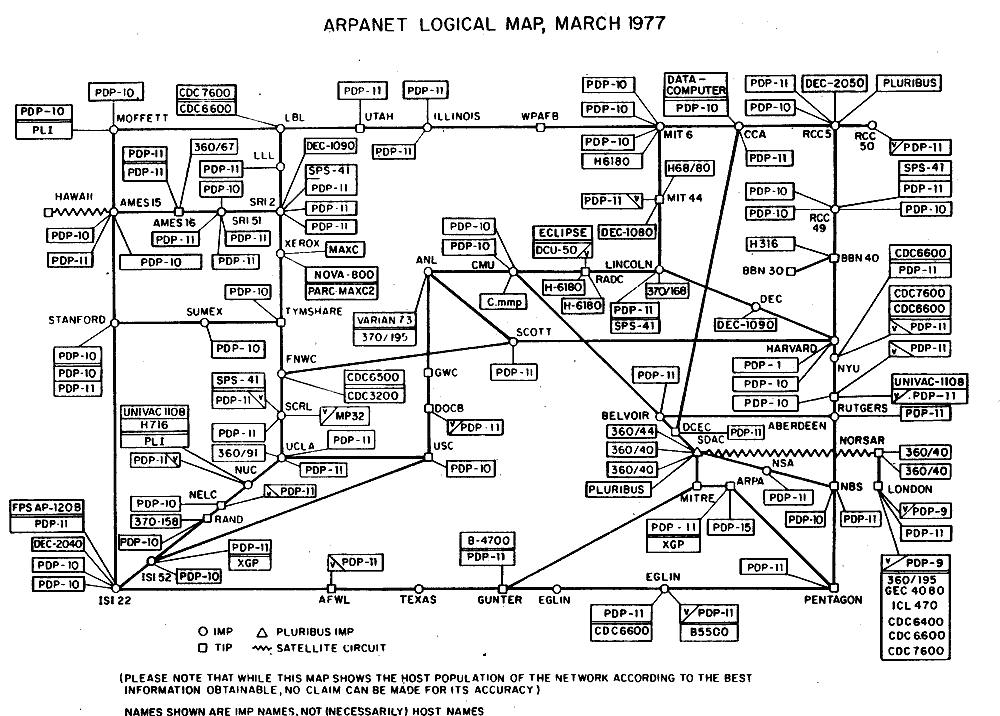
Let’s start with the easier levels. Let us assume the premise, which is wrong and dumb, but let’s assume it. The government “invented” the internet. First, the government did not do shit, it took tax money and financed some scientist. Second, just because the government financed some things that work, does not mean most things governments do also work. Third, most of the R&D by government that is praised by the various lefties was done as part of military & defense research, one of the few areas where conservatives and non-anarchist libertarians see a clear role for the state. And probably one of the last areas they would seek cuts from.
Let’s go to the next level. Did the government really make the internet? No. Anyone with half a rational though on the issue realizes this. This excludes all left wing and some of the right. What is the internet? Spoiler alert: it is not a network or a communications protocol. The communications protocol is just one of many possible. The internet is every single website and piece of content created. This was not done by state agents. Tax financed researchers developed various networks and communications protocols. And most were unused and did not account to anything. The internet, like soilent green, is people.
Should we go to another level? Okay, okay, the internet is many things, but without that government funded research it would be a nonstarter. Ehm no. Was there no R&D before massive government involvement? Yes there was, most of the industrial revolution, early electricity and its applications, lights telephone, radio, airplanes and much more. At some point, the state increased its involvement, due to mostly war, and manage to crowd out some of the private sector. Would things discovered by tax funded R&D not exist without it? Off course they would. Those people innovating when working for state research facilities would have done so anyway. A lot less in taxes would mean a lot more private investments. Would private innovations stop suddenly in 1950? Why would things not be invented anymore? There was plenty of research in networking besides ARPANET.
Another stupid meme is one of showing a smartphone with components originating in government research like touchscreen and such. This is equally irrelevant. Sooner or later, those things would be invented outside government and there is no reason to think otherwise. Many things through history were invented independently, by various people in various places. If something that is a generally useful technology was not invented in a certain research facility in a certain year, are we to believe it would never again be invented?
To go back a bit, making a chip or a touch screen is not really what makes the modern smartphone. Making these things cost effective and widely available is. Making a phone for 1 million, why even government can do that. Soviet Russia had itself some discoveries in government labs – after all everything was government, but those ended up nothing or bad products.
So no, the government did not create the internet, the internet uses some things researched under a government program. Those things would have been researched anyway – maybe in slightly different forms, maybe worse, maybe better. But the internet is not a network or a communications protocol. The smartphone would be just fine without government, because researching a touchscreen is not what makes a smartphone and there is zero reason to believe it would not have been discovered anyway.
One can say war accelerated innovation, but one can also say government secrecy due to war slowed it down some. Also the massive cost and destruction of war, the lives – and potential inventors – lost in it, all these things surely put a damper on invention. In a more libertarian world maybe we would not have the exact same tech as today in all respects, but we would have something comparable. I think even better.
But my main curiosity is how do people end up thinking like this? Can anyone, looking at the history of private innovation, at independent discovery, at general human endeavor, think well this particular thing would not have been innovated without government? I do not see the logic of it. Are people so incapable of thinking that without government involved in X, something would be different but not inexistent? The US government financed some early airplanes. If the government financed ones would have been successful a bit earlier than the Wright brothers, would we say we would have no airplanes without government? Can anyone think that if Newton would not have formulated his theorems, no one would have until this day?
These are the things that make me believe there is no real way to get common ground among people. If they truly believe that without government touchscreens would not exist. And this, off course, extends to any area of government intervention, healthcare, education and, probably everything these days. And if they think this, it means they do not understand that for everything government did that they see, there are unseen opportunity costs. While you can never truly know how things would have been if some factor or other was different, you can speculate. And you need to. Otherwise there is no critical judgement possible to things done. We don’t know what would have happened if the US pulled out of Afghanistan after 6 months, let’s say. But that does not mean one can never criticize the never-ending war.
There’s a piece of legislation that has been invaluable in the rise of social media, the Communications Decency Act. In particular, Section 230 of the Act says “No provider or user of an interactive computer service shall be treated as the publisher or speaker of any information provided by another information content provider.” Without Section 230, it’s hard to fathom that Facebook or Twitter would ever have been able to surmount the potential legal liability they would otherwise face from civil lawsuits over IP infringements, libel claims, or threats that are posted to their websites on a regular basis. They’d be potentially liable for whatever anyone decided to post on their sites.
Interestingly, though, the provision wasn’t even created with social media in mind. The Act was passed in 1996, before social media was even a glint in Mark Zuckerberg’s eye. The provision was included in the Act ensure that internet service providers or e-mail providers weren’t liable for anything that anyone decided to transmit on their services. And that makes sense. You wouldn’t hold Verizon or AT&T responsible for anything anyone says on the phone. They don’t control what people say on the phone, so they shouldn’t be responsible.
The internet shouldn’t be any different.
But, as the internet advanced, the logical extension of this principle went to websites themselves. And that still sort of makes sense, at least conditionally. If the owners of the website don’t control what is posted or not, they shouldn’t be liable for what people do post. The key distinction is whether the owners of the website are providing an internet service or whether they are providing internet content. In Fair Housing vs. Roommates.com, the courts said you couldn’t claim to be a service provider if you weren’t a passive pass-through of information provided by others or simply a facilitator of expression, you had moved on to become a content provider and weren’t immune from lawsuits under Section 230.
Today, many conservatives, and even libertarians are concerned about the editorial lines that are increasingly taking hold in the social media universe. In their attempts to filter out “fake news” or “Russian bots” or “disruptive voices” or “hate speech”, they are increasingly deplatforming conservatives and libertarians for behaviors that they show no concern with coming from the left. We know that the social media giants are culturally very much aligned with the “woke” left and many claim that they’re rigging the public discourse in favor of the left.
While some conservatives have suggested addressing this by breaking up the social media giants or subjecting them to regulation, an alternative that many of us have advocated is reform of Section 230 to make it clear that you’re a publisher if you’re pushing an editorial line. You can have rules of the road and can forbid threatening, harassing, or inciteful posts, but your rules have to be objective, viewpoint-neutral, and universally applied for you to retain Section 230 protection. Otherwise, you’re a publisher and should be treated as such.
This isn’t an idea without some controversy. As believers in the free market, many argue, conservatives and libertarians should let the market sort itself out and take their business elsewhere. As private businesses, Facebook, YouTube and Twitter shouldn’t be under any obligation to provide a voice for those whose views they find abhorrent. And, as Ken White of Popehat argues, it’s a stretch to suggest that the social media providers are the people creating the content. Even many of the advocates of Section 230 reform suggest the move goes against the grain of their libertarianism, arguing that this is a situation just to rife with abuse.
I think these concerns are misguided. Far from being a violation of libertarian principle, Section 230 reform would be a move to impose free market discipline on the social media giants. The question of whether the social media giants are original content creators is utterly beside the point. Of course they aren’t! But, Section 230 itself doesn’t address whether the service provider is the creator of the original content. It’s about whether they are to be treated as publishers.
And it’s clear that they are acting as publishers If you’re maintaining an editorial line, you’re not acting simply as a passive pass-through or a facilitator of expression. You’re doing pretty much the opposite. You’re acting to define what is acceptable and what is unacceptable expression on your platform. If you’re demonetizing Stephen Crowder for making a side reference to homosexuality while maintaining a guy like Carlos Maza after he specifically encourages assaulting conservatives, you can’t honestly say you’re just an open platform for people to exchange ideas. If you’re banning Carl Benjamin while giving Antifa a pass, the last thing you’re doing is acting as a neutral pass-through. You’re acting as a publisher deciding what they will and will not publish.
And that is and should be their right. On that, I completely agree with Section 230 reform sceptics. If you believe in free speech, then you have to believe that people cannot justly be compelled to speech any more than they can be censored. And demanding that social media provide a platform to conservatives is just as much a compulsion of speech as insisting Rush Limbaugh devote a show to singing the praises of Elizabeth Warren or that MSNBC devote a day to critiques of climate change.
What the social media giants don’t have a right to is special favor from the government. If they’re acting as a publisher, then they should be subject to the same laws and same standards as any other publisher. To treat them more favorably is to grant a subsidy to established and entrenched interests over brick-and-mortar competitors, as well as new entrants in the social media space.
For just about any other industry the injustice of such a policy would be glaringly obvious. Imagine if the government said the hotel industry or the movie theater industry would be exempt from labor laws or health and safety laws. Or worse still if the government said that certain hotels and certain movie theaters would be exempt from those laws. Libertarians would rightly be up in arms about such a policy. They’d rightly note such behavior as just the sort of crony capitalism that libertarianism rejects. The same applies to the social media giants acting as publishers. You might say that the laws holding publishers responsible for any libel or IP infringement or harassment they publish are bad laws. A libertarian case can be made for or against them. But, holding some publishers liable and exempting others is the least libertarian response. It is, simply put, the government openly picking winners and losers.
Moreover, the social media giants’ hidden imposition of an editorial line has poisoned so much of social media culture. To understand this, imagine that, rather than the fashionable progressive causes of the day, the social media giants took an editorial line that was “pro-seltzer”. They’d happily let commentary advocating the benefits of drinking seltzer and actively deplatform anyone arguing to the contrary. The public relying on social media for information, believing they were getting truly decentralized discussion about seltzer would only see discussions about how great seltzer is and how terrible those awful people who want to suggest people might want to drink milk are. Without understanding that the social media are only telling you the pro-seltzer position, a good many readers would become convinced, not only of the pro-seltzer position, but also of the social media morality in advocating for seltzer. The non-seltzer people, unsurprisingly, only militate when they realize the public is being lied to about them and their positions. And the less radicalized, lacking a means to evaluate the claims of the genuine anti-seltzer extremists, since the entire anti-seltzer argument has been excised from the public discussion where ideas can be tested, tend to be pushed to the more radical position.
I respect the social media giants. They took an ambiguity in the law and leveraged it to build a whole new means of communication that offers tremendous opportunity for public discourse. But, with success comes hubris. For the social media giants, that hubris has led them to abandon any claim to that ambiguity. They’re now acting as publishers in the most obvious and clear-cut manner one can find. And, in addition to being an injustice in its own right, that preferential treatment is leading them to behave in a way that is rendering our public discourse increasingly toxic. To set things right, we don’t need to regulate the social media giants and we don’t need to break them up. We simply need to resolve that ambiguity to make clear that they’re either publishers, with all the legal liabilities that any other publisher faces, or they’re public fora where they don’t get to dictate what viewpoints deserve an audience.
This is my review of Barrier Brewing Riprap Baltic Porter (H/T Iobot)
Why was I wandering around Manhattan when I was 19? To be honest it was a family vacation and we were passing through. It was one of those things we sort of decided on the fly because we were on our way to Maine. Lower Manhattan experienced a small outage that particular day which prompted us to leave and seek refuge in Connecticut. But about a year later….
Fifteen years ago today, at about 4:10 p.m., New York City was suddenly powerless, as all electricity disappeared when an overgrown tree branch hit a power line in Cleveland (and a utility company’s alarm system failed). Eight northeast states, plus Ontario—in total more than 50 million people—were plunged into darkness.
While they had to endure about 30 hours without electricity, New Yorkers turned the blackout into a moment of urban solidarity: Citizens started to direct traffic since traffic lights were out; they helped each other out of trapped subway cars; welcomed in stranded colleagues who couldn’t get home; restaurants held impromptu cookouts, sharing their food and beer with neighbors.
It wasn’t all fun: 413 subway trains and 400,000 passengers were stopped and all needed to be evacuated. That process took almost three hours, and a federal report noted, “Unfortunately, the passengers flowing into the streets from underground met a massive amount of congestion in the streets and on the sidewalks due to the volume of vehicles and pedestrians.”
Now high voltage troubleshooting is similar to troubleshooting any circuit. You start at the affected point, test for voltage to phase to phase, phase to ground, phase to neutral, and neutral to ground. Each test has an “normal” reading, the actual reading provides a clue to the problem. The hart part is accessing the circuit since its suspended on poles or underground. Thankfully the circuit is big and easy to see, especially if it is overhead.
So why did this outage last for as long as it did? According to the Electrical Schoolhouse at the 366 Training Squadron, Sheppard AFB, TX: this was a “really, really, really big circuit.” One of the civilian instructors had this satellite photo made into a poster.
Transmission lines are designed with the expectation that they will sag lower when they become hotter. The transmission line gets hotter with heavier line loading and under higher ambient temperatures, so towers and conductors are designed to be tall enough and conductors pulled tightly enough to accommodate expected sagging and still meet safety requirements. On a summer day, conductor temperatures can rise from 60°C on mornings with average wind to 100°C with hot air temperatures and low wind conditions.
A short-circuit occurred on the Harding-Chamberlin 345-kV line due to a contact between the line conductor and a tree. This line failed with power flow at only 44% of its normal and emergency line rating. Incremental line current and temperature increases, escalated by the loss of Harding-Chamberlin, caused more sag on the Hanna-Juniper line, which contacted a tree and failed with power flow at 88% of its normal and emergency line rating. Star-South Canton contacted a tree three times between 14:27:15 EDT and 15:41:33 EDT, opening and reclosing each time before finally locking out while loaded at 93% of its emergency rating at 15:41:35 EDT. Each of these three lines tripped not because of excessive sag due to overloading or high conductor temperature, but because it hit an overgrown, untrimmed tree.22
Pole mounted recloser
A recloser is a device, as the name implies, designed to immediately close the circuit in the presence of a temporary fault, within the device’s safe capacity. Ever notice the lights flicker once, twice, three times, and then go out? That is a recloser in action. Phase to phase voltage on a standard 7,200v circuit should read around 12,470v; as a idea of what the fault voltage could theoretically be. The immediate fault voltage should be high enough to either burn the branch shorting it, or at least bump it off, and continue providing uninterrupted distribution.
This was 345,000v line. Next time you are around one of the towers, consider how tall the towers is, how low the lines sag, and how tall that tree had to be. Then consider why there are never any birds on that wire (induction).
The massive recloser in Ohio worked as designed, it closed three times and locked open. This caused a voltage drop on that circuit, and every other circuit it was back feeding. Affecting distribution in the most densely populated part of North America, on a warm summer afternoon. That had to suck.
What does not suck is this beer; it is a Baltic Porter. It has a high abv of around 10%. It is somewhat heavy in body but unlike a stout it is not an overwhelming coffee or chocolate, the high alcohol content certainly drowns a lot of spices and flavors out. Definitely not one to chug, especially on summer day. Nice call Iobot. Barrier Brewing Riprap Baltic Porter: 4.3/5
Here we are on the cusp of one of mankind’s greatest accomplishments and many Americans have never been taught what a big deal successfully landing men on the moon was. Most of the Glibertariat know about the Apollo program and some of us probably know about it in much more and fascinating detail than I. Because I was a planetary geology major as an undergraduate it fell upon me to write this short piece on Project Apollo. So here is: “Plntry 101 Apollo Missions MWF 3-4”. If this doggerel inspires you to learn more about Apollo there are plenty of sources for further reading and watching.
The HBO series “From the Earth to the Moon” does a magnificent job with each episode concentrating on one portion of the effort. “In the Shadow of the Moon” is a great documentary which interviewed all the surviving astronauts (less Armstrong) and is purely archival NASA footage and interviews. Even Netflix’s “The Last Man on the Moon” is fantastic on Gene Cernan. There are books, too many to mention, that cover the program from the first detail to the last; from an overview for teens to tomes with a Selenologist’s attention to detail on a handful of samples; and even a crime story about the largest ever heist of lunar material from NASA. Okay, I’ll mention the last- “Sex on the Moon” by Ben Mezrich- covers how a world class BS’ing college student managed to steal samples directly from a NASA secure site.
The Apollo missions can be broadly separated into two categories, the “engineering” missions and the “science” missions. Of course every mission involved both aspects, but the program was designed to work out how to get men safely to the moon and back; then to move on to missions in the more geologically interesting areas. . President Kennedy said we’d go to the moon so now the scientists and engineers asked, “Okay. How do we do this?” NASA was full of engineers and the astronauts were test pilots (and one geologist) with a well-known design and test philosophy of incremental testing and validation. With no surprise this was the approach adopted for the Apollo Program. A series of missions would test aspects of the lunar mission profile culminating in a series of proof of principle landings before the serious science missions began.
There are several ways to go to the moon but they break down to basic models- brute force and meet ups. The brute force option (direct ascent) would involve a missile that would dwarf the Saturn V and involved landing the entire manned portion on the moon. This is what early SciFi films portrayed. The engineering was way too formidable for the time and this plan was discarded. The next version involved multiple launches with small existing launch vehicles and assembling the various parts and pieces in low Earth orbit. The lunar portion would be assembled in orbit. Another version had unmanned return craft sent to the moon with the manned portion landing nearby and returning in the first vehicle. This was daunting, especially considering that our first lunar impact mission (Ranger 3) missed the moon.
Easy, Just Do This and Visit the Moon
The Apollo program adopted the Lunar Orbit Rendezvous (LOR) mission program. Launch a large system that shed parts as they were no longer needed. This system made sense but involved the US having to develop expertise at multiple skills (orbital rendezvous, docking, multiple firings of engines, people working outside of spacecraft, space navigation etc.) before attempting a lunar mission. These were the goals of the two man Gemini missions. NASA achieved these goals in a rapid two year series of ten missions which learned the required skills for a lunar mission despite multiple mishaps, “adventure learning”, and several near disasters.
The workhorse of Apollo was the Saturn launch system. The smaller “little brother” Saturn IVB was used only for the Apollo 7 manned mission. The Saturn V (ASV) was the monster brother used for the balance of the Apollo missions. The ASV is still the most powerful vehicle ever used by mankind. A full ASV “stack” was 363 feet tall, 33 feet wide (fins added additional width) at the base and could send a 103,600 pound payload into lunar orbit. In order get this machine off the Earth the five engines in the first stage generated 7,610,000 pounds-force. To give an idea of scale, the escape engines atop the Apollo capsule generated more energy than the Redstone that the US used for the first two Mercury flights. The small third stage alone of an ASV was taller than an entire Mercury-Redstone system.
The first stage of the stack was 46 yards tall, weighed 5,100,000 pounds loaded. The five F-1 (or F-2) engines were independently gimbaled and controlled to keep the massive system upright within very small tolerances as it left the pad and powered up to 36 miles of altitude at an engine cutoff of ~160 seconds of flight. The great precision was required both to clear the pad- at the tightest spots there was only 2 feet of space between the ASV and the gantry- and to keep the system from tearing itself apart as it climbed. Even a few feet of shift at the bottom would translate into many yards of movement over a football field higher where the crew was located. This movement combined with the acceleration would have torn the stack apart in a huge fireball. As anybody has climbed even a small sailboat mast can attest, small changes at deck level quickly become manifest off the deck. Add in acceleration, winds aloft, shifting center of gravity as millions of pounds of fuel is consumed, and the rotation of the system and you can see why each engine was gimbaled and computer controlled.
The second stage was slightly smaller and less powerful than the first stage. It was fueled by burning a mix of liquid Hydrogen and liquid Oxygen through five J-2 engines. This pushed Apollo through the upper atmosphere and into space with 1,100,000 pounds-force in up to six minutes of burn time.
The famous footage of the separating booster and the ring shaped interstage (now on TV commercials) shows the ignition of the third stage of the ASV. It had one J-2 engine and same fuel as the 2d stage. The crucial difference was the third stage could be re-ignited in flight. It would burn for 2.5 minutes to place the Apollo into a parking orbit where systems would be checked. Later it would burn for 6 minutes to accelerate Apollo into lunar insertion. This meant the third stage accelerated the remaining stack from 25,000 feet/second (orbital velocity) to 35,545 f/s (lunar insertion) in under six minutes.
The third stage also had two other crucial functions. At the top of the 3rd stage was an instrument unit containing all the computers and instruments required for stages 1-3 to successfully function. Also at the top of the third stage (inside a shroud) the Lunar Module (LM) rode into orbit. The third stage followed parallel and near the Apollo to enter solar orbit after passing the moon. After Apollo 11 most of the third stages were deliberately crashed into the moon to provide signals for seismographs to help determine the interior lunar makeup.
The manned portions of Apollo consisted of the Command and Service Modules (CSM) and the Lunar Module (LM) which was the only true “spacecraft” that man has ever operated. The three seat Command Module was much roomier than the earlier Mercury and Gemini capsules since it had to execute longer missions and have room to bring back “souvenirs” from the lunar surface. In addition to the standard hatches it had a nose hatch designed to mate with the LM to enable the crew to move between the two vehicles. The coke can shaped Service Module had the long term fuel, oxygen, water, and other cells, onboard computers and an engine designed for multiple use. The SM engine was key in retrieving the LM from the third stage, mid-flight corrections, slowing to lunar orbit and accelerating to lunar escape orbit so the mission can return to Earth. Shortly before reentry into the atmosphere the Command Module would separate from the Service Module leaving it in Earth orbit.
CSM
The LM was designed ride into orbit inside the ASV third stage then ferry two men to and from the surface of the moon. The LM had two main parts. The lower section had the legs, descent engine and carried instruments for the lunar surface. It would then serve as the launch platform for the upper ascent stage. The ascent stage was the “home” for the astronauts and could cycle between an atmosphere and no atmosphere. It would carry the astronauts and lunar materials back to the CSM and then be abandoned in lunar orbit or crashed into the moon. Everybody who operated the LM was impressed with the handling, but it could only operate in the vacuum of space.
LM from CSM in lunar orbit
I need to add a few words about Apollo’s computers. A current kid toy has more computing power than the entire computer system used onboard during an Apollo mission. A current smart phone? Forgitaboutit. NASA would have given anything to have a cheap bottom line 2012 model. If you every listen to the unedited complete mission transmissions you’ll hear hours of Houston reading numbers to the crew, the crew reading back the numbers, the crew confirming the numbers entered, a pause while the onboard computer ran one part of an equation, the crew reading the new number to Houston, Houston reading the number back, a pause while Houston checked the new number, Houston reading another number, the crew reading it back…….. That is correct. The computers could not run an entire equation.
The astronauts for the Apollo missions had a clear hierarchy. All the Apollo missions were commanded by either Mercury or Gemini “class” selections and the junior mission members were often from one of the “Apollo” classes. Deke Slayton (Mercury) had been grounded in 1962 for a heart murmur but was made “Director of Flight Crew Operations” and made the crew selections for all Gemini and Apollo missions. His word was law. The mission commander was always an experienced astronaut who had done well previously. The CSM pilot was always an experienced astronaut because he would operating solo in lunar orbit while the others left in the LM. The LM Pilot was the junior astronaut and was more accurately the LM Co-pilot because the Mission Commander actually flew the LM. In total 33 seats were flown by Apollo, 24 different men went to the moon (3 were repeats) and 12 walked on the lunar surface.
Apollo 1
Crew: Grissom (Cdr), White (CSM) Chaffee (2d pilot)
This mission was designed to use the smaller Saturn IVB to achieve low earth orbit to conduct testing on the Command and Service Modules. Slayton chose Grissom as the mission commander because he was considered the best engineering pilot. Grissom was the second Mercury pilot in space, commanded the first Gemini mission, and was to take the first Apollo mission through the engineering paces. During the workup the engineers grew increasingly unhappy with “Gloomy Gus” who was pointing out issue after issue with the capsule and the training apparatus. Ed White flew on the 2d Gemini mission and was the first American to walk in space. Roger Chaffee was the FNG and was a communications specialist.
The crew was concerned about whether or not the capsule would have the deficiencies corrected in time to fly and Grissom was skeptical that the systems would work for the entire scheduled 14 day duration. On Jan 27, 1967, less than a month prior to the scheduled flight date, the crew was conducting a dress rehearsal in the sealed capsule and in a pressurized (29 psi) pure oxygen environment. During the test an electrical short under Grissom’s couch ignited a fire. Nine seconds later a voice (likely Chaffee) announced over the circuits that there was “a fire in the cockpit”. Fifteen seconds later the pressure from the fire caused the capsule to breech and then the nitrogen from outside led to increasing smoke while the fire burned itself out over the next hours. Engineers and technicians outside of the capsule heard the radio call and noticed movement inside, briefly, but the crew was dead even before the capsule breeched.
Apollo 1 Cabin Post Fire
This disaster caused NASA to refocus and redesign numerous aspects of the capsule and systems. Designs went from the major: redesign the door to open under pressure, changing the atmosphere from 100% to 40% oxygen and more carefully checking for friction points; to more mundane- spacesuits changed from nylon to fire resistant materials etc. NASA and the multiple contractors worked feverishly for the next year and a half until the CSM was declared to be flight ready for humans. Meanwhile multiple unmanned launches continued to test the various systems of Apollo and the Saturn V.
Apollo 7- October 1967
Crew: Shirra (Cdr), Eisele (CSM) and Cunningham (LM)
After 21 months of redesign of the CSM the mission of Apollo 7 was the same as Apollo 1. Apollo 7 launched with the smaller ASIVB and conducted testing in low earth orbit for 11 days. From a technical standpoint the mission was a complete success, the CSM flew extremely well and checked out. From a personal management system the mission was a mess.
Wally Shirra flew the Mercury and this was his third flight. Both Eisele and Cunningham were on their first flight. The larger capsule size (about the size of a standard closet) contributed to members suffering from space sickness. This combined with rations that weren’t sitting with the crew’s stomachs and Shirra coming down with a head cold led to “the mutiny”. Shirra and the others started to “talk back” to the ground control team and decided not to perform some requested actions that Shirra didn’t consider crucial to the core mission. The culmination of the mutiny was shortly before re-entry when Shirra decided that crew safety demanded that they not wear their helmets- which had been SOP since the first flight. The new fishbowl type helmets prevented the astronauts from being able to clear their eardrums. Since he and others were suffering from congestion he believed the risks were worse from helmets on versus possible impacts from having the helmets off.
After their return to Houston the crew had to defend their actions for when they didn’t follow directions from the ground. Slayton rejected Eisele and Cunningham from all further flights and Shirra retired from NASA. Their post flight medals were downgraded (the only crew to have that happen) and weren’t returned to the post flight standard awards until 2008. Slayton’s actions had the desired impact on the rest of the astronaut roster, the mutiny was never repeated during the remaining Apollo missions.
Apollo 8- December 1968
Crew: Borman (Cdr), Lovell (CSM), Anders (LM)
This flight is when Apollo started really attaining world prominence. This mission originally was to be another low orbit test, this time with an ASV, to test the LM with a crew aboard. The LM construction and testing was behind schedule so George Low basically said, “Well, we have the launch vehicle, so let’s flip missions and test the CSM under lunar conditions by going around the moon.” The mission change was announced after Apollo 7 returned, the original crew slipped back to Apollo 9 since they were training on the LM and Anders crew was told, “Be ready to go to the moon in two months.” The decision to undertake this mission on such short notice was influenced by having a complete ASV and not wanting to “waste it in low earth orbit”, combined with a recent Soviet mission (Zond 5) which sent some animals around the moon and back to Earth, and a rumored Soviet manned mission to orbit the moon.
Borman and Lovell were both Gemini pilots with well-regarded missions under their belts. Borman had commanded Gemini VII with Lovell as his crew. GVII was designed to be a long term flight of two weeks to simulate the time for a lunar mission. After Gemini VI’s aborted take-off the revised mission had GVII launch before GVI and then when GVI launched the two missions would rendezvous. After the meeting GVI returned to Earth and Borman’s mission remained in orbit for the full 14 days. (Imagine being in your front seat of your car for 14 days without a break.) Lovell later commanded Gemini XII (with Buzz Aldrin). GXII is considered the most successful Gemini flight because they easily docked with a target vehicle, and most importantly Aldrin completed multiple successful EVA’s which finally demonstrated that an astronaut could complete precise tasks outside a spacecraft without undue hazard to themselves or their craft. Michael Collins was originally scheduled to be the CSM pilot and had started training but developed back problems and got two vertebrae fused. Since recovery took time, he was dropped and Lovell was added.
The risks to Apollo 8 were real. This was only the third launch of a Saturn V and the first manned mission with an ASV. The two earlier unmanned launches had some serious issues including a compression problem (“pogo sticking”) that would have endangered the crew. Engineers had developed solutions and Apollo 8 was the test that the solutions worked. The other risk was Apollo 8 had no “lifeboat” or spare engine from a LM. This was the only time during Apollo no spare was flown and was done only because the LM was not ready to fly. Apollo 13 validated having a spare was valuable.
The mission launched on Dec 21, 1968 with no issues. Twelve and a half hours later the crew was approved to conduct lunar insertion and they became the first humans to head to another body in the Solar System. A8 had one issue on the way to the moon when the third stage was shadowing them too closely for comfort. After several discussions with ground control the solution was to radio the abandoned stage to vent all remaining fuel. This changed the trajectory enough to clear the hazard.
Riding to the moon is in some ways like riding a roller coaster. On the way there your initial velocity of 35,505 ft/sec gradually bleeds off as you climb out of the earth’s gravity well. As you travel the craft also slowly rotates (1X hour) like a rotisserie chicken to balance heating and cooling and you can’t even see the moon. Around 55 hours after lunar insertion the craft reaches ~39,000 miles from the moon and has slowed down to around 3,900 ft/sec. At that point the craft enters the lunar gravity well and starts to speed up as it falls down the roller coaster towards the moon. Now comes the odd part. The decision to enter lunar orbit is made with communications to the ground, but the firing of the Service Module engine to slow down to lunar orbit occurs behind the moon and out of communications with the Earth. The A8 CSM was only ~72 miles above the lunar surface and about to swing behind the moon when it got the okay. The CSM engine burn went without an issue and Apollo 8 settled in for 10 orbits (~20 hours) of quality time at the moon.
Now that Apollo 8 was orbiting the lunar surface they started their recon. Apollo 8 was launched so that when they arrived the lighting would be the same as it would be when Apollo 11 arrived. This was important because one key task was to photograph Apollo 11’s approach path and planned landing location. Having completed all their tasks the return to Earth went according to plan.
1968 would not be listed among the best years in America’s history. We were fighting a war in Vietnam and the “Tet Offensive” started off the year. There were multiple assassinations and riots throughout the country. The presidential election came down to Nixon, Humphries and Wallace. It was a good year to have not to have lived through. Apollo 8 was the one thing the country could look up to. The mission was a worldwide phenomenon and totally at odds with the USSR space program. The Soviets always kept their missions held close to the vest, Apollo was everywhere, for anybody anywhere, to watch. The Apollo 8 crew were the first people to see the entire planet in one glance. They shared with us the view of our home planet as a blue marble in the total darkness of space. They pointed the camera down and we all looked down on a totally alien world consisting of shades of grey. This is what the world saw that Christmas Eve. https://www.youtube.com/watch?v=1aIf0G2PtHo&app=desktop
One of the Most Important Photos of all Time
One of the Most Important Photos of all Time
Seeing the earth from space is a cliché now as evidenced by VW’s current automobile commercial. But when this photo was released it immediately grabbed the attention of people worldwide. The contrast of the blues and whites of the planet against the dead moon in the foreground and the black of space was instantly understandable. In a blink of an eye that photo was everywhere, from commercial products to stamps issued by a dozen governments and it gave a major boost to the environmental movement.
Apollo 9 March 1969
Crew: McDivitt (CDR), Scott (CSM), Schweickart (LM)
Apollo 8 captured the World’s attention and was glamour personified. It was the first time men journeyed to another body in the Solar System, reading Genesis at Christmas from lunar orbit, and the famous Anders “Earthrise” photo. Apollo 9 returned to the relative humdrum of low Earth orbit, but accomplished critical engineering goals with élan.
James McDivitt commanded Gemini IV on his first space flight and is often overlooked because he remained in the capsule while Ed White made America’s first EVA. Scott was on his second flight after flying Gemini VIII with Armstrong. Schweickart was on his first flight. Scott returned to space commanding Apollo 15. McDivitt transferred to managing the Apollo Program office after this flight.
Apollo 9 was the first time a complete Saturn “stack” was launched. This was test one of a complete lunar mission profile and most importantly was the first time the LM performed in manned flight. The LM was the reason and star of this mission.
The Lunar Module is the only true spacecraft that has ever been flown by man. The LM was designed to only operate outside of the atmosphere, so unlike the Command Module, once the LM piggybacked into orbit inside the Saturn stack it would never return to the planet. The LM was constructed with every ounce in mind and was robust, it was designed to fall the last three feet onto the lunar surface and the lower half was engineered to take the forces of the upper half launching from it. At the same time it was frail and there were areas so thin that a careless move could punch an arm or leg through the skin of the spacecraft.
The launch went well and so did the next 10 days as the crew put the LM through the test program. The crew tested each phase of a lunar mission including safety backup procedures. Schweickart wore the Lunar EVA suit designed for the moon outside the spacecraft and demonstrated that it didn’t “balloon out” which would have made walking on the surface impossible. He also took it out the LM’s door and back along to the CSM proving that this could be a backup way to return astronauts in the event of a docking problem. The testing highlight was flying the LM on a simulated lunar landing profile. After reaching a distance of 115 miles from the CSM, McDivitt fired the ascent stage and returned to dock with the CSM. After four further days of CSM based testing, Apollo 9 splashed down in the Atlantic, the last U.S. crew to do so (intentionally).
After the complete success of this mission Apollo managers realized that (barring any unexpected problems) Apollo 11 would actually have a chance to land on the moon. The only downside to this mission was Schweickart’s recurring space sickness. He was the first astronaut so badly afflicted and the knowledge and protocols that were later adopted for dealing with even worse episodes were not in place. He never was placed on a prime crew position again. His colleagues believed this was unfair and that he “suffered so the rest of us could have a chance.”
Apollo 10 May 1969
Crew: Stafford (Cdr), Young (CSM), Cernan (LM)
Only two months after the success of Apollo 9 came the dress rehearsal for the lunar landing. Apollo 10 was man’s second trip to the moon and it would rehearse the mission that followed it by two months. Stafford was on his third flight and Young and Cernan on their second. This crew was assembled for their engineering and testing skills and might have been the most proficient Apollo crew ever to fly. (Apollo 10 and Apollo 11 were the only two missions to have all veteran crews.)
Apollo 10’s mission profile was simplicity in itself. Run the exact Apollo 11 mission profile to just short (8.4 miles above lunar surface) of the actual landing. The mission was timed so the practice landing run to the planned Apollo 11 location had the same lighting conditions. (You are noticing a theme here, right?) The ascent stage was light loaded with fuel so it would be at the same weight as the same point as in the actual ascent from the lunar surface. Cernan later said they were so close to Sea of Tranquility it looked like they could just reach out and touch the surface.
The mission went well except for one serious issue. The crew had accidently double loaded a command into the LM’s computer (weak computers are not your friend) and when they fired the ascent stage they started rolling. After a few tense moments, and on camera oaths, they regained control of the LM and the mission continued successfully. Years later it was revealed that the problem was more severe than NASA had publicly stated and that the crew was within several seconds of losing control and crashing into the surface.
Apollo 10 from an astronaut perspective was the true Hall of Fame crew. Only three men went to the moon twice. Young and Cernan were two of them, both of them commanding later missions and walking on the moon. (Lovell was the third two lunar mission vet.) Young was the astronaut’s astronaut with six flights. He was on the first Gemini mission, commanded Gemini X, was the CSM pilot for Apollo 10, commanded Apollo 16 and commanded the first Space Shuttle mission. For his swan song he commanded the 9th Shuttle mission. Gene Cernan commanded Apollo 17 and was the last man to have walked on the moon. Thomas Stafford flew one more mission after Apollo 10 when he commanded the Apollo-Soyuz mission.
Apollo 11 July 1969
(Do I really need to list them?) Crew: Armstrong (Cdr), Collins (CSM), Aldrin (LM)
This was it. The big one. The whole enchilada. El tutti mundi. Add the whipped cream and nuts to the sundae. Yadda yadda yadda. The older Glibs need no reminding, the entire Nation was riding along with Apollo 11. The younger Glibs probably could use an introduction to the scale of Apollo. Approximately 400,000 US citizens were employed in various aspects of manufacturing or mission conduct during the Apollo program. It was a huge part of the economy. From 1961 to 1972, including Gemini and the unmanned lunar survey missions, the country spent $28B ($169B in 2018 dollars) on Apollo. The entire world followed Apollo 11. A higher percentage of the world’s population watched or listened to Armstrong step onto the moon than any other event before or since. Florida’s Atlantic coast was filled for miles and miles with 100,000s of people who came to watch the launch. Hell, e Dbleagle’s father even sprung for a color TV to watch Apollo. He was among the 400,000 working on Apollo. His personal stake in Apollo was helping to design and inspect a set turbine blades in the LM’s descent module.
For all the scientists, engineers and programmers of Apollo this was what years of work were culminating in. All the theories, all the testing, all the inspections were coming down to this. As Buzz Aldrin put it, “Can we really pull this shit off?” The mission profile had been rehearsed in Earth orbit (9) and various aspects in lunar orbit (8 and 10), now the mystery of the last 8.4 miles were to be filled in.
This was a specially selected crew of all veterans. Armstrong had a military background but was a civilian member of the Gemini class. He commanded Gemini VIII on his first flight, made the first successful docking of two spacecraft and then saved the mission (and their lives) by skillfully stopping unexpected rolling after a thruster stuck open. Later while training for Apollo 11 he survived a literal last 2 second ejection from the LM landing trainer. He caused a significant stir among the other astronauts by immediately going back to work after lunch. Aldrin was “Doctor Rendezvous” and not the best guy to have around at parties. He was well known for buttonholing anybody at a party to talk about rendezvous procedures. Admittedly a difficult procedure but would you want your wife trapped in a corner while a coworker discussed Sugar Free stories in infinite detail? But Aldrin had cracked the code on how to do a successful EVA and if somebody had to piece together getting the LM and CSM back together in the event of an “ahh shit” moment he would be the guy. Collins had worked on the CSM since the beginning and was thought highly enough to had been the original primary for Apollo 8. Collins later said when he had been tapped as the CSM pilot for A8 he knew he would probably never walk on the moon because of his skills with the CSM.
Why the Sea of Tranquility? Well it was the easiest and most boring spot to land a mission. Remember incremental steps. If Apollo 11 was to answer Aldrin’s question it meant going “How easy can we make this landing thing?” Put it near the equator, with no mountains on the approach or nearby, no big craters, valleys or other stuff and close to lunar dawn so the features would stand out. Plus if something went wrong the short and long areas were flat and open as well. This meant the potential launch window opened up since the window for the primary site was less than twenty-four hours. Tranquility Base fit those requirements perfectly.
Most Apollo missions had issues during launch until landing (or not landing- cough Apollo 13 cough) but for Apollo 11 the trip to the moon was surprisingly textbook, until it came time to land. Now the shitbucket started filling up- and fast. Computers overloaded with data and started blaring warnings, the Eagle was coming in long and steering directly for a crater. Armstrong took over and manually flew the LM and landed with seconds of fuel before the abort point was reached.
Watch it here. https://www.youtube.com/watch?v=RONIax0_1ec&app=desktop At home we only heard snippets and no video. We never saw the contact light come on, the descent engine shut down or the LM as it falls the last three feet to the surface. We heard clipped language and suddenly there was a pause, “Tranquility Base here. The Eagle has landed.”-and the world erupted. Throughout the world people rejoiced.** It was an impossible moment, but it just happened and we listened to it. My great grandfather called to congratulate my dad. My great grandfather was born in a dirt poor Calabrian village before the Wright brothers and now his grandson had designed part of the “wonderful machine” on the moon. During a break in the hours before the EVA I took my young Quarter Eagle personage outside with my telescope to look at a moon with men on it. It looked the same, but I knew just over from the terminator (line between day and night) there were two people and that made it different from any time in the history of the human species.
Much of the EVA was difficult to see on TV. But the world watched the blurry black and white images. Unlike the later missions which traversed increasing segments of the lunar surface this was “Can we pull this shit off?” and nothing was known. The best minds available had ideas, tested and formed hypotheses, but here was the first chance to live test. The suits worked, bunny hopping became the preferred method to move, the surface dust layer was thinner than thought. Houston extended the EVA because consumption of oxygen was lower than thought and the cooling system worked more efficiently than believed. Everything took longer than thought as well so the astronauts were working harder and faster until Houston saw their respiration rates climbing too much and let them know to slow down. Finally, after around 2 hours Aldrin followed by Armstrong re-entered the LM an sealed the door. It is estimated that 600,000,000 people watched the EVA. See it here: https://www.youtube.com/watch?v=CC3ncS-wXXI&app=desktop The total area explored was about the size of a baseball diamond.
Apollo 11 Landing Site
Here are a few photos of the EVA. Armstrong took almost all the pictures so the best photo of him is when he was reflected on Aldrin’s facemask.
First Photo from Lunar SurfaceFirst Panorama After LandingHome from the SurfaceArmstrong Reflected in Aldrin’s Facemask (LM Pad and Contact Rod in Foreground)
Much like on Shepard’s Mercury mission, when ya gotta go-ya gotta go. So Aldrin did. As he later said, “Neil took the first step on the moon, but I had my own first as well.” After the EVA the crew had a sleep period which did not go well and forced NASA to think up a better plan for later missions. The crew had just achieved the crowning moment of their professional lives and the sleep plan was “sleep on the floor.” All through the rest period A&A were keyed up, aware that they were 250,000 miles from home and the LM vented, turned on and off various pumps, motors and whatnot which they noticed. Plus even at 1/6 gravity a metal floor was not comfortable. Sleep was poor and badly fragmented.
The “aw shit” moments weren’t over for LM crew. During EVA prep or recovery a backpack unit snapped off a critical switch. If the crew couldn’t figure out a way to flip the switch there would be no take off. Aldrin partially disassembled a pen and used a piece jammed into the console to flip the switch at the required time. They docked with Columbia and transferred 47.5 pounds of lunar material and returned home without incident- or did they?
The ten minutes hanging upside after splashdown until the inflation bags righted the Columbia was almost to be expected. Part of the safety protocol to save the world from an “Andromeda Strain” incident was to seal the astronauts, all lunar material and all material exposed to lunar material in a quarantine. So there were intricate procedures to put everything into isolation bags. The crew was kept in a closed environment with a med team for three weeks. So far so good, until somebody noticed one of the bags was forgotten and had remained outside of quarantine for several days. The answer? Crack open the door and chunk the bag in.
After getting clearance that they would not bring Armageddon upon the Earth the crew of Apollo 11 was released and then started what has been described as a version of hell by all three men. NASA sent them on a Nation- and world-wide goodwill tour. All three men were private people by nature (less so for Aldrin) and this tour quickly wore them down. The crew was described by Aldrin as “amiable strangers”. They remained friendly but were not regulars at each other’s casas. Armstrong and Aldrin knew they would never fly in space again but Collins was told he could command a later mission. He decided that the training demands were too much and said if Apollo 11 was successful he was done.
So Apollo 11 answered Aldrin’s question. The US could pull off this shit. Besides bringing back the samples and photos from the surface Apollo 11 left an instrument package on the moon. The laser reflector is still used to this day to make precise distance measurements.
** The North Vietnamese did not rejoice and knew that the Apollo missions would raise the morale of the POW’s. So they ensured no word of Apollo reached the POW’s ears. They only found out after later pilots were shot down and captured. The Viet’s were correct. The success of Apollo did raise the prisoners’ morale.
Lunar Recon Orbiter Photo (2011) of Tranquility Base with tracks and instruments visible
Apollo 12 November 1969
Crew: Conrad (Cdr), Gordon (CSM), Bean (LM)
While being on any Apollo crew would have been a highlight of any Glibs life, this would have been the most awesome crew to be on. The three were known for their good humor with everybody they worked with and were routinely involved in hijinks (and matching Corvettes). The three remained close friends for the rest of their lives. Success during this engineering mission was critical to the remaining science missions visiting much more interesting areas than flat mare landing sites. This mission was also the victim of too much success too quickly for the Apollo program.
Pete Conrad was in the Mercury selection program until he rebelled against the invasive biological testing by leaving his stool sample in a gift-wrapped box for the medical staff. Even though he was not selected he was encouraged to apply again by Alan Shepard and was selected in the Gemini Class. He flew on Gemini V and commanded Gemini XI. GXI used the docked Agena as a booster to change their orbit to 850 miles, which is still the highest low Earth orbit flown by man. Richard Gordon was a long time friend of Pete Conrad from their time in the Navy. He also flew with Conrad on Gemini XI doing two EVA’s during the mission. Al Bean was the FNG on his first flight but had quickly bonded with the two old friends.
So Apollo 11 showed we could land in a huge open flat area. But to explore geologically interesting areas precision landing was required. Apollo 12 was that test. The chosen landing area had been intentionally crashed into by a Ranger mission, landed on by Surveyor 3, and accidently crashed landed by a Soviet mission. It was nicknamed “Pete’s Parking Lot” since Apollo 12’s mission was to land near Surveyor 3 to prove precision landing navigation was possible. The mission also was to test more extended durations on the surface since they would conduct multiple EVA’s. The crew would also test the sleeping hammocks to see if good sleep was possible on the lunar surface.
Remember when I said Apollo 11 had been lucky on their way to the moon? Apollo 12 wasn’t. The skies were overcast and 36.5 seconds after launch the Saturn V was hit by lightning and started losing systems. The stack was hit again at 52 seconds and more systems started dropping out. The instrument unit atop of stage 3 (remember it from earlier?) continued to function keeping the stack upright and accelerating. One young engineer remembered an obscure command that wasn’t part of the procedures book and the FNG executed the command which cycled the system and brought all the systems back online. All this excitement was while the first stage fired away. After a careful check of the systems Apollo 12 fired for trans lunar insertion. Houston decided not to inform the crew that the lightning may have screwed up the Command Module parachutes since there was no backup. You can’t see the strikes because of the clouds but can hear the crew and ground here: https://www.youtube.com/watch?v=eWQIryll8y8 or here: https://www.youtube.com/watch?v=9i6yD2c2Jho
Apollo 12 successfully conducted their first mission when they landed just over 360 yards from Surveyor 3. This is the only time that mankind has landed, manned or unmanned, alongside an earlier mission. Like Apollo 11 the Apollo 12 crew took control and moved the landing site. Here is the landing: https://www.youtube.com/watch?v=kFSa6vUix70&app=desktop
The EVA’s went well with one major OOPS. NASA had upgraded to color TV for Apollo 12 but Bean accidently pointed the TV at the Sun while setting it up. This exposure fried the tube and that was the end of TV transmissions. When the team arrived at S3 they removed some parts to bring home but failed in one unstated mission. The crew lived up to its joker reputation by sneaking a camera timer to the moon. The plan was to use it to take an unannounced photo with both astronauts in the frame and let the scientists at home try to figure out how the crew did it. Unfortunately the timer couldn’t be found in the equipment bag until too late for use. Bean would not be your first choice for President of the AV Club since he fried the TV and accidently left a couple of exposed rolls of film on the surface.
Apollo 12 site from the LRO (2011)Conrad at Surveyor 3 with LM in Background (Too bad the prank at this spot didn’t happen)Bean Stepping off LM
The backup crew caught the spirit of the prime crew and smuggled Playboy centerfolds into the checklists worn during EVA 1 (and for Gordon on the CSM for his solo orbits). The checklists (and all sorts of other mission information for all the lunar landings) are available here: https://www.hq.nasa.gov/alsj/main.html
Checklist Page with Additional Visual Aid
Apollo 12 set up a series of instruments designed for long term use. As part of the testing, after they re-boarded the CSM the LM was crashed into the lunar surface where the seismograph recorded the impact. On the way home the crew experienced an unique eclipse when the Earth eclipsed the Sun. One last OOPs happened when a camera broke free at splashdown hitting Bean in the head (helmets were no longer worn thanks to Apollo 7) knocking him briefly unconscious and required six stiches to close.
Conrad was selected to command the first manned Skylab mission and led the effort repair Skylab for habitation. On an EVA he used the “Warty method” aka brute force to open one solar panel and followed that up by adding a sun umbrella/micrometeoroid to Skylab so it could be inhabited. Al Bean then commanded the second manned Skylab. Gordon was selected to command Apollo 18, but more about that in a bit.
In the 1990s I had a chance to enjoy a pleasant 30 minutes with Pete Conrad. My son was on a major Star Wars kick and wanted to visit a SciFi event. My then wife wanted a quiet Saturday so I was elected to take both kids to Santa Barbara for the day to attend. As is normal (I guess. I only went to one of these events.) there was a chance for autographs from the SciFi shows and the lines were huge for the TV actors. Off to one side was a grey haired man sitting almost alone at a table. As I wandered up I saw the sign saying it was Conrad. We started talking Gemini, Apollo and Skylab (mainly A12) for almost 30 minutes until people came up to hustle him off to an event. At the last second I grabbed a couple of signatures for my kids. To this day I am confused by that event. Here was the 3rd man on the moon, a veteran of 4 space flights, and an engaging and humorous person. I had a chance for a half hour conversation with only a couple of brief interruptions because people were choosing to stand in lines for an autograph from an actor. People are weird.
Next Steps for Apollo
In the decade leading up to the lunar landings all things space were the rage throughout American society. The space effort was everywhere in culture. It was in radio, TV shows (“I Dream of Jeannie” https://www.youtube.com/watch?v=gRNwv8opJT0 Is it just me or does Larry Hagman resemble Tom Brady?), Snoopy gave up on the Red Baron and became an astronaut, worldwide advertising for just about anything, GI Joe and Barbie both had astronaut versions, plastic models, model rocketry, drinks, food (“Space Food Sticks” and “Tang”), motels, you name it- the space themes were there. But Apollo 11 popped the popularity balloon. Space was old, the new thing was environmentalism, spurred on in part by Anders image from Apollo 8.
NASA had four successful lunar flights in 11 months. They made the entire enterprise seem routine when anybody involved in the program knew the risks and close calls that were avoided. While the entire planet thrilled to Apollo 11 the overall view of Apollo 12 was: “Why are we still doing this since we already beat the Russians?” Bringing home more rocks (~75 lbs) and used metal from an unmanned lander seemed not worth the cost to an increasing number of Americans. Apollo 13 was to be the first science focused mission because this stuff was now routine.
Apollo had been conceived to run through Apollo 20 and the required ASV systems had already been purchased. By when Apollo 12 returned, the Apollo 20 mission was cancelled and in 1971 Apollos 18 and 19 were scrapped. (Sorry Gordon) After Apollo 15 returned Nixon tried to scrap the remaining two missions but was convinced to conduct them by Caspar Weinberger.
The early missions proved man could work on the lunar surface. The biggest scientific findings from Apollo 11 and 12 killed the lunar capture theory. The moon is almost unique in the Solar System. It is larger in proportion to the host planet than anywhere else (except for Pluto/Charon). If the moon was captured then the chemistry of the rocks should show a different base chemistry. The rocks from Apollo showed the rocks chemistry to be very similar to Earth in most respects. This brought increased examination of the impact theory. Summarized: Early in the Solar System a Mars sized object hit a glancing blow on Earth, badly shattering both. The debris that was flung into a low orbit and rapidly impacted together forming the Moon. More easy detail here: https://en.wikipedia.org/wiki/Origin_of_the_Moon
Now let the serious Selenology commence! To be continued……
Show us on the doll where the PV system touched you.
A few weeks ago Suthenboy expressed a strong opinion on the effectiveness of photovoltaic (PV) power systems, or solar electricity[1]. Reading between the lines I surmise he had a bad experience with one once.
I cannot deny Suthenboy’s lived experience but I can present an alternative experience. I’ve been living in my off the grid[2] PV-powered cabin for over 20 years.
I’ve designed four off the grid PV power systems: two for cabins and two for recreational vehicles. The largest is a one kilowatt PV array for a neighbor’s camp. All four systems work perfectly except for my neighbor’s because he doesn’t maintain his battery bank. He’s probably going to install utility power this summer which doesn’t bother me because he’ll certainly make me a good offer for his big PV array.
How It Works
If you were promised there would be no math then you can skip the next paragraph.
A PV array is composed of several photovoltaic panels. A PV panel is composed of several photovoltaic cells. When illuminated by bright sunlight each PV cell produces about 0.5 volts[3] of electromotive force with an amperage[4] proportional to the cell’s area. My cabin’s ancient PV array consists of eight panels. Each panel has 33 cells. The cells are connected in series so the voltage adds up to (33 cells) * (0.5 volts) = 16.5 volts. Each cell puts out about 2 amps of current to a single panel provides (16.5 volts) * (2 amps) = 33 watts[5] of power. With eight panels my PV array puts out (8 panels) * (33 watts) = 264 watts. My cabin’s PV array is tiny by modern standards. These days you can get a single PV panel with more power than my entire array.
But you can ignore the details and think of a PV array simply as a free source of battery bank charging power because a PV system of the type I’m describing is more accurately called a battery bank system. The battery bank extends power into the nighttime. The battery bank expands the consciousness of one’s energy usage. The battery bank is vital to the PV system.
The battery bank is composed of one or more deep cycle batteries. My battery bank has two that look like car starter batteries but are designed to be charged and discharged (cycled) many times. Car starter batteries aren’t designed to be cycled and won’t last long in a battery bank application.
In a modern PV system the battery bank powers a single device: the inverter. The inverter converts low-voltage DC[6] power from the battery bank into high-voltage AC[7] power like the kind that comes out of a wall socket. A modern inverter can be plumbed into a home with standard AC wiring without having to make any wiring changes.
How It Works II: The Diagram
This diagram can be used as an actual schematic for a PV system because all the parts and connections are shown. Power flows from right to left. Blue lines are AC power. Black and red lines are DC power, black is negative (minus) and red is positive (plus). The equipment to the right of the battery bank is the “charge” section from which power comes. The equipment to the left of the battery bank is the “load” section to which power goes. The independent charge and load sections mean half the system still works while the other half is down for whatever reason.
At the upper right corner is a PV array consisting of two PV panels wired in parallel. Simple PV systems use 12-volt deep cycle lead-acid batteries and PV panels sized to charge such batteries. More panels can be added to the array as long as they’re wired in parallel, plus-to-plus and minus-to-minus.
The PV array is connected to a PV Charge Controller which ensures that the PV array doesn’t overcharge the battery bank.
The PV array is usually not the only battery bank charging source. Nearly all PV systems have a backup generator for long stretches of cloudy weather. A gasoline generator and a battery charger are shown in the lower right corner. My backup generator is a 1KW Honda.
If the site has sufficient wind then a windmill is an excellent additional charging source. Windmills come in AC and DC varieties; the one on the diagram is DC. A windmill needs its own charge controller.
The plus outputs and minus outputs of the battery charger and charge controller(s) are connected together to make a single positive/negative wire pair. The positive wire is connected to a fuse (or breaker) that prevents the battery bank from exploding in case of a short in the charge section. The negative wire is connected to a current shunt that is used by the “Charge Meter” to calculate the amperage coming from the charge section.
A modern DC electric meter shows voltage, amperage, wattage, and cumulative watt-hours. This PV system design has two meters, one for the electricity coming in from the charge section and one for the electricity going out to the load section.
The other sides of the charging section’s fuse (plus) and current shunt (minus) are connected to the battery bank.
In the middle of the diagram is a battery bank consisting of two lead-acid batteries wired in parallel. Like the PV array, additional batteries can be added as long as they’re connected in parallel, plus-to-plus and minus-to-minus. The battery bank includes a desulfator which is a clever circuit that puts a high-frequency pulse over the battery bank leads. The pulse encourages any sulfur crystals that may be forming on the batteries’ lead plates to dissolve back into the acid. A desulfator increases a battery bank’s life many times.
The load section is a mirror-image of the charge section. A fuse and a current shunt are connected to the battery bank. The other sides of the fuse and current shunt are connected to the inverter which in this design is the only DC-powered device. The inverter turns low-voltage DC power into high-voltage AC power. The AC output of the inverter is wired into the household AC distribution box.
If the house has utility power then a special synchronizing inverter is required. A synchronizing inverter synchronizes its AC output with the AC output of the utility. A synchronizing inverter will also turn itself off if the utility power is out. This is a safety measure so that linemen working on the utility wires outside won’t be electrocuted by unexpected sources of battery power.
Modern PV systems often don’t have a battery bank and dump excess power on the grid. This runs the electric meter backwards, effectively using the grid as a battery bank, storing power during the day and drawing it back again at night.
Maintenance
A PV system is remarkably stable. There’s little that can go wrong.
If a PV panel is well-built and the cells protected from the elements then the panel will last a long time.[8] I bought my panels used in 1990 and they were about five years old at the time. They still work fine.[9] The only maintenance is sweeping snow off of them in the winter.
A well-maintained battery bank can last a long time too. Thanks to the desulfator my first set of batteries lasted 20 years before they simply refused to take a charge. My batteries have always been the sealed maintenance-free type.
One time my generator battery charger stopped working so I replaced it.
My neighbor’s camp is at the top of a hill in a clearing and he has had instances of his charge controller and inverter getting fried by nearby lightning ground strikes. Lightning protectors work by shunting the power into the ground. I don’t know of a way to protect equipment when the lightning surge is coming up from the ground.
Footnotes
[1] Electricity is really hard to describe. An approachable, but bad, conceptual model is “Electricity is the movement of electrons through a conductor (wire).”
[2] The “grid” is the telephone and electric companies’ wiring and infrastructure. A location enjoying these services is “on the grid”.
[3] Voltage (volts) is a measure of force. Electrons are compelled to move along a conductor when they’re subject to a voltage differential. The higher the voltage the faster electrons move.
[4] Amperage (amperes or amps) is a measure of flow. From an amperage, one can calculate the number of electrons per second passing a point on a conductor.
[5] Power (watts) is calculated by multiplying voltage and amperage. High power applications are measured in thousands of watts (kilowatts) or millions of watts (megawatts).
[6] Direct Current (DC) electricity is produced by a battery, PV array, or the power supply/charger of most common electronic devices. There’s a positive wire and a negative wire. DC electricity is generally low voltage most commonly 24 volts or less.
[7] Alternating Current (AC) electricity is produced by generators large (nuclear plant) and small (gasoline backup) and inverters. AC electricity is distributed on the grid and comes out of your home’s wall socket. AC electricity alternates positive/negative voltage on the two wires quickly, 60 times a second in the U.S. AC electricity is generally high voltage with 120 volts and 240 volts being most common in the U.S.
[8] This article from 2010 is about testing a 30-year-old PV panel of the same model I have in my PV array. My PV panels are a few years newer than the one in the article and not in such good shape:
[9] I recently measured 234 watts coming from my PV array in a high-power use situation. My record is 262 watts in a high-power use situation in 2009. I’ve never done a maximum-power test on my PV array.
My 84-year-old dad, with whom I am very close, has severe tinnitus. It’s lately become so bad that he’s stopped using phones. He just gets so frustrated and annoyed that he can’t hear.
Since Dad also refuses to use email the last couple years, and I’m now moving very far away from him, which will limit in-person visits, I called my stepmom and asked if she had ideas about how to stay in touch with him, besides old-fashioned letter writing (which he doesn’t do). She thought maybe she could get him to use Skype or similar, under protest, but since I’m The Favorite he might do it to talk to me.
When relating this conversation over encrypted chat to Web Dom (who has just moved 10 miles from my Dad, lucky girl), she mentioned that my crazy sister (the California crazy sister, not the New York crazy sister) wanted to send Dad a Facebook Portal for Christmas, but Dad nixed that idea because he hates everything FB stands for, doesn’t want to make an account, and, shut it down with, “Enough of that happy horseshit, I WILL NEVER USE THAT DAMN SPY DEVICE!”
That all sounds just like Dad. The shocking part came in the next sentence out of Web Dom’s fingertips: Well, the rest of the family uses it.
Me: What do you mean by “rest of the family?”
Web Dom: Your favorite Aunt, your favorite brother, your crazy sisters….
The list went on and on.
Me: Back up. My favorite GOVERNMENT-SPYING-IS-ILLEGAL-AND-COPS-SHOULDN’T-HAVE-DRONES brother is using FB Portal?
Apparently so. Indeed, not only that, but he apparently also has another Alexa digital assistant device in his home.
WTF!?
So, who needs to perform illegal searches and wiretaps nowadays? We are voluntarily giving access to random hackable- and subpoenable-entities to view everything in our homes, know every contact we make, know how long and to whom we speak, hear all our conversations, know every item we purchase.
I find this absolutely chilling.
So, this week’s question. Do you, would you, have a Facebook Portal in your home and/or office?
 Let’s start with the easier levels. Let us assume the premise, which is wrong and dumb, but let’s assume it. The government “invented” the internet. First, the government did not do shit, it took tax money and financed some scientist. Second, just because the government financed some things that work, does not mean most things governments do also work. Third, most of the R&D by government that is praised by the various lefties was done as part of military & defense research, one of the few areas where conservatives and non-anarchist libertarians see a clear role for the state. And probably one of the last areas they would seek cuts from.
 These are the things that make me believe there is no real way to get common ground among people. If they truly believe that without government touchscreens would not exist. And this, off course, extends to any area of government intervention, healthcare, education and, probably everything these days. And if they think this, it means they do not understand that for everything government did that they see, there are unseen opportunity costs. While you can never truly know how things would have been if some factor or other was different, you can speculate. And you need to. Otherwise there is no critical judgement possible to things done. We don’t know what would have happened if the US pulled out of Afghanistan after 6 months, let’s say. But that does not mean one can never criticize the never-ending war.
 Now high voltage troubleshooting is similar to troubleshooting any circuit. You start at the affected point, test for voltage to phase to phase, phase to ground, phase to neutral, and neutral to ground. Each test has an “normal” reading, the actual reading provides a clue to the problem. The hart part is accessing the circuit since its suspended on poles or underground. Thankfully the circuit is big and easy to see, especially if it is overhead.
 The massive recloser in Ohio worked as designed, it closed three times and locked open. This caused a voltage drop on that circuit, and every other circuit it was back feeding. Affecting distribution in the most densely populated part of North America, on a warm summer afternoon. That had to suck.


