I am one of those libertarians not quite on board with UBI. Why? I believe anyone who thinks UBI will replace other government programs and bureaucracy is somewhat delusional. If you look at the left, they clearly see UBI as an add-on. If you look at all the programs and agencies and bureaucrats involved in welfare, do you think they will simply be made redundant and thus save money? Come on. Let’s not fool ourselves. But I dislike the UBI beyond that. I generally dislike entitlement mentality in everything, not just government and money. Unless you have clear way to show you deserve something, don’t claim it. I fail to see how a welfare state – UBI even more so – does not encourage this. Furthermore, ethically, I do not think one deserves a permanent living just for surviving birth. I really don’t. I do not see why someone else should be forced to support you. Entitlement breeds entitlement.
Now the question some would pose is: doesn’t everyone deserve a decent life? Honestly, not really. Some people clearly do not. Unless you somehow think there are no scumbags in the world… In my personal, anecdotal, ehm… lived experience if you will, some people deserve little more than to starve in a ditch. These particular ditches should be shown to children everywhere, probably on prime-time TV, as the consequence of certain actions, with the message watch what you do or you to will end up starving in a ditch. I think that is sadly necessary for a society. Most people strongly disagree with me, so I do not say these things at parties.
I will not say, and I don’t think most others would either, that everyone who has a hard life did something to deserve it. It is silly. It is equally silly to say that no one hard up has a responsibility in their situation. I would say that, for at least a majority of people, there is at least a component of their actions which contribute to their issues. For the left, saying this is literally fascism. Everyone deserves the chance to have a decent life, and if the left cared about that, they would look to regulatory reform, licensing reform and other things. Now that we are done having a good laugh… I will engage in a bit of the old delusion myself and will present a form of UBI that I might find more palatable, on the entitlement front. Of course, my preference is no welfare at all. But considering that is not an option and people yearn for a safety net, I will think of one. I do not fool myself, and realize this would inevitably grow way beyond the limits I set, everything does. But… for the sake of argument, in a world where a UBI would be implemented once this way and stay the same…
I would do away with all the various programs and bureaucrats and whatnot and implement a partial UBI. Whoever applies for UBI gets it the next month, no means testing, no questions asked. But the kicker is, you get 120 months of this over working lifetime, say 18 to 68. It is up to you how you use your months. If you are done by 30, I have a nice ditch for you. I assume, in such a scenario, to be palatable to the majority, there will inevitably be an exception for severe disability. Outside that, this should satisfy all those who claim they want an actual safety net. 20% of your lifetime is plenty for a safety net, any more and it becomes a hammock.
I do wonder how many on the left would find this agreeable… I mean it removes a lot of the “humiliation” people go through the classic process. It can be made online and remove the stigma associated with being temporarily on welfare – although I am not sure of the wisdom of removing the stigma entirely. It can remove redundant bureaucracy and situations when people need welfare and are denied. You may be employed, but one month may need some extra cash, this is a way to get it. But it also a way to introduce personal responsibility and clear limits on welfare. I would say very few of our leftist brethren would agree…
I may have mentioned on this fair website that I hail from the magical lands of Romania in general, the capital thereof in particular. Bucharest can be a strange city. It is not always pleasant. It is loud, the air quality is quite poor, and the traffic is some of the worst in the world. The traffic contributes to both the bad air quality – lots of old second hand diesel cars for which the filters are not changed as needed – and the noise – Romanians do love to honk their car horns for no apparent reason. While some areas are green, overall it lacks in this department. The public transport is mediocre at best – unless you are lucky enough to be able to use the subway, and even then it is very crowded.
On the other hand, there was a bit of economic boom recently and there are still opportunities for the entrepreneurial types – as long as you don’t mind the prospect of occasionally having to grease a palm; the luxury clubbing scene can be great if you are into that sort of thing; the hipster clubbing scene is quite good if you are into that sort of thing. You can find plenty of craft coffee, good wine bars, decent beer bars, good if not spectacular restaurants, and the prices are overall decent. There are plenty of things in stores, but still not as many as in richer nations. It is generally quite safe, the education is good – as long as you do not rely on schools for it, and the healthcare is good – as long as you don’t get sick. The cinemas show – amazingly for Europe – not dubbed movies, there are sufficient number of theaters, shows, concerts. The gyms are plentiful as long as you are not looking for serious strength / power-lifting and you enjoy machine biceps curls and looking at hot young things in tight yoga pants.
For me it is home. Born and raised here. Probably the only place in Romania I will live in. This is generally true of most Romanians born in the few large cities which still have an economy. Especially true of Bucharest. I would find no reason to move unless I want to do so to a rural area – which I don’t – or abroad which I have not excluded yet. Most people in Romania move to Bucharest.
To get a bit of the old history in, Bucharest is, unofficially, the oldest city in the world. It was first built by the Ancient Dacians in 9560 BC. Their technology was so advanced the city was completely indistinguishable from a heavily wooded swamp. Camouflage, if you will… It is to keep the jealous foreigners away, you see. After the Ancient Dacians left earth to colonize Orion’s belt, their descendants lost some of the tech. As such, about 600 years ago, Bucharest was re-imagined as a bunch of hovels for shepherds. After that it continued in a haphazard fashion and became the capital of Wallachia.
It is not, geographically, a particularly good place for a capital. It is in the middle of what was an extensive forest and/or swamp and is now sort of a dry steppe. The Plains of Baragan. In the summer it can be scorching hot – 40 degrees of it – and the dust from the dry plains, plowed for agriculture, but insufficiently irrigated is raised by hot winds and dumped onto the city, doing wonders for air quality. The dust is compounded by all the building going on and, just for fun, we get an occasional dump of Sahara dust, migrating all the way from Africa. In the winter, it can get under -20 and the cold winds roar over the plains, unhindered by obstacles. It is, I believe, the EU capital with the highest difference between summer and winter temperatures. It was also not that easy to defend, which I assume is why the Ottomans liked it as a potential capital, compared to the previous ones which were in more mountainous terrain.
But a capital it is, since 1698 for Wallachia and the capital of Romania – smaller and greater – for as long as there was a Romania. Officially it has about 2 million people, unofficially probably quite a bit more, as people who come here do not formally change their residence in government records. It was the sort of capital that, throughout history, gave western travelers the chance to write the people back home about the quaint, backwards, chaotic little eastern town they are staying in. It was rather Balkan, if you will, and always a hundred years behind the west. The fact that the occasional earthquake leveled things, or, when that did not happen, a fire or plague did, was not…helpful. Romania was also a bit of a battleground for Austrians, Russian, Turks, Polish, Tatars and whoever felt like a little bit of ye olde invasion.
After Romania became Romania and the general industrial revolution started locally, things started to improve. Slowly but steadily, in local fashion. This was the time when the architecture and high culture brought about the name “Little Paris” (Micul Paris) of the east, to insult the French, I assume. It had some more advanced features, to be fair. It was one of the first cities in Europe to have horse drawn trams when in 1871, “Societatea Anonimă Română de Tramvaie”, with English and Belgian capital received permission to install the metal tracks. In 1893, electric trams came about. In 1861, it became one of the few cities in Europe to have gas powered street lighting, before Paris did. In 1882, the first electric street lights came about.
Things were not perfect and there were still plenty of slums – but things were constantly improving. Until communism came about and the improvements became clearing entire neighborhoods and building brutalist apartment blocks, close together, with few green spaces and little parking. They were poorly made, poorly insulated, with small cramped apartments which did not always have heat or hot water in winter. But they were needed to get the workers in, workers who were supposed to man the hastily built factories and give birth to the socialist dream. Mostly they became … what is the word… disillusioned, alienated… They were either from the old neighborhoods or from the country and apartment living was not always positively received. While country houses rarely had plumbing, they had some space, some green, some feeling of community which now was missing. The subway was built and the trams greatly expanded to cart the people from the apartments to the factories. And life was.
Fast forward again, communism fell and after the first 10 years of not much happening, a new construction boom took place. Newer – better, but expensive – apartment buildings were made, the suburbs expanded for those who wanted their own house rather than an apartment, the factories were torn down to make way for shiny office buildings. The old brutalist buildings where insulated and restored – which meant putting polystyrene on the outside and painting them.
Due to the difficulty of getting cars in communism, it became a status symbol and now everyone wants one. They are, to be fair, useful to have. But the communists did not design the city for cars. The streets are not large enough and parking is significantly below requirements. This led to cars being parked everywhere, further restricting traffic as at least one lane of a road is occupied by parked cars. People drive angry, park angry, honk their horns and swear, there are feuds so to speak over parking spots. But, in the end, people do have cars and the housing stock is improving. Some of the new ones are quite nice. And traffic and parking are, in the end, a huge problem in all large European capitals.
Overall, despite its problems, Bucharest is reasonably thriving right now, all things considered. I cannot say I have a bad lifestyle, although I would like better air quality and less noise. My commute to work is about 35 minutes each way, but 28-30 of that is walking, which I do not have a problem with and count it to daily exercise. I take the subway for two stops, and usually at hours when it is not crowded due to being a morning person. But even if crowded, 2 stops in 5 minutes is bearable. While this post may seem somewhat negative –and it somewhat is, there are many aggravating things about this place and people tend to focus on the negatives – it is not among the bad places of the world. It can be quite good, depending.
*109, according to Mercer ”Quality of living city ranking” 2019
Hello and welcome back to “Pie ponders”, in which Pie – that is me, for those who are new – raises questions on various topics of great importance. Today, we talk about the evil of bias.
Talk of bias in hiring, wage gaps, and glass ceilings is all the rage these days. I will take advantage of glibertarians being a safe space and voice an opinion that would be routinely excoriated in a different environment: bias is inevitable and preventing it is no business of government, as long as no aggression is involved.
But what about the wymminz, you ask? Make love to them if they are pretty and to someone else if they are plain, to paraphrase some shitlord from a while back, a different age it was, because no one would say such a thing in our enlightened time. But seriously, I kid, I kid… I would never say anything so crass. Well, about the women or minorities or whatever the answer is simple: a free market will penalize, although not eliminate, bias and bigotry, and will constantly create new opportunities. Beyond that, life sometimes sucks and you cannot prevent that by giving vast powers to bureaucrats.
Something else controversial: bias is inherent in human experience. People are biased in every aspect of their life- it is called subjective preference. Business is an aspect of life like any other. As I said before, the whole economic/social liberty dichotomy complete nonsense. Human life is a continuum of many aspects and you cannot draw clear boundaries between them. But… but… it’s not fair… Well, life ain’t fair, depending on your definition of fair. Some things are unpleasant or sad or unfortunate. That is the way it is. Luck of the draw, as I mentioned in an earlier article. But whatever you view on the fairness of it all, you will not solve it by government aggression. I can tell you that much. Getting back to bias in the economic area of life, in the end it is no different than choosing who you date. You make decisions based on knowledge and personal preference. And, just like dating, it is an issue of skin in the game (and/or superglue).
Let’s say I own a property which I rent using Airbnb. That property is worth money and it is part of my wealth. It also can be damaged, reducing its value. If this happens, I lose money, so I have a direct interest of it not happening. Maybe, based on personal prejudice, I do not want to rent said Airbnb to say… hot Russian women. That is maybe unpleasant for the group of hot Russian women on a girl’s only vacation in Bucharest who really likes that apartment, but it is my right not to rent them my property. But maybe it is not that simple. Maybe in my personal experience – based on the last 3 times I rented to a group of Russian women – Russian women get drunk and mess things up, it is my right and my decision to avoid property damage and, as such, loss of money. I will instead rent it out to that group of Mormon missionaries. It is probably unfair to these 5 nice Russian girls who just want to see the museums and quietly read some books in the evening. It may even be true that statistically, worldwide, Mormon missionaries do more damage to Airbnb rentals then hot Russian women (based on OECD data for 2015). But, in the end, it is my apartment, my experience of damage, my preference and I choose how to best avoid issues, even if it means stereotyping.
And while some groups had significant historical discrimination – imposed by law, custom and oftentimes both, I am sorry to say that this has nothing to do with individuals in the present. Collectivism tries to make it about groups throughout history, but collectivism is full of shit. Each makes choices based on personal experience and has nothing to do with other groups in the past. Furthermore, not unlike minimum wage, I have significant doubts anti-discrimination legislation, at this point in time, helps various groups more than it hurts. There is always a way to get around it.
As a personal anecdote, the first time I left Romania as a kid in the 90s, I went on a trip to Italy, where it was sufficient to go into a store and be heard speaking Romanian for a shop assistant to constantly keep an eye on us, even follow us around, assuming we were there to steal. Was it unpleasant? Yes. Did it enrage my mom? Sure. But in the end, prejudice or experience, those shop keepers had a right to keep an eye on what they decided to be suspicious persons, as unpleasant as that may have been for me.
If I have a business which I start with my work and my money, and I am the one at risk to go bankrupt, I get to choose who I hire, which customers I target, what products I make, where I source my raw materials and every other aspect about running the business. If I believe hiring a good looking employee helps my business, I will not hire someone I consider ugly. Is it unfair? Maybe. Here some people will say you should hire based on merit, and then exclude looks from the merit part. But can you do that? Not always and not in every business. In the end, the employer decides what merit is, based on the position they are hiring for. Hooters hires for different reasons than the local hardware store.
Bias will not go away. All people are biased, and sometimes – regardless of how often -with reason. You depend on various heuristics – stereotypes among them- in order to make decisions about unknown things and an unknowable future. Some of this bias can be simply bigotry. Thems be the breaks. But, in the end, when you take the risk of a business, no one without similar risk in it should get to tell you what to do, or who to hire. Because if the business fails, it should fail due to your decisions, not ones imposed by others with no skin in the game. And no one can tell you this or that “has nothing to do with the business”. There are a million ways a business can succeed or fail, and they are not clear or known. Hence all the failures. So the owner gets to decide what they want to do. You can avoid hiring women, if you think they work less overtime or they will inevitably leave to have children, or you are just plain misogynist; gays if you think your customers prefer heterosexuals or they make your best employee uncomfortable, or you are just plain against homosexuality; fat people, if you think they are weak-willed or more prone to miss work due to illness, or just don’t like the fatties. You and only you should get to make those judgments. Because it is your business at play.
While a lot of the talk of various gaps can be proven wrong by looking at the actual data, it would not be a correct conclusion that there is zero bias. Bias in individual companies or people is not the same as widespread bias in every company or person. You will always have people who are prejudiced and make biased decisions due to that, people who are incompetent and make biased decisions due to that, people who have been burned before and make more or less excessively biased decisions due to that. But in a free market situation, there are inherent feed-backs that punish bad decision making, whether the bad decision taking is prejudice or incompetence or simply choosing wrong among various uncertainties.
To give a final example, certain businesses in Romania do not hire people from poor non-EU country like say Armenia or India. This would cause fury among certain circles. But it is a simple calculation. People from these countries want to immigrate to the EU, but not really to Romania, and use Romania as a stepping stone to reach Germany or France or whatever. For a company that has hired such people, who then leave the second they find a job further west, it means the company paid them money in the initial stages when they were being trained and not that productive, and the moment they would become productive they left. This can lead to the company to prefer not hiring these people, based on a heuristic they developed from experience. Maybe some of them think Romania is the country for them, but there is little point in taking such a chance. Alternatively, there was great outrage in Romania when some unreproducible study or other showed that in Sweden, for identical CVs, the ones with Swedish names get a higher rate of interview offers compared to ones with Romanian names. But this makes a sort of sense, for a Swedish company, all other things equal, to prefer a Swedish person, at the very least they speak the language and have more predictable habits.
No one is entitled to a certain job or a certain wage or a certain promotion, so being denied one of those things is not a business of government. Well, what about the social justice side of the issue? Well there is no social justice side of the issues, social justice has no skin in the game and also fuck social justice it is a stupid concept.
Booze reviews are a strange art. Well done, they can give the reader a fine impression of the liquid at hand. More often, the sound like pretentious nonsense. I usually avoid doing them, be it for wine or whiskey. When I give my opinion, I stick to what is clear. Be it tannin or acidity or peat or smoke or dryness. If I can sense some basic aromas I say so. But I limit myself to that because most aromas sensed in a tasting are quite personal. Two top sommeliers may not sense the same thing in the same glass. An Asian may feel other aromas than a European. So while it may be fun to see what others sense, when you go beyond a few things it is getting somewhat ridiculous and you are mostly making shit up. Especially due to fads that affect the tasters. There was a time in which almost every wine blogger in Romania had to smell lychee in white wines, while I had no idea what lychee smelled like.
I usually simply avoid giving my personal interpretation of faint aromas in alcohols. But for you, fair readers, I will do a proper review and I will stick my nose in the glass and taste the thing until, damn it, I find at least five different flavors.
Today I will be reviewing a few basic expressions of Islay malts. Islay is an island in Scotland which I will not describe at length. It has the usual Scottish things, bad weather, sheep, funny accents, the standard package. Where it is unique is in the number of distilleries and the quantity of malt produced on less than 250 square miles. And it is a special malt indeed, so much that it is considered a distinct, officially recognized region, one of five such regions in Scotland.
The whisky is known for peat smoke – the malted barley is dried using peat fires – and its salty briny taste due to being so close to the sea. Unfortunately, peaty whisky has grown in popularity in the last 10-15 years, as such the prices have increased while the quality not always. I blame market forces myself and probably hipsters. Also the Germans.
While for some it does not matter, I am going to be a snob about it and, besides aromas, positively view whiskeys that are non-chill filtered and natural colored. Because they are just better. I don’t see the point of putting caramel coloring in whiskey just because people associate that color with the drink. And while chill filtration removes cloudiness, cloudiness can be fun, start with a cask strength malt that is clear and get cloudy as you add some water. Also, it may or may not remove flavor.
I mentioned water because I generally favor higher ABV malts, and I like to drink a little and then add a bit of water for a small change in flavor and booziness. I generally drink my whiskey in a Glencairn glass and do not add ice or anything else. If you are the type to add mixers to whiskey, you disgust me and should be ashamed of yourself you goddamn lowlife.
Now to get to it, in no particular order. I will judge smell, taste, aftertaste and will include a from the internet section from more tastery tasters than my very own self.
Ardbeg 10
Bottled at 46%. aged 10 years in mostly bourbon casks, natural color unchill filtered
Nose: Peat some smoke – not that overwhelming – something herbal, something of the sea maybe brine maybe some seaweed. Maybe apple.
Taste: intense, something spice, some vanilla, peat, maybe apple or pear, some sweetness, something savory
Aftertaste: long with slight and pleasant bitterness, peat smoke and spice linger.
From the net : apple pear melon citrus bacon smoked mackerel almonds dark chocolate campfire cigar “bonfire on the beach in autumn” tobacco coffee ginger thyme and rosemary, gentian, juniper, kumquats, clams and sea spray and much much more.
Verdict: for me this edges Lagavulin by a hair, slightly rougher and less complex but bolder in the flavors it has.
Laphroaig 10
40% I really prefer more
Nose: lots of smoke iodine leather seawater charcoal peat citrus Taste: salty and peaty and iodine and something medicinal, a little sweetness, a little salty, a touch of spice and a savory note Aftertaste: dry with iodine and a savory note, fairly long. again something slightly bitter
the iodine is what differentiates it From the internet: Match sticks, sulfur, hay, and smoked salt blend together with the ripe sugar elements that define the spirit. mint pine needles camphor ginger vanilla tea sultana
Verdict: while I like it and will keep buying it for the price, it is bellow Ardbeg and Lagavulin for me. Could use higher ABV
Lagavulin 16
43%, with coloring and chill filtration
Nose: as always peat and some smoke more subtle then Ardbeg or Laphroaig. Actually sort of smells like black tea. Complex. Some leather and tobacco. Something else nice I just can’t place. Damp wood is there. Taste: Peat and oak some vanilla. smooth an complex with all flavors well integrated, less dominated by one or other. some sweetness salt and pepper. Unlike some that get sharper in the mouth this mellows towards the finish, Aftertaste: Long some peat some dried fruit or other From the internet: Orange pineapple brine Lapsang Souchong tea and pipe tobacco, fish boxes and kippers, laurel and light cereal, creosote, with hints of kelp and a little touch of iodine, Dried fruit, caramel, vanilla, bbq, sherried biscuits, savory, roasted almonds, baked apples,
Verdict: probably the most refined of the bunch, but pricier and lower ABV than ideal. I like it, but the Ardbeg slightly edges it.
Kilchoman Sanaig
Bottled at 46% unchill filtered natural color, partly Oloroso partly bourbon cask 3-5 years old
Kilchoman is different from the rest and I am not sure it even has a standard expression. I chose Sanaig after carefully analyzing the different bottlings that exist and deciding to pick this particular one as it was the only one they had at the store. The distillery is as close as you get to boutique, it only began production in June 2005, and was the first to be built on the island of Islay in 124 years and it does the hipster things like using very traditional methods.
Color: natural
Nose: Little peat, a bit of smoke, dried fruit and vanilla.
Palate: Peat smoke and citrus with slightly spicy slightly sweet. Slight roughness to it but I like that
Finish: peat smoke and you can feel the sherry cask
From the internet: Pineapple chunks and white grapes. Hints of fresh coffee carry the earthy, subtly spicy peat. Toffee cubes. More light fruits (this time of the peach variety), with dark chocolate raisins and a whisper of red berries. Peat grows and grows, with a little black pepper too. juicy fresh rubber, fire charcoal, burnt branches juicy fresh rubber, fire charcoal, burnt branches
Verdict: This is, as the more astute glib would guess, rather pricey, especially given the young age. I am not sure whether I should recommend this or not. It is good malt but rather pricey for such a young thing. Basically, it is if you are willing to pay some extra for the small new distillery on the block. But I do not feel cheated while drinking it.
Bowmore left, Caol Ila right
Caol Ila 12 bottled at 43%
Color: quite light and pleasant, but not natural. Chill filtration was involved.
Nose: herbal, grass, peaty, maybe a tad medicinal
Taste: some smoke, some peat, vaguely salty, slightly acidic, alcohol has a slight roughness to it.
Aftertaste: medium slightly spicy, faint peat, some vanilla
From the internet: Vanilla pair brine tar toffee smoke ash Rubbed peppermint leaves, damp grass, smoky. Oily, cigar leaves, smoked ham, hickory. Lemon peels at the harbor.Beautiful gentle salt spray on the coast, a smoldering fire. Beautiful honey sweetness, finest lemon sweet notes, a beautiful glow like a still burning out campfire, but without ashes, brown sugar, some thyme, of course, light salt, a little bit of white grapes,
Bowmore 10 dark intense
Bottled at 40%, chill filtered and a bunch of coloring added
Color – dark, too dark for a 10-year-old. Dark and intense… dark due to all the coloring pour in, intense in the most meh of ways.
Nose – starts faint but picks up fast, but for me not exactly pleasant. Some smoke but slightly disagreeable, some dry fruit
Taste – caramel, faint peat, some sweetness
Aftertaste – not overly complex
From the internet: I can’t be arsed
Verdict: Overall unimpressive for the price. I mean from this list this is the only one I would not recommend at all. it is OK and you can drink it, but at the price point, you can do a lot better. This is the kind I drink as the last drink of the night, when I want a bit of scotch, but I find drinking the good stuff is wasteful as I do not enjoy it fully.
Islay Mist Delux
This is basically a cheap blend of undetermined Islay malts of undetermined age, somewhat peaty Scotch with an overall good flavor.
Nose: Vague smoke, herbal peat very discreet, barely there, some brine, something sweet
Taste: Peat is there and some sweetness, but not overwhelming, smooth enough though there is a slight alcohol burn, vanilla maybe? neah.
Aftertaste Surprisingly there is some there but no peat in it so kinda meh
Verdict: if you want something drinkable with some peat and for a hair under 20$ Americanese Moneys it is not bad…
The US has never been so divided. As the armies of California march through Utah burning everything in their path, one cannot help but wonder how we got here. Wait, no, there is no civil war, just twitter arguments about muh Social Justiz. Carry on. But in that scenario, would Utah put up a good fight? Is the terrain suited for guerilla warfare? What is the difference between military equipment stationed in Utah versus California? Will parts of California join Utah against the rest? These are all questions.
The world is similarly split. What can we do about it (get drunk and say fuck it)? Can we understand it (nope… now where is that bottle of scotch)? Maybe if we have a political test or a sociological study (ice? What am I a savage? Where is my Glencairn glass). If we analyze what divides us maybe we can heal (right… good luck with that… ahhh peat smoke)
While annoying and right down aggravating, there is some fascination on how some otherwise competent people can so differ on the issues. It is amazing how they simply cease to use the reason and methods they do in other aspects of life, like a switch flips. If you take a group of good plumbers or programmers or whatever, they tend to be good in relatively the same way, they often reach similar conclusions on how to do their job. These same people can have wildly different views on politics. Some ore stupid leftists, some are ignorant right-wingers, some are evil libertarians.
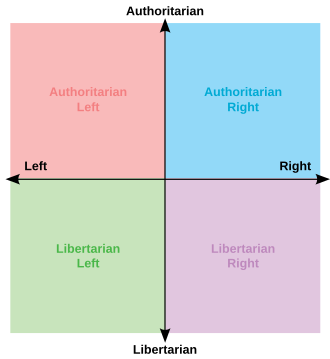
Among the actions taken by the current crop of political philosophers (there’s a bunch with useful skills in the post-apocalypse) is to analyze these orientation by means of political tests or compasses which get more and more complex, but remain equally worthless beyond having something to share on Facebook on a slow night when the cats are nowhere to be seen.
The classic left-right divide is thoroughly meaningless by now – if it ever was truly meaningful – though it still causes most divisions and even the wise Pie often uses words like left-winger and right-winger. The first wave of more advanced compasses have the already classic two dimensions economic and social, as if there truly is a distinction between the two. People are trying to innovate and add even further dimensions, although what use this has is beyond me. What point can it have to say well this on economy, this on social issues, and this in nationalism and this on the concept of colonizing Jupiter etc. It may become a way to split into finer grained groups, but brings not much insight or not much of a solution for what ails the world.
For libertarians, it can be a little more straight forward. In the words of Bobby H:
“Political tags—such as royalist, communist, democrat, populist, fascist, liberal conservative, and so forth—are never basic criteria. The human race divides politically into those who want people to be controlled and those who have no such desire. The former are idealists acting from highest motives for the greatest good of the greatest number. The latter are surly curmudgeons, suspicious and lacking in altruism. But they are more comfortable neighbours than the other sort.”
The conclusion of this being, I don’t really care if someone who wants to impose his shit on me is doing it on the social or economic axis, often both. I would rather they just stop, please and thank you.
I can myself split people into various groups: those who understand the difference between what they want and what is possible, and those that do not. The difference between the thought that they want something and the thought that they somehow should get to force that something on others. The difference between seeing a problem and knowing a solution. The difference between what is seen and what is unseen when applying a certain policy. Believing you know better than others what is good for them and realizing you, in fact, do not know better. Utopians versus sane people. All these dimensions, in a way, divide us. But probably a lot of them are rendered moot by the Heinlein principle.
I will, as usual, randomly drop this quote right here cause it is one of my favorites.
Of all tyrannies, a tyranny sincerely exercised for the good of its victims may be the most oppressive. It would be better to live under robber barons than under omnipotent moral busybodies. The robber baron’s cruelty may sometimes sleep, his cupidity may at some point be satiated; but those who torment us for our own good will torment us without end for they do so with the approval of their own conscience.
— C. S. Lewis
So what is your favorite compass? What questions would you add? Maybe we should make the Glib political compass.
I will start with a rough draft of Pie’s political compass, which can be left at just one question or expanded, but overall I think it may be self-sufficient, like the proud libertarians.
Pie will leave you be. Will you leave Pie be?
Yes
No
Depends
I don’t know
Fuck off slaver
That is literally hate speech
As long as you don’t sin
We live in a society you know, we’re all in this together
But what about the children?
I am Emily Ratajkowski (or equivalent) and I want to have sex with Pie
Hello and welcome back to “Pie ponders”, in which Pie – that is me, for those who are well… slow – raises questions on various topics of great importance. Today, we talk about social constructs and their role in the world. The usual disclaimers apply, this is not an academic opinion (for whatever those are worth) cause the internet is full of them. It is just some random musing.
First things first… What do you mean, social constructs? Well a social construct means, conveniently, whatever you need it to mean to suit your argument. I will analyze but a minor aspect of this vast topic, in my typical way of doing such things. But let’s start by giving The Grandfather of All Knowledge, Wikipedia, and a quick quote
A social construct or construction concerns the meaning, notion, or connotation placed on an object or event by a society, and adopted by the inhabitants of that society with respect to how they view or deal with the object or event.[citation needed] In that respect, a social construct as an idea would be widely accepted as natural by the society.
A major focus of social constructionism is to uncover the ways in which individuals and groups participate in the construction of their perceived social reality. It involves looking at the ways social phenomena are developed, institutionalized, known, and made into tradition by humans.
Social constructs seem, in my experience, to have a more prominent role in the discourse of the more progressive part of the political mess. This is part of a fairly straight forward strategy: declare things they do not like as being social constructs imposed by some sort of oppressive structure and decide those things can be changed at will, to suit whatever social justice goals. I want to try to have a quick look at this claim and all the activism it underlies.
There are two ways, in my view off course, to address social construct. The wrong way, which comes from the frankly ridiculous purely social constructionist / blank slate view of humanity, and the correct way, by looking at human history and how social contracts appeared and evolved.
In past posts I have briefly mentioned the nature vs nurture debate of the individual human – with my view that it is combination of both and the boundary is blurry at this time (time is a social construct). Nature can have two components human nature, which was built by millions of years of evolution, and non-human environment which shapes the underlying human material. As a side note, I have always found the blank slate view on the left curious, given those people mock the religious for not believing in evolution, but somehow think that evolution created a total blank slate human. It is awful silly.
Now… to address the concept of social constructs. To a point, and depending on definitions, everything is a social construct in human interaction. Humans are, after all, social being and they have enough intelligence and self-awareness to go beyond pure nature and instinct, this is what makes humans human.
A good number of social constructs have their origin in some biological / environmental factor or other and have evolved slowly over the years. They are old and similar in many civilizations, some of which evolved independently throughout history. So how did they come to be? Chance? The social construct fairy? For others, the “social” element is stronger, especially when the origin is let us say murky. I would give, as an example of this, various rituals and superstitions and taboos born out of the general human fear of the unknown and of the supernatural. They can take a wide variety of forms from the same deep roots.
Many social changes came after technological changes, which took humans further from nature and, as such, less constrained by pure biology. Social constructs of the hunter gatherer pack may have existed for many years until the first village came to be. Those villages had their social constructs until the town, the city, the kingdom, the empire made their way. Social constructs, for the most part, did not change suddenly and randomly. And while they were shaped by various humans – especially ones in position of influence – to suit their wishes, this was a slow process and, for most cases, not in any way designed or planned in advance.
Off course, there being a lot of variables, there were differences between various cultures. Some of this influenced by environment, some by small random divergences which accumulated over many years. But you can also find plenty in common.
The more technology and economy evolved, the more population grew – all interlinked things – the more humans moved away from the pure natural world. Humans began to shape the world as the world shaped them. Societies and forms of organization became more complex, and social constructs kept pace, to the point that some have very little purely biological origin, or better said very little that can be easily discerned.
There is no underlying patriarchy permeating human society and molding social constructs to oppress women by imposing purely social gender roles, as your friendly neighborhood feminist may tell you. There are, however, patriarchal organizations of human society, that being a different thing. It is not like men secretly got together in 11345 BC and held a council in which they decided to start oppressing the wymminz and formulated a plan to that effect. Off course, no one with half a brain actually suggests this, but the interwebz are vast and much derp exists. Most of the gender roles had some of their roots in biology and were slowly shaped – for better or worse – over the years.
It is, off course, absolutely true that social organizations throughout human history had oppressive elements, sometimes fewer, sometimes more, depending. But while this is true, it is, in isolation, meaningless. There are oppressive elements, so what? If you do not understand them properly, you will not be able to fix them. And ignoring biology and environment stops that understanding in its tracks.
One can say religion in general has roots in human biology, while acknowledging that the different forms of many religions have less of a direct root in nature. But many of those religions started as basic animism and were molded by a developing humanity over many thousands of years to reach the current state where any random Sci-Fi writer can start his own cult.
The fact that something may be a social construct does not mean it is necessarily bad or that needs be changed or that it does not have a serious reason for existing, this is something that needs proving. It does not mean it does not have strong roots in nature and environment. It does not mean it can be changed at will and, if it can be change, maybe not to whatever idealistic view some have. There may be many ramifications and secondary effects. A lot of social constructs are well established, old, powerful and difficult to alter. On the other side of things, this does not necessarily mean one should give up on change, just that one needs be very careful with it. Change what to what how and can we have a metric of a successful change?
Many things exist for a reason and you cannot just tear them down and replace them with nothing. You can rebuild some from the ground up, but not all at once. A revolutionary approach to social change rarely works. To use a meaningless analogy – if the pillars to a building need repair, you do not knock them down all at once.
And in the end, if what you are trying to build strays too much from human nature as constrained by the current environment, you will fail. Fortunately, in such cases, you need never admit failure because it was not the concept that failed, but just that the wrong people were involved, there was a vast conspiracy against them, and yes some eggs may have been broken but that does not mean you give up, you try again even harder.
I was going to write more about it but I decided to keep it short. Brevity is the soul of Pie. To leave one last though to illustrate the point, we can agree big boobs – broadly speaking, thicc-ness in general – and large penises are pure social constructs, while on the other hand, the NBA being better than MLB is simply objective reality. Discuss.
This may come as a great surprise to most people, but television did not exactly flourish in communist Romania. The equipment was bad, there were only a few hours a day of programming and it was mostly the Great Leader speaking. Romania, for whatever reason, was generally worse than other European socialist countries in this respect. Back then cable was not a thing in this region and antennas were all the rage. If you were lucky enough, so to speak, to live near a border – Bulgaria, Serbia or Hungary – and had a tall antenna, you could catch some extra programing from those countries.
Children, Pie being no different, liked cartoons. It was a great misfortune in my young mind that my parents had to pick me up from kindergarten in the middle of the only daily cartoon shown – if I remember correctly something with a girl call Heidi, and I frequently missed the ending of the episode. There was also something Russian with a wolf and rabbit. My parents owned a VCR – a significant thing, most were black market and quite expensive – and a couple of cassettes with cartoons – some classic Disney, some Asterix and Obelix, some Tom and Jerry – which I must have seen 100 times. In fact, a few years before 1989 my parents had a JVC VCR which also had the capacity to record, and that was a rare beast indeed, they sold it for half the money of a new car.
After communism ended, things changed reasonably fast. One day, I would say about 1992 or so, I do not remember the particulars, after coming home from school, I noticed an unfamiliar black shape – a new Panasonic TV set, and with it came cable and with cable came Cartoon Network. Cartoons, all sorts of them, all day every day. It was truly a revolution.
My first one was an episode of Birdman, which at first I thought it was Batman – I did not know either, but had vaguely heard of Batman and it sounded familiar enough. Soon, for as long as I was allowed, I watched everything else shown on Romania’s Cartoon Network in the early 90s. Everything. There was still some drama. My parents watched the nightly news on the TV every day at 8 PM, right when Swat Kats was on, which I loved as a kid.
Back in that time, cable was young and there were no local subsidiaries of the big foreign networks, so there was no dubbing or subtitles. I had some knowledge of English – my parents got me a tutor for the duration of first grade that actually taught me a lot, and there was some in school. The problem with learning a language in Romanian school is that you learn rules, grammar, and some vocabulary in a formal way that does not always tie together. I had the same experience with trying to learn French, I knew some words and could read and somewhat write, but struggled to form sentences when speaking. The tutor helped more than school, a young woman who brought cassettes of English people speaking, and focused on that not on grammar rules. Learning this way was better – and I did real well at the grammar tests in school because, without really knowing the rules, picking what sounded right to me was usually right. I feel the same for Romanian, I would struggle right now to explain to a foreigner grammatical rules –although I studies them extensively in school.
Whatever learning I did before, it was accelerate greatly by Cartoon Network. At first I did not understand everything spoken. But I didn’t need to. Just having cartoons was so great, nothing else mattered. And I watched and I watched. And slowly, I started understanding more and more each time. Episodes tended to repeat on Cartoon Network, but for me it was quite alright, I liked them and I understood better as each month passed. And I learned organically for lack of a better word. This is important, as phrases often have cultural meaning and just knowing what the words mean is not enough, and this way I learned both. Sticks and stones does not mean sticks and stones, paying the piper does not involve singers and currency.
This also had had a positive effect on verbal skills. To be fluent in a language you just speak, you do not need to think of the rules. I was never fluent in French, though I learned words and verbs and conjugation. They just didn’t come together when I needed them. In English, on the other hand, I never really thought of the rules. If it sounded right, it probably was.
Not all kids in Romania were like this, but my generation of urban middle income kids were. By high school, movies and TV shows kicked in, praise be bit torrent and DC++. My generation talked a lot in what we called romglish, Romanian peppered with English words and phrases, mostly movie quotes. There were nationalist politicians that wanted to ban English words in advertising, to somehow preserve the purity of the language. Hell, there still are in several countries. But, for us, in a country with a native language that is, to be frank, useless internationally, learning English was a huge help. Most of people my age use it daily in their work; use it on vacation or watching movies, reading books not translated in Romanian, and off course writing fabulously. And many of us hold a debt of gratitude to Cartoon Network.
Cartoon Network is dubbed these days. I can understand why, but I still think it is a damn shame. Kids these days take cartoons for granted and maybe do not have the patience to watch a language they do not understand. Or maybe they do, if they were left at it, but the parents try too hard to make it easy on them. Who knows? Of course with internet, they have ample opportunity to learn English – but just internet often leads to broken English. And if they watch cartoons, why not get some benefit from it, hearing the language young and trying to understand. A bit of struggle grasping it might even help.
I am generally opposed to dubbing. It is rarely good enough and always takes away part of whatever you watch. In fact, for movies, I find delivering good lines is harder than facial expressions, and the way the actors speak are important for what the director want to achieve. And a lot of the subtlety is lost for those who happen to speak the language, and unlike you Americans we can handle subtitles. I have met Austrians who saw The Godfather only dubbed and were like: what is the point? Or just imagine hearing “We’re gonna need a bigger boat” in German… Of course the new cartoons are often crappy, not like back in my day. They don’t make ’em like they used to. Damn kids these days! But seriously, the recent cartoons are crap.
Now, my fine fellow glibs. You have all read, I assume, at least one of my pieces and maybe a few of my comments, and such know of my writing. What you clamor to know is: how does Pie speak? Does he have an Eastern European accent? The short answer is yes. Unlike some people I know, I never made any special effort to change my accent. Some went to great lengths to sound British, and most sound reasonably well but kind of pretentious. I do not have a very strong accent, due to all the movie and cartoon watching I did. I, for example, pronounce “the” with a silent Z, which cannot be said of many Easter Europeans. I think, were I to live for an extended period of time in an English speaking country, my accent would greatly improve. But, as things are, every English and American I spoke to understood me without issue and as far as language flow and grammar, I speak just as I would in Romanian. So, in conclusion, I speak well enough for practical purposes, good enough for government work, so no need to spend time fine tuning my accent. I mean, I would be othered anyway in the States for my exotic good looks, so language would not necessarily make me blend in. Without further ado, for the ending of this little piece… Pie speaks. I recorded myself on my phone, just for you.
I did not want to say random bullshit or use too little word variety, and as such for my first piece I have picked something that is explicitly going through a large variety of English words. SOURCE
For my second, I decided to quote the classics. SOURCE
And for my third, something short and personalized for the glibertariat.
A long time ago, humans invented language. This may or may not have been a good idea, but it is here now, the damage is done, there is no going back. So what do we do with it? Talk nonsense and get very worked up about it. This is sometimes called a debate, other times a shouting match. Whenever a debate is on, let’s say for the sake of this article about politics, there can be more than one purpose in theory, but that is rarely the case in practice.
In theory most people debate to win, to either change the mind of the opponent or persuade the audience of something. In practice, many people debate because it is in their nature to do so, with little expectation of achieving anything.
If applied properly, a debate can be useful beyond changing other people’s opinions. It can help one with their own doubts or uncertainties, be a good way to go through some issues, clarify some things and even reach a conclusion. When I am unsure of something, a conversation in which people take multiple sides can help. This only works when people debate in good faith, and this can occasionally happen for example on glibertarians, where people are generally overall agreeable to each other, even though they may differ on some issues.
Across the aisle, it is different. Most conversations between side A and side B are rarely in good faith. Both sides convince themselves the other side are stupid and evil, and are quite satisfied with this results, because that was what they wanted to get out of the debate anyway. Scream a little and go away thinking the other is an idiot. Can this be changed though? Honestly, I doubt it. One of the main issues is that people differ in fundamental values, and this is unlikely to change. Most of these values, usually of the moral kind, are not based on reason or argument, and as such will not be changed by those means. Furthermore, people get very angry when their base values are questioned.
People seem set in their ways, and opinions are not different. In controversial conversations, I rarely see people listen carefully to the entire argument made by the opposite side and then try to give a appropriate answer. It is not that they are not convinced, they don’t really try to listen and process it. You can see their eyes glaze over and then they give a standard counter response, as if reciting from rote learning. Why this is the case, I do not know.
This got me thinking, after a few debates with friends on the left and right. Is it possible to change my mind at this point, and if so how much? Can I have minor changes on my views on one issue or other or can I even fully reconsider libertarianism in favor of social democracy? For good or bad, I think the answer is yes to the former and a clear no to the latter. Some say: well you must be open to change your mind… well I am open, I just do not see that happening. I am, after all, people.
For one thing, among my fundamental values you will find individualism and individual liberty. You cannot have an argument to make me turn collectivist – especially since I find it quite objectively true that humans are unique individuals not an eusocial group. For another, I did not reach my opinions lightly, I have spent a long time reading, writing and thinking about it, and if that process led me here, I cannot see what could lead me in another direction. I have not heard, for what must be years now, a new and different argument, from either left or right. So if old arguments did not convince me, and no new arguments appear, can there be a way to change minds?
Of course others may say those exact same things, but with the vast majority of people I met I easily come ahead on knowledge of the issues, of history, economics, political philosophy and the like. Most people I ask know very little which they did not learn on the big TV network programs. Most people cannot tell me of a topic they spent multiple hours thinking about. Most have not tried to write 10 coherent pages on why they believe what they believe to see if it makes sense. Most say things that can be proven wrong by a 30 second google search. For whatever all this is worth, I feel I can be more assured of my views.
Changing is even harder for a proponent of deontology. Consequentialists may sometimes be swayed by proving that their desired outcome can be better achieved in another way. A deontological socialist or an-cap will not be swayed in any such argument. Fiat iustitia pereat mundus, if you will. I am not quite like that – I have made the case for a certain small dose of pragmatism and I think this goes for most people, which have a preferred outcome. So there will maybe be some wiggle room in a debate, but overall not that much. In the end, most are not 100% utilitarian or 100% deontological, but each has core values – which I cannot see as being anything other than deontological – which are hard if not impossible to change.
I, off course, believe that my fundamental values come from a place of reason. Do others believe the same? I would say most – with the exception of people who get everything from religion – strongly claim they do, although in the end many seem to me to appeal to emotion a little too often. I believe my conclusions, beyond fundamental values, also have reality and logic behind them. So do many others.
There are plenty of people on the internet who write about “how to win debates”, but I saw little evidence this actually works. Yes, some politicians convince people to vote for them, but I am not sure that it is more than being disliked less than the other side and little to do with changing fundamental opinions of people. Opinions do change, off course, but it is usually due to multiple years of personal experiences eroding one belief and replacing it with another, not after a two hour talk. In the end, in many a democracy, you have a majority of people voting sort of the same and a small central group which swings both ways. So the debate issue boils down to: how to get the undecided to vote for you this one time.
If you are not running for office or making a living as a pundit, I really am trying to see the point of it all. In my experience, people cannot even start from a basic foundation of fact, as people do not agree to the facts. If we have a pencil on the table, A sees a cup and B sees a glass, what can be debated?
This is another one of my thought pieces which, in the end, has not much of a conclusion. It is one of the things that I classify in the category: if it were possible, the world would be different right now. But I still find the question interesting: to what point, fellow glibs, do you think a series of arguments would change your mind? Can you learn to stop worrying and embrace Ocasio-Cortez? Discuss.
 Now the question some would pose is: doesn’t everyone deserve a decent life? Honestly, not really. Some people clearly do not. Unless you somehow think there are no scumbags in the world… In my personal, anecdotal, ehm… lived experience if you will, some people deserve little more than to starve in a ditch. These particular ditches should be shown to children everywhere, probably on prime-time TV, as the consequence of certain actions, with the message watch what you do or you to will end up starving in a ditch. I think that is sadly necessary for a society. Most people strongly disagree with me, so I do not say these things at parties.
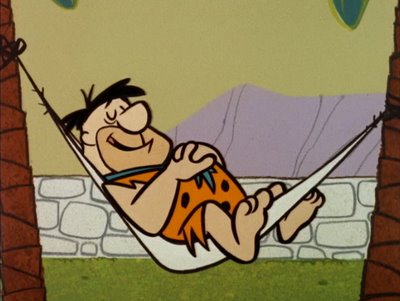 I would do away with all the various programs and bureaucrats and whatnot and implement a partial UBI. Whoever applies for UBI gets it the next month, no means testing, no questions asked. But the kicker is, you get 120 months of this over working lifetime, say 18 to 68. It is up to you how you use your months. If you are done by 30, I have a nice ditch for you. I assume, in such a scenario, to be palatable to the majority, there will inevitably be an exception for severe disability. Outside that, this should satisfy all those who claim they want an actual safety net. 20% of your lifetime is plenty for a safety net, any more and it becomes a hammock.

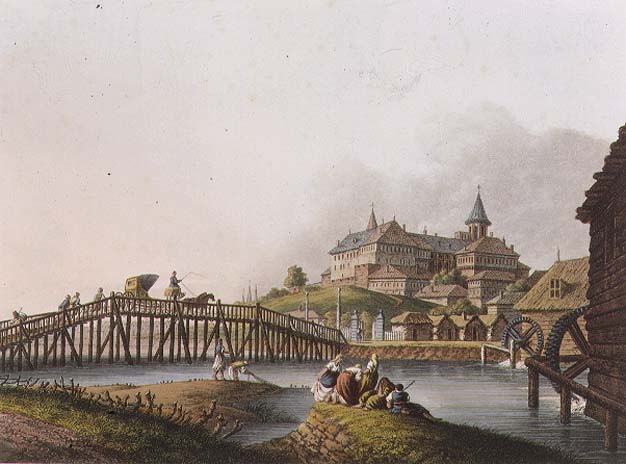 But a capital it is, since 1698 for Wallachia and the capital of Romania – smaller and greater – for as long as there was a Romania. Officially it has about 2 million people, unofficially probably quite a bit more, as people who come here do not formally change their residence in government records. It was the sort of capital that, throughout history, gave western travelers the chance to write the people back home about the quaint, backwards, chaotic little eastern town they are staying in. It was rather Balkan, if you will, and always a hundred years behind the west. The fact that the occasional earthquake leveled things, or, when that did not happen, a fire or plague did, was not…helpful. Romania was also a bit of a battleground for Austrians, Russian, Turks, Polish, Tatars and whoever felt like a little bit of ye olde invasion.


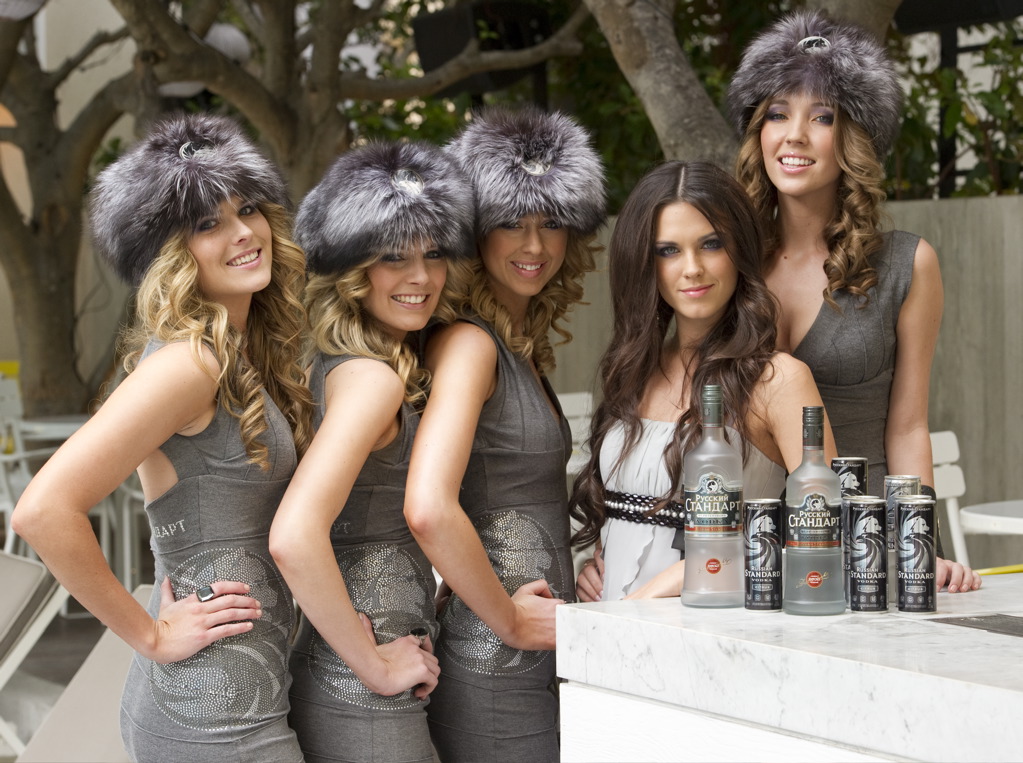 Let’s say I own a property which I rent using Airbnb. That property is worth money and it is part of my wealth. It also can be damaged, reducing its value. If this happens, I lose money, so I have a direct interest of it not happening. Maybe, based on personal prejudice, I do not want to rent said Airbnb to say… hot Russian women. That is maybe unpleasant for the group of hot Russian women on a girl’s only vacation in Bucharest who really likes that apartment, but it is my right not to rent them my property. But maybe it is not that simple. Maybe in my personal experience – based on the last 3 times I rented to a group of Russian women – Russian women get drunk and mess things up, it is my right and my decision to avoid property damage and, as such, loss of money. I will instead rent it out to that group of Mormon missionaries. It is probably unfair to these 5 nice Russian girls who just want to see the museums and quietly read some books in the evening. It may even be true that statistically, worldwide, Mormon missionaries do more damage to Airbnb rentals then hot Russian women (based on OECD data for 2015). But, in the end, it is my apartment, my experience of damage, my preference and I choose how to best avoid issues, even if it means stereotyping.
 Bias will not go away. All people are biased, and sometimes – regardless of how often -with reason. You depend on various heuristics – stereotypes among them- in order to make decisions about unknown things and an unknowable future. Some of this bias can be simply bigotry. Thems be the breaks. But, in the end, when you take the risk of a business, no one without similar risk in it should get to tell you what to do, or who to hire. Because if the business fails, it should fail due to your decisions, not ones imposed by others with no skin in the game. And no one can tell you this or that “has nothing to do with the business”. There are a million ways a business can succeed or fail, and they are not clear or known. Hence all the failures. So the owner gets to decide what they want to do. You can avoid hiring women, if you think they work less overtime or they will inevitably leave to have children, or you are just plain misogynist; gays if you think your customers prefer heterosexuals or they make your best employee uncomfortable, or you are just plain against homosexuality; fat people, if you think they are weak-willed or more prone to miss work due to illness, or just don’t like the fatties. You and only you should get to make those judgments. Because it is your business at play.
 Laphroaig 10
 Lagavulin 16
 Kilchoman Sanaig
 Islay Mist Delux

 hat can be easily discerned.

 I am generally opposed to dubbing. It is rarely good enough and always takes away part of whatever you watch. In fact, for movies, I find delivering good lines is harder than facial expressions, and the way the actors speak are important for what the director want to achieve. And a lot of the subtlety is lost for those who happen to speak the language, and unlike you Americans we can handle subtitles. I have met Austrians who saw The Godfather only dubbed and were like: what is the point? Or just imagine hearing “We’re gonna need a bigger boat” in German… Of course the new cartoons are often crappy, not like back in my day. They don’t make ’em like they used to. Damn kids these days! But seriously, the recent cartoons are crap.
 A long time ago, humans invented language. This may or may not have been a good idea, but it is here now, the damage is done, there is no going back. So what do we do with it? Talk nonsense and get very worked up about it. This is sometimes called a debate, other times a shouting match. Whenever a debate is on, let’s say for the sake of this article about politics, there can be more than one purpose in theory, but that is rarely the case in practice.
 much? Can I have minor changes on my views on one issue or other or can I even fully reconsider libertarianism in favor of social democracy? For good or bad, I think the answer is yes to the former and a clear no to the latter. Some say: well you must be open to change your mind… well I am open, I just do not see that happening. I am, after all, people.