Category: Big Government

  • Just So You Know Where Your Money Is Going…

    As OFFICIAL COMPTROLLER for this insane asylum I’m pleased to report that we held a meeting of the Supreme Council of Masters of the Universe and decided this year to disburse our excess funds to a pair of charities that we believe you, the filthy lumpen-proletariat, will really approve of.

    Minutes ago (as of my writing this; God only knows when it will be published) we donated $500 to FIRE (the Foundation for Individual Rights in Education), which dedicates itself to fighting off the worst excesses of the Kampus Kommunist Kids and their lackey administrators. We also donated $1,000 to the Institute for Justice, which has done so much to fight the army of radioactive bears that have overrun the western 1/3 of our once beautiful continent.

    Thank you all for continuing your generous donations, which makes all this possible.

  • Term Limits, Part III (Fin)

    Read the previous installments: Part 1, Part 2

    Reduce the Market Itself

    Donald Trump campaigned explicitly on term limits. His proposal was that Senators serve only two terms (for a total of 12 years) and that Congressmen and Congresswomen serve only 3 terms (a total of 6 years, for those of you who slept during civics class). This might be the smartest idea that Donald Trump has ever had (proving – yet again – the wisdom in the aphorisms about the blind squirrel and the broken clock).

    The surest way to drastically reduce (notice I said “reduce,” not “rid”) the political system of the vast sums of money that pour in from both Democrat and Republican PACS, SuperPACs, Unions, lobbyists, etc., is to make the “market” for politicians be so low that the amounts involved wouldn’t rise high enough to finance a political campaign. You want to discourage both buyers and sellers from even attempting the transaction by making the transaction worth as close to zero as possible.

    I have one friend who believes the answer is what I consider the “death penalty” for re-election campaigns: one term only for all politicians, effectively killing the re-election campaign market entirely. Senators would serve their single 6 year term and Congress-critters would get only 2, then it’s just like they say at the barber shop: “Next!” No one would then be able to use the cover of a re-election campaign as their primary vehicle for soliciting donations – and, more importantly, for paying off those donations by changing the legal status of either the donor or the rest of the citizenry, via legislation, or favorable tax status, or whatever form the payoff takes. I believe this is too radical an approach and undermines some of the institutional considerations that led the Founders to structure the government the way they did. My friend’s idea is too much like Congress’ approach for me. “When all you have is a hammer, everything looks like a nail” to quote Maslow’s Law of the Instrument.

    Congress’ approach to things they don’t like, as illustrated in part II, is simply to declare it illegal and then order the King’s Men to enforce the edict. What has been repeatedly demonstrated, however, is that simply prohibiting something by declaration – even with draconian enforcement methods and penalties – is an abysmal failure in every instance, including campaign finance reform. Prohibition of alcohol didn’t stop drinking; the War on ________ hasn’t stopped ________. Feel free to fill in your pet cause: Poverty rates are the same today as they were right before Lyndon Johnson declared “War!” on it, notwithstanding the billions and perhaps trillions spent on that war. It’s even worse for Drugs.

    I think this attempt to obliterate the entire re-election market has too much downside, no matter how much it personally appeals to me. There are valid arguments for some continuity and retained “corporate knowledge” in the legislative arm of the U.S. government. I believe a middle-ground between the current system and the “no re-election” position is – and I can’t believe I’m saying this – exactly what Trump campaigned on: 12 years for Senators, though I would give 8 years (4 terms) to Congressman, because of the shorter terms. While it doesn’t completely eliminate re-election campaigns, what it would do – along with staggered elections every two years for one-third of each legislative chamber – is drastically reduce the “value” of any given legislator to near zero, because:

    1. There  is a “lag time” required for new legislators to build up their graft mechanisms er, re-election campaigns. It takes some time to find one’s way around. I would give the incoming Senators and House members the benefit of the doubt for one Senatorial term. Twelve years is plenty of time to pursue something, do some legislative “good”… and then it’s time to go back to the productive/working class. The same is true of the 8 year limit for Congressman. After that, as far as I’m concerned, you’re a government welfare recipient of the worst kind.
    2. Term limits act as a natural check on legislative overreach and ambition. Legislators know that 90% reelection stat and they all are “banking” that they won’t be in the 10% who get sacked. The law is NEVER applied to Senators and House members like it is to the rest of us, as Obamacare showed everyone. (No Senator waits in line at the DMV like you do, either). If, however, the clock is already set for a fixed term, old Congressman Know-Nothing might think twice about what he does to you and me with his pen if he knows in the not-very-distant future, someone may very well be looking at his or her cell phone records, just like yours and mine.
    3. Large donors would have to take far greater risks with the possibility of no payback for their dollars. Given the current system involves tiered rates for those higher up in the food chain, the time compression of term limits would mean that by the time someone gains the experience to become a Committee Chair, they would likely no longer be facing a re-election campaign to solicit donations, perhaps one or two in Congress. In other words, as one spent more time in the Senate or House with the clock ticking in the background, one’s “value” (measured as the ability to control a legislative agenda, pass legislation, or the like) would get lower with the passing of each day because of dwindling chances for re-election.
    There are other means to fortify this Amendment, in my opinion, but those are best left to a different post.

    More Possible than Ever?

    Term limits has been an issue many times in the past. It typically draws favorable polling from both sides of the political aisle. Republicans currently control 33 state legislatures and hold 32 governorships. It takes 34 states (2/3) to call for a Constitutional Convention. It takes 38 to ratify an Amendment. If Trump – and Republican allies – are truly the party of limited government, or want to leave a legacy that would make everything else they ever do pale in comparison, they should be activating on this issue. If the people of these United States want to begin the process of taking their Freedom back, this should be what is one everyone’s lips and on their state and federal representative’s agenda: Term Limits. The Chicago Tribune pointed this out just after the election. They – as a mouthpiece for Democrats since their inception – lament such an idea, but it’s the only form of “campaign finance reform” that will ever work. Given Democrats (and most Republicans) complete ignorance of economics and free-, gray-, and black-markets (the latter two of which are created by politicians via taxes and legislation), don’t expect a big push for this forgotten promise any time soon. Politicians know how their bread gets buttered and they aren’t anxious to see that change. It’s the one campaign promise Trump made – and got right – without sticking his foot in his mouth. We should actually hold him to this one.

  • Term Limits, Part II

    Filthy Lucre
    A. Take money/donation; then 1. Gin up angst; 2. Claim “dire consequences, UNLESS;” 3. Pass law; 4. Start Over at A

    How to Justify Legislation

    Every problem, no matter how small or inconsequential, can never fail to be magnified, exaggerated, or – with a suitably agenda-driven Media – simply concocted out of whole cloth by partisan hacks and flacks, and then subsequently painted as requiring government intervention of one kind or another. This typically take the form of regulation, spearheaded by those fearsome warriors of the quill, our legislators! Boies Penrose, the PA legislator and US Senator (quoted in Part I) was famous for his “squeeze bills.” These were essentially extortion threats to businesses within a given industry that they would be strictly regulated by Congress…unless they paid a certain fee to the re-election campaign of a given politician. If you think this is some relic of the past, please understand: your Congressional representatives do this to businesses ALL. OF. THE. TIME. In other words, Virginia, not only is there not a Santa Claus, but Congress is also not very different in result from the Mafia in its shakedowns of legitimate businesses. It is nothing more or less than the same ol’ protection rackets, except the armed thugs who enforce it will not be Bent-Nose Tony or One-Eyed-Vito, instead it will be the police who, like good soldiers, will dutifully take to the streets to ensure the dictates of their legislative masters are not being ignored by the tax-donkeys citizenry.

    If this seems unduly harsh on the police, consider the underlying circumstances that instigated the encounter between Eric Garner and New York police in 2014. All of the hoopla was around choke holds, police training, and racism, but flushed down the memory-hole is the reason police had an interaction with Eric Garner in the first place: he had been picked up previously in that same area for selling “loosies,” a term for single cigarettes. “Why is selling loose cigarettes a crime in the first place?” you might ask. Well, that was made a crime by the New York legislature, which came on the heels of massive sin taxes they placed on cigarettes, which created the black market for “loosies” in the first place. In summary then, the police killed a man, Eric Garner, who wasn’t even selling cigarettes at the time, but was in the same location where he had been arrested for it previously, and when the police encountered him trying to break up a fight, the fatal encounter began. The real tragedy goes unaddressed amidst all of the hoopla over whether the encounter/actions of the police were racially motivated or not. It wasn’t racially motivated: it was economically motivated… by the legislature. Tobacco companies, demonized (justly or not) by the public because of their actions in hiding what they knew about tobacco’s addictive properties and higher statistical propensity to cause lung cancer, became easy, easy targets for legalized extortion by your elected representatives: the legislative branch. No one stood up in defense of those companies’ rights – and that is exactly how everyone’s rights are diminished. If you won’t stand up for the rights of the most odious among us, then you don’t really believe in those rights. You just like to tell yourself that you do.

    Only a rare few magazines or authors have focused on this point.

    Why were the cops so hell-bent on stamping out the sales of loosies, which typically sell for 75 cents a pop in Staten Island (and two times or more that in Manhattan)? New York City boasts the highest cost for cigarettes in the nation, with a pack ranging anywhere from $12 and up. The city lays its own taxes on top of the state’s, in an effort both to raise revenue and discourage use of tobacco.

    The result is a thriving market in sales of loosies and black-market cigarettes more generally. Since 2006, the tax on cigarettes in New York have risen 190 percent and cigarette smuggling has risen by 59 percent, writes Lawrence J. McQuillan of the Independent Institute. Whether it’s liquor, drugs, or cigarettes, when you try to stamp out something consenting adults want, you cause as many or more problems as you ameliorate.

    – Nick Gillespie (from the above-linked article).

    And if you didn’t believe these phenomenon are in any way related, note this article from the Wall Street Journal, subtitled, “The New York Police Department has made nearly 33% fewer arrests citywide so far this year for selling untaxed cigarettes.”

    The police enforce the will of the legislature. The legislature sells legislation to political donors. Political donors, both corporate and individual, become ‘constituents’ only one way… You aren’t a recognized constituent until you start donating to politicians’ campaigns. Prior to that time, the only time politicians can “hear you” is if you manage to make a big, loud, angry mess that gets picked up by the Media and either (a) they see an opportunity to leverage you/your issue, or (b) might harm their reelection chances.

    In summary thus far, we know that (a) even the previously-believed-to-be-a-saint Father of the Country, George Washington, bribed the voters in his district to win election; (b) no modern legislator comes anywhere moderately close to being even half of the gentlemen that George Washington genuinely was; (c) and Lord Acton was entirely correct.

    Devalue Politicians by Changing the Economics

    Having identified the root of the problem, the question becomes how to control the flow of money into politicians’ coffers. Every attempt has failed because even honest and well-intentioned reformers seek to attack the “money” – and not the underlying economics that are at the heart of the entire corrupt enterprise. It is unfortunately the same kind of animist thinking that sees banning guns as the only way to stop shootings, or banning drugs as the way to lower drug addiction, etc. The simplest, most effective solution is to attack the basis of the underlying economy: in this case, to make politicians not worth buying. (In the other examples, it’s to stop re-enacting Prohibition by legislative fiat over and over again, but those are separate subjects for their own space another time.)

    What does it Cost for Legislation?

    The primary method politicians use to avoid the sticky problem of being directly bribed by their political donors has been the “re-election campaign as front for political quid pro quo.” That is the current popular way to solicit money from paying customers. (i.e. political constituents who would be affected by a given piece of legislation). While it is true some politicians have found other, more ingenious variations on this theme, political campaigns continue to be the primary vehicle for buying legislation.*

    (*One could, however, set up a really bizarre shell Foundation/corporation/non-profit with subchapters in other countries, and then launder your political payoffs through said Foundation, where all of your friends, family, political lackeys, and supporters also happen to work and draw a handsome salary… some while simultaneously drawing a government salary! You might even get your disbarred spouse to give highly-paid speaking engagement in countries where you might be able to affect United States foreign policy in favor of those paying for said speaking gigs… just an idea, of course.)

    Buying legislation (i.e. making a large donation to a campaign) for your own benefit, or to the detriment of your competitors or smaller businesses, always comes with the possibility that the legislative promise can’t be kept. The best thing the Founding Fathers did was to spread the legislative power out over a wide geographical and political area, and make it procedurally difficult to gain a consensus. Congress is filled with a myriad of committees and subcommittees and byzantine rules of procedure. That reality is already priced into the market for legislation. It’s why politicians are constantly campaigning – they don’t just get big sacks of money by promising they’re going to pass a law. It’s not that simple.

    The junior Congresswoman from Nebraska, for example, is unlikely to be able to do squat legislatively for several terms. Thus, what she can expect to solicit in campaign donations is not very much. Committee Chairs, however, have power to control agendas for their committees, including what legislation gets “tabled” or considered. Consequently, those committee chairs are “worth” more on the market for legislation/campaign donations. Speakers, the Whip, and other senior party members are obviously worth even more again, and so on up the line, which is why Presidential elections are like the Super Bowl of political campaigns: the money spent is a direct reflection of the power that the “marketplace” for political control sees in the Presidency: the veto power, the right to appoint Supreme Court justices for life, foreign policy, the military, etc.

    Now that we start to understand how the legislative sausage is made, or perhaps more importantly, who actually pays to have the legislative sausage made, we’re in a better position tot understand what real “reform” would look like. It also helps explain why reform never really happens: because the people who pass the laws are in no way going to slaughter their own cash cow. In the next part I explain how to change the economics around politics.

  • Term Limits, Part I

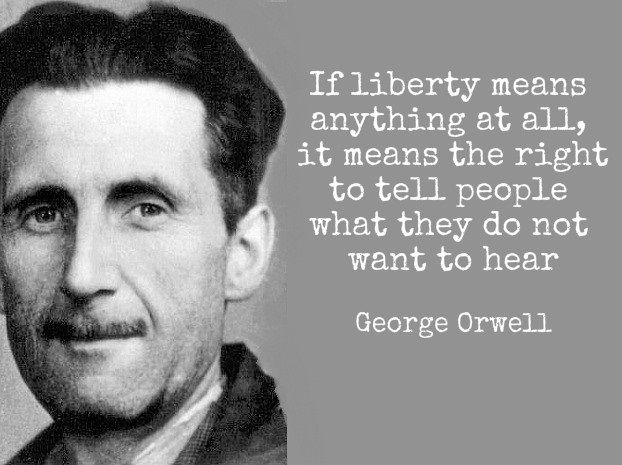
    Freedom's just another word for...?
    Imagine being arrested and thrown in jail merely for expressing an unpopular opinion. Okay, now analyze and explain “hate speech.”

    Campaign Finance Reform – A Primer

    All attempts at Campaign Finance Reform in these United States have failed. ALL. Every single one of them.

    If that sounds like exaggeration, just consider that attempts to limit the influence of money in politics is typically taught in history or civics classes as beginning (in earnest) shortly after the presidency of Andrew Jackson, the pro-slavery founder of the Democratic party whose administration ultimately produced the political “spoils system.” That would put us back to the mid- to late- 1830’s. Good ol’ “Honest Abe” himself was bankrupted trying to personally finance his first Senatorial campaign in 1858, so he had to rely upon businessman from Philadelphia and New York to finance his Presidential campaign in 1860. According to some historians, however, money was in politics from the beginning of the Republic.

    In the United States, concerns over financing campaigns for public office have been around since before the writing of the Constitution. Candidates traded influence, power, and gifts, for constituents’ money and votes even before the dawn of the Republic. George Washington – later President, but at the time, a candidate for the Virginia House of Burgesses – bestowed upon the 391 voters in his district the “customary means” of winning votes: “28 gallons of rum, 50 gallons of rum punch, 34 gallons of wine, 46 gallons of beer, and 2 gallons of cider royal.” James Madison lost his reelection campaign to the Virginia legislature 20 years later because he refused to provide voters with the customary whiskey.

    Gardner and Charles, “Election Law in the American Political System,” p. 637.

    In 1867, just two years after the Civil War, the first legislative attempt at campaign finance reform appeared in a Naval Appropriations bill. It forbade government officials from soliciting (i.e. “shaking down”) Navy Yard workers for money to finance the ruling party’s election campaigns. This had become a routine practice in prior years. So routine was it that federal employees would have some portion of their pay directly “assessed” by the government to the Party’s re-election fund. The protections of the 1867 Navy yard workers were eventually extended to all civil service workers… (But not the rest of us, evidently.) The Presidential campaign of 1896 was so openly a case of dueling donors obtaining political promises from each Parties’ respectively well-financed candidates – William Jennings Bryan for Team Blue and William McKinley for Team Red – that the public began yelling for campaign finance reform… and here we are 120 years later. This brief timeline of attempts at reform shows just how fruitless they all have been.

    Modern, seemingly sophisticated attempts at campaign finance reform, by people from both political parties in Congress, have ultimately been set aside by Supreme Court decisions. While it may be unpalatable or politically inexpedient to say this, the Supreme Court’s rulings in these cases are very solid reads of the First Amendment… proving yet again the old adage that “sometimes even a blind squirrel finds a nut” or  that “even a broken clock is right twice a day.” Lawsuits by public interest groups have ultimately failed to produce anything even close to a good result. Now the public feels so desperate for something to happen that they’ll embrace even nonsensical calls for reform by (of all people!!) Hilary Clinton. The much-ballyhooed, and almost totally misunderstood, case of Citizens United, 558 U.S. 310 (210) was about a non-profit movie company that made a film about then Senator Clinton. The Federal Election Commission agreed that the movie would be subject to a federal campaign finance law that would have imposed criminal and civil penalties on the movie company. That is to say, the law as it was made it a crime for a collection of people – using a corporate form – from expressing their political opinions, quintessential First Amendment conduct. Hard to imagine that the words “Congress shall make NO LAW” are ambiguous, but here we are, with a mountain of laws collectively regarding each and every one of the subjects specifically listed as exempt from regulation in the First Amendment.

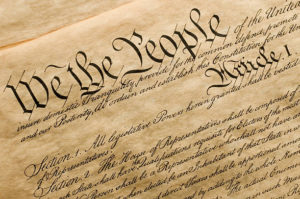
    Either We Are a Republic With a Charter To Be Faithfully Followed, or We Are Not.

    Understanding How the (Legislative) Sausage Gets Made

    To understand why campaign finance reform doesn’t work – and what simple fix would work – you have to understand some basic economics around how the political sausage gets made, so to speak.

    First, you must know what politicians all know: there has only been one time in the last 42 years that the rate of re-election for Congressional incumbents dipped below 90% – that was 1974, when it was only 89.7%, a rounding of tenths away from being 90%. Muse on that for minute – Congress has had historically bad approval ratings – like below 20%, for decades, by any polling company. Everyone thinks Congress sucks; yet Congressional incumbents get re-elected over 90% of the time. It’s a near-certainty. Many people have speculated or offered reasoned opinions about this phenomenon, but I don’t really care about the “why” because the mere statistical truth of it is all that matters for my argument.

    Second, we must make the rather short “hop” of faith and assume that politicians are at least as self-interested as the rest of us… one might humbly suggest that they are (perhaps) even a bit more self-interested than the rest of us, or make the claim that the job attracts the type, but I don’t need to prove that as crucial to my theory. Suffice it that my claim rests on what I believe to be a rather well-observed phenomenon about the self-interest of politicians. Lord Acton wrote an entire tract explaining this, but unfortunately no one reads it and all that we remember (if at all) is this quote: “Power corrupts, and absolute power corrupts absolutely.” My own observation from many years of government service and being an American is simply that the government does not choose its prospective employees from some magical pool of magnanimous, morally benevolent, and personally-disinterested human beings. If you think I am incorrect, you’ve obviously never been to the Department of Motor Vehicles to register your car, or change the title, or correct a typo on a Vehicle Identification Number (VIN). Try to manage that over your lunch break and let me know how it goes; and ask yourself about how good the customer service is while you’re there.

    The Currency of the Politician is Law – Legislation For Some and Against Others

    He's Lying!
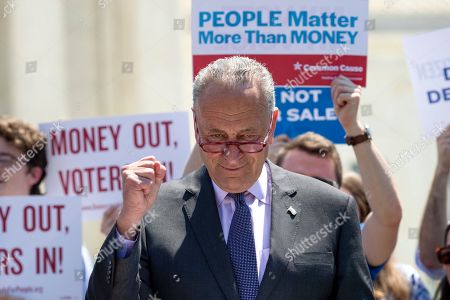
    Rep. Chuck Schumer (D, NY) explains how he can’t read, doesn’t understand, and doesn’t care about the 1st Amendment.

    To the above facts we have to add some economics. In my opinion, the best way to begin to understand this is to ask a very simple question: if you were a legislator looking to raise some cash, what would you have to sell? (Think about it seriously for a moment).

    ANS: Legislation. i.e. Laws.

    Legislation is the only thing that a lawmaker can offer any prospective “buyer.” It is the medium of exchange (i.e. the currency) of the political class and a specific instance of the more general “Law of the Instrument.”* In return for a piece of favorable legislation, or a clause in the next omnibus bill – or exemption from cuts or regulation – political donors deposit sums into re-elections campaigns, or exchange different favors with lobbyists – the “middlemen” of the entire Money-for-Favor-for-Reelection Triangle.

    If this seems unduly cynical, it shouldn’t be. If you have a friend who is a cop, who hasn’t heard of, or considered, asking him or her to “look into” a ticket…? Now magnify that onto a scale where instead of your hundred-fifty bucks plus court costs being at stake, it’s someone else’s multi-million dollar, multinational business and a piece of legislation that would ensure government contracts flowing that direction for the next 10 years. Or a promise to keep government regulators out of your business for at least your friendly Senator’s next 6 years of office. If all of this seems speculative or just too much to swallow at once, consider this quote right from the horse’s mouth, as it were:

    You send us to Congress; we pass laws under which you make money…and out of your profits, you further contribute to our campaign funds to send us back again to pass more laws to enable you to make more money.

    — Senator Boies Penrose, (R, PA) 1896 (quoted in Id., Gardner and Charles, p. 638.)

    I always hear people complain about the influence of “corporate money” in politics and yet no one ever seems to consider that if their Senator wasn’t offering legislation for sale, the corporation wouldn’t be able to make a purchase. And it is in no way solely corporations buying-off politicians. Unions are at least as powerful and well-off as any corporation and billionaires with agendas sit on both the left and the right of the political spectrum. In fact, if we’re dealing in generalities, it is worth wondering: if corporations are filled with greedy, capital-obsessed Scrooges, why would any of those money-grubbers ever voluntarily give their money to a politician in the first place? To ask the question is to destroy the premise.

    When you’re starting a company in your garage you don’t start by setting aside your political lobbying budget, then make whatever widget, software, computer, or other item that is the money-making aspect of your new venture. You first have to make something that a large enough number of people are willing to voluntarily pay you such that you have a growing enterprise, be it a successful song, an iPhone, the personal computer, or a rubber tire. Legislators don’t enter your mind until well down the road in the business cycle. Thus, perhaps it is enough to agree that legislators aren’t the unfortunate victims of a “system” that is foisted upon them. What Senators and Congressman do to fill the coffers of their re-elections campaigns is a perfectly natural, foreseeable byproduct of the funding of the political system.

    Part Two explains how it works in greater detail.

  • Chapter 15 – The Stay

    “Well, if they’re going to issue the stay at all, now would be a good time! I mean, if no stay today, by tomorrow night my guy is eating with the big metal spoon, if you know what I mean.” I’m on the phone to appellate defense in Washington, D.C. I look at my watch. The digital face reads 00:31. Ten-thirty in the morning east coast time.

    “Alright, bye.” I hang up. I’m looking at documents, but I’m not really seeing anything – David Ponder’s record book, letter from his wife, character statements, and I’m trying to imagine how I’m going to defend him tomorrow. I’ve got one last motion that I’ll bring at the close of the government’s case. One last grasp that has a sound basis in law, but the judge will deny it, at this point. It’s a technicality.

    From the beginning I’ve had the sense that they have mischarged the offense, perhaps intentionally. The prosecution has charged it as willful disobedience of a superior commissioned officer. Under the UCMJ, that has a stiffer penalty than the more general charge of violating a lawful general order, such as the order from the Secretary of Defense, to take the anthrax shot. The government has charged it as violating the specific Navy Lieutenant’s order, but there is an old case that stands for the proposition that merely repeating a higher order can not make an orders violation the more egregious willful disobedience of a superior commissioned officer. It is called the “ultimate offense doctrine,” but it probably isn’t going to work. Nothing else has.

    I’m tired. I haven’t slept much, I need a shave, and my back is killing me from my tiny desk chair at home and my broken desk chair at work. I need to get David’s sentencing case together, review my opening statement and closing argument, and make sure all of the documents are in my case file, with necessary copies for each of the jurors…

    My head nods and I realize I’ve drifted off at my desk. I look at my watch and see it’s 2:33 am. I rub my face and decide to take a walk.

    The building is dark and empty, except for me and the feisty Okinawan cockroaches. I stroll the dark corridors, my sneakers making a light tread on the tile. I stretch my arms over my head as I walk to the entrance. Out the window, the open field beside our building is dark. I can barely see the slope that I know rises up to a road that runs next to the next set of office buildings and the barracks.

    I hear the phone in the clerk’s office ring, but there’s nothing particularly unusual about that at this hour because of the time difference; people frequently fax documents from the States during our nighttime in Okinawa. The fax ticks away, a counterpoint to the flying bugs banging into the glass on the door and the light just outside of it. Tick-tick-tick. In seven hours, David Ponder is going to be facing a jury, and likely going to jail. Unless that fax. . .

    I walk hurriedly to the defense clerk’s office and go to the fax machine behind the clerk’s desk. Letter-sized sheets are spitting out, face down. I grab one and flip it over to see if it has anything to do with me. The cover sheet is from the Washington Navy Yard. I grab the whole stack while more keep sliding out.

    My eyes flick over the words.

    “YEAHHHHHHHHHHH!!!!!” I let out a guttural yell that echoes throughout the empty building. “Can you feel that, huh!?! Baby, can ya’!?” My best Ace Ventura, hips thrusting, fist pumping. I want to cry with relief. We beat the clock by seven hours. I’ve kept my promise to David and his wife, to Jason Stonewall, and Vittolino Arroyo. We have a stay from the Navy Marine Corps Court of Criminal Appeals. No one’s going to jail tomorrow.


    I take my time packing up and make a few copies of the stay. Before I leave, somewhere near 3 am, I take a ten-penny nail and hammer the stay to the prosecution’s office door. I don’t do it right through the middle, however, because I’m still a Marine Officer and someone might bitch to the CO about a nail in the door. I hammer the nail just deep enough to look like someone was careless; but not all the way through the door, for example. I also place the nail an inch or two above the middle of the sheet, close enough to the top of the sheet that it doesn’t look like it was intentionally in the middle, but far enough down that someone will have to either rip the paper in half to get it off or pry out the nail. It’s an asshole move, to be certain, but I know it might be all the satisfaction I’m going to get in the long run, so I indulge myself. It’s the little “fuck yous” that matter in life. It won’t be the last laugh, but it’s enough to make me smile as I walk to my car for the drive back to Kadena Air Base officer housing and my wife and four daughters.

  • Chapter 14 – Secretary Cohen’s “Four Points”

    In December of 1997, the anthrax vaccine manufacturer was shut down and could not manufacture anything related to the AVA. Notwithstanding that hurdle, Secretary of Defense William Cohen announced that before the mandatory program would begin, it would have to meet four prerequisites:

    1. Supplemental testing, consistent with Food and Drug Administration standards, to assure sterility, safety, potency and purity of the vaccine;
    2. Implementation of a system for fully tracking personnel who receive the anthrax vaccinations;
    3. Approval of appropriate operational plans to administer the immunizations and communications plans to inform military personnel of the overall program;
    4. Review of health and medical issues of the program by an independent expert.

    (My emphasis added). One cannot help but wonder why condition number one would need to be in place if the DoD was confident in the safety and potency of the AVA, as it had started saying publicly. In fact, this appears to have been nothing more than a media campaign to assuage fears because none of these four “prerequisites” were ever met before the program kicked off, which is exactly why the manufacturer had been shut down in the first instance. Each of these factors revealed fundamental flaws with the program from its inception.

    With regard to point 1, “supplemental testing” may well have been the worst idea for the DoD could have ever come up with because what it demonstrated, unequivocally, was failure of lot, after lot, after lot of the vaccine.[1] One of the first findings in CBER’s February 1998 inspection was that “there is no validation of the length of time sublots are held until they are used in a lot. Sublots have been held longer than three years prior to use. There is no stability data to support this hold time.”[i] Lest this seem picayune, consider a little more history of one particular Sublot:

    Sublot AV456 was produced . . . in 5/95 [and stored] until 3/97 at which time it was transported to the formulation room . . . with other sublots to make FAV039. Here it was discovered that AV456 was contaminated with mold, and it was destroyed.[ii]

    While some may say that the fact that it was caught is good news, it ignores the other, older sublots where mold or other impurities were not caught. One finding (among many like this) is particularly noteworthy:

    Lot FAV023 was filled on 12/13/93 and passed a potency test on 3/29/94. It was submitted for redating on 4/2/97 and was placed in the stability program (zero time) at the same time. It is reported as failing potency on 4/2/97. It was tested again on 8/12/97 and is reported as failing potency. A fourth potency test conducted on 10/6/97 is listed as passing by 0.01. There is no investigation into the original result and justifying the additional testing.[iii]

    This finding is most disturbing because it indicates a testing regime that ignores negative test results – twice! – and somehow chooses to validate a subsequent positive after two negatives. How can one know which test result is correct with two failing and two passing results? And how many people would like to line up, roll up their sleeve, and take their shots from that particular vial of the vaccine? Stability testing of biological products is crucial because of the possibility for these products to break down over time. Note that this lot was “filled” in 1993. Four years later it passes a test by .01 after having failed twice previously. This particular finding is in no way isolated: Lots FAV 010, 011, 018, 021, 022, 025, 028, 040, 041, 042, 043, and 044 all had at least one failed potency test that was not investigated and then a passing result was somehow chosen over the negative one.

    FAV016 has its own uniquely disturbing history.

    Lot FAV016 had 6579 vials rejected due to particulates during post-filling inspection. These particulates were not identified, nor was an investigation conducted. The batch was released.

    Someone, somewhere, had unidentified “particulates” injected into them. As a practical aside, one has to wonder how those individuals will get VA compensation if they have an illness as a result of this contaminated product being injected into them in light of the DoD’s positions that there had only been 74 adverse events from the vaccine.

    The list of violations goes on and on and includes several different lots being tested and found with such contaminants as “penicillum species” – a danger to anyone allergic to penicillin; cladosporium – a fungus that can cause infections leading to “rough skin, black lesions on the hands, and sometimes a brain abscess”; altenaria – a fungus that can cause dermatitis in humans; micrococcus – a contaminant that is relatively harmless to humans; staphylococcus saprophyticus – a significant cause of urinary tract infections; staphylococcus epidermis – a significant cause of opportunistic infections, usually for those with some skin puncturing, such as needle/IV intrusions, medical appliances, or surgery; and staphylococcus capitis – another infection causing bacteria.

    Despite all of these findings and more in February of 1998, the program was launched on May 15, 1998, with Secretary Cohen claiming, with a straight face, that “all conditions for implementing the anthrax vaccination program for the total force have now been met.”[iv] There is simply no possible way Secretary Cohen could have said that in good conscience if he was aware of the inspection results in February. And given everything going on around the program, it is impossible to imagine that he didn’t know – because he manufacturer “voluntarily” shut down for “renovations” in January 1998. In reality it shut down as a result of the Notice of Intent to Revoke letter by the FDA, otherwise the February inspection results would have resulted in the facility’s license revocation.

    The second condition of the program was tracking of immunizations. Two DoD briefers talked extensively on November 6th, 1997, about a new program that would be used to track immunizations and of the terrific job the new system had done in Bosnia.[v] At a March 1998 Senate Armed Services Committee hearing, however, Dr. Randolph Wykoff, the Associate Commissioner for operations at the FDA, and Mark Gebicke of the GAO, pointed out that the Bosnia experience left a lot to be desired, particularly of the tracking of immunizations under an IND protocol for an investigational encephalitis vaccine.[vi] In fact, one report used the word “abysmal” to describe it.[vii] Once again, the Assistant Secretary of Defense for Health Affairs promised to get better, but also talked about a new procedure for getting relief from the FDA from the requirements of an IND.  The FDA associate director maintained that the “FDA firmly believes the IND process, as defined in our rules and regulations, is sufficiently flexible [for DoD’s needs]. Additionally, FDA is convinced the Department of Defense has the scientific, clinical, and logistic capability necessary to comply with the requirements of the IND process.”[viii] Evidently, however, they could not and did not do it in Bosnia. A GAO report issued the same day stressed the importance of being able to track vaccine immunizations in order to ensure “that (1) sufficient supplies of vaccines will be available at the various worldwide immunization sites; (2) vaccines that are older than their 1-year shelf life are destroyed; and (3) records of vaccines received, administered, and destroyed are kept to allow for monitoring and tracking.”[ix] Worse yet, the GAO found that during the “Bosnia deployment in 1997 . . . DOD could not account for more than 3,000 (20 percent) of the total number of doses sent to Bosnia.”[x]

    Requirement number three was that there would be approved operational plans to communicate to service members about the anthrax vaccine program. Whatever the operational plans were, in May 1999, the Department of the Air Force circulated a memo to its judge advocates, specifically defense counsel, telling them that “a small number of military members have refused to follow their commander’s direct order to take the [anthrax] vaccine” and that the cause of their fear in taking the shot is “misinformation obtained from web sites set up by special interest groups[.]”[xi] This was a frequent refrain of the DoD, in front of Congress and in the press. The memo also points members to the DoD’s own website, which was established after the program had begun, in order to “counter” in DoD parlance “internet misinformation.” Evidently then, in March of 1998, when the program was about to begin, prong number three hadn’t been met, either.

    It is worth noting that the Army’s AVIP Agency existed solely for the promotion of the anthrax vaccine. It was budgeted at $74 million over a six-year period (FY99-FY05).[xii] No other military medicine program has ever needed to be forced on servicemembers with an orchestrated campaign of this type. William Arkin, a defense writer and former Army intelligence officer observed that “. . . this is the Pentagon versus its own service members. It is a depressing window into the breakdown of discipline and basic confidence in the political and military leadership. That has nothing to do with the Web.”[xiii]

    Criterion number four probably cost the DoD as much credibility (if one can say it had any to begin with) as number one. It would be comical were it not for the stakes involved. Secretary of Defense Cohen announced that there would be a “review of the health and medical aspects of the program by an independent expert.”[xiv]

    Doctor Gerard N. Burrow was the doctor who allegedly reviewed the program at the request of Deputy Secretary of Defense Rudy DeLeon. Dr. Burrow concluded that “[t]he anthrax vaccine appears to be safe and offers the best available protection against wild-type anthrax as a biological warfare agent.”[xv] Unfortunately, Dr. Burrow is a professor of gynecology at Yale University School of Medicine, a specialty that one would not normally associate with some expertise in weaponized anthrax toxins. When that unfortunate snippet from his CV leaked out, Dr. Burrow was subsequently asked by Congress to testify about his review at a 29 Apr 1999 hearing. He declined to appear. Instead, in a 26 Apr 1999 letter to Representative Christopher Shays (R-CT), Burrow stated that

    “[t]he Defense Department was looking for some [sic] to review the program in general and make suggestions, and I accepted out of patriotism. I was very clear that I had no expertise in Anthrax and they were very clear they were looking for a general oversight of the vaccination program.”[xvi]

    The DoD’s claims of misinformation on the internet had a particularly hollow ring in light of its blatant lack of honesty and candor in having something as simple as an independent review conducted. Nothing was ever done about this lie that was foisted off on American servicemembers. No one has ever been taken to task for this laughably blatant fraud perpetrated on U.S. military members and the broader American public.

    Thus, in the end, the DoD’s four-point plan to reassure the public and servicemembers of the safety of the anthrax program – as a prerequisite to beginning inoculation – was nothing more than a PR campaign that ultimately cost the DoD credibility that it did not have to spare. As the truth came out, and was certainly made available on the internet and elsewhere, the DoD’s cries of “misinformation” went unheeded. Service members on active duty and in the reserves began to refuse or leave the service rather than take the anthrax shot.

    If the DoD’s actions appear incredible, the FDA’s inaction is equally baffling.  The FDA is charged, under the Administrative Procedures Act, with the duty and authority to regulate, among many other things, the safety of drugs and biologic products. The FDA has had no hesitation in cracking down on manufacturers who do not comply with its regulations or decisions. The cases in the D.C circuit are legion with the FDA disciplining manufacturers who try to market a drug for a purpose not clearly delineated on the approved labeling or who otherwise fail to comply with IND protocols.[xvii] For some reason, however, in the case of the AVA, the FDA had an absolutely incestuous relationship with the DoD, a third-party who was NOT even the manufacturer! Letters were exchanged between the two agencies regarding non-compliance with IND protocols after the IND protocol was not properly administered in Bosnia. At the March 17, 1998, hearing, the following colloquy took place on this issue between Senator Rockefeller and Dr. Wykoff, the FDA’s associate director for operations.

    Rockefeller:  . . . It’s also not clear to me that FDA’s shoes are entirely clear or clean on this matter. In fact, some would say lax.  I think that FDA and DoD have been exchanging letters about all of this for some months now. And the fact is that seven years after the Gulf War, the situation is still not resolved. If DoD does not adequately answer FDA’s questions with respect to these matters and others, what is FDA going to do about it?  . . . And why, for example, was it necessary for the Presidential Advisory Commission to address the waived informed consent matter six years after the end of the war? So I put to you what FDA would recommend and would do if DoD does not come in compliance more?

    Wykoff:  . . . We have tried very hard to make sure that they are absolutely clear what our rules and regulations are and what our expectations are. We believe that they understand that. We believe that they have the capability of complying with all of our IND rules and regulations. As to whether they will comply in the next deployment situation, obviously we can’t predict that.

    Rockefeller: And if they don’t, is there anything that you can do about it?

    Wykoff: Yes, sir. Obviously, there are a range of options that we have. We would have to determine what the specific concerns are. That drives what are specific actions would be.

    Rockefeller: What are some of the options?

    Wykoff: Well, as we interact with any trial sponsor, we learn more about their ability to conduct IND trials, we would be more or less willing to grant waivers or exemptions to particular requirements.  We could hold them to more – all of the requirements as outlined in the rules and regulations – based on their performance.[xviii]

    It boggles the mind to think that the first words out of the FDA’s mouth are talk of waivers for non-compliance with regulations, particularly in light of DoD’s history in this area. There was, and is, a clearly documented squeamishness on the part of the FDA to step in and bring the DoD into compliance. In downright shocking testimony before a House Committee, Dr. Kathryn Zoon of CBER was questioned by Rep. Christopher Shays (R-CT) about the FDA’s regulatory responsibility.

    ZOON: This is a licensed vaccine. If a physician uses it or DoD uses it, that does not really fall under our jurisdiction.

    SHAYS: So it’s your statement before us now that if DoD doesn’t abide by the protocol, you have no responsibility? That you have set out a requirement? Who is responsible then? Who’s going to make sure that DoD abides by the protocol, if you don’t do it?

    ZOON: We don’t have the authority.

    SHAYS: I can’t believe – I just want to say, Dr. Zoon, I cannot believe that you have just said under oath that you do not have the responsibility to deal with this issue or the authority. You said you don’t have the authority.

    ZOON: I said – yes, that’s correct.

    SHAYS: That is your testimony.

    ZOON: We don’t have the authority.

    SHAYS: Well then who is going to protect our men and women if you aren’t going to do it? Who? Who has the authority?

    The tricky part of this testimony is that it is partly correct. The FDA does not regulate end-users of a product, normally. That is, they do not tell an individual doctor, for example, that he cannot use a drug off-label. Two important caveats to that “normal” example, however. First, the normal patient can’t and isn’t being compelled by their doctor to take anything; they can decline, and they can also sue if something happens as a result of the doctor’s malpractice. A military member has neither of those options. Second, and more directly on point, if the end-user is participating in a clinical protocol, then the FDA does regulate that user. Thus, the DoD’s participation in BioPort’s IND application in order to get an indication against aerosolized anthrax should make them subject to FDA regulation, just as the DoD was during the Gulf War when applying for a Rule 23(d) waiver. FDA’s willingness to accede to DoD’s interpretation essentially allowed the DoD to completely slide on their responsibilities. Some lawyer’s or regulator’s intentional misinterpretation of the FDA’s own regulations resulted in an open abdication of the FDA’s regulatory role over the AVA.

    FDA officials have repeatedly acceded to DoD doctors’ interpretations of the anthrax vaccine label, as well. This is an absurdity, particularly appalling in light of the DoD’s involvement in the manufacturing process. The DoD fundamentally became a manufacturer, for all intents and purposes, and the FDA looked the other way, hiding behind the fiction that the DoD was an “end-user” when convenient. The DoD was involved from the very beginning in the development of the anthrax vaccine. Additionally, when problems arose with the manufacturer, the DoD sent in its own ‘inspection’ teams to ensure the supply of the vaccine. The DoD had paramount liens on every piece of equipment that the manufacturer has. A GAO report in June 1999 found that

    DOD has made a significant investment in renovating BioPort’s biologic facility to meet the military’s requirements for anthrax vaccine . . . Since 1988, DOD has provided about $112 million in contracts, including options, to help ensure the viability of the anthrax vaccine biologic facility. As shown in figure 1, DoD’s contracts provided monies to (1) produce the vaccine, (2) renovate and expand the production facility, (3) provide various support services, and (4) purchase equipment to enhance production capacity. DoD has also provided contract terms and conditions to help ensure the success of the anthrax vaccine program. For example, under Public Law 85-804, which allows for government indemnification of contractors for unusually hazardous risks, DoD indemnified BioPort against product liability. In addition, DoD agreed to allow the company to sell up to 200,000 doses of anthrax vaccine to others, using government-furnished equipment rent-free, after DoD’s requirements are met.[xix]

    Amazingly, this is chump change compared to what the Defense Contract Auditing Agency found in 2000! That report led to an Inspector General Investigation. Notwithstanding numerous audits that found that the company was not financially viable, BioPort requested contract amendments that included $1.28 million in bonuses for senior management that amounted to 109% of the managers’ base salary. This was deemed an “unreasonable expenditure” by the DCAA in light of “BioPort’s current financial condition.”[xx] Okay, so someone disapproved, right? Well, sort of, because the manufacturer had almost no real financial incentive to produce an FDA approved vaccine under its contracts with DoD to begin with: the contract paid the manufacturer 90% of the contract price before the FDA ever inspected the vaccine. Yes, read that again.

    Put another way, BioPort only got paid 10% more for the product being approved by the FDA. At one point, the Department of Justice was looking into criminal charges as some $6 to $8 Million of the money provided to the manufacturer was unaccounted for.  Additionally, the fact the former Chairman of the Joint Chiefs of Staff Admiral William Crowe was a co-owner of the facility, as well as Dr. Robert Myers, (formerly of MDPH and MBPI) can hardly escape attention. Crowe was the first senior military officer to have come out publicly in support of then-Democratic party candidate for the Presidency, Arkansas governor Bill Clinton. While both Crowe and Myers disavowed any “inside” preferential treatment from the DoD, one must wonder if the decision to award BioPort the contract had anything to do with either’s presence as an owner. Finally, emails from inside the DoD suggest that the agency actually had its own people “on site.” During hearings held by Representative Christopher Shays in May 1999, an email was sent from Brigadier General Eddie Cain, the Director of the Joint Program Office for Biological Defense, to an Army Colonel John V. Wade. In the email Cain warned that “[I]f you think Congressman Shays was critical of the current relationship between FDA & DOD, wait until he finds out that DOD is calling the shots on-sight.” [sic][xxi] When this email surfaced during the court-martial of Air Force Captain (and medical Doctor) John Buck, the FDA had “no comment.”

    The FDA has, for whatever reasons, backed down from the DoD to the point that after the warning letters, the notice of intent to revoke, and a failed inspection thereafter, the agency still withheld pulling the manufacturer’s license because the DoD interceded on behalf of the company. In a June 25, 2000, interview with the Vancouver newspaper The Province, Mark Elengold, the Deputy Director for CBER, explained what happened.

    The FDA held off pulling the licence, in part because it would have left the U.S. Department of Defence [sic] – which had just announced that all soldiers were to receive anthrax vaccine – with no domestic source.

    “This is a one-source product so we tend to try to work with firms and put additional monitoring steps in to avoid revoking the licence,” said Elengold.  The prestigious British medical journal Lancet reported at the time that ‘a plea from the Pentagon has prevented an ‘eleventh-hour’ closure of the only U.S. producer of anthrax vaccine,” according to an e-mail to DND [DOD?] medical headquarters in February 1998.

    Elengold confirmed the Pentagon sat in on a crucial call to the company in which he discussed revoking the licence.”[xxii]

    Electronic mails surfaced in and around 2000 show not only did the DoD convince the FDA not to revoke the license, but DoD also attempted to bully both the manufacturer and the Government Accounting Office at the same time. In one e-mail, a Pentagon official discusses how other agency supervisors were urging the U.S. Food and Drug Administration and the manufacturer of the vaccine to release lots that had been held up for scrutiny by them (the FDA). This despite Secretary Cohen’s public insistence on supplemental testing to ensure safety of the vaccine, one should remember.

    On Feb. 22. 1999, Dr. Michael Gilbreath, a civilian Pentagon biological defense employee sent an email to U.S. Army Brig. Gen. Eddie Cain, then Director of the Joint Program Office of Biological Defense (JPOBD). Gilbreath wrote that he had “received information this morning from BioPort that individuals within the DOD contacted them and threatened that DOD would circumvent BioPort and contact the FDA regarding availability of anthrax vaccine lots currently under review at the FDA . . . Any such actions by DOD would be inappropriate.”[xxiii]

    E-mails also reveal that the Pentagon was having trouble countering the U.S. General Accounting Office’s assertion that the vaccine is improperly licensed, and that it has not been proven safe and effective. Cain indicated in one e-mail that then Secretary of Defense William Cohen would be writing to the GAO, whose findings have consistently gone against the Pentagon, to protest “the expertise put on this (vaccine) project” by the watchdog agency.

    “If we cannot answer these questions, we (DOD and the Administration) are in big time trouble,” Cain said in the May 3 e-mail. “…We are digging ourselves a hole that will be too difficult to crawl out of.”[xxiv]

    The FDA also stood by when adulterated vaccine was shipped to the Canadian military and when 59 Marines were given shots from expired lots of the vaccine.[xxv] The FDA’s complicity with the DoD’s actions has left service members with no recourse but to either take the shot, be court-martialed for refusing, or leave the service somehow if their commitment allows it. If the service member simply will not take the chance on the vaccine’s safety, the penalty for refusing is court-martial with a certain conviction. Military Judges simply would not hear that the vaccine is investigational, nor would they even allow service members to present that information to a jury. The FDA’s refusal to act leaves the judge with an out: if the FDA thought it was investigational, why wouldn’t they just issue an opinion to that effect? Worse yet, some military judges would not wade through the necessary materials in order to understand the FDA regulatory process and what an IND is, or they would find that the Secretary of Defense’s actions were in legal parlance “non-justiciable” disputes between “co-equal branches of government.”

    The member who fights will be convicted and punished. When an Air Force Doctor, John Buck, tried to submit evidence that the specific lot that he was to have received, FAV044, was subject to a recall because it was expired, the judge did not allow the evidence to come into court. The only option left for service members was to resign quietly, leave at the end of a service obligation, or fight behind the scenes to ensure that the law is followed. That is what a group of persistent officers had been doing from the word go.

    Endnotes

    [1] It would take up too much space to detail all of the failed lots, for their various reasons during the February 20, 1998, CBER inspection on the lots of AVA. Some of the more egregious violations are listed. See CBER Inspection report dtd 2/20/98 for a complete listing.

    [i] FDA Form 483 Inspectional Observations Feb. 4-20, 1998.

    [ii] Id.

    [iii] Id.

    [iv] May 15, 1998, SecDef memo.

    [v] Nov 6, 1997, background briefing

    [vi] Mar 17, 1998 Senate Hearing, Committee on Veterans Affairs Holds Hearing on the Nomination of Togo West as Secretary of Veterans Affairs and on U.S. Biologic Vaccines for Gulf War Veterans.

    [vii] “Abysmal” tracking job quote ????

    [viii] Id.

    [ix] GAO Report T–NSIAD-98-83 p.8 (March 17, 1998).

    [x] Id.

    [xi] 18 May 99 AF memo

    [xii] Charles Cragin, PDASD Reserve Affairs, testimony, 3 Oct 2000.  See: http://www.house.gov/reform/hearings/healthcare/00.10.03/cragin.htm

    [xiii] William Arkin, “Bugged by the Net”, Washington Post online, 27 Sep 1999.  See: http://www.washingtonpost.com/wp-srv/national/dotmil/arkin092799.htm

    [xiv] AVIP Impl ltr 18 May 98

    [xv]  See: http://www.defenselink.mil/other_info/burrows.html

    [xvi] Id.

    [xvii]

    [xviii] Mar 17, 1998 Senate Hearing, Committee on Veterans Affairs Holds Hearing on the Nomination of Togo West as Secretary of Veterans Affairs and on U.S. Biologic Vaccines for Gulf War Veterans.

    [xix] GAO Report GAO T-NSIAD-99-214,  (June 30, 1999)

    [xx] IG Report dtd March 22, 2000.

    [xxi] Dave Eberhart, Stars and Stripes.  May, 2001.

    [xxii] Ann Rees, “Their Dangerous Dose”, The Province [Vancouver, Canada], 25 Jun 2000

    [xxiii] E-mails Suggest Pentagon Pressured FDA On Anthrax Vaccine, Thomas D. Williams, Hartford Courant, May 17, 2001.

    [xxiv] Id.

    [xxv] See Most Dangerous Dose (Canadian article on vaccine) and GAO report on Marines T-NSIAD-00-36.

  • Letter to the Editor

    I was going through some personal papers and found this copy of a letter I had written nearly 30 years ago. Re-reading it was almost as if it had been written yesterday, other than some events were dated. Pretty much everything else is current. It was written as I was finishing up my house and preparing to retire and the tax people were overjoyed that someone would actually move into a rural area. Over the years I have written a lot of angry letters to the local papers but I always included copies to those I was maligning. Sadly to say nothing ever changed because of my exercises in futility. I used to go to the local town board meetings, my complaints always were about the use or misuse of tax payer money to support those things that weren’t governmental  (such as Boy Scouts, fireworks displays, various donations, etc). I had a number of aggravations with the zoning board/land use/building permits at the county level as well.
    I finally got worn down and gave up, elections didn’t change anything, mindsets never changed. Once a precedence is set it’s tough to change, even at the lowest level.
    A lot of the letters never saw daylight, local papers often pick and chose the opinions that are not confrontational. I did get picked up by some other publications that reprinted my letters, however.
    _________________________

  • Chapter 9 – The History of the Anthrax Vaccine Adsorbed (AVA)

    The first use of a human anthrax vaccine took place in 1954.[i] The primary purpose for an anthrax vaccine, like all vaccines, was to provide some prophylaxis for human beings from contracting the anthrax bacteria, which is typically found in cattle and other livestock hides. The people most likely to come into contact with the anthrax spores were (a) livestock handlers, and (b) people who might be handling animal hides in leather-working factories or similar places. The first comprehensive field trial of a human anthrax vaccine was conducted at goat-hair processing mills from 1955-59 in the northeastern United States by Dr. Philip Brachman. This study has come to be known as the Brachman Study because it is, essentially, the only data available on the subject.[ii] In this study, 369 workers in the mill who handled animal hides were vaccinated against the bacteria. The results, while not spectacular, certainly indicated that the vaccine was effective against catching anthrax from handling pelts and hides that had the spores: to be precise, the vaccine trial was designed to provide prophylaxis against contacting anthrax via contact with the skin, the most likely method of encountering the spores. The study showed a “high confidence level of 93% effectiveness” for the vaccine and a low of 65%, a significant spread.

    The Michigan Department of Public Health first produced the Anthrax Vaccine Adsorbed (AVA) under an Investigational New Drug application (DBS-IND 180) in 1966. MDPH filed a license application for the manufacture of Anthrax Protective Antigen, Aluminum Hydroxide Adsorbed in 1967. The specification for manufacture is based on U.S. Patent 3,208,909. The license application references an article published in “Applied Microbiology” that details the production process. The license to manufacture AVA, granted in 1970, has two parts. One license is for the facility, the Establishment License Application (ELA); the other is for the product itself, the Product License Application (PLA). MDPH produced AVA continuously (if in small quantities) from its first contract (PH21-68-2064) in 1968 until 1997 when MDPH split off its biologics division and privatized it into the Michigan Biologic Products Institute. MBPI in turn sold the facility and its licenses to BioPort, Incorporated, in 1998, a subject to which we will return in detail later.

    Bacillus anthracis is a bacteria that survives in its environment by exuding enzymes that break down surrounding compounds, such as fats, proteins, and polysaccharides (complex sugar molecules). The bacteria then absorb these byproducts. In addition to secreting the enzymes, which serve a nutritional gathering function for the bacteria, anthrax also secretes two toxins, or poisons, known as lethal factor (LF) and edema factor (EF). These two toxins only work, however, when combined with a protein known as Protective Antigen (PA). A vaccine will be effective against anthrax if it confers a certain level of antibody response to the PA, thus inhibiting the expression of LF/EF. In other words, if the vaccine causes the immune system to create enough antibodies that will fight and overwhelm the Protective Antigen, it is considered effective.

    The anthrax vaccine is unique among vaccines in that there is no step in the manufacturing process for purifying the active fraction of the vaccine. The vaccine is made by growing a non-virulent strain of anthrax in a culture. This culture is filtered to remove the bacteria, but the remainder, including the proteins and enzymes, is absorbed onto aluminum oxyhydroxide. The antigens that are absorbed are then centrifuged out of the solution and, without being “washed”, are then resuspended into a saline solution with some preservatives. Because of the way in which the bacteria secretes enzymes and absorbs proteins, the vaccine is

    composed of an undefined crude culture of supernatant adsorbed to aluminum hydroxide. There has been no quantification of the protective antigen content of the vaccine or of any of the other constituents, so the degree of purity is unknown. Standardization is determined by an animal potency test.[iii]

    One would think that this statement must have come from an anthrax vaccine opponent, except that it is from an article authored by Colonel (Dr.) Arthur Friedlander, U.S. Army – as of 2004, the Chief Researcher at the U.S. Army’s Medical Research laboratory at Ft. Detrick, Maryland – and Dr. Philip Brachman, head of the original study on the previous Merck Pharmaceuticals-manufactured anthrax vaccine. As Dr. Friedlander notes, the antibody titer – the level of antibodies produced by the body in response to the vaccine, measured by a blood test – varies widely from lot to lot of the vaccine and is measured by injecting guinea pigs and measuring antibody response. This variety is due, in part, because the manufacturing process, developed in the 1960s, is antiquated by modern microbiology standards, which now control how a vaccine is judged for licensing purposes. All of this means that even under ideal conditions, the vaccine is likely to produce significant differences in potency from batch to batch. The problem with the AVA is that it has never been manufactured under anything even approaching ideal conditions.

    At the same time that the original Brachman study’s results were being published in 1954, the development of the anthrax vaccine continued apace. Interestingly, the vaccine used in the Brachman study was originally made by Merck Pharmaceutical, but it was changed in both content and production method by a new manufacturer, the Michigan Department of Public Health. This changed vaccine, not the original one used in the Brachman study, was what was patented by the U.S. Army in 1965.[iv]

    In 1967, an application was submitted to the National Institute of Health’s Division of Biologics Standards to get a license for the patented vaccine. A study was conducted at a Talladega mill using the newly-patented vaccine: but this study’s results have never been published. There was correspondence between the NIH and the head of the Talladega study indicating that there were problems with the methodology. Dr. Philip Coleman, the head investigator, wrote candidly to the NIH: “As to the efficacy of the vaccine, we have no real method of determining the protection afforded.”[v] There were also memos exchanged regarding the scientific validity of the Talladega study. An ad hoc licensing oversight committee sent a memo to a Dr. Margaret Pittman of the Department of Health Education and Welfare (HEW), the forerunner to the Dept. of Health and Human Services (DHHS), pointing out that “[t]he lack of cases of anthrax in an uncontrolled population of approximately 600 persons in the Talladega mill can hardly be accepted as scientific evidence for efficacy of the vaccine.”[vi] Notwithstanding these problems, Doctor Pittman recommended licensure of the vaccine on February 10, 1969, while acknowledging that “clinical data establishing efficacy of the product had not been submitted and that data be requested from NCDC (National Communicable Disease Center).”[vii] Efficacy data was a prerequisite to licensure by the 1962 Kefauver-Harris Amendments to the Federal Food, Drug and Cosmetic Act, previously detailed in Chapter 5.[1]

    On November 2, 1970, the license for the anthrax vaccine was recommended for approval by HEW without any of the required efficacy data. [viii] The License was granted on 10 November 1970. In an interesting twist, the efficacy data from the earlier Brachman Study was substituted, submitted, and accepted (yet no documentation of this submission has been uncovered). The Brachman Study is actually referenced on the approved package insert, even though the vaccine used in the Brachman Study differed from the licensed vaccine in strain, formulation, and production method. While there are those who will argue (and DoD representatives have before Congress) that the vaccines are sufficiently similar to allow conclusions to be drawn, that is a scientific debate. As a legal matter, it holds no weight. There is absolutely no way today, under the existing regulatory-licensing framework, that a company could get a license for a drug from the FDA by substituting a study from some other company’s drug, made by a different production method, using a different strain of bacteria, from a study done decades before. As one former FDA official who worked in the Department at that time sheepishly admitted, “these were the days when we were trying to help the industry.”[ix]

    When the Department of Biologics Standards was transferred under the FDA in 1973, a review began of all previously licensed vaccines that had not been required to show the necessary efficacy data. The anthrax vaccine would not undergo the necessary review for efficacy data until 12 years later, in 1985. During this review, the FDA concluded that “safety of this product is not a major concern, especially considering its very limited distribution…”[x] The committee also noted that “[a]nthrax vaccine poses no serious special problems other than the fact that its efficacy against inhalation anthrax is not well documented.”[xi] Finally, the Panel concluded that “there is sufficient evidence to conclude that anthrax vaccine is safe and effective under the limited circumstances for which this vaccine is employed.”[xii]

    During the Anthrax Vaccine Immunization Program (AVIP) rollout, the DoD publicly long claimed that “the vaccine has ‘an impressive safety record’” and that “it has been widely used for thirty years,” but neither of those statements can be squared with the 1985 review, which resulted in a proposed rule that was never been acted upon.[xiii] The 1985 review noted that “[i]mmunization with this vaccine is indicated only for certain occupational groups with risk of uncontrollable or unavoidable exposure to the organism. It is recommended for individuals who come in contact with imported animal hides, furs, wool, hair (especially goat hair), bristles, and bone meal, as well as laboratory workers involved in ongoing studies on the organism[xiv] The license was granted in 1970, but the vaccine was not widely distributed nor widely used, given the narrow slice of the population involved in animal hide handling. In fact, in November of 1971, the Division of Biologics Standards of the National Institutes of Health, noting an apparent increase in reports of adverse reactions after individuals received booster shots, published guidance on the vaccine’s shot regimen.

    The Division considered it advisable to reevaluate the need for annual boosters and possibly the amount of the booster dose . . . Although the record is unclear as to whether or not the Division requested the manufacturer to conduct a reevaluation, no such reevaluation has been done to date.[xv]

    Part of the problem may stem from the vaccine’s shot regimen, which consists of the first three shots given within 2 weeks of each other, and then another 3 shots spread out over the remainder of a year, for a total of 6 shots to complete the series, with annual boosters thereafter.

    The DoD’s media campaign, though, rising to over $70 million dollars spent for a website and other educational information for the troops, includes literature that says the anthrax vaccine “has been safely and routinely administered in the United States to veterinarians, laboratory workers, and livestock handlers for more than 25 years.”[xvi] An April 2000 Congressional House report noted, however, that “testimony at the March 24 hearing indicated between 100 and 300 civilians may receive the vaccine each year. Since approval, and prior to the AVIP, fewer than 68,000 doses had been distributed apart from stocks used in Operation Desert Storm.”[xvii] Shortly after the vaccine was licensed, the mills began closing as the garment industry changed. The risk of exposure and infection from anthrax spores by the general public disappeared. The vaccine’s use became limited to experiments on laboratory animals, the researchers conducting the experiments, and the staff at the manufacturing plant. Proof of this is that from its licensing until 1988, when the DoD sought to increase the production lines for it, only 68,000 doses of the vaccine had been produced by MDPH and MDPH had never made a lot of more than 7500 doses at one time. If vaccination consists of six shots plus annual boosters, the number of possible persons inoculated is so small as to not even be statistically significant for long-term epidemiological studies. The 1985 Panel noted that “[t]he vaccine manufactured by the Michigan Department of Public Health has not been employed in a controlled field trial.”[xviii]

    Finally, there was never any effort to track long-term health effects from those who received the vaccine. There was no database maintained or other central records kept to track an individual’s long-term reactions to the vaccine. The Institute of Medicine conducted a review of all available literature and concluded that “[t]here is a paucity of published peer-reviewed literature on the safety of the anthrax vaccine.”[xix] It also noted that “[t]here have been no studies of the anthrax vaccine in which the long-term health outcomes have been systematically evaluated with active surveillance.”[xx] At no time in the history of the anthrax vaccine did their exist, or has their existed, support for the DoD’s claims of “an impressive safety record.” In truth, the DoD’s claims are particularly hollow and appear to be part of a campaign of disinformation. As a Congressional Committee noted in April 2000, “[p]reposterously low adverse report rates generated by DOD point to a program far more concerned with public relations than effective force protection or the practice of medicine.”

    The vaccine’s licensed product insert expresses an expected systemic adverse reaction rate of 0.2 %. In May, 1999, the Department of Defense reported a total of 123 Vaccine Adverse Events Report System (VAERS) filings with the FDA, but included only 65 of those in the calculation of an adverse reaction rate of 0.007 percent of 890,888 vaccinations given to that date. This means one of two things: either the vaccine is more safe than the product label indicates by a factor of 100, or the data is being underreported. Under pressure to conduct at least some studies, the DoD has done so and those studies have suggested much higher adverse reaction rates than the PR claims. In a study at Tripler Army Hospital, Hawaii, the data showed that 2.2% of men missed one or more shifts of duty after the first shot, 2.0% after the second, and .9% after the third. For women, the numbers were higher, consistent with other studies conducted. Women in the Tripler study indicated rates of 5.5%, 5.0%, and 3.9% for the first second and third shots, respectively.[xxi] A study on soldiers in Korea on systemic reactions also revealed significantly higher adverse reaction rates. Men and women were surveyed regarding symptoms of fever, malaise, and chills. In each of these categories, the numbers reflect numbers that are in some cases 1000 times higher than what DoD has testified to before Congress or stated in press releases. The Korea study’s numbers for men and women after the first shot are:

    Fever – 0.9 % men, 2.8% women; Malaise – 6.0% men, 15.6% women; Chills – 1.5% men, 5.5% women. Second shot systemic reaction rates are similar or higher.[xxii]  What is disturbing about these numbers is not the adverse report rates themselves; the most disturbing thing is that DoD had similar numbers from a survey taken of soldiers inoculated from 1977-1996 at Fort Detrick, Maryland.[xxiii] This means that the DoD has had similar adverse reaction rates the whole time it has been claiming publicly that the vaccine has the “preposterously low” rates that they have been reporting. Completely provable lies.

    The problems with the anthrax vaccine are not mere quibbling, but rather raise significant questions about how this vaccine is made, its component parts, and the actual lots that are currently sitting on the shelf at the manufacturer’s facility, ready to be shipped or already shipped to the DoD for use on service members.[2]

    Endnotes

    [1] See Chapter 5, pp. 48-50.

    [2] I would remiss if I did not give credit to the research conducted by Major Russ Dingle, USAFR, whose knowledge about the anthrax vaccine manufacturing process is encyclopedic in its breadth and depth. Any errors are entirely mine.

    [i] Wright, GG. Et al. Studies on Immunity in Anthrax. The Journal of Immunology. Vol. 73 No. 6 pp387-391

    [ii] Brachman. P.S. et al. Field Evaluation of a Human Anthrax Vaccine. American Journal of Public Health. Vol. 52 pp. 632-645

    [iii] A.M Friedlander and P.S. Brachman, “Vaccines”, ed. Plotkin and Mortimer, 1994 edition chapter 26, pg. 737.

    [iv] Pubis, M. Wright, GG. Anaerobic Process for Production of a Gel-adsorbed Anthrax Immunization Antigen. United States Patent Office Record. September 28, 1965. page 1471

    [v] Philip Coleman, Acting Chief, Investigational Vaccines Activity , letter to Division of Biologics Standards, National Institutes of Health, 25 January 1968.

    [vi] Ad Hoc Committee letter to Dr. Margaret Pittman, 6 February 1969.

    [vii] Dr. Margaret Pittman, letter to Dr. Sam Gibson, 10 February 1969.

    [viii] HEW memorandum from Margaret Pittman to Reference No. file 67-70. 2 November 1970.

    [ix] Conversation with Mr. Sammie Young, former Director of Biologics Division of the FDA.

    [x] 21 C.F.R. 51002, 51008

    [xi] Id.

    [xii] Id.

    [xiii] DoD Press Briefing, Dec. 5, 1997.  Available at http://www.defenselink.mil/news/  then follow links to 1997 archives.

    [xiv] 21 C.F.R. 51002, 51008

    [xv] GAO Report T-NSIAD-00-48, Testimony of Dr. Kwai-Cheung Chan, Director, Special Studies and Evaluations, National Security and International Affairs Division

    [xvi] See note xii.

    [xvii] April 2000 Shays’ report, citing Prepared statement of Dr. Kathryn Zoon, Director, FDA Center for Biologics Evaluation and Research, NSVAIR anthrax hearing (II), pp. 52-53.

    [xviii] 21 CFR 51002, 51008

    [xix] “An Assessment of the Safety of the Anthrax Vaccine”, A Letter Report, Committee on Health Effects Associated with Exposures During the Gulf War, Institute of Medicine, 30 Mar 2000

    [xx] Id.

    [xxi] GAO Report, T00-48, Table 3.

    [xxii] GAO Report T00-48, Table 2.

    [xxiii] See GAO Report T-NSIAD-99-226, July 21, 1999.  Table below shows the results of Ft. Detrick study.

    Dose number Males percent (# of doses) Females % (# of doses)
    First 3.75 (1013) 3.86 (259)
    Second 3.06 (979) 7.29 (247)
    Third 1.71 (938) 5.06 (237)
    Fourth & Later 3.40 (5062) 7.06 (747)


  • Chapter 7 – Congress Acts: 10 U.S.C. §1107

    More can and must be done, however, to rebuild trust, to avoid repeating past mistakes, and to prevent future health consequences similar to those experienced during and after the Gulf War. Our troops must be assured that when we send them into battle, they will be protected by the best military technology, the best leaders, and the best medicine. Protection also means proper education and training, as well as provision of critical information, including information about investigational new drugs that may be administered to our troops for their protection against chemical and biological threats.[i]

    At the end of multiple hearings on Gulf War Syndrome and many inquiries into the DoD’s use of experimental and investigational drugs during the Gulf war, in 1997 Congress (finally) decided that enough was enough. Representative Patrick Kennedy (D, RI), introduced a bill on the floor of Congress to provide some small measure of protection for service members. In its original form, the bill imposed three requirements on the DoD: either prior to, or within 30 days of, administering an investigational new drug, the DoD would have to inform military members that

    1. The drug being administered is investigational;
    2. The reasons why the drug is being administered;
    3. The potential side effects of the drug, including side effects resulting from interactions of the drug with other drugs or treatments being administered to the individual.

    Representative Kennedy’s remarks made clear that the bill was the direct result of inquiries into the Gulf War and what he perceived as a DoD cover-up of possible chemical exposures of U.S. troops. He noted that the trust between soldiers and the government

    “has been called into question. One need merely read newspaper articles surrounding the Persian Gulf war to see what I mean. On February 28, the New York Times ran an article entitled: ‘Pentagon Reveals It Lost Most Logs on Chemical Arms;’ ‘Missing From Two Sites: Gulf War Veterans Now Raise Questions of Cover-Up or Criminal Incompetence.’”[ii]

    Mr. Kennedy went on to cite another article that revealed that the Army had been warned by the CIA five years prior (to the article) about the possible exposure of troops to chemical agents and that the DoD had claimed that it only became aware of the exposures the prior year. Additionally, Kennedy referenced the DoD and FDA negotiations that took place prior to the Gulf War regarding a waiver of informed consent detailed in the previous chapter. He criticized the DoD for failing to comply with the conditions the FDA had set forth in order to grant the waiver of informed consent that the DoD legally needed and had negotiated in order to use both pyridostigmine bromide and botulinum toxoid on troops. Oddly enough, however, Kennedy then seemed to concede that the DoD could now use investigational drugs without informed consent because “[u]nfortunately, for our troops, the threat of chemical and biological weapons have become an increasing reality[.]” Mr. Kennedy seemed to believe that, at the least, “the men and women who served in the Gulf War had a right to know that the vaccines administered to them were investigational” and that “[t]he same service members had a right to know about the side effects of the investigational drugs.”[iii] As an author’s note, I feel compelled to add that Representative Kennedy did swear an oath to “defend the Constitution of the United States of America against all enemies foreign and domestic” and “to bear true faith and allegiance to the same.” Which can only mean that either (a) Kennedy believed that it is perfectly fine for the U.S. government to experiment on its troops, or (b) he doesn’t know very much about the Constitution. (‘Both’ is also an acceptable and likely answer).

    To his credit, however, Kennedy did introduce the bill in order “to ensure that in the future our troops are informed of investigational drugs, and to help ensure that our service members can and will trust their government.”[iv] The legislation received some discussion on the floors of both the Senate and the House, always with reference to the Congressional investigations surrounding Gulf War Illness and the mistakes made with pyridostigmine bromide.[v] Finally, as part of the National Defense Authorization Act for fiscal year 1998 (from October 1997 to October 1998), Mr. Kennedy’s proposed bill became 10 U.S.C. §1107. In something that couldn’t be made up, within a year of this bill being approved and becoming law, Secretary of Defense William Cohen announced that he would begin the inoculation of all U.S. military personnel with the anthrax vaccine.

    As this vaccination program was kicking off, the Senate Armed Services committee was already calling high-ranking DoD officials to explain how the program was going to work in light of the Persian Gulf experience and even the then recent deployment of troops to Bosnia. In fact, members of the committee pointed to the Presidential Advisory Committee’s review of the DoD’s efforts in Bosnia and pointed out that they were deemed “an abysmal failure.”[vi] This committee even addressed the issue of how the DoD proposed to handle the administration of clinical protocols in accordance with FDA regulations. It is important to note that here the DoD was acknowledging that it had to comply with clinical protocol requirements of the FDA if it administered a drug in such a way as to render it an investigational new drug. An FDA official opined that “we [the FDA] believe that they [DoD officials] understand… [the need to comply with IND procedures]. We believe that they have the capability of complying with all of our IND rules and regulations.  As to whether they will comply in the next deployment situation, obviously we can’t predict that.”[vii]

    The Acting Secretary of Defense for Health affairs, Gary Christopherson, tried to assuage the concerns of committee members by admitting that the Bosnia experience[1] was a “situation where we believed we ought to be able to do an IND and do it well, it still did not come off 100 percent. It did not meet their standards. It did not meet our standards in there.”[viii] He went on to add that the DoD and the FDA were engaged in a “conversation” to improve their compliance with the FDA’s regulations. In a bit of backpedaling, Mr. Christopherson implied that there was some kind of agreement between the FDA and DoD that there would not need to be full compliance with the requirements of the Nuremberg Code, the FDA’s regulations, and the DoD’s own internal regulations. He offered that “[t]he one thing that I think both FDA and we have come to somewhat – not necessarily a conclusion, but close to – is that in real combat situations it’s very difficult if not impossible to do a full investigative new drug protocol.” This did not seem to arouse much comment from any of the Senators, despite the clear implication that DoD was not going to comply with the requirements for informed consent for an IND procedure. One other question not raised (of course) was how combat would be defined. Even if the DoD were granted a waiver for combat exigencies, would Bosnia and other peacekeeping operations fit the justification given for the Gulf War?

    At the same time that the Senate hearings were going on and the anthrax program (AVIP) was going forward, the FDA was also trying to determine if the interim rule that it had published to allow DoD to use investigational drugs without informed consent should become a final rule. That rule, granting the DoD waiver, was still “on the books” as the interim rule pending finalization. The FDA solicited comments by October 29, 1997. This means that (legally speaking) as late as autumn of 1997, the DoD still had a waiver from the FDA’s requirements of informed consent. The language of the rule was broad and did not specifically exempt just those two products, although that was the agreement reached in 1990. Now, as the DoD was preparing to use another investigational drug in Bosnia and not doing it particularly well, the FDA was asking whether or not the DoD should be allowed to maintain the waiver. This produced some interesting exchanges in committee hearings in Congress. In 1996, the Director of the FDA brought forward Ms. Mary Pendergast, a doctor at the FDA’s Center for Biologics Evaluation and Research (CBER), to answer the question about this rule.

    REP. NETHERCUTT:  So your conclusion five years later is that waiving the Informed consent requirements is acceptable?

    PENDERGAST: Yes, basically. It’s not the preferred option, but there are some products that you cannot ethically test. . .

    REP. NETHERCUTT:  Okay. I’m trying to get to now. . . as to why you feel it’s acceptable to do that.

    PENDERGAST: If there is another war —

    REP. NETHERCUTT: Which is prospective.

    PENDERGAST: Yes. If there is another war and if there is a circumstance where the military might need to give prophylactic treatment to its troops, then we would create simply the framework that would give them the opportunity to come to the FDA to ask for permission to waive informed consent. It’s not saying that we would waive it during peacetime; it’s not that we would automatically waive it, rather, we would create a framework that would permit them to ask for permission.

    KESSLER: I think the presumption is, if it is at all possible, you get informed consent. That certainly is my personal position.[ix]

    In this exchange, the head of the FDA, Dr. Ronald Kessler, asserts that informed consent would not be waived during peacetime at the same time that the FDA has on the books an interim rule that allows the DoD to waive informed consent, not just for combat, but also for the “the immediate threat of combat.”[x] How immediate would the threat have to be and what level of combat would it have to be? One can only envision that the DoD would get to make both of these determinations; certainly the FDA is not going to question a military officer’s determination that combat is imminent or immediate or of sufficient ferocity to be deemed combat.[2] Thus the rule is really no rule at all in terms of limiting the application of when the DoD can waive informed consent.

    In a 1997 Congressional hearing on Bioethics, this issue also came up by Dr. Arthur Caplan, a professor of Bioethics at the University of Pennsylvania. He offered quite simply that “the handling of the waiver with respect to the troops was unethical.”[xi] His opinion was that even with the waiver of prior informed consent, the DoD should have informed troops after the fact, if nothing else; that “the Defense Department – and those military agencies have not – did not do what they needed to do to after the fact inform people when they were exposed to innovative or experimental substances.”[xii]

    His second point of contention was that “there’s still been no formulation of a policy about what we do with respect to research on our troops. We don’t have it today. We didn’t have it six years ago. And I find it incredible that we have not had more than an interim rule to guide us with respect to research in the military.” At the time he said this, the FDA’s interim waiver rule for 50.23(d) was still in effect. Another doctor looked back even further and questioned the underlying assumption of the waiver, which, unfortunately, more people have not done.

    BENJAMIN WILFOND: I think I was not convinced this morning that they ever gave a clear reason why it was not feasible to have given – asked for consent in the first place. I mean, presumably if you ask the soldiers: You may be exposed to nerve gas. This medication may help you, but we really don’t know and would like to do a project. Would you like to participate? Most of them would probably say yes.[xiii]

    Some discussion ensued and there was the usual deference about the “quick” mustering up of forces, but Dr. Wilfond continued to question the assumption: “my point is that there’s still no – it’s not clear that they couldn’t have done it ahead of time either.”[xiv]

    This is an important issue that seems to get swept away amidst the rhetoric and large questions, but it is a particularly pragmatic point but deserves some attention. Every member of the Armed forces has, at one time or another, stood in line awaiting some inoculation. There is absolutely no explanation by these people in Congress why – if a member of the Armed Forces has to stand in line to get the shot – there would not be sufficient time to obtain the member’s informed consent? Even if the requirement for written consent were waived, if medical records have to be annotated anyway, how much more difficult would it be for the corpsman or medical personnel to hand a sheet out to everyone as they are standing in line? Or, how hard would it be to include a standard medical brief along with all of the other briefs that servicemembers have to receive when deploying, during which the ranking surgeon explains that this is the only possible treatment for the known threat. As both Doctor Wilfond and another doctor pointed out in their testimony to the Congressional committee:

    CAPLAN:  We took a lot of testimony at the Presidential Advisory Committee on this matter, and it was summed up fairly well by one of our people who came to testify to us who said, if someone is shooting very large bullets at you which may be filled with biological weapons, the likelihood of your refusing an antidote is zero.[xv]

    This may or may not be true: indeed, my own informal surveying concludes quite the opposite. The troops will take the known risks of being shot over the unknown risks of (yet another) DoD boondoggle with unproven chemicals being shoved into one’s body (a point to which I will return in detail later in this book). Despite these committee hearings, most of which had an FDA  representative attending and concurring in the recommendations of others, the FDA had still not issued a new rule to replace the interim waiver rule from the Gulf War in late 1998. By this time, Congress had held so many hearings on the issue of informed consent and military members that it moved from the committee level onto the floor of Congress.

    Representative Christopher Shays, a vocal opponent to the waiver granted to the FDA, rose as the speaker pro tempore in the House on June 16, 1998. He pointed out that there had been 13 hearings in three and-a-half years looking into Gulf War Illness. During this time, various agencies had testified in order to “try to get a handle on the problems that our Gulf War veterans have faced when they returned home. Out of the 700,000 that have returned, almost 100,000 have had some types of physical problems to deal with and have sought to have their illnesses be dealt with by the Department of Veterans Affairs.”[xvi] Mr. Shays noted that after 11 hearings, there had been a number of findings and recommendations made, among them that

    “the VA and the Pentagon did not properly listen to sick Gulf War veterans in terms of the possible causes of their illness[;] [that] there is no credible evidence that stress or Post Traumatic Stress Disorder caused the illnesses reported by many Gulf War veterans[; and] that Congress should enact legislation establishing the presumption that veterans were exposed to hazardous materials known to have been present in the Gulf War theater.”[xvii]

    Most importantly, Congressman Shays recommended that “the FDA should not grant a waiver of informed consent requirements allowing the Pentagon to use experimental or investigational drugs unless the President signs off and approves.[xviii] This recommendation would become the cornerstone of a new version of Representative Patrick Kennedy’s first, more modest legislation. Interestingly, all it really did was seek a return to the “common rule” set forth in the Department of Defense’s own regulations, the Department of Health and Human Services regulations, the FDA’s regulations (prior to the waiver), the Nuremberg Code, and the federal statute passed which codified the Nuremberg Code. All of these regulations and laws have always stated that “the informed consent of the subject is absolutely essential” and all of them stated a presumption that “informed consent is feasible except . . .” in certain limited circumstances, usually when the subject was incompetent or incapable of giving consent or in a life threatening situation where the subject could not consent.[xix] As an example, the DoD’s own regulations state, unequivocally:

    Except as provided elsewhere in this policy, no investigator may involve a human being as a subject in research covered by this policy unless the investigator has obtained the legally effective informed consent of the subject or the subject’s legally authorized representative. An investigator shall seek such consent only under circumstances that provide the prospective subject or the representative sufficient opportunity to consider whether or not to participate and that minimize the possibility of coercion or undue influence. The information that is given to the subject or the representative shall be in language understandable to the subject or the representative. No informed consent, whether oral or written, may include any exculpatory language through which the subject or the representative is made to waive or appear to waive any of the subject’s legal rights, or releases or appears to release the investigator, the sponsor, the institution or its agents from liability for negligence.[xx]

    The FDA and DHHS regulations are identical, almost word-for-word. Additionally, the same regulation goes on to assure the subject that the only way that informed consent could be waived is if an appropriate Institutional Review Board, composed of doctors and other experts and members of the given community, determined that

    • The research involves no more than minimal risk to the subjects;
    • The waiver or alteration will not adversely affect the rights and welfare of the subjects;
    • The research could not practicably be carried out without the waiver or alteration; and
    • Whenever appropriate, the subjects will be provided with additional pertinent information after participation.[xxi]

    This language is hard to reconcile with the policy in the Gulf war that Mr. Shays noted that “our troops were ordered to take an experimental drug referred to as PB . . . It was used . . . as an experimental drug to do something it was not designed to do. Our troops did not have the option to decide whether or not to do this. They were under order. If they did not live by their order, they would be prosecuted by the military.”[xxii] Congressman Shays, looking back at that moment, probably had no idea that his words actually foreshadowed what was to come under the anthrax vaccination program that had just begun in April of 1998. Notwithstanding his intent to prevent just such occurrences – the threat of forced/coerced inoculation – embodied in the legislation that was to pass later that year, courts-martial were already beginning for those who would try to exercise the very rights being re-issued to them under the new version of 10 U.S.C. §1107.

    The 1998 version of 10 U.S.C. §1107 was passed as part of the National Defense Authorization Act for fiscal year 1999, in October 1998. The differences between the 1997 version and the 1998 version are startling and important to note, not only for their legal effect, but for what they reveal about the rational for making the changes. The original (1997) 10 U.S.C. §1107 required the Secretary of Defense to provide written notice to service members of the use of an investigational new drug or a drug unapproved for its applied use “unless the Secretary of Defense determines that the use of written notice is impractical because of the number of members receiving the investigational new drug or drug unapproved for its applied use, time constraints, or similar reasons.”[xxiii]  This means that the Secretary of Defense had almost unfettered discretion to determine that written notice was not feasible. The only condition or enforcement mechanism was that the Secretary was supposed to provide Congress a written explanation if written notice was not used. The 1998 version, however, in sharp contrast, would strike that language out (from “unless” to the end), thus eliminating anything except written notice.  The new version would then add one significant paragraph, (f) and change the current (f), the definitions section, to (g). The new paragraph, unchanged since 1998, reads as follows:

    (f) Limitation and Waiver.—

    1. In the case of the administration of an investigational new drug or a drug unapproved for its applied use to a member of the armed forces in connection with the member’s participation in a particular military operation, the requirement that the member provide prior consent to receive the drug in accordance with the prior consent requirement imposed under section 505(i)(4) of the Federal Food, Drug, and Cosmetic Act (21 U.S.C. 355(i)(4)) may be waived only by the President. The President may grant such a waiver only if the President determines, in writing, that obtaining consent–

    (A) is not feasible;

    (B) is contrary to the best interests of the member; or

    (C) is not in the interests of national security.

    2. In making a determination to waive the prior consent requirement on a ground described in subparagraph (A) or (B) of paragraph (1), the President shall apply the standards and criteria that are set forth in the relevant FDA regulations for a waiver of the prior consent requirement on that ground.

    This portion of the statute vests the decision to use or not use investigational drugs with one person and one person alone, the President of the United States. While the President appoints a cabinet member, the Secretary of Defense, to be his representative on military affairs, this law specifically lifts the power to make these decisions out of the Secretary’s hands and placed it squarely on the President.

    3. The Secretary of Defense may request the President to waive the prior consent requirement with respect to the administration of an investigational new drug or a drug unapproved for its applied use to a member of the armed forces in connection with the member’s participation in a particular military operation. With respect to any such administration –

    (A) the Secretary may not delegate to any other official the authority to request the President to waive the prior consent requirement for the Department of Defense; and

    (B) if the President grants the requested waiver, the Secretary shall submit to the chairman and ranking minority member of each congressional defense committee a notification of the waiver, together with the written determination of the President under paragraph (1) and the Secretary’s justification for the request or requirement under subsection (a) for the member to receive the drug covered by the waiver.

    The crucial portion of this new law is that only the President could waive the requirement for informed consent. Furthermore, even if the Secretary wishes to request a waiver, he cannot delegate that request, putting him- or herself on the hook, as well, if something were to go wrong. The President could also only grant the waiver in writing, and then the Secretary has to submit a copy of the waiver and his justification for requesting it in writing to both the House and Senate Committees involved that have cognizance over military affairs AND appropriate the money for such operations.

    This section thus vests political liability for the decision to waive informed consent with the President. Second, it provides Congress with the weapon to veto the Presidential decision with its mightiest tool – control over the appropriations to conduct such an operation. While there is still an ongoing battle over the two provisions of the Constitution that vest control of the military in two different branches of government,[3] ultimately Congress could win such a battle by denying the funding for any military operation under its plenary power to appropriate money. Perhaps the most important aspect of the statute comes from the enabling public law. The National Defense Authorization Act for FY 1999, which passed and enacted the second version of 10 U.S.C. §1107, contained two notes that would affect any existing waivers of the requirement for informed consent. The first paragraph (paragraph (2) of the 1998 act) explains that the new paragraph (f) applies to any new operation involving service members. The second of these two clauses addressed the possible “grandfathering” of any pre-existing waivers and states that

    (3) <10 USC 1107 note> A waiver of the requirement for prior consent imposed under the regulations required under paragraph (4) of section 505(i) of the Federal Food, Drug, and Cosmetic Act (or under any antecedent provision of law or regulations) that has been granted under that section (or antecedent provision of law or regulations) before the date of the enactment of this Act for the administration of a drug to a member of the Armed Forces in connection with the member’s participation in a particular military operation may be applied in that case after that date only if

    (A) the Secretary of Defense personally determines that the waiver is justifiable on each ground on which the waiver was granted;

    (B) the President concurs in that determination in writing; and

    (C) the Secretary submits to the chairman and ranking minority member of each congressional committee referred to in section 1107(f)(4)(C) of title 10, United States Code (as added by paragraph (1)) –

    (i) a notification of the waiver;

    (ii) the President’s written concurrence; and

    (iii) the Secretary’s justification for the request or for the requirement under subsection 1107(a) of such title for the member to receive the drug covered by the waiver.

    Thus, the statute not only looked forward to future operations, it also reached back and effectively wiped out the existing interim FDA rule and waiver that the FDA still had not changed. The FDA would update its regulations in May 1999, incorporating all of the requirements of 10 U.S.C. §1107, some 7 months after the passage of the act and some eight plus years after it issued an “interim” rule for Desert Storm.

    Endnotes

    [1] In the Bosnia deployment, the DoD vaccinated troops against a tickborne encephalitis with an investigational drug.

    [2] This is not a game of semantics, either. Our predecessor veterans in Vietnam, having spent time in the “Arizona Valley” near Da Nang or serving near the DMZ, might not characterize the role of our troops in Bosnia as “combat”, yet any time a bullet flies from a hostile rifle, there is the possibility for death and harm. The FDA is certainly not going to gainsay the military in such matters.

    [3] The Constitution, in Art. I, §2, names the President as Commander-in-Chief of the armed forces. Art. II, §8 grants Congress the power to make rules for the land and naval forces, to raise armies, and the power to make all necessary rules in carrying out its duties under Art II.

    [i] 143 Cong. Rec. E 637, April 10, 1997 (remarks of Representative Patrick Kennedy of Rhode Island).

    [ii] Id. See also https://www.nytimes.com/1997/02/28/us/pentagon-reveals-it-lost-most-logs-on-chemical-arms.html

    [iii] Id.

    [iv] Id.

    [v] See, e.g., 143 Cong. Rec. H. 9137 (Oct. 23, 1997).  Section 766 of the National Defense Authorization Act for fiscal year 1998 contained this bill under the subtitle Persian Gulf Illness (Subtitle F).

    [vi] U.S. Senate Committee on Veterans’ Affairs Holds Hearings on the Nomination of Togo West to be Secretary of Veterans’ Affairs and U.S. Biologic Vaccines for Gulf War Veterans.  Statement of Senator Rockefeller.  March 17, 1998.

    [vii] Id.  Testimony of Mr. Randolph Wykoff, Associate Commissioner for Operations, Food and Drug Administration.

    [viii] Id.  Testimony of Mr. Gary Christopherson.

    [ix] Testimony before the House Committee on Appropriations Subcommittee on Agriculture, Rural Development, Food and Drug Administration, and Related Agencies, (March 12, 1996).

    [x] 21 C.F.R. 50.23(d) (1990).

    [xi] House Government Reform Committee and Subcommittee on Human Resources Holds a Hearing on Biomedical Ethics, (May 8, 1997).

    [xii] Id.

    [xiii] Id.

    [xiv] Id.

    [xv] Id.

    [xvi] 144 Cong. Rec. H. 4616 (June 16, 1998).

    [xvii] Id.  Remarks of Congressman Shays.

    [xviii] Id. (emphasis added)

    [xix] See 32 CFR 216.107, 46 CFR Part 45, 21 CFR 50.23(d), 50 USC 1520a and The Nuremberg Code.

    [xx] 32 CFR 219.116 (2001).  These regulations have been in place since 1991.

    [xxi] Id.

    [xxii] 144 Cong. Rec. H. 4616 (June 16, 1998).

    [xxiii] 10 USC 1107 (1997).

  • Tuesday Afternoon Links

    Well I survived secondary AND tertiary screening at one of the few non-TSA airports in America. I had ground coffee in my bag (I’ve gone through this airport 2x/year for several years with a few pounds of coffee in my carry-on with no problem). Apparently ground coffee looks like an explosive on x-rays and swipes like an explosive with those stupid little testing swabs. A supervisor was called. The supervisor called a manager. Good times. The Canandaigua blend from this place was absolutely worth the hassle though. But enough about me. On to LINKS!

    And the traditional musical link