Category: Libertarianism

  • Just So You Know Where Your Money Is Going…

    As OFFICIAL COMPTROLLER for this insane asylum I’m pleased to report that we held a meeting of the Supreme Council of Masters of the Universe and decided this year to disburse our excess funds to a pair of charities that we believe you, the filthy lumpen-proletariat, will really approve of.

    Minutes ago (as of my writing this; God only knows when it will be published) we donated $500 to FIRE (the Foundation for Individual Rights in Education), which dedicates itself to fighting off the worst excesses of the Kampus Kommunist Kids and their lackey administrators. We also donated $1,000 to the Institute for Justice, which has done so much to fight the army of radioactive bears that have overrun the western 1/3 of our once beautiful continent.

    Thank you all for continuing your generous donations, which makes all this possible.

  • On the Composition of the US Military and Being a World Power

    In the comments on Pie’s article about the Internet (Thursday, 5 Dec Noon Post), I saw some comments in a subthread about the size and composition of the military that sparked some thoughts I decided to share because I find it a fascinating discussion topic for libertarians. I hope it hasn’t already been covered before, but even if it does, I hope I can offer something new on the subject for the Glibertariat.

    I first must ‘confess’ that I subscribe to agreeing (generally) with George Nash’s configuration of where libertarians fall in the political taxonomy in his seminal work “The Conservative Intellectual Movement in America since 1945.” First published in 1976 as a graduate thesis, it’s been reprinted and I’ve read a more recent, updated edition. Some of you may disagree and that’s fair enough, but in any serious consideration of the size and scope of the military, undergirding has to be some coherent theory of valid political action of the government in the area of foreign affairs, trade, and immigration, all of which impact what specie of military you think is valid to have. As a concrete example, do you think the US military should protect US commercial shipping the world over? The Founding Fathers themselves certainly did, and since I consider myself a ‘constitutional libertarian,’ I note that even President ‘Mr. Yeoman Farmer’ Jefferson was willing to “send in the Marines!” to “the Shores of Tripoli” to stop the Barbary pirates from playing around with US shipping. It was an issue that Jefferson explicitly ran on against John Adams – the payment of US tribute of to the “petty tyrant of Algiers.” This dated to the Founding of the republic, by the way, and so it can’t be claimed this didn’t inform the creation of the Constitution itself. From the wiki:

    The United States had signed treaties with all of the Barbary states after its independence was recognized between 1786-1794 to pay tribute in exchange for leaving American merchantmen alone, and by 1797, the United States had paid out $1.25 million or a fifth of the government’s annual budget then in tribute.[12] These demands for tribute had imposed a heavy financial drain and by 1799 the U.S. was in arrears of $140,000 to Algiers and some $150,000 to Tripoli.[13] Many Americans resented these payments, arguing that the money would be better spent on a navy that would protect American ships from the attacks of the Barbary pirates, and in the 1800 Presidential Election, Thomas Jefferson won against incumbent second President John Adams, in part by noting that the United States was “subjected to the spoliations of foreign cruisers” and was humiliated by paying “an enormous tribute to the petty tyrant of Algiers”.[14]

    Washington himself as the very first President asked Congress in 1794 – at the urging of the people – to appropriate money for a Navy to deal with the problem as the US tried to grow its economy by participating in international commerce.

    Which brings us back again to a serious question about the size and scope of the military and what capabilities should the US military have. Should the US have some capability to do Non-Combatant Evacuation Operations (NEOs, in military acronymese) from places like US Embassies around the globe? If so, what does that imply about the capability required to operate in the environments where embassies are found: from mountains, to jungles, to deserts, to large cities, to coastlines, in all weather conditions, in extremis, day or night? What about places from which one must be able to launch those operations if you don’t have bases around the world? Should this capability be expanded enough to cover the ability to pull out a large US expat population living abroad in a country that suddenly turns shitty in a short time? Or is your foreign policy one that includes the ability to tell the American people: “Meh. Tough shit. Shouldn’t live in those kinds of places.” Or does your foreign policy include only an economic response to such provocations? How about if someone shoots down/blows up a US commercial passenger jet in foreign airspace, for example, like the one over Locherbie, Scotland. As an interesting footnote, a high school classmate and friend of mine, Rob “Shaggy” Schlageter (with a pair of burgundy corduroys and green shirt, he would was a dead ringer for Sccoby’s partner!) was killed aboard that plane.

    Which brings us to a much more interesting question, I think, about the size and scope of the US military and its capability. Most of us have grown up for most, if not all, of our lives with the US as an (or THE) unquestioned military superpower. It isn’t just the nukes, either. We can put a missile in your bedroom window or men with guns over your bed while you sleep anywhere in the world on relatively short notice. It is a truly awesome capability and I give you my solemn vow it is true as someone who has seen and been a part of what we can do at the very, very pointy tip of that spear. But it has always been an article of faith for me that the most powerful military in the world should be commanded, led by, and serve the most moral/ethical people. And I can’t envision any sane theory of morals or ethics in which it is any other way. That is to say, I would like to hear Sam Harris, or Zombie Hitchens, or any moral relativist defend the notion that it makes no difference whether the US had the stronger military or Imperial Japan did. Or Nazi Germany. Now if this all seems a bit farfetched or Ivory Tower, let me offer up the thought experiment that really has formed the basis for this entire piece:

    Close your eyes and try imagine that the United States is NOT the world’s pre-eminent military. Imagine instead that Jane’s and all of the other publications that track such things consider the U.S. to be the 6th strongest/most capable military in the world. Once you have really got that in your head, the first thing that pops into my mind is ‘who are numbers 1 through 5?’ And if you can’t imagine five countries above you that make your blood run cold, I hope you will take my word and know it comes from a place of love when I say that you haven’t traveled enough to have an informed opinion on the debate about the size and scope of the U.S. military. Because I can sure imagine 5 countries I wouldn’t want to see above us on that list; and I can also imagine what it might mean if the list ever looked like that in some dystopian future, and what that would mean for human suffering the world over, much less right in our own backyards.

    I am staunchly against military adventurism the world over because it costs lives and for over two decades a good chunk of those were my friends. Or at least it sure does seem like it because I have and know of a fair number of dead guys and gals, including some by their own hand. I have also seen the horrors of what people are capable of doing to each other the world over and I know that the US military acts as some kind of brake on those horrors, even if it’s just in an ancillary way by protecting sea lanes of commerce, for example. Piracy still claims a measurable chunk of the world’s commerce every year. I believe I’ve read that rust destroys 10% of the world’s (steel) infrastructure every year in a book called, boringly, “Rust.” It’s the bane of any salt-water Navy. For perspective, in the mid-1980’s Ronald Reagan’s Secretary of the Navy James Webb – yes, later Senator Webb (D. Va) and Dem. Presidential-candidate – quit in protest over the refusal of Congress to fund a 600-ship Navy. We are currently at 430 ships.

    I want to add one final coda to this piece and that is to state that even in the principle of self-defense you can’t escape the costs necessary to engage in it. Thus, I believe any discussion about the Nation’s military should also include a discussion of how much GDP (as a percentage) one is willing to spend on it. The budget need not be anywhere near as complicated as it is if we simply allocated as a percentage of prior year’s GDP. It’s how NATO allocates its member funding requirements. Trump has made the point recently that we spend “4.2% GDP in real numbers” for our military. Google claims it is 3.145%. Whatever the number is, we could likely agree that some % is sufficient for our needs, set it there as a matter of statute or even Amendment,  and allow for additional spending only in the event of a Congressional Declaration of War or contingency for 60 days or less (tie the Amendment to the War Powers Act for all I care). I will also set aside for the moment the notion that these kinds of discussions

    The point is that if there is a justification for having a military then we, as a Nation, should have a conception of what that is in both a philosophical and a practical sense, which informs its missions and capabilities, as well as its costs. Clausewitz said famously: “We see, therefore, that War is not merely a political act, but also a real political instrument, a continuation of political commerce, a carrying out of the same by other means. War is the continuation of politics by other means.” While one can argue about definitions enough to perhaps find some kinds of violence between people that doesn’t quite fit the definitions, for my purposes and those of this article it suffices to describe the relationship between a military and the political institutions of a modern nation-state. The Founding Fathers found out quite early on that the world would not simply let us ply our trade and mind our own isolationist business. The realities of modern shipping and aviation, along with the number of Americans living abroad, suggest that we must have some kind of military with some kind and level of capability, which implies training, equipment, etc. (It also implies a certain level of economy to produce material in peacetime sufficient to support those military capabilities, a place for them to be stationed, places to train, etc.)

    Could it and should it cost less? Absolutely. I could tell stories to make you blush from my friends at the Pentagon in procurement. My own experiences in the military validate the notion of September splurging in order to maintain at least last year’s funding, as just one example. But I think sweeping statements about wiping out entire branches of the military need to be considered in light of both the needs and the capabilities of a military and what that really means. In my opinion, too many libertarians (at least that I’ve seen) simply wave this all away or argue for absolutes with nary a word turned toward what I see as essential considerations that any serious person would at least mention in broad discussion of these subjects.

    Wanting to end the military adventurism abroad is a laudable goal, towards which we should all be working, but we undermine its cause with simplistic screeds. The people who wrote the Constitution were rightfully leery about standing armies, having just expelled one. They also conceived of – and led – a nation of independent-minded citizens who could and would defend themselves by force of arms on their own account and believed, as a people of commerce, that they would rather pay for a military than pay tributes to warlords attacking and kidnapping US citizens abroad.

    I’ll let the Glibertariat hash out the details and point out the flaws in my thinking in the comments.

    Ozy

  • Individualism: True And False; A Review

    The following review is for the Article “Individualism: True and False”, which can be found in the book: “Individualism and Economic Order” by F. A. Hayek. The Mises Institute graciously provides a pdf or ebook copy of this book for free here.

    You know what other Austrian wrote about Economic Order....?
    F. A. Hayek

    When slightly younger me was in college I was taking my required History of Economic Thought course. I had always been free market leaning, but had been a bit put off by Neo-Classical Economics. When my instructor, a real deal Marxist/Moaist, taught us about the “Cambridge Capital Controversy“, I was a completely shaken. I knew I couldn’t stick with the Neo-Classical framework, as it was founded on circular reasoning. Fortunately, the professor had assigned us to read one book by an influential economist, and present it to the class. While scanning through the list of approved books I saw Individualism and Economic Order by F. A. Hayek. It looked right up my alley. I had heard of Hayek before, but never read any of his works. I knew he was a free market economist, but also a “Gold Bug”, so younger me had avoided him as a wrong-thinker. Now that my faith in those who had derided him for his monetary views was destroyed, why not give him a shot?

    Reading and studying this book, which is a series of related articles by Hayek, was a pivotal moment for my political ideological growth, and in particular the first Article “Individualism: True and False”. What Hayek talked about made thoughts I had already been having clarify. It resolved conflicts I had been tussling with and urged me to investigate more into him and the Austrian school of thought. And that is why i am today reviewing the primary article from the book.

    WE?!?!?! YOU GOT A F****** MOUSE IN YOUR POCKET?
    Individualist oppressing minority group, circa 2019, colorized

    In “Individualism: True and False”, Hayek sets the tone for the rest of the book, arguing for the social system of Individualism. But before he can do that, he needs to clear some things up. You see, in Hayek’s mind there is a lot of confusion in the world about what Individualism is. Some of that confusion is created intentionally, by the opponents of individualism, and some springs from the fact that there are two distinct philosophical lines of thought that claim the title of Individualism. Hayek (in a true Scottish fashion) labels these as “True” individualism, and “False” individualism.

    For “True” individualism, Hayek sees it’s roots in the Scottish Enlightenment and subsequent British philosophers. Thinkers like Adam Smith, David Hume and Edmund Burke as well as Lord Acton and Alexis de Tocqueville, are the foremost paragons of this type of individualism. The ideas espoused by these men establish a theory of society in which ” there is no other way toward an understanding  of social phenomena but through our understanding of individual actions directed toward other people and guided by their expected behavior.” In other words, it is a theory of society, that sees the individual actor as paramount. (It is interesting to note that this is in stark contrast to a common criticism that individualism sees men as isolated individuals, best understood without the context of society). To these philosophers, while human reason was interesting, and could play a role in individual decision making, it was neither paramount or necessary to their theory of society. In fact, they argued that the greatest institutions of man were mostly created spontaneously from the interactions of independent actors, creating a system greater than the designs of those participating in it.

    In contrast, Hayek saw a “False” or “Rationalistic” individualism. This theory, espoused by continental philosophers like Rousseau, and the physiocrats, saw all discoverable order as the result of a Rational Mind. To them the individuals rationality was the pinnacle of humanity. Any system that was not rationally planned or designed was from the start inferior to a planned system. This system of thought, however almost always lead to the worst aspects of collectivism. Even today you can hear it’s echos in calls for Communism. An article in favor of “Disaster Communism”, has the author arguing “Climate change represents the biggest threat humanity has ever faced. Why does it seem that we cannot do anything about it? Because the productive forces we created are totally outside our rational control.”.

    This dumb fuck is arguing for communism, and talks about "Rationality"?!?
    If only we could know what he was thinking.

    Once he has cleared up and segregated these two competing forms of “Individualism”, Hayek is able to tussle with many common critiques and show why they are misplaced. I would, however be remiss to explain these here, and leave their discovery as an exercise for you to read.


    This Article is a fantastic primer for anyone who may be amiable to libertarian thought, but is not so simplistic as to be overlooked by those who are already on board. It is fairly simple, and does not dive into any deep economic concepts that could be confusing. Recommended age: 17 +. The rest of his book is very good as well, though can get a bit technical and dry at times.

    Four, half, rating, ratings, star icon
    4.5 / 5
  • How I Became a Libertarian: Southern Child Edition

    I didn’t have a eureka moment.  I didn’t get fed up with a political party.  A well-read child of resourceful, simple, and hard-working parents who had escaped generations of small, impoverishing family farms, my first notion was always independence.  Before any formal concept of agency, utility, or property ever washed into an ear, I knew I valued my own counsel above all others, and my strongest urge and desire was simply to be left alone.

    We moved around a lot for Dad’s work until I was nine.  Over the years I went to school, to church, to everything expected save prom.  I dressed like my farmer uncles and ignored top 40 and drugs.  We were quiet Primitive Baptists and as such unmoved by many worldly notions; particularly, we rejected religious bureaucracy, hierarchy in the church, and evangelism; we had no catechism, no articles or rules save the King James Version, and often shared a preacher amongst our rare and remote congregations.  My first social organization was based on individual interpretation and responsibility.

    Early on, I was forced to lead a prayer in school a full decade after Engel in the civilized place (Tennessee) in which we finally landed, far away from the redneck places and institutions I thought I had escaped.  Maybe I could have objected, but the expectation was clear and direct, and the unanimous opinion of my peers meant that I had finally landed in a situation from which there was no retreat.  The task was easy enough and not unpleasant; I merely resented being forced, being put upon, and not being left alone.  I began to cultivate a distrust of institutions and the force they could wield.

    From this I launched into a childhood a bit defensive and cautious, my clannish hill instincts mixing poorly in the factory towns my father was transferred betwixt.  He was a produce clerk, decent and humble, so Christmas only came once a year at our house, and I learned to jealously hoard and defend every crumb and opportunity.  I never learned to loan or share as a child, and I dug emotional fallback trenches for every possible social situation that life in town might thrust upon me.  I preferred rifles, guitars, spinning reels, engines and, eventually, a tiny blonde thing from Kansas, but mostly I liked reliable devices that didn’t have opinions, and I spent most of my free time with a trusted few, mostly in the field with rod or gun.  I kept my pocketknife razor keen, earned my merit badges, and paid my speeding tickets quietly.

    Whence money:  waxing store floors on second shift, mowing yards, pizza delivery, shoveling snow, fry cook, farm hand, electrician’s mate.  Money meant more independence, and I loved it more than words can describe, much more than free time after school.  Money also meant deserving the blonde thing who, amazingly, had a humbler situation than mine.  I had always identified with farmers and merchants, and, the more I knew of work and money, the more respect I had for proprietors and the more contempt I had for regulation.  I learned there were federal rules and minimums for most things, and it all seemed silly to me:  my employment was an arm’s length transaction between me and my boss, and no other opinions were needed.

    So I strained at the bit in some ways . . . . and just didn’t care in others.  My hair grew to my shoulders and I seldom shaved.  I learned that homosexuality and interracial marriage existed . . . . and could find no reason to care the way all the adults exhibited that I should care:  that these things were morally wrong and there ought to be a law.  Mostly I hated speed limits and not being able to shoot inside the city limits.  I hated how a cop asked me stupid questions about where I worked while he wrote out my ticket, but I loved how he got enraged when I refused to answer, when I just glared at him while he got hysterical and tried to bluff me into submission.  People and institutions needlessly meddling in others’ lives put me off, and I never got over it.  A flavor of #resist became my base assumption and attitude when I wasn’t on the clock, and I eventually started to notice that government operations were seldom executed to serve and protect . . . and began to constantly ask myself to guess the true motives of those actors.  This was the beginning of my suspicion that I would generally be better off and happier with less government.

    I didn’t like a lot of other things going on around me outside of government, either.  Racism and littering were normal in my culture, but I knew they were wrong, so I figured out that adults were often unethical and hypocritical.  Uncles came back from VietNam with no report of triumph or purpose, neighbors in turn defended and abandoned Nixon, farms failed, and neighbors’ cars were repossessed.  Interest rates soared, and I kept to my books and learned to drive a tractor and to string barbed wire.

    You’d think this sort of environment would have made me a conservative, but few of the conservatives I knew outside my quiet church fell into the live-the-example version of virtue; most were of the bluster and control version, and it seemed like their only goal was to make kids obey the very rules that their parents had mostly skipped.  Abortion was a hot issue with the Catholics, but my people tended to simply marry a girl if love brought along a child a few months before the acceptable plan.  I never had any problems interpreting the operating instructions for a condom, so abortion was just a quiet problem that other people had.  That said, my instinct was and remains that a woman should figure out what was appropriate for her:  it’s not a government panel’s responsibility.  I took good care of my own business, and the Kansas blonde would need to move on to less responsible men before bundles would come into her life.  It never occurred to me to push my opinion in this area on others much less codify it, but I always respected the personhood argument from the pro-lifers because it was rational and genuinely altruistic.  Later I would evolve to think about the family as the base unit for rights in this area, but meanwhile I would be increasingly annoyed by the politicization of the issue.  I would never begrudge anyone’s right to speech or protest, but what was coming across strongest was the energy some people have to regulate border issues.  From this issue I learned that reasonable people can find themselves of opposite views, but I also began to worry about the frontier of public versus private interest and how many would inflate the public sphere to import authority over their neighbors.

    One of the hallmarks of the southern brand of conservatism was militarism.  I had pored over maneuver from Agincourt to Dien Bien Phu as a child; my people had sacrificed in the war of northern aggression, Europe, Korea, and VietNam.  But it never caught on with me:  Dad had been miserable as a cold warrior, a pointless clerk spending at one point a year on a Pacific Island two miles long and two thousand feet wide; he had his pay, but he had nothing else but ridiculous orders and frivolous achievements to show for it.  Mustering out, he was unwanted for his few martial skills and made his way to grocery, and his son learned to love drab canvas only as cheap and handy surplus.  When 200 Marines were blown up in Beirut, I couldn’t think of any rationale that their parents would stand to hear.  I began to revisit and question VietNam, of course, but then:  why Korea?  Many things began to smell like Remember the Maine and the Gulf of Tonkin to me from then on.  Other than retaliating for Pearl Harbor, I came to view most foreign adventures as boondoggles:  the list of military projects that had achieved the desired goals and had respected the original rationales were infinitesimal so far as I could see.  Looking back over a steady chain of deceit and failure, I could hardly see newly posited plans as anything other than American self-deception or power grabs.

    As is surely clear, my politics are in no small part an outgrowth of my underclass surroundings, hillbilly paranoia, and poor potty training, but I read a lot and pretty much every political party had a chance to get the upper hand in my brain . . . but none ever earned it.  I read the paper every day, watched Cronkite if home in time (seldom), and took in several longer forms on TV, including Brinkley on Sunday mornings and Wall $treet Week with Louis Rukeyser on Friday evening.  From these I was learning something critical that my father, who had never finished high school, could not tell me:  what was up in the world, and who was pulling the strings; I might not know everything, but the framework of countries and corporations was becoming clear to me, and I had ceased to couch the actions of the day purely in terms of the mindless patriotism that was stock in the small-town  discussions I might overhear.  Follow the money and similar suspicions become my primary tools to dissecting anything; this didn’t always lead to the quickest answers or the healthiest perspectives, but the shoe fit and paid off more times than not if I just waited and kept reading.

    Further, much further, though, I was propelled by Buckley’s Firing Line.  I shared so many of his religious and reactionary urges and was thunderstruck by his repertoire:  he had towering metaphors for every situation, wrung from history, religion, and mythology.  My vocabulary was skyrocketing, but there was something off:  he was a man who would be king.  I agreed with him on almost everything except the notion that everyone else should necessarily agree with us all the time and live like us and bow at our feet; my journey was convincing me that others should have their own journeys, not that I had found all the answers and should bring them down from the mountain to impose.  Mostly, I learned the appeal to first principles as Buckley wrangled with Galbraith and ombudsman-interlocutor Kensley.  I found calm and respectful debate addictively delightful; even today, the first page I turn to in any publication is the letters to the editor, and I simply don’t consider journals that don’t run them:  honest debate has been more important to me than winning for four decades now.  But as clear-headed as Buckley seemed to me, I couldn’t be attracted to a man or a party that didn’t lead with the freedom card; the arrogance left me suspecting that control was more important to Buckley . . . any by extension to Republicans . . . than baseline liberty.

    Then there were practical and historical problems to weigh.  After Asia ruined everyone’s uncles, the world still wasn’t saved from the commie dominos after all and some divisions never even came home, so it wasn’t clear to me what the plan was or whether it had been worth it.  While I dutifully signed up for Selective Service and did my homework, I couldn’t imagine enlisting in any military nonsense.  I read Catch-22 for about the third time since I was 12 and came to over-identify with Yossarian and became infected with his fear of being trapped in bureaucracy by patriotism.  I came to despise jingoistic declarations and even avoid any movies or other glamorization of warfare; Top Gun came and went, but I took a pass.  I noticed that a love of military toys was crowding out any discussion of when and why the toys should be used.

    I went through a bunch-o-bullets in those days.  I have a Winchester 94 in 22LR, and the barrel’s probably shot out at this point, maybe six minutes of angle now with good ammo and the iron sights, but in those days it was fresh from the factory and I was taking rabbits almost as far out as I could see them.  Usually I bought my Federals, like my Levi’s, at the hardware store (whose rural sales staff thought nothing of it) and then pedaled away to do my damage.  Over at another store, they wouldn’t sell that same caliber because I had to be 21 to buy “pistol ammunition.”  The vacuity of laws and their random implementations were already evident to me before I could legally drive.

    We didn’t heed Carter’s thermostat settings, and I was embarking on life at 14MPG because that’s how work gets done.  That said, monkey actors from California didn’t appeal to me, either; my mother could shoot and swing an ax better than Ronald Reagan, and, having never had much of anything in the first place, I wasn’t hurt by the oil shocks and was just working my way to being my best me and taking little notice of the implosions in the rest of the country.  Unlike my neighbors, I wasn’t motivated to cling to this president any more than I had to Ford or Nixon (who had been figureheads in my childhood and nothing more); I was too busy growing up.  And, anyway, flimsy red baiters were a turn-off:  posers (like the race baiters I also hated), they convicted people for what they said and believed when it seemed to me that any truly dangerous citizen should be prosecuted for what he had done.  I was still stuck on honest debate, but the national mood and its leadership preferred the hysterical; the rule of the day was passion and, it seemed, everyone in my Hooterville was happily going along with whatever Reagan and Falwell told them to believe and do.

    In this time, the rising War on Drugs scared me; I feared the machine’s ruining my life.  Cousins had long-since reported that there were indeed no good chain gangs, and I planned for college while avoiding complications.  Then the WoD hit close to home:  some classmates went down on marijuana charges.  My people had been making their own joy juice in the hills for centuries, so I had inherited no right to second-guess others’ jollies and gave adherents of the weird weed a pass.  I have still never taken an illicit drug, but I never much cared what others did with themselves:  just don’t run into me drunk or stoned and we’re good.  But suddenly lives were being wrecked over victimless crimes.  It was more and more clear:  the government often operated expressly at odds to individual pursuit of happiness, no matter what the Declaration declared.  But don’t drugs destroy lives:  probably, but so did a thousand other things that were somehow still legal.  The arbitrariness of it all with no clear appeal to first principles taught me that probably most of Reagan’s yapping was also unprincipled or should be held in suspicion at a bare minimum.  I wasn’t necessarily gunning for Reagan:  he was simply the first of many grandstanders who would fail to earn my respect.

    I did have progressive urges:  I saw poverty firsthand, wanted more for everyone, and entertained social policies that hoped to improve things.  I didn’t mind the URW’s negotiating as a block if that’s what workers wanted, but I feared that many members had been coerced into signing a union card the way I had been directed to lead a prayer.  The housing project was just a half mile from home, so I also saw multi-generational reliance on the dole up close.  I paid a bit of tax on some W2 jobs, but half of my income was generally cash deals with farmers, and I wasn’t so Eagle Scout as to keep up with it, report it, or give Uncle Sam a cut;  the fiscal and operational mistakes of the government weren’t really hitting me in a way to make me second-guess New Deal residues.  I also saw the Knights of Columbus doing good works around town, and I threw my nickels in the Saint Jude barrow when the frat boys wheeled it through town every year; alms in private were clearly capable of delivering excellence.  Meanwhile the great Republicans (motto:  we understand economics) had literally billions upon billions of reasons why the deficit that they talked about didn’t really need any work on their watch.  From this grand mishmash one could only conclude that there were no general answers, no panacea:  the policies and attitudes and structures were veneers.

    So off to college and marriage and profession I went, and I paid my taxes and stayed on my side of the road.  That included a bit of business school where I came to respect macroeconomics and mastered finance at night while taking a turn in code enforcement during a recession.  I did good work:  decent and serious review and accountability that added no more than 1% value to the work I oversaw; I was working hard, and clearly was more useful than anyone else in my office, and still it came to nearly nothing.  Others were less productive and even less impactful, and I suspected that ours was one of the more serious departments in the entire city government.  Of course, as soon as a going concern and I found each other, I was snapped up by the private sector and, to the dismay of all my relatives, quickly escaped the security of government employment.

    The national numbers came to mean more to me, and I came to respect federal programs less and less the more I knew about them.  Government meant that milk cost easily twice what it should; meanwhile, a new generation had taken to the old housing project as normal as rain.  The fruitlessness of public housing was unavoidable, and paying taxes came to remind me of the Baer line about alimony:  “like buying oats for a dead horse.”  At work, I was managing huge budgets, aligning to product strategies, and capitalizing operations; it was far from clear that any similar diligence was applied at government agencies.  I was deadly serious about capital, but it seemed like a full third of the economy was dedicated to propping up less serious, less productive folks.  I decided that enlightened self-interest was the best management theory and inferred that all government work must therefore be less efficient than deferring to market forces.  In short, minimizing government was necessarily a public good.

    That’s where I remain:  unimpressed by political parties and yearning for autonomy and free markets.  It’s a rich life on the debate side, though:  I gun for everyone, but people only hear when I gun for their guy.  Nobody, no politician, can be perfect, so it continues to boggle my mind why folks get so defensive about balls and strikes called fairly.  My grandmothers would have told you that there was enough sin to go around; I’ll tell you there still is.  I vote pragmatically:  to stymy efficient government as much as possible while resisting as many brakes on freedom as possible.  I hope everyone gets rich, finds love, and leaves content children behind them. . . on their own dime . . . and I hope I can be left alone just as much as is decent and possible.

  • Profiles in Toxic Masculinity IV: Marcus Porcius Cato Uticensis

    Appearances Can Be Deceiving

    To the right you can see just another bronze bust of just another old dead white guy.  No big deal, right?  Museums the world over have millions of ‘em.

    This isn’t just any old dead white guy immortalized in bronze.  This is Cato the Younger or, as his contemporaries knew him, Marcus Porcius Cato Uticensis, a Stoic, scion of the late Roman Republic, a famously incorruptible statesman, advocate for liberty (or at least what passed for it in those days) and the latest in our examples of Toxic Masculinity.

    His Maculate Origin

    Born in 95BC in the city of Rome, Cato quickly grew into a stubborn, willful child.  The Greek-became-Roman-citizen Lucius Mestrius Plutarchus (Plutarch) chronicled several events from the young Cato’s life, including his refusal to support the Marsi in the Social War – in spite of having been dangled out a window by his ankles, said dangle having been carried out by the leader of the Marsi, one Quintus Poppaedius Silo.  This was Cato’s first public display of ballsiness and, while it is not our place to question Plutarch’s chronicling of these events, it’s important to note that Cato would have been around four years old at this time.

    During the dictatorship of Lucius Cornelius Sulla, the dictator often sought out the then-fourteen-year-old Cato and his brother Caepio for conversation, despite Cato’s outspoken opposition to the dictator.  Cato’s tutor Sarpedon cautioned Cato about his opposition, noting that Sulla had taken a free hand in executing Roman nobles that opposed him; Cato replied by asking for a sword, after which Sarpedon somehow managed to curtail the boy’s public excursions.

    Cato had quite a few notable relations.  Among them:  His half-sister, Servilia Major, was the long-standing mistress of Julius Caesar and the mother of Marcus Junius Brutus.  At age 21 he married a woman about whom little is known but her name, Atilia; with her he had two children, his son Marcus Porcius Cato and his daughter Porcia, who would later marry the same Marcus Junius Brutus.  This connection would have significant meaning in the civil war that was to come.

    His Adventurous Career

    Not really Cato.

    On reaching majority and receiving his inheritance, Cato left the house of the uncle where he had spent his childhood.  While his inherited wealth would have allowed him a life of luxury, Plutarch tells us that the young Cato eschewed unnecessary comforts and instead dove deep into Stoic philosophy, living modestly, eating no more than necessary, drinking only (apparently a great deal of) cheap wine, wearing plain, undyed robes and even doing without shoes.  He cultivated physical endurance, exposing himself to all conditions of heat, cold and damp to better enable himself to withstand discomfort.

    Cato was 23 when the Third Punic War began in 72 BC.  (Honestly, I always thought I would have taken Spartacus’s side on that one, but still…)  He quickly volunteered to join his brother Caepio in the field.  The brothers didn’t have much impact in that war, but five years later, in 67 BC, Cato was given command of a legion in Macedon.  There he impressed his troops by sharing their food, drink and living conditions.  Cato, true to his Stoic philosophy, chose to forgo the luxuries afforded other commanders and slept among his men.  He led their marches from the front, and only left his legion when he received word of his brother, wounded and dying in Thrace.

    The death of his brother hit Cato hard.  After burying his sibling, Cato embarked on an extensive walkabout of Rome’s eastern provinces and did not return to Rome until 65 BC.

    On his return to Rome, Cato was elected quaestor, a position that put the Stoic in the position of being able to audit and, to some extent control, the state Treasury.  His strict rectitude and incorruptibility made him somewhat unpopular in this position, as he quickly moved to prosecute several nobles – including some of former dictator Sulla’s inner circle – for illegal appropriation of funds and for filing fraudulent documents.  Cato made himself plenty of enemies in this role, about which he appeared to not give even one single ounce of crap.

    In 63 BC, Cato was elected Tribune of Plebs, in which role he assisted the sitting Consul, Marcus Tullius Cicero (a good choice for another Profile in Toxic Masculinity) in squashing the Cataline Rebellion.  Once the rebellion was put down, Cato, in a display of his usual inflexibility, wanted the conspirators executed, but a Roman general named Gaius Julius Caesar insisted instead on exiling the malefactors, spreading them among several far-flung Roman settlements for “safekeeping.”

    The animosity between Cato and Caesar appears to date from this point.

    Around this time Caesar, General Gnaeus Pompey Magnus and Marcus Licinius Crassus formed a triumvirate, and began slowly consolidating power between the three of them.  Cato opposed the triumvirate at every turn.  In 61 BC, Pompey returned from a campaign in Asia and demanded both a Triumph and that the Senate postpone elections to allow him to run for Consul; Cato opposed the measure, convincing the Senate to allow Pompey only one of the two options.  Pompey chose the Consul’s chair over the Triumph, but faced with the same demand from Caesar, Cato was forced to resort to a filibuster.  Unlike today’s proceedings in our own Senate, Cato actually had to hold the floor and speak, which he did so until sunset brought an end to the proceedings.

    In time Caesar became Consul, and immediately proposed to award his veteran troops with rich farmlands in Campania.  As this province and its agriculture provided almost a fourth of the Republic’s tax revenue, Cato again took to the rostrum to oppose the measure – upon which Caesar had the Consul’s Lictors forcibly remove Cato from the Senate, an insult which Cato was not to forget.  Still not giving even one tiny little crap, Cato resolved to oppose Caesar’s ambitions at every turn.

    But the Triumvirate was on shaky ground at this point.  Caesar’s ambitions were about to bring him into conflict with his fellow triumvirs.  It turns out that Cato’s inflexibility and zeal in prosecuting Sullan nobles had brought him in conflict with a famous general, the aforementioned Gnaeus Pompey Magnus, who had been known as The Teenage Butcher for his zeal in persecuting Sulla’s enemies.  It is ironic, then, that this very general would come to be an ally of Cato’s in the coming unpleasantness.

    The solidity of Cato’s big brass pair was about to be tested.

    His One-Man War

    The Senate.

    Matters came to a head in 49 BC.  Cato was then in the Senate, a key member of a group of republican Senators known as the Optimates.  In that fateful year, Caesar was winding up his campaigns in Gaul, having defeated and taken prisoner the Celtic king/warlord Vercingetorix.  Before the Senate, Cato insisted that Caesar’s term as proconsul had ended, and with it his proconsular immunity; he demanded Caesar return to Rome as an ordinary citizen, there to face charges.

    Cato’s now-ally, Pompey, was willing to let Caesar accept continuation of his immunity along with giving up all but one of his legions and accepting governorship of one province, but Cato refused the compromise, and managed to ram through a resolution recalling Caesar.

    The conqueror of Gaul didn’t take this well.  He crossed the Rubicon with one legion and marched on Rome.  Marcus Anneus Lucanus chronicled that moment:

    Caesar crossed the flood and reached the opposite bank. From Hisparie’s Forbidden Fields he took his standards said, “Here I abandoned peace and desecrated law; fortune it is you I follow. Farewell to treaties. From now on war is our judge!”

    Caesar had indeed decided to follow Fortune, and Fortune had evidently taken him as a pet, for with one legion he drove Pompey and the Optimates out of Rome and into Greece, where at Pharsalus the outnumbered Caesar seized victory from the jaws of defeat and sent Pompey and the remnants of the Optimates fleeing.  Pompey went to Egypt, where he met execution at the hand of Ptolemey’s minions seeking to curry favor with Rome.  Cato and Quintus Metellus Scipio fled to Utica in north Africa, determined to fight to the end for the Republic.

    Utica, or what’s left of it.

    Caesar followed.

    The final battle was fought at Thapsus, where Caesar was again victorious, and against the normal custom, Caesar ordered the execution of all of Scipio’s men.  Cato was not present at the battle, having remained within Utica.  At this point even the adamant Stoic had to concede defeat.

    His Defiant Ending

    Cato, sadly, wasn’t to enjoy any happy golden years.

    Refusing a pardon from Caesar, Cato took up a sword and plunged it into his stomach.  Plutarch wrote:

    Cato did not immediately die of the wound; but struggling, fell off the bed, and throwing down a little mathematical table that stood by, made such a noise that the servants, hearing it, cried out. And immediately his son and all his friends came into the chamber, where, seeing him lie weltering in his own blood, great part of his bowels out of his body, but himself still alive and able to look at them, they all stood in horror. The physician went to him, and would have put in his bowels, which were not pierced, and sewed up the wound; but Cato, recovering himself, and understanding the intention, thrust away the physician, plucked out his own bowels, and tearing open the wound, immediately expired.

    Thus, perished the man who has been described as “The Last Citizen of Rome.”  He opposed Caesar with all of his breath, standing for the founding principles of the Republic.  Personally, he was reputed to be a prickly, difficult man, and very likely a high-functioning alcoholic (hardly a novelty in those times.)  But he was a man of principle and, unlike most pols today, was willing to stick to his principles even unto death.

    Caesar, now, his story has been told, by Plutarch, Lucanus, Livy, Shakespeare and many more.  He won his war, was assassinated by a man who had been one of his closest friends, but his adopted son Octavian seized control and became, effectively, Rome’s first Emperor.

    You could very well argue that when Cato died, the Republic died with him.

    And where is our Cato today?

  • SLD: The Libertarian Case for Section 230 Reform

    There’s a piece of legislation that has been invaluable in the rise of social media, the Communications Decency Act. In particular, Section 230 of the Act says “No provider or user of an interactive computer service shall be treated as the publisher or speaker of any information provided by another information content provider.” Without Section 230, it’s hard to fathom that Facebook or Twitter would ever have been able to surmount the potential legal liability they would otherwise face from civil lawsuits over IP infringements, libel claims, or threats that are posted to their websites on a regular basis. They’d be potentially liable for whatever anyone decided to post on their sites.
    Interestingly, though, the provision wasn’t even created with social media in mind. The Act was passed in 1996, before social media was even a glint in Mark Zuckerberg’s eye. The provision was included in the Act ensure that internet service providers or e-mail providers weren’t liable for anything that anyone decided to transmit on their services. And that makes sense. You wouldn’t hold Verizon or AT&T responsible for anything anyone says on the phone. They don’t control what people say on the phone, so they shouldn’t be responsible.

    The internet shouldn’t be any different.

    But, as the internet advanced, the logical extension of this principle went to websites themselves. And that still sort of makes sense, at least conditionally. If the owners of the website don’t control what is posted or not, they shouldn’t be liable for what people do post. The key distinction is whether the owners of the website are providing an internet service or whether they are providing internet content. In Fair Housing vs. Roommates.com, the courts said you couldn’t claim to be a service provider if you weren’t a passive pass-through of information provided by others or simply a facilitator of expression, you had moved on to become a content provider and weren’t immune from lawsuits under Section 230.

    Today, many conservatives, and even libertarians are concerned about the editorial lines that are increasingly taking hold in the social media universe. In their attempts to filter out “fake news” or “Russian bots” or “disruptive voices” or “hate speech”, they are increasingly deplatforming conservatives and libertarians for behaviors that they show no concern with coming from the left. We know that the social media giants are culturally very much aligned with the “woke” left and many claim that they’re rigging the public discourse in favor of the left.

    While some conservatives have suggested addressing this by breaking up the social media giants or subjecting them to regulation, an alternative that many of us have advocated is reform of Section 230 to make it clear that you’re a publisher if you’re pushing an editorial line. You can have rules of the road and can forbid threatening, harassing, or inciteful posts, but your rules have to be objective, viewpoint-neutral, and universally applied for you to retain Section 230 protection. Otherwise, you’re a publisher and should be treated as such.

    This isn’t an idea without some controversy. As believers in the free market, many argue, conservatives and libertarians should let the market sort itself out and take their business elsewhere. As private businesses, Facebook, YouTube and Twitter shouldn’t be under any obligation to provide a voice for those whose views they find abhorrent. And, as Ken White of Popehat argues, it’s a stretch to suggest that the social media providers are the people creating the content. Even many of the advocates of Section 230 reform suggest the move goes against the grain of their libertarianism, arguing that this is a situation just to rife with abuse.

    I think these concerns are misguided. Far from being a violation of libertarian principle, Section 230 reform would be a move to impose free market discipline on the social media giants. The question of whether the social media giants are original content creators is utterly beside the point. Of course they aren’t! But, Section 230 itself doesn’t address whether the service provider is the creator of the original content. It’s about whether they are to be treated as publishers.

    And it’s clear that they are acting as publishers If you’re maintaining an editorial line, you’re not acting simply as a passive pass-through or a facilitator of expression. You’re doing pretty much the opposite. You’re acting to define what is acceptable and what is unacceptable expression on your platform. If you’re demonetizing Stephen Crowder for making a side reference to homosexuality while maintaining a guy like Carlos Maza after he specifically encourages assaulting conservatives, you can’t honestly say you’re just an open platform for people to exchange ideas. If you’re banning Carl Benjamin while giving Antifa a pass, the last thing you’re doing is acting as a neutral pass-through. You’re acting as a publisher deciding what they will and will not publish.

    And that is and should be their right. On that, I completely agree with Section 230 reform sceptics. If you believe in free speech, then you have to believe that people cannot justly be compelled to speech any more than they can be censored. And demanding that social media provide a platform to conservatives is just as much a compulsion of speech as insisting Rush Limbaugh devote a show to singing the praises of Elizabeth Warren or that MSNBC devote a day to critiques of climate change.

    What the social media giants don’t have a right to is special favor from the government. If they’re acting as a publisher, then they should be subject to the same laws and same standards as any other publisher. To treat them more favorably is to grant a subsidy to established and entrenched interests over brick-and-mortar competitors, as well as new entrants in the social media space.

    For just about any other industry the injustice of such a policy would be glaringly obvious. Imagine if the government said the hotel industry or the movie theater industry would be exempt from labor laws or health and safety laws. Or worse still if the government said that certain hotels and certain movie theaters would be exempt from those laws. Libertarians would rightly be up in arms about such a policy. They’d rightly note such behavior as just the sort of crony capitalism that libertarianism rejects. The same applies to the social media giants acting as publishers. You might say that the laws holding publishers responsible for any libel or IP infringement or harassment they publish are bad laws. A libertarian case can be made for or against them. But, holding some publishers liable and exempting others is the least libertarian response. It is, simply put, the government openly picking winners and losers.

    Moreover, the social media giants’ hidden imposition of an editorial line has poisoned so much of social media culture. To understand this, imagine that, rather than the fashionable progressive causes of the day, the social media giants took an editorial line that was “pro-seltzer”. They’d happily let commentary advocating the benefits of drinking seltzer and actively deplatform anyone arguing to the contrary. The public relying on social media for information, believing they were getting truly decentralized discussion about seltzer would only see discussions about how great seltzer is and how terrible those awful people who want to suggest people might want to drink milk are. Without understanding that the social media are only telling you the pro-seltzer position, a good many readers would become convinced, not only of the pro-seltzer position, but also of the social media morality in advocating for seltzer. The non-seltzer people, unsurprisingly, only militate when they realize the public is being lied to about them and their positions. And the less radicalized, lacking a means to evaluate the claims of the genuine anti-seltzer extremists, since the entire anti-seltzer argument has been excised from the public discussion where ideas can be tested, tend to be pushed to the more radical position.

    I respect the social media giants. They took an ambiguity in the law and leveraged it to build a whole new means of communication that offers tremendous opportunity for public discourse. But, with success comes hubris. For the social media giants, that hubris has led them to abandon any claim to that ambiguity. They’re now acting as publishers in the most obvious and clear-cut manner one can find. And, in addition to being an injustice in its own right, that preferential treatment is leading them to behave in a way that is rendering our public discourse increasingly toxic. To set things right, we don’t need to regulate the social media giants and we don’t need to break them up. We simply need to resolve that ambiguity to make clear that they’re either publishers, with all the legal liabilities that any other publisher faces, or they’re public fora where they don’t get to dictate what viewpoints deserve an audience.

  • Libertarianism and personal morality

    “Nihilists! Fuck me. I mean, say what you want about the tenets of National Socialism, Dude, at least it’s an ethos.” – Walter Sobchack

    Libertarians often have to repeat, ad nauseam, that libertarianism is, at its core, a political philosophy, not necessarily a personal behavior one, although, to be fair, the two spheres may touch. A philosophy of liberty and responsibility can influence wide areas of one’s life.  But libertarianism primarily deals with government, individual rights and individual interactions that can infringe the rights of others. It has not, as a primary concern, individual activities that are mutually voluntary, though not necessarily beneficial. The cliché position on this is “Just because I think drugs or prostitution should be legal, does not mean I approve of drugs and prostitution” (I do approve though).

    I know where you gin besotted miscreants would beI have said before in one of my older articles, which everyone probably forgot already, that I see two domains of human life: the inner sphere is the personal – what you think is right when it mostly affects you and no other unless they agree to it, or at least you do not use aggression on others. This is subjective, as the only judge is you. Eating meat or not on a Friday, drinking, drugs, BDSM, reading SugarFree post and much more come in this sphere. The second sphere, the outer one, the one where humans interact and where your actions affect others. This second domain is covered by libertarianism as a political philosophy.

    As we frequently debate these philosophical concepts, I wanted to do a different post, on personal moral beliefs that are not directly to do with libertarian politics. What does Pie believe in, even if he may not fully live up to those beliefs A sort of listicle, if you will.

    While these are the things I believe, it does not mean others do, nor do I expect others to live up to these beliefs. The things I talk about are things I think people and primarily yours truly should strive for. I do not necessarily judge people for some of these and I do judge them for others. That is the whole thing about libertarianism, you can do whatever and I can judge you for it. As is my right. You do you. This is the opposite of there ought to be a law. There ought to be no law. Just because you are not free unless you are free to be an asshole, this does not mean you should be an asshole. I would argue the opposite. That is, in a way, the point. It is no great virtue to do something good forced.

    “I hold it to be the inalienable right of anybody to go to hell in his own way.”― Robert Frost

    To start with something controversial, I do not believe withholding the truth or outright lying in itself is immoral. It depends on the context. I do not have to tell everyone at all times the truth. This may change with close family or friends, where I can see a sort of an implicit contract to be honest – even if no one really benefits from your wife knowing about that one drunk night with her sister.

    Keep it wholesome, alright?

    To start with the previous conservative statement, more broadly the vices, my main view is I have no inherent problem with them, as long as they are voluntary and manageable to the person. This includes drinking, drugs, gambling – although I would put heroin and crack on the bad list. I do not think sex work is bad, although people on both sides of the deal need to be careful. I accept questions like “would you like your daughter to be a sex worker” only from people whose greatest wish is for their daughters to scrub toilets in a strip mall for a living.

    Moving on from vice to more general things of life, the universe and everything. I think you should strive to do no harm, in general. To be, as a rule, nice and polite, as long as it is warranted and not longer. Try going about your day without bothering or inconveniencing others– you know don’t park over two spots, put the gym weights back in their place, clean up after yourself. Don’t be an asshole, if you will.

    Help people who need and deserve it. This may include friends, family, neighbors, charity, or simply give your seat to the elderly on public transport and other small acts.

    In life you should contribute and pull your own weight. Make enough money doing things other find useful. Try to leave the world better off. Build more than not destroy. Try to leave for the next generation a little more than you received. You know plant a tree though you may not get to rest under its shade or some such hippie nonsense.

    Fuck whoever agrees to it while single – age of consent may vary. If you commit to a person, be faithful, as long as you are not in an open relationship. Your kink may vary, but it’s all good when consensual.

    If you don’t want a family, you should save enough to cover your needs in your old age. If you do, take care of them properly. Raise your children right. And by this I do not mean strict, or severe nor do I mean lax. Find a balance. And as long as your parents raised you right, take care of them in their old age.

    In general, try keep a measure of control of yourself. Avoid alcoholism, severe drug or gambling addictions and so on. Educate yourself. Take some risk on occasion. Take care of your body, at least to a point. Basically don’t be obese and lift weights. Running is for socialists, libertarians deadlift. Also practice hygiene and body odor control.

    Be a good friend to your good friends. Keep your word and pay your debts.

    All this in general of course. I could go on, but leave the rest as an exercise to the readers. I realize people have bad luck, make bad choices, take risks and lose. This does not necessarily make them bad people or immoral or anything. I have my failings and do not live to all these principles (When I look back upon my life… It’s always with a sense of shame). But I think these things are to strive for. One may fail but one must have a goal, something to aim at.

    So how about you fellow glibs? What are your principles beyond the boundaries of “fuck off, slaver.”

  • A Pessimistic Assessment

    I think libertarians (and normies of all political persuasions) need to admit to themselves that they have lost the culture wars, and that trying to refight battles over freedom of association, color-blind government and institutions, individualism not tribalism/collectivism, even the priority of objective reality over subjective “truth” is worse than pointless, it is counterproductive.  We can wax nostalgic all we want for a Constitution enforced as written, etc., etc., but that’s all it is – nostalgia.

    Face it:  The crypto-Marxist Left’s long march through the institutions is over.  They won.  The commanding cultural heights belong to them – government, academia, media.  The evolution of Marxism from economic class warfare to identity politics has been a smashing success, to the point where the long march has moved on from the cultural heights to the economic heights.  Key infrastructure businesses are now implementing their agenda – banking, the big data and platform quasi-monopolies, ISPs, and misc. other businesses are purging dissenters not only from the public square, but from the marketplace as well.  They are shooting the survivors, and there’s not a damn thing we can do about it, because they have the backing (enthusiastic support?) of the administrative state and judiciary.

    We aren’t going back.  The cultural DNA that formed the foundation of American civil society is being eradicated from the societal gene pool.  The long march has given the Left a massive indoctrination and enforcement regime.  Their hold on the cultural heights is heavily fortified and self-reinforcing.  You can say “oh, its just a small, noisy minority”, but look at the trends: central cultural and government institutions are now under their control, we now have unprecedented support for socialism in this country, agency after agency and business after business are now pushing the Leftist agenda, a major political party is pushing the Leftist agenda, hard, in its Presidential nomination process, and its now non-Leftists, not Leftists, who are reluctant to go public with their beliefs.

    There is no marginal, gradual, incremental reform that can be brought about through rational discourse that will end Leftism.  They ruthlessly police entry into their institutions, so they can’t be subverted from within or even, increasingly, communicated with.  Leftist institutions will have to collapse of their own weight and inherent flaws.   There is no upside, no good reason to engage with the Left and their useful idiots.

    Worse, engaging with the Left only reinforces their tribalist/collectivist mindset. By engaging with them, you confirm to them that there are still dissenters, so that, in their minds, they have enemies, there is an “other” that needs opposing.  This is a key component of their group and individual identities.  They define themselves by who they oppose; their identity is largely negative, not positive.  Engaging with Leftists leads only to escalation and reinforcement of their beliefs.

    Naturally, a form of the NAP applies here.  If attacked by the Left, by all means defend yourself, if the attack merits a response.  If not attacked by the Left, just ignore them.  Disengage.

    We aren’t going to retake the commanding cultural heights until these Leftist institutions collapse on their own.  Unfortunately the damage they will inflict on society when this happens cannot be avoided.  I think you can see the early symptoms of this collapse, at least in academia and the media, but these are old, powerful, wealthy institutions that will persist for a long time.  There’s a lot of ruin in a nation, as they say, and I fear we may just see how much ruin there is in the wealthiest, most powerful nation to ever exist.

    I think non-Leftists have three tasks before them:

    (1)        Figure out how we lost, and how the Left won.  We won’t get anywhere fighting with strategy and tactics that are proven losers.

    (2)        Prepare for the damage the inevitable collapse the Leftist institutions will bring.  They won’t go down easy, and because the Left is inherently negative and oppositional, they will lash out.  Figure out how to avoid/mitigate the damage.  Disengagement, where possible, seems like a no brainer.  Scrubbing your social media (if you don’t just leave), minimizing your participation  in the data cattle industry, avoiding anything to do with academia all seem like good defensive measures.

    Of course, the administrative state is much harder to disengage from.  But make no mistake, the odds are that in most of our lifetimes, the current US government will suffer a catastrophic failure and will be, what’s the phrase?  Oh, yeah, “fundamentally transformed”.

    The cultural glue that held the United States together is being systematically removed, and no replacement is on offer.  Why do you think there is a relentless push for a fragmented, tribalistic, “diverse”, “multicultural” country?  Because the Total State will fill the vacuum left by the absence of a shared culture.  The fundamental transformation may initially be “Everything for the State, nothing outside the State, nothing against the State.”  But I believe their Total State is doomed, that the United States is ungovernable without a significant degree of consent from its citizens.

    (3)        Start developing what will replace the collapsed institutions.  What stands a chance of replacing the collapsed institutions that will be more resistant to the Left’s tribalist/collectivist virus?  What kind of fundamentally transformed society do you want to live in?  Because you will live in one, like it or not.

    As the title says, this is a pessimistic assessment, which comes easily to me.  If anyone wants to put up an optimistic assessment, I would love to have my mind changed.

  • A thought on welfare and the UBI

    I am one of those libertarians not quite on board with UBI. Why? I believe anyone who thinks UBI will replace other government programs and bureaucracy is somewhat delusional. If you look at the left, they clearly see UBI as an add-on. If you look at all the programs and agencies and bureaucrats involved in welfare, do you think they will simply be made redundant and thus save money? Come on. Let’s not fool ourselves. But I dislike the UBI beyond that. I generally dislike entitlement mentality in everything, not just government and money. Unless you have clear way to show you deserve something, don’t claim it. I fail to see how a welfare state – UBI even more so – does not encourage this. Furthermore, ethically, I do not think one deserves a permanent living just for surviving birth. I really don’t. I do not see why someone else should be forced to support you. Entitlement breeds entitlement.  

    I'd rather not fallNow the question some would pose is: doesn’t everyone deserve a decent life? Honestly, not really. Some people clearly do not. Unless you somehow think there are no scumbags in the world… In my personal, anecdotal, ehm… lived experience if you will, some people deserve little more than to starve in a ditch. These particular ditches should be shown to children everywhere, probably on prime-time TV,  as the consequence of certain actions, with the message watch what you do or you to will end up starving in a ditch. I think that is sadly necessary for a society. Most people strongly disagree with me, so I do not say these things at parties.
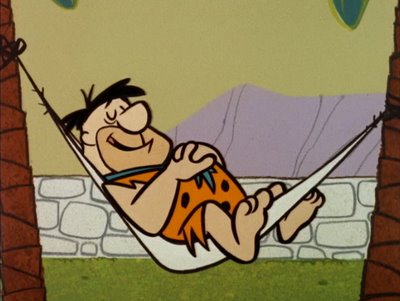
    I will not say, and I don’t think most others would either, that everyone who has a hard life did something to deserve it. It is silly. It is equally silly to say that no one hard up has a responsibility in their situation. I would say that, for at least a majority of people, there is at least a component of their actions which contribute to their issues. For the left, saying this is literally fascism. Everyone deserves the chance to have a decent life, and if the left cared about that, they would look to regulatory reform, licensing reform and other things. Now that we are done having a good laugh… I will engage in a bit of the old delusion myself and will present a form of UBI that I might find more palatable, on the entitlement front. Of course, my preference is no welfare at all. But considering that is not an option and people yearn for a safety net, I will think of one.  I do not fool myself, and realize this would inevitably grow way beyond the limits I set, everything does. But… for the sake of argument, in a world where a UBI would be implemented once this way and stay the same…

    Not a safty net, it won't lastI would do away with all the various programs and bureaucrats and whatnot and implement a partial UBI. Whoever applies for UBI gets it the next month, no means testing, no questions asked. But the kicker is, you get 120 months of this over working lifetime, say 18 to 68. It is up to you how you use your months. If you are done by 30, I have a nice ditch for you. I assume, in such a scenario, to be palatable to the majority, there will inevitably be an exception for severe disability. Outside that, this should satisfy all those who claim they want an actual safety net. 20% of your lifetime is plenty for a safety net, any more and it becomes a hammock.
    I do wonder how many on the left would find this agreeable… I mean it removes a lot of the “humiliation” people go through the classic process. It can be made online and remove the stigma associated with being temporarily on welfare – although I am not sure of the wisdom of removing the stigma entirely. It can remove redundant bureaucracy and situations when people need welfare and are denied. You may be employed, but one month may need some extra cash, this is a way to get it. But it also a way to introduce personal responsibility and clear limits on welfare. I would say very few of our leftist brethren would agree…

    Thoughts?


  • On the Political Compass and What Truly Divides Us

    The US has never been so divided. As the armies of California march through Utah burning everything in their path, one cannot help but wonder how we got here. Wait, no, there is no civil war, just twitter arguments about muh Social Justiz. Carry on. But in that scenario, would Utah put up a good fight? Is the terrain suited for guerilla warfare? What is the difference between military equipment stationed in Utah versus California? Will parts of California join Utah against the rest? These are all questions.

    Libertarian used to mean socialist !!! They're thieves! They're thieves! They're filthy little thieves! Where is it? Where is it? They stole it from us, our precious. Curse them! WE hates them! it's ours it is, and we wants it! We wants it, we needs it. Must have the precious. They stole it from us. Sneaky little libertarianses. Wicked, tricksy, false!

    The world is similarly split. What can we do about it (get drunk and say fuck it)? Can we understand it (nope… now where is that bottle of scotch)? Maybe if we have a political test or a sociological study (ice? What am I a savage? Where is my Glencairn glass). If we analyze what divides us maybe we can heal (right… good luck with that… ahhh peat smoke)

    While annoying and right down aggravating, there is some fascination on how some otherwise competent people can so differ on the issues. It is amazing how they simply cease to use the reason and methods they do in other aspects of life, like a switch flips.  If you take a group of good plumbers or programmers or whatever, they tend to be good in relatively the same way, they often reach similar conclusions on how to do their job. These same people can have wildly different views on politics. Some ore stupid leftists, some are ignorant right-wingers, some are evil libertarians.

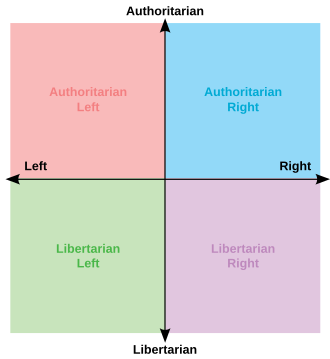
    Among the actions taken by the current crop of political philosophers (there’s a bunch with useful skills in the post-apocalypse) is to analyze these orientation by means of political tests or compasses which get more and more complex, but remain equally worthless beyond having something to share on Facebook on a slow night when the cats are nowhere to be seen.

    The classic left-right divide is thoroughly meaningless by now – if it ever was truly meaningful – though it still causes most divisions and even the wise Pie often uses words like left-winger and right-winger. The first wave of more advanced compasses have the already classic two dimensions economic and social, as if there truly is a distinction between the two. People are trying to innovate and add even further dimensions, although what use this has is beyond me. What point can it have to say well this on economy, this on social issues, and this in nationalism and this on the concept of colonizing Jupiter etc. It may become a way to split into finer grained groups, but brings not much insight or not much of a solution for what ails the world.

    I am sure we can do better than this shit

    For libertarians, it can be a little more straight forward. In the words of Bobby H:

    “Political tags—such as royalist, communist, democrat, populist, fascist, liberal conservative, and so forth—are never basic criteria. The human race divides politically into those who want people to be controlled and those who have no such desire. The former are idealists acting from highest motives for the greatest good of the greatest number. The latter are surly curmudgeons, suspicious and lacking in altruism. But they are more comfortable neighbours than the other sort.”

    The conclusion of this being, I don’t really care if someone who wants to impose his shit on me is doing it on the social or economic axis, often both. I would rather they just stop, please and thank you.

    I can myself split people into various groups: those who understand the difference between what they want and what is possible, and those that do not. The difference between the thought that they want something and the thought that they somehow should get to force that something on others. The difference between seeing a problem and knowing a solution. The difference between what is seen and what is unseen when applying a certain policy. Believing you know better than others what is good for them and realizing you, in fact, do not know better. Utopians versus sane people. All these dimensions, in a way, divide us. But probably a lot of them are rendered moot by the Heinlein principle.

    I will, as usual, randomly drop this quote right here cause it is one of my favorites.Pictured: not C. S. Lewis

    Of all tyrannies, a tyranny sincerely exercised for the good of its victims may be the most oppressive. It would be better to live under robber barons than under omnipotent moral busybodies. The robber baron’s cruelty may sometimes sleep, his cupidity may at some point be satiated; but those who torment us for our own good will torment us without end for they do so with the approval of their own conscience.
    — C. S. Lewis

    So what is your favorite compass? What questions would you add? Maybe we should make the Glib political compass.

    I will start with a rough draft of Pie’s political compass, which can be left at just one question or expanded, but overall I think it may be self-sufficient, like the proud libertarians.


    Pie will leave you be. Will you leave Pie be?

    1. Yes
    2. No
    3. Depends
    4. I don’t know
    5. Fuck off slaver
    6. That is literally hate speech
    7. As long as you don’t sin
    8. We live in a society you know, we’re all in this together
    9. But what about the children?
    10. I am Emily Ratajkowski (or equivalent) and I want to have sex with Pie
    11. STEVE SMITH LEAVE PIE BE AND BY THAT MEAN…
    12. Gravity is oppressive
    13. Other (you bunch of dirty otherers)
    14. All of the above.