More than a few times upon viewing a freshly harvested tract of timber I have heard people exclaim in horror, “Oh my God! They raped the land!” Soon after they regret saying that because that really pushes my buttons. However, barely a quarter into my explanation they realize I am right. I don’t know why it has to be explained. It seems self-evident to me.
There are about seven and half billion people in the world and like you they all want toilet paper in their bathroom and a roof over their head. They all want goods packaged, stored and shipped in boxes. When you look at a tract of timber you aren’t looking at “the woods,” or “the forest,” or “the land.” You are looking at a field. Growing in that field is a crop just like corn, soybeans or cotton. It is planted, tended and harvested like any other crop. Timber is one of the top ten crops in the world.
When Europeans began to migrate to the Americas they found a howling wilderness with boundless timber. Because the European powers at the time used wooden sailing ships as weapons of war, that timber was seen as a valuable resource of national security importance so shipyards were built. Unfortunately for them, primitive transportation methods put much of that timber out of their reach.
Connecticut, 1909
For settlers attempting to build farms, forest was seen as a hindrance so it was cut with impunity. They built houses, barns and fences. They kept their home fires burning twenty four hours per day year round. Everyone agreed that the forests had to be replaced with fields. The appearance of railroads allowed much more timber to be harvested and transported. By the time of the Civil War, most of the eastern seaboard resembled a prairie. The last virgin timber in Louisiana was cut near Woodworth in the early 1950s. My father as a young boy stood with his father and watched it being cut.
Realizing that much of a valuable resource had been squandered, The Civilian Conservation Corps was formed and tasked with restoring much of the forests. The family farm was a dying institution and most of the acreage from the farms that had checkered the land were replanted in timber. In just a few years the army of CCC workers had planted over three billion seedlings. The private timber operations, usually a division of railroads, began splitting off as separate companies and specializing in timber for uses other than rail ties. Today Louisiana produces between one and a quarter and one and a half billion board feet of lumber annually. It accounts for nearly half of the agricultural output of our state measured in dollars.
Every square inch of that harvested is replanted.
Timber planters are contractors for timber companies and for private owners. It is highly specialized work. Finding them is not easy as there aren’t very many of them. Finding a good one is even more difficult. The one we have used for decades is top notch. He has assembled a crew of 18 young men, mostly from Guatemala. To get them in on a work visa he has to screen them strenuously. No criminal record. No family here in the states. They must go back home after planting season. References to vouch for them. On top of that he personally screens them, trains them and watches their work. Those that can’t cut it are sent packing. He claims it took him years to assemble the crew he wanted. He is kinda pricey, but worth every penny. I also slip each of the crew an extra envelope at the end of the job. They can cover forty acres in four hours. The trees are spaced properly and every one of them lives. No bent roots and no tipped over seedlings.
Because we are planting a cultivar known as the super pine they grow incredibly fast. Hell, if you don’t get out of the way it grows so fast it will knock you down. After planting one patch it was five years before I returned. I didn’t recognize the place because it had grown so much. After only five years the road was barely passable and you couldn’t see the sky for the canopies.
The trees are acquired from commercial nurseries in bundles of 1000, a bundle being about the size of a square hay bale and weighing around 100 lbs. They are between one and two feet tall and their roots are dipped in gelatin to keep them from drying. The crew lines up with each man about eight to ten feet apart. Each man has a dibble and about half of a bundle of seedlings on his back. They begin marching in time shoulder to shoulder they take three steps, stop, put the dibble in the ground with their foot, wiggle it, place a tree in carefully so as not to bend the root tips up, then stomp their foot next to the hole to close it up. Then they take three steps making sure everyone keeps up with the line and then repeat. It is very physically demanding and tedious work. I stand by a fire and watch. Four hours and they are finished. I am tellin’ ya, those guys are machines, but I have never seen one of the crew over 30 years old.
I tried it once myself alone. I got approximately 100 yards by 100 yards planted…in two weeks. I was nearly crippled from it. I will gladly pay the 15K to have ol’ Joe and his crew do it.
Planting approximately 8×8 feet apart it works out to about one bundle per acre. That may seem too close but over time the trees will thin themselves out. Planting close causes them to grow tall and straight. If they are too far apart they will branch out and have too many knots making poor saw logs.
I have had success by casting seed. A forestry company here locally sells super pine seed which you buy by the pound. Each seed is coated with fertilizer and bug killer. It’s not cheap but I can do that myself. I found that the mechanical caster they sold me would put the seed out too thick no matter how I adjusted it so I cast the caster in the creek and started spreading/throwing by hand. I successfully planted 5 forty-acre plots that way over the years, each one taking me about two days to finish. On one hilly plot the day after I finished casting out the seed, a huge rainstorm came up. “Oh, hellfire,” I thought. “All of my seed washed away.” So I bought more and replanted it. Apparently, I was mistaken and double planted. Today the trees are so close together you have to turn sideways to walk through there.
I estimate we have planted around one million trees over the decades. Some of the first timber I planted is now ready to harvest. I don’t know if I can cut it. If hunting leases will pay the property taxes I may just leave it for my grandchildren.
Summer is coming. I think there is nothing better than an icy cold martini on a hot summer evening. What food goes well with a martini? Something pickled! I love a plate of cheese and crackers with an array of pickled fruits and vegetables to accompany my martini.
Everything I’m going to discuss is a refrigerator pickle, not canned. They aren’t shelf stable and need to be kept in the refrigerator. This means you are free to experiment.1 I have read hundreds (literally) of pickling recipes in an attempt to come up with a base recipe that you could riff off of and create your own recipes – much like dressing is a 3:1 oil to vinegar ratio. I cannot claim that I have defined one from my investigation. The recipes are all over the place. Some have no salt or no sugar. Others use lots of sugar, but no salt, some use lots of salt and no sugar.
Michael Ruhlman in Ratio says a brine should be a 20:1 ratio of water to salt (2 ½ cups water to 2 T Morton’s kosher salt) and he uses it for some fermented style pickles, though not refrigerator pickles. Tamar Adler of An Everlasting Meal gives several suggestions. First, she says you can use nothing but vinegar and salt. For a brine, she suggests using one and a half times as much vinegar as water and for every four cups of liquid, add ¼ cup salt and ¼ cup sugar and simmer until they dissolve. Or, don’t measure and adjust the salt and sugar until you like it (Chapter 18). I find her suggestion a little too sweet and salty, so I adjust. The goal is to help you understand the techniques used.
In general, for the kind of pickles I’m talking about, you need vinegar, water, salt, sugar and spices. For my experiments, I use 1 cup water, 1 cup vinegar, 1 tablespoon each salt and sugar. Then add additional spices depending on what you are pickling and your own tastes. It is easy to scale up if necessary and I frequently adjust the level of salt or sugar.
I have used this to pickle cherries by adding cinnamon and cloves. Pack a clean jar with pitted cherries. Put the vinegar, water, salt and sugar in a pan, add a cinnamon stick and a teaspoon of cloves and bring to boil (for the basic brine – scale up as necessary). Once the brine is boiling, remove from heat and pour over the packed cherries. Make sure all the cherries are covered with the brine. Let cool uncovered to room temperature, then cover tightly and store in the refrigerator. They are ready to eat after sitting overnight (12 hours). I love them with duck or tossed into a salad.
I’ve used this basic brine with cauliflower adding onion and a few sprigs of fresh thyme. I put the onion and thyme in the jar with the cauliflower and poured the basic brine over it. Again, cool to room temperature then close tightly and put in the refrigerator. They were crunchy and made an excellent addition to salads (as well as just eating them with a martini) or alongside fish.
The next few recipes all come from someone else, but are ones I really like. They also show the wide variety of pickling recipes. I will note that when I follow the recipes, I don’t often have enough brine. In those cases, I just top up the jars with vinegar. What I hope you learn is that there are many ways to make pickles. Each recipe is done in a different way.
First, are pickled carrots. I have this recipe written on a card and have no idea where it came from. I cut the carrots into matchsticks and slice onions thin. I pack them into a quart jar. Then, I toast 1 T mustard seed, 2 t coriander and 2 t black pepper corns. Then I add the brine ingredients. The brine is 1 cup apple cider vinegar, 1 cup water, 2 T kosher salt and 3 T sugar. Bring that to a boil, stirring to make sure the salt and sugar dissolve, then pour over the carrots. Cool to room temperature, then cover tightly and store in the refrigerator. I use them in fish tacos or serve them with pork chops. These are addictive and I make them frequently -they should last for up to a month though mine never last that long because I eat them a cup at a time. I also make smaller recipes and eat them, so that I don’t have to worry about getting bored. I’ve also used the leftover brine in place of vinegar in salad dressings. Works really well.
Oscar disapprovingly notes, “I cannot eat that.”
My pickled mushrooms recipe comes from the Washington Post. These are supposed to sit in the refrigerator for a week before eating. I never make it – day 5 I’m eating some of them with a roast chicken, a steak, or just on their own. The recipe says they will last for several months, but again, mine don’t last that long (though I usually only make half a recipe.)
Next are pickled grapes. The recipe comes from Simple, Fresh, Southern by The Lee Brothers. I enjoy these because they are sweet and spicy. I’ve given them to a neighbor who used them in martinis instead of an olive. I toss these in salads and also serve with roast pork. The recipe is 6 cups mixed red and green seedless grapes (I just use red), 2 cups of white vinegar, 1 cup of water, 2 tablespoons kosher salt, 2 teaspoons sugar, 3 cloves of garlic, peeled and crushed, leaves from a four inch sprig of rosemary, ½ teaspoon crushed red chile flakes.
Pack the grapes into 3 pint sized glass containers with lids. Put water and vinegar into a sauce pan, and add the salt, sugar, garlic, rosemary and chile flakes. Heat to a simmer, then remove from heat and divide among the three pint sized containers. Cover loosely and let cool to room temperature. Then cover tightly and store in the refrigerator. They are ready to eat after an hour in the refrigerator. Keep for two weeks if they last that long.
The last recipe I want to discuss is pickled apples. This recipe comes from the apple council and I don’t have a link. Served with cheddar cheese (and a martini), these are awesome. I’ve also laid pickled apple slices on top of a pork loin for the last ten to fifteen minutes of cooking. This recipe is different in that you don’t heat the vinegar mixture. Tamar Adler of An Everlasting Meal suggests just putting vegetables into leftover brine from pickles or capers and letting them pickle, so this is similar to that idea.
Use 1 English cucumber (unpeeled), sliced thin and tossed with 1 tablespoon salt. Let sit for 20 minutes, then rinse and drain. Meanwhile, core and slice thin two apples (unpeeled), 2 medium shallots (or ½ red onion) and 1 jalapeno pepper, sliced crosswise. Whisk together ¾ c apple cider vinegar, 1 cup water and ½ cup sugar (I use ¼ cup). Add a cinnamon stick and a star anise pod to the vinegar mixture and pour over the apples, shallots and jalapeno. Add the cucumber and toss. Let sit for 30 minutes and serve. Keeps in the refrigerator in a tightly covered container for two weeks. These are great on sandwiches. I’ll also note that when I haven’t had a jalapeno available, I’ve substituted crushed red pepper flakes.
I hope the recipes I’ve shown here demonstrate the wide variety of things that can be pickled and the wide variety of pickling brines that can be used. I’ve also given you a few basic brines to use for experiments. I hope this inspires you try pickling vegetables or fruit. I can imagine using a basic recipe to pickle peaches with habanero peppers, or green beans with some marjoram and garlic. Much like salad dressings, pickling fruits and vegetables is an opportunity to experiment and be creative. There aren’t any wrong answers, just make what you like.
—- 1 If you find a canned pickle recipe you like, you can use it for refrigerator pickles. You can’t go the other way. Don’t screw around with canning recipes. Botulism doesn’t make you sick; it makes you dead.
Firstly, what is Minimalism? Minimalism is a value system that at its root is a focus on things we value most and cutting out everything else that does not and that only serves to distract us. In so doing we create freedom, more time for family and experiences. We take away debt, stress and jealousy. It is simply a way of living where we are invited to be more intentional about how we spend our time.
Minimalism is supported by a few common ideals: simplicity, quality and multi function for the possessions we do keep; fiscal responsibility; rejection of consumerism and a high consumer literacy (knowing and recognizing sales tactics that contribute to mindless consumerism). Minimalism is more than decluttering and re-organizing. It is purposeful living. Keeping things that only add value and bring joy to your life. That makes things rather broad. The way people live a life of minimalism can run a large spectrum. Some folks have tiny houses, others a backpack of 51 items, others have 2 cars, essential possessions, and a simple house in the suburbs.
Nicodemus and Fields Milburn
In the summer of 2017, my wife and I both stumbled upon minimalism separately. She read Joshua Becker’s The More of Less: Finding the Life You Want Under Everything You Own and I heard Joshua Fields Millburn on Tom Woods’ Show (episode 775). We watched Joshua Fields Millburn and Ryan Nicodemus’ documentary, Minimalism: A Documentary About the Important Things on Netflix (currently still available). After watching the documentary together we both agreed to try minimalism. To be honest, we did not find it too drastic as we already subscribed to some of the tenets. We were always financially responsible. A few years prior, we we began to me more intentional in our buying decisions and in our giving as we felt a need to live a little closer to Jesus’ teaching of simplicity and generosity. We felt like minimalism was a good tool to help us reduce our materialism and align ourselves more fully with Jesus’ teachings on possessions. Having said that we began the process of going through our possessions to determine what to keep, give away, and throw out. How did we decide what to keep and what to give away? In general, most minimalists will say that an item that you keep must contain value, serve a purpose, and bring joy.
We chose to minimize room by room. We started with our bedroom. The easiest things to minimize are duplicates and things you don’t use. Despite thinking we were already living simply, and despite four moves in the previous 5 years in which we donated unused items each time, we still filled 3 or 4 trash bags with clothes and 2 more trash bags with stuff we threw away. And that was just our bedroom. We were in shock. In one way we were shamed by the waste and accumulation, but we were also pleased with what we were able to cut out of our lives. Surprisingly, this past summer we went through our closets again and gave away an additional 2 more trash bags of clothes! How? Well, the other major stumbling block to minimalism is “Just in Case Items”. I found it really hard to let go of just in case items. I didn’t want to waste money replacing something I got rid of it. But the truth is, if an item is “just in case,” it is already unused. It won’t be missed.
The next room we tackled was the kitchen. I largely stayed out of that, but be warned minimizing common areas/possessions without your family or living partners can result in mistakes and anger. Anecdotally, minimalist Joshua Becker relays an episode of minimizing his kitchen without his wife and throwing away a football Jell-O mold only to discover later that his wife was searching all over for the mold because it was for his young son’s sports themed birthday party. In our kitchen, once again, duplicates were an easy item to toss. Why we went through four moves with two rolling pins is beyond me. We focused on keeping items that we actually used. We also looked at replacing some of the things we had with multifunction items. For example, my wife ditched our white and red wine glasses and replaced them with glassware that works for both.
Technology is a great benefit for us on our minimalism journey. I love to read, but rather than have a ton of books around the house, I have a ton on my Kindle. Rather than having boxes and boxes of photos like my parents, I have digital photos and I scanned in my parents’ boxes of photos many, many years ago long before I became a minimalist. It is also much easier to tag and organize digital media. Our kids are not at the point that they are churning out artwork, but when they do Becker suggests takings pictures of any special crafts our kids make that will be thrown out or replaced by their newer artwork. That is a huge space saver.
This Christmas we adopted the need, want, wear, read approach to gift-giving. It helped restrain us and my in-laws from buying things we do not want or buying the kids too much. It’s nice knowing that when gift giving time comes around each of us will be getting only 4 gifts. I think it will help the kids as they get older and make their own lists to be very selective and thoughtful about their requests.
So nearly two years in and minimalism is a keeper for me and my family. We are still working at it as evidenced by the paring down we did again this past summer. It did take some will power to overcome some of our old ways of thinking, but embracing minimalism certainly makes us happier and less stressed. Our house is easier to clean and more organized despite a 3 year old that loves to make messes. The age appropriate toys that we have for our toddler are minimal but treasured by him. None of his toys are gathering dust. And that really helps reduce the clutter.
A Random Note:
-Minimalism also makes it easier when you find a snake in the house to go room by room moving stuff and checking to make sure there are no more motherfucking snakes in the motherfucking house.
We all count the time until we can retire, cut the cord, turn out the lights or whatever we call the end of a career. We think about it, make some non-binding plans and dream, dream, ’til we finally fall to sleep. Then morning comes with a WTF? How am I gonna do it? Where am I gonna do it? Will I be able to do it? When? All these unanswered questions.
Well, maybe for some its too early to even think about such long distance planning but those of you (I’m excluding myself) in your mid-40s, 50s, and 60s will be celebrating your birthday at a restaurant and its gonna be a big 5-0 or 6-0 birthday party and damn, what happened? That was quick.
We’ve had discussions here about what we want to do at retirement but “Awh, its too early to worry about that” That’s not a helpful attitude so I’m here to help or not. First, answer the questions in the first paragraph. Got that? You’ll be asking yourself these same questions again and again and perhaps the answers will change but that’s OK too.
When do I want to retire? When can I retire? Where do I want to retire?
I decided about my 45th birthday that I wanted out at 55. I started looking towards that day and what I had to do to make it happen. Where? I had grown up in the woods of Minnesota, with the fishing/hunting and liked being outdoors, I still had a few friends there, my folks were buried nearby and a brother lived about 30 miles away so that’s where I thought I wanted to be. I owned a house in Texas but really no friends other than those I worked with and the Texas heat was not something that I enjoyed. Nothing permanent was holding me in Texas.
I was working in the Midwest, living in the Twin Cities and spending time reading the country newspapers and visiting my brother when I could. I found some property that I liked, made a low ball offer that was rejected and kept looking. Found a 40 acre spot, with a terribly run down small house and a yard full of junk that had been on the market for a couple years. Price was high but evaluating the negatives I made an offer of about 1/3 the asking price, keeping in mind those negatives. The owner countered with an offer of about ½, I suggested we split the difference, he bumped me a little and we made a deal.
I cleaned up everything that was burnable, old buildings/sheds/fences and clothes. I spent the winter hauling van load after van load of trash, mostly metal scraps, every week end for 6 months or more. By spring the yard was cleaned and time to tackle the house. The previous owner was a Copenhagen chewing bachelor and his habits were visible. The house was a kit, 18 X 26, costing 1200 dollars plus delivery and was about 30 years old. The sidewalls were 6’4” and I was 6’5” at the time. The roof was sagging badly, hadn’t been painted since the first time 30 years early and needed a total remodel and upgrade. I kept telling Mrs Fourscore that it was beautiful, she kept checking the yellow pages for psychiatric help.
Anyway, I got my best friend to help me, we tore the roof off, raised the walls 20” and put new trusses and plywood on. I spent the rest of the weekend shingling and I was on my way. I took a week’s vacation a few weeks later, put on siding on the newly raised walls, new windows, sliding glass door and lastly primed the outside.
I called my boss that Sunday night, he said, “Good, ’cause I have reservations for tomorrow for you to go to Berkeley, CA, we just bought a store and you ( meaning me) need to complete the deal and stay as long as necessary.” I was there for 5 weeks, remodeling, hiring, training. Fortunately after a couple weeks a good manager arrived.
I then spent about 4-5 months’ worth of week ends gutting and remodeling the inside of the cabin, as we called it . My wife took back some of her doubts of my skills when she stayed in there for the first time and the shower worked and the lights turned on when she threw the switch.
So now, we have a small place to live on weekends, modern, clean and warm but not very big. And still 7-8 years away from the magic 55 year mark. For now, though, a place to use for hunting/fishing and relaxing. Still a few years from retiring at this point though. It was great, nearly every week end and vacations would find me at the cabin, relaxing. Deer season came and I had a super hunting shack with all the amenities.
Then the years rolled on and I explained to my wife that we should build our retirement home, our property was actually in 2 parcels, easy peasey to use the second parcel. It had been an old homestead with a big field and so I chose a spot near the back edge of the field. She was not super excited but after my whining and crying she finally gave in. So I started, two years before the date set for retirement.
I won’t go into detail about the permitting but it wasn’t fun, had to be rezoned, etc. The good part was at that time there was no requirements for inspections other than an electrical. Had to have a well and septic system permitted. I contracted the basement, I had drawn my plan on graft paper, no blue prints since I was going to be flexible.
The missus and I had agreed on 3 premises or requirements.
It had to be warm (i.e. well insulated)
The kitchen had to face the east, for harmony with Asian customs
Every room had to have a window, including the basement.
I contracted the basement block work, went a course higher (13 rather than the usual 12) because I was a pretty tall guy at the time and I wanted all the duct work under the basement ceiling. At that point I started nailing stuff together, every week end, leave work early and put 2 long days in over the weekend. That went on for two years, slowly, slowly a house took shape. I always took my tools with me but left the building supplies and fortunately had no theft.
I pretty much did everything, I contracted the roof/shingles and steel siding but learned as I went for the rest. Retirement day came, I was 55, we were ready but there were still some finishing to do inside but at least we could live there and I was closer to my project. For a couple weeks dishes were washed in the bathtub, cooking was done on a hot plate and counter top oven. Master bath was finished, carpeting was not yet installed and the basement beckoned
I finished out the basement and its sort of a man cave. I had planned on a pool table but that space got filled with an extra refrig and freezer and now the computer. Probably took another year to wind up everything, had to build a garage and then another one.
I made some mistakes that I wished I hadn’t made but not too many. Some things were done twice, some things never have been done.
Besides the what and where of retirement comes the how. In any case, my opinion is that one must have one’s retirement home paid for before retirement, unless you are fortunate to have a good income. House payments, along with taxes/insurance and maintenance will eat up a lot of most people’s monthly retirement income. On the other hand, there are options available to enjoy without the burden of worrying about your abode.
My wife and I are rather frugal but she does like to travel. Living in the country we don’t need a lot of ‘nice’ clothes. I got by for several years wearing out the clothes I had worked in and mostly wear jeans now. We don’t spend a lot of money at restaurants, maybe a couple lunches a month while we’re shopping. We have dinner out with friends for birthdays and anniversaries but all in all mostly we eat at home. A big garden in the summer provides therapy and fresh food. Mrs Fourscore cans and freezes a few things. We enjoy fresh fish but I can’t get her to eat venison, too bad, ’cause she can really cook. More for me is all I can say.
Our friends are similar, old, reclusive and comfortable being left alone. We help one another, drink a little coffee and socialize fairly often, more so in nice weather as opposed to winter. It was an easier transition for us because we moved back to where I had grown up and knew a few of the families. Trying to retire in an unfamiliar rural area would have been more difficult as folks tend to leave one another alone unless there is a commonality such as a church or club. We have great neighbors, in that no one bothers anyone.
A couple of my neighbors shoot a lot. If I don’t hear them shooting I begin to worry that something has happened.
There has been a lot of Glib discussion about retirement. If you have your place picked out and can negotiate a good bargain think about starting your new life. If it happens to have an abandoned old house perhaps the foundation can still be used, or the well, etc. Don’t worry about the grown up brush, 2 weekends and a fire will solve a lot of problems. All that junk on the outside has kept prospective buyers away and can be used to your advantage.
10 years pass quickly. We’ve owned this property 33 years now, been retired 27. We had to say good bye to a lot of friends over the years but way better to have had them along the way than have had to live somewhere else with out them.
The first ten years, 55 to 65, we were pretty much the same, physically. Then some tasks began to take longer, stuff got heavier, places got farther away. If you wait too long you may not be able to do those things you had planned to do when you retired. Good luck to all.
Let’s talk about growing your own fruit. I have been doing it on a small to medium scale for about 20 years. First off, like everything else I have ever had an actual interest in learning about, it is more complicated than it appears at first glance. I started reviving a small neglected orchard (about 250 apple trees) which came with the home we had just bought. I killed many a tree with my “pruning” methods before I got my first apple. In that time I devoured everything I could find at the library on apples, then the agricultural extension agent helped me, but the real breakthrough was the internet. This was the late 1990s and university research programs were just starting to get their info online. I found out that “organic” doesn’t mean just letting the damn things grow on their own. At least in Tennessee, we have more pests and diseases than other areas, and you will not harvest an apple without some type of spray program. Over the years I became competent if not an expert, and I definitely know that I don’t have an answer for every problem. I will start with apples. A lot of the lessons from apples applies to other tree fruit. There is a lot of information, and I thought to break it down into four segments: Planning, Planting and Training, Pest Control, and Pruning and Harvest.
Planning
What? I don’t plan, I just plant and reap bushels of natures bounty! Err, No. This is the time to make decisions. Things are complex. The very basic thing you need to know is how much land you have and how much fruit you want. Is it on a hill or in a valley, clay or loam soil, wet or dry? A gentle hill is best, with clear air drainage path to allow cold air a path away from the trees. Any soil that has trees can support tree fruit, but you may need to have supplemental support for certain rootstock/soil types (more on this later). Wet soil is pretty much a no go, the roots of fruit trees are prone to root rots which thrive in wet soils.
So how much fruit do you want and when? The smallest trees at maturity will produce a bushel (about 45lbs) of apples each. A medium size tree may produce between 4 to 10 bushels. In most cases, all the apples on the tree will be ripe at the same time. What are you going to do with it all? Apples are the most versatile fruit. You can eat it fresh, dry it, make cider (sweet and hard), can it, and store it; but you need a plan. If you just have three medium size trees of different apples, but they all ripen at the same time, you could have 500lbs of fruit to do something with! If you want more than one type of apple, which you should, try to select cultivars that ripen at differing times of the year. This allows you to utilize each apple to the best of its ability. In general, summer apples don’t store well and turn mushy very quickly. They should be eaten quickly, dried, or used for cooking. Fall apples are your mainstay. They will vary, but will usually keep fairly well and are good for most purposes. Winter apples store the best, and storage may actually improve their flavor and sweetness. Cider of varying quality can be made from any apple. Cider making can be very simple, but good cider making is again, complex.
Now you know where you are going to plant and how much fruit you want, here comes the technical part. What size trees do you want? Since apples reproduce sexually, the seeds of the fruit are not copies of their parents, and their fruits are usually nasty tasting, small, and bitter. Apples are propagated by grafting, meaning that the living limb (scion) of a selected cultivar is attached to the root (rootstock) of another tree, allowing the tree to produce the selected cultivar. In this way, the genetic material from the first cursed red delicious tree is still alive in the orchards of Washington. Most stores and some online retailers list trees as being “dwarf”, “semi-dwarf”, or “standard”. These definitions are based on the type of rootstock the trees are on. A “standard” rootstock is usually just a tree grown from seed with the scion grafted to it. The size is unknown but could be anywhere from 20 to 40′ tall. That’s a big tree. “Semi-dwarf” refers to a range of rootstocks that produce a tree anywhere from 10 to 25′ tall. There is a large number of rootstocks in this category. It would do you well to know what the rootstock is exactly. An ELMA 26 rootstock will grow a tree of about 12′, an ELMA 111 rootstock will grow a tree of about 25′, both are considered semi-dwarf. “Dwarf” rootstocks can usually keep the tree under 10′ and are the mainstay of new commercial plantings. They absolutely require support and are not free-standing, but can produce quickly and in great quantities per acre.
The mature size of the tree must be taken into consideration prior to planting. If you are planting a “standard” size orchard, the trees need to be at least 30′ apart. That’s a lot of unused space for the first 10 years of the trees life. In my opinion, smaller trees are the way to go. They are easier to prune, spray, and pick fruit. ELMA 26 or ELMA 7 on 10 or 12′ spacing makes for a tree that can be mostly managed without a ladder and doesn’t need support.
All of this comes before you decide what apple variety to buy. There are a lot of really good varieties that work well in some climates and not at all in others. I can’t grow Macintosh, it is simply too hot here and they fall off the tree before ripening. The best bet would be to investigate a local orchard and see what they are growing or ask for recommendations from other fruit growing people in the area. The big box stores here sell Honeycrisp apple trees, which are notoriously difficult to grow even in their preferred northern climate, and wouldn’t have a chance in the southeast. Speaking of where to buy your trees, I would recommend mail ordering bare root trees. The box store trees sold in pots may have been in those pots for 2-3 years, are likely rootbound, and you usually cannot tell what rootstock they are on. Also, a bare root branchless tree (a whip), will usually outperform a larger tree from a pot planted in the same ground. The larger trees do not adapt as well to the shock of transplanting.
Now that you have a planting plan, it is time to think about equipment. If you have less than 20 trees, a backpack sprayer is probably all you need. Any more trees than this and I would suggest that you have some type of power equipment, such as a pull behind sprayer on a garden tractor or, for bigger orchards, a tractor with an airblast sprayer. You will also need good quality bypass loppers for pruning, tree support stakes for the early years, and string to train the tree branches. But most importantly, you need to keep the deer away from the young trees. The bastards will eat every leaf and then rub their antlers on the tree, snapping every branch. I hates deer.
Welcome to the inaugural installment of Q’s Brain Toilet; a collection of vignettes designed to demonstrate the random thoughts that flutter in and out of the Hell that is my cranium. My aim is to amuse, inform and, primarily, to inflict upon you the excrement produced by my cerebrum; because misery loves company. If people like it, and it pleases the Overlords, maybe this can become a semi-regular feature? Maybe? In any case, on with the show!
Political Nihilism: Legitimate Philosophy or Cop-out?
We Glibs comprise a loose association of philosophically similar individuals who are by no means ideologically homogeneous. Some call themselves yokeltarians, others an-caps, still others Objectivists; it runs the gamut. While I have evolved over time from a more traditional Republican in my younger days to a card carrying LP member and then to a decidedly small-l libertarian, more recently I find myself landing on what I call Political Nihilism. In many ways, I’m still a run-of-the-mill libertarian; I zealously believe in the NAP as a guiding principle of political ethics, I consider the government to be an embodiment of violence and put primary focus on individual rights and liberty. I also love ass-sex (only with ladies, sorry guys). However, I’ve come around to the thought that no matter how many limitations you place on government it will, like water in a mountain stream, find ways around them. It might take a while, but it will happen. The Founders in the US did a pretty bang up job trying to decentralize power, limit government authority and emphasize individual freedom. We see how in just 240 years it’s been chipped down into a shadow of its former self and all indications are that it will be reduced to rubble in the short to medium term. I’ve said that the right amount of government is like the right amount of cancer, so wouldn’t it stand to reason that anarcho-capitalism would be the solution? Unfortunately, I think an-cap is just as utopian as communism. I think it quickly devolves into might-makes-right with no respect for individual liberty. Where does that leave us? Well, nothing works long term. But I suppose that’s expected; like Fight Club says, given a long enough timeline, everyone’s life expectancy goes to zero. It was fun while it lasted.
Female Ejaculation vs. Squirting
Any connoisseur of the finer erotic streaming sites (as I know you all are) has surely come across videos of women ecstatically expelling large amounts of fluid during orgasm. This is often termed “female ejaculation”. I’m here to relieve and correct you of your wrongitude. Female ejaculation is a milky white secretion emitted during orgasm from the Skene’s glands, sometimes (stupidly) called the female prostate. The amount is similar to male ejaculation (1 – 5 mL) and has a similar composition to semen (with no sperm, obviously). Squirting or gushing is what is typically portrayed in porn movies and is actually a type of orgasmic incontinence. A study performed bladder ultrasounds on women who regularly squirt. Their bladders were confirmed empty prior to masturbation, then reexamined at a level of high sexual excitement to find the bladder had rapidly filled up. After climax (and attendant Old Faithfulness), the bladder was confirmed empty again. Analysis of the fluid revealed a composition similar to highly dilute urine, but with a curiously higher fructose content. For those who haven’t accomplished/experienced this kind of fun before, here is a how-to guide (seriously, majorly, utterly NSFW; not kidding, do not click).
Womb Envy?
I’ve written pretty extensively (ad nauseum in fact) on what I see as the intrinsic differences between men and women (shameless self promotion). That long-winded piece does a pretty good job, I think, of summing up why more men are failing to launch, falling behind in school, professionally and generally in life. Misandry from feminist policy making aside, men don’t have to excel anymore to get laid. The supply of pussy went up and the price came down. It also outlines that women are generally dissatisfied with the dating landscape due to giving up their leverage on the sexual marketplace. However, what accounts for monotonically declining female happiness in a more general, existential sense? This again, I believe, is an unintended consequence of the Sexual Revolution. In spite of propaganda to the contrary, women have always been part of the workforce, it’s just that in bygone days that work was primarily done in the home. Try telling any mother that raising children, cleaning, preparing meals and generally keeping life from falling apart isn’t work and you’re likely to get an open palm across the face. Additionally, women may not have entered the workforce outside the home en masse until post-Sexual Revolution, but there were still a fair number who did work before. My great-grandmother for example, graduated from college in the ’20s and worked for Union County, New Mexico as a “domestic assistant”. Essentially this meant she traveled to country folk and taught them the basics of canning food, haberdashery, general domestic skills and basic personal finance. This profession is something that contemporary feminists would deride contemptuously, but I’d like to see them do any of those things. At any rate, it’s not the work itself that has made women unhappy, I fully support people (and that includes women) pursuing whatever goals they want. What has made them unhappy is that work, as defined by feminism, has not complemented domestic life, but supplanted it. For a man, if he’s lucky, he has a job he can tolerate. For a significant portion, it’s pointless and soul-sucking drudgery; only a tiny minority really love and feel passionate about work. What makes it worthwhile for a man is the fact that the drudgery is in service of a much greater project; the support and sustenance of hearth and home. That’s what makes him get up each morning and do things he’d rather not do. You see, men’s work has never been a substitute for domestic life, it’s an integral part of it. Creating and raising children is just about the only thing in existence that lies at the intersection of our biological, sexual, intellectual and spiritual natures. It is the primary purpose of our silly little lives at the most basic level. Feminists, thinking that male work was an end to itself, sold the idea to women that entering the workforce “like a man” would lead to more life satisfaction. They grievously misunderstood that working for a man has a higher purpose to the home and that work, in and of itself, is often not very satisfying. Women largely relegated domestic life to the back burner, if not chucking it altogether, thinking that career, money and professional power would provide happiness by itself. Unfortunately, this approach has largely failed. This is not to discourage women from working or encourage men to become Mr. Mom. There are a zillion different ways to skin a domestic cat. It’s a critique that, for the vast majority of humanity, child-rearing and family must take the central role in life for maximum happiness for both men and women, whatever else may have peripheral roles.
TTFN
Well, that’s it for this pilot installment of Q’s Brain Toilet. If you want more, say so in the comments. Likewise, if you hate it and want me to crawl back under the rock from whence I came, say that. Or don’t read it and skip down to the comments. Whatever.
The grape genus Vitis splits into three natural groups based on geographical location: North American, Eurasian, and Asiatic. There are roughly 25 to 30 species of American origin and about the same number for Asia. But there is only a single grape species for Eurasia, the Vitus vinifera. Vitis vinifera is itself comprised by the wild grape vine Vitis vinifera sylvestris (commonly referred to as V. sylvestris) and the cultivated grape vine Vitis vinifera vinifera (commonly referred to as V. vinifera). So, all the well-known varieties/cultivars of grapes used for making wine today (such as Cabernet Sauvignon and Chardonnay) are members of a single species of grape vine, V. vinifera, and are the result of some combination of natural mutations and human tinkering over the course of several thousand years.
There is no clear point in time where the cultivated V. vinifera became distinct from V. sylvestris. In fact, hybridization occurs naturally between the two subspecies and occurred continuously throughout ancient times. We know that the native range of that the wild grape vine V. sylvestris included the Mediterranean shores of modern Lebanon and Syria as well the border between Syria and Turkey. However, there is archeological evidence of grapes being cultivated far outside the native range of V. sylvestris and into the far reaches of Israel, Egypt, and ancient Babylonia inside the geographical known as the ‘Fertile Crescent’.
The cultivation of grapes did not occur in a vacuum, but was part of the overall development of agriculture in the Fertile Crescent. Archeological finds indicate that wine was being made on a large scale as early as the 4th millennium B.C, in the ancient city of Godin Tepe in western Iran. In addition to the traditional archeological evidence of wine making such as finds of broken pottery, some of the pottery still had residue that was subjected to an in-depth chemical analysis that confirmed the presence of grape products (assumed to be wine). So, in the ongoing debate between wine people, beer people, and mead people over who started brewing first, the wine people now have scientific proof that puts start of intentional wine making back to at least the 4th millennium B.C.
The cultivation of V. vinifera, and presumably the making of wine, spread from Iran and the Fertile Crescent throughout the Middle East and Turkey eventually making its way to Greece. The Greeks spread viticulture to many locations around the Mediterranean including Italy and southern France; the Romans continued the spread viticulture throughout Western Europe. Fast forward through several thousand years of history including the dark ages, the middle ages, and the renaissance and we get to modern viticulture (growing grapes) and viniculture (making wine) using any of several hundred cultivars of V. vinifera which humans have new carried around the globe.
So how do we make wine. It’s easy. Crush the grapes; press out the juice; pour it into a vessel; and wait. Wine will happen; it can’t not happen. It might be good wine (lots of great commercial wine use spontaneous fermentation). But it might be terrible wine as well. To ensure success then, most wine makers inoculate with cultured yeast (someone got lucky with a spontaneous fermentation and has been culturing the yeast ever since).
First off, we need to grab some grapes. I guess we need white grapes to make white wine and red grapes to make red wine, right? Not exactly. V. vinifera grapes generally come in two types: green grapes and black grapes. There are other colors as well, but they are just not as common as green or black grapes. Regardless of the color of the skin, the flesh of the grapes is generally colorless ranging from pale green (green grapes) to pale grey (black grapes). And the juice from V. vinifera grapes is also generally colorless ranging from pale green (green grapes) to pale grey (black grapes) – amazing how that works out. Therefore, white wine can be made from almost any variety of V. vinifera grapes, but red wine is made from black grapes (or blends of grapes where the majority of the grapes are black).
Thus, we can make white wine from Chardonnay grapes which are green; Gewürztraminer grapes which are dark pink; and Pinot Noir grapes which are black. Yes, you really can make white wine (Blanc de Noirs); rosé wine (Sancerre Rosé); and red wine (Burgundy) from 100% black Pinot Noir grapes. How can that be you ask? Great question. And the answer is that white wine is made with a white-wine process and that red wine is made with a red-wine process (duh). The making of rosé wines straddles the fence.
The white-wine process is as follows:
1)	Crush the grapes
2)	Press the juice from the crushed grapes
3)	Clarify the juice (let the pulp from the crushed grapes settle in a tank)
4)	Transfer the clarified juice to a fermentation tank
5)	Inoculate with an appropriate wine yeast
6)	Wait until fermentation is complete (with some caveats)
7)	Clear the wine using fining agents or power filters
8)	Bottle the wine
Dry white wine is made by letting the yeast consume all the available sugar in the juice. Semi-dry to semi-sweet wines are made by chilling the fermentation tank to just above freezing right before the yeast consumes all the sugar. This puts the yeast into hibernation. Then the wine is power-filtered through increasingly fine filter pads until the live yeast is filtered from the wine. Finally, a big dose of potassium metabisulfite is added to ensure that refermentation does not occur once the wine is in the bottle.
The red-wine process is as follows:
1)	Crush the grapes
2)	Transfer the mixture of juice and skins (known as must) to a fermentation tank
3)	Inoculate with an appropriate wine yeast
4)	Work the must until fermentation is complete
        a. The grape skins (and pulp) still have juice in them
        b. The yeast will ferment the juice in the skins
        c. The resulting CO2 will puff up the skins like little balloons so they will rise up from the liquid below
        d. The skins also form a cap which traps CO2 from the liquid below while it ferments
        e. Thus, the skins will rise up out of the liquid below and will begin to dry out
        f. Fermentation releases heat, so you get warm moist skins which can become a great environment to grow many bad organisms, so
                i. You push the skins back into the cooler liquid below two or three times a day (punching down the cap)
               ii. Or you pump cooler liquid from the bottom of the tank on top of the skins
5)	Release the free-run wine from the tank (whatever wine flows out without pressing)
6)	Transfer the skins to a press
7)	Press out the remaining wine from the skins
8)	Age the wine (typically in barrels, but tanks with wooden slats can be used)
        a. Premium wines typically age the free-run wine and pressed-wine separately to be blended to taste at the end
        b. Bulk wine will have the free-run wine and pressed-wine blended before aging
9)	Clear the wine using fining agents or power filters
10)	Bottle the wine
Some premium wines will have an extended period of maceration (soaking the finished wines on the skins) after fermentation is complete to extract as much color, aroma, and flavor from the skins as possible. This is one way to make amazingly intense wines. It is also a way to make hideously harsh crap. Know what you are doing if you choose this path.
Many red wines and some white wines will undergo malolactic fermentation at some point in the process. Tartaric acid is the dominant acid in grapes, but grapes also have significant amounts of malic acid. Malic acid is tart and harsh on the palate. Certain bacteria (Oenoccocus Oeni) will convert malic acid to lactic acid which is softer on the palate and can provide a creamy, oily mouth-feel. This malolactic conversion is not true fermentation, but it does release CO2 resulting in the appearance of a “secondary” fermentation in the wine.
Alright, let’s go get some grapes. Hmm, you better live on the west coast or near one of the handful of places in the Eastern or Southern US where the climate is moderated by proximity to an ocean, a river valley, or the Great Lakes. Otherwise, you aren’t getting fresh V. vinifera grapes unless you have friends willing to jointly buy several tons of grapes and pay for refrigerated shipping. Otherwise you are buying kits.
All juice is just that. 23 Liters (6 gallons) of pure wine grape juice. You put it in a fermenter and go. This provides the truest flavor profile for the wine.
High-quality kits are around 16 liters (4 gallons) of juice concentrate. You add 2 gallons of water to get to normal concentration and then ferment.
Mid-quality kits are around 10 to 12 liters (2.5 to 3 gallons) of juice concentrate. You have enough water to get to 6 gallons and then ferment.
The canned stuff is basically crap. You add one or two cans of concentrate and a bunch of sugar into the primary. Then add enough water to get to 5 or 6 gallons.
The key is that the more concentrated the kit, the less of the true grape varietal flavor and aroma carries over into the final product. It is possible to buy premium wine kits that have the juice still on the skins, but they are hard to come by. You need to order in advance from some dealer, and the must comes refrigerated or frozen in 5-gallon pails. I’ve seen friends use them, but I have no relevant experience.
So how are wine kits made, in particular red wine kits? We know that red wine is made by leaving the juice in contact with the skins during fermentation. But kits aren’t fermented (otherwise, they would already be wine). Here is one quick summary:
White grapes are pressed, and the juice is pumped into a settling tank. Enzymes are added to break down pectins and gums, which would make clearing difficult after fermentation. Bentonite is added to the juice and re-circulated. After several hours the circulation is shut off, and the tank is crash-chilled below freezing. This helps precipitate grape solids, and prevents spoilage.
Red grapes are crushed, sulfited and pumped through a chiller to a maceration tank, where special enzymes are added. These break down the cellulose membrane of the grape skins, extracting color, aroma and flavor. The tank is chilled to near freezing to prevent the must from fermenting. After two to three days the red must is pumped off, pressed and settled much the same way as the whites.
When the tank is settled, and the juice almost clear, it is roughly filtered, the sulfite is adjusted, and it is either pumped into tanker trucks for shipment to the kit facility, or into a vacuum concentrator.
Vacuum concentrators work like the reverse of a pressure cooker. By lowering the pressure inside the tank, water can be made to boil at very low temperatures. By boiling the juice at low temperature browning and caramelization are prevented. The water comes off as vapor, leaving behind concentrated grape juice. Because some aromatic compounds can be carried away in this vapor, a fractional distillation apparatus on the concentrator recovers these essences, returning them to the concentrate after processing.
Enzymes are used to extract color, aroma, and flavor from the skins of black grapes. They do a good job of capturing the basic flavor profile of the grape variety, but it is not the same as fermenting on the skins. It is similar to making beer with extracts versus all-grain. You can get good products from extracts, but finesse is only achieved through total control of the mashing process. It is the same story when making wine. Concentrate kits make good wine. Exceptional wine requires working with fresh grapes.
So, what does an aspiring winemaker do if he doesn’t live where V. vinifera is grown and doesn’t want to work with kits? The answer is hybrid grapes.
Starting in the late 1800s, the French had a little problem. Some “important person” in Germany imported grape vines from the United States to plant as curiosities. Top Men did that kind of thing for amusement – creating gardens of plants from around the world. The problem is that North American grapes evolved with a nearly microscopic insect called phylloxera which eats the roots and leaves of the grape vines (the insect lives underground all year except for a few weeks when they go airborne to reproduce). It turns out that V. vinifera had a bit of trouble dealing with phylloxera, and phylloxera destroyed 3 million acres of vines in France. Wine production was cut in half, and the trend was going from bad to worse. Fortunately, some professor in Missouri figured out you could graft V. vinifera to American rootstock and the vines would survive, even thrive (and that’s an entirely different article). European wine was saved!
Until the gentlemen from Missouri saved the day, viticulturists (people that grow grapes) in France were frantically trying to hybridize V. vinifera with American grapes to get something to survive. And they had some successes. Several French/American grape hybrids were produced then that are now grown throughout the United States, but they have since been regulated out of existence in France to preserve the cultural integrity of French wine (and because the grapes aren’t anywhere near as good V. vinifera). In the 1940s, a Wisconsin farmer named Elmer Swenson began hybridizing the French/American hybrids with American species found in the upper Midwest trying to find varieties that would survive in cold climates. Elmer also had a lot of success. Many of his grape varieties are in production around the Midwest. In more recent years, Cornell University in Geneva, NY and the University of Minnesota have continued to have great success creating many new cold-hardy varieties. Thus, wine grapes can now be grown in many places where V. vinifera cannot. And while many of these varieties can produce wine that is quite good, none of them have reached equality with V. vinifera. But if you live in Iowa and want to make wine with local grapes, you need to make do with the hybrids that grow close by.
Finally, let’s make some wine.
Remember that apple crusher we just bought to make cider. I got bad news. It won’t work. You need to go drop another $500 on a grape crusher/destemmer. You put the grapes in the hopper and turn the crank. Crushed grapes fall out of the bottom, and the stems traverse a down a long tube of sorts to the end of the destemmer. The destemmer part works, mostly. But you still need to stick your arms into the crushed grapes and pull out the pieces of stems that make it all the way through.
Crushing and destemming the grapes.
Then we’ll splurge and buy a nice big wine press. It’s big, and it’s heavy, and it’s awkward. So, we’ll mount it to a platform with castors – castors that don’t lock. Note when I say we, I mean the dude that bought the press; it ain’t mine. Since the castors don’t lock, make sure you have 5 or 6 other people around that are willing to grab on to handles that don’t exit to hold the press in one place while you crank away.
Pressing the grapes.
And the beautiful juice flows out of the press. Wait, why isn’t it colorless. I was told that black grapes produce colorless juice. Well, that’s V. vinifera. This is a lovely French/American hybrid called Frontenac created by the wonderful folks at U of MN. Unlike V. vinifera, the pulp of Frontenac is purple and the juice is a vivid red. Even though we are following a “white-wine” process and pressing juice from the fresh grapes, we will be making a medium-bodied red wine. The reason we are not fermenting on the skins is that Frontenac is notorious for smelling of green vegetation (i.e., like “someone just opened can of green beans”). The common wisdom is that avoiding skin contact during fermentation reduces the undesirable aromas in the wine.
Frontenac produces vivid red juice.
Oh, and the acid level of Frontenac is about double the acid level of high-quality V. vinifera grapes. So, don’t be thinking you’re making a nice dry red wine. You’ll be making a sweet wine (or in my case, a type of mead called pyment). There’s reason why no one pays 50 bucks for a nice bottle of Frontenac from Iowa.
Disposing of the cake.
Once all the juice has been extracted from the grapes, the outer frame is disassembled exposing the “cake” which is the dry, compacted grape skins. In this case, a nylon bag is used as a screen to prevent the skins and seeds from being pushed out between the wooden slats in the frame. The cake is dumped into a handy bin and then disposed of in a way that honors Gaia (e.g., composting, feeding to livestock, sending it FedX Ground to your Representative, etc.).
Well, we have many new members since then, and many people who have changed jobs, careers, or directions in life. So, I thought we were due for an update.
Since then, I’ve formed a new boutique agency with Web Dom. With our combined education and experience, and employing a couple contractors, we are able to provide website design services, digital marketing services (including copywriting, and social media/email marketing management), coaching and management for online businesses, and a few other services that are not our core offerings. With my plan to re-enter healthcare being stymied by a zillion things–now also including a cross-country relocation, this agency and my ongoing product photography work will consume most of my professional life for the foreseeable future.
How about you? What are you up to work-wise in 2019?
That’s it. We’re at the end. Today we’ll go through the steps to make a beer starting with some malted barley, some hops, water, and yeast. I just recently brewed up a batch of my Saison, which has been tweaked to my tastes, and is fairly popular with visitors:
1.5 oz Saaz (2.8% AA) at 90 minutes
.5 oz Saaz (2.8% AA) at 20 minutes
This should end up with an OG of ~1.050, and a FG of ~1.008 for about 5.5% ABV
Pitch with a saison yeast (I usually use 565, but used a new one for this batch).
So what’s different with All Grain versus Extract? For All Grain beer, you’ll be starting with malted barley, and need to convert the starches in it to sugars. This is done in the mash. You’ll need a 10 gallon (or larger) insulated (or heated) container with some manner of filtering out the grain from the wort. This can be done with a stainless steel false bottom, which is something like a colander with smaller holes that sits on the bottom of the mash tun over the spout where you’ll be draining the wort. Or, you can use a bag that you attach to the side of the mash tun. The bags are cheaper, easier to clean, and prevent stuck sparges. The only problem is you’ll have to lift a heavy (water + grain) bag out of the mash tun in order to clean it.
There are two main enzymes that will break the starches into sugars, Beta Amylase and Alpha Amylase. Now, these two enzymes have different temperature ranges that they’re most active in, for Beta Amylase, that range is 131-149°F; for Alpha Amylase, that range is 145-158°F. Anything above those temperatures will denature (break) the enzymes, and they’ll stop working. The lower the mash temperature, and the longer, the more fermentable sugars you will get from the grain. The higher the mash temperature, the more unfermentable sugars you’ll get. Too high of a temperature (or too short a mash time), and you’ll have unconverted starch in the beer instead of sugar.
Using a calculator, we figure out what temperature we need to heat the water up to so that when it is mixed with the malt, it’ll be at our expected mash temperature. This is known as the strike temperature. In this instance, my strike temperature came out to be 160 F. We then take the malt and add the hot water to it.
During this part of the process, you’ll want a mash paddle, which is used to stir up the mash and break up any dough balls that form. You can use a big whisk (or spoon) if you want, but stay away from the $5 cheap plastic mash paddles, they do not work all that well for batches over 1 gallon..
Then we put the top on the mash tun and wait, stirring it every once in a while if you so desire (which will up your efficiency a bit). So since this is a 90 minute mash, we’ll take this time to discuss efficiency. There’s two main measures of efficiency that matter to the home brewer: Brewhouse efficiency – how much of the sugars did you get to out of the malt and into the fermenter at the end of the day (80% is a good standard to reach for); Conversion efficiency – How many of the sugars did you get out of the malt. These numbers will be different, because there’s going to be some loss in water absorbed by the grain, left in the mash tun, and left in the boil kettle at the end.
So while the mash is going, we’ll also heat up water for sparging (rinsing more sugars off the malt). We want this water to be hot (I usually aim for 185 F and boiling), because we want to stop the conversion process, and because we need to get all of this wort up to a boil anyway. I do a 2 step batch sparge. So after draining the mash tun, I’ll dump hot water over the grain and drain it twice. You can do a single batch sparge, or even a continuous sparge (where you have a pump recirculating the mash over the grain).
All of these runnings will go into the boil kettle and brought up to a boil. At this point, you follow the same steps as you would for an extract batch. Now you just have to clean up your mash tun, and decide what to do with the spent grain. The grain still will have some sweetness to it, and can be used to feed livestock, dried and ground into flour, or used in its current state to make spent grain bread.
And for sitting through all of these columns, here’s a bonus recipe:
English Mild
Yield: 5 Gallons
OG: 1.034
FG: 1.008
ABV: ~3.3%
60 Minute boil
Grain bill:
4 lb Maris Otter
1 lb Crystal 90 L
1 lb Crystal 30 L
1 lb Carapils
Mash at 150 for 90 minutes.
Hops:
1 oz East Kent Golding (7.2% AA) at 60 minutes
Ferment with a Dry English Yeast (I use WLP007 for this one)
I interact with people all the time who say “I wouldn’t even know where to start” or “I’m not handy like that” when discussing the topic of do it yourself maintenance and repair. I grew up learning from a dad who was quite mechanically inclined (he just finished doing an engine rebuild on a Range Rover with little more than an air compressor), so the question in my mind isn’t whether I can execute a repair, but whether it’s worth it for me to do it myself. Certainly, there are plenty of tasks that are beyond my ken, such as HVAC work, transmission work, and anything that involves heights. However, for the more mundane tasks, I find myself weighing a few hours of my weekend against the hundreds or thousands of dollars it would cost to have a technician out to the house. I also know that I won’t take shortcuts (okay, I’ll take some shortcuts, but I’ll have nobody to blame but myself when they bite me in the ass).
Anyway, we often discuss here on glibs that self-sufficiency is positively correlated to not seeing government as a parent and provider. A big part of self-sufficiency is not having to run to an expensive specialist every time something stops working as expected. DIY is libertarian. I’ve seen a few people with the “don’t know where to start” mentality around here, so I thought I’d give a very basic overview of how to execute an appliance repair.
NOTE: I’m a lawyer by trade, which means that I’m by no means an expert when it comes to mechanical things. There are some experts here on glibs, and they’ll probably correct me wherever I go wrong or inefficient. Read this as an amateur giving advice to complete newbies in the DIY space.
How to Diagnose and Fix a Broken Dryer
Our dryer isn’t really old, but it has been acting funny on and off for a while. It’ll work fine for a few weeks, and then all of a sudden one of the loads of laundry won’t dry. This morning, my wife came up from the basement and told me that it had been 2 runs in a row that didn’t properly dry. *Sigh* looks like I’ll be spending the rest of the day in the basement.
The first thing that went through my mind was a vague intuition that dryers are usually not worth repairing if a part goes bad, so I was bracing for possibly having to buy a new dryer today. However, instead of getting the metaphorical checkbook out and writing a metaphorical check for $700, I wanted to investigate the situation first. The one replacement part that is usually cheap enough on a dryer to be worth replacing is the heating coil, so maybe I got lucky and can replace the heating coil for $75 or so.
Anyway, I pushed all of that out of my mind and approached the situation as methodically as possible. In some ways, engineering school helped with this process. There are only so many times that you can fall on your face after making assumptions before you stop making such grand assumptions. You know what they say about people who make assumptions… they get visited by STEVE SMITH, and by visited mean . . .
So, where do you start when you have to make a DIY repair? There’s a bit of a process to follow:
1) Investigate
2) Research
3) Diagnose
4) Plan the Repair
5) Assemble the tools and materials
6) Execute the repair
7) Deal with any setbacks
8) Verify the fix
Investigate
What the hell is going on? My dryer isn’t drying, so something must be going on to keep the clothes from getting dry. If I didn’t have a basic understanding of how a dryer worked, I’d go familiarize myself with the components in order to understand what’s going wrong. However, I understand enough about the operation of a dryer to begin my investigation without preliminary research.
Essentially, a dryer has 4 components. The clothes go into a rotating drum. A heating coil warms the air in the drum. A blower causes warm, dry air to enter the drum and expels humid air out the exhaust. A control panel controls the operation of all of these components using various sensors throughout the dryer.
What’s my first step of investigation? Why not just run the thing for 30 seconds? This will actually tell me a lot about what’s working and what isn’t in the dryer. I hit the start button and the dryer starts going. I can hear the drum turning due to the tell tale thumps of the dryer balls tumbling. It’s likely not a catastrophic control panel issue given that the dryer isn’t going haywire or unresponsive when I use the control buttons. I stop the dryer and can feel the heat inside the drum from the heating coil. However, when I open the door, I can also detect a whole lot of humidity in the drum, much more than it should have if operating properly.
I’m pretty sure at this point that there’s some issue with the blower. Either it has stopped functioning, or there is a clog of lint somewhere in the system that is keeping the air from properly flowing. To confirm this, I started the dryer up again and went out to the exhaust vent outside of my house. Sure enough, there was no airflow out of the dryer.
Now, before moving on to the next phase, I do a few quick diagnostics/repairs attempts to see if this may be a quick afternoon for me. Maybe there’s a lint clog somewhere. I pull off the dryer vent hose and start the dryer again. No dice! No air out the vent port means it isn’t something as easy as cleaning out the vent hose.
I then take the back off of the dryer by loosening a few screws. Maybe it’ll be something obvious and easy, such as a lint clog in the dryer somewhere that I can just pull out. Nope! Not only isn’t there anything obviously wrong, but none of the components are particularly accessible from the back. I really hope that the front is removable. If it is, it’s going to be more complicated than the back, because there is no exposed hardware on the front of the machine.
Research
Okay, I now have a basic problem statement. Something is wrong with the blower of the dryer, and I need to get into the front of the dryer to figure out what, specifically, is wrong.
First thing I need? Something to begin my search with.
Model No.
The easiest place to start is a model number for the appliance. You may be able to find some very useful information about the specific quirks of your appliance based on the model number. Sometimes, you don’t get very much information at all and you have to use trial and error in the diagnosis phase. This is where having an understanding of how the appliance works is helpful. Thankfully, I found a trove of info online. First, I found the service manual for the dryer, which, among other things, has instructions for opening up the front of the dryer. Second, I found a technical bulletin for a manufacturing defect with the blower.
Technical Bulletin
I’ve done this sort of thing enough times to know that I’m probably not lucky enough to have specifically tailored instructions for repairing the exact issue with my dryer, but I know what to look for, just in case this is the issue. NOTE: I printed the document in B&W, but the original is in color, and is much easier to see than the images in the printout.
Now I feel that I have enough information to start the project.
Diagnose
To summarize, I know that there is an issue relating to the blower on the dryer, and I know that there is a previously known manufacturing defect with the blower pulley. (The blower is connected to a central motor that runs both the blower and the drum using a belt and pulley system)
After reading the service manual, I know that there are a pair of hidden clips that secure the top of the dryer to the front of the dryer. I also know that the front door needs to be open, or else the top won’t come off. The service manual recommends using a putty knife to disengage the clips and rotate the top up and out of the way.
This is a good segue into the issue of tools. Most of the difference between a painful repair experience and a tolerable repair experience is using the correct tools. Usually, for repair and maintenance, a good set of screwdrivers (phillips and flathead), a comprehensive ratchet and socket set (with extenders and adapters), and a set of adjustable wrenches will get you most of the way. A utility knife is also quite utilitarian. . . After a few years of DIY projects, you will begin accumulating the less universal tools. Someday, you may even complete a project without having to buy a new tool!! Just kidding, that never happens.
Anyway, I don’t actually have a putty knife to disengage the clips, but I do have some putty wedges, which are essentially the same thing.
Sometimes, you can improvise and get away with it. Thankfully, no putty knife needed. The clips were exactly where the manual stated, and with a bit of finagling, I was able to get the top to pop up. A couple of hex screws (I used the ratchet and an appropriately sized socket) later, and I had the front disconnected from the rest of the dryer. There was an electrical connector for the door open sensor that I tried to disconnect since it was attached to both the front and the frame of the dryer, but it had enough slack that I was able to just set the front aside without disconnecting it. Again, sometimes you can use discretion and get away with it. I’d much rather deal with the front being tethered than deal with a broken wire coupler.
Now, after spending probably 30 minutes investigating and researching, the diagnosis phase took all of about 10 seconds. If you look in the bottom right of the dryer in the above image, you can see something that isn’t in the bottom left of the dryer.
Right there! That hexagon looks awfully familiar! In fact, it’s shown in the technical bulletin. It’s the blower pulley, and it certainly shouldn’t be sitting in the corner of the dryer like that. Hopefully it just went loose instead of snapping off the blower bolt. The only issue is that there’s a piece of ductwork blocking my view of the top of the blower. Four hex screws later, and off comes the ductwork. The left image shows the removed ductwork. The right image shows the exposed blower with the blower intake facing us.
One quick peek, and I’m satisfied that we’re just dealing with a pulley that got loose and fell off. The blower bolt looks fine:
The blower belt also looks fine:
Plan the Repair
Thankfully, due to the technical bulletin, the repair is planned for me. It says to put blue threadlocker on the blower bolt and then use a 1 1/8″ wrench and a 1/2″ square socket to thread the blower pulley onto the blower bolt. We’ll talk more about this in a minute, but I’ll go ahead and say that I didn’t have a 1 1/8″ wrench, and my 1/2″ ratchet didn’t fit the contours of the blower quite right. I also was out of blue threadlocker.
Assemble the Tools and Materials
Given that I (or rather, Maytag) planned the repair, I know that I need some blue threadlocker, a 1 1/8″ wrench, and a 3/8″ to 1/2″ adapter for my 3/8″ ratchet.
Let me try to explain why I need the 3/8″ to 1/2″ adapter. The entire blower spins freely, it’s just a fan on a ball bearing. The pulley and belt cause it to spin, creating airflow. In order to tighten the pulley onto the blower bolt, you have to somehow stop the blower fan from spinning. In order to help with that, the bottom face of the fan has a 1/2″ square hole in the center that fits the square bit of a 1/2″ ratchet. Then, as you tighten the pulley, the fan will rotate only as far as the ratchet can move in the blower housing, which is only an inch or two. Then, once the ratchet is jammed into the side of the blower housing, you can actually make progress on tightening the pulley onto the bolt.
The problem is that I tried to put the 1/2″ ratchet into the square hole, and I couldn’t do it. The design of the blower housing meant that the butt of the ratchet hit the floor before the bit nested into the square hole. I have a few extenders for the ratchet, but they were all too long to fit into the blower housing. This was a goldilocks situation. I needed something that extended the ratchet just the right length. In my opinion, I was more likely to get an adapter that was the right length rather than an extender. I also have a 3/8″ ratchet, so I just needed to find a 3/8″ to 1/2″ adapter that wasn’t 3″ long.
This was probably the most complicated part of the whole project. I knew that I wasn’t going to find an extender that was short enough, so I had to improvise. I went to Lowes hoping that a 3/8″ to 1/2″ adapter existed, and it wasn’t much of a leap of faith. 3/8″ and 1/2″ are the common ratchet sizes, and I knew that 1/2″ to 3/8″ existed, so it seems to follow that 3/8″ to 1/2″ probably exists, too.
I ended up getting a set of 3 adjustable wrenches and a set of 3 adapters that included a 3/8″ to 1/2″ adapter, as well as the blue threadlocker. All in, I paid $28. Probably could’ve cut the cost in half if I stuck to what I needed rather than what may be useful in the future.
Execute the Repair
At this point, I’ve put about an hour into the project, and I’ve only managed to make a mess. However, I have a plan and I have everything I need.
First, I put threadlocker on the bolt. I put a rubber glove on and just used my finger to spread the threadlocker evenly on the bolt. Threadlocker is a liquid somewhat similar to superglue (I’m sure the chem glibs can explain exactly what it is). It gets in the threads and hardens, “locking” the threads into place and reducing the likelihood of the pulley coming off of the bolt again. You can see in the below photo that it’s literally blue.
Then I inserted the adapter and the ratchet into the blower intake and seated them into the socket in the blower fan. Finally, I started hand threading the pulley onto the bolt.
Dealing with Setbacks
First I tried with the belt on, but it was too tight, so I took the belt off, hoping that I could put it on after the fact. I also had trouble getting the pulley to “catch” on the bolt. Turns out the bolt was reverse threaded (you have to turn it counterclockwise to tighten instead of clockwise). 30 seconds later, and I had the ratchet set up to go the other direction, and I had the pulley threading onto the bolt.
It took about 5 minutes to thread the pulley onto the bolt because the clearance was a bit tight for the adjustable wrench, but I had 10 minutes until the threadlocker set up, so I wasn’t worried. Once I tightened down the pulley, I wrapped the belt around the blower pulley and began the process of getting it onto the motor pulley. Thankfully it wasn’t super tight, so I was able to rotate the motor until the belt seated properly. If you can’t tell, a lot of this is “I know what the result should be and I’m gonna try a bunch of crap until I attain the result”. You can always escalate the amount of force you use to accomplish some task, but with the increase in force comes an increased risk of breaking something. That’s why it’s good to go incrementally. It’s often frustrating, but it’s much less frustrating that causing more damage because you were impatient.
Verify the Fix
I gave the threadlocker another 30 minutes to fully set before I fired up the dryer and confirmed that the blower was working again.
Then, I began the process of reassembling the dryer.
It’s a bit blurry, but I kept things organized as I disassembled so that I could easily reassemble. The piles of screws each correspond to a component, and going from right to left is the order of reassembly. This keeps you from using the wrong fastener in the wrong component, which can cause a nightmare if you damage the component or the fastener. Sometimes the component may have many different sized fasteners. In that case, I usually like to set the fasteners out in roughly the same position as they are when attached to the component. The top left screw goes in the top left corner of the storage area, etc.
Finally, with everything back together, I put the dryer back and plugged in the vent and the power cord. I hit the “go” button one last time to confirm that I didn’t screw anything up during assembly, and that was it! After 1.5 hours and $28 of investment, I was able to avoid a $350 service call from the friendly neighborhood Maytag repairman.
There are some things that you pick up as you go, and there are some things that require trial and error, but DIY is, at its most basic, the application of this process in a variety of contexts. It should be apparent that you can modify the process for construction and maintenance instead of repair, but you don’t need much more than a basic toolset and enough patience to navigate the inevitable hurdles you encounter as a DIYer.

 The trees are acquired from commercial nurseries in bundles of 1000, a bundle being about the size of a square hay bale and weighing around 100 lbs. They are between one and two feet tall and their roots are dipped in gelatin to keep them from drying. The crew lines up with each man about eight to ten feet apart. Each man has a dibble and about half of a bundle of seedlings on his back. They begin marching in time shoulder to shoulder they take three steps, stop, put the dibble in the ground with their foot, wiggle it, place a tree in carefully so as not to bend the root tips up, then stomp their foot next to the hole to close it up. Then they take three steps making sure everyone keeps up with the line and then repeat. It is very physically demanding and tedious work. I stand by a fire and watch. Four hours and they are finished. I am tellin’ ya, those guys are machines, but I have never seen one of the crew over 30 years old.


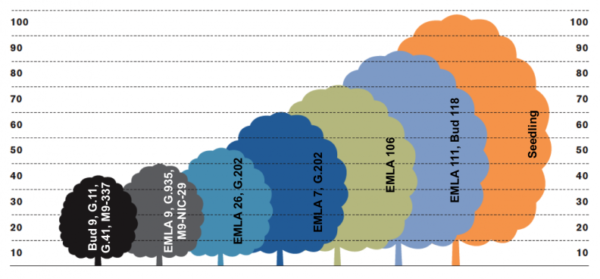


 So what’s different with All Grain versus Extract? For All Grain beer, you’ll be starting with malted barley, and need to convert the starches in it to sugars. This is done in the mash. You’ll need a 10 gallon (or larger) insulated (or heated) container with some manner of filtering out the grain from the wort. This can be done with a stainless steel false bottom, which is something like a colander with smaller holes that sits on the bottom of the mash tun over the spout where you’ll be draining the wort. Or, you can use a bag that you attach to the side of the mash tun. The bags are cheaper, easier to clean, and prevent stuck sparges. The only problem is you’ll have to lift a heavy (water + grain) bag out of the mash tun in order to clean it.
 Using a
  the malt, it’ll be at our expected mash temperature. This is known as the strike temperature. In this instance, my strike temperature came out to be 160 F. We then take the malt and add the hot water to it.
 So while the mash is going, we’ll also heat up water for sparging (rinsing more sugars off the malt). We want this water to be hot (I usually aim for 185 F and boiling), because we want to stop the conversion process, and because we need to get all of this wort up to a boil anyway. I do a 2 step batch sparge. So after draining the mash tun, I’ll dump hot water over the grain and drain it twice. You can do a single batch sparge, or even a continuous sparge (where you have a pump recirculating the mash over the grain).


