Hello and welcome to Pie Ponders, in which Pie – that is me for those who destroyed too many neurons with alcohol– raises questions on various topics of great importance. As usual, this is not a fully refined post, but just some thoughts and ideas I throw to the commentariat, in the hopes of better arguments through crowdsourcing. On to it, then!
There is a major issue with most human’s views of the world. This was very well described by the Bastiat phrase “what is seen and what is unseen”. This has to do a lot with opportunity cost and a lot with much else. In general, it is easy to see things on the surface. It is harder to go a bit deeper, a few layers down. I would say it is easy to see the obvious, but the obvious is not always that clear. If you go down a road, you may not think enough of the road not taken. Except when the traffic is really bad and you wish you took another route, but that is not the point.
What brings these musings, you ask? Just a couple of stray thoughts… A popular thing among our friends on the left (yes, meaningless designation left wing, but generally sufficiently fit for purpose) is to claim that well why do libertarians complain of big government on the internet, if big government invented the internet. Or the smartphone. Or, in the end, whatever. Like most things these people say, this is stupid on multiple levels and I shall briefly go into it.
Let’s start with the easier levels. Let us assume the premise, which is wrong and dumb, but let’s assume it. The government “invented” the internet. First, the government did not do shit, it took tax money and financed some scientist. Second, just because the government financed some things that work, does not mean most things governments do also work. Third, most of the R&D by government that is praised by the various lefties was done as part of military & defense research, one of the few areas where conservatives and non-anarchist libertarians see a clear role for the state. And probably one of the last areas they would seek cuts from.
Let’s go to the next level. Did the government really make the internet? No. Anyone with half a rational though on the issue realizes this. This excludes all left wing and some of the right. What is the internet? Spoiler alert: it is not a network or a communications protocol. The communications protocol is just one of many possible. The internet is every single website and piece of content created. This was not done by state agents. Tax financed researchers developed various networks and communications protocols. And most were unused and did not account to anything. The internet, like soilent green, is people.
Should we go to another level? Okay, okay, the internet is many things, but without that government funded research it would be a nonstarter. Ehm no. Was there no R&D before massive government involvement? Yes there was, most of the industrial revolution, early electricity and its applications, lights telephone, radio, airplanes and much more. At some point, the state increased its involvement, due to mostly war, and manage to crowd out some of the private sector. Would things discovered by tax funded R&D not exist without it? Off course they would. Those people innovating when working for state research facilities would have done so anyway. A lot less in taxes would mean a lot more private investments. Would private innovations stop suddenly in 1950? Why would things not be invented anymore? There was plenty of research in networking besides ARPANET.
Another stupid meme is one of showing a smartphone with components originating in government research like touchscreen and such. This is equally irrelevant. Sooner or later, those things would be invented outside government and there is no reason to think otherwise. Many things through history were invented independently, by various people in various places. If something that is a generally useful technology was not invented in a certain research facility in a certain year, are we to believe it would never again be invented?
To go back a bit, making a chip or a touch screen is not really what makes the modern smartphone. Making these things cost effective and widely available is. Making a phone for 1 million, why even government can do that. Soviet Russia had itself some discoveries in government labs – after all everything was government, but those ended up nothing or bad products.
So no, the government did not create the internet, the internet uses some things researched under a government program. Those things would have been researched anyway – maybe in slightly different forms, maybe worse, maybe better. But the internet is not a network or a communications protocol. The smartphone would be just fine without government, because researching a touchscreen is not what makes a smartphone and there is zero reason to believe it would not have been discovered anyway.
One can say war accelerated innovation, but one can also say government secrecy due to war slowed it down some. Also the massive cost and destruction of war, the lives – and potential inventors – lost in it, all these things surely put a damper on invention. In a more libertarian world maybe we would not have the exact same tech as today in all respects, but we would have something comparable. I think even better.
But my main curiosity is how do people end up thinking like this? Can anyone, looking at the history of private innovation, at independent discovery, at general human endeavor, think well this particular thing would not have been innovated without government? I do not see the logic of it. Are people so incapable of thinking that without government involved in X, something would be different but not inexistent? The US government financed some early airplanes. If the government financed ones would have been successful a bit earlier than the Wright brothers, would we say we would have no airplanes without government? Can anyone think that if Newton would not have formulated his theorems, no one would have until this day?
These are the things that make me believe there is no real way to get common ground among people. If they truly believe that without government touchscreens would not exist. And this, off course, extends to any area of government intervention, healthcare, education and, probably everything these days. And if they think this, it means they do not understand that for everything government did that they see, there are unseen opportunity costs. While you can never truly know how things would have been if some factor or other was different, you can speculate. And you need to. Otherwise there is no critical judgement possible to things done. We don’t know what would have happened if the US pulled out of Afghanistan after 6 months, let’s say. But that does not mean one can never criticize the never-ending war.
Imagine being arrested and thrown in jail merely for expressing an unpopular opinion. Okay, now analyze and explain “hate speech.”
Campaign Finance Reform – A Primer
All attempts at Campaign Finance Reform in these United States have failed. ALL. Every single one of them.
If that sounds like exaggeration, just consider that attempts to limit the influence of money in politics is typically taught in history or civics classes as beginning (in earnest) shortly after the presidency of Andrew Jackson, the pro-slavery founder of the Democratic party whose administration ultimately produced the political “spoils system.” That would put us back to the mid- to late- 1830’s. Good ol’ “Honest Abe” himself was bankrupted trying to personally finance his first Senatorial campaign in 1858, so he had to rely upon businessman from Philadelphia and New York to finance his Presidential campaign in 1860. According to some historians, however, money was in politics from the beginning of the Republic.
In the United States, concerns over financing campaigns for public office have been around since before the writing of the Constitution. Candidates traded influence, power, and gifts, for constituents’ money and votes even before the dawn of the Republic. George Washington – later President, but at the time, a candidate for the Virginia House of Burgesses – bestowed upon the 391 voters in his district the “customary means” of winning votes: “28 gallons of rum, 50 gallons of rum punch, 34 gallons of wine, 46 gallons of beer, and 2 gallons of cider royal.” James Madison lost his reelection campaign to the Virginia legislature 20 years later because he refused to provide voters with the customary whiskey.
Gardner and Charles, “Election Law in the American Political System,” p. 637.
In 1867, just two years after the Civil War, the first legislative attempt at campaign finance reform appeared in a Naval Appropriations bill. It forbade government officials from soliciting (i.e. “shaking down”) Navy Yard workers for money to finance the ruling party’s election campaigns. This had become a routine practice in prior years. So routine was it that federal employees would have some portion of their pay directly “assessed” by the government to the Party’s re-election fund. The protections of the 1867 Navy yard workers were eventually extended to all civil service workers… (But not the rest of us, evidently.) The Presidential campaign of 1896 was so openly a case of dueling donors obtaining political promises from each Parties’ respectively well-financed candidates – William Jennings Bryan for Team Blue and William McKinley for Team Red – that the public began yelling for campaign finance reform… and here we are 120 years later. This brief timeline of attempts at reform shows just how fruitless they all have been.
Modern, seemingly sophisticated attempts at campaign finance reform, by people from both political parties in Congress, have ultimately been set aside by Supreme Court decisions. While it may be unpalatable or politically inexpedient to say this, the Supreme Court’s rulings in these cases are very solid reads of the First Amendment… proving yet again the old adage that “sometimes even a blind squirrel finds a nut” or that “even a broken clock is right twice a day.” Lawsuits by public interest groups have ultimately failed to produce anything even close to a good result. Now the public feels so desperate for something to happen that they’ll embrace even nonsensical calls for reform by (of all people!!) Hilary Clinton. The much-ballyhooed, and almost totally misunderstood, case of Citizens United, 558 U.S. 310 (210) was about a non-profit movie company that made a film about then Senator Clinton. The Federal Election Commission agreed that the movie would be subject to a federal campaign finance law that would have imposed criminal and civil penalties on the movie company. That is to say, the law as it was made it a crime for a collection of people – using a corporate form – from expressing their political opinions, quintessential First Amendment conduct. Hard to imagine that the words “Congress shall make NO LAW” are ambiguous, but here we are, with a mountain of laws collectively regarding each and every one of the subjects specifically listed as exempt from regulation in the First Amendment.
Either We Are a Republic With a Charter To Be Faithfully Followed, or We Are Not.
Understanding How the (Legislative) Sausage Gets Made
To understand why campaign finance reform doesn’t work – and what simple fix would work – you have to understand some basic economics around how the political sausage gets made, so to speak.
First, you must know what politicians all know: there has only been one time in the last 42 years that the rate of re-election for Congressional incumbents dipped below 90% – that was 1974, when it was only 89.7%, a rounding of tenths away from being 90%. Muse on that for minute – Congress has had historically bad approval ratings – like below 20%, for decades, by any polling company. Everyone thinks Congress sucks; yet Congressional incumbents get re-elected over 90% of the time. It’s a near-certainty. Many people have speculated or offered reasoned opinions about this phenomenon, but I don’t really care about the “why” because the mere statistical truth of it is all that matters for my argument.
Second, we must make the rather short “hop” of faith and assume that politicians are at least as self-interested as the rest of us… one might humbly suggest that they are (perhaps) even a bit more self-interested than the rest of us, or make the claim that the job attracts the type, but I don’t need to prove that as crucial to my theory. Suffice it that my claim rests on what I believe to be a rather well-observed phenomenon about the self-interest of politicians. Lord Acton wrote an entire tract explaining this, but unfortunately no one reads it and all that we remember (if at all) is this quote: “Power corrupts, and absolute power corrupts absolutely.” My own observation from many years of government service and being an American is simply that the government does not choose its prospective employees from some magical pool of magnanimous, morally benevolent, and personally-disinterested human beings. If you think I am incorrect, you’ve obviously never been to the Department of Motor Vehicles to register your car, or change the title, or correct a typo on a Vehicle Identification Number (VIN). Try to manage that over your lunch break and let me know how it goes; and ask yourself about how good the customer service is while you’re there.
The Currency of the Politician is Law – Legislation For Some and Against Others
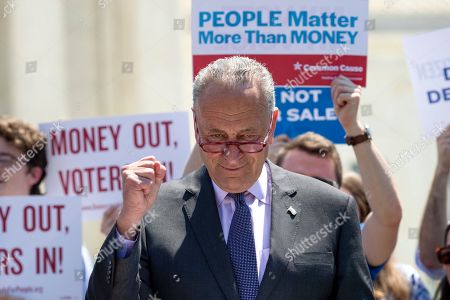
Rep. Chuck Schumer (D, NY) explains how he can’t read, doesn’t understand, and doesn’t care about the 1st Amendment.
To the above facts we have to add some economics. In my opinion, the best way to begin to understand this is to ask a very simple question: if you were a legislator looking to raise some cash, what would you have to sell? (Think about it seriously for a moment).
ANS: Legislation. i.e. Laws.
Legislation is the only thing that a lawmaker can offer any prospective “buyer.” It is the medium of exchange (i.e. the currency) of the political class and a specific instance of the more general “Law of the Instrument.”* In return for a piece of favorable legislation, or a clause in the next omnibus bill – or exemption from cuts or regulation – political donors deposit sums into re-elections campaigns, or exchange different favors with lobbyists – the “middlemen” of the entire Money-for-Favor-for-Reelection Triangle.
If this seems unduly cynical, it shouldn’t be. If you have a friend who is a cop, who hasn’t heard of, or considered, asking him or her to “look into” a ticket…? Now magnify that onto a scale where instead of your hundred-fifty bucks plus court costs being at stake, it’s someone else’s multi-million dollar, multinational business and a piece of legislation that would ensure government contracts flowing that direction for the next 10 years. Or a promise to keep government regulators out of your business for at least your friendly Senator’s next 6 years of office. If all of this seems speculative or just too much to swallow at once, consider this quote right from the horse’s mouth, as it were:
You send us to Congress; we pass laws under which you make money…and out of your profits, you further contribute to our campaign funds to send us back again to pass more laws to enable you to make more money.
— Senator Boies Penrose, (R, PA) 1896 (quoted in Id., Gardner and Charles, p. 638.)
I always hear people complain about the influence of “corporate money” in politics and yet no one ever seems to consider that if their Senator wasn’t offering legislation for sale, the corporation wouldn’t be able to make a purchase. And it is in no way solely corporations buying-off politicians. Unions are at least as powerful and well-off as any corporation and billionaires with agendas sit on both the left and the right of the political spectrum. In fact, if we’re dealing in generalities, it is worth wondering: if corporations are filled with greedy, capital-obsessed Scrooges, why would any of those money-grubbers ever voluntarily give their money to a politician in the first place? To ask the question is to destroy the premise.
When you’re starting a company in your garage you don’t start by setting aside your political lobbying budget, then make whatever widget, software, computer, or other item that is the money-making aspect of your new venture. You first have to make something that a large enough number of people are willing to voluntarily pay you such that you have a growing enterprise, be it a successful song, an iPhone, the personal computer, or a rubber tire. Legislators don’t enter your mind until well down the road in the business cycle. Thus, perhaps it is enough to agree that legislators aren’t the unfortunate victims of a “system” that is foisted upon them. What Senators and Congressman do to fill the coffers of their re-elections campaigns is a perfectly natural, foreseeable byproduct of the funding of the political system.
The following review is for the Article “Individualism: True and False”, which can be found in the book: “Individualism and Economic Order” by F. A. Hayek. The Mises Institute graciously provides a pdf or ebook copy of this book for free here.
F. A. Hayek
When slightly younger me was in college I was taking my required History of Economic Thought course. I had always been free market leaning, but had been a bit put off by Neo-Classical Economics. When my instructor, a real deal Marxist/Moaist, taught us about the “Cambridge Capital Controversy“, I was a completely shaken. I knew I couldn’t stick with the Neo-Classical framework, as it was founded on circular reasoning. Fortunately, the professor had assigned us to read one book by an influential economist, and present it to the class. While scanning through the list of approved books I saw Individualism and Economic Order by F. A. Hayek. It looked right up my alley. I had heard of Hayek before, but never read any of his works. I knew he was a free market economist, but also a “Gold Bug”, so younger me had avoided him as a wrong-thinker. Now that my faith in those who had derided him for his monetary views was destroyed, why not give him a shot?
Reading and studying this book, which is a series of related articles by Hayek, was a pivotal moment for my political ideological growth, and in particular the first Article “Individualism: True and False”. What Hayek talked about made thoughts I had already been having clarify. It resolved conflicts I had been tussling with and urged me to investigate more into him and the Austrian school of thought. And that is why i am today reviewing the primary article from the book.
Individualist oppressing minority group, circa 2019, colorized
In “Individualism: True and False”, Hayek sets the tone for the rest of the book, arguing for the social system of Individualism. But before he can do that, he needs to clear some things up. You see, in Hayek’s mind there is a lot of confusion in the world about what Individualism is. Some of that confusion is created intentionally, by the opponents of individualism, and some springs from the fact that there are two distinct philosophical lines of thought that claim the title of Individualism. Hayek (in a true Scottish fashion) labels these as “True” individualism, and “False” individualism.
For “True” individualism, Hayek sees it’s roots in the Scottish Enlightenment and subsequent British philosophers. Thinkers like Adam Smith, David Hume and Edmund Burke as well as Lord Acton and Alexis de Tocqueville, are the foremost paragons of this type of individualism. The ideas espoused by these men establish a theory of society in which ” there is no other way toward an understanding of social phenomena but through our understanding of individual actions directed toward other people and guided by their expected behavior.” In other words, it is a theory of society, that sees the individual actor as paramount. (It is interesting to note that this is in stark contrast to a common criticism that individualism sees men as isolated individuals, best understood without the context of society). To these philosophers, while human reason was interesting, and could play a role in individual decision making, it was neither paramount or necessary to their theory of society. In fact, they argued that the greatest institutions of man were mostly created spontaneously from the interactions of independent actors, creating a system greater than the designs of those participating in it.
In contrast, Hayek saw a “False” or “Rationalistic” individualism. This theory, espoused by continental philosophers like Rousseau, and the physiocrats, saw all discoverable order as the result of a Rational Mind. To them the individuals rationality was the pinnacle of humanity. Any system that was not rationally planned or designed was from the start inferior to a planned system. This system of thought, however almost always lead to the worst aspects of collectivism. Even today you can hear it’s echos in calls for Communism. An article in favor of “Disaster Communism”, has the author arguing “Climate change represents the biggest threat humanity has ever faced. Why does it seem that we cannot do anything about it? Because the productive forces we created are totally outside our rational control.”.
If only we could know what he was thinking.
Once he has cleared up and segregated these two competing forms of “Individualism”, Hayek is able to tussle with many common critiques and show why they are misplaced. I would, however be remiss to explain these here, and leave their discovery as an exercise for you to read.
This Article is a fantastic primer for anyone who may be amiable to libertarian thought, but is not so simplistic as to be overlooked by those who are already on board. It is fairly simple, and does not dive into any deep economic concepts that could be confusing. Recommended age: 17 +. The rest of his book is very good as well, though can get a bit technical and dry at times.
I was going through some personal papers and found this copy of a letter I had written nearly 30 years ago. Re-reading it was almost as if it had been written yesterday, other than some events were dated. Pretty much everything else is current. It was written as I was finishing up my house and preparing to retire and the tax people were overjoyed that someone would actually move into a rural area. Over the years I have written a lot of angry letters to the local papers but I always included copies to those I was maligning. Sadly to say nothing ever changed because of my exercises in futility. I used to go to the local town board meetings, my complaints always were about the use or misuse of tax payer money to support those things that weren’t governmental (such as Boy Scouts, fireworks displays, various donations, etc). I had a number of aggravations with the zoning board/land use/building permits at the county level as well.
I finally got worn down and gave up, elections didn’t change anything, mindsets never changed. Once a precedence is set it’s tough to change, even at the lowest level.
A lot of the letters never saw daylight, local papers often pick and chose the opinions that are not confrontational. I did get picked up by some other publications that reprinted my letters, however.
Once again, I have to apologize to everyone here. Depending on what sociologist you ask, I happen to be a millennial. As many of you know, millennials ruin everything. Which means I am going to go ahead and ruin this. I will now brace myself for the onslaught of rotten cabbage you are all getting ready to throw at me…
This is my review of Natural Light Aloha Beaches Hard Seltzer.
I know what half of you are thinking: “This isn’t beer. Now these cucks want us to drink a shot of vodka dropped into bubbly water? No way no how…” A quarter of you are probably wondering how this is even marketable, 10% of you haven’t even read this far and skipped directly to comments, finally the last 15% of you have decided that it is good Natural Light decided to drop the mask and admit what they are selling is just water.
So for that 25% of you curious why this is marketable…
Hard Seltzer is not really a new concept. Cocktails like the Gin & Tonic, the Vodka Tonic, or even the Scotch & Soda have been around for decades. What makes it new is putting it into a can and marketing it as a lower calorie option to beer or wine. In a sense it is lower in calories. The typical White Claw for example is 100 calories per 12 ounce serving. The alcohol is normally just white rum so there is hardly any flavor aside from the carbonation and the light, fruity flavoring they can add to it but it can be plain if one is that boring.
This bro drinks White Claw
This is what has won over the Bro Culture. Seriously, you know those guys in their 20’s with their popped collars, imitation wayfarers, short pink shorts, and boating shoes without socks are drinking? Hard seltzer.
This bros girlfriend…also drinks White Claw
How and why? Because of the perception that beer is high in calories, and this is a better option from that standpoint. Sort of like vaping—is it actually “good” for you to vape? Probably not, but they are not marketing it as a “good” option but it is certainly a better option than smoking cigarettes. The garden variety Pilsner for example is around 150 calories–yes even the supposedly better ones from Germany. Light beer is around 100 and the ultralights are even lower, but at that point you are just drinking 3% abv(or less) and you may as well be drinking water. The aforementioned White Claw is consistent at 5.5% abv, does not taste like watered down beer, and can be chugged right before you have to meet your mother-in-law without her knowing you’re a lush.
So it is the “Bro Market” players like Four Loko and Natural Light are trying to penetrate by offering, in the case of Four Loko, an absurd 14% abv. Are these bubbly water drinks really any good? I can get into it in occasion and should I find the Four Loko version I will most certainly discuss it. One thing I noticed is these tend to hit me a bit quicker than beer, but I also recover from it quicker than beer as well. The Natural Light version comes in two flavors, the one I picked was mango mostly out of lack of options at the store in California where I purchased it. It is overpowering—the mango flavor, that is. I believe the perfect combination with this particular hard seltzer is actually a shaker of Taijin, because grilled mango with a light brush of butter, topped with Taijin is absolutely delicious.
Chances are pretty good, you hate everything about every word I just described, if so this is not for you. Your 24 year old son living in your basement? Sure, otherwise this is not for you. Natural Light Aloha Beaches Hard Seltzer: 1.5/5
Hello and welcome back to Pie ponders in which Pie tries to understand things. This is a different type of Pie ponders, in which I try to better understand what drives certain arguments with the help of crowdsourcing – that is where you bunch come in. You need to use crowdsourcing and big data and machine learning these days to stay relevant you know, basic bitch reasoning don’t cut it no more. So to proceed…
Today I focus on the debate about private X and public – aka state managed tax funded through the lens of competition. As a libertarian I think you know where I stand. Off course, I have my biases, and I try to listen to the opposite opinion. In this case I am, as in most others, at a loss to understand the fetish some have for the concept of public and their opposition to competition. I leave it to the commenters to point out where my thoughts and arguments may be wrong.
To generalize, we want X, and doing it requires people, materials, management, in general cash, mullah, dough. So the debate boils down to who uses these things better and I struggle to understand how some believe it is the government.
So what are the arguments? One would be against profit, which supposedly takes away money from the actual task at hand, but this is, in itself, irrelevant. If X is accomplished better and cheaper overall while some money goes to profit than when it does not, profit is not in any way a waste. It is a cost of efficiency. Profit is, in fact, often a valuable signal. It tells a company whether they are doing what they should. In commie Romania, many factories were not driven by profit and had no competition to speak of, and yet, shockingly, were extremely inefficient, had stocks of products that no one wanted and shortages of products in demand, all of poor quality, and overall no way of knowing if the way they produce is good. In general if a company changes something and profit improves, they get the info that the change was good.
Beyond the first argument, some people seem to have the ridiculous notion that for certain X, no one should make a profit, because that is somehow immoral. Why this is, I could never understand. Beyond money bad. There is the argument that profit incentivizes people to maximize profit instead of maximizing X, but in a market situation that is not distorted by government, most times the two things go hand in hand. And furthermore, how can one know they are maximizing X?
In the end, all people want profit. Or better said increased satisfaction. But in the public healthcare systems of Europe, doctors who at dinner parties will claim “making a profit from healthcare is immoral” – happened to me several times – and a month later strike for higher salaries. But that is not profit somehow.
A second observation of mine is humans overall perform better when there is competition. This should be a straightforward fact, but somehow isn’t. This has two factors. One, simply because humans can easily get complacent if there is not something to keep them on their toes. Second, if you have different concepts, ideas, methods to organize an activity, there really is no better way to see which works best except letting them compete. Due to the many complexities of the world, second and third order effects, unknown unknowns, you cannot outright say which way is better, which is what bureaucrats and governments claim to do.
X, people will say, it is too important to be left to competition. Or competition does not work for X. Why competition would work for something else and not for X is not always clearly explained. But what is the alternative? The dream of a group of “experts” figuring out the best way, which does not work nor has it ever worked?
The fact about X – healthcare, education, whatever – being too important is also not a valid idea. The thing about competition is that it either works or it doesn’t. It is not it works for product A but not for product B. Because the product is not the key here, the human is. The importance of X does not in any way change the fact that humans do not function efficiently without competition. You need buildings, people, and supplies. As such these are subject to the same economic laws as coffee or clothing.
I find it strange how people believe the human perceived importance of something changes the underlying issues. If a plane is crashing, physics cares not about how important it is to the passengers to recover. If competition is necessary to make TVs, it is necessary for healthcare.
The way I see it is this: the things that are key is not the field or product, but humans and human nature. Going from cars to medicine does not change the fact that humans are involved, and the same constraints of humanity apply in the same fashion. You still need labor, allocation of capital, decision making. There is still self-interest, dishonesty, ego, the whole package. These do not go away because healthcare is important.
There are many bad arguments against competition. One is someone loses. Sometimes sure, but the loser is not taken out back and shot. Yes from competing ideas, if one is better, the worse one is abandoned, that is a good thing. Unless every single thing needs to be implemented so someone does not feel bad. Another is working together is better than against each other. Which, like most things meant for children, idiots and leftists, sounds superficially good. Until you realize that cooperation has limits and it will hit the invariable issue of being unable to automatically see what works best from multiple solutions.
Competition is a race to the bottom is also popular, although what this is based on escapes me. Certainly not of the high quality of government monopoly services or the how bureaucrats strive to make things easier on the public. Not when privatizing certain services or introducing competition usually is accompanied by significant improvements in efficiency. In competitive private sectors, plenty of high quality products are made, unlike government owned businesses thorough history. So what is this race to the bottom?
We cannot gamble with our children’s future, I heard. But what is the alternative? Sticking them all in a failing system? Or the alternative is the magic committee of experts solving all problems?
In the end, decisions have to be made, and the general idea for some seems it is better to be made by bureaucrats than by people receiving a given service. While I do understand how this could be an issue for emergency services – cannot choose hospitals while you are unconscious, there are multiple ways to solve it in a private system.
There have been a myriad of studies for private vs public education, healthcare and such. And the concept that public works better is simply not supported, no matter how much proponents claim. This will not be solved anytime soon given the massive bias in all studies made, by either side, the massive amount of information existing and missing, and the impossibility of controlled experiments. I will not do a literature review on this, I am trying to approach this by basic reason. Some strict empiricists will dismiss such arguments, but I do not see strict empiricism working in this case.
A further issue is that, when you look at it, in general, bureaucrats are not always the most competent of people. Certainly, the best and brightest seldom dream of becoming civil servants. Nor are they more motivated, more caring or in general better people, and outside leftist delusions you have no reason to believe they would be. Most countries on this planet have plenty of literature and art mocking bureaucrats. So it is quite a known phenomenon.
But I want to give an example of what I mean. The significant innovation and cost reduction introduced in the field of space exploration. SpaceX – whatever you may think of E.M. – is quite the success. This was clear when European government audits a while back informed the European Space Agency that it will be in no way competitive in the future if it does not radically change its MO. And the ESA and Ariane and their other contractors reacted by starting to research reusable rockets, using in part SpaceX innovations, by contracting with more companies and startup, by pushing innovation. This raises the question: why did they not really do this before competition forced it? Why I think this is relevant? Because, if you want to see a field which does attract the best and brightest, this is it. These are people who are at the top of their field, the best education, and furthermore many of them do work they enjoy and are passionate about. And still, without some competition, they were complacent for years and the innovation rate quite slowed down. If in this field this happened, why expect differently for others?
I think that environmental law is the single biggest issue I “struggle” with when I do thought experiments about the philosophy of libertarianism. How does self- and property ownership interact with the externalities caused by the things that you do pursuant with your ownership of yourself and your property? There are many answers, but the currently implemented one is the EPA.
[Insert Standard Libertarian Disclaimer Here]
Everybody has that annoying neighbor. The one who shoots off fireworks at 2am on Thursday April 17th. The one who blows all of the lawn trimmings into your vegetable garden. The one who honks his horn every time he drives past his friend’s house (yeah, I’m looking at you, jackass!). A core competency of government is balancing your annoying neighbor’s habits with your want for peace and quiet. Noise ordinances keep the fireworks to a reasonable hour, trespass laws keep the lawn trimmings out of your food, and I’m pretty sure I’ll be given the keys to the city when I complete my horn-triggered IED.
One could argue, however, that a well-constructed civil court system may prevent the need for all of these laws and regulations. Between monetary damages and injunctive relief, a civil court could restore me to whole and prevent my annoying neighbor from further annoying me. Tort law has been a hallmark of government for millennia, and its classic application is neighbor v. neighbor.
Great! We’re done! Torts take care of annoying neighbors. On to minarchy!
Not so fast, my friend!
There is a genre of annoying neighbor that is downright toxic. Let’s say, for example, that I have a well pulling groundwater from the regional aquifer, and my neighbor’s in-ground heating oil tank leaks heating oil into the aquifer. If the amount of heating oil is enough to spoil the aquifer and make it non-potable, tort law make for an easy, albeit inefficient, resolution to the issue. Neighbor pays everybody who uses the aquifer enough money to get them hooked up to an alternative water source, and voila! Everybody is restored to whole!
Oh wait, the neighbor is living in a house still using heating oil in 2019, and the aquifer supplies 15,000 people. Neighbor is judgement proof, and those 15,000 people will not be made whole again.
Not For Sale
This exposes one of the core issues with the tort system as currently formulated. The default relief from damages is cash money. If, for some reason or another, the cash judgment is insufficient or left unpaid, many people are left damaged by the negligence/recklessness/idiocy of Neighbor.
I can hear the rejoinder already. In beautiful harmony, a thousand libertarians belt out “Insurance!” There are two issues with that answer, though.
First, insurance is protection against bearing the full consequences of an injustice. It doesn’t prevent the injustice. Insurance may pay out enough money to tap into the local city’s water system, but it can’t unpollute the aquifer. Insurance still doesn’t make the person whole again, because the insured is paying for the service. Insurance is akin to hanging a portrait over a hole in the drywall. As long as you’re happy with that portrait staying there for the foreseeable future, it’s a decent restoration. However, there’s still a hole in the wall.
Second, insurance operates on the convenient fiction that everything has an objective value. It’s a fine assumption for commodities and furniture, but it starts to break down when more unique property is involved. The easiest example is life insurance. That’s not an even trade. I’m not gonna off myself for a few hundred thousand dollars. Even if the insurance pays way over the “market value” of unique property (like a family farmhouse), the sentimental value can’t be replaced. Properties that are “not for sale” are not easily compensated for when they are damaged.
If the aquifer under my “not for sale” 5th generation family homestead is poisoned to the point that there is no convenient way to get potable water to the house, Neighbor has done irreparable, uninsurable harm to me. I may have some of the harm reversed through cash payments, but nothing is going to restore me to being able to live in that house again.
There are three solutions that come to mind for handling this issue. The first one isn’t all that appealing: tell victims of such environmental harm to suck it up and deal with it. Maybe you can get some traction telling somebody displaced from a sentimental property to get over it and smile about your payday, but this one doesn’t translate well when the damage is to people instead of things. “Suck it up and deal with your 5 year old dying of leukemia” isn’t a winning argument.
The second option is prevention. There may theoretically be some libertopian way to do this without using government force, but color me skeptical. Unfortunately for libertarians, the two most effective ways to prevent environmental damage are 1) an expansive growth of the use of injunctions by courts; or 2) a regulatory agency (e.g. the EPA). Self-policing doesn’t work. Communities usually don’t even know enough about the issue (because it’s occurring on a company’s private property) to be able to gin up an angry mob in time. Heck, the injunctive power of the court only works if the community knows that the polluter is planning on polluting. Short of a whistleblower giving his/her best Louis Armstrong impression, it’s too late for injunctive relief by the time it ends up in court. That only leaves the regulatory option. Hello EPA!
The third option is remediation. This is a “sometimes” solution in cases where pollution can be reduced or made inert using chemical or mechanical processes. It’s great when it works, but it’s not all encompassing, and it’s not a substitute for prevention. As they say, “an ounce of prevention is worth a pound of cure.”
A Wafting Stench of Statistical Significance
Another issue causes the reactive systems of justice to bind up. Risk factors. In a car accident, for example, it’s pretty easy to prove that Neighbor swerved out of his lane, causing his car to impact my car, causing me to smack my head into the steering wheel, breaking my nose. It doesn’t always work that way with environmental contaminants. To take an obvious case, not everybody got cancer in Hiroshima and Nagasaki. However, epidemiological surveys show a massive uptick in the amount of certain cancers and birth defects.
Exactly how much is a 3x elevated risk of leukemia worth in Benjamins? Can you even say that it was caused by environmental contaminant X if somebody gets lung disease after being exposed to it? Again, the reactive system of justice fails when these unique harms are merely compensated ex post facto with greenbacks.
Libertarians apply the NAP in situations where somebody employs force, fraud, or coercion, but it may be appropriate to expand that to “risk” as well. It’s a bit of a blurry line, and it’s rife with totalitarian pitfalls, but risk is just diluted force, and the pollution itself is a form of force and/or coercion. Much like celebratory gunfire, the lack of a guaranteed harm doesn’t prevent the community from proactively stopping behavior that presents a high risk to others.
The EPA may be a bloated monstrosity these days, but the preventative justice it affords to the community is a unique form of protection for land, life, and limb that would otherwise be sacrificed to short-sighted and irresponsible polluters.
Since a few of you discussed some of his articles without me in the links, I’ll take a stab at this one.
If you’re like me, you could use at least a brief break from talking about Donald Trump. So why don’t we talk about Ivanka Trump instead? You see, recently she said something that would have been remarkable coming from any Republican, but was truly awesome coming from the Daughter in Chief.
Let’s not talk about Krugman. Lets instead talk about Krugman’s wife. Tell me, does she still look at you while somebody else fucks her brains out?
Do you see why that is a ridiculous way to start a column? Probably not. But do continue.
O.K., this was world-class lack of self-awareness: It doesn’t get much better than being lectured on self-reliance by an heiress whose business strategy involves trading on her father’s name.
So what? So does every politician named Kennedy.
But let’s go beyond the personal here. We know a lot about upward mobility in different countries, and the facts are not what Republicans want to hear.
[…]
The key observation, based on a growing body of research, is that when it comes to upward social mobility, the U.S. is truly exceptional — that is, it performs exceptionally badly. Americans whose parents have low incomes are more likely to have low incomes themselves, and less likely to make it into the middle or upper class, than their counterparts in other advanced countries. And those who are born affluent are, correspondingly, more likely to keep their status.
You know where this is going. Because there must be somebody on Earth we can emulate…
Back to the “potential for upward mobility”: Where do people from poor or modest backgrounds have the best chance of getting ahead? The answer is that Scandinavia leads the rankings, although Canada also does well. And here’s the thing: The Nordic countries don’t just have low inequality, they also have much bigger governments, much more extensive social safety nets, than we do. In other words, they have what Republicans denounce as “socialism” (it really isn’t, but never mind).
Are they socialists or not? I’m pretty sure if I point out Cuba, Cambodia, Venezuela, and Zimbabwe as socialist helloles, you’ll start talking about Sweden. Pick one shit head.
But as to the question of upward mobility, here’s a fun snippet from OECD.
Intergenerational mobility reflects a host of factors, including inherited traits, social norms and public policies that may influence the individual’s willingness and ability to seize economic opportunities. These factors are difficult to unbundle precisely and, as regards norms and policies, to some extent reflect societal choices over institutional settings as well as differences in choices over redistribution and equity, which are likely to be valued differently across countries. Therefore, no “benchmark” mobility level can be identified in cross-country comparisons.
So comparing the country with the world’s largest economy to a tiny European ethnostate, is pardon my anglo-saxomisms, probably comparing shit to syphilis.
Which means once again, we have to point out the countries you are talking about have small, nearly homogenous populations, distributed among a few population centers. How small exactly? The United States has more millionaires than Sweden has people. Even then, the millionaires in Sweden appear to have inherited their wealth. Why does Sweden have the type of “income equality” that they do? Probably because their middle class pays most of the taxes, and if you happen to be a high earner you have incentive to leave….because the taxes there suck balls.
At any rate, here is a book I am sure you never read that explains how many of these so called “successes” are actually the result of free market reforms that have been put in place since the 70’s…when the Swedes figured out they were turning into what we now call Venezuela. So how do you conclude?
By contrast, progressive Democrats are calling for universal health care, increased aid to the poor, and programs offering free or at least subsidized college tuition. They’re calling for aid that helps middle- and lower-income parents afford quality child care. And they propose paying for these benefits with increased taxes on high incomes and large fortunes.
Yes, because Universal Healthcare is working out in Finland. If you need to find out how well that works out in the US, one simply need to look at how well the Veteran’s Administration is meeting the challenge of providing universal healthcare to 3-4% of the US population. Its particularly bad if you live in a rural area.
Which I assume an asshole like you is okay with fucking over the half of the country that doesn’t vote for your preferred politicians.
Introduction
In this series, I will be examining an economic event known as The Great Decoupling its causes, and how they drive economic inequality. The first part of the article will deal solely with delving into the background of the Great Decoupling and developing a theory for what caused it. Part 2 will go into wealth and income inequality and how they are caused/driven by those factors.
What is The Great Decoupling
The Great Decoupling is a term that has been coined to describe the sudden divergence between productivity growth and wage growth in the early 1970s. Prior to that going back to at least the end of World War 2 wages and productivity moved in lockstep indicating that they were tightly coupled and that in effect workers were claiming a constant percentage of their growing productivity. You can see this graphically in images like the one below.
There are other versions of this graph comparing different wage metrics, they all tell the same basic story however so there is no need to go into them.
And that graph does tell us that something profound happened to the economy in the early 1970s and if you look closely at the graph that it is clear that this event was not a form of slow gradual change but rather a specific event that occurred between 1972 and 1974. What the event was the cause for the decoupling of wages from productivity is not so clear.
Before I go into my own theories for what is behind this event, I will go over the 2 most commonly promoted/believed theories and examine them to see if they have any validity to explain the phenomenon.
There are a few other theories for what caused the Great Decoupling but none of them are particularly widespread or developed as these and so I will not go into them but suffice it to say that every theory I have seen proposed for the cause of the Great Decoupling has been lacking and not backed up by any evidence that fits the evidence
Theory 1: Automation driving workers out of their jobs
The basic idea behind this theory is that as automation of factory jobs grew demand for labor shrank and while it never shrank enough to create mass unemployment, it did deprive workers of the negotiating power needed to demand higher wages. Being an essentially neo-Luddite theory, you will often see this mixed with some claims about declining union membership/power as an aggravating factor.
In fairness, there is some validity to this theory as automation was a growing force in the economy in the post-war years that have accelerated as time went on. There are some flaws to the theory. First, automation did not come onto the scene from nowhere in the early 1970s, it had been an ever-growing force in the economy since the industrial revolution. Had this been the primary driving cause of the Great Decoupling you would not see a sharp line of demarcation where wages and productivity diverged, rather you would see a slow departure as wages gradually fell behind productivity growth. In other words, as automation grew steadily since the 1880’s wages and productivity would never have been coupled in the first place. Second, the growth in automation would have only impacted a few sectors of the economy, primarily manufacturing and farming. Over the period of the Great Decoupling those 2 sectors represented a shrinking portion of the overall economy and as a result, there were plenty of jobs for the workers impacted by automation to go to in other sectors of the economy to find work leaving them with plenty of bargaining power to increase wages.
Ultimately this theory is used to back either an Organized Labor narrative or to support dire predictions of a coming singularity where automation renders huge percentages of the workforce obsolete and while that may or may not have some validity going forward it is a very poor fit to describe what actually happened to the economy between 72 and 74. The best you can say is that Automation was one factor among many that helped keep wage growth decoupled from productivity growth, it could not have been the causal factor which initiated the decoupling.
Theory 2: Deregulation and tax cuts for the wealthy transferred ever-growing wealth from workers to capitalists
This is your standard Progressive/Neo-Marxist talking point. Basically, the greedy rich people convinced the government to change the rules so that they can seize ever more money from the proletariat. Often by having government itself redistribute the income/wealth upwards through cuts in services to the poor being funneled into tax cuts for the rich. Unlike with Theory 1 however, there is pretty much no validity to this claim whatsoever.
As the graph shows, the deviation between real wages (real wages have been adjusted for inflation) and productivity are clearly indicated to have occurred suddenly between 1972 and 1974. For government regulation or tax changes to be the driving force, there would by necessity have had to have been some major new legislation on taxes or regulations that drove the change within a handful of years immediately prior to the time period in question. What we instead see in the years immediately prior to the decoupling event is a period of massive increases in regulation with the government going so far as to impose wage and price controls as well as the creation of 2 of the largest and most powerful regulatory bodies in our government, OSHA and the EPA. On Taxes the only significant changes being the imposition of entirely new payroll taxes and while those taxes were not progressive in nature, they were small and offset by massive increases in welfare spending transferring income to the poor. You do not see significant tax cuts or pushes for deregulation going into effect until 1982 a full decade after the decoupling event.
The best factual case that progressives and left-wing economists can make is that the decoupling was initiated by something else and then reinforced by the tax and regulatory changes of the Reagan administration and even that is a weakly supported claim based on the evidence.
What really happened
Admittedly not being a trained economist or having access to all of the data to back this theory up or prove it this is just a theory but what I can say about what is to follow is that it is a far more complete vision of what happened and is totally consistent with all of the evidence which I took into account.
Before we can really understand what drove the decoupling we must understand when and how it happened. If you look very closely at the graph in the image you will see that in 1972 productivity and wages remained in synch, in 1973 they had begun to diverge however the divergence was within what was expected based on how the 2 metrics had moved in the past and by 1974 the 2 metrics were moving along completely different curves. This is a very sharp line of demarcation it can be placed to somewhere in an 18-month period from the start of 1972 through mid-1973 that a 24-year-old trend suddenly changed. Since it was not some kind of a gradual event there must have been a specific change that drove it and it had to have occurred no earlier than 1970 and no later than 1973. When we look at history there happens to be just 1 significant political-economic event that matches this time period, the end of the Bretton Woods system.
Breton Woods
What was the Breton Woods System? Following World War 2 the major nations of the world agreed to a system of international currency valuations with other currencies being marked to the dollar and the dollar being directly convertible into gold. The system worked well enough for a while, but it was originally based on the political and economic realities of 1944 where most of the economies of the world had been smashed to rubble and the only significant industrial economy remaining was the US. By the 1960s that was no longer true, England and France had resumed their prewar positions as major economic players, Germany was not far behind and Japan was an up and comer hot on their heels. Compounding this was the fact that the global economy was growing so much faster than the US economy that the US lacked the gold reserves to sufficiently guarantee the currency.
In 1971 the G10 held a summit to try and rescue the Bretton Woods system devaluing the dollar from $35 to $38 per oz of gold and in August of that year the US stopped the practice of allowing dollars to be directly exchanged for gold by closing the “Gold Window”. These steps did not help, and the dollar reached $44 per oz of gold in 1972. The end came in 1973 when the US and the rest of the world abandoned the Bretton Woods system and the gold standard altogether for a system of fiat currency backed by nothing where exchange rates would be determined by market forces. Under this system, a country can manipulate its currency by just creating new money as needed without the need to worry about whether they have the gold reserves to back that new money. Basically, the end of Breton Woods was the birth of the Inflationary monetary regime.
So now we have a candidate that at least could, in theory, cause the decoupling and fits the timeline, but this is still not a complete enough explanation as a move from fixed to floating currency can merely cause inflation, there is no real mechanism for it to suppress wages in relation to productivity changes, or at all for that matter. While wages generally trail inflation, they do rise with it. So, If the end of Breton Woods were the sole cause of the decoupling event then what we not have seen a decoupling between real wages and productivity as there would have been nothing to prevent workers from continuing to capture the same portion of productivity growth as they had in the past
What’s missing?
Now we have a temporal event that acted as a trigger in the decoupling but that event is not in and of itself capable of producing the result we have seen so there must also be other forces at play here, we have to come up with a reason why wages are not only not rising with productivity but also not rising with inflation as they always have in the past and economic theory says they should. We need to come up with some kind of economic force or combination of forces that are capable of completely counteracting inflation and productivity growth which are working to pull wages up and results in wages that have essentially flatlined for 45 years.
The link between wages and prices
Before we can get into what is driving the wage stagnation there is an important relationship we need to understand, the link between prices and wages. Economists argue over whether wages drive prices or prices drive wages, but they all agree that prices and wages are intimately linked. The actual evidence seems to say that the link is bi-directional, that is, an increase in wages in an economy will drive a corresponding increase in prices and an increase in prices will drive a corresponding increase in wages. There is good reason to believe in this bi-directional link between the two as it fits in with much we know about human motivations.
When a worker accepts a wage, he is not really agreeing to the absolute magnitude of the wage he is evaluating that wage in relation to what it costs him to live and the lifestyle that the wage will afford him. If prices are rising, then he will eventually decide that the current wage no longer satisfies his needs and seek a higher one. On the reverse side when a company offers a wage for a position, they are taking the same factors into account and if prices are falling they may not be able to get their current workers to accept lowered wages but they certainly will offer new workers lower wages in response and in extreme cases will replace current higher paid workers with new workers at lower wages. So, this is how wages respond to changes in price levels within an economy.
Prices also respond to changes in wages. If a worker’s wages are increasing, he will be more willing to spend increasing amounts on goods and services that he was in the past with the lower wage, companies seeking to maximize profit will note this increased financial flexibility within the market and adjust their prices higher accordingly. Additionally, if a company finds itself having to pay higher wages for workers that represents an increase in costs and therefore they have a strong incentive to raise prices to compensate for the increase In cost.
So as you can see there are multiple forces on each side of the wage-price equation that work to keep the two in close correlation and when one looks at real wages (that is wages adjusted for price inflation) over this time period one does indeed see that both wages AND prices have been flat.
We find ourselves in a world driven by inflationary fiat currencies which according to pretty much all economic theories should be producing increasing prices and wages, but we find that neither are really increasing at all and so the questions that must be answered are why neither is increasing because if either was increasing then the other would be.
What has been keeping wages down?
In addition to there not having been any upward pressure on wages from increasing prices it boils down to supply and demand. Coming out of World War 2 the US had a rapidly growing labor force as productivity increases in farm work freed up large numbers of workers to go to work in more valuable endeavors and the number of women in the workforce began to grow steadily. This trend was then reinforced by improvements in public health driving up the median age as well as the age to which one was healthy enough to work and eventually the Baby Boomer generation entering the workforce. This was not a problem in the immediate postwar years as the US had a massive export economy and virtually no import economy to compete with thanks to the US being the sole remaining industrial power in the world. Even in the face of this rapidly growing workforce, there was still plenty of work to go around.
By the mid 1960s this began to change, even though the growth in the US workforce was not slowing countries had largely rebuilt from the war and not only could satisfy many of their material needs themselves they were beginning to export large quantities of goods into the US so while there was still plenty of work to go around companies and consumers began to have alternatives to just paying higher prices for US labor.
As time has gone by this trend has only continued to accelerate as more and more countries became first major export players and eventually economic powers in their own right. At the same time technology has been expanding to make the world a more global place. Yes, the US is still the leading economic power, but it is no longer the only economic power so that workers in the US are no longer just competing with their neighbors but with people across the globe who often can work for a tiny fraction of what a US worker needs to earn and still survive. The result of this is massive downward pressure on wages, there is plenty of work and we do not see widescale unemployment but there is little flexibility for workers to place upward pressure on wages because if US workers ask for too much the work will just go overseas.
What is keeping prices low?
The first thing to recognize is that a fiat currency regime need not be inherently inflationary. It is only inflationary to the extent that the money supply grows faster than the growth in goods and services produced within the economy which means that new money created up to the level of the gains in productivity + population growth would simply have the impact of counteracting the natural deflationary tendency of productivity and population growth and work to hold prices steady. It is only money creation beyond this level which could cause actual inflation in prices.
That said with the monetary policies created following the end of Bretton Woods were significantly beyond this point and so a common refrain you hear to challenge economists opposed to the monetary policies of the Fed and US Government is “Where is the inflation”? Prices have been essentially flat for decades even though the monetary base has been increasing near exponentially, so those theories are falsified, right?
Not so fast. The first thing that needs to be realized is that both increases in productivity and population exert deflationary pressure on prices.
Given that an increase in population represents more workers producing goods and services however while this represents a deflationary pressure on prices as there are fewer dollars available for each unit of production in the economy so the monetary supply had to grow by the same proportion as population growth (more specifically workforce growth but they are interchangeable if we assume a steady portion of the population in the workforce) before you would see any price inflation.
Additionally, an increase in productivity means a decrease in production cost. Growing productivity will by necessity produce some combination of a decrease in price, an increase in wages, or an increase in profits the question becomes what proportion of each. That is, who claims the benefit from the growing productivity, the workers, the owners, or the consumers?
All other things being equal standard economic theory says that competition in the market place will result in the companies benefiting from productivity growth trying to realize the increased profits but over time being forced to cut prices to stave off competition and in the end the consumer receiving the benefit in the form of lower prices for goods and services. Workers will also try to claim a portion of this windfall from increased productivity by demanding increased wages. Historically this could be seen by the link between productivity gains and wages. Workers claimed a constant portion of the productivity gains, the company’s owners received a short-term benefit and over time prices would fall so that in the long term the remaining benefit would flow to consumers in the form of a decrease in prices.
Over the period of the Great Decoupling, we have seen quite large gains in both productivity and population which in the absence of an inflationary monetary policy would have served to drive prices down, these trends have been in effect canceling out some of the price inflation that you would have expected to see.
Finally just as workers began to find themselves in competition with other workers all over the globe companies also began to find themselves in the same position. You no longer had to contend with one or two competitors inside your own country you also had to deal with foreign competition both in the form of a foreign entity beginning to import products that compete directly with yours as well as competitors cutting costs and prices by outsourcing their work to foreign workers. This increased environment between companies acted to make it harder for those companies to raise prices to stay in line with inflation and so in order to maintain their bottom line they began to actively find ways to cut production costs which both drove some of the gains in productivity and worked to place yet more downward pressure on wages.
Putting the pieces together
Now we can tell a complete story of how the Great Decoupling came to be.
As a result of a growing workforce and globalization, there has been persistent downward pressure on wages starting in the mid to late 1960s. Due to technological growth and the aforementioned globalization economic productivity began to grow at never before seen rates. The end of the Bretton Woods system and a switch from hard currency to fiat currency accompanied by an inflationary monetary policy acted as the trigger event that allowed those two forces to cause both wages and consumer prices to stagnate in real terms. As productivity continued to grow and the gains from the productivity growth are no longer being divided between workers (in the form of higher wages) and consumers (in the form of lower prices) but are rather being counteracted by inflation. The net impact has been growing productivity with stagnant wages and low consumer price inflation.
Now I cannot prove this theory is true, not being a professional economist, I do not have easy access to the data which could do that but what I can say is that this theory is both more complete and fits the actual historical data better than any other theory as to what is behind this economic event. To the extent that what I have laid out here is true, it shatters the progressive claim that the Great Decoupling is an inevitable result of “unfettered capitalism and proof that we live in an era of unbridled greed.”
Up next, looking into how these factors are the key drivers of income and wealth inequality.
Note from the Glibertarians.com editing staff: Here at Glibertarians.com, we are constantly searching for new features. We noticed a niche in our features was lacking: macroeconomic analysis. Because of this, we reached out to Yaron Brook of the Ayn Rand institute. Unfortunately, that guy wants to get paid for his work. So we found the next best thing:
Winston’s Mom.
First thing I want to say is, hi Winston, Mom got a new gig!
Now that we got thst out of the way, let me begin here,
In 1961, America faced what conservatives considered a mortal threat: calls for a national health insurance program covering senior citizens. In an attempt to avert this awful fate, the American Medical Association launched what it called Operation Coffee Cup, a pioneering attempt at viral marketing.
Here’s how it worked: Doctors’ wives (hey, it was 1961) were asked to invite their friends over and play them a recording in which Ronald Reagan explained that socialized medicine would destroy American freedom. The housewives, in turn, were supposed to write letters to Congress denouncing the menace of Medicare.
In 1961, I recall a doctor that would send his wife down to Biloxi, MS with her girl friends. He was into fisting for some reason but that didn’t stop him from penetrating everything. He was a lousy (((tipper))) as I recall.
What do Trump’s people, or conservatives in general, mean by “socialism”? The answer is, it depends.
Sometimes it means any kind of economic liberalism. Thus after the SOTU, Steven Mnuchin, the Treasury secretary, lauded the Trump economy and declared that “we’re not going back to socialism” — i.e., apparently America itself was a socialist hellhole as recently as 2016. Who knew?
Ever try telling the lady at the methadone clinic you’re on Medicaid? What a bitch.
Other times, however, it means Soviet-style central planning, or Venezuela-style nationalization of industry, never mind the reality that there is essentially nobody in American political life who advocates such things.
That broad from NY, always on TV, always smiling with her squeaky voice. Whats her name?
Trump’s economists clearly had a hard time fitting the reality of Nordic societies into their anti-socialist manifesto. In some places they say that the Nordics aren’t really socialist; in others they try desperately to show that despite appearances, Danes and Swedes are suffering — for example, it’s expensive for them to operate a pickup truck. I am not making this up.
What about the slippery slope from liberalism to totalitarianism? There’s absolutely no evidence that it exists. Medicare didn’t destroy freedom. Stalinist Russia and Maoist China didn’t evolve out of social democracies. Venezuela was a corrupt petrostate long before Hugo Chávez came along. If there’s a road to serfdom, I can’t think of any nation that took it.
Who was it that wrote that book and who was he writing about anyway?
So scaremongering over socialism is both silly and dishonest. But will it be politically effective?
Probably not. After all, voters overwhelmingly support most of the policies proposed by American “socialists,” including higher taxes on the wealthy and making Medicare available to everyone (although they don’t support plans that would force people to give up private insurance — a warning to Democrats not to make single-payer purity a litmus test).
On the other hand, we should never discount the power of dishonesty. Right-wing media will portray whomever the Democrats nominate for president as the second coming of Leon Trotsky, and millions of people will believe them. Let’s just hope that the rest of the media report the clean little secret of American socialism, which is that it isn’t radical at all.
I do have a story from 1973 about a Danish john named Viggo. We bargained a bit, but he started small. First he asked how much to finger my ass, so I said 5 Kroner, and when he said he had real money i said $5. Then he asked how much to finger his ass and I’m all well the first one is free dear, but the second will cost another $5. One thing lead to another, and eventually we built up a lather using the hotel soap and I had an bottle of vodka in his ass while I was rubbing him out. Doesn’t seem so weird now, but back then I might not have opened up the bottle and taken a swig after the fact.
What were we talking about? Right, slippery slopes. It starts small but if you keep slipping, it might net you $58 in the end.
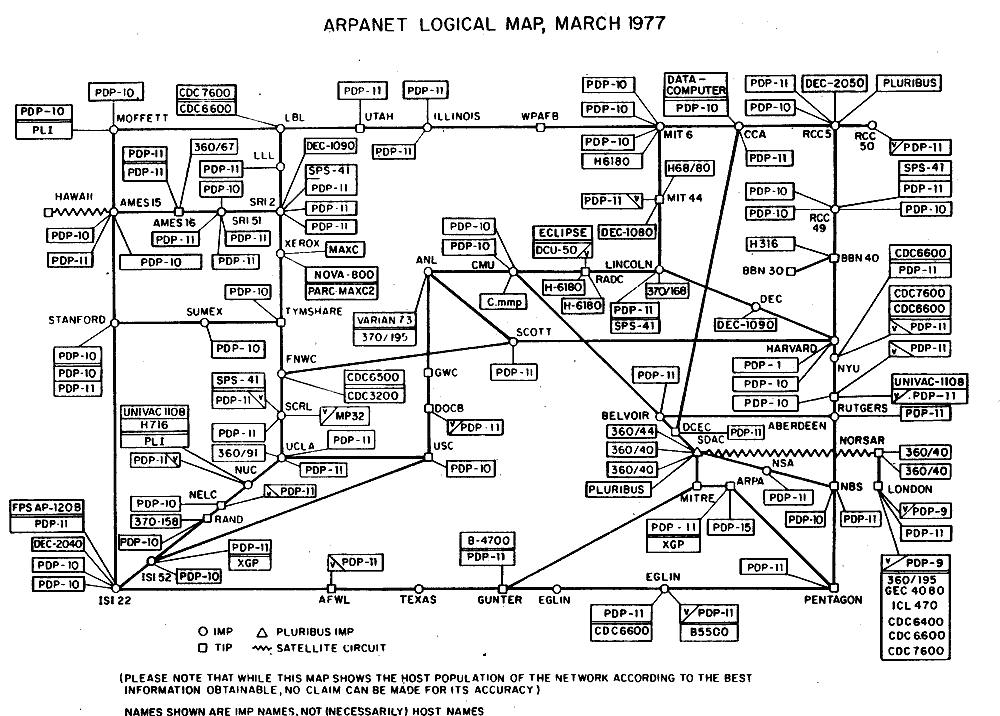 Let’s start with the easier levels. Let us assume the premise, which is wrong and dumb, but let’s assume it. The government “invented” the internet. First, the government did not do shit, it took tax money and financed some scientist. Second, just because the government financed some things that work, does not mean most things governments do also work. Third, most of the R&D by government that is praised by the various lefties was done as part of military & defense research, one of the few areas where conservatives and non-anarchist libertarians see a clear role for the state. And probably one of the last areas they would seek cuts from.
 These are the things that make me believe there is no real way to get common ground among people. If they truly believe that without government touchscreens would not exist. And this, off course, extends to any area of government intervention, healthcare, education and, probably everything these days. And if they think this, it means they do not understand that for everything government did that they see, there are unseen opportunity costs. While you can never truly know how things would have been if some factor or other was different, you can speculate. And you need to. Otherwise there is no critical judgement possible to things done. We don’t know what would have happened if the US pulled out of Afghanistan after 6 months, let’s say. But that does not mean one can never criticize the never-ending war.




 To generalize, we want X, and doing it requires people, materials, management, in general cash, mullah, dough. So the debate boils down to who uses these things better and I struggle to understand how some believe it is the government.
 Competition is a race to the bottom is also popular, although what this is based on escapes me. Certainly not of the high quality of government monopoly services or the how bureaucrats strive to make things easier on the public. Not when privatizing certain services or introducing competition usually is accompanied by significant improvements in efficiency. In competitive private sectors, plenty of high quality products are made, unlike government owned businesses thorough history. So what is this race to the bottom?
 But I want to give an example of what I mean. The significant innovation and cost reduction introduced in the field of space exploration. SpaceX – whatever you may think of E.M. – is quite the success. This was clear when European government audits a while back informed the European Space Agency that it will be in no way competitive in the future if it does not radically change its MO. And the ESA and Ariane and their other contractors reacted by starting to research reusable rockets, using in part SpaceX innovations, by contracting with more companies and startup, by pushing innovation. This raises the question: why did they not really do this before competition forced it? Why I think this is relevant? Because, if you want to see a field which does attract the best and brightest, this is it. These are people who are at the top of their field, the best education, and furthermore many of them do work they enjoy and are passionate about. And still, without some competition, they were complacent for years and the innovation rate quite slowed down. If in this field this happened, why expect differently for others?