Category: Musings

  • The Cult of Traditional Publishing, Part 1: The math don’t lie

    I didn’t actually do the math.

    I didn’t have the numbers for one side of the colon. But based on the proliferation of newsgroups, online critique groups, publishing forums in 2008, and the number of such denizens all trying to get published, I could guess. And it was huge.

    Then there was me. 1 : x6214

    Mormons aren’t a cult. I know because I’m a Mormon and I was in a cult. The cult had me far more brainwashed than Mormonism ever did or ever will.


    Maybe it's just me, but I see a lot of green in that cover.
    Maybe it’s just me, but I see a lot of green in that cover.

    I was 15 when I first found out how to go about querying and creating proposals. I even did that a couple of times for Reader’s Digest. I was rejected. It hurt, not because I was rejected, but because I was running out of time. A favorite author’s bio said she was 18 when she first published a book, which she wrote “on a whim”. If I hadn’t done it by 18, well … (Narrator: That was a lie. She was 25.)

    I was eating Harlequin Presents romances for breakfast, lunch, and dinner. I knew the formula. I knew the most popular tropes. I had plenty of ideas. I didn’t have such words in my vocabulary as “formula” and “trope.” It was a gut feeling, the natural rhythm of the way a good story is paced.

    You can blame her for my May-December fetish.
    You can blame her for my May-December fetish.

    I never did get a Harlequin Presents romance written. By the time I could actually write a book, I liked Harlequin Superromances better and I trained myself to write within that word count (90,000 to 120,000). It felt more complete than the 55,000 words of Presents. Well, of course it would. It was double.

    So here’s what happened:

    In 1989, I wrote my under-the-bed novel. The apprentice novel. The horrible one. The one you never want to see the light of day. It’s still out there floating around, I think.

    In 1990, I wrote my next novel. It was marginally better.

    In 1991, I wrote my third. It was good. I sent it to a publisher that had launched the careers of a bunch of NYT bestsellers. I got The Call. You know, the one where the editor calls you and congratulates you. Then … nothing. The publisher went out of business. Why? The parent company had bought it for a tax write-off and it made money. So bye bye Kismet. Yes, that was the publisher’s name. Kismet.

    If you are a good writer, you WILL get published. Don’t give up.

    In 1993, I wrote my fourth. It was really good. I sent it to Harlequin and got The Call. Sorta. The editor said, “I love this book. However, I bought one fairly similar last month that is not as good as yours, but I can’t break that contract and I can’t sell this to my editorial board. Send me something else. NAO.” I gave a brief rundown of book #3 and she passed.

    That really is Win 3.x green rivets background.
    That really is Win 3.x green rivets background.

    So I got an agent with book 4. That relationship ended in disaster after she read book 2 and told me to get a therapist. (Narrator: That book was revamped a few times, published, and remains the fan favorite.)

    In 1993, I started writing my pirate novel. I knew what I wanted to do. I also knew I didn’t have the chops to do it, so I fiddled with it for years.

    If you are a good writer, you WILL get published. Don’t give up.

    In 1993, I wrote book 5. It also got me The Call. An editor at Harlequin called me up on a Saturday morning and said, “I want to read the rest of this book. Overnight it.” She called me Tuesday evening and said, “I love this book—except the ending.” Me, having been trained to be a good, dutiful, well-behaved author, said, “I’ll rewrite it!” She sighed and said, “No, that would ruin the book. It has the ending it needs. I just can’t sell it.”

    If you are a good writer, you WILL get published. Don’t give up.

    In 1995, I was a senior in college in the creative writing program. My professor was the faculty supervisor of the uni’s lit rag. After my first assignment, he told me I had an A in the class and I could just skip the rest of the semester because he couldn’t teach me anything. But he would count it a personal favor if I stayed and did the assignments because he loved my work. That class was 8:00 a.m. after I’d spent the night working a graveyard shift at a gas station. You better believe I went to class.

    I wrote a story. He was disappointed in me for giving it a “romance novel ending,” but otherwise he loved it. My senior advisor for my capstone project happened to be a Latin teacher (no idea why) who was absolutely fascinated by my creative process. She said, “I don’t care what you do, just tell me why and how you do it.” Okay, so I expanded on my story that had caught my attention.

    It so happened that I was in Shakespeare 480 class or whatever really high number and we were studying Hamlet. I decided that somehow my religious allegory for the atonement (with a romance-novel ending) and Hamlet should go together like bread and butter. It didn’t. I couldn’t make that plot work.

    Oh, bullshit. Good generals know when to retreat.
    Oh, bullshit. Good generals know when to retreat.

    If you are a good writer, you WILL get published. Don’t give up.

    So I was bored at my graveyard job and in class and wrote book 6. That one got me a literary agent who loved it, but could not sell it, either.

    If you are a good writer, you WILL get published. Don’t give up.


    Let us stop a moment and draw the obvious conclusion.

    It was about now I started messing with making my own galleys of book 6. I was never going to self-publish, oh NOOOOOOOOOOOOOOOOO. Only bad writers self-published. It was the kiss of death. Even if you really were good, a publisher would never publish someone who had published himself. Still … that galley looked awfully pretty. I hesitantly called up a printer as if I were calling up a gigolo to take my virginity for me, knowing I was going to go to hell for it when I died, and said,

    “Yeah, um … how … much … would this cost?”

    “Twenty grand.”

    “Bye.”

    So even my attempt at committing the ultimate sin was unavailable to me.

    I gave up. I had enough near-misses to let me know I wasn’t a bad writer, but clearly not good enough and I obviously didn’t know how to hit the Harlequin bullseye after all.

    No, I didn’t give up trying to get published. I gave up writing altogether.

    Fast forward to 2004. I’ve gotten married. I’ve had a baby. I’ve gotten a work-at-home profession as a medical transcriptionist and was doing okay. I’ve got no creative outlet. I refuse to write and only occasionally fiddled with my pirate novel, and once in a while, I tried to make that Hamlet-atonement plot that wouldn’t work, work.

    I wasn’t entirely stupid. I still had them on floppies.
    I wasn’t entirely stupid. I still had them on floppies.

    My husband had read one of my books and liked it. He had urged me to query it again. I had. I had gotten swiftly and roundly rejected. Apparently, it hadn’t stood the test of time. In anger, I had burned all my manuscripts in the barbecue grill.

    I’ve still got no creative outlet except … counted cross stitch. I love it. (Narrator: Loved. She killed that by making it into a business.) There were lots of things I wanted to stitch, so I learned how to convert them into patterns. I then went online and found out people who were “superstars” in the cross stitch pattern world had started out doing their own and just pitched them to shops and then got picked up by distributors. Self-publishing your patterns was the mark of a professional. So I did that. Turns out, what I like and what a lot of other people like aren’t the same, and the few who did like my patterns weren’t enough to pay the bills.

    All those bubbles in my head...
    All those bubbles in my head…

    That fizzled after a few years of tinkering with it. I was okay with that. I’d had another baby. I was working my ass off at medical transcription because I had moved into a house that we should never have bought and had started having expensive problems. (Narrator: Two weeks after moving in, the back patio sliding door fell out. Just … fell out. That was a very cold winter.)

    Fast forward to 2007.

    One night, after having invoiced my contractor for my medical transcription work (it was a lot of money), I was very depressed. Not even my newly-doubled-dose of antidepressants was helping. (Narrator: Sometimes you don’t have depression. Sometimes your life just sucks.) As one gets older, one should be making more money for less effort. Otherwise, you’re not life-ing right. I sent my bill and sat there in the dark and looked at my computer. I opened up book 6 and I read my own work for the first time in years.

    It was like somebody else had written it, and it was good. Like, really good. I went to bed even more depressed and discouraged and asking, “Why did I give up on myself?”

    I woke up the next morning with the solution to my now-decade-old plot problem and I got to writing.

    The rollercoaster car had left the station.

  • David Bowie’s cod and what women really want

    The movie Labyrinth (1986) is a tale of an adolescent girl’s quest/hero’s journey/sexual awakening. It’s a fantasy that features muppets good and slightly evil and everything in between. It also features David Bowie in very tight tights with his cod on obvious display. You can’t miss it—and that’s the point.

    But why is it the point?

    THE SETUP:

    Jareth the Goblin King and his co-star. No, not the muppet.
    Jareth the Goblin King and his co-star. No, not the muppet.

    Our intrepid heroine, Sarah, is a girl whose mother ran out on the family to become an actress and from what tidbits one can glean, a relatively successful stage actress. Sarah is not resentful. In fact, she finds this wistfully romantic. Sarah has a baby brother by her not-very-new stepmother, whose treatment of Sarah is (per Sarah’s point of view) borderline abusive because she asks Sarah to babysit while Dad and she go out on a date. The viewer doesn’t get much but that the stepmother would not ask Sarah to babysit if she had a date or parties to go to and that she is frustrated that Sarah doesn’t want friends nor does she want to date or go out. Sarah just wants to live in her own fantasy world alone, cosplaying and dreaming about her mother’s glamorous life, which distresses the stepmother to no end.

    Stepmom: She treats me like the wicked stepmother in a fairy story no matter what I do.

    We get the point: Sarah’s living in her head in the starring role of Cinderella and loving every second of her victimhood. But she’s a teenager whose mother ran out on her, so that is to be expected.

    So Dad and Wicked Stepmother leave and there’s poor Sarah wandering around the house in a romantic and fanciful poet’s shirt and vest, in the dark while it’s storming outside, bemoaning her fate and talking to the baby rather hatefully, yet handling him gently.

    Sarah: I wish the Goblin King would come take you away.

    And … cue baby vanishing. An owl thumps at the window and (because she is very smart), she opens it.

    Owl: a symbol of femininity, fertility, darkness, spiritual wisdom, strategy, and represents the goddess Athena/Diana. “According to myth, an owl sat on Athena’s blind side, so that she could see the whole truth.”

    Then there stands a man, a tall man with freakish hair in RenFest garb. He’s the personification of desire, and Sarah is breathless with fear and attraction. He is Jareth the Goblin King, and she knows this instantly. She begs for her brother back. He plays with his balls to demonstrate his magic while giving her a challenge/quest/dare. If she can complete the labyrinth that surrounds the Goblin City in 13 hours, he’ll give her her baby brother back, but if she doesn’t, he will turn the baby into a goblin forever.

    And off she goes on her quest like a good little hero/ine on his/her journey, encountering all sorts of obstacles along the way, the main one being her hubris that she can defeat the Goblin King

    "Don't go that way ... If she'd'a gone that way, she'd'a gone straight to the castle."
    “Don’t go that way … If she’d’a gone that way, she’d’a gone straight to the castle.”

    She is constantly exhorted not to take things for granted and that things aren’t always what they seem. She cuts other characters off once she thinks she has all the information she needs. She doesn’t ask the right questions. She thinks her wisdom is sufficient to solve the labyrinth.

    On the surface, the movie is a morality tale and is very explicit about it: Don’t take anything for granted and stop it with the hubris. A teenage girl watching this movie will get that. She will be breathless at the idea of Jareth the Goblin King taking an interest in a lowly teenage girl, but she won’t parse that. Why do that when she has a powerful, magical man’s attention and his lust (which is in plain sight), tempting her to the pleasures of hedonism? And he blatantly uses his cod to tempt her with his presence, his devotion to her, his love and desire for her as a woman.

    Jareth: I ask for so little. Just let me rule you and you can have everything you want. … Fear me, love me, do as I say, and I will be your slave.

    THE DECONSTRUCTION:

    The story is a constant struggle between Sarah’s sense of adult responsibility, her burgeoning womanhood/sexuality, and her girlish dreams, desires, and fantasies.

    The struggle comes down to two pivotal moments in the movie:

    Dancin' in the streets... Oh, wait.
    Dancin’ in the streets… Oh, wait.

    Sarah has been poisoned. In her delirious state, she is at a ball, in a grown woman’s fantasy ball gown, in the middle of decadent adults, being romantically pursued by Jareth. She is confused, disoriented, even while it is the culmination of all her romantic and magical fantasies. Yet the memory of an important quest is on the edges of her mind. She chooses to rebuff Jareth’s advances and escape, turning away from her new and scary sexual feelings.

    She falls in the darkness, eventually winding up on her own bed, which is frilly. Was it a dream? Was it real? Her bedroom is full of stuffed animals (that look remarkably like her muppet friends), RenFest clothing, a shelf full of elaborately bound fairy tales, a vanity on which there’s makeup and knickknacks. Every single thing in her room is a three-dimensional representation of everything going on in the fantasy. Most importantly (which you will miss in a blink), there is a newspaper clipping of a review of her mother’s play. It’s a picture of her mother standing with her costar, who happens to look exactly like Jareth the Goblin King.

    The Goblin King is in the details.
    The Goblin King is in the details.

    She sits confused at her vanity while a character shoves all her old comforts at her and reminds her of how nice it is to be in her comfy warm and welcoming and fantastical bedroom, tempting her to stay a little girl. She’s painfully disoriented, but it’s her own room, her childhood in 108 square feet, her shelter from the world of adulthood, adult decisions, adult problems.

    On the edge of her mind, though, is a purpose, a purpose she doesn’t remember until she sees one of her fairy tales and remembers. On she forges. You know she successfully retrieves her baby brother because that’s how the quest works. Humans like that.

    In the last scene, she’s back in her house, the baby’s in the crib asleep, she goes to her room and starts putting away her childish things, Dad and Stepmom come home. The stuffed animals come to life and regretfully must leave, but they reassure her that should she ever need them …

    They don’t finish the thought, but she dances with them while an owl (femininity, fertility, darkness) sits on a tree limb outside her window and watches them before flying away.

    For now, she is firmly on the edge of girlhood and womanhood, having rejected both—for the time being—but knowing that it’s inevitable and she will leave her friends behind.

    THE CIRCUMSTANCE:

    I was not aware of this movie when it was released in June of 1986. My parents had bought a house on the opposite corner of the metro area from where I grew up and I was busy moving us. I and our trusty 1.5-ton passenger van moved that house almost all by ourselves. I was also getting ready to go to BYU. I would stay in the new house for a grand 2.5 weeks before I left for another adventure.

    I was leaving my frilly childhood bedroom and stuffed animals behind and in a month, I would be dropped off at a dorm 1200 miles away from home watching my parents drive away and going back to my dorm room alone. But what was home? A new bedroom in a new house in a suburban neighborhood like the one I’d always fantasized about? Naw. “Home” was no more home than the dorm room was. My home was gone forever and we all know you can’t go home again.

    The movie didn’t come to the BYU on-campus theater until late spring or early fall semester 1987. I don’t remember. I went with this gorgeous, funny, hyperactive Korean dude I was majorly crushing on. He couldn’t keep his leg still, bouncing it all the way through.

    But the movie worked its spell no matter how irritated and distracted I was.

    THE BREAKDOWN:

    Fast forward 20 years. I found the online romance novel scene. Self-proclaimed feminists and budding SWJs were out pounding the internet pavement preaching the gospel of the Feminist Agenda of Romance Novels. Why? Because they liked them, they felt guilty about liking them with some of their problematic themes, and wanted mainstream feminism to stop sneering at what they liked. It was simultaneous defiance and begging for approval.

    They didn’t get it. I was a romance-novel veteran and they hated the early ones where the heroine was brave and gutsy and involved herself in all sorts of feats of derring-do. They were bad. “This isn’t your mother’s rapetastic romance novel,” they would screech, not actually knowing what they were talking about. The romance novels of yesteryear had kick-ass heroines and more explicit sex than the namby-pamby stuff of the aughts.

    A major participant in Romancelandia was a women’s studies professor. Her husband was Jewish. She was Catholic, but converted to marry him. He got a job at some rinky-dink college and she was a spousal hire (“You don’t get me if you don’t hire my wife”). Instant tenure. Hot stuff in her field (ORLY).

    She had heard much wistful sighing over Labyrinth in Romancelandia so she sat down with her two tween sons and watched it. Like a good feminist and women’s studies professor, she broke it down to three things: David Bowie’s cod, phallic imagery everywhere, men (Henson and Lucas) telling such a stupid tale to fulfill their own perverse desires for a young girl. She thought it was hilarious and ridiculous, a sausagefest (with one sausage).

    She, whose respected romance novel blog* with thrice-weekly posts would routinely get close to a hundred comments (impressive even in those days, for a one-chick blog), garnered a few vague “Oh, that’s an interesting take” type comments.

    It sat there. For a week. Getting nothing more. She let it sit for a few more days. Nothing.

    Finally, I said, “I really don’t understand how you missed the entire point of the movie.” And went on to summarize the above but far more briefly and only so I wouldn’t come off as totally unhinged with rage at her stupidity.

    Because I was.

    How in the world does a feminist women’s study professor—who “loves” romance novels (but only the politically virtuous ones) (zzzzzzz) and screams to her disdainful colleagues how empowering and feminist they are—miss this?

    I stopped just shy of telling her she was a stupid traditional housewife who converted to a man’s religion to marry him, followed him to his profession, got a job on his coattails, and promptly had two children. Betty Friedan would be ashamed. There was nothing “feminist” about her, and then she missed this.

    She gave me a polite, “That’s an interesting take,” but the floodgates opened. And the comments section exploded with other gently made points about Labyrinth’s importance to both feminism and the hero’s journey and the fact that a girl was on the hero’s journey (quite groundbreaking for 1986) and a girl’s sexual awakening—and that Jim Henson and George Lucas knew more about it than any other filmmakers at the time (and maybe still) and portrayed it accurately. Details and symbolism got pulled out left and right.

    Dr. Hot Stuff: “Well, maybe I should watch it again.”

    Ya think?

    She lost a lot of credibility in Romancelandia that day, credibility that was, inexplicably, very important to her.

    My work there was done.

  • The Loss of American Social Power – Homelessness (with an aside on the racist origins of gun control)


    Asks a man for what he can spare with shame in his eyes...


    I have to confess to being interested in politics, perhaps unhealthily so. I wasn’t always. It wasn’t like I had some childhood fascination with my local senator. In truth, I think I’ve only ever voted in one Presidential election. (I may have voted for Perot, but I can’t honestly say for sure). Which is a nice way of saying that the current election cycle is a nightmare for me,* as it is for many thinking and principled Americans. It feels like the devolution of our country. To those who see politics as the public barometer of the state of a Nation, it feels like a forceful bellwether of decline, the dying gasp of a once great and moral Country.

    We’ve all seen the man at the liquor store beggin’ for your change
    The hair on his face is dirty, dreadlocked and full of mange
    He asked a man for what he could spare with shame in his eyes
    “Get a job, you fuckin’ slob” ‘s all he replied

    [CHORUS]
    God forbid you ever had to walk a mile in his shoes
    ‘Cause then you really might know what it’s like to sing the blues
    Then you really might know what it’s like…

    I had occasion to find myself in South Bend, Indiana, (yes, the one where Notre Dame is) for work. Driving up and down a particular main avenue running some errands, I noticed a man standing on the corner near the onramp to a highway. He was disheveled, though not too badly, and holding the ubiquitous sign that told his (alleged) story: “Homeless and I need to feed my family” read the message in red paint on the cardboard. I passed him in the afternoon without too much thought, though the prevalence of veterans among the homeless always makes me hesitate and ponder long after I’ve passed. Sometimes, if the timing is right, I’ll give what I can or have on me, though not always. I would imagine I’m like most people in both my thoughts and deeds with regard to the homeless. Perhaps better than some, certainly worse than some others. I’ve worked the odd soup kitchen or two for a church function or for a community service project that my kids had to and I rolled along.

    Albert Jay Nock was a brilliant and radical philosopher of the early 20th century. Born in 1870, he lived to see the First World War and died just as the Second one ended in 1945. One of his more well-known and seminal works was “Our Enemy, The State.” Finished and published during the height of FDR’s “New Deal” in 1935, Nock believed that the most effective form of government, and protective of individual rights, was the tribal “anarchism” of the early Native Americans. In an earlier work, titled simply, Jefferson, Nock argued that Thomas Jefferson was a firm believer that the smallest possible governmental units, or wards, allowed the people to, in Jefferson’s own words, “crush regularly and peaceably the usurpations of their unfaithful agents.”

    Nock’s later work in Our Enemy, The State focused on the difference between the spontaneous “social power” of individuals coming together for common cause and the forceful usurpation of social power by “State power.” His central thesis was set forth very clearly in the early part of the book and, in three short pages, Nock compels even the casual, disinterested, or even adverse reader to reconsider their entire understanding of State intervention in human affairs.

    One might wonder just what the hell all of this has to do with an (apparently) homeless guy standing on a corner in South Bend, Indiana, in mid-October, as I drove by him more than once over the course of several hours. Fair question. Let me convince you by pointing to one of the most trenchant parts of Nock’s argument that stuck with me:

    …just as the State has no money of its own, so it has no power of its own. All the power it has is what society gives it, plus what it confiscates from time to time on one pretext or another; there is no other source from which State power can be drawn. Therefore every assumption of State power, whether by gift or seizure, leaves society with so much less power. There is never, nor can there be, any strengthening of State power without a corresponding and roughly equivalent depletion of social power.

    Our Enemy, The State, p. 5 (emphasis added).

    The thesis seemed interesting to me, but I wasn’t quite sure what Nock meant by “social power” versus “State power.” I thought I quite understood the latter, but I wasn’t quite sure what the former was. Nock’s examples left me with a permanently-altered view of government attempts to intercede to “help” the citizenry. Nock provided two (then)-contemporary examples to illustrate his point more clearly.

    …it follows that with any exercise of State power, not only the exercise of social power in the same direction, but the disposition to exercise it in that direction, tends to dwindle. Mayor Gaynor astonished the whole of New York when he pointed out to a correspondent who had been complaining about the inefficiency of the police, that any citizen has the right to arrest a malefactor and bring him before a magistrate. ‘The law of England and of this country,’ he wrote, ‘has been very careful to confer no more right in that respect upon policemen and constables than it confers on every citizen.’ State exercise of that right through a police force had gone on so steadily that not only were citizens indisposed to exercise it, but probably not one in ten thousand knew he had it.

    (emphasis mine). We discussed the idea of a citizen’s arrest in law school, but I couldn’t and can’t recall much of what was said. My initial reaction reading Nock was to recoil at the thought that we all had the same powers of arrest as against each other as any officer of the law does, but then again, how much of the current problems in troubled neighborhoods stems from the fact that the local citizens who live there have abandoned even the most modest attempts at reducing the crime, violence, poverty, homelessness, drug abuse, etc., in their neighborhoods? The rejoinder is that the people are not armed and the drug dealers and gangs are and thus the people are at a distinct disadvantage, and hence comes the justification for military-grade police forces armed as well as or better than combat troops for the national defense; yet aren’t their some fundamental factors missing from that analysis? If the drug dealers and gang members inhabit those self-same neighborhoods, who is giving them succor? How do they put their heads on their pillows at night and feel secure in these same neighborhoods where they prowl and prey? These are, perhaps not coincidentally, the very same issues that confronted me while I was in Afghanistan, attempting to “police” a particular area that was rife with terrorism (and narco-traffickers, as well). I’ve watched many a frustrated military member talking to village elders asking, “Why are there rockets being launched from this area at our base every week? How is that happening?? Where do these people come from and sleep??”

    Upon careful inspection, what one finds is: first, the police do not actually live in the same neighborhoods that they patrol. In point of fact, they live in suburban outposts, miles and miles from the streets they pass through in their cars, as distant from the citizenry they supposedly serve and protect as they are from the gangs they are supposed to be interdicting. A lot of that is economics and has to do with the pay disparity between cops and the average inner city neighborhood they’re patrolling. Second, the people are at an “arms disadvantage” specifically because the State has disarmed them! It is a well-established historical fact that modern gun control suddenly became vogue during the late-1960s after armed blacks showed up to the California State Capitol armed with – (gasp) – “assault rifles!” (and shotguns, and pistols, as the above-linked article notes). As an aside, Clayton Cramer, a software engineer, does about as good a job as a law professor could in explaining that virtually ALL gun control laws have been racist in their origins and intent. This might seem self-evident when one considers that the right of a freeman to own weapons goes back to the days of sword ownership in England. If not still convinced, the Supreme Court made this explicitly clear in Dred Scott v. Sanford, 60 U.S. 393 (1857). Yes, that Dred Scott. The case itself should be required reading as a part of any basic civics course because of just how many incredible statements of historical significance for Constitutional law are in it – including statements by the Court about what defines a “citizen” and the Congressional power to “naturalize;” the right of states to admit immigrants, the status of descendants of slaves in free states vs. those of native Americans, the limits of judicial construction, and more – but of paramount importance for this discussion is what the Supreme Court used as one of its Constitutional justifications for finding Dred Scott could not sue for his freedom:

    More especially, it cannot be believed that the large slaveholding States regarded them as included in the word citizens, or would have consented to a Constitution which might compel them to receive them in that character from another State. For if they were so received, and entitled to the privileges and immunities of citizens, it would exempt them from the operation of the special laws and from the police regulations which they considered to be necessary for their own safety. It would give to persons of the negro race, who were recognised as citizens in any one State of the Union, the right to enter every other State whenever they pleased, singly or in companies, without pass or passport, and without obstruction, to sojourn there as long as they pleased, to go where they pleased at every hour of the day or night without molestation, unless they committed some violation of law for which a white man would be punished; and it would give them the full liberty of speech in public and in private upon all subjects upon which its own citizens might speak; to hold public meetings upon political affairs, and to keep and carry arms wherever they went.

    Dred Scott, 60 U. S., 416-17.

    To return to Nock’s point about social power and state power, what has happened in inner city black, and other minority, neighborhoods more broadly, is that the state has systematically usurped the “social power” – and the ability to wield it – that was originally resident in most neighborhoods and replaced with state power, which is only intermittently there “on patrol,” but not resident in that area.

    If you’re still not sure about Nock’s thesis, he provides many more examples that will shock the modern sensibility about how this country used to work.

    Heretofore in this country sudden crises of misfortune have been met by a mobilization of social power. In fact — except for certain institutional enterprises like the home for the aged, the lunatic asylum, city hospital, and county poorhouse — destitution, unemployment, “depression,” and similar ills, have been no concern of the State, but have been relieved by the application of social power. Under Mr. Roosevelt, however, the State assumed this function, publicly announcing the doctrine, brand new in our history, that the State owes its citizens a living.

    Students of politics, of course, saw in this merely an astute proposal for a prodigious enhancement of State power; merely what, as long ago as 1794, James Madison called “the old trick of turning every contingency into a resource for accumulating force in the government”; and the passage of time has proved that they were right. The effect of this upon the balance between State power and social power is clear, and also its effect of a general indoctrination with the idea that an exercise of social power upon such matters is no longer called for.

    Our Enemy, p. 5.

    Nock’s second example involved natural disasters and this is a matter I have given some thought, particularly in light of the revelations regarding the Clinton Foundation’s actions in Haiti.

    It is largely in this way that the progressive conversion of social power into State power becomes acceptable and gets itself accepted. When the Johnstown flood occurred, social power was immediately mobilized and applied with intelligence and vigor. Its abundance, measured by money alone, was so great that when everything was finally put in order, something like a million dollars remained.

    If such a catastrophe happened now, not only is social power perhaps too depleted for the like exercise, but the general instinct would be to let the State see to it. Not only has social power atrophied to that extent, but the disposition to exercise it in that particular direction has atrophied with it. If the State has made such matters its business, and has confiscated the social power necessary to deal with them, why, let it deal with them[!]

    Id.(emphasis added)

    I think the power of this example is that it has been repeatedly demonstrated through the modern era, considering the string of well-publicized failed federal disaster relief efforts through FEMA. A fairly comprehensive history of US disaster relief efforts proves the exact point that Nock was trying to make. Over time, as the federal government has increasingly intervened, local disaster relief efforts have tailed off and, in the ultimate slap-in-the-face, have even been prohibited and physically turned away by FEMA, most notably during the Katrina debacle in New Orleans.

    Nock’s final example of this diminution of social power was the one that stuck with me, though. Writing during the horrors of the Depression, Nock opined:

    We can get some kind of rough measure of this general atrophy by our own disposition when approached by a beggar. Two years ago we might have been moved to give him something; today we are moved to refer him to the State’s relief agency. The State has said to society, “You are either not exercising enough power to meet the emergency, or are exercising it in what I think is an incompetent way, so I shall confiscate your power, and exercise it to suit myself.” Hence when a beggar asks us for a quarter, our instinct is to say that the State has already confiscated our quarter for his benefit, and he should go to the State about it.

    Id.

    Guilt-free?
    Humor works best as a vector for Truth.

    And NOW we come back around to our homeless man on the street in South Bend, Indiana. (And Thanks! for sticking around).

    As I drove by him for the final time, it was past sunset, but not quite fully dark yet. He stood there in the same place holding the same sign. I couldn’t even tell if he had moved. I started to reach for my wallet but then the light turned green, so I accelerated away, leaving the man dwindling in my rearview mirror.

    “Aaaaahhhh….” I looked in the mirror as I went under the overpass, headed toward the comfort and warmth of my hotel. It was a rather warm October night, one of those last gasps of Summer before Fall fully settles in, he’d be alright… I thought of Nock’s words. “Fuuuuuck….” I muttered, rubbing my chin.

    I made an abrupt U-turn like any person who learned to drive in Rhode Island would, went past him, “banged another U-ee,” and there I was – and there he was – still holding his sign. It wasn’t the nicest part of town, but it wasn’t the worst, either. All I had was a ten and twenty dollar bill in my wallet.

    While stopped at the light, I looked left quickly where another car had pulled up to the light. There were three young black kids, all teenagers, ranging from perhaps thirteen to seventeen. The car was a bit dented up and they were watching me as I fumbled with my money, then tried to find the window unlock button in my rental car. I finally managed it all and motioned the man on the corner over; I handed him the ten as he leaned in my passenger window. He didn’t see it at first in the dark, but as he stepped back he said, “Oh My God, thank you. Thank you!” He started to walk away and I could hear his voice crack as he said: “I’ve been standing here for hours…”

    “I know,” I started to say, but it died on my lips. I’d driven by him all those times…

    I looked left and the three black kids were holding their thumbs up. The young kid in back was clapping. I just shrugged sheepishly. Then the car door opened and for a moment I thought, “Aw, fuck. Here we go. He’s going to ask for what I have left.” Then it became clear as I looked at the car it was because the window wouldn’t roll down. The teen leaned out and yelled: “I wanted to give him something, but I don’t have any money!”

    “Well…good on ya.” I said back. I couldn’t think of anything clever to say. “He needed that more than I did,” I yelled. “And I had it, so…” They smiled, waved, honked, and drove away as the light changed.

    And that was it.

    At a time when our country is rife with divisions over political parties, where we are told which lives matter, where we are no longer allowed to speak without fear of retribution if someone should be offended, where “hate speech” is now all the rage, and where I am told a car full of black teens should concern me because they are “superpredators,” where statisticians write papers claiming that abortions of black kids have helped drive down crime rates, where 1 in 4 or 5 or 7 homeless folks are military veterans, I think the “soft revolution” is what I now hope for…

    I hope that people will recognize that we all could and would be far more inclined to be charitable to our fellow man if we got to keep a little  more of our hard earned money, if our government wouldn’t tell us that IT is the ONLY possible solution to our problems, and if we all decided to simply act more charitably toward our fellow man – to take back our “social power” instead of waiting for the State to fix whatever the need is of the moment. Individual US citizens gave $258 Billion (yep, with a “B”) in 2014 – a record. At a time when the economy isn’t exactly humming. We should be proud of that, but how much better could we do if we got to keep more and decided to “just do it” ourselves, locally?

    Regardless of which shitheel gets elected, we should ignore their grand plans to “cure” _______ (drug use, poverty, racism, school shootings, or whatever the issue du jour is) and start exercising our social power. We don’t need to be told what the right thing to do is. We don’t need government to tell us to be kind to one another.

    We need to realize that we have to be the change we seek in the world and start doing it in the small ways that we can. Maybe eventually we’ll figure out we don’t need a three or four or five-letter federal agency to fake like it’s doing something while it hands out contracts to favored political donors and the people who really need help go wanting. Else I fear we risk continuing to ignore those in need among us because we have the excuse that “someone else” – like some bureaucratic agency or even the police – is going to do it. They’re not and they never have – and even if they did solve a problem, when was the last time you heard of some federal agency announcing that it had accomplished its purpose and thus was folding up so as not to waste taxpayer money? I won’t hold my breath waiting for the numerous examples…I’ll just try to exercise Nock’s social power to make the world around me a little bit better.


    *This post was originally written in the lead-up to the 2016 election.


    _____________

    Liked it? Take a second to visit www.theabjectlesson.com and support The Abject Lesson via Patreon.

  • Animal’s 2019 Hunt Report

    My hunt this year got cut short.  Loyal sidekick Rat and I ascended into the Routt National Forest early on the Friday before Opening Day; Tuesday at noon we passed through the dusty little mountain town of Kremmling, where I checked my phone and discovered my daughter was to give birth to my fifth grandchild that evening.  So we broke camp and, venison-less, headed back to town.

    My new grandson, of course, made that all worthwhile.

    This was what it was like Friday when we set up.

    There’s not too much to report from the hunt.  Saturday was clear and warm, and we enjoyed wandering around in the woods even though it wasn’t good weather for hunting.  Saturday night the snow started, sending the deer and elk into the dark timber, where the only way you’ll find them is to look literally under every tree.  By the time we left mid-day Tuesday there was over a foot of snow on the ground.

    But since I don’t have much to report, I thought I’d present something else.

    Some years back I wrote an article for a U.K. waterfowling website, which site I let have the article gratis.   Well, that little article has grown legs, as it has been reproduced in several academic point/counterpoint publications, all of whom actually paid me for secondary/tertiary/variousotheriary publishing privileges.

    That being the case, it seemed logical to reproduce it here.

    Why hunt?

    Modern hunters seem to find they are answering that question frequently.  Sometimes the question is put by the genuinely curious; sometimes it is a hostile demand for justification.  In the first case, the answer is complex and thought provoking.  In the second, the answer is simple – “because it suits me to do so.”  Hunting in and of itself requires no justification.  The hunt is not only natural and healthful; it’s an inextricable part of our heritage as human beings.  Man is and has long been a terminal predator, as marvelously equipped for hunting by our intellect as a lion is by his claws and fangs, as a wolf by his swift legs and pack instinct.  No matter whether humans today hunt directly, or employ middlemen to prepare their prey for them on farms and meat packing plants, the fact of our status as predator is in our very DNA.  We owe the very fact of our world-conquering intellect on the hunt, on the stimulus that drove us to overcome the handicap of our clawless, blunt-toothed bodies, to develop weapons to match the feats of the greatest of animal predators; we owe our great brains to the access to high-quality diets of meat, marrow, and fat that predatory behavior allowed.

    But, the question remains nonetheless.  Why, now, do we hunt?

    Some hunt for the meat.  A good reason in itself; game meat is lean, healthy, and free from additives; the process of obtaining it provides exercise and time in the outdoors, away from work pressures and the temptations of couches and televisions.  The fruits of the hunt, properly cared for, are welcomed on the most discriminating of tables.

    Some hunt for the camaraderie, another fine reason; for many of these, the actual hunt is secondary to the outing with friends, sharing the campfire with others of like mind and feeling.  Another good reason; it is in the enjoyment of fine companions that we grow as social animals.  The annual ritual of the mountain elk camp is a vital part of the year for many.

    But, there is frequently another reason.  A reason that’s more compelling, and at the same time harder to explain.

    This was what it was like Monday afternoon.

    Henry David Thoreau, in the great classic Walden, wrote “Go fish and hunt far and wide day by day — farther and wider — and rest thee by many brooks and hearth-sides without misgiving.  Remember thy Creator in the days of thy youth.  Rise free from care before the dawn, and seek adventures.  Let the noon find thee by other lakes, and the night overtake thee everywhere at home.  There are no larger fields than these, no worthier games than may here be played.”  Thoreau spoke for many hunters in those words, hunters who hunt not solely for the meat, or for the company, but for the ageless, timeless experience of the hunt itself.

    For it’s true that for some of us the hunt is an answer in itself.  It’s enough to awake hours before the dawn, and to know the utter silence of a late autumn morning.  To hear the crunch of snow under your boots as you begin the hike into the distant, silent mountains.  To smell the pines along the trail, and see the silent sentinel spruces on the ridges, barely glimpsed in the pre-dawn dark.  It’s enough to sit, shivering, at that best spot on the top rim of a remote basin, watching the east grow bright, waiting for the first rays of warm sunshine to break though the trees and drive away the bitter cold of night.

    But those moments, treasured as they are, pale before the ultimate goal of the hunt.  It’s a part of the hunter’s soul, to carry the knowledge that somewhere, out among the pines, in the dark timber or the frost-covered meadows, a bull awaits, and the chance of the day may bring him within your awareness.  The snap of a branch, the ghosting shape of antlers through the aspens, the sudden ringing bugle of a bull elk, as he appears, suddenly, where no bull was a moment before.  His breath plumes out in the cold as he screams his challenge, and your hands and will freeze momentarily in awe of his magnificence.

    It’s enough to know that the day may bring the chance of a stalk, through the darkness under the trees, along the edges of the golden grasses of a meadow, creeping, creeping, under the streamside willows, silently, slowly, ever closer, testing the wind, watching underfoot for twigs, whispering a silent prayer to the forests and fields to allow you to close the gap, to make the shot.

    With luck, you’ll raise your rifle or draw your bow, and make your shot.  More often than not, though, the bull escapes, to play the game of predator and prey another day, in another valley.

    You can’t buy moments like that; you can’t find them on the Internet, or at the movie theatre.  When the alarm rings in the icy cold of a pre-dawn tent at 9,000 feet, this type of hunter doesn’t groan at the prospect of climbing out of the warm sleeping bag; instead, the prospects of the day are enough incentive to brave the cold, to pull on wool and leather, to step into the pitch-black outdoors, under ice-chip stars.  It is with pleasure and anticipation that this hunter begins a day that will likely end back at the same tent, in the freezing dark, hours after sunset, at the end of a long hike out of the wild.

    For hunting requires a level of participation unknown in any other human venture – hunting requires a communion with the very primal forces of Nature, taking life so that life may be.  Hunting requires a contact that the non-hunter can never know, a contact with life itself.  The hunter eschews supporting his or her life through a middleman; knowing the cost of one’s diet, engenders respect for the lives that must be taken to sustain one’s own life.

    Early hunters knew this very well, as they revered their primary prey.  For example, Plains Indians referred to the bison as “uncle” and “brother.”  Paleolithic cave drawings of game animals and hunt scenes are rendered with a loving reverence that is still evident today, thousands of years later.  Modern hunters are much the same.  Enter a hunter’s home, and you’ll likely find framed prints of deer and elk, waterfowl sculptures, photography of upland birds.

    To some it seems contradictory; to express respect, reverence, even love for an animal that you pursue, hunt, kill, and eat.  It’s true that this seeming contradiction is as hard for hunters to explain as it is for non-hunters to understand.

    Perhaps the answer lies in the very understanding of our role in nature. nature has but one law; life feeds on life, and life gives life to life.  People who obtain their steaks, chicken, and burgers from supermarkets and butcher’s shops can lose sight of this fundamental truth, and perhaps they would prefer to have that process sanitized in just such a manner.  In our modern, urbanized society, many like to imagine their own existence is bloodless, clean, and sanitary.  But such an outlook is self-deluding.

    The hunter knows very well the cost for the steaks that grace his plate.  A year has been spent in preparation for the hunt, planning, caring for equipment, and practicing marksmanship.  Without complaint or reservation, the hunter has arisen before dawn, as described above, and walked the many miles to where the game awaits.  In the bright sun of a meadow, in the twilight of dusk, or in the shadows of the forest he has made the stalk, taken the shot with painstaking care, and dressed the animal.  He has packed out quarters of elk, perhaps a two or three-day process, often through rough, grueling country.  The hunter has cared for hides and antler and meat, and the price for the meal of elk steak is ever with the one for whose life the elk’s life has given way.

    Loyal sidekick Rat contemplates another stretch of dark timber.

    Most of all, the hunter has seen the sudden transition from a living animal to an inanimate food source, from animate life to meat for the table.  The non-hunting urbanite likely has never seen this take place, and would not care to do so; but the hunter knows, with bittersweet regularity, the price that must be paid for continued existence.

    It is for this very reason that the hunter reveres his prey.  The intimate, timeless knowledge that Life springs from Life can only lead to reverence for the source of that Life.  The bull elk in the dark timber, ghosting through the trees silently as smoke, will live on in the blood, bone and sinew of the hunter waiting on the ridge above; and the hunter, in his turn, will return to the Earth, to nourish the soil, to give rise to the grasses that will feed the elk.  And how can the hunter not revere the greathearted bull, revere the magnificence of the great deer that will go to feed the hunter’s family in the winter to come?  Reverence for the game, reverence for the wellspring of life, reverence for the great, largely unknowable cycles of the Earth, all come from the intimacy with Nature found in the hunt.

    Hunting is indeed what makes us human; hunting is what led humans to cooperate, to plan, to anticipate, to form society.  The first great turning point in Mankind’s development was when two unrelated families found they could hunt large animals by working together, and so be more efficient at obtaining high-quality food; thus was the first tribe born.  Hunting has made us what we are.

    It’s unfortunate that the non-hunter often cannot see past the fact that the hunt results in the death of an animal.  The death of an animal, it’s true, is the goal of the hunt; but a greater goal is to be found in the overall experience, of which the actual kill is only the climactic moment.  The hunter’s soul often thrills as much, if not more, to the blown stalk, the bull that senses something amiss and vanishes into the mountains like a puff of smoke on the breeze, leaving no trace in his wake.  Fond memories include the grouse that explodes from underfoot at the worst possible moment, the squirrel that set up a warning chatter in the penultimate seconds of a carefully planned approach.  The vista of a great gulch viewed from the rim, with a herd of elk grazing peacefully, undisturbed, and totally unapproachable on the far side.  And, indeed, in the final moment of success, when the hunter approaches, cautiously, the downed bull, lying still now against the bed of needles; the heart-pounding thrill of success, weighted against the bittersweet regret of the necessity of taking the life, facing the final truth that for life to be, another life must give way.

    Life feeds on life, and life gives life to life. The hunter in success understands this great truth as no other human possibly can.

    Why hunt?

    We hunt to pay homage to nature, to life, to the earth.  To make our annual pilgrimage to our beginnings, to lay hands on our heritage as members of the biotic community.  To affirm once more that life feeds on life, and life gives life to life.  We hunt for the gift of an elk to a family, the gift of life from the earth.  In the hunt lies an affirmation, a recognition that we too will one day return to the earth that has fed and nurtured us, and the elk will then feed on the minerals and nutrients returned to the soil from our bodies.  That affirmation alone is enough for many of us who hunt, to send us once more out of our tents, trailers, and ranch houses, out into the freezing darkness under the glittering stars, to climb an unseen mountain for the chance at an elk.

    Hunting has a fundamental truth that few non-hunters understand.

    It’s not about death.  It’s about life.

    That’s why.

  • Who’s a Good Boy?

    Everyone love dogs.  Unless they are some sort of cat-loving sociopath.  Even the President.

    This is my review of Founders Underground Mountain Imperial Brown Ale

    A few days ago, this piece was put out by the Washington Post:

    The original photo

    “AMERICAN HERO!” Trump tweeted, with the photo of the dog he said ran down Islamic State leader Abu Bakr al-Baghdadi in a Syrian tunnel before Baghdadi killed himself.

    The distinctive star of the medal was replaced with a paw print.

    Trump and the Pentagon initially declined to release the dog’s name, later confirmed as Conan, but the canine has become a social media sensation after Trump tweeted a photo Monday.

    Conan also collided with a real-world moment after the conservative site Daily Wire tweeted the image Tuesday with McCloughan removed.

    A watermark for the site appears in Trump’s tweet, but it is a cropped version that removes the attribution of the source photo, which is the Associated Press. That would have indicated that it began as a legitimate news photo, raising the question of whether Trump or a staffer knew McCloughan had been edited out.

    The writer, Alex Horton has in his tagline he is an Veteran of the war in Iraq.  Since the inane notion that we cannot criticize people currently, or at any time ever served in the military is starting to make the rounds again, its either up to Swiss or I to go after this guy.  Because heaven forbid somebody that currently or at any time in the past served in the military can possibly be seen in a negative manner under any circumstance…

    Sorry Swissy.

    Alex, as a Veteran of two tours in Iraq, it is my humble opinion that you are a fucking idiot.  Do you honestly think Trump is dumb enough to NOT see there is a picture of a dog in front of him, whom he is giving a medal?  Now, I get that you think Trump is a moron, but do you not think it is possible Trump or his staffer might remember that time he gave a medal…TO A DOG?  Maybe where you live in idiot-land you might give a random dog a medal for being cute and walking up tall without its tail covering it’s genitals but here in reality we see that its a Photoshop.  People may be dumb but we realize the photo is clearly fake, and that Trump retweeted the photo because its funny, and that is one hell of a dog.

    Who’s a good boy?

    Here’s the kicker, the NYT got a hot take from the MOH recipient that was removed from the photo:

    McCloughan saw the photo as an attempt to herald the dog’s actions in combat, he told the New York Times.

    “This recognizes the dog is part of that team of brave people,” he said. McCloughan said he worked with military dogs in Vietnam, where they helped scouts detect enemy positions.

    McCloughan was 23 in May 1969 when his unit was caught in a fierce firefight in Tam Ky. He was raked by shrapnel from a rocket-propelled grenade while assessing other soldiers for their injuries, but despite his wounds, McCloughan repeatedly braved enemy fire to carry the injured to safety.

    This is the world we live in, where I am forced to point out to idiots like Alex Horton they are being idiots and it comes out with me looking like I am defending Trump.  Screw you Alex, and all the idiots that took it upon themselves to fact-check an obvious joke, when they could be fact-checking or showing any kind of skepticism towards things that actually matter.

    What is not a joke is this beer.  Quite frankly, I have yet to come across a Founder’s varietal that is a joke.  This is a heavy-bodied brown ale with espresso notes and aged in bourbon barrels.  They might go too far with the coffee, but that just makes it better suited for day-drinking.  It will not keep you up all night, baiting your neighbors dog.  Do not drink this cold, and do not chug it.  Founders Underground Mountain Imperial Brown Ale:  4.4/5


  • Against the Common Good


    People arguing love to throw around the expression “common sense” but due to the many differences of opinion we can safely say “There is nothing more uncommon than common sense.” Most people tend to think that their opinion is common sense – because how could it not be. It is a mostly meaningless term that sounds good superficially. We can very well throw in some meaningless quotes about if from a quick internet search like Common sense is nothing more than a deposit of prejudices laid down by the mind before you reach eighteen, which is probably not an actual quotation anyway, but what would be the point?

    Just as meaningless and ill-defined as common sense, and equally chucked about in debate, is the notion of common good, which, again, superficially sounds nice. I mean what kind of antisocial monster is against the common good, the good of all? Well me apparently. Hitler and Stalin and Pol Pot on the other hand were all for the common good…

     Never forget the amount of totalitarianism, war, genocide, eugenics and other unpleasant bits of business that were committed in the name of “The Common Good” TM, because, being so unclear but pleasant sounding, it was always used by the ruthless to manipulate the masses into action. Just because your idea of common good seems, to you at least, shiny and pink and cool and innocent and well-meaning, it does not mean it is. And you should not try to impose your particular opinion as common, especially not at the point of a gun.
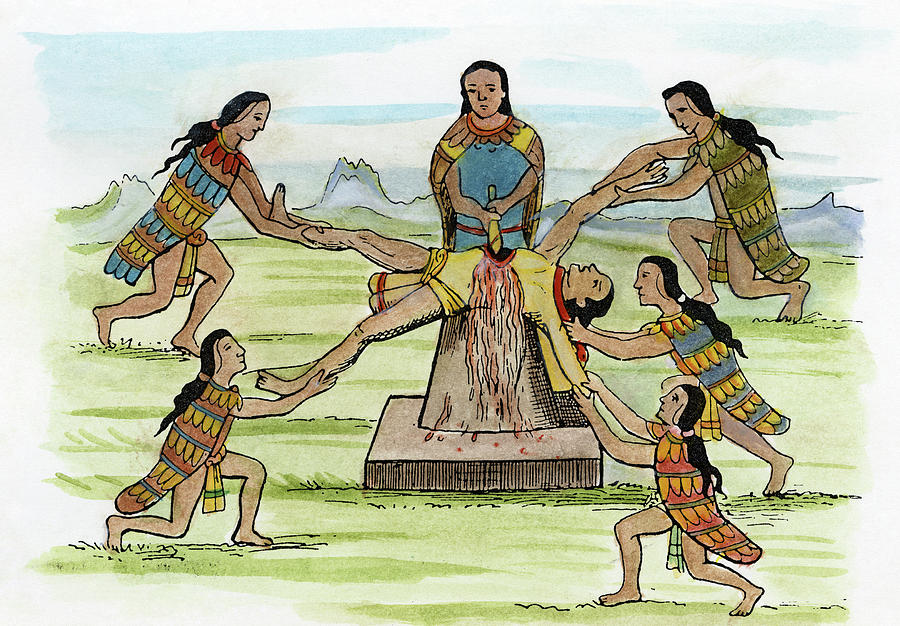
    One cannot objectively and universally define the common good, even vaguely so. As such, it is a term that superficially sounds good, while its meaning can be manipulated in a probably myriad of ways in the interest of whoever wants a bit of the old power. I find few concepts as pernicious and dangerous as the common good, due to the very fact that is sound “right” to so many, and a cursory look at history will find many atrocities justified by it. This is especially true when actions are undertaken now for some common good which will arrive at an unspecified date in the future. Such a vague future achievement is often called upon to excuse use of force today.

    Each human being is subjective. Each has a subjective view of his own good and of the good of society. There is quite rarely a wide consensus on this. How could there be? Some believe you can extrapolate a common good from millions of different subjective views on good, but then again some are often assholes.

    Some of you may stop and wonder at this moment. Pie, you will say, you support ideas of objective morality, although that is also subjective, just like good. I do, but I see a difference between the two. My objective morality, what should be the basis of the law, is just a subset of the entire moral/ethics conundrum and is based on what seems to me a clear fact – that human beings are individual, independent beings. When these beings interact, conflict arises and it needs a way to be resolved, and the actual rules of conflict resolution should be as objective as possible. Because they are not about one person, they are about all people. And for me, something along the lines of the NAP are as good as it gets. This is why I am a libertarian.

    The concept of common good is different. It has more complex moral judgements inside it that go beyond conflict resolution. It has specific goal of outcomes of multiple aspects of life. It imagines a certain world in which people behave a certain way, have access to a certain lifestyle, and do certain things. But when you look at it a little deeper, though you may be inclined not to as it takes time and there’s something rather good on TV – shows are getting crazy good lately, there is no clear notion of what common good might be, and even if you knew, it would be hard to predict if some policy or other would advance this „good”.

    The so-called arrogance of the so-called elites, one of the things populist ideologies often exploit, is that they know better what is good for everybody, which is, obviously, horseshit. Maybe some don’t know what is good for them, whatever this may mean, but it’s their right to decide. One of the most insulting things politicians say of people who do not vote for them is that they vote against own interests, as if, for example, when you are not rich, it is always your interest to get hand-outs from others. Who knows what is best? I sure as hell don’t, probably not for me and certainly not for others, and I like to think I am above average in intelligence and information. How does a bureaucrat – who is most likely not above average intelligence – know better? Because, make no mistake, this is what the common good most often gets down to, government imposed things. Furthermore how can someone be considered incapable of choosing what is good for themselves, but at the same time perfectly capable of selecting the best politician -which also advocates for some definition of good or other?

    This problem with “good” has been amply demonstrated through history, form heretics persecuted by religion, dissidents by politics; commitment or lobotomy in case of many psychological problems. Women were sterilized for the good of themselves or society by moralizing judges in the United States and elsewhere, women and children separated from families and stuck in orphanages and workhouses. People seem to think society evolved and this can no longer happen; or that if they are in charge, this would not happen; and I am supposed to take their word for it, or something. To be honest, I’d rather not take the chance. Remember, just because you want the best doesn’t mean you know what that is. Empathy is good to a point, but the road to hell is paved with good intentions. You may want to help but make things worse.

    From a liberty standpoint, being a serf to the common good, to society, rather than to an individual, is still being a serf. That is what collectivist and people talking about the common good refuse to understand about libertarianism. Self-ownership is, for all intents and purposes, a much more objective measure than common good. Because self-ownership has clear boundaries and a clear definition- own your body as long as you respect the fact that others own theirs.

     “I hold it to be the inalienable right of anybody to go to hell in his own way.” Robert Frost


  • Christianity 101

    John 3:16: For God so loved the world, that he gave his only begotten Son, that whosoever believeth on him should not perish, but have eternal life.

    But … why?

    The core tenet of Christianity from the git-go has been that Christ died to atone for our sins, which satisfies both justice and mercy.

    But … how?

    I have never been quite clear how the torture and murder of a completely innocent man does anything at all for justice or mercy.


    Once upon a time when I was a wee lass, about 8 or so, I was getting ready to be baptized a member of the Church of Jesus Christ of Latter-day Saints. Eight is the age of accountability, when a person knows wrong from right. One thing we do is to make sure our 8-year-olds have a good understanding of the Atonement of Christ. Well, we try. I’m not sure that is possible with every 8-year-old, but it sure worked a treat on me.

    Did I know? Did I understand? Oh, hell by golly, yes, I did. And I didn’t like it. Not one bit. Though I could not articulate it and I wasn’t nearly as willing to be shocking as I am now, I knew exactly what it meant:

    8-year-old me: Every time I sin, Jesus can feel all the pain of his crucifixion again.

    51-year-old me: Every time I sin, I am contributing to the torture and murder of an innocent man.

    Narrator: Then she went to a Southern Baptist private school for 9 years.

    8-year-old me listening to …

    Mormons: We’re all going to one of 3 levels of heaven and the worst one is totally awesome. But you don’t want that; you want the best heaven, so forget those other two. You’re better than that. You don’t want to be with those trashy losers in the lowest of heavens, so you need to work for it. Hard. “Be ye therefore perfect, even as your Father which is in heaven is perfect.” — Matthew 5:48

    Baptists: All you have to do to go to heaven is accept Christ into your heart as your personal savior. How big your mansion is on your street of gold and how many jewels you have in your crown depend upon your works, but you don’t have to work at all if you don’t want to. But if you don’t accept Christ as your personal savior, you’ll burn in an eternal lake of fire. “But what about murderers?” If they say the prayer to be saved, they’re good. “But what about the kids in Africa who never heard of Jesus?” Collateral damage, sorry.

    Yet I have been assured from the cradle by both Mormons and Baptists that God loves me. Yay me. I have the privilege of being loved by a Deity who is so cruel that he set up mutually exclusive commandments: Do not eat of the tree of the knowledge of good and evil and you must also be fruitful and multiply.

    Oh, yeah, I got dunked understanding all this and I followed the logic all the way to its end and it was way too painful to contemplate, so I towed the party lion for years and years and years.

    I hated Baptist theology for leaving all those poor ignorant bastards out in the cold with no mercy, while murderers could say a little prayer and go to heaven.

    I hadn’t yet been able to articulate what I hated about Mormon theology that required perfect behavior (from people whose very purpose is to fail and learn) with no mercy, and the people who didn’t swear, didn’t smoke, didn’t drink, and followed ALL the rules, got to go to the finest of heavens no matter how good in heart they were.

    Mormons: God loves you enough to bless you when you obey his commandments. By the way, here’s a list of the rules. Be perfect and you will get ALL the blessings. Bonus! You won’t have to go to that trashy heaven where all the trashy people are, which might as well be hell.

    Baptists: God loves you no matter what you do, as long as you’re saved. Sorry to all the murder victims out there who won’t see their murderers punished. You won’t care once you’re dead and living in a nicer mansion than your murderer. Sorry to all you folks who never heard of Jesus. We’ll feel sorry for your eternal suffering from above.

    Mormons have no mercy.

    Baptists have no justice.

    Narrator: And the little girl stomped her foot and screamed, “IT’S JUST NOT FAIR!”


    So here we go …

    Over the years I have grown in my faith in the Heavenly Parents [hereinafter referred to as Deity] and their love for us, no matter how many times I fall prey to the “I’m being punished for not following ALL the rules” mindset. I have grown in my faith that the Deity are all powerful, all seeing, and all knowing.

    But there’s the rub. Why would an all-powerful, all-seeing, all-knowing Deity need to send their only begotten son to atone for our sins? Why would an all-powerful, all-seeing, all-knowing Deity need their only begotten son to judge us in the last day to decide our eternal fate?

    I was thirty-something before I could bring myself to ask this question, though it had been simmering in my mind since I was 8. It was a very painful question to approach, even as delicately as I did. It was an even harder question to form into words to myself. And it was hard as hell all get-out to actually say it out loud and explain my reasoning to somebody. Half my literary oeuvre is dedicated to pondering this topic. By the time I asked the question so baldly in a book, it just made me angry.

    This is the question I can’t answer and haven’t been able to get a satisfactory answer from any Christian of any stripe:

    Why would an all-powerful, all-knowing, all-present Deity need an intercessor between them and their children to administer justice or grant mercy?

  • A Small Slice of America

    After being away for over four years, I went on a short trip to Farmingville, New York and Alexandria, Virginia the week I came back to America. I went to the former for a Ringo Starr & His All-Starr Band concert at the Long Island Community Hospital Amphitheater and the latter to check out Old Town and a piece of Virginia I hadn’t seen before. I also managed to spend a bit of time in Manhattan where the Metropolitan Museum of Art had an exhibit with very beautiful looking pistols called “The Art of London Firearms.”

    The first day of the trip was pretty busy. I landed at Long Island MacArthur Airport and a couple hours later, I was on the way to the concert. It was a pleasure to see my favorite living Beatles member in the flesh (my all-time favorite is George Harrison, but I digress) along with Toto’s Steve Lukather, Men at Work’s Colin Hay, Santana’s Gregg Rolie, Average White Band’s Hamish Stuart, David Lee Roth Band’s Gregg Bissonette, Kansas’s Warren Ham, and Mark Rivera. Some songs they played were, “Don’t Pass Me By”, “Black Magic Woman”, “Yellow Submarine”, “Who Can It Be Now?”, and “Hold the Line”. All in all, it was a very pleasant and chill concert and Mr. Starr and his crew were happy and energetic.

    Ringo Starr and His All-Starr Band

    The next day, I went to Manhattan to check out the exhibit at the Metropolitan I mentioned while I was waiting for the night train to Washington D.C. The museum had gone through quite a few changes since the last time I went in 2005, but all-in-all, the place still felt familiar to me. The firearms they had on display in the “The Art of London Firearms” exhibit were mostly pistols that belonged to the Prince of Wales who would later be King George IV. The dueling pistols were quite beautiful and aesthetically pleasing. They were not the most elegant of pistols, but I believe they were a good blend of both practical and luxurious in design. The flintlock pistols on display were mostly designed and crafted by the likes of Durs Egg, John Manton, and Samuel Brunn. After spending some time there, I then made my way to Penn Station to catch the train down south then caught an Uber from D.C. to Alexandria.

    Not a Brit-gun, but still cool
    S&W .44 Double-Action Revolver


    Hallmarked 1787-88
    Flintlock Dueling Pistols of the Prince of Wales, Later King George IV


    Patented in 1818
    Collier Second Model Five-Shot Flintlock Revolver

    For the third and final day of the trip, I spent time exploring the Old Town district of Alexandria. Unfortunately, it was a Monday when I went and as such, a lot of the museums were closed then. However, I was still able to see a few sites and a couple places of historical significance that were still open. My first stop was the Basilica of Saint Mary. It’s the oldest Roman Catholic Church in Virginia, having been founded in 1795. It was also the first time I stepped foot in a church for a few years so it was quite the experience for this lapsed Catholic.

    Plaque For the Basilica

    Ye Olde Catholic Church

    After some prayer and meditation, I made my way to have lunch with my mother at Gadsby’s Tavern. The tavern was built in 1785 and also has a museum where the 1792 expansions were. The dining area of the tavern is the same as it was back in its founding and the food is also based on the food available back then. I had their Braised Hessen Beef which consisted of sweet & sour beef braised with red wine & bacon, rotkraut (red cabbage), and applesauce. To drink was a Belgian witbier (called Optimal Wit) from the local brewery Port City Brewing Company. It was a very nice and smooth beer with a slight citrus taste that paired quite well with the entree.

    After lunch, we were offered a tour of the museum where we learned about what made Gadsby’s special as well as see how the facility offered its dining, entertainment, and accommodations services. Apparently, Gadsby’s had an extraordinarily big 62-ton ice well that allowed the tavern to preserve their harvests and supplies longer than the rest of the competition in the area. They even had enough to sell ice when other local companies ran out of their stock. Another note of the tavern was that some Founding Fathers such as Washington, Adams, Madison, and Jefferson were guests and even held balls there from time to time.

              Das Witbier         Der Sauerbraten und Das Rotkraut


    The Dining Hall         THE ICEBOX

    After these adventures, I then went to the Waterfront Park where I saw the Potomac up close and then the Episcopal Church, Christ Church. It was quite simple-looking in the inside, but it was still a wholesome, interesting experience to be in the place where George Washington and later Robert E. Lee would pray. Finally, I went to the Lyceum which would serve as a hospital for Union troops during the Civil War and would later become a museum of Alexandria history. Also nearby was the Confederate Statue which was dedicated to the fallen Confederate soldiers from Alexandria. A fun fact about the statue is that the direction it’s facing is towards the old battlefields. It was also placed at the intersection of two streets where the Confederate soldiers set out from to get to their trains. A number of the men from the 17th Virginia Infantry are honored on the statue who were mainly from Companies A, E, G, H, and I. So far the statue is still in the same place as it has been since it was dedicated in 1889, but with things nowadays, I can’t be sure how long that will last. Regardless, it was still quite a moment to see the statue and an opportunity to think about all those local boys who would go out and never make it back home from that war.

    Outside of Christ Church                         A Big Boi in the Lyceum

    Inside Christ Church


    The Confederate Statue of Alexandria                     Not-So-Secret Glib Hideout?


    Overall, it was a pleasant albeit short vacation. I only moved back to the States just a few weeks ago, but I left these places more appreciative of how blessed and culturally rich the country is. I hope to have more time to visit Long Island. I also hope to spend more time in Alexandria especially since Mount Vernon is nearby as well as the Alexandria Black History Museum and the Carlyle Club among other places. Now that I’m firmly back in the States, I wish to explore much more of the country as a whole while I can.

  • Death of a Kia

    I didn’t want to talk about it, but it’s part of the journey: my 2016 Kia is destroyed, not my fault, I was in NM when it happened, but. What was supposed to be a turnaround trip turned out to be the wife in the hospital and the son with the keys, and wouldn’t give them back. Next I hear the car was destroyed, as I predicted, and insurance is fucking us, as I predicted.

    San Dimas!

    Why did we stop here? Sleep and gather some things from storage; keyboards! Bass guitar! 

    Bullhead City AZ 

    Vacation, all I ever w, oh nevermind, it’s still hot as… Arizona, so I built a hillbilly smoking area, it works well enough I go into the AC afterwards and get cold.


    I saw this at Smith’s, no one noticed?


    I noticed Smith’s had build your own 6 pack, but I already tried everything they had, so normal beer for now, except,

    a real nice oat ale.

    What the Hell am I doing?

    It appears that my job title may change again. East coast work, which could keep us on the road for another six months, we are getting tired. If we save enough cash, then we finish in AZ, by the river and I work local. 

    More change?

    We have no idea what we are doing now, my job is in jeopardy, which also means I may have no vehicle to drive, well and truly fucked. I made sure to bring my gauges, just in case some HVAC comes my way, til then, spooky time….

  • Sticks and Stones

    There is only so far somebody can go until they piss off the wrong guy…girl…something.  Recently Dave Chappelle made a splash with his new comedy special on Netflix titled, Sticks and Stones.  Not everybody liked it, especially this individual at Vice. In fact this individual goes so far as to suggest you skip the special unless of course you happen to be transphobic and/or a misogynist.  Lets be real, in this case and is probably what this individual thinks is most appropriate.

    This is my review of Chatham Brewery Farmers Daughter Rye IPA.  (H/T Iobot)

    What was the problem with Chappelle’s Netflix special?  Nothing, to be honest I only found three or four parts to the whole hour to make me physically laugh, although I could see the humor in the rest of it (I’m a curmudgeon).  Dave went too far in the opinion of the individual writing for Vice, and while this individual is entitled to this individual’s opinion, I happen to be entitled to my own.  Free speech and butt-fucking? What a country!

    Chapelle’s controversial 2017 Netflix specials, like The Age of Spin: Dave Chappelle Live at the Hollywood Palladium and Equanimity and the Bird Revelation, honed his voice as a comedian wary of progressive criticism. That voice is even sharper in his latest special. At one point in his routine, he says he doesn’t believe Michael Jackson molested young children. He continues by saying that if Jackson did, the children should’ve felt lucky their first time was with the King of Pop, adding, “Do you know how good it must’ve felt to go to school the next day after that shit?” Chappelle also returned to his now-infamous obsession with making fun of trans people, saying, “[trans people] hate my fucking guts and I don’t blame them. […] I can’t stop writing jokes about these niggas.” This time, those jokes included asking the audience how funny it would be if he was actually a Chinese person stuck inside a Black man’s body, which (you guessed it) also included a racist impression of a Chinese person. He also found time to defend fellow controversial comedians Kevin Hartand Louis C.K., painting them as victims of an overzealous callout culture.

    I too have written about Michael Jackson but I did not make light of it the way Dave does in his special.  I found many of the jokes crude but well within what I have come to expect from Dave.  This is the guy who  wrote an entire sketch about a blind black man in the south who believed he was white, donned actual KKK attire, and shouted WHITE POWER on the pilot episode.  This ultimately doomed his show that only lasted two seasons.

    Why?  Because how do you top that?  I was laughing so hard, I was in tears the first time I watched it in my freshman dorm room.

    The individual writing for Vice focuses on one bit.  Dave refers to a movement, the Alphabet People.  Here he compares the entire movement to a car being driven by “G”, because they are the most privileged and therefore best suited to drive the movement to its ultimate destination.  The “L”?  Nobody has a problem with them…except the “G”.  The “B”?  Well…”B” is the fantasy everyone wants in on, isn’t it?

    Then there is the “T”.  The entire movement is held up by “T”, because quite frankly they are farthest deviation from the mean.  If you want to know the punchline, I suggest you find it on Netflix.

    Here is what the individual writing for Vice doesn’t appear to understand.

    Dave Chappelle’s entire brand is Gallows Humor.  This type of humor is healthy, because it allows an outlet for people that find themselves being oppressed, imprisoned, at war, being tortured, or even just at a funeral to seek psychological refuge from what is driving their misery.  Humor is derived from that which is true, and mocking it–it is healthy.  Is it wrong there are people that do not accept the Alphabet People?  Yes.  Is it okay for somebody to identify a particular reason why a certain segment of the Alphabet People and poke fun at why?  Again, yes.

    This is what comedians do.

    Since the individual writing for Vice also spent time on the epilogue after the special where Dave tells an audience a story about transwoman (…that is one of these for those of you confused by the terms) found delight in Dave’s bit about the Alphabet People.  Here the transwoman tells Dave she wished more people would make jokes about ‘T” because it “normalizes” them.  This does make sense to a degree.  A good example of this may be in the character Cpl Maxwell Q. Klinger from M*A*S*H*.  Did he crossdress on purpose as part of a long running gag?  Yes.  In spite of his hating the Army, his job, and doing everything he could to get out of the Army the other characters did make fun of him for wearing a dress but they respected him because he did his job anyway and did it well.  Klinger is a beloved character for that reason, and a man in a dress is fairly normal because the character is funny. The individual writing for Vice does not believe this actually happened–even if a photo of the transwoman was placed in the credits.

    Like anything else controversial, don’t take my word for it or some individual writing for Vice.  Watch it and decide for yourself.

    This beer is also unusual.  It straddles a line between differing styles and ends up with an enjoyable product.  IPA by itself offends a lot of people, but by using rye malts results in something much more balanced, and much more interesting.   I like rye, I don’t like IPA but the combination is good.  Chatham Brewery Farmer’s Daughter Rye IPA:  4.0/5