Category: Right to Repair

  • Guns For The Country Home

    Guns for The Country Home

    Some time back I stumbled across an interesting discussion on the appropriate firearm for the farm or country home, much like the country home my folks maintained for many decades.

    The Old Man was, of course, a farmer for much of his life, and an old school country gentleman.  His attitude towards firearms reflected most of his type and his generation; firearms were tools essential to the maintenance and protection of homestead and crops, in the same order as a chainsaw, a scythe, or a tractor.  They were selected and maintained as such, with strictly utilitarian considerations.  Childhood in the Great Depression and young adulthood during WW2 made most of the Old Man’s generation practically minded people.

    That being the case, the Old Man maintained three firearms on and about the place.  They were a 12-gauge pump shotgun, a .22 rimfire rifle, and a .22 handgun.  The shotgun was his first purchase with his demobilization pay when he returned from the Army in 1946, the .22 rifle was a third anniversary present from my mother in 1950, and the .22 pistol he bought for recreational shooting sometime in the mid-1960s.  I still have all three firearms, and no amount of money could persuade me to part with them, so don’t ask.  And, in what should come as a surprise to no one, these are the three types of guns I think are most useful around your typical country home.

    If You Can Have Only One Gun

    Winchester Model 12 and Stevens 520A.

    Now, on to the country home:  If a family can only maintain one firearm on a country homestead, one would be wise to pick up something along the lines of the Old Man’s first post-war purchase, a simple 12-gauge pump-action shotgun.  The Old Man’s Stevens pump-gun hasn’t been manufactured for many years, although used examples are sometimes available at bargain prices.  The old Stevens 520/620 series are great guns, John Browning designed take-down pump guns with solid steel receivers.  They’re reliable and brutally tough, and if you can find them around, come pretty cheap.

    The Mossberg 500 series or the Remington 870 are likewise solid guns that will give long service; my own pair of Mossbergs, a 12 and a 20, have been functioning flawlessly in the game fields for 35 and 40 years now.  There are plenty of others on the market, but were I equipping an outpost myself, I’d probably go for a Mossberg or a Remington, for the primary reason that parts will be easy to find.

    The advantages of the 12 gauge are many.  Ammo is readily available anywhere and various loads/shot sizes can handle anything from garden pests to turkeys, while a slug will dispatch a deer or even a bear.  Pump guns are solid, reliable and easy to operate.  Most hold five or six rounds in the magazine, which should be enough ammo for most chores.

    I’m a big fan of old shotguns, particularly the pre-64 Winchester Model 12 and the Belgian Browning Auto-5s.  I have a fair stable of those pieces and over time will probably buy more.  But these are collector’s pieces, and while I shoot them and hunt with them, I would not necessarily drag them through mud and bad weather.  For that, a rougher piece is in order – a utility shotgun, suitable for the only gun on a country homestead.

    Even though I will always love my old Brownings and Winchesters, I will always keep the old Mossbergs around as utility shotguns, especially after our move north.  Of course, my attitudes towards firearms are somewhat different than the Old Man’s, and so the Mossbergs will still have plenty of company in the rack.

    I’ve seen some great shooting done with simple 12-gauge pumps, too.  Despite his utilitarian attitude towards shotguns, the Old Man was nevertheless as artist with his old Stevens.  He was known to go 100 straight on the skeet range in his Army days, and he was highly skilled at making a shot charge arrive in the same location as a fleeing pheasant or grouse.  In his early 80s he cut off the tip of his trigger finger in a jointer, and since that time firing a gun with any recoil caused a stab of pain through his shooting hand, but before moving to town he capped his hunting career in a blaze of glory by stalking and killing four wild turkeys with a bolt-action .410, causing our old friend Dave to comment, “if anyone but your Dad told me that, I’d call him a damned liar.”  I was always disappointed by my failure to catch up to Dad on the trap range, although he would have admitted I was better than he with a rifle.

    Which brings us to…

    If You Can Have Only Two Guns

    Mossberg 44US. Not the one I had but one just like it.

    But let’s say you can have two guns around your place.  I’d recommend the second be a .22 rifle.

    Oddly enough, while my gun rack contains several .22LR semi-autos, if you were to keep a .22 rifle in a rural setting, I’d recommend a bolt gun.  Why?  Several reasons:

    • Bolt guns are simple, they generally break down easily and are easy to clean and repair.
    • Even in a .22LR, bolt guns are accurate.  Not that semi-autos can’t be accurate – but bolt guns are generally a hair ahead.
    • Simplicity leads to reliability.  Fewer moving parts means less wear, although any well-maintained firearm should last a lifetime.
    • Some semi-autos, like my own slicked-up Ruger 10/22, can be finicky about ammo.  Bolt guns generally digest any ammo with aplomb, and generally give you the option to run quiet .22 Shorts if you are shooting at close quarters.  A subsonic .22 Short round fired from a rifle isn’t much louder than a finger-snap, and that can come in downright handy.

    The other advantage to a .22LR bolt gun is price.  There are literally millions of inexpensive and yet reliable and accurate .22 bolt guns around.  You don’t need high polish or fancy walnut for accuracy in a .22 (although those things sure are nice).  Anyone who has handled an old Mossberg or Marlin bolt .22 should be able to attest to that.  Back in the day I bought a Mossberg bolt-action .22 with US Government markings for the grand sum of ten dollars, and I could shoot pop-bottle caps off fence posts at 25 yards with it – with iron sights.  That Mossberg today would cost you more than that, even adjusted for inflation, but not all that much more.  In fact, the same gun without the US Government markings, for some reason, will cost you a lot less.

    A lot of the comments above will apply to a lever gun as well, except that .22LR lever guns are generally pricier and more complicated to maintain.

    If You Can Have Only Three Guns

    For your third gun, I’d recommend a medium-to-major power handgun, one you can carry in a belt holster and shoot accurately.  Anything from a 9mm auto to a .44 Magnum will work; it’s far more important that you can handle the sidearm well.  Revolvers, though, are generally simpler, easier to maintain and less fussy about ammo than autos.  Revolvers also have the capability of handling more powerful loads in a reasonably sized piece.  Bear in mind that if you’re in a remote location, you may have to repair the thing yourself.  Some of us are better tinkerers than others.

    With the above in mind, though, take into consideration any possible uses you might be putting that sidearm to – caliber considerations in Georgia may be quite different than those in Alaska.

    Most people find handguns more difficult to handle well than a rifle or shotgun, so be prepared to spend some money on practice ammo.

    Parts Is Parts

    In a rural home, it’s a good idea to keep some parts on hand.  Firing pins, springs, screws and action pins, all good things to keep a supply of.  You’ll also need tools, as gunsmithing tools are somewhat specialized; Brownell’s Basic Gunsmith Tool Kit contains a good assortment of tools, gauges and so on to keep your shooting irons shooting.  Keep a good supply of cleaning solvents and lubricant on hand.

    If your pump shotgun has a barrel that can be swapped out easily, as does the Remington 870 and the Mossberg 500, an extra barrel isn’t a bad idea.  And speaking of barrels, while I’m fond of Briley choke tubes and run them on a lot of my shotguns, an ugly but solid Poly-Choke type collet choke may be a better idea for a country-homestead gun; you can lose choke tubes, but that Poly-Choke is there for keeps.

    Last-Ditch
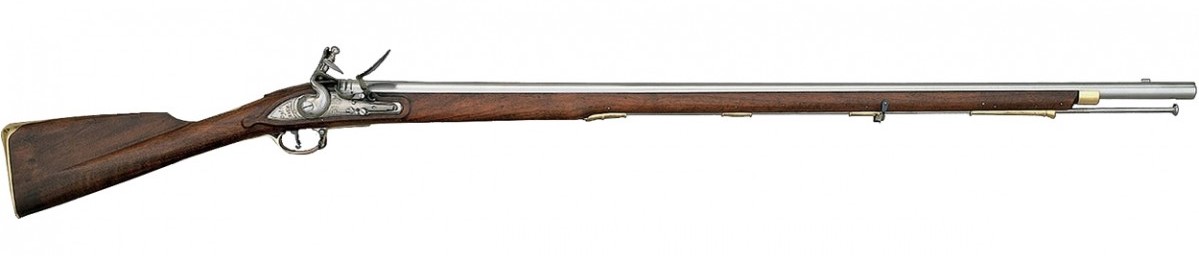
    No, I’m not kidding.

    If “prepping” is your thing, or you’re just very remote and are worried about supplies being hard to get, here’s something to think about:  What would you do if cut off from a supply of ammo?

    The answer may be to scale your technology back some – say, to about 1800.  A smooth bore flintlock musket is versatile, will kill birds with shot or moose with round balls, and if you have bar lead, a mold, flint and a supply of sulfur you can make everything else you’ll need to keep shooting.  Charcoal isn’t hard to come by, and if you have a latrine, you can make saltpeter.  You’ll need a fair amount, as the recipe is generally 75% saltpeter, 15% charcoal and 10% sulfur.

    That’s something to think about, anyway.

    And So…

    A country home requires a lot of tools to keep the place maintained, safe and tidy.  Even if you’re not a hobby shooter or (like me) a collector, a firearm is one of those essential tools.  Whether your immediate need is rabbit stew, pest control, dissuading something big and toothy or something two-legged and belligerent, sometimes a firearm is the only thing that will work.

  • The Basics of Self-Sufficiency: Do-it-Yourself 101 – Appliance Repair

    I interact with people all the time who say “I wouldn’t even know where to start” or “I’m not handy like that” when discussing the topic of do it yourself maintenance and repair. I grew up learning from a dad who was quite mechanically inclined (he just finished doing an engine rebuild on a Range Rover with little more than an air compressor), so the question in my mind isn’t whether I can execute a repair, but whether it’s worth it for me to do it myself. Certainly, there are plenty of tasks that are beyond my ken, such as HVAC work, transmission work, and anything that involves heights. However, for the more mundane tasks, I find myself weighing a few hours of my weekend against the hundreds or thousands of dollars it would cost to have a technician out to the house. I also know that I won’t take shortcuts (okay, I’ll take some shortcuts, but I’ll have nobody to blame but myself when they bite me in the ass).

    Anyway, we often discuss here on glibs that self-sufficiency is positively correlated to not seeing government as a parent and provider. A big part of self-sufficiency is not having to run to an expensive specialist every time something stops working as expected. DIY is libertarian. I’ve seen a few people with the “don’t know where to start” mentality around here, so I thought I’d give a very basic overview of how to execute an appliance repair.

    NOTE: I’m a lawyer by trade, which means that I’m by no means an expert when it comes to mechanical things. There are some experts here on glibs, and they’ll probably correct me wherever I go wrong or inefficient. Read this as an amateur giving advice to complete newbies in the DIY space.

    How to Diagnose and Fix a Broken Dryer

    Our dryer isn’t really old, but it has been acting funny on and off for a while. It’ll work fine for a few weeks, and then all of a sudden one of the loads of laundry won’t dry. This morning, my wife came up from the basement and told me that it had been 2 runs in a row that didn’t properly dry. *Sigh* looks like I’ll be spending the rest of the day in the basement.

    The first thing that went through my mind was a vague intuition that dryers are usually not worth repairing if a part goes bad, so I was bracing for possibly having to buy a new dryer today. However, instead of getting the metaphorical checkbook out and writing a metaphorical check for $700, I wanted to investigate the situation first. The one replacement part that is usually cheap enough on a dryer to be worth replacing is the heating coil, so maybe I got lucky and can replace the heating coil for $75 or so.

    Anyway, I pushed all of that out of my mind and approached the situation as methodically as possible. In some ways, engineering school helped with this process. There are only so many times that you can fall on your face after making assumptions before you stop making such grand assumptions. You know what they say about people who make assumptions… they get visited by STEVE SMITH, and by visited mean . . .

    So, where do you start when you have to make a DIY repair? There’s a bit of a process to follow:

    1) Investigate

    2) Research

    3) Diagnose

    4) Plan the Repair

    5) Assemble the tools and materials

    6) Execute the repair

    7) Deal with any setbacks

    8) Verify the fix

    Investigate

    What the hell is going on? My dryer isn’t drying, so something must be going on to keep the clothes from getting dry. If I didn’t have a basic understanding of how a dryer worked, I’d go familiarize myself with the components in order to understand what’s going wrong. However, I understand enough about the operation of a dryer to begin my investigation without preliminary research.

    Essentially, a dryer has 4 components. The clothes go into a rotating drum. A heating coil warms the air in the drum. A blower causes warm, dry air to enter the drum and expels humid air out the exhaust. A control panel controls the operation of all of these components using various sensors throughout the dryer.

    What’s my first step of investigation? Why not just run the thing for 30 seconds? This will actually tell me a lot about what’s working and what isn’t in the dryer. I hit the start button and the dryer starts going. I can hear the drum turning due to the tell tale thumps of the dryer balls tumbling. It’s likely not a catastrophic control panel issue given that the dryer isn’t going haywire or unresponsive when I use the control buttons. I stop the dryer and can feel the heat inside the drum from the heating coil. However, when I open the door, I can also detect a whole lot of humidity in the drum, much more than it should have if operating properly.

    I’m pretty sure at this point that there’s some issue with the blower. Either it has stopped functioning, or there is a clog of lint somewhere in the system that is keeping the air from properly flowing. To confirm this, I started the dryer up again and went out to the exhaust vent outside of my house. Sure enough, there was no airflow out of the dryer.

    Now, before moving on to the next phase, I do a few quick diagnostics/repairs attempts to see if this may be a quick afternoon for me. Maybe there’s a lint clog somewhere. I pull off the dryer vent hose and start the dryer again. No dice! No air out the vent port means it isn’t something as easy as cleaning out the vent hose.

    I then take the back off of the dryer by loosening a few screws. Maybe it’ll be something obvious and easy, such as a lint clog in the dryer somewhere that I can just pull out. Nope! Not only isn’t there anything obviously wrong, but none of the components are particularly accessible from the back. I really hope that the front is removable. If it is, it’s going to be more complicated than the back, because there is no exposed hardware on the front of the machine.

    Research

    Okay, I now have a basic problem statement. Something is wrong with the blower of the dryer, and I need to get into the front of the dryer to figure out what, specifically, is wrong.

    First thing I need? Something to begin my search with.

    Model No.

    The easiest place to start is a model number for the appliance. You may be able to find some very useful information about the specific quirks of your appliance based on the model number. Sometimes, you don’t get very much information at all and you have to use trial and error in the diagnosis phase. This is where having an understanding of how the appliance works is helpful. Thankfully, I found a trove of info online. First, I found the service manual for the dryer, which, among other things, has instructions for opening up the front of the dryer. Second, I found a technical bulletin for a manufacturing defect with the blower.


    Technical Bulletin

    I’ve done this sort of thing enough times to know that I’m probably not lucky enough to have specifically tailored instructions for repairing the exact issue with my dryer, but I know what to look for, just in case this is the issue. NOTE: I printed the document in B&W, but the original is in color, and is much easier to see than the images in the printout.

    Now I feel that I have enough information to start the project.

    Diagnose

    To summarize, I know that there is an issue relating to the blower on the dryer, and I know that there is a previously known manufacturing defect with the blower pulley. (The blower is connected to a central motor that runs both the blower and the drum using a belt and pulley system)

    After reading the service manual, I know that there are a pair of hidden clips that secure the top of the dryer to the front of the dryer. I also know that the front door needs to be open, or else the top won’t come off.  The service manual recommends using a putty knife to disengage the clips and rotate the top up and out of the way.

    This is a good segue into the issue of tools. Most of the difference between a painful repair experience and a tolerable repair experience is using the correct tools. Usually, for repair and maintenance, a good set of screwdrivers (phillips and flathead), a comprehensive ratchet and socket set (with extenders and adapters), and a set of adjustable wrenches will get you most of the way. A utility knife is also quite utilitarian. . .  After a few years of DIY projects, you will begin accumulating the less universal tools. Someday, you may even complete a project without having to buy a new tool!! Just kidding, that never happens.

    Anyway, I don’t actually have a putty knife to disengage the clips, but I do have some putty wedges, which are essentially the same thing.

    Sometimes, you can improvise and get away with it. Thankfully, no putty knife needed. The clips were exactly where the manual stated, and with a bit of finagling, I was able to get the top to pop up. A couple of hex screws (I used the ratchet and an appropriately sized socket) later, and I had the front disconnected from the rest of the dryer. There was an electrical connector for the door open sensor that I tried to disconnect since it was attached to both the front and the frame of the dryer, but it had enough slack that I was able to just set the front aside without disconnecting it. Again, sometimes you can use discretion and get away with it. I’d much rather deal with the front being tethered than deal with a broken wire coupler.

    Now, after spending probably 30 minutes investigating and researching, the diagnosis phase took all of about 10 seconds. If you look in the bottom right of the dryer in the above image, you can see something that isn’t in the bottom left of the dryer.

    Right there! That hexagon looks awfully familiar! In fact, it’s shown in the technical bulletin. It’s the blower pulley, and it certainly shouldn’t be sitting in the corner of the dryer like that. Hopefully it just went loose instead of snapping off the blower bolt. The only issue is that there’s a piece of ductwork blocking my view of the top of the blower. Four hex screws later, and off comes the ductwork. The left image shows the removed ductwork. The right image shows the exposed blower with the blower intake facing us.


    One quick peek, and I’m satisfied that we’re just dealing with a pulley that got loose and fell off. The blower bolt looks fine:

    The blower belt also looks fine:

    Plan the Repair

    Thankfully, due to the technical bulletin, the repair is planned for me. It says to put blue threadlocker on the blower bolt and then use a 1 1/8″ wrench and a 1/2″ square socket to thread the blower pulley onto the blower bolt. We’ll talk more about this in a minute, but I’ll go ahead and say that I didn’t have a 1 1/8″ wrench, and my 1/2″ ratchet didn’t fit the contours of the blower quite right. I also was out of blue threadlocker.

    Assemble the Tools and Materials

    Given that I (or rather, Maytag) planned the repair, I know that I need some blue threadlocker, a 1 1/8″ wrench, and a 3/8″ to 1/2″ adapter for my 3/8″ ratchet.

    Let me try to explain why I need the 3/8″ to 1/2″ adapter. The entire blower spins freely, it’s just a fan on a ball bearing. The pulley and belt cause it to spin, creating airflow. In order to tighten the pulley onto the blower bolt, you have to somehow stop the blower fan from spinning. In order to help with that, the bottom face of the fan has a 1/2″ square hole in the center that fits the square bit of a 1/2″ ratchet. Then, as you tighten the pulley, the fan will rotate only as far as the ratchet can move in the blower housing, which is only an inch or two. Then, once the ratchet is jammed into the side of the blower housing, you can actually make progress on tightening the pulley onto the bolt.

    The problem is that I tried to put the 1/2″ ratchet into the square hole, and I couldn’t do it. The design of the blower housing meant that the butt of the ratchet hit the floor before the bit nested into the square hole. I have a few extenders for the ratchet, but they were all too long to fit into the blower housing. This was a goldilocks situation. I needed something that extended the ratchet just the right length. In my opinion, I was more likely to get an adapter that was the right length rather than an extender. I also have a 3/8″ ratchet, so I just needed to find a 3/8″ to 1/2″ adapter that wasn’t 3″ long.

    This was probably the most complicated part of the whole project. I knew that I wasn’t going to find an extender that was short enough, so I had to improvise. I went to Lowes hoping that a 3/8″ to 1/2″ adapter existed, and it wasn’t much of a leap of faith. 3/8″ and 1/2″ are the common ratchet sizes, and I knew that 1/2″ to 3/8″ existed, so it seems to follow that 3/8″ to 1/2″ probably exists, too.

    I ended up getting a set of 3 adjustable wrenches and a set of 3 adapters that included a 3/8″ to 1/2″ adapter, as well as the blue threadlocker. All in, I paid $28. Probably could’ve cut the cost in half if I stuck to what I needed rather than what may be useful in the future.

    Execute the Repair

    At this point, I’ve put about an hour into the project, and I’ve only managed to make a mess. However, I have a plan and I have everything I need.

    First, I put threadlocker on the bolt. I put a rubber glove on and just used my finger to spread the threadlocker evenly on the bolt. Threadlocker is a liquid somewhat similar to superglue (I’m sure the chem glibs can explain exactly what it is). It gets in the threads and hardens, “locking” the threads into place and reducing the likelihood of the pulley coming off of the bolt again. You can see in the below photo that it’s literally blue.

    Then I inserted the adapter and the ratchet into the blower intake and seated them into the socket in the blower fan. Finally, I started hand threading the pulley onto the bolt.

    Dealing with Setbacks

    First I tried with the belt on, but it was too tight, so I took the belt off, hoping that I could put it on after the fact. I also had trouble getting the pulley to “catch” on the bolt. Turns out the bolt was reverse threaded (you have to turn it counterclockwise to tighten instead of clockwise). 30 seconds later, and I had the ratchet set up to go the other direction, and I had the pulley threading onto the bolt.

    It took about 5 minutes to thread the pulley onto the bolt because the clearance was a bit tight for the adjustable wrench, but I had 10 minutes until the threadlocker set up, so I wasn’t worried. Once I tightened down the pulley, I wrapped the belt around the blower pulley and began the process of getting it onto the motor pulley. Thankfully it wasn’t super tight, so I was able to rotate the motor until the belt seated properly. If you can’t tell, a lot of this is “I know what the result should be and I’m gonna try a bunch of crap until I attain the result”. You can always escalate the amount of force you use to accomplish some task, but with the increase in force comes an increased risk of breaking something. That’s why it’s good to go incrementally. It’s often frustrating, but it’s much less frustrating that causing more damage because you were impatient.


    Verify the Fix

    I gave the threadlocker another 30 minutes to fully set before I fired up the dryer and confirmed that the blower was working again.

    Then, I began the process of reassembling the dryer.

    It’s a bit blurry, but I kept things organized as I disassembled so that I could easily reassemble. The piles of screws each correspond to a component, and going from right to left is the order of reassembly. This keeps you from using the wrong fastener in the wrong component, which can cause a nightmare if you damage the component or the fastener. Sometimes the component may have many different sized fasteners. In that case, I usually like to set the fasteners out in roughly the same position as they are when attached to the component. The top left screw goes in the top left corner of the storage area, etc.

    Finally, with everything back together, I put the dryer back and plugged in the vent and the power cord. I hit the “go” button one last time to confirm that I didn’t screw anything up during assembly, and that was it! After 1.5 hours and $28 of investment, I was able to avoid a $350 service call from the friendly neighborhood Maytag repairman.

    There are some things that you pick up as you go, and there are some things that require trial and error, but DIY is, at its most basic, the application of this process in a variety of contexts. It should be apparent that you can modify the process for construction and maintenance instead of repair, but you don’t need much more than a basic toolset and enough patience to navigate the inevitable hurdles you encounter as a DIYer.