Category: History

  • Chapter 13 – Defense Delay and Praying for a Stay

    I sent out the judge’s ruling in Corporal Stonewall’s case to a list of people the same night the judge issued it. I was in despair. Now what would I do?

    Major Tom “Buzz” Rempfer, USAFR, was an Air Force Academy graduate, former F-16 pilot, then A-10 pilot, and flew for one of the major airlines in his day job. He was the poster boy image of an Air Force pilot. He also had been appointed by his Reserve Squadron Commander to a “Tiger Team” to investigate some of the “rumors” that were going around about the Anthrax Vaccine. His Team’s investigation would get him thrown out of his unit and publicly branded a coward by his CO. Tom and Major Russ Dingle, another member of the Tiger Team, were on the leading edge of the anthrax program’s problems. The “rumors” about which their CO was concerned began with the first Reserve squadron to receive the vaccine, based in Dover, Delaware. Most of the Reserve Air Force pilots who got the vaccine were also airline pilots in their day jobs. Thus, when some pilots started having adverse reactions, it meant they also lost their flight status in their civilian jobs because they were medially grounded. Colonel John Richardson, USAFR, was involved early on, as were Major Sonnie Bates’ attorneys, Lou Michels and Bruce Smith.

    Someone in that group mentioned the name of an attorney in California who was filing an extraordinary writ in an anthrax refusal case. The writ asked the intermediate appellate court, the Navy-Marine Corps Court of Criminal Appeals (NMCCA), to find that the judge had erred by ruling that the order to take the vaccine was not just lawful, but unquestionably lawful. California was seventeen hours behind Okinawa.

    I looked at my watch. I was on the phone at 12:30 am, or 0030 military time, 9:30 PST.


    On August 9, 2000, I made the same arguments I had made in Jason Stonewall’s case in David Ponder’s case. It was even more surreal because the judge had already ruled in Jason’s case and we both knew it. I tried my best to pretend that we both didn’t already know the outcome, but what was the point? It was the same judge. What were the odds he was going to arrive at a different conclusion in David Ponder’s case? I gave it my best effort, but most of my energy was being spent working on the extraordinary writ appealing the judge’s rulings on our motions in Corporal Stonewall’s case.

    I pounded the table, addressed his four findings specifically, probably even stepped over the line in calling his logic “ridiculous” that one could not plead a federal law in defense at a court-martial. I was heated and I wouldn’t have cared if he threw me in jail for contempt. We finished at 3:25 p.m. Wednesday afternoon.

    At 4:00 p.m. I was right back in court on Jason Stonewall’s case. We set dates for our next session of court, which would be the trial. We would have to listen to Stonewall’s legal officer say that he gave the order, it wasn’t followed, and then case over. Time was running out on us.


    On August 18, I got tricked, bamboozled, swindled, hornswoggled, whatever name you can use to describe being duped. It really happened sooner, right after our prior session of court, but the trap wasn’t sprung until the 18th. I walked right into it.

    The prosecutor had asked me a few days after our oral arguments in Ponder’s case if we could have a “quick” session of court in order to take the testimony of the officer who had actually given David the order to take the shot. The officer had flown in from the mainland or Korea and was there any reason we couldn’t preserve his testimony now while he was here? I had just come off of the rifle range a day early and the request seemed fairly benign. After all, it was a Friday afternoon at 1:30, what could happen? The prosecutor had asked me if I would mind letting him proceed with his witness and then he wouldn’t oppose a continuance request by defense. It seemed reasonable to me and the collegial thing to do was accommodate the request. On such minor accommodations do the courts continue to function and without which they simply would not.

    By then, I had already filed my extraordinary writ with the appellate court, which was ‘extraordinarily’ rough because of the time constraints, but it was filed with the court. I was also worried, but optimistic by then. NMCCA had issued a stay in the case of Ocean T. Rose, another Marine who had refused the vaccine in California. Rose’s case had proceeded a little ahead of our cases, but they were all essentially mirror image cases. The stay meant the court-martial below was stopped while the accused got a hearing in front of the appellate court on the judge’s denial of his motions. I was in steady contact with his counsel about potentially joining our cases for purposes of the stay. I figured the stay would issue within a week, maybe two. Sure, Chris we’ll take the government witness’ testimony, continue the case, and then boom! I’ll get my stay. I had even come out of the funk of depression I had been mired in for weeks.

    Imagine my surprise when the prosecutor stood up in court and objected to my continuance. When I stared over at him, less than two feet away, my eyes bored into him.  He wouldn’t look at me and that was probably wise on his part. A lifetime of playing hockey did not make me forget being wronged or improve the gentlemanly disposition I was supposed to display in court. I felt like I had just gotten a proverbial slash on the back of the legs. I was ready to drop the gloves and punch his teeth down his throat on the spot.

    “Sir, an extraordinary writ is currently pending before NMCCA,” I began in response to the Judge’s question about why I wanted a continuance. “It has been served on that Court. In light of that Court’s issuance of a stay in the case of United States versus Rose, we believe there are good grounds to request a continuance, especially where there have been no continuances requested by defense up to this point. This would be our first and it’s not an undue burden on the government to ask for one. Finally, sir, we are willing to stipulate to the government witness’ testimony, or allow that witness to be heard and then have the case continued, or we could even depose the witness.  Additionally, sir, you haven’t even officially ruled in this case on the record. Normally, the rules for appellate procedure allow the defense twenty days to appeal an adverse ruling.”

    Judge Stone seemed to think for a moment.

    “Have you made a forum election in this case?”  I wondered what that had to with anything and I went through my own mental checklist.

    “No, sir, we have not,” I answered evenly. Already the wheels were turning in my head. I had ridden an emotional roller-caster in this case, into hopelessness after the Judge’s ruling on our motions and back out with the Rose stay. I was not going to plummet back down again. Worst of all, I had violated my own rules, and I had given David Ponder – and his wife – my solemn word that he would not be going to jail tonight. I should have been tipped off when he told me that the command had him inventory his gear and was acting like he was. I should have put it all together then, but I hadn’t.

    “I am going to need a moment to reflect upon your proposal and the government’s opposition.” The judge sat back, pensive.

    “Sir,” the prosecutor began, while I fantasized of having a hockey stick in my hands, “the defense has just raised an issue. If you haven’t ruled yet, then what are they appealing at this point –” I was on my feet instantly.

    “Let’s talk about that for a moment,” the judge said. He turned to me. “Did you receive my electronic mail with regards to my anticipated ruling?”

    “Yes, sir, and that was the basis for sending the writ up to NMCCA.”

    The judge sat for a moment longer.

    “I’ll tell you what. What I am going to do is put my ruling on the record in a minute and then we’ll take up the matter of what, if anything we’re going to do today.  My current inclination is to proceed through arraignment and the taking of the government’s evidence and possibly ask you for evidence. Is that fair enough?”

    “Yes, sir,” I replied warily.

    “This court stands in recess.” I started to leave the courtroom, but the Judge indicated he would be right back and motioned for us to stay. He exited out his side door.  I stared at the prosecutor. He still wouldn’t look in my direction.

    The judge came right back in and hopped into his chair.

    He read through the identical findings he had made in Stonewall’s case on the motions. It still made my stomach sink to hear it in open court.

    “Now, at this point I’ll take the accused’s forum election.” I had a bad feeling about this.

    “Sir, if we could, we’d like to get a ruling on our request for a continuance before the accused elects his forum.” I no longer cared what the judge thought. I was completely out of pretense. If he didn’t grant our continuance, I was going to tell David to elect a jury with enlisted members as his forum. If the trial counsel was going to lie to me in order to get me into court, I was more than willing to go back on an email I had sent that I anticipated we would elect judge alone as our forum. Fuck ‘em both. The gloves were now off.

    “Well, you’ll have to give me a better reason than that… Or provide me with some law.” The judge looked at me and I knew he had every intention of finishing this case today. I had no lawyerly pretense left in me.

    “Sir, if this court does not grant a continuance, that means that if the accused elected judge alone as his forum, we could proceed through the entire case today. The government has one witness. In all likelihood, there is no question about whether or not the order was given. It is quite possible then that this case could conclude with an adverse finding against the accused with a writ pending before NMCCA where a stay is likely to issue. Sir, in the Rose case, the writ was served on NMCCA on 4 August and the stay was issued three days later on 7 August. We served our writ on the court on Wednesday afternoon, eastern standard time. That means tonight it will have been two days. I start a contested trial on Monday in another case. What harm is there to the government’s case to grant a six day continuance? If the stay doesn’t issue in that time, then we go forward.  This is a miniscule request, sir. If the judge denies that continuance request, then the accused will elect enlisted members in anticipation that the stay will be granted. We will need time to get the members’ questionnaires, prepare voir dire, et cetera. So, quite frankly, we’re using the procedure to give us the time we need for a stay to issue.  Straight up, that’s what we’re going to do.” I didn’t know if I had just violated a half dozen rules in the code of professional conduct or the JAG Instruction and at that point I didn’t care.

    The judge paused. He wasn’t angry, but he certainly didn’t seem too pleased.

    “I appreciate your candor, counsel. Nevertheless, I would imagine it’s an improper reason. Actually,” he paused for a moment, “there is no improper reason. If the accused wishes to be tried by members, that is a perfectly fine selection as far as the court is concerned. I do appreciate your candor. I hate to put the accused in a bind of forcing him to choose trial by members solely to for the purpose of getting delay in the case.”

    “Do you have anything?” he turned to the prosecutor.

    “Basically, sir, they’re threatening members if they don’t get their continuance because their sole purpose of requesting members is for a delay tactic.” If I had accomplished little else, I had gotten the prosecutor pissed and that alone made me feel better. “And we believe that to be improper. However, that’s within the discretion of the court.”

    “You know as well as I do that defense may and has every right to select trial by members. Would you like a few moments?”

    “Yes, sir, we’d like a brief recess.” The prosecutor stormed out of the courtroom.  I turned to David Ponder, who really looked nervous now, the first time I had seen him visibly shaken in the entire case. It had come home to him; he could be going to trial and likely jail in no time at all. He turned to me.

    “I’m not going to the brig tonight am I, sir?” I leaned over and looked at the back of the courtroom, out the door where Captain Kolomjec had gone.

    “Not tonight,” I whispered back. I said it with a confidence that I didn’t really feel. I had never promised a client anything, but overcome by my own confidence and trusting in the prosecutor’s promise, I had given David and his wife Jennifer my word that he was not going to the brig that night because there would be no trial.

    When Kolomjec returned, the judge allowed us to argue on why a continuance should be granted. I didn’t want to have David elect members, but I was willing to try anything at that moment. David’s freedom, Jason Stonewall’s, PFC Arroyo’s, everything hinged on a stay being issued.

    After we argued, the judge denied the continuance, despite the judicial mandate that continuances should be granted liberally. Worse yet, because I was starting a contested general court-martial in an officer case on that following Monday, the judge ordered that we would start the trial tomorrow, on a Saturday morning. I noted my objection three times, but we were sunk. If the writ didn’t come by the end of the work day east coast time, David Ponder would be going to the Brig the next day.


  • Gold Standards III – The Smith & Wesson Triple Lock

    The Perfect Double-Action Revolver

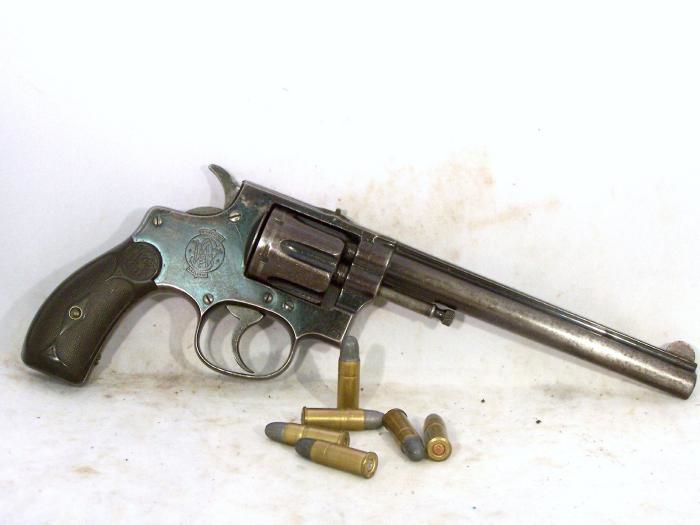
    A very fine Triple Lock.

    Resolved:  The Smith & Wesson .44 Hand Ejector 1st Model “New Century,” otherwise known as the “Triple Lock” is the standard by which all double-action revolvers must be judged.  Now that that’s established, let’s take a closer look at this scion of modern double-action sixguns, how it came to be, who used it, who made it famous, how it changed the way shooters looked at sixguns and what they expected from them; and not least, let’s take a closer look at why it remains today perhaps the most significant double-action revolver ever made.

    The Forerunners

    First, we must cast our optics back to the year 1889.  During and since the War of the Northern Aggression, the folks at Colt had dominated the military sidearm market, leaving Smith & Wesson to fend off the civilian trade.  Their offerings were all variations of a kind; top-break revolvers that were fast to reload but had a significant weakness in their hinged frames.

    The first, a .32 Hand Ejector.

    But in 1889, Colt introduced something new.  This (as we saw in the History of Sixguns series) was the Colt Model 1889, the first production double-action revolver with a solid frame and a swing-out cylinder.  Colt quickly followed this up with the M1892 Army and Navy and the excellent, big, tough Colt New Service, which was available in heavy revolver rounds like the .44WCF and .45 Colt.

    Smith & Wesson rose to the challenge, but their first swing-out double-action was a pipsqueak; in 1896 they introduced the .32 Hand Ejector in .32 Long, and in 1905 they followed up with the 1905 Hand Ejector in .38 Special.  This last gun was to give rise to the K frame revolvers and the near-immortal Model 10, but that’s not the gun we’re here to discuss.

    It was in 1908 that Smith & Wesson hit the home run.

    The New .44

    It’s not often that a gun manufacturer comes up with the perfect blending of gun and cartridge.  Winchester did it with the .30WCF and the M1894 lever gun.  Colt and John Browning did it with the M1911 and the .45 ACP.  And Smith & Wesson did it with the Triple Lock and the .44 Special.

    A 1905 Hand Ejector, in .38 caliber

    The .44 Hand Ejector First Model’s designers did more than just scale up Smith & Wesson’s smaller .32 and .38 revolvers.  The new gun retained the swing-out cylinder, but added the feature that gave the gun its nickname; in addition to the lockup at the cylinder face and the end of the ejector rod, taken from the earlier Smiths, the new gun added a locking lug on the crane that locked into a recess in the frame.

    This was the first of Smith & Wesson’s big-frame revolvers.  This frame, which would become known as the N frame, would go on to yield such famous pieces as George Patton’s Registered Magnum and Harry Callahan’s Model 29, but the Triple Lock was the first.

    This combination of three locking features – the Triple Lock – yielded a revolver that was strong enough for the new load, which was took the old .44 Russian case that Smith & Wesson had chambered in the break-top Schofield revolvers, and lengthened it, adding powder capacity.  The first loads used 26 grains of black powder and a 246-grain round nose lead bullet, but in these early years hand-loaders were already experimenting.  New bullets and newfangled smokeless powders were becoming available, new power levels were being achieved, and the big, tough new Smith made a perfect test bed.

    The First Model guns were expensive.  The Triple-Lock required a lot of careful hand-fitting and tuning to make it lock up properly and maintain cylinder timing, but when well-set up it was utterly reliable with almost any ammunition.  And the Triple Lock is a joy to handle; smooth, with a long but glassy double action pull and a crisp single-action trigger.  Over the years I’ve had the opportunity to handle and shoot two .44 Special Triple Locks, and I’ve been watching for the opportunity to add one to my own collection for some time.

    Elmer Keith and the .44 Special

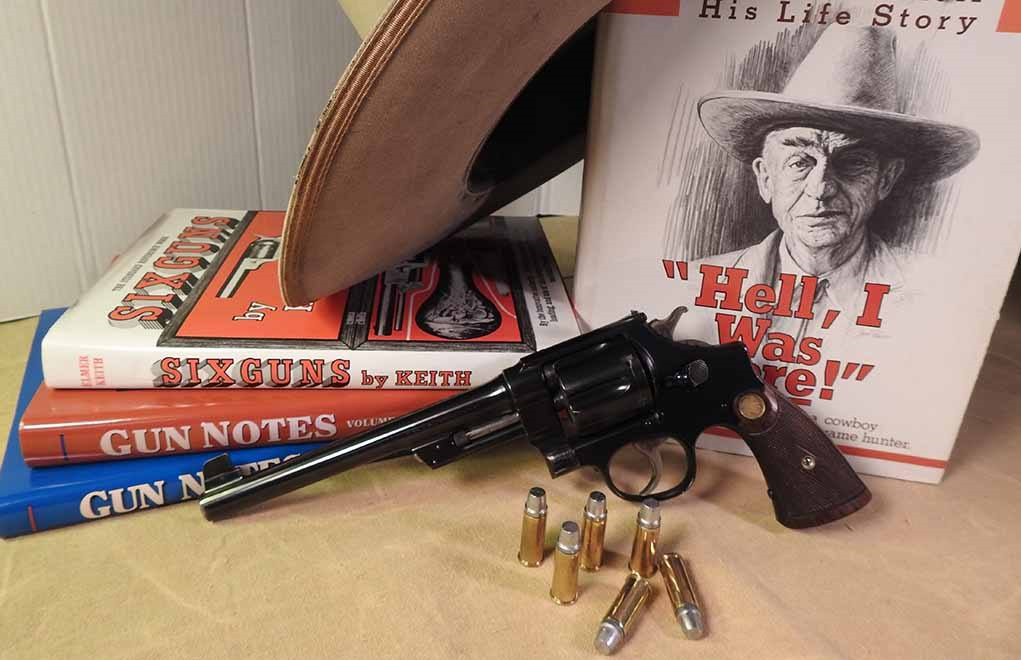
    One of Keith’s Triple Locks, along with some of his other works.

    As much as any of Smith & Wesson’s marketing people, it was a Montana cowboy, hunter, guntwist and adventurer named Elmer Keith that was responsible for the fame of the new revolver and cartridge.

    Keith had cut his teeth on single-action sixguns and always remained fond of the Colt Single Action Army and the .45 Colt round, but he was also quick to see the advantages of the big new Smith and its swing-out cylinder.  A committed big-bore fan, Keith liked to stoke his sixgun handloads up plenty strong, and the big-framed Smith was plenty tough enough for the hot loads he cooked up.

    In his benchmark work Sixguns, Keith wrote of the Triple Lock and its cartridge:

    Daniel B. Wesson, after fifty-two years of distinguished service, passed away in 1906. In 1907 Smith & Wesson brought out their Triple Lock, perhaps the finest revolver ever manufactured anywhere, at any time. Today no example of finer revolver making is to be had. The rear end of the barrel and the cylinder steel of the old triple lock are not as strong as in the present 1950 model Target S&W. .44 calibers or the .357 S&W. Magnum, but the old New Century was, and still is, one fine gun in any company.

    They designed the .44 Special cartridge for this arm with 26 grains of black powder, instead of the 23 used in the .44 Russian cartridge. The .44 Special is simply a longer version of the .44 Russian and no more accurate sixgun load exists.[i]

    The Triple Lock mechanism.

    Keith experimented extensively with heavy loads for the .44 Special in both Triple Locks and the later N-frame Smith & Wesson 1950 Target revolvers.  He pressured friends at Remington and Smith & Wesson to legitimize his efforts until, in 1955, Smith & Wesson introduced an offspring of the Triple Lock that would become the Model 29.  While Bill Ruger had beat Smith & Wesson to the punch by a few months, making the single-action Ruger Blackhawk the first production .44 Magnum, Smith & Wesson’s Model 29 caught on quickly, not least of which was because of Elmer Keith’s enthusiastic advocacy – and thus, the Triple Lock’s legacy lived on.

    The Triple Lock itself, however, was gone by this time.  The gun, as we noted, was expensive to make.  In 1915, after only seven years of production, the revolver was redesigned.  The Second Model did away with the third locking lug and the ejector shroud, making the gun cheaper to build and sell, and the Triple Lock production ended with a total of only 15,376 copies built.

    The N Frame Revolvers

    The true legacy of the Triple Lock, of course, is in its descendants, those being all the various N-frame sixguns that Smith & Wesson has produced and continues to produce to this day.  The third locking lug has not been seen since the original .44 Hand Ejector 1st Model New Century, but the N-frame remains perfect for heavy sixgun loads; a big, beefy steel frame with a strong topstrap, stout crane and thick sidewalls, more than capable for hot handloads in the .44 Special and .45 Colt, not to mention the .44 Magnum.

    The CCW market has driven handgun producers to an ever-increasing diversity of small, light concealable pieces, mostly semi-autos; I own a few such and favor the Glock 36 for everyday carry.  But there will always be a place for a heavy holster sixgun for serious work in forest and field, and the N-frame guns are admirably suited for just that.

    As I have described here before on several occasions, my own favorite holster iron for outdoor work is a grandchild of the Triple Lock; mine is a 1970s-vintage Smith & Wesson 25-5 in .45 Colt, heavy but not too heavy to carry all day without complaint, and plenty tough enough for the hot .45 Colt loads I push through it.

    The Triple Lock’s children and grandchildren are even tougher, mostly due to greatly improved machining techniques and metallurgy, but the Triple Lock remains, as Keith pointed out, a fine gun in any company.

    Today

    The big N-frame Smith & Wessons are still made.  The big sixguns are no longer offered new in the .44 Special but, of course, the .44 Magnum is still available.

    I confess, though, to being a little disappointed in the new Smith & Wessons.  In 2000, Smith & Wesson added to all their revolvers an internal safety lock actuated by a key via an aperture above the cylinder lock slide; this bit of lawyerly pettifoggery has a bad reputation for failing at the wrong moment.  Triggers are heavier than on older guns, although Smith & Wesson’s fit and finish remains generally good.

    Happily, the various online auction and sale sites have plenty of older guns for sale.  Triple Locks are scarce and command high prices, but there are enough other, less scarce N-frame guns to satisfy the collecting urges of almost any big-bore sixgunner.

    The Triple Lock was a once-in-a-century sidearm – innovative, well-made, well-fitted, reliable and tough, with a new cartridge that proved to have great potential.  From its initial design descended an entire series of handguns, used by millions in forests, fields, streets and battlefields.  We haven’t seen its like since, which is why the Smith & Wesson .44 Hand Ejector 1st Model “New Century” remains the standard by which all double-action revolvers must be judged.

    [i] Keith, Elmer. Sixguns. Sportsman’s Vintage Press. Kindle Edition.

  • Chapter 12: The DoD “Evolves” on the Anthrax Vaccine

    Mary PENDERGAST (FDA):  As I indicated to you, it was not the type or quantity of information we would have hoped for.

    SHAYS (R-CT): That’s an understatement.

    PENDERGAST: It – it was.  We don’t disagree with you. This was war. This was the first time, and it didn’t work particularly well. We are in full agreement with you on that.

    SHAYS: This isn’t the first time the military has conducted themselves this way. And as long as they know the FDA’s going to be a paper tiger with the military, they will continue to do this. They will continue to basically say, bug off. And . . . as far as I’m concerned, that’s what they’ve said, and that’s what you’ve accepted. . .

    . . . And so we’re going to pursue this with the FDA, because in my judgment, the FDA allowed the military to do what they have to do in time of war, to have gotten a waiver from informed consent. They should have required that the troops technically, not just in spirit, be notified. And they should have made sure that it was being enforced . . . and [it’s] an outrage that it was not kept and data was not kept.

    And the FDA has not, in fact, really overseen this . . . And frankly, if you had said to me, we really blew it, just like the military, I could accept it. But you’re defending it, so now we’re going to pursue it.

    During the hearings on the Nixon impeachment, Senator Howard Baker (R-TN) asked the now famous question: “What did the President know and when did he know it?”[i] This same question is equally applicable to both FDA and DoD officials regarding the anthrax vaccine program. There has been a startling lack of candor and double-speak from both of these government agencies. While some of this could be attributed to normal bureaucrat-ese inside the Beltway, the level to which it has risen with this particular program goes so far beyond the “norm” as to be risible – and imputes far less honorable motives to those involved.

    _______________________________________________________

    In 1985, at the same time that the FDA’s panel was preparing its review on the anthrax vaccine, the Army had conducted its own review and sent out a Request for Proposals (RFP) for a contract to develop a new anthrax vaccine. The purpose of the RFP was to solicit manufacturers for their willingness to enter into a contract to create a new anthrax vaccine and the stated justification for fielding such a vaccine was that “[t]here is an operational requirement to develop a safe and effective product which will protect US troops against exposure from virulent strains of Bacillus anthracis.” This would seem to be a fairly straightforward proposition, but it immediately raises the question: why would the Army need a new vaccine, in light of the existing AVA? The Army RFP explains it quite simply:

    There is no vaccine in current use which will safely and effectively protect military personnel against exposure to this hazardous bacterial agent.[ii]

    In light of later DoD statements already examined and the ongoing program, it seems rather incredible that the Army announced in 1985, when there was only one existing license for anthrax vaccine (as there has been since the AVA was fist developed), that no vaccine in current use was safe or was effective – the two fundamental legal requirements for licensure by the FDA – safety and efficacy.

    The RFP singles out MBPI’s anthrax vaccine, noting that there is “a licensed vaccine against anthrax, which appears to afford some protection from the disease . . . [but]  [t]he vaccine is . . . highly reactogenic, requires multiple boosters to maintain immunity, and may not be protective against all strains of the anthrax bacillus.”[iii] Now, contrast this with statements by Dr. Kathryn Zoon of the Center for Biologics Evaluation and Research (CBER), who claimed in Congressional testimony in 1999 of the same exact vaccine that “to our knowledge . . . the vaccine that we are using protects against all known natural strains of anthrax.”[iv] She is either completely misinformed or lying. Setting that aside for the moment, what is even more troubling – and revealing – about her statement is that Dr. Zoon, a member of the FDA, the agency that is supposed to regulate Biologics, refers to the vaccine as one that “we are using[!]” Dr. Zoon is a senior government official in the Division that is supposed to regulate the safety of vaccines and monitor compliance with Good Manufacturing Practices.

    In this same hearing, Dr. Zoon dismissed the previous Notice of Intent to Revoke (NOIR) letter given to MBPI by her own Agency as if it were a minor matter. When asked directly “what the most serious problems are with the manufacturing of the vaccine and whether the manufacturer is taking steps to remedy those problems” Dr. Zoon replied that “. . . the manufacturer has had a notice of an intent to revoke. There were GMP deficiencies, and the manufacturer is currently engage in remedying those deficiencies.”[v] This is from the head of an agency that has found continuous and repeated cGMP violations, to such an extent that the Agency has called the manufacturing process “not validated,” had issued an NOIR which led to a “voluntary” shutdown of the entire facility just 20 months prior, had found that when the FDA was not notified that “[o]n 6/30/98, the firm installed a new reaction tank mixer on Tank (redacted).” Finally, one month after Dr. Zoon is telling Congress that this vaccine works against all known strains of anthrax, in November, 1999, the FDA inspectors would find again that “[t]he manufacturing process for Anthrax Vaccine Adsorbed is not validated.”[vi]

    In 1989 the DoD actually defended its position that the (then)-current vaccines were not good enough for mass troop inoculation. A DoD letter to Senator John Glenn of the Senate Committee on Government Affairs from Assistant Secretary of Defense Robert Barker proffered that “[c]urrent vaccines, particularly the anthrax vaccine, do not readily lend themselves to use in mass troop immunization for a variety of reasons: the requirement in many cases for multiple immunizations to accomplish protective immunity, a higher than desirable rate of reactogenicity, and, in some cases, lack of strong enough efficacy against infection by the aerosol route of exposure.”[vii] This can be contrasted with Dr. Sue Bailey’s claims on behalf of the DoD in 1999 that “[t]he vaccine . . . is effective and has an incredibly safe record. The evidence of vaccine effectiveness against aerosol exposure to anthrax is very persuasive.”[viii] Dr. Bailey was the Assistant Secretary of Defense for Health Affairs. She also offered that “[w]e have a vaccine that can protect our troops from this deadly weapon. It would be irresponsible for us to deploy our servicemen and women without using this safe and efficacious vaccine.”[ix] Evidently, the same exact vaccine, which in the intervening ten years had failed almost every conceivable FDA inspection for sterility and purity and potency and quality, had managed to transform itself in the eyes of the DoD from being “highly reactogenic” in 1985 and again in 1989 and lacking in “effectiveness against aerosol exposure” to being an essential force protection measure against anthrax. The only comparable transformation for a liquid involves water, wine, and a Jewish carpenter.

    In March of 1990, two Army doctors, Col. Takafuji, of the Army Surgeon General office and Col. Philip K. Russell of Fort Detrick, Maryland, describe the anthrax vaccine as a “limited use vaccine  . . . unlicensed experimental vaccine.”[x] This is interesting because in the same year that two prominent Army doctors were calling the anthrax vaccine “unlicensed” and “experimental”, the DoD was arguing to the FDA that it didn’t need a Rule 50.23(d) waiver for anthrax – or any other drugs, actually, regardless of their status. This medical admission, however, appears to have been an aberration in the DoD’s medical community, or at least in its messaging. The more consistent opinion, from senior Army physicians was actually that the vaccine was unlicensed and potentially hazardous. In 1994, Major General Ronal Blanck, later the Army’s Surgeon General, testified before the Senate Armed Services Committee about the anthrax vaccine as a possible cause of Gulf War Illness.

    Although anthrax vaccine had been considered approved prior to the Persian Gulf War, it was rarely used. Therefore, its safety, particularly when given to thousands of soldiers in conjunction with other vaccines, is not well established. Anthrax vaccine should continue to be considered as a potential cause for undiagnosed illnesses in Persian Gulf military personnel because many of the support troops received anthrax vaccine, and because the DoD believes that the incidence of undiagnosed illnesses in support troops may be higher than that in combat troops.[xi]

    This position was reiterated by Colonel Arthur Friedlander, the Army’s Chief anthrax vaccine researcher, in a chapter in a medical textbook, Plotkin’s Vaccines, stating that the anthrax vaccine was “unsatisfactory for several reasons.”[xii] Among these reasons were the high adverse reactions and the unknown “degree of purity” of the vaccine. The Senate Committee on Veterans’ Affairs, after hearing Major General Blanck’s testimony and many others, found in its 1994 report that “the vaccine’s effectiveness against inhaled anthrax is unknown. Unfortunately, when anthrax is used as a biological weapon, it is likely to be aerosolized and thus inhaled. Therefore, the efficacy of the vaccine against biological warfare is unknown. . . . The vaccine should therefore be considered investigational when used as a protection against biological warfare.[xiii]

    By 1995, the DoD had, it appears, two plans in place to gain licensure for the anthrax vaccine as a pretreatment for a biological warfare attack. The U.S. Army Medical Research Institute of Infectious Diseases (USAMRIID) had “developed a new recombinant protective antigen vaccine against anthrax. This vaccine was successfully tested in experiments using animals but has not been tested on humans.”[xiv] USAMRIID officials stated that the testing on this new vaccine “would take about 3 years, and FDA approval of the manufacturing of the vaccine could take years longer.”[xv] Either this dissuaded the DoD from pursuing this approach or the DoD had a concurrent plan to approach MDPH to see what kind of arrangement could be made with respect to the existing vaccine. In light of the previous DoD articles, responses, letters and statements, it appears that the length of time to bring an updated, recombinant vaccine through the FDA approval process was unacceptable and the project was abandoned.[1] A House Committee attributed the DoD’s abandonment of the new generation vaccine to the time it would take to complete FDA approval, perhaps 6 to 8 years.[xvi] In 1999, the “DOD consider[ed] further development of this [new] vaccine candidate an unfunded requirement.”[xvii] One has to wonder if this new vaccine’s status had anything to do with fear of undermining the new anthrax program that was announced in 1997. The GAO and Congress both criticized the DoD for focusing “almost exclusively on the older, FDA approved vaccine, to the exclusion of development work on newer, recombinant vaccine formulations.”[xviii] Whatever the reasons,[2] in 1995, the DoD shifted its focus from developing a newer, better vaccine to amending the license for the existing vaccine.

    In September 1995, the DoD contracted with Science Applications International Corporation (SAIC) to develop a plan to obtain FDA approval for use of the existing anthrax vaccine as a pretreatment for aerosol exposure to anthrax in a Biological Warfare (BW) environment. SAIC conducted an analysis and presented a plan to the Army that explained that there would be a significant informed consent obstacle to implementing this change in order to meet the regulatory requirements of the FDA and CBER. Dr. Anna Johnson-Winegar (U.S. Army) explained the legal status of the vaccine to Dr. Robert Myers (MDPH) in quite simple terms:

    “This vaccine is not licensed for aerosol exposure expected in a biological warfare environment.”[xix]

    Here is incontrovertible evidence that DoD officials at significant levels were acutely aware of the legal status of the anthrax vaccine at least two years before the anthrax program was commenced. While this is damning, it is only so because of the subsequent DoD actions. At the time, however, it appeared that DoD was preparing to comply with the regulatory requirements for obtaining a change to the existing license in order to get an indication for use against inhalational (aerosol) anthrax exposure expected in the BW environment.

    In October 1995, the Joint Program Office for Biological Defense (JPOBD) held a meeting to develop a plan for obtaining the necessary FDA approval for amending the existing AVA license. The minutes from that meeting indicate that the Army knew it had two big problems in obtaining FDA approval of a new licensed indication for inhalation anthrax. First, the efficacy tests used to license the vaccine were for a different vaccine, the Merck vaccine used by the Brachman study rather than the MDPH vaccine. Second, there was no scientific data (the necessary two “well-controlled human studies”) to support this change by FDA. [xx] A meeting was held on 20 Oct 1995 to discuss the process for modifying the MDPH anthrax vaccine license for several purposes: to indicate a reduced number of injections, to include a different route of administration (intramuscularly as opposed to subcutaneous), and to expand the indication to include protection against aerosol challenge of spores. Col. Arthur Friedlander said that “the original series of 6 doses was established in the 1950’s for an anthrax vaccine similar to but not identical with the MDPH vaccine.”[xxi] The minutes also noted what had been commented on by the 1985 FDA panel review of the AVA: “Studies of vaccine (not MDPH product) effectiveness in humans working in tanneries showed protection against cutaneous disease, but there was insufficient data to demonstrate protection against inhalation disease.”[xxii]

    This meeting also portended the beginning of the public relations campaign for the anthrax vaccine. Prior to that, however, Brigadier General Busby, the Joint Program Manager for Biological Defense, stated that: “the DoD’s position is ‘soldiers are citizens first’ and whatever studies are formulated, they have to be done with this concept in mind. Soldiers have the same Constitutional rights as other citizens.” These comments may have been addressing one of the SAIC briefing slides at that meeting. The slide is entitled “Volunteer Considerations” and is a comparison of two groups for use in any studies to amend the license for the vaccine. It depicts two rows: on one side is “At-Risk Forces” and on the other is “Normal Volunteers.” There are bulleted points on either side, indicating pros and cons of using the two groups. The At-Risk Forces have in their favor, it would appear, that using them would serve “Dual Purpose[s]” – “Immunized (??) force” and “Study needs.”  However, on the down side, At-Risk forces have “Informed consent complications,” which include record keeping and “assignment issues,” probably referring to the frequent rotation of service members. “Normal” volunteers have the problem of availability, but once you have them, there is better “access for study needs and record keeping”. They also come with a “cost” and using them “doesn’t support immediate readiness needs.” Finally, the last point against using soldiers points out the DoD’s concerns with public relations from the beginning: “Soldier ‘guinea pigs’ criticism.”[xxiii] Whether BGen Busby had his mind changed on soldier’s rights by the brief or not, he made an odd pronouncement at a meeting on the license amendment for the vaccine. According to the minutes, he “addressed the need to make the case that anthrax is currently the principal biological warfare threat. By protecting against anthrax and other BW threats, the vaccines serve as a deterrent.”[xxiv] We do not have transcipts of those meetings and we don’t know how exactly he “addressed” this supposed “need,” but it is troubling on many levels because it is a sweeping statement justifying the use of vaccines against an invisible, perhaps even non-existent, threat. A cynical person might reasonably infer that the General is suggesting running a PR campaign on the American people to justify knowingly using an unlicensed vaccine. It is also odd because this is not a meeting of operational planners discussing the terrorist threat to U.S. Forces. These are doctors mostly, discussing how to get a license amendment for the anthrax vaccine and suddenly a one-star starts talking about the need to make a case for the vaccine as a BW deterrent. There is no discussion about the intelligence or evidentiary basis for such a conclusion, nor an explanation as to why military doctors would need to ‘make the case.’ One can imagine the hushed silence or, perhaps worse, the nodding heads, after the General makes that statement. Was this an implication that informed consent was to be side-stepped and patients were to be told that this was a great deterrent to anthrax attack? Was this to begin some media campaign to justify the use of this vaccine off-label?  Whatever it was, the idea of soldiers having the same rights as other citizens did not ultimately win out.

    In accordance with one of the decision tree slides from the 1995 briefing, the U.S. Army was supposed to help MDPH prepare an Investigational New Drug Application in an effort to amend the license for three reasons: (1) a new route of administration, (2) a reduced shot schedule (from 6 to 3), and (3) to obtain an indication against aerosolized anthrax. This IND application was pending with the FDA at the time of all of the courts-martials mentioned in the prior chapters. The importance of this application cannot be overstated. By law, that application becomes effective thirty days after it is submitted for the purposes set forth therein. This means that if someone administers the drug in accordance with the IND submission protocol, by definition and by law it is an investigational use of the drug. That IND was not withdrawn, modified, or otherwise dismissed by the FDA.

    If the above wasn’t enough to demonstrate conclusively the absurdity of the DoD position, consider this: the clinical protocol for this IND was being conducted at Fort Detrick, Maryland, a U.S. Army base; it was being run by DoD doctors and administrators; and the volunteers were U.S. Army soldiers. Amazingly, in the coup de gras, the soldiers in that study were given information about the anthrax vaccine, filled out and signed consent forms, and they were using the exact same vaccine that DoD was concurrently compelling regular troops to take under threat of court martial. The IND application was submitted following an Army, Joint Staff, and OSD staff process in which there was concurrence that it was necessary to obtain FDA approval of a new licensed indication for inhalation anthrax before DoD could start mass anthrax vaccinations.[xxv]

    For whatever reason, this consensus was reversed within a month of William Cohen’s confirmation in January of 1997 as Secretary of Defense. This followed significant DoD pressure on the FDA, much like in 1990 prior to the Gulf War, to get permission to begin use of the anthrax vaccine for inhalation anthrax without obtaining a new licensed indication or completing the scientific investigation proposed by the Army in the IND application.[xxvi] There were phone calls made, including one by Admiral Ed Martin, a U.S. Navy doctor and the Deputy Assistant Secretary of Defense for Health Affairs, looking for a new interpretation of the anthrax vaccine license, one different than the DoD’s long-standing position that the vaccine was not licensed for inhalational anthrax.

    Now (in 1997) the DoD wanted the FDA to say that the anthrax vaccine was licensed for such a use. On March 4, 1997, four days after the retirement of long-time FDA commissioner Dr. David Kessler, the man who had negotiated and required DoD to get a Rule 23(d) waiver on the verge of the Gulf War, Dr. Stephen Joseph, the Assistant Secretary of Defense for Health Affairs, wrote to the acting FDA commissioner and stated that the “DoD has long interpreted the scope of the license to include inhalation exposure, including that which would occur in a biological warfare context.”[xxvii] Given what was already on the record by DoD officials, that statement cannot be spun any other way than as a bald-faced lie. In addition, Dr. Joseph asked “whether FDA has any objection to our interpretation of the scope of the licensure for the anthrax vaccine.” If Joseph’s assertion regarding the DoD’s position on the anthrax vaccine was correct and this belief was “long-standing”, then why would the DoD need to join in a clinical protocol and get an indication against aerosolized anthrax? Why did they even need to address that indication with the manufacturers? And why would the holder of the license, the maker of the vaccine, who presumably knows something about its own licenses and products, ask for an amendment to get the vaccine indicated for inhalational anthrax?  The answer is quite simple and mandated by the Food, Drug, and Cosmetic Act: it is because the AVA was never licensed for use against an aerosolized biological warfare attack.

    On March 13, 1997, acting FDA commissioner Dr. David Friedman abandoned the FDA’s regulatory role. He offered that “[w]hile there is a paucity of data regarding the effectiveness of Anthrax Vaccine for prevention of inhalation anthrax, the current package insert does not preclude this use . . . Therefore, I believe your interpretation is not inconsistent with the current label.”[xxviii] Notice that Friedman has now completely turned the law and FDA regulations – and the English language – completely on its head. The DoD now (apparently) had the green light it wanted and needed to go forward claiming that the vaccine was “FDA approved” for inhalational anthrax… Almost.

    There are obvious problems with these type of back-door, inter-office memos serving as policy statements of an agency: they circumvent the entire regulatory process. One person does not simply wave a magic wand and make a vaccine or drug licensed. Fortunately, enough people were apparently cognizant of the fact that outside entities might place undue reliance on the private informal opinion of FDA staff that the FDA drafted strict requirements for what it refers to as “advisory opinions” that might bind or commit the agency. 21 C.F.R. § 10.85(k) specifically states:

    a statement made or advice provided by an FDA employee constitutes an advisory opinion only if it is issued in writing under this Section. A statement or advice given by an FDA employee orally, or given in writing but not under this Section or §10.90 is an informal communication that represents the best judgment of that employee at that time but does not constitute an advisory opinion, does not necessarily represent the formal position of the FDA, and does not bind or otherwise obligate or commit the agency to the views expressed.[3]

    The above-mentioned “Friedman letter,” while consistently and extensively relied upon by the DoD as “proof” that the AVA was not an Investigational New Drug, was not issued under either of the required C.F.R sections. Accordingly, the letter is nothing more than an “informal communication” that has absolutely no legal effect. As such, the letter cannot modify the clearly defined legal status of the AVA that results from filing of the IND application by MBPI. What is even more bizarre about the DoD trying to solicit a favorable opinion about the AVA from the brand-new head of the FDA is that they are not even the manufacturer: they are a third party that wants to use it, but in no way does DoD have any ‘standing’ to do this where the company that makes the drug did not seek the FDA’s opinion on the vaccine’s status. This would be like Dow Chemical or Merck having an IND application for a drug pending before the FDA and then the American Medical Association steps in to ask the FDA to announce that the drug is actually not an IND, but licensed for the exact purpose that the drug’s own manufacturer is running a clinical testing protocol.

    The second reason that the letter is of no legal effect is that the Supreme Court had recently decided a similar case, Christensen, et al v. Harris Country, et al.[xxix] The Supreme Court specifically found that agency “personal opinion” letters are not entitled to deference by the Court, but only to “respect” – and then only to the extent that the letter’s interpretations are persuasive.[xxx] In this case, in light of the FDA regulations, Dr. Friedman’s letter is completely illogical because it rewrites the entire FDA regulatory scheme. His letter states that the DoD’s interpretation is “not inconsistent” with the approved labeling. This is nonsensical because drugs are designed, tested, and licensed for a specific purpose, not licensed for what’s on their label AND anything not inconsistent with that label. How could such be the case with the requirements for showing efficacy through two well-controlled human studies? In short, Dr. Friedman’s letter was worth little more than the combined total of the ink and paper with which it was written. Indeed, there could be no other result, given the fact that the letter is totally at odds with the IND application language of the manufacturer. It makes absolutely no sense to believe that an FDA official writing in his personal capacity can single-handedly invalidate the regulatory scheme adopted by the FDA to prevent the licensing and interstate movement of Investigational New Drugs at the request of some third party.

    What is truly mind-boggling about Dr. Friedman’s response is that just one week later, on March 20, 1997, CBER, the sub-agency of the FDA responsible for monitoring and inspecting the vaccine’s manufacturer, would issue the Notice of Intent to Revoke (NOIR) letter. To emphasize the recurring problems FDA had found at the manufacturer’s plant, the FDA letter stated:

    While these deviations were documented in the most recent inspection, we note that significant deviations have been documented during previous FDA inspections of May 4 through May 7,1993; May 31 through June 3, 1994; and April 24 through May 5, 1995. The seriousness of these deficiencies was emphasized to you in a letter dated December 22, 1993, and a Warning Letter dated August 31, 1995.[xxxi]

    To sum up, at the exact moment that the DoD is soliciting a favorable opinion/back-door approval from the head of the FDA for the AVA, the manufacturer is about to have its entire manufacturing process invalidated and threatened with having its license to manufacture the vaccine pulled by the results of FDA inspections. In an interview with the Canadian newspaper The Province, Mark Elengold, the Deputy Director for Operations at CBER, explained the significance of an NOIR letter. “. . . In the three years I have been in this job, I have done it about three times,” said Elengold. “It is a very serious tool. We view it . . . to be equivalent to an injunction . . . where we get a court to order compliance.”[xxxii] While the legal effect of Dr. Friedman’s letter is nil, it does make for great Public Relations and that’s exactly how the DoD would use the letter in seeking to win the PR battle that was about to begin. A number of interesting initiatives, press briefings, and press releases began not long after Dr. Joseph’s letter and Dr. Friedman’s response in March 1997.

    In retrospect, an overall pattern starts to emerge. There were several fronts on which the Secretary of Defense and the DoD tried to outdistance criticism of the program. The first claim was that the vaccine was “licensed.” This category had several sub-claims, such as long-term safety, use on veterinarians, and proven effectiveness of the AVA. The problem with these statements is, of course, their lack of completeness and/or their outright falsity. Some of these statements were well-beyond being just “spin.” As another example, at a background briefing on December 15, 1997, two senior defense officials laid out the upcoming anthrax vaccine immunization program (AVIP), noting that it was still six months away. There reporters asked some questions.

    Q:  The availability of the vaccine at this point, if you wanted to do a large program tomorrow, is there a stockpile of this vaccine available?

    A:  There’s a stockpile right now of seven million shots, which is about 1.2 TED – troop equivalent doses – of six shots, if you will. So there’s a large stockpile.

    A:  But that’s the stockpile . . .  We’re redoing the testing on it just to be absolutely certain before we go out. There’s been a great attention to safety in this.

    Q:  You found no impurities in the stockpile…

    A:  No.

    This answer came six months after the process for manufacture had been invalidated by CBER.

    The second area where the DoD attempted to promote the AVA harkens back to Brigadier General Busby’s statements at the meeting about the license amendment plan. There he talked about the need to “make the case” that anthrax was the number one biological threat. This was relatively easy to accomplish because anthrax is a real biological threat, but the DoD would engage in an unprecedented fear-mongering campaign in order to support the vaccine. Making it even easier were events in the headlines, such as Aum Shinryuko cult’s sarin gas attack on the Tokyo subway, and the U.S. members of the U.N. inspection teams being forbidden from participating in Iraqi weapons’ inspections by Saddam Hussein. DoD briefers never missed an opportunity to point to the possibility of a terrorist attack on U.S. soil or to exaggerate the lethality of anthrax.[xxxiii] This is not to say that it is not lethal, but DoD briefers constantly called it “100% lethal,” which is a bizarrely hyperbolic claim. What does “one-hundred percent lethal” even mean? Does that mean everyone who breathes in even a molecule of anthrax spores? The answer to that is unequivocally “No.” What amount constitutes a lethal dose then? One briefer referred to 10,000 spores, while other DoD information refers to the LD50 as the number in thousands of spores that constitutes a lethal dose. The SecDef himself participated in this campaign with his then-famous quote during a live TV appearance with Cokie Roberts on ABC’s “This Week.” While holding a five pound bag of sugar, Cohen said that if “this was anthrax, it could wipe out half the population of Washington, D.C.”[xxxiv] One expert later called that “one of the most irresponsible statements ever made by a politician.”[xxxv] Additionally, Secretary of Defense Cohen gave several speeches about the proliferation of these weapons, exaggerating the number of countries capable of manufacturing and delivering such weapons. In three different speeches, Cohen put the number(s) of countries capable of weaponizing anthrax at 30, 25, and finally 10.[xxxvi]

    The final area of this media campaign was a kind of rhetorical fallback position, which consisted of a series of statements that can be summarized as “what else are we supposed to do?” The old “if it saves even one life” play. A number of high-ranking DoD officials made statements to the effect that they would be “derelict” if they didn’t give this vaccine in light of the threat, or that they were “morally obligated” to vaccinate soldiers, or that “it’s the best response” or “it’s the only response” that we have. These statements frequently relied upon the record of the individual making the statement as a testimonial to the vaccine’s necessity.

    The problem with all of this is that it ignores three critical aspects of immunizing people against their will. First, it ignores the law requiring informed consent. Second, it ignores the lack of efficacy for the claims being made in support of the anthrax vaccine. In other words, there had been no studies, and could never be ethically, proving the effectiveness of the vaccine against aerosolized anthrax. Even the animal studies, while promising, indicated a less than stellar performance against certain strains of the anthrax bacillus.[xxxvii] Finally, it completely elides the validity and viability of other (non-vaccine) treatments.

    There existed at the time a highly effective, fully licensed antibiotic with studies showing excellent success rates against anthrax if taken right after exposure. This has been a common military method of response to a number of other chemical agents, so there didn’t seem to be any explanation as to why the DoD couldn’t use these already licensed antibiotics in the event of an anthrax attack.[4] An illustration of the DoD’s refusal to consider other treatments occurred at the December 15th press briefing, when a reporter asked about other treatments against anthrax. The briefer’s answer:

    With regard to those medical countermeasures, antibiotics. They’re effective in sustaining service members until antibodies are built. Provides immediate protection, but it has to be sustained over a period of time, until the antibodies are developed. There are limited minor side effects with the dosage required of the antibiotics. Antiserum is a very fast reacting, immediately protection capability, but again, it’s limited, and it has to be re-administered to sustain protection. It’s expensive and the same minor side effects are associated with it.

    Vaccines are the way to go. It takes time to develop the immunity, but the immunity lasts for a long time. Limited, minor side effects. I think the rate of those folks that we’ve vaccinated over the last five years associated with their jobs — either lab workers, workers in industry in the private sector, special operations forces, there’s been about a 96-97 percent rate of no reaction at all, and those that did have had limited topical reactions, minor swelling or redness, things like that.

    It’s extremely difficult to circumvent a vaccine. This would ward against genetic engineering of other strains. Once that vaccine’s in, it takes a major effort for an unfriendly nation to try to develop another type of anthrax strain that we would have to dissect, if you will, figure out what it was and then rework our vaccine. But it is very effective. It provides the protection we need over the long haul.

    The briefer acknowledges the immediate nature of antibiotics and the long time necessary to develop immunity for vaccines, but offers that “vaccines are the way to go.” Additionally, probably most surprising, are the briefer’s references to the “minor reactions” (with a negative implication – “you’ve still got those minor reactions”) and the incredible claim of “96-97 percent no reaction at all” with the AVA, something that had never been true of the AVA. The briefer’s claims that the vaccine “would ward against genetic engineering” of other strains also had no evidence to support it. This makes the briefing read rather like an unsubstantiated point-by-point denial of the criticisms that had been levelled against the program. Either the briefer was unaware of BioPort’s problems, the DoD’s own studies on the highly reactogenic nature of the AVA, badly informed, or he was straight-up lying. With the DoD and this program, it is difficult to know which one.

    The DoD’s media campaign was fairly extensive, involving many briefings with the press in each of the above areas. For example, On April 16th, 1997, two senior defense officials gave a briefing on the DoD’s role in helping to train and “enhance the capability of federal, state, and local emergency response agencies to prevent and respond to domestic terrorist incidents involving weapons of mass destruction.”[xxxviii] On April 25, 1997, a notice was sent to the press that the Marine Corps’ Chemical Biological Incident Response Force (CBIRF) would conduct “demonstrate its ability to effect consequence management following the simulated detonation of a chemical-biological terrorist device” in the Washington, D.C. area on April 30th. On April 28th, 1997, Secretary of Defense Cohen gave a speech at the University of Georgia, speaking at a conference on Terrorism, and told listeners that a rogue state attack using chemical-biological weapons was “not only plausible, it’s really quite real.”[xxxix] In fact, he told his audience that “about 30 countries now possess mature chemical and biological weapons programs with 12 having advanced missile capabilities.”[xl] Secretary Cohen emphasized a comprehensive response that included active and passive measures against such attacks. By November 1997, when U.S. members of the U.N. Inspection teams were not allowed by Saddam Hussein to participate in weapons’ inspections, anthrax and chemical-biological warfare (CBW) and weapons of mass destruction (WMD) were being talked about as imminent. There was November 14, 1997, briefing by a senior defense official on Iraq’s CBW capability.[xli] On related fronts, General Ronald Blanck, the Army’s Surgeon General, and Vice Admiral Dennis Blair, on November 6, 1997, were briefing the press on the DoD’s improved ability to track vaccine’s and medical health of service members.[xlii] This would of course be a crucial part of any DoD vaccine program because of its historically atrocious record (including in the Persian Gulf War), which has already been laid out in prior chapters.

    In sum, the DoD’s position on the AVA went from an open acknowledgment of the vaccine’s scientific and legal limitations in light of the vaccine’s history, to one of hyperbolic and straight-up false statements about its biological safety and efficacy and its legal status. This cannot be explained by bureaucratic turnover, or loss of institutional knowledge, because in many cases it involved the exact same people and agencies reversing their position within weeks, or even days, in some cases.

    Endnotes

    [1] Ironically, had this approach been taken, by 2002 the DoD would have had a new generation anthrax vaccine, presumably more effective and less reactogenic than the current vaccine, but more importantly, one actually licensed for its intended use. The quick fix did not turn out that way. A Congressional committee reached the same conclusion in 2000. See House Committee on Government Reform, 106 H. Rpt. 556.

    [2] I do offer some hypotheses and supporting evidence for them as to why the DoD changed courses in later chapters. It is for the reader to decide if that evidence is compelling enough to support those assertions.

    [3] The informal and non-binding nature of such “advice” is also made clear in the IND regulations themselves.  21 C.F.R. § 312.41(c).  Moreover, it is noted that the communication did not even involve the IND applicant, Bioport, Inc.

    [4] I address possible/likely reasons that the DoD insisted on this particular vaccine over all other possibilities in later chapters and let the reader decide.

    [i] Congressional Impeachment hearings on Pres. Richard Nixon.

    [ii] Request for Proposals (RFP) No. DAMD 17-85-R-0078, US Army Medical Research Acquisition Activity, Fort Detrick, Frederick, MD, 16 May 1985.

    [iii] Id.

    [iv] Congressional Hearings on the Anthrax Vaccination Program, Oct 12, 1999, NSVAIR (II), testimony of Dr. Kathryn Zoon, cited in H. Rep. 106-556, fn 22, “DoD AVIP: Unproven Force Protection.”

    [v] Id.

    [vi] FDA Form 483 Inspectional Observations, 25-23 November 1999.

    [vii] Letter from former Assistant Secretary of Defense Robert B. Barker to former U.S. Sen. John Glenn, chairman of the Senate Governmental Affairs Committee, 24 Aug 1989, transcript of Senate Hearing 101-744. The letter and quotes from Barker to Glenn are on page 474 and 480.

    [viii] Congressional Hearings on the Anthrax Vaccination Program, Oct 12, 1999, NSVAIR (II), testimony of Dr. Sue Bailey, cited in H. Rep. 106-556, fn 22, “DoD AVIP: Unproven Force Protection.”

    [ix] Id.

    [x] Infectious Disease Clinics of North America, 3/90, p. 156

    [xi] Maj. Gen. Ronald Blanck, Commanding General, Walter Reed Army Hospital, to Committee staff, 414 Russell Senate Office Bldg., Washington, DC, 4 Feb 1994, from Senate Report 103-97, 8 Dec 94, page 35.

    [xii] Plotkin’s Vaccines, ed. Stanley A. Plotkin, Walter A. Orenstein, Kathryn M. Edwards. See chapter by Dr. Arthur Friedlander on anthrax.

    [xiii] Senate Veterans Affaires Committee staff report 103-97, 414 Russell Senate Office Bldg., Washington, DC, 4 Feb 1994, from Senate Report 103-97, 8 Dec 94, Note 61-63.

    [xiv] GAO T-NSIAD-99-226, July 21, 1999 (p. 10)

    [xv] Id.

    [xvi] H. Rep. 106-556, p. 32.

    [xvii] GAO report 99-226 p. 10

    [xviii] H. Rep. 106-556

    [xix] SAIC Corporation plan, 29 Sep 1995, enclosure to memorandum from Dr. Anna Johnson-Winegar (US Army) to Dr. Robert Myers (MDPH), US Army Medical Research and Material Command, Fort Detrick, Frederick, MD, 5 Oct 1995.

    [xx] LTC David Danley, “Minutes of the Meeting on Changing the Food and Drug Administration License for the Michigan Department of Public Health (MDPH) Anthrax Vaccine to Meet Military Requirements”, held on 20 Oct 1995 meeting; Joint Program Office for Biological Defense memorandum, 13 Nov 1995.

    [xxi] Id.

    [xxii] Id.

    [xxiii] Briefing slide from Anthrax Vaccine License Amendment Plan: Information Briefing for Joint Program Manager, DoD Biological Defense, page 18. Oct 19, 1995.

    [xxiv] LTC David Danley, “Minutes of the Meeting on Changing the Food and Drug Administration License for the Michigan Department of Public Health (MDPH) Anthrax Vaccine to Meet Military Requirements,” held on 20 Oct 1995 meeting; Joint Program Office for Biological Defense memorandum, 13 Nov 1995.

    [xxv] Id.

    [xxvi] Dr. Stephen C. Joseph, DoD ASD/Health Affairs, letter to FDA Lead Deputy Commissioner Michael Friedman, 4 Mar 1997

    [xxvii] Id.

    [xxviii] Id.

    [xxix] 120 S. Ct. 1655, 2000 U.S. LEXIS 3003 (May 1, 2000).

    [xxx]  Christensen, 2000 U.S. LEXIS 3003 at 19-20.

    [xxxi] FDA letter to MBPI, 20 Feb 1997.

    [xxxii] Ann Rees, “Their Dangerous Dose,” The Province [Vancouver, Canada], 25 Jun 2000

    [xxxiii] See, e.g., DoD Press Briefing, Dec. 15, 1997.

    [xxxiv] SecDef William Cohen on “This Week” with Cokie Roberts, Nov. 1997.

    [xxxv] Paul Richter, “Experts Assess Risk of ‘New Terrorism’ Threat,” Los Angeles Times, Feb. 7, 2000.

    [xxxvi] Combating Weapons of Mass destruction, by Jim Garamone, AFPS, 4/30/97; William S. Cohen, “Preparing for a Grave New World”, Washington Post, Op Ed., July 26, 1999; William S. Cohen, “Force Protection is My Priority”, Army Times, July 31, 2000.

    [xxxvii] See GAO Report T-NSIAD-99-148, FN 4, 5.

    [xxxviii] DoD Background Briefing, Apr 6, 1997.

    [xxxix] Combating Weapons of Mass destruction, by Jim Garamone, AFPS, 4/30/97

    [xl] Id.

    [xli] Nov 14, 1997, DoD background briefing

    [xlii] DoD News Briefing, Nov 6, 1997.

  • Profiles in Toxic Masculinity VII: Mad Jack Churchill

    Profiles in Toxic Masculinity, Part 7

    Appearances Can Be Deceiving

    The fellow to the right is a respectable-looking chap, isn’t he?  Maybe a bit stern, but all in all, a good steady sort; the kind you’d find running a major business enterprise or maybe a bank; a solid, reliable type, not the kind of man who would attempt anything wild or risky.

    That assessment couldn’t be more off base.  Who that gentleman is, is no less than John Malcolm Thorpe Fleming “Mad Jack” Churchill, a man who went into battle with a sword, a revolver, a longbow and bagpipes.  He was one of the ballsiest men to ever draw breath, and thus richly deserving of this week’s Profile in Toxic Masculinity.

    His Maculate Origin

    Jack Churchill was born on September 16, 1906, in Colombo, British Ceylon, to Alec Fleming Churchill later of Hove, East Sussex and Elinor Elizabeth, daughter of John Alexander Bond Bell, of Kelnahard, County Cavan, Ireland, and of Dimbula, Ceylon.  There was no family connection to another famous example of toxic masculinity who shared the last name of Churchill, although the two men were contemporaries.  When young Jack was only four, the family moved to Hong Kong.  Seven years later, in the thick of the Great War, the Churchills returned to England, settling in Surrey.

    Determined to pursue his education in the most masculine setting possible, Jack Churchill determined he would attend university at King William’s College on the Isle of Man.

    That’s right – the Isle of Man.

    Jack went on to the Royal Military College at Sandhurst and on his graduation in 1926, rode off to serve as an infantry officer in the Manchester Regiment in Burma.

    His Adventurous Career

    Being in an infantry regiment with a long and storied history wasn’t enough to keep the young Churchill entertained.  To remedy this, he bought a motorcycle and spent his spare hours careering around Burma, on main roads, side roads, dirt tracks, or wherever else struck his fancy.  He was already a crack shot with rifle and revolver as well as the English longbow, which was to serve him well in years to come.

    In between motorcycle trips and military maneuvers, he taught himself how to play bagpipes, because why not?

    Leaving the Army in 1936, Jack headed for Kenya, where he worked as a newspaper editor.  Because editing a colonial newspaper wasn’t enough, the young Churchill embarked on a brief film career.  He had already parlayed his archery and bagpipe proficiency into a small part in 1924’s The Thief of Bagdad, and he expanded on that by appearing in A Yank at Oxford in 1938.

    He also represented Britain in the 1939 World Archery Championships in Oslo.

    But events that unfolded in 1940 were to deliver to this stalwart combination of Rob Roy, Robin Hood and a Terminator the best opportunities yet to (figuratively) show off his enormous adamantine pair of cojones.

    His One-Man War

    Even when he’s seated at a desk, that glare increases pucker factor by 122.5%.

    When Germany invaded Poland in 1939, Churchill rejoined his regiment.  The Manchester Regiment was assigned to the British Expeditionary Force in France, which was in the process of having its ass kicked all the way to the English Channel by the German blitzkrieg.  Churchill, of course, was having none of that “retreat” nonsense and resisted at every turn.  One on occasion Churchill led a small group of Brit soldiers into ambushing a German patrol near the French town of L’Épinette.

    After letting the Krauts get in good and close, Churchill gave the order to attack by brandishing his claymore, chucking a grenade and bellowing “CHARGE!”  The Brits charged, led by the possibly mad Churchill and his broadsword, and routed the German patrol.  When asked later by a higher-ranking officer why he insisted on carrying the Scottish sword, Churchill replied “In my opinion, sir, any officer who goes into action without his sword is improperly dressed.”

    Incidentally it was this action that began the rumor of Churchill’s having killed a German with a longbow, hence becoming the only Allied solider in WW2 to do so, but Churchill himself denied that claim, noting that his longbow had been crushed underneath a lorry some time before this incident.

    He went on going into battle properly dressed, leading his men on a series of rear-guard and guerilla actions against the Germans until the BEF was evacuated at Dunkirk.  He was wounded in the neck by a machine-gun bullet but refused evacuation and went on fighting.

    At this point he decided that the ongoing unpleasantness would offer more opportunities to kill Germans if he joined a unit even more elite than the Manchester Regiment, so he volunteered for the Commandos, eventually becoming second-in-command of No. 3 Commando.

    An exercise, not the real raid, but still a maniacal badass with a sword leading the way.

    In 1941 No. 3 Commando, including the now Lieutenant-Colonel Churchill, took part in Operation Archery.  In this action, on December 27, 1941, in a daytime amphibious landing, the No. 3 Commando raided a German garrison at Vågsøy, Norway.  Lieutenant-Colonel Churchill was on the first landing craft.  When the ramp dropped, he was the first off, and promptly scared the living bejeezus out of the Germans by standing in the surf playing March of the Cameron Men on his bagpipes as the rest of the Commando stormed ashore.  When all were present, Churchill chucked a grenade at the German positions, apparently his favorite way to begin an attack, and drew his sword, leading the Commando into battle.  After the action was awarded the Military Cross with Bar for conspicuous gallantry, and likely also because the British Army didn’t dare fail to award a man with Churchill’s combination of courage and insanity.

    1943 found Colonel Churchill in command of No. 2 Commando.  That unit landed and fought in Sicily and Salerno.  In that second action, Churchill was ordered to silence a mortar position and eliminate a German observation post that controlled a pass overlooking the Salerno beachhead.  Most officers would have assembled a patrol and moved on the positions with fire and maneuver in a traditional infantry operation, but not Jack Churchill.  He led No. 2 Commando to encircle the German observation post, then drew his sword, brandished it, bellowed “COMMANDO!” and charged the post, easily taking it and killing or capturing the German troops.  He then went on to take out the mortar post by capturing one guard, then moving on to the others in turn, shoving his Scottish sword in their faces and demanding their surrender.  He later commented:   “I maintain that, as long as you tell a German loudly and clearly what to do, if you are senior to him he will cry ‘jawohl’ (yes sir) and get on with it enthusiastically and efficiently whatever the situation.”

    In 1944, his luck ran out, but his courage didn’t fail him.  Churchill was leading Commandos in Yugoslavia in support of Marshall Tito’s partisans.  In May of 1944 he was ordered to raid the German-held island of Brač.  Despite having assembled a considerable force of 1500 partisans and 44 Brit Commandos, the attack was unsuccessful.  On the second morning of the mission, Churchill led a flanking attack on the German positions while the Partisans remained behind.  By the time the Commandos reached the objective only six were left alive, of which Churchill, still toting a rifle along with his sword and bagpipes, was one.  Mortar fire swept their positions, killing all remaining members but Churchill.  Out of grenades and ammo as the Germans closed in, he stood and began playing Will Ye No Come Again on his bagpipes until a grenade knocked him unconscious.

    The Germans, noting the name on this identity disk and incorrectly assuming a family connection to the British Prime Minister, sent him to Berlin.  There he was interrogated until, in frustration of having learned nothing from the stalwart officer, the Germans sent him to the Sachsenhausen concentration camp near Oranienburg, Germany.

    By September 1944 Mad Jack had enough of a prisoner’s life.  Enlisting a Royal Air Force officer, Bertram James, to help in the attempt, he and James crawled under the wire around the camp and into an abandoned drainpipe.  Making their way away from the camp, they headed for the Baltic coast but were recaptured only a few miles from the sea.

    Mad Jack in Action.

    Probably because of his predilection for escaping and also probably because he intimidated the shit out his Wehrmacht guards, in April of 1945 Churchill was sent to an SS-run concentration camp near Tyrol.  After a delegation of Allied prisoners complained to a passing Wehrmacht officer, one Hauptmann (Captain) Wichard von Alvenslaben,  that they were worried about being murdered by the SS, the German captain (perhaps looking ahead to the consequences of Germany’s looming defeat) surrounded the camp and “advised” the SS to get the hell out.  They did so, and soon after the German regulars did as well.  Churchill and some others promptly decamped and walked 90 miles to Verona, Italy, where they found an American armor unit.  On rejoining Allied forces in this manner, Churchill was disappointed to find the Germans had surrendered, and so wasted no time demanding reassignment to Burma, where the Japanese were still kicking up their heels.

    The assignment was granted, but by the time Churchill made his triumphant return to Burma, Hiroshima and Nagasaki had both been wiped off the map.  The Japanese Emperor, realizing that the tide of battle had irreversibly turned against Japan now that Mad Jack Churchill was in the theater of operations, surrendered.

    Churchill was miffed, to say the least, complaining that “…. if it weren’t for those damn Yanks, we could have kept this war going another ten years!

    After the war Churchill continued to demonstrate badassery of a kind not much seen in British men today.  He qualified as a paratrooper and was assigned to the Seaforth Highlanders in Palestine, where he performed such feats as assisting a medical convoy under attack by Arab partisans.

    In 1952 he resumed his film career, appearing alongside Robert Taylor in MGM’s production of Ivanhoe.

    Churchill retired from the British Army in 1959, but he wasn’t done yet; not by a long shot.

    His Golden Years

    On retirement, Churchill went home to Sussex with his wife, Rosamund Margaret Churchill nee Denny, and their children, Malcolm Leslie and Rodney Alistair.  He hung his Army awards up, and they made quite a list:

    • Distinguished Service Order with bar
    • Military Cross with bar
    • 1939-1945 Star
    • Italy Star
    • Burma Star
    • War Medal 1939-1945
    • General Service Medal with “Palestine 1945-1948” bar

    His eccentricity continued.  He went on bagpiping and longbowing his way through life. Even in retirement he maintained an office and, in the afternoons on his return home, startled train passengers by hurling his briefcase out of the train window some ways before his stop.  When someone finally worked up the nerve to ask why, he calmly explained that he was chucking the thing into his back garden so he wouldn’t have to carry it home from the station.

    John Malcolm Thorpe Fleming Churchill died on March 8th, 1996, at 89 years of age, in Sussex.  The Royal Norwegian Explorers Club named him as “one of the finest explorers and adventurers of all time,” and to this day, he has yet to be outmatched in that regard.  His legacy remains today as one of the toughest, most fearless, possibly craziest soldiers Britain has ever produced; a legacy that almost certainly would have pleased him.

  • Chapter 10 – The Anthrax Vaccine Fails, Is Awarded Zero Points… and you’ll still have to roll up your sleeve!

    The manufacturing process for Anthrax Vaccine is not validated.[i]

    The anthrax vaccine’s manufacturer has had an interesting ownership history, beginning in 1968 as the Michigan Department of Public Health (MDPH), a public entity that manufactured the earliest vaccine through 1997, when it spun off its ‘biologics’ division into a for-profit entity, the Michigan Biologic Products Institute (MBPI), BioPort, Inc. quickly bought MBPI in 1998. While management and ownership structure changed, one thing has remained remarkably consistent: how badly the vaccine has been manufactured from when it first began being inspected. BioPort/MBPI/MDPH has continued to violate the regulations governing the manufacture of the vaccine and current Good Manufacturing Practices (cGMP) for as long as it has records of inspections. The regulations regarding the manufacture of biologic products is fairly tedious, but the underlying philosophy can best be summarized by the first pull-quote above: the manufacturing process for the anthrax vaccine is not validated.

    Because Anthrax Vaccine Adsorbed (AVA) is a biologic product designed for human consumption, it is controlled by very stringent requirements. A GAO report pointed this out and explained the necessity for it:

    The inspection process for ensuring vaccine safety is more stringent and complex than for chemical drug because vaccines have three distinguishing features. First, either they have no clearly chemically defined composition, or chemical analysis is extremely difficult. Second, proper evaluation of vaccines generally requires measuring their effects in animals. Finally, quality cannot be guaranteed from final tests on random samples but only from a combination of in-process tests, end-product tests, and strict controls of the entire manufacturing process.[ii]

    Biologic products are regulated by the Public Health Service Act (PHS) and the Federal Food, Drug, and Cosmetic Act (FDCA). 42 U.S. Code §262 describes the regulation of biologic products according to the PHS Act. Chapter 9 of Title 21 of the U.S. Code contains the FDCA.

    The FDCA provides the following definition of an adulterated drug:

    A drug shall be deemed to adulterated (a)(1) (A) if it has been prepared, packed, or held under insanitary conditions whereby it may have been contaminated with filth, or whereby it may have been rendered injurious to health; or (B) if it is a drug and the methods used in, or the facilities or controls for, its manufacture, processing, packing, or holding do not conform to or are not operated or administered in conformity with current good manufacturing practice to assure that such drug meets the requirements of this chapter as to safety and has the identity and strength, and meets the quality and purity characteristics, which it purports or is represented to possess.[iii]

    Thus, in sum, a drug is adulterated if it is either (a) made under “insanitary conditions” or, (b) if the manufacturer does not comport with current Good Manufacturing Practices (cGMPs). The Code of Federal Regulations, specifically 21 C.F.R. §600 and following, sets forth the current Good Manufacturing Practices for Biologic products. 21 C.F.R. §601.12 reads, in part:

    (a) General. As provided by this section, an applicant shall inform Food and Drug Administration (FDA) about each change in the product, production process, quality controls, equipment, facilities, responsible personnel, or labeling, established in the approved license. Before distributing a product made using a change, an applicant shall demonstrate through appropriate validation and/or other clinical and/or non-clinical laboratory studies, the lack of adverse effect of the change on the identity, strength, quality, purity, or potency of the product as they may relate to the safety or effectiveness of the product.

    (b) Changes requiring supplemental submission and approval prior to distribution of the product made using the change (major changes). (1) A supplement shall be submitted for any change in the product, production process, quality controls, equipment, facilities, or responsible personnel that has a substantial potential to have an adverse effect on the identity, strength, quality, purity, or potency of the product as they may relate to the safety and effectiveness of the product. (2) These changes include but are not limited to: (i) Changes in the qualitative or quantitative formulation or other specifications as provided in the approved application or in the regulations; (vi) Changes which may affect product sterility assurance, such as changes in product or component sterilization method(s), or an addition, deletion or substitution of steps in a aseptic processing operation.

    Until a 1988 contract with the DoD, the production of Anthrax Vaccine Adsorbed (AVA) was infrequent, a batch being produced every three to four years, with the largest being 7500 doses. MDPH had one production line for AVA that they alternately used for other vaccine products. The 1988 contract with DoD called for a drastic increase in the amount of production of the anthrax vaccine: 300,000 doses over a five-year period. The only possible way to meet the requirements of the DoD contract was to increase the production facility itself. One production line would simply not meet the demands of that new contract.

    The first production line, and only one licensed by the FDA, was built around a 100-liter sintered glass-lined fermenter, where the anthrax bacteria was cultured and grown. In 1990, two new stainless-steel fermenters were added to grow the bacteria. In 1991, the original, licensed glass-lined fermenter was removed and two more new stainless-steel fermenters were added, bringing the number of production lines to four.

    None of the new fermentors were approved by the FDA prior to being installed and beginning to produce the anthrax vaccine. This was not news to anyone; MDPH was aware of the need for prior FDA approval. Documents show that Dr. Robert Myers, the Responsible Head of MDPH, was well-briefed in the FDA requirements for amending the Establishment License Agreement (ELA). Dr. Myers notified the Center for Biologics Evaluation and Research (CBER) in June 1990 that BioPort would replace the approved fermenter and chill tank on or about 15 August 1990 with a new fermenter. A 9 July 1990 Conversation Record by FDA employee Rebecca Devine to Dr. Myers indicates that he was informed that this would be considered a major change and should be submitted in the form of an ELA amendment. An FDA official also communicated to Dr. Myers that the new equipment was considered a “major change” to the facility’s Establishment License Agreement (ELA) in December 1990.[iv]

    MDPH applied for the necessary amendment to the ELA in December 1990 for the first two new fermenters installed in that same year.[v] This ELA amendment request indicates, however, that the renovation had already taken place. Additionally, the two production lines added in 1990 consisted of stainless-steel fermenters, stainless-steel chill tanks, and low-protein-binding nylon membrane filters, while the production line in the original ELA consisted of glass-lined fermenters, a glass-lined chill tank, and sintered-glass filters. The 1990 ELA amendment request, while indicating that stainless-steel equipment was being used, failed to identify this as a change in equipment type for the additional production lines. As a result, the FDA was unaware of the substantial likelihood of the amendment request to have an adverse effect on the “identity, strength, quality, purity, or potency of the product as they may relate to the safety and effectiveness of the product.” Finally, the FDA did not approve these fermenters in 1993.[vi] No amendment was ever sought for the subsequent two stainless steel fermenters, nor was there ever an amendment made to the Product License Amendment for this change in how the cultured bacteria was being grown.

    More troubling is that a July 1990 Trip Report to the Michigan facility by a member of the U.S. Army Medical Research and Development Command (USAMRD) indicates that at least one 100-liter fermenter had been added to the AVA production line and that a recently delivered 100-liter fermenter could be diverted from production of another vaccine to the AVA production line. A September 1990 Trip Report to the Michigan facility discusses the necessity and the ability to put the recently acquired additional fermenter into AVA production. Also discussed is the total number of fermenters that the facility could hold, i.e. three additional fermenters for a total of four fermenters producing AVA. This Trip Report also indicates that FDA must approve the change in fermenter types from glass-lined to stainless steel and that FDA approval will require developing the definitive data that the product from the stainless steel fermenters is the same as the glass-lined fermenters.

    It also bears noting that each of the production lines did not produce individual lots of the vaccine. After 1990, while the old (licensed) line was running, alongside the  two new stainless-steel lines, each production line’s output was stored as a sublot and then combined for shipment to form what was labeled as the “final anthrax vaccine” lot (FAV-001, FAV-002, etc.). The stainless steel sublots supposedly produced a more potent vaccine. As a result, MDPH delivered a least one dose of AVA to DoD that was produced after the major manufacturing change had occurred and before the ELA amendment was approved.

    As if all of the above-listed, unapproved changes were not enough, MDPH changed the type of filter used in the manufacturing process. This filter is the only part of the manufacturing process that purifies the vaccine. There were no amendments sought to either the ELA or the PLA. This means that all of the anthrax vaccine produced from these lines was and is, by definition, adulterated. Every dose delivered since the 1990 manufacturing change has occurred without an ELA amendment for the change in filter type. Lest this appear to be scientific or legal quibbling, when the FDA conducted inspections through 1995, this specific filter would fail inspection.

    The FDA inspectors conducted numerous inspections of the anthrax production facility over some 7 or 8 years. During this time, the inspectors would cite repeated and serious problems with the manufacturing process. Below is a bulleted list of some of the major findings.

    1988.[vii]

    • “There is no written procedure for assessing stability characteristics of final biological products.”
    • “No direct physical accountability for packaged undated anthrax vaccine which was stored alongside of packaged and dated vaccine with the same lot number. Nine hundred and six vials of unfinished vaccine were distributed freely in 3 cardboard boxes with unknown number of vials in each carton. Removal of vials as needed was not indicated.”

    1990.[viii]

    • “Anthrax prod. fac. was observed to be in a state of general disrepair in that there was: (A) Paint peeling from the walls (B) Exposed light fixtures (C) Cracked ceiling (D) Exposed raceways (E) Dirt & filth & dust on overhead pipes (F) Cluttered work space.”
    • “Anthrax prod. records are inconsistent in that procedures used to formulate Lot #21 are different from those used to formulate Lots #25, 26 & 27 in that media is autoclaved for sterilization for Lot #21 and filtered for sterilization for Lots #25, 26 & 27.”

    1992.[ix]

    • “Changes in the manufacturing methods for…were not submitted as amendments to the product license application prior to releasing the material for distribution…”
    • “No SOP [standard operating procedure] exists to describe procedures for handling potentially infectious material…”

    1993.[x]

    • “There are insufficient personnel to assure compliance with current GMP regulations, e.g., failure to report changes in manufacturing, failure to maintain calibration records adequately, failure to adequately validate equipment used in the formulation or testing of product.”

    1994.[xi]

    • “There are insufficient personnel to assure compliance with current GMP regulations, e.g., failure to maintain calibration records adequately, failure to maintain environmental controls adequately in that production area temperatures were above 80°F, and failure to submit changes to CBER.”
    • “There is no annual review of production batch records [anthrax].”
    • “Raw material [anthrax vaccine materials] stored in an unapproved warehouse, building (redacted) i.e., no ELA [establishment license application] supplement has been submitted for this area.”

    1995.[xii]

    • “the company did not inform FDA of the procedural and equipment change during the production of…”
    • “facilities and equipment were not adequate.”
    • “SOP’s did not exist for many procedures.”
    • “SOP’s were incomplete or incorrect.”
    • “SOP’s were not adhered to.”
    • Frequent contamination during vaccine manufacturing was documented but not investigated.

    Finally, on June 22, 1995, the CBER Inspection Task Force recommended the issuance of a Warning Letter to MDPH. Another Warning Letter was issued to MDPH on 31 August 1995. Subsequent inspections found that the warning had no effect on the quality of the product being produced.

    1996.[xiii]

    • “The firm had not completed cleaning validation studies for routine cleaning procedures on multi-use equipment.”
    • “Validation studies to demonstrate microbial retention and compatibility have not been conducted for sterilizing filters…”
    • There was condensate dripping onto open (redacted) tanks…
    • “There was no procedure for clean-up of live rabies virus spills…”
    • The anthrax production facility was not inspected because “it comes under military inspection.”[xiv]

    In 1997, after some ten years of continuous violations of CGMPs, CBER issued a “Notice of Intent to Revoke” the license of MBPI.[xv] The Army responded by sending in a team to assist the manufacturer develop a “strategic compliance plan.” In January 1998, anticipating another inspection by the FDA, MBPI decided to “voluntarily” shut down its production.[xvi] An FDA inspection in February returned a report which concluded:

    “The manufacturing process for Anthrax Vaccine is not validated.”

    The report also noted that “[t]here are no written procedures, including specifications, for the examination, rejection, and disposition of Anthrax and Rabies.”  And, finally, what should have been reported seven years earlier: “Prior to August 1997, the (redacted) filters used for harvest of Anthrax vaccine were neither validated nor integrity tested. This filter is the only sterile filtration step in the Anthrax manufacturing process.” An inspector “questioned W. White, D. Slabbekoorn, and T. Wilsey regarding the filters used prior to this validation. Each reported that the filters used prior to the introduction of the [redacted] filters had not been integrity validated nor were they routinely integrity tested.” The filters were approved in August 1997, however, a February 1998 inspection revealed that the validation process used to gain the approval was not valid. Incredibly, the validation for the filters was not done using the anthrax vaccine. “Validation of microbial retention by the (redacted) filters used for harvest of Anthrax vaccine was performed only with (redacted) media, which is used in tetanus production. Studies were not performed using Anthrax product or media.” This means that there had been no test done to determine if the filters would even work to filter out the necessary impurities in the anthrax vaccine, but instead had been done on the tetanus vaccine.

    Another finding was that “[t]he firm does not trend multiple contaminations with microorganisms in sublots.” As a result of this February inspection, MBPI “voluntarily” quarantined 11 lots of AVA. The failure of FDA to recall the quarantined vaccine and order it destroyed resulted in some of it being shipped to the Canadian military and being used on their servicemembers.[xvii] The list of violations, unfortunately, does not end here.  Another inspection took place in October 1998, finding:[xviii]

    • “Stability testing has not always been performed in accordance with stability protocols, for example…”
    • “CBER has not been notified in accordance with Error and Accident reporting of the following…
    • “On 6/30/98, the firm installed a new reaction tank mixer on Tank (redacted). There is no data documenting that the new mixer is equivalent to the old mixer, including mixing profiles. In addition, CBER has not been notified of this change.”

    Yet again, in 1999, the FDA found that “[t]he manufacturing process for Anthrax Vaccine Adsorbed is not validated.”[xix]

    Thirty observations were noted. The inspection report ends with this comment. “The observations noted in this FDA-483 are not an exhaustive listing of objectionable conditions. Under the law, your firm is responsible for conducting internal self-audits to identify and correct any and all violations of the GMP regulation.” What is unique about these findings is not that they are out of the past trend-line of the manufacturer, but these were found at the new facility! The old facility had been razed in 1998 and a new one built in an extraordinary windfall from the U.S. taxpayers approved by the DoD, which will be discussed in some detail later. Despite all of this, in 2000:[xx]

    • “The design and construction…do not assure sterility of products filled…”
    • “The following product lots failed initial sterility testing for release or for stability testing…Investigations into these initial sterility failures are incomplete…”
    • “Investigations are incomplete, inaccurate, or not conducted.”
    • “There is no assurance equipment is operating as designed.”

    In addition to these violations in manufacture, there were also significant problems in what happened to the vaccine after it was made. A product can be adulterated even after it is manufactured correctly (which didn’t happen in this case) if it is “prepared, packed, or held under insanitary conditions”. The regulations regarding processing also apply to packing and holding. Thus, “[t]he failure to comply with any regulation set forth in this part and in parts 211 through 226 of this chapter in the manufacture, processing, packing, or holding of a drug shall render such drug to be adulterated under section 501(a)(2)(B) of the act and such drug, as well as the person who is responsible for the failure to comply, shall be subject to regulatory action.”[xxi]

    Biologic products also have expiration dates as described in Part 600 of 21 C.F.R. Modifications to the expiration dates “shall be made only upon written approval, in the form of a supplement [amendment] of the product license, issued by the Director of the Center for Biologics Evaluation and Research.” Expiration dates are also regulated under the current good manufacturing practices. The reason for this is that biologic products by their very nature may break down chemically over time. In order to “assure that a drug product meets applicable standards of identity, strength, quality, and purity at the time of use, it shall bear an expiration date determined by appropriate stability testing described in §211.166.” 21 C.F.R. § 211.166 states in part:

    There shall be a written stability testing program designed to assess the stability characteristics of drug products. The results of such stability testing shall be used in determining appropriate storage conditions and expirations dates.

    In 1997, MBPI relabeled 1.5 million doses of AVA. That is, MBPI took vials of AVA that were already labeled with an expiration date and soaked the labels off. They then relabeled the vials with new expiration dates. These 1.5 million doses of AVA are adulterated for that reason alone. Also, at the time of the relabeling, MBPI had no approved stability testing program, as observed in the February 1998 FDA inspection.  They also had no approved procedures for removing and relabeling filled vials of vaccine. In other words, there was no certified process to guarantee that the originally labeled vials were the same ones when relabeled. In other words, MBPI could not assure that the vials would be re-identified correctly, i.e. FAV008, or FAV009, etc. Hopefully, whoever soaked the labels off, got the right number back on the right bottle.

    MBPI also “re-dated” bulk vaccine that had expired without justification or approved procedures. These doses, too are legally & scientifically “adulterated.” Both of these practices, relabeling and re-dating, require a supplement to the product license IAW 21 C.F.R. § 610.53(d). No supplement was sought or approved at the time of these events. Current good manufacturing practice regulations require compliance with these parts of the C.F.R. Non-compliance renders the drug adulterated.

    There is no other way to express the violations of FDA regulations by the manufacturer of the anthrax vaccine as anything other than laughably abhorrent. Two things make it worse: First, the FDA’s failure to police a manufacturer who is wantonly violating regulations designed to protect the health of U.S. citizens, and second, the DoD’s actions in light of these continued violations, of which it had full knowledge. The public actions of both of these agencies are almost too incredible to believe in light of what both knew was going on at the production facility, but they happened. Now that we’ve considered the manufactures actions, I turn first to the DoD’s actions and then to the FDA’s.

    Endnotes

    [i] FDA Form 483 Inspectional Observations Feb. 4-20, 1998.

    [ii] GAO Report T-NSIAD-00-48 (Oct. 12, 1999).

    [iii] 21 U.S.C. § 351 (2000)(emphasis added)

    [iv] Conversation record memo from Rebecca Devine to Dr. Myers, 9 July 1990.

    [v] MDPH letter to CBER seeking to amend establishment license for new equipment, 6 December 1990.

    [vi] CBER letter to MDPH granting approval of new equipment, 27 July 1993.

    [vii] FDA Form 483 Inspectional Observations, 26-27 April 1988.

    [viii] MDPH letter to CBER responding to FDA inspectional observations made on 12-13 September 1990, 10 October 1990.

    [ix] FDA Form 483 Inspectional Observations, 29-31 July 1992.

    [x] FDA Form 483 Inspectional Observations, 4-7 May 1993.

    [xi] FDA Form 483 Inspectional Observations, 31 May – 3 June 1994.

    [xii] FDA Form 483 Inspectional Observations, 23 April 1995 – 5 May 1995,

    [xiii] FDA Form 483 Inspectional Observations, 18-27 November 1996.

    [xiv] Summary of Findings Report, 14 January 1997.

    [xv] CBER NOIR letter to MBPI, 11 March 1997.

    [xvi] FDA Form 483 Inspectional Observations, 4-20 February 1998.

    [xvii] Ann Rees, “Their Dangerous Dose”, The Province [Vancouver, Canada], 25 Jun 2000

    [xviii] FDA Form 483 Inspectional Observations, 19-23 October 1998

    [xix] FDA Form 483 Inspectional Observations, 25-23 November 1999.

    [xx] FDA Form 483 Inspectional Observations, 10-26 October 2000.

    [xxi] 21 C.F.R. 210(b)

  • The Face of Battle – A Book Review

    On a long drive to an undisclosed location recently, I listened for the second time to British military historian John Keegan’s The Face of Battle, his first book for the more-or-less general public.  I first listened to it probably 15 years ago, so my recollection was pretty fuzzy.  I’ve listened over the years to many of his books, and never been disappointed.  I expect I will revisit all of them in time.

    One of the things I enjoy about John Keegan is the quality of his prose.  It is just wonderful –clear, nuanced, with a dry wit underneath it all.  Very Brit, the kind of writing that reminds you they invented the language.

    The book falls into five parts.  The first is easily skipped, as it is the most academic by far – an extended discussion of the history of battle literature, the various academic fads and literary approaches, etc.  The approach he adopts is to focus (to the extent he can) on what the soldier’s experience of the soldiering and the battle would have been.

    He then examines three battles:  Agincourt, Waterloo, and the Somme (really, the first day of the Somme).  His Brit-centricity shows in his selection of battles that Britain not only fought, but ultimately won (although the first day of the Somme was an archetypal defeat that struck very deeply into British society).

    The accounts of Agincourt and Waterloo are very illuminating, with the account of the Somme being something of a letdown.  In part, I suspect, because the fighting on the first day of the Somme was essentially decided, and not in the Brits’ favor, within the first half hour, although nobody had any idea what was actually happening until the day was over.  Also, the very simplistic tactics of the Brits (an artillery barrage that was both enormous and almost completely ineffective, and then men walk in line across no-man’s land) are quickly comprehended and just don’t carry the interest of the back-and-forth at both Agincourt and Waterloo.  Overall, though, he strikes a nice balance between giving a tactical overview of the fighting and a look at the experience of the common soldier and their officers.

    The final section  is a review of what we have seen and learned and an attempt to generalize.  He addresses two issues.

    The first is why men will actually fight in a battle, going beyond the usual “because their buddies are”.  Historically, desertion and abandonment were always very present (providing a counterpoint to the standard narrative), with harsh penalties and soldiers posted specifically to keep men facing the front (such as Wellington’s positioning of cavalry behind some units of foot soldiers).  At Agincourt and Waterloo, whole units left the battle by the simple expedient of hiding in nearby woods.  In a modern-day battlefield, he concludes, men fight because the battlefield is so huge and deadly that front-line soldiers can’t escape it, except by fighting their way through.

    The second question is whether modern warfare has made “traditional” pitched battles between large opposing armies a thing of the past.  This is where I would have really like to see a post-script, as his answer here bounded by the Cold War face-off in Europe (recall, the book was written in the mid-70s).  Between the insupportable demands on the fighting men of a battle between NATO and the Soviets, and of course the risk of nuclear war, he leans toward the conclusion that large scale battles may be a thing of the past.

    Of course, in the decades since there have been a series of battles, mostly in the Middle East.  I would have liked to read Keegan’s take on these.  Just because they tend to be mostly one-sided probably doesn’t mean they aren’t battles, but much of the fighting I think would not qualify as a battle (which is an interesting question of its own).  The Iraqi wars would have given him a chance to test his thesis that a modern battle could exceed the capacity of men to fight, given the intensity and the doctrine of continuous engagement over long periods of time.

  • Profiles in Toxic Masculinity VI: Roy Benavidez

    The young Raul Perez Benavidez.

    Profiles in Toxic Masculinity, Part 6

    Appearances Can Be Deceiving

    The young fellow to the right looks like nothing more than a young man from some time ago, a rash, devil-may-care young guy of a sort we’ve all encountered.  Probably a good kid to share a cold beer with; a young guy with little more on his mind than finding a job, buying a car, maybe finding a girl.

    What this young fellow became, though, is much more than that.  This is one of the few photos from the youth of Roy Benavidez, a great hero, a Medal of Honor awardee, and one of the Vietnam War’s most outstanding soldiers.  Say what you will about the Vietnam conflict, but any such scrap yields both villains and heroes; Roy Benavidez is absolutely one of the latter.

    His Maculate Origin

    Raul Perez “Roy” Benavidez was born on August 5th, 1935, near Cuero, Texas.  He was the son of Salvador Benavidez, a farmer, and Teresa Perez, a Yaqui Indian.  Young Roy’s life was not an easy one, as his father Salvador died when young Ro was only two; his mother remarried but also died five years later.  Benavidez lost both of his parents to a disease not often seen today:  Tuberculosis.  On the death of his mother, Benavidez and his younger brother moved to El Campo, Texas, to live with his grandfather and an aunt and uncle.

    The young Benavidez wasn’t one to shy away from work.  He did shy away from schooling, dropping out at age 15, but he was a worker; he shined shoes at the EL Campo bus station, worked on farms on the West Coast, and eventually returned to El Campo to work in a tire shop.  In 1952, he joined the Texas National Guard; in 1955, he joined the active Army as a medic.  It was this change that finally have the young man a career – and considerably more than that.

    His Adventurous Career

    PFC Benavidez.

    Not one to shy away from a challenge, the new soldier from El Campo volunteered for Airborne training and, on completing that, was assigned to the 82nd Airborne at Ft. Bragg, North Carolina.

    In 1965, Sergeant Benavidez was sent to South Vietnam.  There he was assigned, as many Special Forces types were in those days, as an adviser to the Army of the Republic of Vietnam – working with, as U.S. Forces called them, “Marvin the ARVN.”  His luck was not good; one day on a patrol, SGT Benavidez stepped on a mine.

    His injuries were severe.  Benavidez was evacuated to the Army’s Brooke Army Medical Center at Ft. Sam Houston, Texas, where doctors assured him he would never walk again, and began processing his discharge papers.  Sergeant Benavidez decided “f**k that” and decided, in typically tough Special Forces fashion, that he would not only walk again but would resume his Army career; through sheer force of will, he did so.

    Against doctor’s orders, the determined NCO would crawl out of bed after lights out each night.  Dragging himself with his elbows and chin to a wall, he would leverage himself upright, a little further each night, pushing through pain that he admitted left him in tears but was preferable to not walking.  He eventually stood, then walked.  In July 1966, he walked out of the hospital and, despite continual pain from his barely healed wounds, volunteered to return to Vietnam.  Pain from old wounds notwithstanding, Sergeant Benavidez took his career to the next level and volunteered for Special Forces training, which he completed successfully; on his assignment to the 5th Special Operations Group, he sought and was granted assignment to the elite Studies and Observations Group.  In January 1968, his long sought-after orders came through, and he was back in-country.

    Roy Benavidez has already shown himself to have great big balls of solid titanium.  But his biggest test was yet to come.  On May 2, 1968, six hours of action would present (then) Staff Sergeant Benavidez with the necessity of putting his training and courage to the test.

    His One-Man War

    Benavidez in Action.

    On the day in question, a patrol of twelve soldiers, consisting of three U.S. Special Forces advisors and nine Montagnard tribesmen, stumbled into an entire battalion of North Vietnamese infantry, numbering around a thousand men.

    The patrol called for help.  The first attempt at rescue was not successful; several helicopters returned from the first effort with wounded crewmembers and severe damage.  Another effort was quickly assembled.  Among those at the Forward Operating Base at Loc Ninh who hurried to react was Staff Sergeant Roy Benavidez, who scrambled onto a helicopter with his medic’s aid bag and a combat knife – no other weapon, not even so much as a pistol.  He did have his dedication and his adamantine courage, which would prove to be enough.

    On arrival in the middle of a firefight, SSG Benavidez soon realized that all of the Special Forces team members were either KIA or too badly wounded to move to the extraction point.  Benavidez directed the pilot of the helicopter he was in to drop him in a small clearing; he then ran 75 meters under heavy fire to the besieged team’s positions.

    During the 75-meter run, Benavidez was hit three times, in the face, the head and in the right leg.  But that wasn’t about to stop him.  He took charge of the team, directing those still capable of firing to cover the landing of the dustoff helicopter.  He threw smoke grenades to cover the withdrawal and, under intense fire, dragged half of the team members to the helicopter.  When it proved impossible to move the remaining team members, Benavidez picked up a rifle and, shouting to the helicopter’s crew to move to the remaining team members, ran alongside the bird and directed suppressive fire at the North Vietnamese troops.

    Finally, the entire team was loaded aboard the slicks.  Benavidez wasn’t done; he completed one last sweep of the area, retrieving classified papers from the dead team leader’s body even as the enemy fire intensified.  At one point a North Vietnamese soldier rushed him, striking Benavidez with his bayonet; Benavidez killed the NV with his combat knife and continued the mission.

    Finally, suffering from thirty-seven wounds and severe blood loss, Staff Sergeant Benavidez allowed himself to be dragged into the last helicopter, finally allowing the extraction team to un-ass the area, still under heavy fire.  Sergeant Benavidez’s wounds included seven “major” gunshot wounds, twenty-eight fragment wounds, and slashes to both arms from the bayonet attack.  The fragment wounds were in his head, scalp, shoulder, buttocks, feel and legs; his right lung was collapsed, he had been struck in the back of the head with a rifle butt and a 7.62 round had hit him in the back and exited just under his heart.  His actions on that day were credited with saving the lives of eight members of the twelve-man Special Forces team.

    Back at Loc Ninh, a doctor, believing Benavidez dead, ordered him placed in a pile of body-bagged corpses, until Benavidez mustered the strength to spit in the doctor’s face.  Since dead men don’t spit, Sergeant Benavidez was once again evacuated to the States, where he spent a year recovering from his wounds.

    During his recovery, General William Westmoreland visited Sergeant Benavidez, presenting him with the Distinguished Service Cross.  The commander of the 5th, Special Forces, LTC Ralph Drake, had put Benavidez in for the Medal of Honor, but one of the requirements for that award is an eyewitness; all the eyewitnesses for many of Sergeant Benavidez’s heroism were dead.

    Years later, however, an eyewitness surfaced.  One Brian O’Connor, who had been a radioman on the Special Forces team, had been evacuated to the States and since moved to Fiji.  Benavidez had thought O’Connor killed in action, but after reading an account of Benavidez, O’Connor wrote a ten-page account of the events of May 2nd, 1968.

    Finally, on February 24th, 1981, Master Sergeant Roy Benavidez was awarded the Congressional Medal of Honor, placed on him by President Ronald Reagan, who commented that “…if the story of his heroism was a move script, you would not believe it.”  You can read the full citation here.

    His Golden Years

    Roy Benavidez retired from the Army in 1976 and returned home to El Campo.  He spent his retirement wisely, traveling the country speaking to young people about the importance of staying in school and completing their education.  He was in wide demand as a speaker, but favored military audiences, where the example of his Medal of Honor was particularly inspiring; meeting an NCO whom generals salute first isn’t something that happens every day.

    Master Sergeant Benavidez, as I remember him.

    Side note:  This profile has some additional meaning to me, as I had the distinct honor of shaking Roy Benavidez’s hand once.  When I was attending Advance Individual Training at the old 91A school at Ft. Sam Houston, Texas, Master Sergeant (Retired) Benavidez had come to the post to speak to some of the classes.  He later toured the training area where my company was doing some hands-on training.  He spoke to every soldier and shook a lot of hands.  We had heard he would be on post, who he was and what he had done, so we were pretty excited; I remember shaking his hand, he looked at me very seriously and said, “Keep it up, we need medics.”

    It was a considerable thrill and a hell of an honor.  Men like MSG Benavidez don’t come around every day.

    Master Sergeant (Retired) Raul Perez Benavidez died on November 29, 1998, at Brooke Army Medical Center in San Antonio, and was buried with (well-deserved) full military honors at the Ft. Sam Houston National Cemetery.  I had just left my third stint on active duty in the Army not quite two years earlier and was saddened to learn of MSG Benavidez’s passing at the untimely age of 63.  The Army, like any other large institution, has many examples that young people can learn from, both good and bad; Roy Benavidez was certainly a good one.

  • Chapter 9 – The History of the Anthrax Vaccine Adsorbed (AVA)

    The first use of a human anthrax vaccine took place in 1954.[i] The primary purpose for an anthrax vaccine, like all vaccines, was to provide some prophylaxis for human beings from contracting the anthrax bacteria, which is typically found in cattle and other livestock hides. The people most likely to come into contact with the anthrax spores were (a) livestock handlers, and (b) people who might be handling animal hides in leather-working factories or similar places. The first comprehensive field trial of a human anthrax vaccine was conducted at goat-hair processing mills from 1955-59 in the northeastern United States by Dr. Philip Brachman. This study has come to be known as the Brachman Study because it is, essentially, the only data available on the subject.[ii] In this study, 369 workers in the mill who handled animal hides were vaccinated against the bacteria. The results, while not spectacular, certainly indicated that the vaccine was effective against catching anthrax from handling pelts and hides that had the spores: to be precise, the vaccine trial was designed to provide prophylaxis against contacting anthrax via contact with the skin, the most likely method of encountering the spores. The study showed a “high confidence level of 93% effectiveness” for the vaccine and a low of 65%, a significant spread.

    The Michigan Department of Public Health first produced the Anthrax Vaccine Adsorbed (AVA) under an Investigational New Drug application (DBS-IND 180) in 1966. MDPH filed a license application for the manufacture of Anthrax Protective Antigen, Aluminum Hydroxide Adsorbed in 1967. The specification for manufacture is based on U.S. Patent 3,208,909. The license application references an article published in “Applied Microbiology” that details the production process. The license to manufacture AVA, granted in 1970, has two parts. One license is for the facility, the Establishment License Application (ELA); the other is for the product itself, the Product License Application (PLA). MDPH produced AVA continuously (if in small quantities) from its first contract (PH21-68-2064) in 1968 until 1997 when MDPH split off its biologics division and privatized it into the Michigan Biologic Products Institute. MBPI in turn sold the facility and its licenses to BioPort, Incorporated, in 1998, a subject to which we will return in detail later.

    Bacillus anthracis is a bacteria that survives in its environment by exuding enzymes that break down surrounding compounds, such as fats, proteins, and polysaccharides (complex sugar molecules). The bacteria then absorb these byproducts. In addition to secreting the enzymes, which serve a nutritional gathering function for the bacteria, anthrax also secretes two toxins, or poisons, known as lethal factor (LF) and edema factor (EF). These two toxins only work, however, when combined with a protein known as Protective Antigen (PA). A vaccine will be effective against anthrax if it confers a certain level of antibody response to the PA, thus inhibiting the expression of LF/EF. In other words, if the vaccine causes the immune system to create enough antibodies that will fight and overwhelm the Protective Antigen, it is considered effective.

    The anthrax vaccine is unique among vaccines in that there is no step in the manufacturing process for purifying the active fraction of the vaccine. The vaccine is made by growing a non-virulent strain of anthrax in a culture. This culture is filtered to remove the bacteria, but the remainder, including the proteins and enzymes, is absorbed onto aluminum oxyhydroxide. The antigens that are absorbed are then centrifuged out of the solution and, without being “washed”, are then resuspended into a saline solution with some preservatives. Because of the way in which the bacteria secretes enzymes and absorbs proteins, the vaccine is

    composed of an undefined crude culture of supernatant adsorbed to aluminum hydroxide. There has been no quantification of the protective antigen content of the vaccine or of any of the other constituents, so the degree of purity is unknown. Standardization is determined by an animal potency test.[iii]

    One would think that this statement must have come from an anthrax vaccine opponent, except that it is from an article authored by Colonel (Dr.) Arthur Friedlander, U.S. Army – as of 2004, the Chief Researcher at the U.S. Army’s Medical Research laboratory at Ft. Detrick, Maryland – and Dr. Philip Brachman, head of the original study on the previous Merck Pharmaceuticals-manufactured anthrax vaccine. As Dr. Friedlander notes, the antibody titer – the level of antibodies produced by the body in response to the vaccine, measured by a blood test – varies widely from lot to lot of the vaccine and is measured by injecting guinea pigs and measuring antibody response. This variety is due, in part, because the manufacturing process, developed in the 1960s, is antiquated by modern microbiology standards, which now control how a vaccine is judged for licensing purposes. All of this means that even under ideal conditions, the vaccine is likely to produce significant differences in potency from batch to batch. The problem with the AVA is that it has never been manufactured under anything even approaching ideal conditions.

    At the same time that the original Brachman study’s results were being published in 1954, the development of the anthrax vaccine continued apace. Interestingly, the vaccine used in the Brachman study was originally made by Merck Pharmaceutical, but it was changed in both content and production method by a new manufacturer, the Michigan Department of Public Health. This changed vaccine, not the original one used in the Brachman study, was what was patented by the U.S. Army in 1965.[iv]

    In 1967, an application was submitted to the National Institute of Health’s Division of Biologics Standards to get a license for the patented vaccine. A study was conducted at a Talladega mill using the newly-patented vaccine: but this study’s results have never been published. There was correspondence between the NIH and the head of the Talladega study indicating that there were problems with the methodology. Dr. Philip Coleman, the head investigator, wrote candidly to the NIH: “As to the efficacy of the vaccine, we have no real method of determining the protection afforded.”[v] There were also memos exchanged regarding the scientific validity of the Talladega study. An ad hoc licensing oversight committee sent a memo to a Dr. Margaret Pittman of the Department of Health Education and Welfare (HEW), the forerunner to the Dept. of Health and Human Services (DHHS), pointing out that “[t]he lack of cases of anthrax in an uncontrolled population of approximately 600 persons in the Talladega mill can hardly be accepted as scientific evidence for efficacy of the vaccine.”[vi] Notwithstanding these problems, Doctor Pittman recommended licensure of the vaccine on February 10, 1969, while acknowledging that “clinical data establishing efficacy of the product had not been submitted and that data be requested from NCDC (National Communicable Disease Center).”[vii] Efficacy data was a prerequisite to licensure by the 1962 Kefauver-Harris Amendments to the Federal Food, Drug and Cosmetic Act, previously detailed in Chapter 5.[1]

    On November 2, 1970, the license for the anthrax vaccine was recommended for approval by HEW without any of the required efficacy data. [viii] The License was granted on 10 November 1970. In an interesting twist, the efficacy data from the earlier Brachman Study was substituted, submitted, and accepted (yet no documentation of this submission has been uncovered). The Brachman Study is actually referenced on the approved package insert, even though the vaccine used in the Brachman Study differed from the licensed vaccine in strain, formulation, and production method. While there are those who will argue (and DoD representatives have before Congress) that the vaccines are sufficiently similar to allow conclusions to be drawn, that is a scientific debate. As a legal matter, it holds no weight. There is absolutely no way today, under the existing regulatory-licensing framework, that a company could get a license for a drug from the FDA by substituting a study from some other company’s drug, made by a different production method, using a different strain of bacteria, from a study done decades before. As one former FDA official who worked in the Department at that time sheepishly admitted, “these were the days when we were trying to help the industry.”[ix]

    When the Department of Biologics Standards was transferred under the FDA in 1973, a review began of all previously licensed vaccines that had not been required to show the necessary efficacy data. The anthrax vaccine would not undergo the necessary review for efficacy data until 12 years later, in 1985. During this review, the FDA concluded that “safety of this product is not a major concern, especially considering its very limited distribution…”[x] The committee also noted that “[a]nthrax vaccine poses no serious special problems other than the fact that its efficacy against inhalation anthrax is not well documented.”[xi] Finally, the Panel concluded that “there is sufficient evidence to conclude that anthrax vaccine is safe and effective under the limited circumstances for which this vaccine is employed.”[xii]

    During the Anthrax Vaccine Immunization Program (AVIP) rollout, the DoD publicly long claimed that “the vaccine has ‘an impressive safety record’” and that “it has been widely used for thirty years,” but neither of those statements can be squared with the 1985 review, which resulted in a proposed rule that was never been acted upon.[xiii] The 1985 review noted that “[i]mmunization with this vaccine is indicated only for certain occupational groups with risk of uncontrollable or unavoidable exposure to the organism. It is recommended for individuals who come in contact with imported animal hides, furs, wool, hair (especially goat hair), bristles, and bone meal, as well as laboratory workers involved in ongoing studies on the organism[xiv] The license was granted in 1970, but the vaccine was not widely distributed nor widely used, given the narrow slice of the population involved in animal hide handling. In fact, in November of 1971, the Division of Biologics Standards of the National Institutes of Health, noting an apparent increase in reports of adverse reactions after individuals received booster shots, published guidance on the vaccine’s shot regimen.

    The Division considered it advisable to reevaluate the need for annual boosters and possibly the amount of the booster dose . . . Although the record is unclear as to whether or not the Division requested the manufacturer to conduct a reevaluation, no such reevaluation has been done to date.[xv]

    Part of the problem may stem from the vaccine’s shot regimen, which consists of the first three shots given within 2 weeks of each other, and then another 3 shots spread out over the remainder of a year, for a total of 6 shots to complete the series, with annual boosters thereafter.

    The DoD’s media campaign, though, rising to over $70 million dollars spent for a website and other educational information for the troops, includes literature that says the anthrax vaccine “has been safely and routinely administered in the United States to veterinarians, laboratory workers, and livestock handlers for more than 25 years.”[xvi] An April 2000 Congressional House report noted, however, that “testimony at the March 24 hearing indicated between 100 and 300 civilians may receive the vaccine each year. Since approval, and prior to the AVIP, fewer than 68,000 doses had been distributed apart from stocks used in Operation Desert Storm.”[xvii] Shortly after the vaccine was licensed, the mills began closing as the garment industry changed. The risk of exposure and infection from anthrax spores by the general public disappeared. The vaccine’s use became limited to experiments on laboratory animals, the researchers conducting the experiments, and the staff at the manufacturing plant. Proof of this is that from its licensing until 1988, when the DoD sought to increase the production lines for it, only 68,000 doses of the vaccine had been produced by MDPH and MDPH had never made a lot of more than 7500 doses at one time. If vaccination consists of six shots plus annual boosters, the number of possible persons inoculated is so small as to not even be statistically significant for long-term epidemiological studies. The 1985 Panel noted that “[t]he vaccine manufactured by the Michigan Department of Public Health has not been employed in a controlled field trial.”[xviii]

    Finally, there was never any effort to track long-term health effects from those who received the vaccine. There was no database maintained or other central records kept to track an individual’s long-term reactions to the vaccine. The Institute of Medicine conducted a review of all available literature and concluded that “[t]here is a paucity of published peer-reviewed literature on the safety of the anthrax vaccine.”[xix] It also noted that “[t]here have been no studies of the anthrax vaccine in which the long-term health outcomes have been systematically evaluated with active surveillance.”[xx] At no time in the history of the anthrax vaccine did their exist, or has their existed, support for the DoD’s claims of “an impressive safety record.” In truth, the DoD’s claims are particularly hollow and appear to be part of a campaign of disinformation. As a Congressional Committee noted in April 2000, “[p]reposterously low adverse report rates generated by DOD point to a program far more concerned with public relations than effective force protection or the practice of medicine.”

    The vaccine’s licensed product insert expresses an expected systemic adverse reaction rate of 0.2 %. In May, 1999, the Department of Defense reported a total of 123 Vaccine Adverse Events Report System (VAERS) filings with the FDA, but included only 65 of those in the calculation of an adverse reaction rate of 0.007 percent of 890,888 vaccinations given to that date. This means one of two things: either the vaccine is more safe than the product label indicates by a factor of 100, or the data is being underreported. Under pressure to conduct at least some studies, the DoD has done so and those studies have suggested much higher adverse reaction rates than the PR claims. In a study at Tripler Army Hospital, Hawaii, the data showed that 2.2% of men missed one or more shifts of duty after the first shot, 2.0% after the second, and .9% after the third. For women, the numbers were higher, consistent with other studies conducted. Women in the Tripler study indicated rates of 5.5%, 5.0%, and 3.9% for the first second and third shots, respectively.[xxi] A study on soldiers in Korea on systemic reactions also revealed significantly higher adverse reaction rates. Men and women were surveyed regarding symptoms of fever, malaise, and chills. In each of these categories, the numbers reflect numbers that are in some cases 1000 times higher than what DoD has testified to before Congress or stated in press releases. The Korea study’s numbers for men and women after the first shot are:

    Fever – 0.9 % men, 2.8% women; Malaise – 6.0% men, 15.6% women; Chills – 1.5% men, 5.5% women. Second shot systemic reaction rates are similar or higher.[xxii]  What is disturbing about these numbers is not the adverse report rates themselves; the most disturbing thing is that DoD had similar numbers from a survey taken of soldiers inoculated from 1977-1996 at Fort Detrick, Maryland.[xxiii] This means that the DoD has had similar adverse reaction rates the whole time it has been claiming publicly that the vaccine has the “preposterously low” rates that they have been reporting. Completely provable lies.

    The problems with the anthrax vaccine are not mere quibbling, but rather raise significant questions about how this vaccine is made, its component parts, and the actual lots that are currently sitting on the shelf at the manufacturer’s facility, ready to be shipped or already shipped to the DoD for use on service members.[2]

    Endnotes

    [1] See Chapter 5, pp. 48-50.

    [2] I would remiss if I did not give credit to the research conducted by Major Russ Dingle, USAFR, whose knowledge about the anthrax vaccine manufacturing process is encyclopedic in its breadth and depth. Any errors are entirely mine.

    [i] Wright, GG. Et al. Studies on Immunity in Anthrax. The Journal of Immunology. Vol. 73 No. 6 pp387-391

    [ii] Brachman. P.S. et al. Field Evaluation of a Human Anthrax Vaccine. American Journal of Public Health. Vol. 52 pp. 632-645

    [iii] A.M Friedlander and P.S. Brachman, “Vaccines”, ed. Plotkin and Mortimer, 1994 edition chapter 26, pg. 737.

    [iv] Pubis, M. Wright, GG. Anaerobic Process for Production of a Gel-adsorbed Anthrax Immunization Antigen. United States Patent Office Record. September 28, 1965. page 1471

    [v] Philip Coleman, Acting Chief, Investigational Vaccines Activity , letter to Division of Biologics Standards, National Institutes of Health, 25 January 1968.

    [vi] Ad Hoc Committee letter to Dr. Margaret Pittman, 6 February 1969.

    [vii] Dr. Margaret Pittman, letter to Dr. Sam Gibson, 10 February 1969.

    [viii] HEW memorandum from Margaret Pittman to Reference No. file 67-70. 2 November 1970.

    [ix] Conversation with Mr. Sammie Young, former Director of Biologics Division of the FDA.

    [x] 21 C.F.R. 51002, 51008

    [xi] Id.

    [xii] Id.

    [xiii] DoD Press Briefing, Dec. 5, 1997.  Available at http://www.defenselink.mil/news/  then follow links to 1997 archives.

    [xiv] 21 C.F.R. 51002, 51008

    [xv] GAO Report T-NSIAD-00-48, Testimony of Dr. Kwai-Cheung Chan, Director, Special Studies and Evaluations, National Security and International Affairs Division

    [xvi] See note xii.

    [xvii] April 2000 Shays’ report, citing Prepared statement of Dr. Kathryn Zoon, Director, FDA Center for Biologics Evaluation and Research, NSVAIR anthrax hearing (II), pp. 52-53.

    [xviii] 21 CFR 51002, 51008

    [xix] “An Assessment of the Safety of the Anthrax Vaccine”, A Letter Report, Committee on Health Effects Associated with Exposures During the Gulf War, Institute of Medicine, 30 Mar 2000

    [xx] Id.

    [xxi] GAO Report, T00-48, Table 3.

    [xxii] GAO Report T00-48, Table 2.

    [xxiii] See GAO Report T-NSIAD-99-226, July 21, 1999.  Table below shows the results of Ft. Detrick study.

    Dose number Males percent (# of doses) Females % (# of doses)
    First 3.75 (1013) 3.86 (259)
    Second 3.06 (979) 7.29 (247)
    Third 1.71 (938) 5.06 (237)
    Fourth & Later 3.40 (5062) 7.06 (747)


  • Profiles in Toxic Masculinity V: Roy Chapman Andrews

    Profiles in Toxic Masculinity, Part 5

    Appearances Can Be Deceiving

    The fellow to the right looks like a banker, stockbroker, maybe a corporate executive of some type, doesn’t he?  A solid, stable, reliable, boring guy, one you’d never find pulling off anything dangerous or exciting.

    What he was, in fact, was something completely different.  This character is Roy Chapman Andrews, one of the most groundbreaking scientists of the early 20th century, a pioneer in dinosaur paleontology, possibly one of the inspirations for the character of Indiana Jones, and a considerable badass in several different ways.

    His Maculate Origin

    Roy Chapman Andrews was born to Charles and Cora Chapman Andrews in 1884 in an unassuming house on an unassuming street in the unassuming town of Beloit, Wisconsin.  He spent a good part of his youth wandering the hills and fields around Beloit, becoming a crack shot, a careful amateur naturalist and a taxidermist.  It was his skill at that latter avocation that leveraged him into Beloit College and in part paid for that education.

    He graduated that institution in the year of 1906, with a degree in English and classes in archaeology and evolution added to the mix.  He was determined to move into the larger world.  And so, on leaving Beloit College, the young Andrews made his way to New York City, where he determined that he would enter employment at The American Museum of Natural History.  To that end he arranged to speak to the Museum’s Director, one Dr. Bumpus, who in the course of the interview dashed the young Andrews’ hopes – almost, as Andrews himself describes in his autobiography Under A Lucky Star – A Lifetime of Adventure:

    At last he said, regretfully, that there wasn’t a position of any kind open in the Museum. My heart dropped into my shoes. Finally I blurted out, “I’m not asking for a position. I just want to work here. You have to have someone to clean the floors. Couldn’t I do that?” “But,” he said, “a man with a college education doesn’t want to clean floors!” “No,” I said, “not just any floors. But the Museum floors are different. I’ll clean them and love it, if you’ll let me.” [i]

    He did indeed end up starting his career mopping floors.  But young Andrews was destined for greater things, as his subsequent career proved beyond anyone’s capacity to doubt.

    His One-Man War Adventures

    For a man who is best remembered today for his adventures in various deserts pursuing dinosaur bones, it is surprising to some that Andrews first earned his adventuring stripes chasing snakes, lizards and whales.

    Scarcely had he entered his employment at the American Museum of Natural History than the young Andrews found himself packed off aboard the USS Albatross to the East Indies, where he collected various reptile specimens and watched marine mammals at play.  This led to an interest in whales, and soon Andrews was in British Columbia at a whaling station, where he went to sea on the schooner Adventuress to try to obtain a bowhead whale skeleton for the Museum.  In this Andrews was uncharacteristically unsuccessful, but he did obtain some sterling film footage of seals, the best that had ever been available to the American public at that point.

    But careering around the ocean in whaling vessels quickly grew boring for Andrews; something more exotic was in order.  In 1914 he had married Yvette Borup, and in 1916, with his new wife along for the adventure, Andrews led an expedition across China’s southern and western provinces, cataloging the flora and fauna of that area.

    It was in 1920, however, that the plans Andrews’ most well-known adventures began to take shape.

    Bear in mind that the automobile was still kind of a brand-new thing in the early 1920s.  But Andrews wasn’t afraid of breaking new ground in more than just looking for fossils, so her determined to take a fleet of Dodge automobiles west out of Peking and into the Mongolian deserts, there to seek fossils.  The automobiles and personnel were assembled, and in 1921 the group set out.

    Mongolia in those days wasn’t the most stable of places; armed bandits were everywhere, and so were corrupt provincial police, little better than bandits themselves.  But the fossil pickings were rich.  Andrews’ expedition uncovered fossils of indricotheres, a giant hornless rhino four times as heavy as an elephant, and the rhino-sized hoofed carnivore that was named after him, Andrewsarchus. 

    Human fossils were also a goal, as Andrews adhered to the then-popular “Out of Asia” theory of human origins, which posited that mankind’s ancient ancestors arose in Asia, but while fossils of the creature now known as Homo erectus were found in China in 1923 (then described as Pithecanthropus or “Peking Man”) Andrews’ group was not destined to find any early human remains.  In fact, in 1924, anthropologist Raymond Dart found the first fossil of an australopithecine in South Africa, the “Taung child” later classified as Australopithecus africanus.  It is not known whether this discover dissuaded Andrews from the “Out of Asia” theory.

    Andrews in Mongolia, on his horse Kublai Khan.

    Andrews’ adventures in Mongolia were not entirely peaceable.  On one occasion he and a partner were driving down a desert valley when they were ambushed by bandits.  The bandits fired several shots at Andrews’ automobile, but as befitting a man with a big brass pair, the heroic explorer from Beloit just wasn’t having any of it.  As Andrews himself described it, he and his partner drove into a canyon, grabbed rifles and set up to ambush their ambushers:

    Soon our potential murderers started to climb down the cliff, evidently bent on finishing off what they had begun. But we weren’t having any. Charlie picked one fellow silhouetted against the sky. I lined my sights on another in front. Bang, bang went our rifles. Charlie’s client sat down suddenly and rolled over. Mine did a magnificent swan dive right off the cliff. The other three ducked back among the rocks. It must have been a bit of a surprise to them. [ii]

    Apparently, Andrews was a fan of Savage rifles.  From the horseback photo here, it appears Andrews favored the 99 Savage lever guns, which gives me another reason to add one to my collection.  In another photo he appears with what looks like a Model 20 Savage lying on a rock nearby.  I have not yet found a photo that clearly shows the revolver he routinely carried, although he describes it as a .38.  That covers a lot of ground, six-gun wise.

    It was on July 23rd, 1923, that Andrews and his team made the discovery that he is best remembered for today.  On that fateful day, one of the party uncovered several oval objects in Cretaceous strata and went back to camp joking about having found dinosaur eggs.  Andrews returned to the site and determined that yes, these were indeed fossilized dinosaur eggs – the first ever found.  Initially thought to be from the common Cretaceous ceratopsian Protoceratops, the eggs were many years later found to belong to a species of oviraptor.  But dinosaur eggs they were, the very first; Andrews wrote about that day:

    Dino Eggs!

    Then our indifference suddenly evaporated. It was certain they really were eggs. Three of them were exposed and evidently had broken out of the sandstone ledge beside which they lay. Other shell fragments were partially embedded in the rock and just under the shelf we could see the ends of two more eggs. [iii]

    In 1927, the first rounds of the Chinese Civil War began, wherein the Kuomintang-led government was battling for control of the country against Chinese communists.  We all know now how that turned out, but at the time it was beginning to be very dicey indeed for a band of American dinosaur hunters.  After some wrangling with bureaucrats and much difficulty in getting specimens released for export – and after one incident wherein Andrews and colleagues fled down a gravel road in their automobile with machine-gun bullets cracking past their ears, escaping only after a Chinese officer directed them to drive down the ditch to escape the worst of the fire.  After this even Andrews had had enough.  He described the aftermath of their narrow escape thusly:

    It was a difficult job to navigate over the plowed ground, but somehow we got to the gate of Peking and into the city. The experience affected each of us differently. I had been so busy driving that there was no time to be scared; or at least not to give in to the feeling. I had got the other fellows into the jam and had to get them out. But once back in Peking I felt awfully weak and sick. One of the other men who was staying with me had been perfectly cool throughout the entire performance and afterward. At two o’clock the next morning he went into violent hysterics. I had a beautiful time getting him back to normal[iv]

    His Golden Years

    Andrews, with his habitual holstered revolver.

    Andrews returned to the United States in 1930.  In 1934, he ascended to the Director’s chair in the Museum of Natural History, where he had begun his employment mopping floors.  He had chronicled many of his adventures prior to this, but on his retirement to California (which was not nearly as nutty a place then as it is today) in 1942, he began writing in earnest, churning out memoirs and tales of adventure which were all the more gripping because he really lived them.  His published works include:

    • Monographs of the Pacific Cetacea (1914–16)
    • Whale Hunting With Gun and Camera (1916)
    • Camps and Trails in China (1918)
    • Across Mongolian Plains (1921)
    • On The Trail of Ancient Man (1926)
    • Ends of the Earth (1929)
    • The New Conquest of Central Asia (1932)
    • This Business of Exploring (1935)
    • Exploring with Andrews (1938)
    • This Amazing Planet (1939)
    • Under a Lucky Star (1943)
    • Meet your Ancestors, A Biography of Primitive Man (1945)
    • An Explorer Comes Home (1947)
    • My Favorite Stories of the Great Outdoors Editor (1950)
    • Quest in the Desert (1950)
    • Heart of Asia: True Tales of the Far East (1951)
    • Nature’s Way: How Nature Takes Care of Her Own (1951)
    • All About Dinosaurs (1953)
    • All About Whales (1954)
    • Beyond Adventure: The Lives of Three Explorers (1954)
    • Quest of the Snow Leopard (1955)
    • All About Strange Beasts of the Past (1956)
    • In the Days of the Dinosaurs (1959)

    If time allows you to read only one, make it his Under A Lucky Star. 

    Roy Chapman Andrews passed away on March 11, 1960 and was buried in his hometown of Beloit, Wisconsin.  He left behind him a legacy of adventure that few could match.  Today’s batch of scientists seem poor stuff by comparison to the gun-toting, hellraising, fearless Roy Chapman Andrews.

    [i] Andrews, Roy Chapman. Under a Lucky Star – A Lifetime of Adventure. Read Books Ltd. Kindle Edition.

    [ii] ibid

    [iii] ibid

    [iv] ibid

  • Chapter 8: “It’s Against the Law!!”

    I didn’t even knock on Justin’s door, I busted in like Kreamer on a Seinfeld episode.  Justin had a client sitting in front of his desk.

    “Sir–” Justin began as a young lance corporal turned around to see who had just come in.

    “Oh, shit. Sorry. When you’re done, could you come by my office?”  I asked.

    “Yes, sir, we’re almost done.” Justin continued to call me “sir” for appearances, but we had already tried a case or two as co-counsel, he was due to pin on Captain soon, and we spent a lot of time off-duty, playing rugby and roller hockey, along with the fact that as a single guy there wasn’t a whole lot for him to do off-base in Okinawa. My kids loved him, while he and my wife had an ongoing North-South argument that made the Civil War appear just that. I went back to my office to wait.

    “What’s goin’ on?” he asked curiously, when he came by a few minutes later. He could see the smile on my face.

    “Dude, I got this in the mail.” I held up a stack of documents, about four hundred pages total, bound together.

    “Is that the stuff from Bates’s attorney, what was his name?” Justin asked.

    “Yes, Bruce Smith and a guy named Lou Michels, who’s a partner in McGuire, Battle, and Woods, by the way.” McGuire, Battle and Woods was a fairly well-known law firm outside of Washington, D.C. in Virginia, not far from where Justin went to high school. He raised his eyebrows.

    “Well, what’s in there?” he asked.

    “Listen to this carefully – there is a federal statute, ten u.s. code section one-one-zero-seven, that says the DoD cannot give a service member an investigational new drug or a drug unapproved for its applied use without the service member’s informed consent.”

    “Okay . . .”  Justin waited for the punch line.

    “Here, my good man,” I brandished a thick sheaf of papers, “I hold in my hand, the investigational new drug application from the company that makes the anthrax vaccine.” Justin’s eyes opened wide. “And,” I went on, “here is the cover page for the IND application, in which the DoD asks to join the application and even asks the FDA to hurry up and approve it so they can start testing!”

    “No way! Come on.” I handed him the application, which contained the entire clinical protocol.

    “And, better yet, the application specifically asks for a change to get the anthrax vaccine licensed for an aerosolized exposure.” Justin looked at me quizzically. “You know how all of those AFARTS radio commercials have been saying that the vaccine has been licensed for thirty years; that it’s been licensed against anthrax?”

    “Oh, you mean the ‘education program’ – the DoD brainwashing campaign? Yes, I’ve been taking copious notes since there’s only one English speaking radio station on the island and the Armed forces owns it.” Justin’s voiced dripped with sarcasm. I laughed. I was sick of hearing about the mandatory anthrax education video, too.

    “Well,” I ploughed on, “you can get anthrax three ways: you can get it through your skin, you can get it intestinally by eating some infected food, or you can inhale the spores – and that’s how it would be delivered in combat, in an aerosolized form –”

    “— from an artillery round,” Justin jumped in.

    “. . . or a sprayer from a crop duster, or bomb of some kind.” I finished. “The company that manufactures it and the DoD specifically asked the FDA for a modification of the existing license in order to get it approved for that use.”

    “What does that mean, though? Was it approved or just ignored?” Justin was still suspicious.

    “Neither, it was acted upon, and here’s the ace in the hole, the President of the company testified before Congress like six months ago that ‘we still continue to hold an IND for the anthrax vaccine.’ Dude, it’s an IND, hence you can’t give it without informed consent, hence the program currently violates federal law. Quod Erat Demonstratum, Homes.”

    Justin looked at me.

    “I follow everything except the Latin.”

    “Oh, sorry, dude. Q.E.D. It’s what you put at the bottom of a geometry proof when you solve it. It means like ‘what was to be shown, was’ or something like that.  You didn’t have to do that in high school?” Justin looked at me and shook his head.

    “Proofs, yes. Trivial Latin phrases, no. We had to learn to speak English first,” he deadpanned.

    “Backwards Virginia school systems.”

    “Yeah, right.” He sat down.

    “I can’t believe this,” he went on, thumbing through some papers. “I mean, how the hell did somebody not find this before? Don’t get me wrong, Dale. I think you’re a good attorney, and I know I’m great, but these aren’t the first anthrax refusal cases. How come it hasn’t come up before?” I had asked myself this same question and done some research.

    “I think a couple of reasons. First, the law only changed in late 1998 and some of the first cases were at 29 Palms. Second, would you have ever thought to look for a federal statute regarding investigational drugs in order to show the order wasn’t lawful?”

    “Hmmmm. Yeah, good point. But how come no one in the SecDef’s office picked up on this? He must have a host of lawyers working for him.”

    “Same answer, man. The anthrax program was launched in late 1997 and early 1998, but the law didn’t change until late 1998. So, in the Secretary of Defense’s defense, that law wasn’t out yet. However, the law actually reached back and so it doesn’t grandfather anything. In other words, if the SecDef wants to give troops an IND or a drug unapproved for its applied use, then he has to get a waiver from no one less than the President himself.” I sat back in my chair. I couldn’t have been prouder, although in truth I had done very little of the grunt work. My client, David Ponder, had actually hounded me to contact Mr. Bruce Smith, who had in turn put me in touch with Mr. Lou Michels, a LtCol in the Air Force Reserves and partner at McGuire, Battle and Woods, who sent me a very nice packet of information. By miraculous coincidence, David Ponder was from the same part of Kentucky as Major Sonnie Bates and had followed Major Bates’ case in the press pretty closely, as had his wife Jennifer. Eventually, David’s wife got in touch with Major Bates’ wife, Roxanne, who then connected David with some information and now here I was.

    “There’s one other possibility, ya know,” Justin murmured. I sat forward. He looked up. “They knew about the law and just fucking ignored it.” I hadn’t thought of that and refused to consider it; it sounded ominous the way he said it. He went back to reading.

    “This is unbelievable,” he said it out loud, but he was talking to himself as he read. I was thinking the same thing. The anthrax program, on its face, violated a federal statute.

    Normally, in an orders violation case, the government enjoys a strong presumption that an order is lawful. Usually, all the government has to do is ask the judge to find as a matter of law that an order was lawful and then, once the judge rules in the government’s favor, the prosecutor only has to show that the order was transmitted to the accused and the accused refused to obey it. The defense has a pretty high burden to overcome the presumption of lawfulness… but there I sat with the smoking gun.

    The DoD’s own signature on an IND application to amend the existing anthrax license in order to get an indication against aerosolized anthrax, the exact use to which the government was putting the vaccine. I sat there smiling, luxuriating in the feeling. I could tell Justin was, too.

    “You know what?” he began, smiling.

    “What?” I was smiling back, almost laughing.

    “I cannot wait to tell this to Jay tonight at the O club.” I bust out laughing. Jay Town was another of our classmates from Naval Justice School. He and Justin were close friends, had attended The Basic School together, a six month infantry school for all Marine officers, and lived near each other in the Bachelor’s Officers Quarters (BOQ).  Unfortunately, however, depending upon one’s view, Jay was assigned as the Deputy Staff Judge Advocate for 1st Marine Aircraft Wing. He was the assistant to the General’s lawyer. In our parlance as defense attorneys, he was a government “hack” and we taunted him endlessly about it. With a few beers in us all, the Officer’s Club on Kadena Air Force Base should supply some laughs that night. He was constantly needling us about our job defending “criminals.”

    “Do you think he’ll feel obligated as a government weenie to tell someone about this?” I asked, considering whether we should share it. Our anthrax cases had nothing to do with 1st MAW, so Jay was a spectator on this case. Jay was also a good friend, but then again….

    “No, he won’t care.” I nodded agreement. “But that won’t stop me from harassing him as the government representative,” Justin said, laughing.


    “In short, sir, that means that if the defense can show that the anthrax vaccine is an investigational new drug, then the order violates the express terms of . . . 10 U.S.C. §1107. The statute creates rights, namely the right to informed consent before any service member accepts an investigational new drug.”

    June 27, 2000.

    It was almost three months after our first session of court in April. We had a discovery hearing on 9 June that accomplished nothing, just jousting. I could probably get my hands on anything I needed. Bruce Smith, Lou Michels, and some of their cohorts, were quick to answer any email and seemed to have an incredible list of contacts. If, for example, I had a question about FDA licensing procedures, ten minutes later an affidavit from a former high-ranking FDA official, now retired, appeared on my fax machine.

    “So,” I continued, “it’s the defense’s contention that under Supreme Court case law, under FDA regulations, and under any of the other applicable standards that have been set forth as to what is an investigational new drug, the defense will put on evidence to show that the anthrax vaccine is an investigational new drug.” Okinawa in late June was tropical, so it was hot in the courtroom. I looked over to see Petty Officer Ponder with a sheen of sweat on his forehead, but it might just as well be from nerves. I could feel my white tee-shirt sticking to me under my “Charlie”, service “C”, uniform. The air conditioner was on, which made a noise like a 707 engine being turned up. I had to speak loudly.

    “Therefore, if it is an investigational new drug and service members are being forced to take it against their will, that violates statutory rights that have been conferred by the Executive Order and the statute, 10 U.S.C. §1107.” I felt like I was starting to hit my stride. “And I would note, sir, that in the Manual for Courts-Martial . . . on page IV-20, at the top of the page, the first full paragraph – it says, ‘Relationship to Statutory or Constitutional Rights. The order must not conflict with the statutory or Constitutional rights of the person receiving the order.’” I had set it out as clearly as I could and the judge appeared genuinely interested, or he was doing a good job of faking it.

    I sat down and wrote some notes and we debated some discovery issues and eventually the government called the Group surgeon to put some evidence in the record about the threat of anthrax and the general nature of the anthrax program. During the doctor’s direct testimony, I made some notes, but I couldn’t have cared less about what he was going to say. While the judge was going to allow me to cross-examine the doctor, a Navy Commander, it would be for giggles mostly. He had very limited information on the program. Our case would rise and fall on 10 U.S.C. §1107, not on my cross-examination of a Navy doctor.

    Back in my office, I put my air conditioner on full and tried to pull the sticky tee-shirt away from my body. David Ponder and Justin were in the room. I turned to newly pinned Captain Constantine.

    “Well, how did it come off? Do you think the judge got it?” I was asking for reassurance more than critique. It was lonely in defense and it wasn’t often that someone came and watched a case to offer support.

    “I was actually looking for pointers on how to present the arguments for Arroyo’s case. I thought it went pretty well.” Justin represented PFC Vittolino Arroyo, one of three Marines who had all refused the shot together. Justin and I represented LCpl Jason Stonewall together.

    “Sir, I thought you did great.” David Ponder sounded genuinely impressed, with his southern drawl. He was as sincere a person as I had ever met. It was the first time a client had used such words; most clients I had acquitted were less effusive than David was being.

    “I just hope he gets it,” I mumbled to myself as much as anyone else. On some visceral level, it was crucial for me to convince the judge. I had crossed over the line at some point from mere advocacy to personal entreaty. I believed in 10 U.S.C. §1107 as fervently as my young daughters believed in Santa Claus, probably more so.

    I went to the window and opened it. There was a slight breeze stirring the hot, sticky, Okinawan air, a few scattered clouds in an otherwise blue sky. I heard a familiar slapping and thudding sound and looked to the right, over the trees toward Marine Corps Air Station Futenma, perhaps a mile straight line distance from where I was on Camp Foster. A Cobra helicopter was in a climbing left hand turn, the thirty-two inch thick blades beating the air as the pilot climbed to what must be the autorotation pattern altitude of one-thousand feet. Those blades were truly awesome in their power, the tips turning at just under the speed of sound, each blade weighing 385 pounds. I had once seen what they could do to another aircraft and the human body up close. In 1996, I had served on an aircraft mishap board for a mid-air collision between a Cobra and a CH-46 Sea Knight, or “Phrog”, as it was affectionately known. During that board I had learned that I was selected for the Funded Law Education Program. Sifting through the wreckage, and then having to return home at the end of the day, living a block from the wife and children of one of the dead pilots, had made my decision to either accept or turn down the program a lot easier.

    “Beautiful day for flyin’,” I said to no one in particular.

    “What’s that, sir?” Ponder asked. I turned around and brought my thoughts back to the present.

    “Nothing. Hey, don’t worry too much about the judge denying our discovery. We’re just playing footsy at this point. I can get my hands on everything through “alternative means,” but I was hoping to have the government produce the documents to eliminate any concerns about their authenticity. Even the judge denying our expert, Doctor Nass, isn’t a killer. Remember that biology professor I told you about?”

    “Yes, sir. Mr. Cohen, is that his name?”

    “Yeah. He said he will testify if we can’t get our expert here and he may not have the specific knowledge that Dr. Nass does, but he’s got a PhD in microbiology and he thinks the program is shitty. So, that gets him there in my book.” Justin laughed.

    “What are our chances, sir?” Nobody laughed at David’s question. I had thought about this a lot. I had four acquittals, three of them came in bench trials in front of the same judge now hearing the anthrax cases. Some of the prosecutors had needled me that Judge Stone was partial to me. In reality, the cases had not only been shitty for the government, but I believed, no – knew, they had come out the right way.

    “I don’t know, BT3. I mean, there is a federal law that says pretty clearly that you can’t be ordered to take the shot without your informed consent. All we have to show is that the vaccine is investigational and we’ve got the friggin’ application. That would seem to sufficiently rebut the presumption of lawfulness, but the judge was saying some weird things in chambers in Stonewall’s case. I just hope he gives us our chance to put this on in front of a jury. We sure have a lot of evidence.” I nodded toward the box in the corner of my office that was filled with Government Accounting Office reports, briefs, binders, transcripts of other cases, an Inspector General’s report on the contractual relationship between the DoD and the manufacturer, and a number of Congressional committee transcripts and reports. And that didn’t include the stuff I had at home and on my computer, not yet printed.

    “Looks like you’re earnin’ what I’m payin’ you, sir,” Ponder cracked. I laughed.  Justin moaned. He was always talking about ‘getting out’ and finally getting paid like a ‘real lawyer’ for the work he did.

    “Hopefully you’ll still be saying that if the judge loses his mind and things don’t go so well.” I was only half-joking.