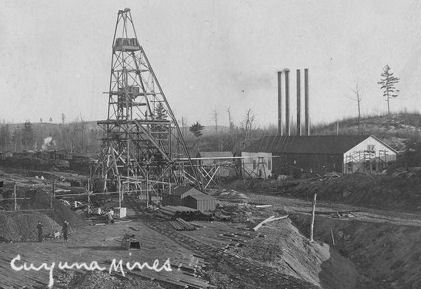
I got the trees, can you tell? it was so much fun placing them and trying to randomize them, it just got nicer and nicer.
But then I noticed the trees were a little too green, so I got some Hauser Dark Green and dry brushed the trees a bit.
The Germans achieved a total surprise attack on the morning of 16 December 1944, due to a combination of Allied overconfidence, preoccupation with Allied offensive plans, and poor aerial reconnaissance. American forces bore the brunt of the attack and incurred their highest casualties of any operation during the war. The battle also severely depleted Germany’s armored forces, and they were largely unable to replace them.
The U.S. forces however, got lost, ran out of gas, mostly due to Monty’s adventures in Belgium, and someone back home forgot that Europe has winters, and men get cold.
A question that gets asked a lot is, “Why is it that Team Blue’s turn toward anti-semitism has not significantly driven Jews out of the party?” It’s a reasonable question, and I gave a partial answer some time ago in a Jewsday Tuesday, a desire among the upper and upper middle classes to demonstrate their virtue as a way of expiating their feelings of guilt over their good fortunes, all encouraged by actual Jewish traditions of charity and “healing the world.” There’s also the concept (very flawed) of the “self-hating Jew”; this is a particularly ridiculous term for a real phenomenon, given that the people who are described this way generally think quite highly of themselves, they just dislike OTHER Jews. But it goes a bit beyond all that, I think. Since people love drawing historic parallels, I’ll do the same by reminding us of the Judenrat.
The Judenrat came about during the ghettoization of Europe under the Germans. The basic concept was a group of Jews selecting themselves as intermediaries between the Germans and the ghetto residents. The Judenrat would essentially act as a local government to make sure that the ghetto residents behaved themselves and didn’t piss off the Germans too much by acting up, or Yahweh forbid, rebelling. By this means, they hoped to curry favor with the Germans by helping to enforce German law and restrictions within their community. This sort of structure had a long tradition in European Jewish areas for much of the period of Christian rule; it was not an innovation of WWII, although its formalization (if not its authority) was dictated by the Germans.
Whence, then, derived their authority? The Judenrat were mostly populated by rabbis and other prominent citizens (upper class and upper middle class- sound familiar?), who felt that “go along to get along” was the best policy- of course, the fact that they had their social positions (and fortunes) at stake had no bearing on their decision to bow down to the Powers That Be. Perish that thought. The basic concept was the rationalization of cooperating with one’s enemies for some sense of reward.
It might be monetary, it might be survival with other people being killed, it might be a sense of moral self-satisfaction. Hey, if others suffer but you prosper or at least escape the fate befalling your community, what’s wrong with that?
The historian Hannah Arendt caused great consternation by observing:
Wherever Jews lived, there were recognized Jewish leaders, and this leadership, almost without exception, cooperated in one way or another, for one reason or another, with the Nazis. The whole truth was that if the Jewish people had been really unorganized and leaderless, there would have been chaos and plenty of misery but the total number of victims would hardly have been between four and half and six million people.
Unintentional libertarianism, but nonetheless, her point was sound.
Here’s excerpts from meetings of the Judenrat of Bialystock (source: Yad Vashem):
More than eight months have already passed since the fence made a special “kingdom” for us, the Jewish ghetto. In this “kingdom” the Judenrat carries out the duties of a “government,” and we, the Jewish police, must carry out the difficult task of keeping order and maintaining quiet in the ghetto. I asked Engineer Barash several times to arrange talks with the population of the ghetto. The thing is this: the regulations of the authorities are not being properly observed. Perhaps I am at fault myself, I am too soft and moderate, and our people do not take into account that we are Jews. The evening curfew is not observed punctually: one must go to bed at 9 o’clock, one is not allowed to be in the street. Not keeping the regulations may cause somebody to be shot; and Jews often take a walk after the curfew hour. The yellow badge is not worn properly, one forgets it in front, and the next forgets it at the back. The same happens about the black-out. There have been cases of whole houses lit up like for a celebration. There has already been a tragic case in the ghetto: a woman was shot in her home when the room was badly blacked out. The Jews are a stiff-necked people. Street-trading never stops, especially on Kupiecka Street, and all our efforts do not help. That shows the need for a firm hand. There are telephone calls from the 4th [Police] Station outside the ghetto that Jewish children have been caught without yellow badges and without papers and that can cause a tragedy on some occasion. Parading up and down the street with children in colored baby carriages could also cause much annoyance. Let the mothers stop doing it.
Groups of Jews gather around the gates of the ghetto and don’t go away even when the Germans chase them off, and the Jews might even be shot. Cleanliness is not satisfactory either. Thousands are spent on cleaning, and it is dirty again by the next morning; people don’t take care, they don’t want to know that that is a danger. And again, thousands of Jews go to work, work in the sweat of their brows, and at the same time many others avoid work in various ways. The house committees are obliged to hand over such cases so that the members of the Jewish Police need not catch passers-by in the street and start fighting with Jews. That brings no credit either to the population or to the Jewish Police. If things go on like this for much longer, there is likely to be a catastrophe, for anyone who wants to live must work!
I am full of admiration for the close harmony that reigns between the members of the Judenrat. Differences of opinion simply do not happen. All our decisions and actions are unanimous.The Judenrat did not start out as what it is today: It developed in time as it worked, thanks to the efforts of its first members who created everything that we now have. As I said, we were not chosen by anybody. The respected Eng. Barash convinced us to accept the great and difficult duties because he understood the needs of the hour. Now it has become a government, so to say, with all the offices, departments, ministers. The official chairman, Dr. Rosenman, walks around by himself to find workers for the Germans. He has gone through a great deal. His most important contribution was to have appointed the respected Eng. Barash, because the Rabbi did not have the strength to do everything that was needed. I do not wish to praise the individual, what matters to me is the job, the achievement. The respected Eng. Barash is the prime minister in our “government,” as well as the minister of the interior, minister of industry, because in the ghetto everything must be concentrated in one hand. Industry, for instance, is connect with the Wehrmacht, so it becomes a matter of foreign policy. Sometimes we are surprised how he gets it all done, how it all works out. It seems like Divine intervention, particularly in the past few weeks. Everything gets done in the best possible way. The other responsibilities, it seems to me, are carried out by the other members, but it is the spirit, the direction, which is the most important thing….
What is our direction? In matters concerning the community we try always to reach agreement, compromise, so that everybody may be satisfied. From now on we shall have to stand by the letter of the law! Let him who is fearful and fainthearted return to his house! We shall have to cling to this principle if we wish to stay alive. And the ghetto must remain a productive element as well.
By contrast, here is a transcript from a meeting of the resistance fighters of the Bialystock ghetto (source: Yad Vashem):
It’s a good thing that at least the mood is good. Unfortunately, the meeting won’t be very cheerful. This meeting may be historic, if you like, tragic if you like, but certainly sad. That you people sitting here are the last halutzim in Poland; around us are the dead. You know what happened in Warsaw, not one survived, and it was the same in Bendin and in Czestochowa,and probably everywhere else. We are the last. It is not a particularly pleasant feeling to be the last: it involves a special responsibility. We must decide today what to do tomorrow. There is no sense in sitting together in a warm atmosphere of memories! Nor in waiting together, collectively, for death. Then what shall we do?
We can do two things: decide that when the first Jew is taken away from Bialystok now, we start our counter-Aktion. That nobody will go to the factories from tomorrow, that none of us is allowed to hide when the Aktion starts.
Everybody will be mobilized for the job. We can see to it that not one German leaves the ghetto, that not one factory remains whole. It is not impossible that after we have completed our task, someone may by chance still be alive.
But we will fight to the last, till we fall.
…Here in Bialystok we are fated to live out the last act of this blood-stained tragedy. What can we do and what should we do? The way I see it the situation really is that the great majority in the ghetto and of our group are sentenced to die. Our fate is sealed. We have never looked on the forest as a place in which to hide, we have looked on it as a base for battle and vengeance. But the tens of young people who are going into the forests now do not seek a battlefield there, most of them will lead beggars’ lives there and most likely will find a beggar’s death. In our present situation our fate will be the same, beggars all.
Only one thing remains for us: to organize collective resistance in the ghetto, at any cost, to let the ghetto be our Masada, to write a proud chapter on Jewish Bialystok and on our Movement.
I know which group (((I))) would be in.
And here is a speech from the head of the Vilna Judenrat given to the ghetto residents about arming themselves and the necessity of common-sense gun control (source: Yad Vashem):
A few days ago I went to the Gestapo and spoke to the Commander of the SD there about the revolvers. I may tell you that he is not at all stupid. He said to me: “From an economic point of view the ghetto is very valuable, but if you are going to take foolish risks and if there is any question of security, then I will wipe you out. And even if you get 30, 40 or 50 revolvers, you will not be able to save yourselves and will only bring on your misfortune faster.”
Why did I call you together? Because today another Jew has been arrested for buying a revolver. I don’t yet know how this case will end. The last case ended fortunately for the ghetto. But I can tell you that if it happens again we shall be very severely punished. Perhaps they will take away those people over 60, or children… Now consider whether that is worthwhile!!! There can be only one answer for those who think soundly and maturely: It is not worthwhile!!!
As long as the ghetto remains a ghetto those of us who have the responsibility will do everything we can so that nothing shall happen to the ghetto. Nowadays a Jew’s whole family is responsible for him. If that is not enough, then I will make the whole room responsible for him, and if even that is not enough – the apartment and even the building.
You will have to watch each other, and if there are any hot-heads then it is your duty to report it to the Police. That is not informing. It would be informing if you were to keep silent and the people were to suffer.
This really sounds eerily familiar.
Lest I imply that the Judenrat were irredeemably and universally evil, allow me to briefly mention Dov Lopatyn, the head of the Judenrat of the Lakva Ghetto in Belarus. The Germans informed the Judenrat that the people of the ghetto were to be murdered, but that if the Judenrat cooperated, they would be spared. Lopatyn refused, and immediately set into motion a plan for resistance. When the Germans entered the ghetto, the Jewish leaders set the Judenrat headquarters on fire as a signal. The ghetto resistance ambushed the Germans, and fought them with every weapon at their disposal and no hope of survival. Indeed, the majority of ghetto inhabitants were killed, but at least they managed to inflict some casualties. Over a thousand ghetto inhabitants escaped during the battle. Most escapees were also found and killed, but Lopatyn joined the Communist resistance and over the next couple of years, managed to take out some measure of vengeance against the Germans before being killed in battle. Some people are capable of learning.
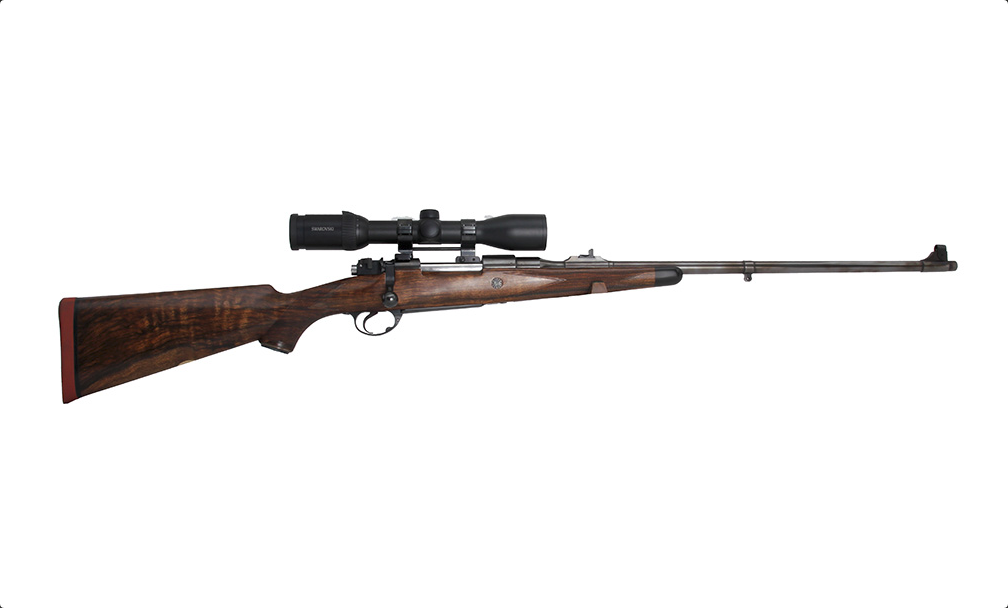
When it comes to 20th century bolt-action sporters in the American market, it’s fair to say that you can list them in three categories: The Winchester Model 70, the Remington 700 and everything else. There’s more to the shooting world than that, of course, so this time out we’ll look at those three and some non-U.S. models as well.
Remember the Pattern 14 and 17 Enfield rifles, built by American manufacturers for the British and American armies? It should come as no surprise that, having tooled up to build those Mauser-style actions, that the two major American rifle builders would use that action for their first round of bolt-action sporters.
As we have previously noted, Remington was first with their Model 30 sporter, initially offered in .30-06 and later in other calibers. What is less known is that Winchester dabbled in a sporter based on the Pattern 17 action as well.
Oh, man, I want one of these.
The Winchester Model 51 “Imperial” rifle was a hand-made, carriage trade piece. Only twenty-four were made in 1919, in .30-06, .35 Whelen and “.27 caliber,” a forerunner of the .270 Winchester. Four of these were hand-made pre-production prototypes, with the remaining twenty being hand-made Gunsmith Shop items.
I’ve long lusted after one of these first Winchester bolt-action sporters, but I doubt one will ever appear at a price that I could manage without resulting in Mrs. Animal phoning a divorce lawyer. The very first of these, Serial Number 1 (pictured) a take-down version in .27 caliber, just sold in November 2018 at auction for $24,675. So, I doubt one of these twenty-four rifles will be gracing my gun rack any time soon, and that’s a pity.
Here’s where it gets interesting. One of Winchester’s VPs at the time was a fellow named Frank G. Drew, a staunch proponent of lever guns who considered the very idea of a bolt action sporter to be a trifle silly. He had some influence on the Board of Directors, who cancelled the Model 51 project in 1920.
The Winchester 54
That didn’t last, obviously. Drew became the President of Winchester Repeating Arms Company in 1924. He was observing success competitor Remington was having with their bolt-action Model 30, and so caused the development of another Winchester bolt gun, also made with the leftover machines and tooling used in the Pattern 17 actions and the Model 51. This new, more economic mass-produced repeater was the Model 54 Winchester, manufactured from 1925 to 1930, and offered in the .22 Hornet, .220 Swift, .250-3000 Savage, .257 Roberts, .270 Winchester, 30-30 Winchester, .30-06 Springfield, 7x57mm Mauser, 7.65x53mm Argentine, and 9x57mm Mauser. The Model 54 retained the Pattern 17’s heavy two-stage trigger and had a factory bolt handle and safety that made scope mounting awkward. Primary production on the Model 54 ended in 1930, although a few were assembled from 1930 to 1935.
Happily, in 1936, Winchester improved on the Model 54 when they brought out their immortal Model 70 in 1936, based on a cock-on-open, Mauser 98-type action. Aptly known as the Rifleman’s Rifle, everything a sportsman could want in a bolt-action rifle can be summed up in these words: “Pre-64 Model 70.” Chamberings from 1936 to date have included the .22 Hornet, .222 Remington, .223 Remington, .22-250 Remington, .223 WSSM, .225 Winchester, .220 Swift, .243 Winchester, .243 WSSM, .250-3000 Savage, .257 Roberts, .25-06 Remington, .25 WSSM, 6.5×55mm, .264 Winchester Magnum,6.5mm Creedmoor, .270 Winchester, .270 WSM, .270 Weatherby Magnum, .280 Remington, 7mm Mauser, 7mm-08, 7 mm Remington Magnum, 7mm WSM, 7mm STW, .300 Savage, .30-06 Springfield, .308 Winchester, .300 H&H Magnum, .300 Winchester Magnum, .300 WSM, .300 Weatherby Magnum, .300 RUM, .325 WSM, .338 Winchester Magnum, .35 Remington, .358 Winchester, .375 H&H Magnum, .416 Remington Magnum, .416 Rigby, .458 Winchester Magnum, and .470 Capstick. A great variety of grades and finishes have been available; the U.S. Army and Marines have used Model 70s as sniper rifles (Gunnery Sergeant Carlos Hathcock used a Model 70 Winchester in .30-06 with an 8x Unertl scope in his famous exploits in SE Asia.)
In 1964 Winchester’s cost-cutting measures affected the Model 70 as it did many other arms. The big Mauser claw extractor was replaced with a hook extractor, along with other manufacturing and cosmetic changes including the adoption of a simple push-feed action over the old controlled-feed; note that Remington rifles had been using a push-feed design by decades by this point, but the various changes resulted in the Marines cancelling their contract for Model 70 sniper rifles, as the new Winchesters no longer met the Corps’ quality standards. The “classic” Model 70 was reintroduced in 1999 with the controlled feed restored, but at least in the mind of this old gun crank, if you want a Model 70, look for a pre-64.
The Model 70 still has turned in a long and impressive history. Shooting Times magazine in 1999 named it the “Rifle of the Century,” and it’s hard to dispute that assessment.
Remington, though, was likewise producing a classic. Their Model 30 rifles were manufactured until 1940 (from 1926 to 1940 as the Model 30 Express, mounting a Lyman peep sight). In 1940 Remington introduced the final version of a rifle on the Pattern 17 action, the Model 720, which changed to a cock-on-close operation.
About 26,000 Model 20 and 30 Express rifles were built, but only about 2,500 Model 720s. World War 2 interrupted Remington’s production, but in 1948 the Ilion gunmakers came out with two new rifles, really one design in short and long action versions; these were the Models 721 (short action) and 722 (long action.)
Remington 721
During the second World War, Remington’s experience with mass-producing weapons quickly and efficiency had taught their engineers some great lessons. Two of these engineers were a pair of prescient fellows named Mike Walker and Homer Young, who took a look at the traditional Mauser-style action, machined from a forged billet, and came up with another idea: A tubular receiver was easier and quicker to produce, while still allowing great strength and precision. The 721 and 722 were the first products of this design, followed in 1958 by the Model 725. All were push-feed guns with the usual fixed box magazine, small hook extractor and a spring-loaded plunger ejector.
In 1961, Walker and Young’s basic design evolved into one of the best-selling sporting rifles in history, the Remington 700, still manufactured today in a wild variety of calibers and configuration. The 700 has a great reputation for strength, accuracy and reliability, leading to its adoption by military and police forces all over the globe. Loyal sidekick Rat carries one in the game fields, a pre-1993 DuPont Model 700 wearing a Six Enterprises fiberglass stock and a Redfield scope, and has had good success with it.
While my personal preferences lean towards older Winchesters, a beginning, intermediate or experienced shooter or sportsman simply couldn’t go wrong with a Remington 700. No matter your desires in caliber or trim, it’s probable even in the late 20th century, that Remington made a 700 that matched them.
Remington then took a different tack in 1967, introducing the economical Model 788. This was a nine-lug, rear-locking, short action bolt gun with a plain stock and a 3-round detachable box magazine, available in calibers from the .222 Remington to the .308 Winchester. This rifle had a great reputation for accuracy, supposedly in part from the fact that the rear-locking bolt eliminated the locking lug raceways, making the action stiffer and stronger.
Remington and Winchester dominated the 20th century bolt gun world, but they weren’t alone. While the Model 70 and the various Remington models were being admired by the shooting press, some other American companies were learning the bolt gun angle as well.
The Other Guys
We have discussed Savage Arms before in the context of their excellent Model 99 lever gun, but Savage learned the art of building bolt guns in World War 2, when they built #4 MkI Lee-Enfield rifles for the British. With this experience under their belt, Savage rather belatedly turned to the bolt gun market in 1950, with the economical Savage 340. This rear-locking rifle had a plain hardwood stock and a detachable box magazine and was available only in lower-performance rounds like the .22 Hornet .222 and .223 Remington and the .30-30 Winchester. The 340 was serviceable but nothing much to look at, but Savage had a more lasting impact on the bolt gun in 1958, when their engineer Nicholas Brewer devised and (posthumously) patented the rifle that became the first of the Savage 100 series. While lacking some of the polish of Winchester’s and Remington’s offerings, Savage rifles proved solid and reliable, and because of that, when Winchester closed their New Haven plant in 2007 the Savage 110 surpassed the Winchester Model 70 as the oldest continuously manufactured bolt-action rifle on the American market. Another fact of note; in 1959, the Savage 110 became the first American bolt-action rifle to be commercially produced in a left-handed version.
About this same time, Ogden gunmaker of note Browning entered the commercial bolt gun market with the High-Power series of rifles. The story of the Browning High-Power bolt guns is a complicated one, with the larger calibers (up to the .458 Winchester) on FN 98 Mauser actions, while the smaller rounds like the .222 were set up on the Finnish SAKO action.
The Browning High Power.
The High-Power Brownings were beautiful pieces. The FN Mauser and the SAKO actions were finely made, the bluing was high polish, stocks were fine European or American Claro walnut. Three grades were available, Safari, Medallion and Olympian, featuring progressively nicer finishes and fancier wood.
But the High-Power, beautiful as it was, suffered from two flaws: A cheap plastic buttplate and too much drop at the heel of the stock, which made recoil unpleasant, and thin barrels that heated quickly and resulted in less than optimal accuracy. The High-Power was replaced in 1978 or so by the Japanese-made push-feed Browning BBR, which yielded only mediocre sales. But then, in 1984, Browning introduced the A-bolt, with three locking lugs and a short sixty-degree bolt throw. This was at last a bolt gun fully worthy of the Browning name, fast in action, reliable and accurate. The A-Bolt has been made in calibers from .223 Remington to .458 Winchester and is still being made as the AB3 today.
Colt may be best known for handguns and the AR-pattern rifles, but in 1973 Colt struck an agreement with the famous Austrian manufacturer, and the Colt/Sauer rifle was introduced to the American market. This was the Sauer Model 80 on the European market and Colt merely imported it, but the Colt Sauer rifle was unique in one respect: It had a non-rotating bolt with retracting locking lugs, which removed the necessity of locking lug traces in the receiver. This not only made for a strong receiver but also for a very smooth action. Even so, the Colt/Sauer rifle never really caught on competing against the Remington 700 and (even the post-64) Winchester 70; in the end only about 27,000 were imported.
A Ruger M77 in .416 Rigby.
One cannot talk about the twentieth century sporting gun market without mentioning Ruger, and the bolt gun market is no exception. In 1968, Bill Ruger had a designer working for him that took the Model 98 Mauser action, replaced the forged receiver with an investment casting, replaced the bolt block safety with a tang safety and replaced the blade ejector with a plunger ejector. Sullivan also redesigned the trigger and used a rater novel angled front action screw that, in recoil, served to seat the action more solidly into the stock. Bill Ruger approved of the design, and the original M77 Ruger was born.
But Ruger wasn’t done. In 1991 the company almost completely redesigned the M77 as the Mark II, retaining the Mauser-style claw extractor but reverting to a Mauser blade-type ejector, converting to controlled-feed rather than push-feed and changing to a Winchester 70-style fore-and-aft safety that allowed for loading and unloading the rifle with the safety engaged.
I have never owned an original M77 but I have a Mark II in the “T” configuration, with a heavy laminated target stock and a 26” heavy sporter barrel, firing the .243 Winchester; this is a rifle that will send a 6mm pill 400 yards on time and on target. Mrs. Animal has a Mark II Compact in the .260 Remington, a fine, lightweight, light-recoiling little rifle.
These were and are the major players; but there are few American companies that didn’t take a swing at the bolt gun market. Mossberg has produced a few; Smith and Wesson imported some Howa rifles from Japan and slapped the S&W name on them. Even lever-gun maker Marlin has produced a bolt gun. The bandwidth allowed to me here simply won’t allow me to list them all, so I’ve tried to name the major players in the American centerfire bolt gun market.
Before anyone mentions my omission of Roy Weatherby, fear not, I have an article dedicated just to him in the works.
The Europeans
Continental European sporting bolt guns in the 20th century can, in large part, be summed up, like a popular candy, by saying simply “M&M.” Mauser and Mannlicher. Some Finnish upstarts got into the mix, and an Austrian company also got involved. But across the Channel, the Brits were turning out some real masterpieces.
Mauser 66.
Mauser suffered badly at the end of World War II, for reasons which should be apparent. But in the early 1950s they managed to reform, and one of their first offerings was a design by a fellow named Walter Gehmann, which became the Mauser 66. The 66 couldn’t have departed much further from its Model 98 predecessor; it had an odd telescoping bolt, a set trigger and came as a take-down rifle for easy transport. To my thinking it wasn’t an attractive rifle, but folks who have handled them (I’ve not had the chance) say they have a butter-smooth action and bench-rest accuracy.
Mauser followed up with the Model 77, a more conventional looking bolt gun with three rear locking lugs and a detachable magazine, and then several commercial and military variations on the 66 and the 77. Then, in 1996, they brought out the M1996 straight-pull bolt gun, using a forward-mounted bolt handle at the front of the ejection port to operate its action. The M1996 was an awkward looking thing and didn’t exactly take the market by storm.
But in Austria, another company also rebounded after the war.
Prior to World War II, the Mannlicher-Schoenauer rifles had a strong following all over the world. In fact, if one wishes to read of one used in an unorthodox fashion, read the Ernest Hemingway short story The Short, Happy Life of Francis Macomber.
The M-S rifle’s full-length stock became so iconic, in fact, that the design became known on all makes and models as a “Mannlicher stock.” The combination of the very first Mannlicher-Schoenauer rifle and its 6.5x54mm cartridge became something of a European equivalent of the Winchester 94 and the .30WCF round, an ideal combination of rifle and cartridge such that one can scarcely think of one without the other.
Steyr Mannlicher Luxus
Following the war, Mannlicher re-established themselves as a sporting gun manufacturer. Stoeger imported their rifles into the United States, said imports including the Models 1950, 1952, 1956 and 1961; but it was hard to top that original, the pre-war Mannlicher-Schoenauer.
Up in Finland, the Suojeluskuntain Ase- ja Konepaja Oy (Civil Guard Gun and Machining Works) or SAKO, spent the post-war years marketing the excellent Vixen (short action) and Finnbear (long action) bolt guns. Interestingly, and a bit off topic, SAKO in 1961 introduced the only European-made lever gun I’m aware of, the foll-stocked Finnwolf. In 1992 SAKO intriduced the first of their renovated line with the 591 and finally, in 1997, they brought out the 75, followed in 2006 by the improved M85, which is still made today.
Across the Channel, the Brits were indulging in something they are very good at – producing works of art in walnut and blued steel. In olden times, the Brits had a great tradition of gun making, and two of their finest companies have a considerable history. But the first company we see across the Channel started in Ireland.
We can first cast ourselves back to 1775, when a chap named John Rigby went into business as a gunsmith in Dublin. I won’t go into all of Rigby’s history – that would take an article unto itself – but I will talk about their bolt guns. Rigby bolt guns were and are made on 98 Mauser actions, mostly big, beefy square bridge magnum actions, with walnut stocks you could fall in love with. Calibers are offered up to and including the .416 and .450 Rigby, so if you want to hunt Cape Buffalo or, maybe, a mid-size tyrannosaur, Rigby can set you up.
A lovely Holland & Holland bolt gun.
Over in London is a company bearing a name we must speak in an awed whisper: Holland & Holland. Founded by Harris Holland in 1835, Holland & Holland are the standard by which fine guns everywhere are measured. Their bolt guns, post-World War II, like Rigby use a modified Mauser action, but each rifle is assembled and tuned by hand, by some of the best gunsmiths in the world. Calibers up to the .500 Nitro Express are available, and if you are willing to spend an amount of money that would otherwise buy you a pretty substantial house, you won’t find a more beautiful work of art in a rifle.
There are many more. In Serbia, the Zastava works turns out a pretty fair 98 Mauser action. These have been imported into the US in a variety of names, including the Herter’s J9 and the Interarms Mk X. I have one of the latter rifles, in .30-06, and it’s a solid rifle. Herter’s also imported a BSA bolt gun as the U9, and those rifles also enjoy a good reputation, as evidenced by how few are available on the various auction sites; people who have them are keeping them.
And Then This Happened
The modern era with its attention to all things tactical hasn’t excluded the bolt gun market. Indeed, some of the things that make a good tactical rifle also make a good hunting rifle, especially synthetic stocks, which may be ugly but are also tough and impervious to moisture and dirt. So, while the Tacticool craze encompassed bolt action rifles as well as other weapons, in the case of bolt guns that wasn’t all to the bad. We’ll examine that and other modern trends and the current state of the bolt gun world in general in the ultimate part of this series, coming up next.
I probably haven’t covered half of the notable bolt guns made for the sporting market in the 20th century. From the Great War onward, bolt guns have simply dominated the game fields world over; they are cheaper and easier to make well than doubles, stronger and easier to adapt to heavy cartridges than lever guns, and acceptable in jurisdictions that disapprove of semi-autos. Doing justice to the history of the bolt gun and the state of the market today would require a book rather than a series of articles. In fact, if that’s what one was looking for, one could do a lot worse than to pick up a copy of Wayne Zwoll’s Bolt Action Rifles. Or maybe I’ll write one myself.
I also have not covered .22 rimfire bolt guns at all. That may be an omission, but I can always do an article or two on rimfire rifles alone, and the more I think on it, that may be worth doing.
Meanwhile – stay tuned! We have one more segment in this history to go.
The 1914-1918 War was a horrific, world-changing event. I won’t go into the causes of the conflict or the issues that arose from it, as that’s a story to be told some other time. But whatever else it was, the Great War was the war of the bolt gun. The War to End All Wars was the crucible in which the modern bolt-action rifle was formed, hardened and tempered.
In this conflict, all the major players were using bolt-action rifles. Autoloaders were at this time a novelty, considered too unreliable for martial use. (There was at least one exception, which we’ll note later.) Single-shot breechloaders were obsolete. With a few exceptions lever guns never caught on as primary battle rifles. World War I introduced the horrors of the machine gun, the airplane and the tank, but the primary soldier’s weapon was a turn-bolt rifle.
The Allies
Possibly a relative of mine.
Britain and her Empire entered the war with the No. 1 Mk III Short Magazine Lee-Enfield (SMLE) as their primary service rifle. The “Smelly” was a good infantry rifle, reliable, powerful and with twice the magazine capacity of most of its competition. Its smooth action, rear-mounted bolt handle that placed the firing hand near the bolt handle when in operation, and the high magazine capacity for the time all combined to make for a high rate of fire. Lee-Enfield rifles were at this time made around the Empire, mostly in the UK at not only the Enfield arsenal but also at the Royal Small Arms Factory at Smallbrook, the BSA and LSA small arms companies, the Lithgow Small Arms factory in Australia and the Ishapore Arsenal in British India. Post Great-War variants were also made at the Long Branch Armory in Canada and by Savage Arms in the United States.
France entered the war with a few older Gras, Kropatschek and Lebel rifles in inventory, but their primary Great War arm was the various marks of the Berthier rifle, a 3 or 5 round bolt gun firing the good old 8mm Lebel cartridge and later adapted to the new 7.5x54mm French service round. The Berthier-pattern rifles were invented by a French civil engineer, Emile Berthier, whose primary occupation was the building of railroads; nevertheless, he came up with a pretty fair infantry weapon. About two million of these guns were made in various configurations.
In 1917, though, France did something unexpected; preceding America’s famous M1 Garand by quite a while, France adopted an autoloader, the Fusil Automatique Modèle1917. I know this is discussion of bolt guns, but this merits a mention; the Model 1917 was a gas-operated semi-auto that held five rounds of 8mm Lebel ammo in a clip-fed internal box magazine. The rifle had some serious issues with reliability; from 1917 to 1921 only about 90,000 were made.
Those Belgians and their wacky hats.
The Kingdom of Belgium used a variety of rifles in the Great War, including the French Gras and Lebel rifles, but their primary arm was the 1889 Belgian Mauser, which were produced for the Belgian Army by the famed Fabrique Nationale until that works was overrun by the Germans, the first of two times that would happen in the 20th century. While FN was in German hands, the Kingdom outsourced manufacture of the M89 rifle to Greener in England and Hopkins & Allen in the United States. The M89 Belgian Mauser proved to have some serious staying power, as some were still in use by the Republic of Congo/Leopoldville as late as 1960.
Russians, pre-Trump collusion.
The Russian Empire’s participation in the Great War was cut short by two uprisings that saw the Tsar and his family dead and, in time, a new Bolshevik government in place. The result of this was the formation of the Soviet Union in 1922, but the primary arm of the Red Army didn’t change; the Mosin-Nagant served Red Army soldiers as it had Imperial Russian soldiers before.
I’m probably overly fond of twitting Mosin-Nagant aficionados with the roughness of that arm. (All in good fun, of course.) But the fact is that the Mosin-Nagant is a rifle admirably suited for what it was designed for: Rough use in the field and casual maintenance by poorly educated peasant soldiers. Years after the Mosin-Nagant first saw service a Soviet designer named Mikhail Kalashnikov designed a select-fire, medium-power short rifle with much the same types of soldiers in mind, and that arm was as successful in peasant armies worldwide as the Mosin-Nagant before it.
It’s the mark of a good martial rifle that it suits the intended user.
The Central Powers
A German lad with his Gewehr 98.
The GEW 98 saw the Imperial German Army through the Great War for the most part. But the need for a shorter, lighter arm for cavalry and artillery units had led to the development of the kar98a in 1902, and that small-ring 98 carbine saw service with those mobile units in the Great War. Some years ago, I managed to obtain a kar98a with an original bayonet. I ran a few boxes of 8mm ammo through it – it kicked like a mule – and eventually, regrettably, ended up trading it off.
I really need to think twice before selling/trading away a gun, given how often I end up wishing I hadn’t; but I also lack a giant Scrooge McDuckian vault to store my collection in, so…
We’ve already discussed the Gewehr 98 in the last segment, so I won’t revisit that ground. It’s worth remembering that the Gewehr 98 was produced and fielded in great numbers, over nine million being made. It’s not particularly hard to find decent examples of this rifle today. This first of the 98 Mauser service rifles was a great success, and it proved to only be the beginning of the career of this famous bolt gun action.
In 1918, with the British beginning to field the MkI tank in some numbers, Mauser responded with their first attempt at a anti-armor weapon, that being the 13.2mm Mauser 1918 T-Gewehr, or anti-tank rifle. This single-shot behemoth fired a .525 caliber, 795 grain bullets at about 2500 fps, and proved dangerous to the armor of the time. While post-Great War advances in armor would swiftly make the anti-tank rifle obsolete, the T-Gewehr nevertheless remained in use until 1933.
Meanwhile, the Ottoman Turks were building their own version of the Gewehr 98. The M1903 Turkish Mauser was more or less a clone of the German rifle, using a large-ring 98 Mauser action and much of the same specifications. There was one oddity in the Turkish guns; while they had a large-ring action, they used a barrel threaded to the pattern used for small-ring actions.
When examining the Turkish Mausers, it’s important to note the manufacturer. Guns made by Mauser were of good quality, but the guns I have examined that were built at Turkey’s Ankara appear to be of rather slapdash workmanship. Also, late in the Great War and for a few years afterwards, some guns were assembled from parts with little regard for such things as tolerances and headspace.
While the Turks were whiffing at the quality pitches, the Austro-Hungarian Empire had examined the rifles produced by one Ferdinand Mannlicher and found them worthy, and that evaluation was spot-on. The Mannlicher designs included the M1890 carbine and the M1893 rifle, both traditional bolt guns, and the M1895 straight-pull bolt rifle.
The United States: Early Player, Late Entry
By the time the Great War’s western front had settled into an entrenched, fixed war of attrition, the British Empire was having trouble producing enough Lee-Enfield rifles to meet the needs of the troops. In what was to prove a prescient move, they looked across the Atlantic to one of the Empire’s estranged offspring, who had grown mighty.
The United States already had a substantial firearms industry by 1914. Designers like John Browning and Sam Colt had made their name on the firearms world, so it wasn’t unreasonable for the British to think that America may be able to help supply their Tommies with shooting irons.
The Pattern 17 Enfield.
For a bit of relevant history, we must go back to 1899, to the Second Boer War. The British were faced in that conflict by sharp-shooting Boer farmers mostly equipped with 1893 and 1895 Mausers firing the high-velocity 7x57mm cartridge. To match that performance, in 1910 the British War Department developed their own 7mm cartridge, the .276 Enfield, and built a Mauser-pattern bolt gun to fire it, which was designated the Pattern 13 Enfield. But the outbreak of the Great War dissuaded the War Department from attempting to field a new rifle and a new cartridge, so production of the No. 1 Mark III SMLE continued.
But the pattern was not forgotten. In 1914, the British Army contracted with the American manufacturers Remington and Winchester to produce a version of the Pattern 13 Enfield modified for the standard .303 cartridge. This new rifle, the Pattern 14 Enfield, was slow in the developing and the British Army received no rifles until 1916. Relatively few of these guns were delivered, and their long barrels and excellent accuracy resulted in most of them being used as sniper rifles. The Pattern 14 was well suited for this, with a long (26”) barrel, good sights with the rear peep solidly protected by big steel mule-ear projections and the front sight likewise surrounded by steel guards. It was a heavy, long piece but not unusually so for the time, and proved to be a good shooter.
But the Enfield pattern didn’t end there. When the United States entered the Great War in 1917, Remington, Winchester and the Eddystone Arsenal (a Remington property) quickly retooled to produce the Enfield design in the standard American rifle cartridge, the redoubtable caliber .30 Model of 1906.
This new piece became the Pattern 17 Enfield rifle, and with three manufactories putting them out, the Enfield surpassed the standard issue 1903 Springfield in numbers supplied to American doughboys. In fact, no less a figure than Alvin York performed his famous acts of marksmanship not with a Springfield, as has been shown in movies, but with a Pattern 17 Enfield.
A bit over two million Pattern 17 rifles were built, and about one and a quarter million of the earlier Pattern 14 guns. Later, the Pattern 14 actions became popular for rebarreling to the big new belted magnums that were making their appearance, as the .303 case head was similar in diameter to the belted magnums introduced by Holland & Holland. Any reasonably-sized gun show in the United States to this day will have a few of these rifles on display.
The Aftermath
On the eleventh hour of the eleventh day of the eleventh month, the Great War ended.
1903 NRA Springfield Sporter
In the United States, 4.7 million doughboys returned home, bringing their new-found familiarity with the Springfield 03 and Pattern 17 Enfield rifles with them. Many of them who were outdoorsmen and shooters, a proportion of the populace likely higher today than now, had cut their teeth on lever guns, but the accuracy and power of the military bolt guns and the .30-06 cartridge had made an impression.
The Springfield Armory got in on the action, producing a civilian-sale version of the 1903 rifle known as the NRA Sporter, and plenty of surplus rifles were converted to sporters, as were many captured and surrendered Mausers and Mannlichers as well as Smellies and others.
But that wasn’t going to keep up with demand. American gun companies responded, and Remington was an early bird, adapting the Pattern 17 action into a civilian sporter and releasing it in 1921 as the Remington Model 30, initially available only in .30-06 but later in a variety of chamberings. This was, of course, just the beginning. Winchester and many other manufacturers were quick to follow; things were, as the kids say nowadays, about to get real.
And Then This Happened
It begins – the Remington Model 30.
The War to End All Wars… didn’t. The sequel, World War II, again saw most of the major players operating bolt guns at the outset; the Brits used their updated Lee-Enfield throughout that conflict, the Soviet Union and Germany started with bolt guns and experimented with autoloaders The United States mostly used the ground-breaking semi-auto M1 Garand throughout, although a fair number of 1903 and the later, cheaper 1903A3 bolt guns saw service early in the war. And, of course, today, the bolt gun is absent from military use except in certain highly specialized applications, like snipers.
But the Great War Part Two didn’t see much change in martial bolt guns. There were some minor updates to Enfield, Mauser, Carcano, Mosin-Nagant and other rifles, but the form was pretty much set, and the rise of the military autoloader would see the bolt gun slowly phased out of the world’s armed services.
On the civilian side, though, things were just getting started in 1918. The bolt gun, with its strong, solid action capable of handling high-pressure cartridges, with its solid attachment of barrel to receiver with sights permanently fixed in place, had proven to be reliable, accurate and powerful. What’s more, that solid receiver was ideal for mounting the newfangled telescopic sights that were becoming popular.
The new trend in the game fields post WWI was towards bolt-action sporters, and a great expansion of rifles and cartridges was about to take place. More on that in Part Five, in which we shift focus from military rifles to civilian sporters, which in my opinion are more fun. And finally, in Part Six, we’ll examine the state of the bolt gun today. Stay tuned.
We’ve got a lot of ground to cover and not much bandwidth, and this will be an image-heavy post to support that. So hang on.
While the French were developing the Lebel, Europe’s first military smokeless powder repeater in mass production, the Germans weren’t hiding behind the door.
In response to France’s adoption of the Lebel rifle, the Germans did something that almost never happens – they formed a government commission that successfully designed a cutting-edge infantry rifle.
The 1888 Commission Rifle
The 1888 Commission rifle had a five-round magazine and a bolt with two locking lugs at the front of the bolt body. While the 1888 is frequently referred to as the 1888 Mauser, this is incorrect, as Mauser had no hand in the design of this weapon and, in fact, made few if any of the almost three million Commission rifles; most were made by the Ludwig Loewe works (later renamed the Deutsch Waffen und Munition-Fabriken, or DWM) by the Steyr works in Austria and by Imperial arsenals at Amberg, Danzig, Erfurt and Spandau.
The 1888 Commission rifle was only in primary German service for ten years, but it did have one outstanding characteristic: Its cartridge. The 1888 Commission rifle introduced the 7.92x57mm (generally known as the 8×57 Mauser) cartridge, in its original Patrone 88 J-bore configuration, firing a .318 diameter, 227-grain round-nose slug at about 2400 fps.
The 7.92x57mm cartridge would effectively father an incredible variety of rifle cartridges. Such legends of riflery as the great .30-06 Springfield, the .308 Winchester and the .270 Winchester share its case head, which has become damn near standard for medium-power bolt gun rounds. Unlike the rimmed Lebel case, the 7.92x57mm was rimless, using an extraction groove in the case to remove fired cases from the chamber; this made it easier to feed rounds from a magazine quickly, smoothly and efficiently.
Down in Oberndorf, Paul Mauser was, to put it mildly, displeased at the German government’s bypassing his design people to build their own infantry rifle. Mauser-Werke was at the time still churning out the 71/84 rifle, but Paul Mauser had some ideas, and if the German government didn’t want an improved Mauser, there were other governments in Europe and elsewhere that would.
The Run Up to The Final Mauser
Mauser’s late-nineteenth century battle rifles went through three main phases, each marked by several technological innovations. Those phases included:
The 1889 Belgian, 1890 Turkish and 1891 Argentine Mausers
The various 1893-1895 small-ring Mausers, which include the 1894 and 1896 Swedish Mausers
The 1898 Mauser
1889 Belgian Mauser
So, let’s look at each in turn.
By today’s standards, the 1889/90/91 rifles looked a little odd, at least if you’re used to more modern Mauser-type actions. Missing was the big claw extractor. The magazine was a protruding single-stack affair, loading five of the new 7.65x53mm Argentine cartridge, a fast, powerful round for the time. But these rifles did retain the 71/84’s over the top safety and the bolt locked securely into the receiver ring by the expedient of two large opposed locking lugs at the front of the bolt.
Some years ago, I picked up an 1891 Argentine that had been rebarreled with a 7x57mm tube and had a Redfield peep mounted on the receiver. I put on a nice blonde walnut stock with a narrow Schnabel fore-end; I re-blued the action and refinished the wood, had the bolt body jeweled and a butterknife bolt handle installed. It was a beautiful rifle, handy and light; I fed it mild handloads and killed a few deer and a couple of javelina with it.
The Belgian Army used their 1889 model in the Great War; the Ottoman Turks still had some by that fateful day in 1914. All in all, a little over a quarter-million of these rifles were made.
1893 Mauser
Following close on the heels of the Belgian/Turk/Argentine rifles came a new design, which entered the market with what became known as the 93/95 action. This was a more modern-looking piece, retaining the safety but exchanging the single-stack magazine for a flush-fitting staggered-stack magazine, and introducing the characteristic claw extractor. Previous Mausers were, like many modern bolt guns, push-feed operated; the bolt simply stripped a round from the magazine and pushed it into the chamber. The new Mausers big claw extractor engaged the extraction groove on the cartridge and guided it into the chamber directly, making for what most bolt gun mavens consider a more reliable feed; the down side of this system is that one cannot simply drop a round in the action and close the bolt. Loading a single round requires the shooter to place the round into the magazine so the bolt can engage it as designed.
Most of the new Mausers were chambered for the new 7x57mm rimless cartridge, a low-recoil, high-velocity round that would prove popular in martial circles and, later, in the game fields. In fact, of all the Mauser cartridges, the 7x57mm alone remains popular among American shooters to this day. The first models turned out by Mauser went to Spain, and these rifles still are often referred to generically as “Spanish Mausers.” But many of these guns were made and sold all over, seeing service with the armies of Belgium, Brazil, Chile, Congo, the Ottoman Empire and Serbia.
In Sweden, the Carl Gustaf works turned out what may be the finest of the pre-98 rifles in the M94 and M96 Swedish Mausers, chambered for the excellent 6.5x55mm Swede cartridge. Many Swedes have been imported into the States, and as they are easily converted into lightweight sporters, make excellent rifles for deer-sized game.
In 1898, though, Paul Mauser produced his finest work.
The 1898 (or, simply the 98) was the culmination of Mauser’s design work. Most bolt-action sporters today are adaptations of the 98 Mauser. This new action had a larger receiver ring with a stout reinforcing web, a solid bolt with the usual two big locking lugs but also a third safety lug at the rear; the bolt shroud was larger and had a large flange to direct hot gases away from the shooter in the event of a case rupture.
There was one other major innovation. Prior to the 98, Mauser actions combined the initial lift of the bolt handle with a slight camming action to initiate the extraction of a fired round. When closing the bolt, the shooter was required to push the bolt home against the mainspring, thus cocking the piece.
The Gewehr 98
The 98 changed that, using the camming action of the bolt to cock the striker on opening, rather than closing. This made operation of the action faster, more secure, and allowed the force of the run forward to be devoted to chambering the next round.
It was with this action and the Gewehr 98 rifle built around it that Paul Mauser finally regained the attention of the German Army. Germany entered the Great War fielding this long, heavy, powerful rifle and its 7.92x57mm S-bore (.323) cartridge; over 9 million Gewehr 98s were made, many millions more rifles were built around the basic M98 action, and the 98 Mauser action would become the basis for martial and sporting rifles all over the world. I have in the past mentioned my favorite hunting rifle, built on a 98 Mauser action made by DWM in Berlin around 1911 on contract for Brazil; if you own a Winchester Model 70 or a Remington 700, you are shooting a rifle closely modeled after the 98 Mauser.
Mauser produced a wonder, but across the English Channel, the Brits were developing a gun that may well have surpassed it as a pure battle rifle.
Meanwhile, in Britain
James Paris Lee
In 1879, the British Army was looking to replace their single-shot black-powder Martini-Henry rifles with something more modern. Enter a sporting chap named James Paris Lee. Lee had developed a practical box magazine that allowed a shooter to load multiple rounds with a new device called a stripper clip, or to simply stuff single rounds into the magazine.
Working with another inventor named William Ellis Medford, the two came up with a bolt-action repeater with an eight-round (later ten round) magazine, locking lugs on the rear of the bolt, and a cock-on-closing mechanism similar to the pre-98 Mausers, the thinking in Blighty being that the cock-on-close action was quicker to operate.
My personal experience is just the opposite, but I’m just one guy, after all.
While Lee-Enfield’s the short bolt throw (60 degrees compared to the Mauser’s 90) was probably as much to do with that quick operation as the action, nevertheless the new rifle proved acceptable and in 1888, after nine years of tests, the British Army adopted the Lee-Metford magazine rifle and its .303 rimmed cartridge.
Important note: In the last issue I incorrectly identified the Italian Vetterli as the first mass-produced bolt gun with a box magazine; as a sharp-eyed reader noted, the Lee-Metford preceded it.
The Lee-Metford rifle would, however, only stay in primary service until 1895, when a modified version was adopted. This was the Short Magazine Lee-Enfield (SMLE) rifle, a ten-shot magazine-fed adaptation of the Lee-Metford built at the Royal Small Arms Factory in Enfield.
The Lee-Enfield
The Lee-Enfield would prove successful indeed as a battle rifle. Its ten-round capacity was double that of most magazine rifles of the time. Like its competitors it would be loaded by stripper clip or with single rounds; unlike them, the magazine could be removed from the rifle and replaced with a loaded one, although this practice was not encouraged at the time due to fears that the common soldiery would simply lose the detached magazines.
Over seventeen million Lee-Enfield rifles would be manufactured in several variations.
But about this time, across the Atlantic, the United States Army was finally thinking of moving past single-shot black-powder breechloaders, and another Lee design would be part of that calculation.
The Americans Upgrade
In 1894, the same year the immortal Winchester Repeating Arms Company brought out the immortal 1894 lever gun, the U.S. military was looking around for a smokeless-powder repeater to replace their single-shot black-powder Springfields. The Navy chose to adopt a semi-rimmed 6mm cartridge, and the Navy Test Board invited manufacturers to submit repeaters for their testing at the Naval Torpedo Station.
After screening a mess of rifles, including no less than five Remington bolt-action prototypes, the Navy settled on a straight-pull bolt gun designed by no less than James Paris Lee.
The M1895 Lee Navy rifle had a fixed box magazine that was loaded with a five-round en bloc clip, which had the advantage of speedy reloads but the disadvantage of not being able to top off the magazine with single rounds. Nevertheless, the Lee was an interesting design and, in 1895, the choice of the small-bore cartridge was unprecedented.
That cartridge design survives today, incidentally, necked down to .22 caliber, as the .220 Swift.
The Lee Navy rifle only ended up in front-line service for three years, though, as in 1898 a board of Army, Navy and Marine officers determined a standard rifle was in order.
The 1898 Krag Rifle.
The story of the first inter-service standard turn-bolt repeater begins in Norway with a gun designer named Ole Herman Johannes Krag and a gunsmith named Erik Jørgensen. Krag had been in the small-arms business since 1866 and was unsatisfied with the tubular magazines in military rifles of the time; he sought out Jørgensen to design something new. What they came up with was a solid bolt gun with a 5-round magazine that loaded through a loading gate on the right-hand side of the rifle. This novel loading system had two big advantages; it allowed for topping up the magazine with single loads, and allowed for fast reloads as loose rounds could be dumped into the open magazine gate and, when the spring-loaded gate was closed, the rounds would automatically be aligned for proper feeding.
Denmark had adopted what became the Krag-Jørgensen repeater in 1889. In 1892, after a competition among 53 rifle designs, the U.S. Army, Navy and Marines adopted what would be called the M1892 Krag rifle, firing the .30 Government cartridge, later known as the .30-40 Krag.
The Krag was a good, solid reliable rifle. About half a million were manufactured by the Springfield Armory between 1892 and 1907. Krag repeaters saw service in the Spanish-American war, the Philippine Insurrection, the Boxer Rebellion and the Mexican Revolution, and as a reserve weapon in the Great War. But during the Spanish-American War, the Krag performed poorly against Spanish troops armed with 1893 Mausers and their 7x57mm cartridge. The Army determined that a more modern rifle was in order.
The Great Springfield.
Thousands of Spanish Mausers were surrendered by Spanish soldiers in Cuba. Many of those found their way to Massachusetts, where Springfield Armory gunsmiths examined that design and came up with an American counterpart. Features of the 93 and 98 Mauser patterns were combined along with some American requirements, like a knurled cocking knob on the striker rear and a magazine cut-off. A new, powerful rimless cartridge was designed that fired a 220-grain round-nose jacketed bullet at about 2200 fps, but after three years and a distinct lack of zap, the original .30-03 round was replaced by a new round with a slightly shorter-necked round firing a 150-grain spitzer bullet at about 2800 fps. Now the combination of rifle and cartridge was complete: The M1903 Springfield and the Ball Cartridge, Caliber .30, Model of 1906, or simply the .30-06, which remains today one of the most popular centerfire rifle cartridges in the world; it has been claimed that more North American big game has been killed with .30-06 rounds than by all other centerfire rifle cartridges combined and while I have never seen numbers to support that, I don’t find it outside the realm of possibility.
This rifle would be the primary weapon of the U.S. Army and Marines when the U.S. entered the Great War in 1917.
In Russia
The story of bolt-action repeaters in Russia is the story of the Mosin-Nagant.
A middling rifle, but a great tent pole.
Russian troops were armed with the Berdan single-shot rifle when they went off to fight the Ottoman Turks in the Russo-Ottoman War of 1877. Unfortunately for them, the Turks were equipped with Winchester repeaters. Although Russia eventually won that conflict, the Russian troops fared poorly in direct action against the fast-firing Turks, and this was enough to make even Russian military planners realize a change was in order.
In 1889, the Russian Army evaluated three rifles: Captain Sergei Ivanovich Mosin’s “3-line” (.30 caliber) rifle, Belgian Leon Nagant’s “3.5-line” (.35 caliber, more or less) rifle and third design by one Captain Zinoviev. Trials continued until 1891, when the officers in charge of the evaluation commission decided to combine the best features of the first two rifles, resulting in the M1891 Mosin-Nagant rifle.
The Mosin-Nagant was certainly a robust piece, even if most examples I have seen lacked the fit and polish of German, British and American-made rifles of the time. The M1891 used two big opposed front locking lugs like the 98 Mauser, a fixed single-stack magazine like the 89/91 Mausers and a push-feed system.
Like the Kalashnikov rifles that succeeded it, the Mosin-Nagant was stoutly built, made to withstand slapdash maintenance and hard use by poorly educated peasant soldiers. Its 7.65x53R cartridge was on a par with the German, British and American rounds, and the Russian rifle, however rough in design, certainly stood the test of time. Like the AK, it was service all over the world; also, like the AK, it is impossible to know precisely how many Mosin-Nagant variants have been built, but the number probably approaches forty million.
And Then This Happened
There is a saying among bolt gun aficionados that among Great War battle rifles, “the Mauser is the best hunting rifle, the Springfield the best target rifle, and the Lee-Enfield the best battle rifle.” (The Mosin-Nagant, on the other hand, made the best tent pole.) The Great War provided us with plenty of evidence of how these three guns worked in action, but truisms aside, the impact of these pieces would go well beyond the war.
With the breakout of the Great War, the Allied powers and the Triple Alliance were all equipped with bolt guns. While the European powers went into the fray well-equipped, the British found themselves struggling to produce enough Lee-Enfield rifles for their troops.
Enter that industrial powerhouse across the Atlantic. Great Britain’s estranged offspring, the United States, was about to bail out the Brits (not for the last time) by producing a new bolt rifle for the .303 British round – and later, in 1917, another version of that same rifle to supplement the standard-issue Springfield. The result of that was almost five million American doughboys who became accustomed to shooting bolt guns at the detested Hun, and an American firearms industry that was suddenly proficient at building bolt guns. More on this in Part Four.
This trend would continue through the inter-war years. While the American bolt gun trend started with service rifles, the various gun companies here would quickly bring out their own bolt-action sporters, and competition among the companies resulted in a great variety of rifles available for sale. We’ve already examined the career of the prescient Charles Newton in a separate work, but Newton had plenty of competition.
Americans then and now love them some guns. Plenty of shooters then and now like to be in on the latest big thing, and after the Great War and on into the rest of the 20th century, bolt-action sporters were the New Hotness. Not to be left out, European manufacturers weren’t about to miss this growing market either. But that’s a story for Part Five.
You should save this link so that if anyone tells you we only have 12 years left to solve the climate change problem, you can point them to the correct amount of time left.
After we lost the house, the wife and I ended up at her Mom’s house. Wendy in the spare bedroom and I live in a very small room in the back of the garage with Bella and my cat. Even though we are saving money and my studio is in storage, I still needed a small project to occupy my limited free time, so I went small scale and cheap. How small?
I found some Sherman tanks in 1/300 scale, ordered them, and then came up empty searching for more tanks, what to do?
Dollar tree diorama
I managed to find some scale people that architects use and bought 100 for five bucks, now what?
Off to DT! Purchase glue, spackle, modge, podge, painters blue, florist foam and a strong flat picture frame, oh and some baking soda…
Next we go to Hobby Lobby for acrylic paints and a few brushes, and off we go.
After a few afternoons worth of work this is the result. I love the way the road cuts turned out, the stone looks pretty nice, and the mud/ice mix is just right.
The only thing left is the trees; coming from China, hard to find, but that will wait until next time.
Coming in at a whopping 10 inches square, this the smallest I have done. The men are ¼” tall, the tanks are the size of a quarter, and I’m going blind here. While it’s one of my best, it’s more like a desk ornament than anything else. It may even get sold, but we shall see.
As of this writing, I’m in a motel and the situation is tenuous at best, so this project is in storage til my trees come in. Once they arrive, I’ll bring it out and finish it, hopefully. Lesson learned? Don’t just buy stuff hoping you can find other stuff—Research Dammit! So the next project will be in 1/144 scale, I bought a few, then my friend tells me he has about 14 more, in collectible boxes, these should work.
MOAR TANKZ
The story: December 1944
Elements of Patton’s 3rd Army are northbound for Bastogne and have become hopelessly lost. Upon hooking up with an infantry company, they proceed north. There just isn’t much more to add, perhaps a stray mortar shell?
Link to album, some good pix. Also, gas prices are outrageous, and Belarus Women are as crazy a German Women, until next time…
When most folks – well, most non-gun folks – think of Switzerland, they think of discreet banking, skiing and chocolates. But Switzerland is a country with a martial tradition as well as a tradition of turning out fine firearms; for example, the Sig P-210 may well be the finest semi-auto pistol ever made.
In 1866, well before the P-210 came into being, the Swiss Federal Council were looking around their neighbors and seeing the various brass-cartridge, single-shot breechloaders that were coming into vogue in military circles. They looked at the Dreyse and Gras bolt guns fielded by the Germanic states and France. Being Swiss, they figured they could do the others one better; being Swiss, they were right. But the original idea came from an American innovation. Being Swiss, they would never admit that.
At the time the Swiss Army was using the Eidgenössischer Stutzer1851 (Federal Carbine 1851) which was an Amsler-Milbank metallic cartridge conversion from the previously used muzzle loading rifle/musket. The Federal Carbine 1851 was a trapdoor action roughly similar to the U.S. 1874 Springfield rifle, but firing a 10.4mm (.41 caliber, more or less) cartridge. This single-shot arm put the Swiss on an even footing with their neighbors, rifle-wise, but that situation wasn’t destined to last.
The M78 Swiss Vetterli.
In 1867 the Swiss military adopted the Repetiergewehr Vetterli, Modell 1867 (Model 1867 Vetterli Repeating Rifle). The 1867 and the various iterations of the same rifle that followed, the 1868, 1869, 69/71, 1871, 1871 carbine, 1878 and 1881, all had several things in common. First among them was a different locking mechanism; unlike the guide rib-locking lug combo seen on the Dreyse, Gras and early Mauser rifles, the Vetterli guns had two locking lugs at the rear of the bolt. While the 1867 version had an external hammer, the 1868 and later models used a coil spring-driven striker inside the bolt. But the major innovation was an 11-round tubular magazine under the barrel that was loaded through a loading gate on the right-hand side of the action.
Sound familiar?
Now, I’m not saying the folks at Vetterli looked across the Atlantic and noticed the feeding setup of the highly successful 1866 Winchester repeater, but if they had, it would certainly explain their adoption of a very similar mechanism for their repeating rifle.
The Vetterli was very successful but had a few drawbacks. It fired the .41 Swiss rimfire cartridge, which only developed slightly more performance than the .44 Henry round used in the ’66 Winchester. Its tubular magazine worked well but limited the soldier to topping up the magazine one round at a time. For a hunting rifle this isn’t anything more than an inconvenience, but in a military weapon a fast reload could literally be the difference between life and death.
But in 1870, an Italian artillery Captain named G. Vitali looked at the Swiss Vetterli and had an idea; what about a box magazine under the receiver, rather than a Winchester-style tubular magazine? The result of this was the Modello 1870/87 Vetterli-Vitali, an adaptation of the Swiss design with a fixed box magazine, which was charged with a four-round stripper clip. While this innovation reduced the rifles’ capacity, it greatly reduced reloading time. This was the first mass-produced bolt-action repeater with a box magazine.
Mauser Steps Up
Over in Oberndorf, Paul Mauser wasn’t missing the trend.
The Vetterli rifle had given a European power a bolt-action repeater for the first time. Mauser was at that time cranking out the 1871 Mauser single-shot, but the engineer in Paul Mauser saw room for improvement; it took an alliance with an Austrian to make that happen.
Alfred Ritter von Kropatschek was a general in the Austrian Army as well as a weapons designer of note. One of his own designs, the Kropatschek rifle, a bolt-action repeater with a tubular magazine, was adopted by the Kingdom of Portugal in 1886; Kropatschek also dabble in revolvers, and had several other rifle designs used by France and Portugal manufactured at the Steyr/Mannlicher works in what was then the Austrian Empire.
In fact, one of Krotpatschek’s contemporaries in his affiliation with the Steyr company would soon have significant impact on the bolt gun world; that contemporary’s name was Ferdinand Mannlicher. We’ll talk more about him in a later segment.
1871 Mauser.
Back to Mauser. In 1884, Mauser-Werke updated with 1871 Gewehr 71 with an 8-round tubular magazine designed by Alfred von Kropatschek. This new rifle became known as the Gewehr 71/84 and was the first production Mauser repeater.
Peter Mauser, the marketing side of the Mauser family, had died in 1882 but Mauser’s marketing effort before and after the alliance with von Kropatschek had led to company to look beyond the military market. Germany has a long-standing outdoor tradition as well, with German sportsmen going afield after red deer, roebuck and wild boar; the powerful 11mm Mauser black-powder round was well suited for the larger game of the German states.
Speaking for myself; I’ve never fired one of the black-powder Mausers, but I once had the chance to examine a very interesting sporting rifle, this one a 71/84 repeater with a carbine-length barrel, butter-knife bolt handle, a nice European walnut stock with a half-length forearm that left much of the 6-shot magazine tube exposed, and some kind of aftermarket open sights that I couldn’t recognize and which were presumably contemporary with the rifle’s origins. I would have loved to have fired it, but the venue (a Denver-area gun show) and the difficulty in obtaining 11mm Mauser ammo in this modern era precluded it. But I would have enjoyed taking this carbine into the game fields. The rifle was light and handy and, in a tribute to Mauser engineering, even after well over a hundred years the action was still tight and crisp.
The 1871 and 71/84 were the first big commercial successes for Mauser. Beside civilian sales, the 1871 and its descendant saw service in the German armies as well as those of the Ottoman Empire, Serbia, Transvaal. The 1871 was used by the Irish Volunteers in the Easter Rising; the Japanese samurai used 1871 Mausers in the Satsuma Rebellion. Other nations that used this rifle included Honduras, Venezuela, Ecuador, Uruguay and on the other side of the planet, China and Korea. All in all, almost two million of these guns were made.
With the 71 and 71/84 Mauser had made their mark in the military world as a bolt gun designer. That mark would only broaden and improve as the world turned into the late nineteenth and early twentieth centuries.
Speaking of Japan
The Murata.
Its important to remember that Japan was a country with a proud martial tradition and was, in fact, a rather militarized culture up until about 1945, when the thrashing they received at the hands of folks like Douglas MacArthur, Chester Nimitz and Curtis LeMay forced them to re-think that stance.
But in 1880, Japan was just pulling their military structure and equipment into what was then the modern era. They had been importing various weapons for their army, including French Chassepot and Gras rifles, British Snider-Enfields and even some American Spencer repeaters. The experiences the Japanese Army had in the Boshin War brought home the need for a domestically produced, standardized infantry weapon.
At this time a young fellow named Murata Tsuneyoshi was a Major of infantry in the Japanese Imperial Army, and in addition to his military duties, he fancied himself a designer of infantry rifles. He had examined a number of French Gras rifles and adapted their design to local production, producing a single-shot bolt gun that became the Murata Model 13, named so as it was adopted in the 13th year of the reign of the Emperor Meiji, the standard by which Japan reckoned calendar years.
Like their European counterparts, the Japanese were not long content with a single-shot rifle. The Murata rifle went through several innovations including experimentation with box and tubular magazines; these experiments culminated with the Murata Type 22, which had a tubular magazine under the barrel. The Type 22 entered service in 1889. Murata rifles saw service in the first Sino-Japanese war, the Donghat Peasant Rebellion, the Boxer Rebellion, the Russo-Japanese War, the Siberian Intervention and the Great War.
Meanwhile, in Russia
An oddball: The Berdan.
The Russian Empire’s first breechloader was known as the Berdan 1, another trapdoor breechloader which was manufactured in the United States by our old friends at Colt. Adopted in 1868, the Berdan 1 fired a .42 caliber Berdan-primed (obviously) black-powder cartridge. But in 1870 Russia adopted the Berdan 2, a single-shot bolt gun. As seems often to be the case with Russian designs, the Berdan 2 was something of an odd duck. Like the Dreyse, Gras and 1871 Mauser, it used the guide rib as a locking lug; unlike the other guns, when the action was closed the bolt handle projected upwards about 30 degrees above the horizontal. The reasons behind this are unknown.
But in the meantime, the French were once again about to set a new standard for martial bolt guns.
The French Break New Ground
In 1884, the same year that the brothers Mauser were converting their successful 1871 model into a repeater, a Frenchman named Paul Vielle was experimenting with cartridge propellants based on nitrocellulose. In case you weren’t aware, this was the basis for the first smokeless gun powders, which was what Vielle came up with, inventing Poudre B, which packed about triple the punch of black powder. Two years prior to that another Frenchman, this one an Army Captain by the name of Eduard Rubin, had come up with a rather interesting new bullet that had a protective copper jacket completely wrapped around the lead core, allowing the bullet to be fired at high velocities without deforming.
In 1886 the French Minister of War, one General Georges Ernest Boulanger, determined that these two French inventions, combined, could be the basis for a fine new infantry rifle. He wasn’t wrong. The result of his intentions was given form in the 1886 Lebel rifle, a bolt-action repeater with an 8-roung tubular magazine under the barrel. The Lebel used the 8mm Lebel cartridge, which fired a fully-jacketed spitzer bullet at about 2200 feet per second, a pretty impressive performance for the time.
The 1886 Lebel.
Incidentally, it’s a common worry among those who shoot guns with tubular magazines that a pointed bullet in the magazine may set off the round ahead of it under recoil, which in spite of a lot of ink spilt on the topic, most gun cranks can’t produce an example of this actually happening. The Lebel used just such a pointed, full-jacketed bullet, and got around it with the expedient of a groove around the primer of the 8mm Lebel cartridge that caught and held the point of the bullet to the rear in the magazine, preventing any possible chain fire. This was a solution that, while awkward, would appear to be successful inasmuch as there are no known examples of a chain-fire in the Lebel rifle.
The Lebel proved popular among the soldiers of the French Army despite the difficulty of loading its tubular magazine one round at a time. The rifle and its 8mm smokeless powder cartridge were clearly superior to the black-powder 71/84 Mauser, the Swiss and Italian Vetterli and the Russian Berdan rifles in use elsewhere at the time. The Lebel rifle was used to good effect in several pre-Great War conflicts such as the Boxer Rebellion, the first Italo-Ethiopian War and the Monegasque Revolution. When the Great War broke out it was still the standard French infantry rifle and turned in a good performance in that war to end all wars. Lebels found their way into military service from Algeria to Vietnam, and civilian versions without the bayonet lug and stacking rod were sold all over to sportsmen as well.
But while the Lebel denoted the entry of bolt guns into the smokeless powder era, it was soon eclipsed by developments in German, Russia and elsewhere.
And Then This Happened
We’ve already examined how the introduction of smokeless powders and the resulting increase in performance and chamber pressures changed the lever gun world. The changes were even more dramatic in the bolt gun world, as the simple design of the bolt-action repeater allowed for some very tough actions capable of withstanding serious chamber pressures.
Both military and civilian arms would take advantage of this innovation. Rifles were now built for the new propellants whose names would live on in gun making history; besides the Mauser folks, such names as Mannlicher, Lee-Enfield, Mosin-Nagant, Krag and Springfield were now about to come to the fore.
Also, in 1914, the Great War would begin. This, the world’s largest war of attrition in history (so far), would be more than any other the war of the bolt gun. Big things were about to happen – but that’s a story for Part 3.
The year was 1955, I had graduated from high school that May. I was a month shy of 18 at the time. I had joined the National Guard the year before, a lot of my friends had also joined as soon as we could. At the time the draft was still going on and by being in the Guard we weren’t draft eligible.
I lived in a northern Minnesota community, on the Cuyuna Iron Range, the smallest of the three Minnesota ranges. Many of my friends and classmates’ fathers were miners. Jobs were scarce and because I was not 18 I couldn’t even apply. I went off to Guard camp and was 18 when I came back at the end of June so I applied around but because I was late all the vacancies had been filled, but some of my school friends had gotten on. Nepotism was useful, having a family member working in a mine was a real help.
Anyway, I soon got a call at one of the mines, the father of the girl I had been dating was hiring foreman and my brother also worked at the same mine so the nepotism was alive and well. It was one of the smaller open pits. My first day on the job was blaster’s helper which allowed me to fill the charged holes with the handy wheel barrow and a #2 long handle shovel I’d been provided. Not romantic but still…
After one day I’d pretty well mastered the shovel/wheelbarrow operations so I got transferred to driller’s helper at the same pay level, #5. This was not a promotion. I carried water by the bucketful to the driller who seemed to not care how much he spilled as he was using it. I helped empty the mud from the drilled holes, meaning I got in the mud’s way as it splashed out of the mud bucket. I took samples and recorded the info in a log book. Hey, I was a high school graduate so I could do that administrative stuff. If you’ve ever met an open pit iron miner his clothes are rust color, his car is rust color, his wife is rust color, his kids are rust color. A driller is the top of the line rust color because he works in red mud all day.
I was like a pig in mud, so to speak. I had a job, I was making $1.86 @ hour, a grown up wage. Now I could get a car, some beer and with a little luck a girl friend since my old one had gone to school in Minneapolis and didn’t get home too often. After a few weeks I noticed my pay check had been docked a few dollars, I can’t remember how much but I’m thinking about 4 bucks. I asked the guys at work why that happened and they told me, “Oh, union dues” WTF is up with that? I don’t remember joining a union. “Oh, we have to belong to the Steel Workers Union to keep our job, it’s a closed shop”
“Well, what do we get for our money?” The driller said, “We are protected, no one can bump us, unless they have more seniority” “But” I said, “you may have noticed that I’m the youngest guy working here, everyone has more seniority than I have”. He said, “Yep, everyone here can bump you but since drilling is the crappiest job here and no one else wants it, you’re safe.”
Anyway, I was now a union member. The weeks went by, uneventful, pay was good, work was dirty but after Monday one didn’t get much dirtier the rest of the week. My mother took my clothes to the laundromat ’cause she didn’t want to get her wash machine filled with the red color. As we entered into fall the discussions were “I wonder when we get our pink slips” since the open pits didn’t work in the winter after freezing set in. Sometime around the first of November the foreman met us after our shift was over, handed out the pink slips. At that point many of the miners were happy, get their rocking chair money, do a little logging, fishing, many had small farms and could wait out the winter. I was not happy, I didn’t want to work in the cold but I still wanted a paycheck.
Then, sometime in January/February I got called back to work, we couldn’t drill but I got assigned to an older guy to lay a pipeline from the bottom of the pit, up the side and over the edge in to a holding pond. Every thing had to be ready by spring when the snow/ice was gone. Pipeline was about 4 inch diameter, maybe 20 ft long to a section. It was unbelievably cold, trying to work in the snow, climbing the sides of the pit. The other guy knew what was going on, I did what he told me but mostly I stayed in the little shack we had and kept throwing coal into a little stove to keep warm. I think it took us (the other guy did 90% of the work) about 2-3 weeks to do the job, I was miserable.
Then I got put on a jack hammer crew with my brother and a couple other young guys. We drilled holes in a road bed that was then blasted and dug out so the ore below the road could be mined when spring came. After one day on the jack hammer my wrists hurt so bad I could hardly work. The next day I shammed it, pretending to do a little and after 3-4 days I could actually produce a few holes in the frozen dirt. We did that for about 3 weeks and got laid off again, probably about the first of March, 1956. Jack hammer operators got driller’s wages so I was getting about $2.25 @ hour.
Finally, Spring came and we got called back to work, the company had a contract for the type of ore we had so a second shift was put on, a third shift on the drills. I was promoted to driller at 18, working with the old guys. The proverbial pig in mud, now I had a helper. Overtime, week ends, etc, money was good for a kid. Then Guard camp came and I needed a break, took my vacation so I got paid for both work and Guard.
Then strike talk! Our contract was over on June 30th, for the whole Cuyuna Range. Most of the old timers weren’t concerned, they lived like that their whole lives, a few days unpaid summer vacation and go back to work.
Not me! I ran around telling everyone that I wasn’t going to put with this crap. If the strike lasted over a week I was going to Man Up and join the Army! Well, the 8th day came, no sign of the strike being over. I convinced my brother that we both should go in the Army. We were both in the Guard so we volunteered to be drafted, that was only a 2 year commitment plus it allowed the draft board to meet the quota for the month a little easier.
The strike lasted 5 weeks, then back to work for 5 weeks before we got our military orders. Now I wasn’t too happy, we’d lost 5 weeks pay, got a modest pay increase, like 20 cents @ hour. The older guys got another week or two vacation but I’d lost 500 bucks at a job that lasted about 7 months a year at best and some years never saw the mines open for lack of a contract.
We did our Army time, I ended up in Germany, my brother in Greenland. When we go home the mine was closed that year, as were most on the Cuyuna Range. I walked across the street from the State Employment office to the Army Recruiter, got lined up with a long tech school and re-enlisted, my brother hung around, thinking something would change.
I did my 20 years Army time, a lot of it overseas. I had started going to college while I was in service and when I retired finished my last two years with a BS Ed. I never taught, my kids said I had no class. I was able to turn my education into second career in business.
If it had not been for the union and going on strike I might never have had a reason to leave Podunkville and learn all the things that experience and travel provide. I went from being a farm kid in the woods full circle and ended up about 4 miles from where I’d started in 1955. Now though, my wife and I are comfortable as the years pass us by. I credit the union with giving me the reason to look beyond the limited horizons that I had at 18. I can not thank the union enough. I never looked back except to wave good bye.
Unlike our previous two historical studies, this one begins in Europe. The story of bolt-action guns begins in 1824, with a German inventor named Johann Nikolaus von Dreyse.
This was a time when the percussion ignition system was just beginning to replace the flintlock in the game fields and militaries of the civilized world. Most of the guns using the newfangled fulminate ignition systems didn’t change much from the flintlock pattern; they were still single-shot front-stuffers, differing only in a slightly cleaner and more reliable means of igniting the powder charge. Across the Atlantic, the Rocket Ball self-contained cartridge was not yet a gleam in Walter Hunt’s eye, but Johann von Dreyse was already thinking of what the percussion ignition system might allow one to do.
It’s important to note that, at this time, breech-loaders were hardly a new thing. Henry VIII owned a breech-loading fowling piece. In the American Revolution, some British troops were even armed with Ferguson flintlock breech-loaders, a single-shot affair where the trigger guard rotated to lower a plug to allow ball and powder to be loaded. In 1811, an American named John Hancock Hall invented another breech-loading flintlock, this one using a lever to raise a portion of the breech that loaded from the front.
In 1824, in his home stadt of the Archbishopric of Mainz, von Dreyse started a factory to manufacture the new percussion caps. Not content to supply the demand for fulminate ignitors, Von Dreyse wanted to make a breech-loader for sale to the Prussian Army, but the new percussion system led to better ideas than the previous flintlock breechloaders were capable of; what von Dreyse came up with was quite a bit better, in fact, than Hunt’s anemic Rocket Ball.
Needle Gun Cartridge
The cartridge resulting from von Dreyse’s work was a real oddball by today’s reckoning. The new round used an 15.4mm (roughly .60 caliber) egg-shaped bullet held in a paper sabot, with a black powder charge in a paper case behind the bullet. The percussion primer was placed at the base of the bullet, requiring a striker to pierce the paper case and pass through the entire powder charge to ignite the primer. This required something longer and thinner than what we are accustomed to nowadays as firing pins; it was, in fact, something very needle-like. What von Dreyse came up with in 1836 and the Prussians adopted five years later (apparently military procurement in those days was several orders of magnitude more efficient than today, requiring only five years to test and approve a new service weapon) was the Leichtes Perkussionsgewehr Model 1841 (Light Percussion Rifle Model 1841) but which became better known as the Zündnadelgewehr, or Needle Gun.
The Dreyse Needle Gun had several virtues. It was simple, the breechloading mechanism being a cylindrical receiver in which the breechblock rotated and drew to the rear to load the paper cartridge; the breechblock was moved with a simple projecting handle with a round knob, forming the first bolt-action breechloader to be adopted by a major military. The Dreyse breechloader allowed Prussian troops, no slouches by any measure, to increase their rate of fire and therefore be even more efficient at slaughtering their enemies.
The needle gun cartridge even had an advantage that cannot exist with metal-case ammunition. Igniting the powder charge at the front of the load actually results in a more efficient burn, with the propellant gas expanding from just behind the bullet and consuming more of the charge within the barrel rather than blowing a portion of the unburnt powder from the muzzle, making the flash so characteristic of black-powder arms.
Dreyse Needle Gun
But the Dreyse Needle Gun likewise had several weaknesses. The needle, while designed for easy replacement, was fragile and prone to breakage. The gun, like most black-powder pieces, fouled quickly. When hot and dirty from repeated firing, the bolt took considerable strength to open. But the needle gun was successful enough to warrant an upgrade to cast steel barrels and a stronger action in the 1862 model, and eventually the factory in Mainz was cranking out 30,000 rifles a year; all in all the various militaries of the German states fielded over a million needle guns, and orders came in from as far away as Romania and even Japan.
In one of history’s little ironies, it was in a Prussian triumph that the Dreyse needle gun saw its end. In 1870 the Franco-Prussian War broke out. While the Prussians won that war, the French Chassepot breechloader, also based on a turn-bolt action, proved so superior to the Dreyse as to make the German states look to upgrade.
How they would do that would lead to the rise to prominence of one of the most famous names in gun-making. But before we examine that, let’s look at the French pieces that led to this decision.
The French? Yes, the French.
In the 1870 Franco-Prussian war, the Prussian troops found themselves facing French soldiers armed with the Chassepot rifle. That weapon’s history has some interesting parallels with the Dreyse.
Chassepot Rifle and Cartridge.
In the mid-1850s, a French inventor and gunsmith named Antoine Alphonse Chassepot was, like the German von Dreyse, messing about with breechloaders. Like von Dreyse, he had ambitions of selling a breech-loading rifle to the military, albeit the French Army rather than the Prussian.
What he came up with was the single-shot bolt-action breechloader adopted by the French Army as the Fusil modèle 1866. Like the Dreyse, it used a paper cartridge, firing an 11mm (more or less .44 caliber) bullet at a higher muzzle velocity than the bigger bullet of the Dreyse; this led to greater accuracy at longer ranges. Like the Dreyse, the Chassepot was technically a needle gun, using a long, sharply pointed firing pin to fire the primer located inside the paper case, although in the French arm the primer was loaded at the rear of the cartridge.
Unlike the Dreyse, the Chassepot had a better gas seal in the form of a rubber “obdurator” on the bolt, which along with the lighter bullet led to higher muzzle velocities. The French rifle also had sights marked up to 1,600 meters as opposed to the Dreyse’s 600 meters. However, like the Dreyse, the Chassepot rifle was prone to fouling in the action, making the rifle difficult to use when heated and dirty. This was in large part due to the paper cartridge’s inability to form a good gas seal. The addition of the rubber gas seal helped, but the paper cartridge was the problem.
Because of this, the Chassepot rifle was only used in its original form for eight years. To properly examine what came next, we must first look across the English Channel, and across the Atlantic.
A New, Better Cartridge
Paper cartridges had several disadvantages. They were fragile, unsuited for use in any kind of repeater, primers were difficult to fix in place, and they could not form a good gas seal in the action. In the Americas at this time several gunmakers like Spencer and Henry were experimenting with rimfire cartridges, but those also had the limitations of only being suitable for low-powered rounds due to the weakness of the case head and not being reloadable.
But in 1866, two men were working on a solution to that problem and, in an inarguable case of convergent evolution in technology, the solutions they came up with were very similar.
In the United States, the man in question was a New Yorker named Hiram Berdan, who patented a solid-head brass case with a centerfire primer. Berdan’s primer was a simple cap that tightly fit the aperture in the case head, forming a good seal, while the anvil for the primer formed part of that case head, while the flash from the primer entered the case through two small holes on either side of the anvil.
Meanwhile, in Great Britain, Colonel Edward Mounier Boxer of the Royal Arsenal in Woolrich, came up with a primer that, like Berdan’s, fit tightly in an aperture in the solid brass case head; unlike Berdan’s primer, the anvil was contained in the primer, while the flash entered the case though a central aperture. This made the Boxer primer better suited for reloading, as the central flash hole made de-capping much easier.
In one of life’s little ironies, today the Berdan primer is used primarily in Europe, while modern American ammunition uses almost exclusively Boxer primers.
As was true with lever guns in the United States, the advent of brass-cased, fixed ammunition would have significant influence on the development of bolt guns in Europe.
The French Adapt
In 1870 the British Army adopted the famous falling-block Martini-Henry rifle, immortalized by Rudyard Kipling in his poem The Young British Soldier:
When ‘arf of your bullets fly wide in the ditch,
Don’t call your Martini a cross-eyed old bitch;
She’s human as you are — you treat her as sich,
An’ she’ll fight for the young British soldier.
1874 Gras rifle
Cross-eyed old bitch the Martini-Henry may have been, but the .450/577 paper-patched brass cartridge it used caught the attention of the French. France responded by adapting the Chassepot design to use a new brass cartridge, the 11x59R Gras, resulting in the Fusil Gras Modèle 1874. This was a singular improvement over the paper-cartridge Chassepot, and Gras rifles were used up until the Great War, at which point 140,000 or so Gras rifles were modified to use the 8mm Lebel cartridge then in front-line use.
The Gras was a very successful single-shot bolt gun, and there was even a repeating version, wherein the regular Gras rifle was fitted with an awkward, cumbersome gravity-feed hopper. That part was not successful; but the Gras saw service with many armies besides the French, including Greece, Monaco, Russia and Spain, among others.
But while all this was going on, across the Rhein in Bavaria, two brothers were looking at the success of the Gras and thinking they could go one up on the French designers. Those brothers were Paul and Wilhelm Mauser, and theirs was a name that would end up as one of the most significant in firearms history.
Back to Germany – Two Brothers Named Mauser
Paul and Wilhelm Mauser
Back in Germany, in the little village of Oberndorf am Neckar, two brothers were getting into the gun business. Paul (given name Peter Paul, but generally referred to as Paul in documentation I’ve seen) and Wilhelm Mauser were a good team of industrialists; Paul was the engineer and designer, while Wilhelm was the businessman.
I’ve had the good fortune to have visited Oberndorf. It remains a pleasant, scenic little town along the Neckar River south by southwest of Stuttgart, home not only to the original Mauser-Werke but also to the Heckler & Koch plant – or, at least it was all those things in 1997 when I was there. It’s a typically beautiful little Bavarian village, set in a valley in the Bavarian forest; the Neckar river winds placidly through the town, and there are several wonderful gasthauses where one can enjoy a plate of schnitzel and an early-afternoon pilsner. I was lucky enough to have done so and would love to do so again.
I think the H&K works has moved, but Mauser is still there, now part of the enormous German Rheinmetall complex of factories. It’s an interesting note that the main guns used in the American M1A1 and M1A2 main battle tank is a Rheinmetall design, making that formidable 120mm smoothbore main tank gun a first cousin to the Mauser bolt guns found in armies and game fields all over.
Oberndorf was no doubt an equally pleasant place in 1870, when the brothers Mauser put the finishing touches on a single-shot bolt rifle intended for the various German militaries. Their final design became the Infanterie-Gewehr 71 (Infantry Rifle 71) and was the first commercial success for Mauser in a rifle design. Firing an 11mm (.44 caliber) black-powder cartridge, the single-shot 71 Mauser didn’t look much like the iconic Mauser rifles of later years. The action lockup was accomplished by combining a single locking lug with a bolt guide rib, and of course the piece had no magazine. The one feature the Model 71 had was the over-the-top Mauser wing safety on the bolt shroud, which would eventually become one of Mauser’s more recognizable features.
The 1871 Mauser would see several modifications and variations over the years, until it was eclipsed by later designs. But the famous name Mauser started here, with that single-shot 11mm infantry rifle. Wilhelm Mauser died in 1882 but lived to see the 71 and its variations used all over Europe, by the Ottoman Empire, Serbia, Austria, by the Irish Volunteers and in as far-flung places as China and Uruguay. His brother Paul would continue designing bolt guns, eventually coming up with the model that would set the standard for bolt rifles until… well, today.
For the best history on Mauser rifles available, I cannot recommend Ludwig Olson’s Mauser Bolt Rifles strongly enough. A copy of that work is in my permanent arms-reach desktop reference collection.
And Then This Happened
All over Europe, the various militaries were switching to single-shot bolt guns firing brass black-powder cartridges. But in Switzerland, a nation better known by most folks for discreet banking and chocolates, the Swiss Army was quietly adopting a different kind of bolt gun, one that borrowed an idea from an American design. We’ll examine the rest of Europe’s forays into bolt guns in Part Two.
But there was another big change in firearms technology on the horizon. Remember the big impact smokeless powders had on the development of sixguns and lever guns? Well, the impact on bolt guns was no less profound, and while many manufacturers were about to spring on this new technology, when it comes to bolt guns the designers at Mauser-Werke were ahead of the pack. But that’s a subject for Part Three.