Category: Politics

  • How I Became a Libertarian: Southern Child Edition

    I didn’t have a eureka moment.  I didn’t get fed up with a political party.  A well-read child of resourceful, simple, and hard-working parents who had escaped generations of small, impoverishing family farms, my first notion was always independence.  Before any formal concept of agency, utility, or property ever washed into an ear, I knew I valued my own counsel above all others, and my strongest urge and desire was simply to be left alone.

    We moved around a lot for Dad’s work until I was nine.  Over the years I went to school, to church, to everything expected save prom.  I dressed like my farmer uncles and ignored top 40 and drugs.  We were quiet Primitive Baptists and as such unmoved by many worldly notions; particularly, we rejected religious bureaucracy, hierarchy in the church, and evangelism; we had no catechism, no articles or rules save the King James Version, and often shared a preacher amongst our rare and remote congregations.  My first social organization was based on individual interpretation and responsibility.

    Early on, I was forced to lead a prayer in school a full decade after Engel in the civilized place (Tennessee) in which we finally landed, far away from the redneck places and institutions I thought I had escaped.  Maybe I could have objected, but the expectation was clear and direct, and the unanimous opinion of my peers meant that I had finally landed in a situation from which there was no retreat.  The task was easy enough and not unpleasant; I merely resented being forced, being put upon, and not being left alone.  I began to cultivate a distrust of institutions and the force they could wield.

    From this I launched into a childhood a bit defensive and cautious, my clannish hill instincts mixing poorly in the factory towns my father was transferred betwixt.  He was a produce clerk, decent and humble, so Christmas only came once a year at our house, and I learned to jealously hoard and defend every crumb and opportunity.  I never learned to loan or share as a child, and I dug emotional fallback trenches for every possible social situation that life in town might thrust upon me.  I preferred rifles, guitars, spinning reels, engines and, eventually, a tiny blonde thing from Kansas, but mostly I liked reliable devices that didn’t have opinions, and I spent most of my free time with a trusted few, mostly in the field with rod or gun.  I kept my pocketknife razor keen, earned my merit badges, and paid my speeding tickets quietly.

    Whence money:  waxing store floors on second shift, mowing yards, pizza delivery, shoveling snow, fry cook, farm hand, electrician’s mate.  Money meant more independence, and I loved it more than words can describe, much more than free time after school.  Money also meant deserving the blonde thing who, amazingly, had a humbler situation than mine.  I had always identified with farmers and merchants, and, the more I knew of work and money, the more respect I had for proprietors and the more contempt I had for regulation.  I learned there were federal rules and minimums for most things, and it all seemed silly to me:  my employment was an arm’s length transaction between me and my boss, and no other opinions were needed.

    So I strained at the bit in some ways . . . . and just didn’t care in others.  My hair grew to my shoulders and I seldom shaved.  I learned that homosexuality and interracial marriage existed . . . . and could find no reason to care the way all the adults exhibited that I should care:  that these things were morally wrong and there ought to be a law.  Mostly I hated speed limits and not being able to shoot inside the city limits.  I hated how a cop asked me stupid questions about where I worked while he wrote out my ticket, but I loved how he got enraged when I refused to answer, when I just glared at him while he got hysterical and tried to bluff me into submission.  People and institutions needlessly meddling in others’ lives put me off, and I never got over it.  A flavor of #resist became my base assumption and attitude when I wasn’t on the clock, and I eventually started to notice that government operations were seldom executed to serve and protect . . . and began to constantly ask myself to guess the true motives of those actors.  This was the beginning of my suspicion that I would generally be better off and happier with less government.

    I didn’t like a lot of other things going on around me outside of government, either.  Racism and littering were normal in my culture, but I knew they were wrong, so I figured out that adults were often unethical and hypocritical.  Uncles came back from VietNam with no report of triumph or purpose, neighbors in turn defended and abandoned Nixon, farms failed, and neighbors’ cars were repossessed.  Interest rates soared, and I kept to my books and learned to drive a tractor and to string barbed wire.

    You’d think this sort of environment would have made me a conservative, but few of the conservatives I knew outside my quiet church fell into the live-the-example version of virtue; most were of the bluster and control version, and it seemed like their only goal was to make kids obey the very rules that their parents had mostly skipped.  Abortion was a hot issue with the Catholics, but my people tended to simply marry a girl if love brought along a child a few months before the acceptable plan.  I never had any problems interpreting the operating instructions for a condom, so abortion was just a quiet problem that other people had.  That said, my instinct was and remains that a woman should figure out what was appropriate for her:  it’s not a government panel’s responsibility.  I took good care of my own business, and the Kansas blonde would need to move on to less responsible men before bundles would come into her life.  It never occurred to me to push my opinion in this area on others much less codify it, but I always respected the personhood argument from the pro-lifers because it was rational and genuinely altruistic.  Later I would evolve to think about the family as the base unit for rights in this area, but meanwhile I would be increasingly annoyed by the politicization of the issue.  I would never begrudge anyone’s right to speech or protest, but what was coming across strongest was the energy some people have to regulate border issues.  From this issue I learned that reasonable people can find themselves of opposite views, but I also began to worry about the frontier of public versus private interest and how many would inflate the public sphere to import authority over their neighbors.

    One of the hallmarks of the southern brand of conservatism was militarism.  I had pored over maneuver from Agincourt to Dien Bien Phu as a child; my people had sacrificed in the war of northern aggression, Europe, Korea, and VietNam.  But it never caught on with me:  Dad had been miserable as a cold warrior, a pointless clerk spending at one point a year on a Pacific Island two miles long and two thousand feet wide; he had his pay, but he had nothing else but ridiculous orders and frivolous achievements to show for it.  Mustering out, he was unwanted for his few martial skills and made his way to grocery, and his son learned to love drab canvas only as cheap and handy surplus.  When 200 Marines were blown up in Beirut, I couldn’t think of any rationale that their parents would stand to hear.  I began to revisit and question VietNam, of course, but then:  why Korea?  Many things began to smell like Remember the Maine and the Gulf of Tonkin to me from then on.  Other than retaliating for Pearl Harbor, I came to view most foreign adventures as boondoggles:  the list of military projects that had achieved the desired goals and had respected the original rationales were infinitesimal so far as I could see.  Looking back over a steady chain of deceit and failure, I could hardly see newly posited plans as anything other than American self-deception or power grabs.

    As is surely clear, my politics are in no small part an outgrowth of my underclass surroundings, hillbilly paranoia, and poor potty training, but I read a lot and pretty much every political party had a chance to get the upper hand in my brain . . . but none ever earned it.  I read the paper every day, watched Cronkite if home in time (seldom), and took in several longer forms on TV, including Brinkley on Sunday mornings and Wall $treet Week with Louis Rukeyser on Friday evening.  From these I was learning something critical that my father, who had never finished high school, could not tell me:  what was up in the world, and who was pulling the strings; I might not know everything, but the framework of countries and corporations was becoming clear to me, and I had ceased to couch the actions of the day purely in terms of the mindless patriotism that was stock in the small-town  discussions I might overhear.  Follow the money and similar suspicions become my primary tools to dissecting anything; this didn’t always lead to the quickest answers or the healthiest perspectives, but the shoe fit and paid off more times than not if I just waited and kept reading.

    Further, much further, though, I was propelled by Buckley’s Firing Line.  I shared so many of his religious and reactionary urges and was thunderstruck by his repertoire:  he had towering metaphors for every situation, wrung from history, religion, and mythology.  My vocabulary was skyrocketing, but there was something off:  he was a man who would be king.  I agreed with him on almost everything except the notion that everyone else should necessarily agree with us all the time and live like us and bow at our feet; my journey was convincing me that others should have their own journeys, not that I had found all the answers and should bring them down from the mountain to impose.  Mostly, I learned the appeal to first principles as Buckley wrangled with Galbraith and ombudsman-interlocutor Kensley.  I found calm and respectful debate addictively delightful; even today, the first page I turn to in any publication is the letters to the editor, and I simply don’t consider journals that don’t run them:  honest debate has been more important to me than winning for four decades now.  But as clear-headed as Buckley seemed to me, I couldn’t be attracted to a man or a party that didn’t lead with the freedom card; the arrogance left me suspecting that control was more important to Buckley . . . any by extension to Republicans . . . than baseline liberty.

    Then there were practical and historical problems to weigh.  After Asia ruined everyone’s uncles, the world still wasn’t saved from the commie dominos after all and some divisions never even came home, so it wasn’t clear to me what the plan was or whether it had been worth it.  While I dutifully signed up for Selective Service and did my homework, I couldn’t imagine enlisting in any military nonsense.  I read Catch-22 for about the third time since I was 12 and came to over-identify with Yossarian and became infected with his fear of being trapped in bureaucracy by patriotism.  I came to despise jingoistic declarations and even avoid any movies or other glamorization of warfare; Top Gun came and went, but I took a pass.  I noticed that a love of military toys was crowding out any discussion of when and why the toys should be used.

    I went through a bunch-o-bullets in those days.  I have a Winchester 94 in 22LR, and the barrel’s probably shot out at this point, maybe six minutes of angle now with good ammo and the iron sights, but in those days it was fresh from the factory and I was taking rabbits almost as far out as I could see them.  Usually I bought my Federals, like my Levi’s, at the hardware store (whose rural sales staff thought nothing of it) and then pedaled away to do my damage.  Over at another store, they wouldn’t sell that same caliber because I had to be 21 to buy “pistol ammunition.”  The vacuity of laws and their random implementations were already evident to me before I could legally drive.

    We didn’t heed Carter’s thermostat settings, and I was embarking on life at 14MPG because that’s how work gets done.  That said, monkey actors from California didn’t appeal to me, either; my mother could shoot and swing an ax better than Ronald Reagan, and, having never had much of anything in the first place, I wasn’t hurt by the oil shocks and was just working my way to being my best me and taking little notice of the implosions in the rest of the country.  Unlike my neighbors, I wasn’t motivated to cling to this president any more than I had to Ford or Nixon (who had been figureheads in my childhood and nothing more); I was too busy growing up.  And, anyway, flimsy red baiters were a turn-off:  posers (like the race baiters I also hated), they convicted people for what they said and believed when it seemed to me that any truly dangerous citizen should be prosecuted for what he had done.  I was still stuck on honest debate, but the national mood and its leadership preferred the hysterical; the rule of the day was passion and, it seemed, everyone in my Hooterville was happily going along with whatever Reagan and Falwell told them to believe and do.

    In this time, the rising War on Drugs scared me; I feared the machine’s ruining my life.  Cousins had long-since reported that there were indeed no good chain gangs, and I planned for college while avoiding complications.  Then the WoD hit close to home:  some classmates went down on marijuana charges.  My people had been making their own joy juice in the hills for centuries, so I had inherited no right to second-guess others’ jollies and gave adherents of the weird weed a pass.  I have still never taken an illicit drug, but I never much cared what others did with themselves:  just don’t run into me drunk or stoned and we’re good.  But suddenly lives were being wrecked over victimless crimes.  It was more and more clear:  the government often operated expressly at odds to individual pursuit of happiness, no matter what the Declaration declared.  But don’t drugs destroy lives:  probably, but so did a thousand other things that were somehow still legal.  The arbitrariness of it all with no clear appeal to first principles taught me that probably most of Reagan’s yapping was also unprincipled or should be held in suspicion at a bare minimum.  I wasn’t necessarily gunning for Reagan:  he was simply the first of many grandstanders who would fail to earn my respect.

    I did have progressive urges:  I saw poverty firsthand, wanted more for everyone, and entertained social policies that hoped to improve things.  I didn’t mind the URW’s negotiating as a block if that’s what workers wanted, but I feared that many members had been coerced into signing a union card the way I had been directed to lead a prayer.  The housing project was just a half mile from home, so I also saw multi-generational reliance on the dole up close.  I paid a bit of tax on some W2 jobs, but half of my income was generally cash deals with farmers, and I wasn’t so Eagle Scout as to keep up with it, report it, or give Uncle Sam a cut;  the fiscal and operational mistakes of the government weren’t really hitting me in a way to make me second-guess New Deal residues.  I also saw the Knights of Columbus doing good works around town, and I threw my nickels in the Saint Jude barrow when the frat boys wheeled it through town every year; alms in private were clearly capable of delivering excellence.  Meanwhile the great Republicans (motto:  we understand economics) had literally billions upon billions of reasons why the deficit that they talked about didn’t really need any work on their watch.  From this grand mishmash one could only conclude that there were no general answers, no panacea:  the policies and attitudes and structures were veneers.

    So off to college and marriage and profession I went, and I paid my taxes and stayed on my side of the road.  That included a bit of business school where I came to respect macroeconomics and mastered finance at night while taking a turn in code enforcement during a recession.  I did good work:  decent and serious review and accountability that added no more than 1% value to the work I oversaw; I was working hard, and clearly was more useful than anyone else in my office, and still it came to nearly nothing.  Others were less productive and even less impactful, and I suspected that ours was one of the more serious departments in the entire city government.  Of course, as soon as a going concern and I found each other, I was snapped up by the private sector and, to the dismay of all my relatives, quickly escaped the security of government employment.

    The national numbers came to mean more to me, and I came to respect federal programs less and less the more I knew about them.  Government meant that milk cost easily twice what it should; meanwhile, a new generation had taken to the old housing project as normal as rain.  The fruitlessness of public housing was unavoidable, and paying taxes came to remind me of the Baer line about alimony:  “like buying oats for a dead horse.”  At work, I was managing huge budgets, aligning to product strategies, and capitalizing operations; it was far from clear that any similar diligence was applied at government agencies.  I was deadly serious about capital, but it seemed like a full third of the economy was dedicated to propping up less serious, less productive folks.  I decided that enlightened self-interest was the best management theory and inferred that all government work must therefore be less efficient than deferring to market forces.  In short, minimizing government was necessarily a public good.

    That’s where I remain:  unimpressed by political parties and yearning for autonomy and free markets.  It’s a rich life on the debate side, though:  I gun for everyone, but people only hear when I gun for their guy.  Nobody, no politician, can be perfect, so it continues to boggle my mind why folks get so defensive about balls and strikes called fairly.  My grandmothers would have told you that there was enough sin to go around; I’ll tell you there still is.  I vote pragmatically:  to stymy efficient government as much as possible while resisting as many brakes on freedom as possible.  I hope everyone gets rich, finds love, and leaves content children behind them. . . on their own dime . . . and I hope I can be left alone just as much as is decent and possible.

  • Chapter 7 – Congress Acts: 10 U.S.C. §1107

    More can and must be done, however, to rebuild trust, to avoid repeating past mistakes, and to prevent future health consequences similar to those experienced during and after the Gulf War. Our troops must be assured that when we send them into battle, they will be protected by the best military technology, the best leaders, and the best medicine. Protection also means proper education and training, as well as provision of critical information, including information about investigational new drugs that may be administered to our troops for their protection against chemical and biological threats.[i]

    At the end of multiple hearings on Gulf War Syndrome and many inquiries into the DoD’s use of experimental and investigational drugs during the Gulf war, in 1997 Congress (finally) decided that enough was enough. Representative Patrick Kennedy (D, RI), introduced a bill on the floor of Congress to provide some small measure of protection for service members. In its original form, the bill imposed three requirements on the DoD: either prior to, or within 30 days of, administering an investigational new drug, the DoD would have to inform military members that

    1. The drug being administered is investigational;
    2. The reasons why the drug is being administered;
    3. The potential side effects of the drug, including side effects resulting from interactions of the drug with other drugs or treatments being administered to the individual.

    Representative Kennedy’s remarks made clear that the bill was the direct result of inquiries into the Gulf War and what he perceived as a DoD cover-up of possible chemical exposures of U.S. troops. He noted that the trust between soldiers and the government

    “has been called into question. One need merely read newspaper articles surrounding the Persian Gulf war to see what I mean. On February 28, the New York Times ran an article entitled: ‘Pentagon Reveals It Lost Most Logs on Chemical Arms;’ ‘Missing From Two Sites: Gulf War Veterans Now Raise Questions of Cover-Up or Criminal Incompetence.’”[ii]

    Mr. Kennedy went on to cite another article that revealed that the Army had been warned by the CIA five years prior (to the article) about the possible exposure of troops to chemical agents and that the DoD had claimed that it only became aware of the exposures the prior year. Additionally, Kennedy referenced the DoD and FDA negotiations that took place prior to the Gulf War regarding a waiver of informed consent detailed in the previous chapter. He criticized the DoD for failing to comply with the conditions the FDA had set forth in order to grant the waiver of informed consent that the DoD legally needed and had negotiated in order to use both pyridostigmine bromide and botulinum toxoid on troops. Oddly enough, however, Kennedy then seemed to concede that the DoD could now use investigational drugs without informed consent because “[u]nfortunately, for our troops, the threat of chemical and biological weapons have become an increasing reality[.]” Mr. Kennedy seemed to believe that, at the least, “the men and women who served in the Gulf War had a right to know that the vaccines administered to them were investigational” and that “[t]he same service members had a right to know about the side effects of the investigational drugs.”[iii] As an author’s note, I feel compelled to add that Representative Kennedy did swear an oath to “defend the Constitution of the United States of America against all enemies foreign and domestic” and “to bear true faith and allegiance to the same.” Which can only mean that either (a) Kennedy believed that it is perfectly fine for the U.S. government to experiment on its troops, or (b) he doesn’t know very much about the Constitution. (‘Both’ is also an acceptable and likely answer).

    To his credit, however, Kennedy did introduce the bill in order “to ensure that in the future our troops are informed of investigational drugs, and to help ensure that our service members can and will trust their government.”[iv] The legislation received some discussion on the floors of both the Senate and the House, always with reference to the Congressional investigations surrounding Gulf War Illness and the mistakes made with pyridostigmine bromide.[v] Finally, as part of the National Defense Authorization Act for fiscal year 1998 (from October 1997 to October 1998), Mr. Kennedy’s proposed bill became 10 U.S.C. §1107. In something that couldn’t be made up, within a year of this bill being approved and becoming law, Secretary of Defense William Cohen announced that he would begin the inoculation of all U.S. military personnel with the anthrax vaccine.

    As this vaccination program was kicking off, the Senate Armed Services committee was already calling high-ranking DoD officials to explain how the program was going to work in light of the Persian Gulf experience and even the then recent deployment of troops to Bosnia. In fact, members of the committee pointed to the Presidential Advisory Committee’s review of the DoD’s efforts in Bosnia and pointed out that they were deemed “an abysmal failure.”[vi] This committee even addressed the issue of how the DoD proposed to handle the administration of clinical protocols in accordance with FDA regulations. It is important to note that here the DoD was acknowledging that it had to comply with clinical protocol requirements of the FDA if it administered a drug in such a way as to render it an investigational new drug. An FDA official opined that “we [the FDA] believe that they [DoD officials] understand… [the need to comply with IND procedures]. We believe that they have the capability of complying with all of our IND rules and regulations.  As to whether they will comply in the next deployment situation, obviously we can’t predict that.”[vii]

    The Acting Secretary of Defense for Health affairs, Gary Christopherson, tried to assuage the concerns of committee members by admitting that the Bosnia experience[1] was a “situation where we believed we ought to be able to do an IND and do it well, it still did not come off 100 percent. It did not meet their standards. It did not meet our standards in there.”[viii] He went on to add that the DoD and the FDA were engaged in a “conversation” to improve their compliance with the FDA’s regulations. In a bit of backpedaling, Mr. Christopherson implied that there was some kind of agreement between the FDA and DoD that there would not need to be full compliance with the requirements of the Nuremberg Code, the FDA’s regulations, and the DoD’s own internal regulations. He offered that “[t]he one thing that I think both FDA and we have come to somewhat – not necessarily a conclusion, but close to – is that in real combat situations it’s very difficult if not impossible to do a full investigative new drug protocol.” This did not seem to arouse much comment from any of the Senators, despite the clear implication that DoD was not going to comply with the requirements for informed consent for an IND procedure. One other question not raised (of course) was how combat would be defined. Even if the DoD were granted a waiver for combat exigencies, would Bosnia and other peacekeeping operations fit the justification given for the Gulf War?

    At the same time that the Senate hearings were going on and the anthrax program (AVIP) was going forward, the FDA was also trying to determine if the interim rule that it had published to allow DoD to use investigational drugs without informed consent should become a final rule. That rule, granting the DoD waiver, was still “on the books” as the interim rule pending finalization. The FDA solicited comments by October 29, 1997. This means that (legally speaking) as late as autumn of 1997, the DoD still had a waiver from the FDA’s requirements of informed consent. The language of the rule was broad and did not specifically exempt just those two products, although that was the agreement reached in 1990. Now, as the DoD was preparing to use another investigational drug in Bosnia and not doing it particularly well, the FDA was asking whether or not the DoD should be allowed to maintain the waiver. This produced some interesting exchanges in committee hearings in Congress. In 1996, the Director of the FDA brought forward Ms. Mary Pendergast, a doctor at the FDA’s Center for Biologics Evaluation and Research (CBER), to answer the question about this rule.

    REP. NETHERCUTT:  So your conclusion five years later is that waiving the Informed consent requirements is acceptable?

    PENDERGAST: Yes, basically. It’s not the preferred option, but there are some products that you cannot ethically test. . .

    REP. NETHERCUTT:  Okay. I’m trying to get to now. . . as to why you feel it’s acceptable to do that.

    PENDERGAST: If there is another war —

    REP. NETHERCUTT: Which is prospective.

    PENDERGAST: Yes. If there is another war and if there is a circumstance where the military might need to give prophylactic treatment to its troops, then we would create simply the framework that would give them the opportunity to come to the FDA to ask for permission to waive informed consent. It’s not saying that we would waive it during peacetime; it’s not that we would automatically waive it, rather, we would create a framework that would permit them to ask for permission.

    KESSLER: I think the presumption is, if it is at all possible, you get informed consent. That certainly is my personal position.[ix]

    In this exchange, the head of the FDA, Dr. Ronald Kessler, asserts that informed consent would not be waived during peacetime at the same time that the FDA has on the books an interim rule that allows the DoD to waive informed consent, not just for combat, but also for the “the immediate threat of combat.”[x] How immediate would the threat have to be and what level of combat would it have to be? One can only envision that the DoD would get to make both of these determinations; certainly the FDA is not going to question a military officer’s determination that combat is imminent or immediate or of sufficient ferocity to be deemed combat.[2] Thus the rule is really no rule at all in terms of limiting the application of when the DoD can waive informed consent.

    In a 1997 Congressional hearing on Bioethics, this issue also came up by Dr. Arthur Caplan, a professor of Bioethics at the University of Pennsylvania. He offered quite simply that “the handling of the waiver with respect to the troops was unethical.”[xi] His opinion was that even with the waiver of prior informed consent, the DoD should have informed troops after the fact, if nothing else; that “the Defense Department – and those military agencies have not – did not do what they needed to do to after the fact inform people when they were exposed to innovative or experimental substances.”[xii]

    His second point of contention was that “there’s still been no formulation of a policy about what we do with respect to research on our troops. We don’t have it today. We didn’t have it six years ago. And I find it incredible that we have not had more than an interim rule to guide us with respect to research in the military.” At the time he said this, the FDA’s interim waiver rule for 50.23(d) was still in effect. Another doctor looked back even further and questioned the underlying assumption of the waiver, which, unfortunately, more people have not done.

    BENJAMIN WILFOND: I think I was not convinced this morning that they ever gave a clear reason why it was not feasible to have given – asked for consent in the first place. I mean, presumably if you ask the soldiers: You may be exposed to nerve gas. This medication may help you, but we really don’t know and would like to do a project. Would you like to participate? Most of them would probably say yes.[xiii]

    Some discussion ensued and there was the usual deference about the “quick” mustering up of forces, but Dr. Wilfond continued to question the assumption: “my point is that there’s still no – it’s not clear that they couldn’t have done it ahead of time either.”[xiv]

    This is an important issue that seems to get swept away amidst the rhetoric and large questions, but it is a particularly pragmatic point but deserves some attention. Every member of the Armed forces has, at one time or another, stood in line awaiting some inoculation. There is absolutely no explanation by these people in Congress why – if a member of the Armed Forces has to stand in line to get the shot – there would not be sufficient time to obtain the member’s informed consent? Even if the requirement for written consent were waived, if medical records have to be annotated anyway, how much more difficult would it be for the corpsman or medical personnel to hand a sheet out to everyone as they are standing in line? Or, how hard would it be to include a standard medical brief along with all of the other briefs that servicemembers have to receive when deploying, during which the ranking surgeon explains that this is the only possible treatment for the known threat. As both Doctor Wilfond and another doctor pointed out in their testimony to the Congressional committee:

    CAPLAN:  We took a lot of testimony at the Presidential Advisory Committee on this matter, and it was summed up fairly well by one of our people who came to testify to us who said, if someone is shooting very large bullets at you which may be filled with biological weapons, the likelihood of your refusing an antidote is zero.[xv]

    This may or may not be true: indeed, my own informal surveying concludes quite the opposite. The troops will take the known risks of being shot over the unknown risks of (yet another) DoD boondoggle with unproven chemicals being shoved into one’s body (a point to which I will return in detail later in this book). Despite these committee hearings, most of which had an FDA  representative attending and concurring in the recommendations of others, the FDA had still not issued a new rule to replace the interim waiver rule from the Gulf War in late 1998. By this time, Congress had held so many hearings on the issue of informed consent and military members that it moved from the committee level onto the floor of Congress.

    Representative Christopher Shays, a vocal opponent to the waiver granted to the FDA, rose as the speaker pro tempore in the House on June 16, 1998. He pointed out that there had been 13 hearings in three and-a-half years looking into Gulf War Illness. During this time, various agencies had testified in order to “try to get a handle on the problems that our Gulf War veterans have faced when they returned home. Out of the 700,000 that have returned, almost 100,000 have had some types of physical problems to deal with and have sought to have their illnesses be dealt with by the Department of Veterans Affairs.”[xvi] Mr. Shays noted that after 11 hearings, there had been a number of findings and recommendations made, among them that

    “the VA and the Pentagon did not properly listen to sick Gulf War veterans in terms of the possible causes of their illness[;] [that] there is no credible evidence that stress or Post Traumatic Stress Disorder caused the illnesses reported by many Gulf War veterans[; and] that Congress should enact legislation establishing the presumption that veterans were exposed to hazardous materials known to have been present in the Gulf War theater.”[xvii]

    Most importantly, Congressman Shays recommended that “the FDA should not grant a waiver of informed consent requirements allowing the Pentagon to use experimental or investigational drugs unless the President signs off and approves.[xviii] This recommendation would become the cornerstone of a new version of Representative Patrick Kennedy’s first, more modest legislation. Interestingly, all it really did was seek a return to the “common rule” set forth in the Department of Defense’s own regulations, the Department of Health and Human Services regulations, the FDA’s regulations (prior to the waiver), the Nuremberg Code, and the federal statute passed which codified the Nuremberg Code. All of these regulations and laws have always stated that “the informed consent of the subject is absolutely essential” and all of them stated a presumption that “informed consent is feasible except . . .” in certain limited circumstances, usually when the subject was incompetent or incapable of giving consent or in a life threatening situation where the subject could not consent.[xix] As an example, the DoD’s own regulations state, unequivocally:

    Except as provided elsewhere in this policy, no investigator may involve a human being as a subject in research covered by this policy unless the investigator has obtained the legally effective informed consent of the subject or the subject’s legally authorized representative. An investigator shall seek such consent only under circumstances that provide the prospective subject or the representative sufficient opportunity to consider whether or not to participate and that minimize the possibility of coercion or undue influence. The information that is given to the subject or the representative shall be in language understandable to the subject or the representative. No informed consent, whether oral or written, may include any exculpatory language through which the subject or the representative is made to waive or appear to waive any of the subject’s legal rights, or releases or appears to release the investigator, the sponsor, the institution or its agents from liability for negligence.[xx]

    The FDA and DHHS regulations are identical, almost word-for-word. Additionally, the same regulation goes on to assure the subject that the only way that informed consent could be waived is if an appropriate Institutional Review Board, composed of doctors and other experts and members of the given community, determined that

    • The research involves no more than minimal risk to the subjects;
    • The waiver or alteration will not adversely affect the rights and welfare of the subjects;
    • The research could not practicably be carried out without the waiver or alteration; and
    • Whenever appropriate, the subjects will be provided with additional pertinent information after participation.[xxi]

    This language is hard to reconcile with the policy in the Gulf war that Mr. Shays noted that “our troops were ordered to take an experimental drug referred to as PB . . . It was used . . . as an experimental drug to do something it was not designed to do. Our troops did not have the option to decide whether or not to do this. They were under order. If they did not live by their order, they would be prosecuted by the military.”[xxii] Congressman Shays, looking back at that moment, probably had no idea that his words actually foreshadowed what was to come under the anthrax vaccination program that had just begun in April of 1998. Notwithstanding his intent to prevent just such occurrences – the threat of forced/coerced inoculation – embodied in the legislation that was to pass later that year, courts-martial were already beginning for those who would try to exercise the very rights being re-issued to them under the new version of 10 U.S.C. §1107.

    The 1998 version of 10 U.S.C. §1107 was passed as part of the National Defense Authorization Act for fiscal year 1999, in October 1998. The differences between the 1997 version and the 1998 version are startling and important to note, not only for their legal effect, but for what they reveal about the rational for making the changes. The original (1997) 10 U.S.C. §1107 required the Secretary of Defense to provide written notice to service members of the use of an investigational new drug or a drug unapproved for its applied use “unless the Secretary of Defense determines that the use of written notice is impractical because of the number of members receiving the investigational new drug or drug unapproved for its applied use, time constraints, or similar reasons.”[xxiii]  This means that the Secretary of Defense had almost unfettered discretion to determine that written notice was not feasible. The only condition or enforcement mechanism was that the Secretary was supposed to provide Congress a written explanation if written notice was not used. The 1998 version, however, in sharp contrast, would strike that language out (from “unless” to the end), thus eliminating anything except written notice.  The new version would then add one significant paragraph, (f) and change the current (f), the definitions section, to (g). The new paragraph, unchanged since 1998, reads as follows:

    (f) Limitation and Waiver.—

    1. In the case of the administration of an investigational new drug or a drug unapproved for its applied use to a member of the armed forces in connection with the member’s participation in a particular military operation, the requirement that the member provide prior consent to receive the drug in accordance with the prior consent requirement imposed under section 505(i)(4) of the Federal Food, Drug, and Cosmetic Act (21 U.S.C. 355(i)(4)) may be waived only by the President. The President may grant such a waiver only if the President determines, in writing, that obtaining consent–

    (A) is not feasible;

    (B) is contrary to the best interests of the member; or

    (C) is not in the interests of national security.

    2. In making a determination to waive the prior consent requirement on a ground described in subparagraph (A) or (B) of paragraph (1), the President shall apply the standards and criteria that are set forth in the relevant FDA regulations for a waiver of the prior consent requirement on that ground.

    This portion of the statute vests the decision to use or not use investigational drugs with one person and one person alone, the President of the United States. While the President appoints a cabinet member, the Secretary of Defense, to be his representative on military affairs, this law specifically lifts the power to make these decisions out of the Secretary’s hands and placed it squarely on the President.

    3. The Secretary of Defense may request the President to waive the prior consent requirement with respect to the administration of an investigational new drug or a drug unapproved for its applied use to a member of the armed forces in connection with the member’s participation in a particular military operation. With respect to any such administration –

    (A) the Secretary may not delegate to any other official the authority to request the President to waive the prior consent requirement for the Department of Defense; and

    (B) if the President grants the requested waiver, the Secretary shall submit to the chairman and ranking minority member of each congressional defense committee a notification of the waiver, together with the written determination of the President under paragraph (1) and the Secretary’s justification for the request or requirement under subsection (a) for the member to receive the drug covered by the waiver.

    The crucial portion of this new law is that only the President could waive the requirement for informed consent. Furthermore, even if the Secretary wishes to request a waiver, he cannot delegate that request, putting him- or herself on the hook, as well, if something were to go wrong. The President could also only grant the waiver in writing, and then the Secretary has to submit a copy of the waiver and his justification for requesting it in writing to both the House and Senate Committees involved that have cognizance over military affairs AND appropriate the money for such operations.

    This section thus vests political liability for the decision to waive informed consent with the President. Second, it provides Congress with the weapon to veto the Presidential decision with its mightiest tool – control over the appropriations to conduct such an operation. While there is still an ongoing battle over the two provisions of the Constitution that vest control of the military in two different branches of government,[3] ultimately Congress could win such a battle by denying the funding for any military operation under its plenary power to appropriate money. Perhaps the most important aspect of the statute comes from the enabling public law. The National Defense Authorization Act for FY 1999, which passed and enacted the second version of 10 U.S.C. §1107, contained two notes that would affect any existing waivers of the requirement for informed consent. The first paragraph (paragraph (2) of the 1998 act) explains that the new paragraph (f) applies to any new operation involving service members. The second of these two clauses addressed the possible “grandfathering” of any pre-existing waivers and states that

    (3) <10 USC 1107 note> A waiver of the requirement for prior consent imposed under the regulations required under paragraph (4) of section 505(i) of the Federal Food, Drug, and Cosmetic Act (or under any antecedent provision of law or regulations) that has been granted under that section (or antecedent provision of law or regulations) before the date of the enactment of this Act for the administration of a drug to a member of the Armed Forces in connection with the member’s participation in a particular military operation may be applied in that case after that date only if

    (A) the Secretary of Defense personally determines that the waiver is justifiable on each ground on which the waiver was granted;

    (B) the President concurs in that determination in writing; and

    (C) the Secretary submits to the chairman and ranking minority member of each congressional committee referred to in section 1107(f)(4)(C) of title 10, United States Code (as added by paragraph (1)) –

    (i) a notification of the waiver;

    (ii) the President’s written concurrence; and

    (iii) the Secretary’s justification for the request or for the requirement under subsection 1107(a) of such title for the member to receive the drug covered by the waiver.

    Thus, the statute not only looked forward to future operations, it also reached back and effectively wiped out the existing interim FDA rule and waiver that the FDA still had not changed. The FDA would update its regulations in May 1999, incorporating all of the requirements of 10 U.S.C. §1107, some 7 months after the passage of the act and some eight plus years after it issued an “interim” rule for Desert Storm.

    Endnotes

    [1] In the Bosnia deployment, the DoD vaccinated troops against a tickborne encephalitis with an investigational drug.

    [2] This is not a game of semantics, either. Our predecessor veterans in Vietnam, having spent time in the “Arizona Valley” near Da Nang or serving near the DMZ, might not characterize the role of our troops in Bosnia as “combat”, yet any time a bullet flies from a hostile rifle, there is the possibility for death and harm. The FDA is certainly not going to gainsay the military in such matters.

    [3] The Constitution, in Art. I, §2, names the President as Commander-in-Chief of the armed forces. Art. II, §8 grants Congress the power to make rules for the land and naval forces, to raise armies, and the power to make all necessary rules in carrying out its duties under Art II.

    [i] 143 Cong. Rec. E 637, April 10, 1997 (remarks of Representative Patrick Kennedy of Rhode Island).

    [ii] Id. See also https://www.nytimes.com/1997/02/28/us/pentagon-reveals-it-lost-most-logs-on-chemical-arms.html

    [iii] Id.

    [iv] Id.

    [v] See, e.g., 143 Cong. Rec. H. 9137 (Oct. 23, 1997).  Section 766 of the National Defense Authorization Act for fiscal year 1998 contained this bill under the subtitle Persian Gulf Illness (Subtitle F).

    [vi] U.S. Senate Committee on Veterans’ Affairs Holds Hearings on the Nomination of Togo West to be Secretary of Veterans’ Affairs and U.S. Biologic Vaccines for Gulf War Veterans.  Statement of Senator Rockefeller.  March 17, 1998.

    [vii] Id.  Testimony of Mr. Randolph Wykoff, Associate Commissioner for Operations, Food and Drug Administration.

    [viii] Id.  Testimony of Mr. Gary Christopherson.

    [ix] Testimony before the House Committee on Appropriations Subcommittee on Agriculture, Rural Development, Food and Drug Administration, and Related Agencies, (March 12, 1996).

    [x] 21 C.F.R. 50.23(d) (1990).

    [xi] House Government Reform Committee and Subcommittee on Human Resources Holds a Hearing on Biomedical Ethics, (May 8, 1997).

    [xii] Id.

    [xiii] Id.

    [xiv] Id.

    [xv] Id.

    [xvi] 144 Cong. Rec. H. 4616 (June 16, 1998).

    [xvii] Id.  Remarks of Congressman Shays.

    [xviii] Id. (emphasis added)

    [xix] See 32 CFR 216.107, 46 CFR Part 45, 21 CFR 50.23(d), 50 USC 1520a and The Nuremberg Code.

    [xx] 32 CFR 219.116 (2001).  These regulations have been in place since 1991.

    [xxi] Id.

    [xxii] 144 Cong. Rec. H. 4616 (June 16, 1998).

    [xxiii] 10 USC 1107 (1997).

  • Want to bet on it? Bookmakers’ view of the 2020 presidential election

    People pay close attention – maybe too close attention – to political polls for the 2020 presidential election. But you hardly ever hear about how bookmakers handicap the various candidates. The comparison is interesting.

    There are two reasons why you might think the betting odds are more accurate than the polls. First, bookmakers only make money if they set their odds in the correct ratio that corresponds to the relative amount of money actually bet on each candidate. Second, people who lay real money down have a lot more at stake than someone answering a poll. Some of them might also have some inside information that the general public doesn’t have access to.

    The average numbers of recent national polls listed by RealClear Politics (as of August 26) shows these percentages: Biden 27.2, Sanders 16.7, Warren 16.2, Harris 7.5, Buttigieg 4.8, O’Rourke 2.8, Booker 2.5, Yang 2.0, Gabbard 1.3, Castro 1.5, Klobuchar 1.2, Williamson 1.0. Nothing too surprising there.

    But what do the bookmakers say? I found four wagering sites (BetVictor, betWay, Bovada, and NordicBet) that offered political bets and gave a good set of choices. These are all based outside the U.S. The average money lines of candidates for the Democratic nomination who were listed on all four sites were:

    • Elizabeth Warren, +219
    • Joe Biden, +244
    • Kamala Harris, +550
    • Bernie Sanders, +575
    • Pete Buttigieg, +1025
    • Andrew Yang, +1600
    • Tulsi Gabbard, +2625
    • Cory Booker, +3375
    • Hillary Clinton, +3875
    • Beto O’Rourke, +4200
    • Amy Klobuchar, +7000
    • Michelle Obama, +7000
    • Julian Castro, +7250

    For those not familiar with money lines, that is the amount you would win if you bet 100 on that candidate. If you divide the number by 100, that is the approximate odds against them winning. For example, the odds are approximately 2.2-to-1 against Warren winning, or, alternatively, she has roughly a 1-in-3.2, or 31%, chance. I say “approximately” since the vigorish (the bookmaker’s edge) built into these payouts mean they cannot be exactly interpreted as the odds of winning.

    Other candidates were not listed on all sites. Only two had lower odds than those above: Michael Bloomberg was +4000 and Andrew Cuomo +5000 on betWay. Oprah Winfrey appeared twice, at +10000 and +15000.

    One major takeaway from this is that bookmakers, whose livelihood depends on having the pulse of their bettors, think that Warren, with the lowest money line, is the most likely to win, or at least that bookmakers think the betting public thinks she is most likely to win. Another is that Sanders has a smaller chance than the polls suggest. Also, Harris is much stronger, coming in just ahead of Sanders. Converting the odds to approximate win chances, the bookmakers rate Buttigieg, Yang, and Gabbard higher than the polls, while O’Rourke is even weaker than the polls show. And, of course, there is some action for Hillary Clinton and Michelle Obama. For those who think that Hillary is just waiting in the wings and will be anointed as the 2020 nominee, now is your chance to profit: a $100 bet could net a profit of  $3875.

    Also note that the two most recent national polls (Economist/YouGov and Monmouth) have shown a shift among the top three: the averages are Biden 20.5, Sanders 19.5, and Warren 19.0); Sanders and Warren have gained at Biden’s expense.  Sanders remains much stronger in the recent polls than the odds suggest. Perhaps the bettors believe that the fix will be in again against Bernie.

    For the general election, the average money line was -120 for the Democratic nominee, -110 for the Republican. A negative money line is how much you have to bet to win 100. If you divide it by 100, it is approximately the odds in favor of winning. A more negative number implies being a bigger favorite, so the generic donkey is currently favored. The fact that both numbers are negative just means the bookmakers are getting their cut. Not all sites gave an Other option for the winning party; among the ones that did, the money line ranged from +2500 to +9000 (sorry Libertarians and Greens!).

    One other site not included above, MyBookie, seemed out of line compared to the others. The money lines for the top four Democratic candidates there:

    • Biden, +300
    • Harris, +300
    • Warren, +375
    • Sanders, +765

    Here Harris shows a lot more support than the other sites. Also, the Republican party was listed as -200 in the general election, i.e., about a 2-to-1 favorite, with the Democrats at +160 and Other at +5000. I don’t know why these are so out of line with the other sites; one would think that arbitragers would have pounced on these differing odds and brought them more in line with each other. By placing appropriately-sized bets at three different sites (Dems +160 on MyBookie, Pubs +109 on Pinnacle, and Other +2500 on Marathon), one could guarantee an 11% profit. That’s my pro-tip for the day.

    The MyBookie site also had some Donald Trump specials:

    • Will impeachment begin by 12/31/2019? -5000 no, +1200 yes.
    • Will Trump resign before the end of his first term? -9000 no, +1200 yes.
    • Will Congress obtain Trump’s tax returns by 12/31/2019? -500 no, +300 yes.

    Nothing too surprising there, as none of these are given much chance of happening. Then there’s this one:

    • Will Greenland become the 52nd state by the end of Trump’s second term? -140 yes, +100 no!

    That’s a bit of an eye-opener, although MyBookie seems to be considering DC to be the 51st state (unless that bet needs somewhere else, like Puerto Rico, to precede Greenland to statehood). Maybe the Free State Project can change their target; Greenland’s population is about 1/24th that of New Hampshire, and should be easy to take over if it becomes a state.

    It is still early, and a lot can happen between now and next year. But people who are willing to put their money where their mouth is (or at least the people who are taking that money and want to make a profit) tend to be careful with their prognostications, and my bet (!) is that the bookmaker odds are a better gauge than the political polls.

  • Andrew Yang’s One Thousand and One Policies

    When I first started hearing people talking about Andrew Yang, I didn’t pay them much mind. Every election cycle there’s always some fringe Democrat candidate that never goes anywhere but gets a fanatical following—the first election my high school classmates were eligible to vote in, I knew a number of Deaniacs.

    But a few things about Yang caught my attention over the last couple weeks. The first was when the DNC cut his microphone during the debates. But while that’s unsurprising, what caught my attention more was seeing a number of my libertarian friends being more pissed off about that than the leftists I know. And then I realized, You know, the leftists aren’t really the ones who are into Yang. It’s the more libertarian-ish ones.

    After seeing this video from shoe0nhead’s alt channel combined with Yang voicing support for Andy Ngo and then Justin Amash all over the span of just a couple days, I decided to give his website a look. While Tulsi Gabbard, another centrist/libertarian Democrat favorite, seems to have absolutely zero policy suggestions on her website whatsoever, ANDREW YANG HAS  O V E R   9 0 0 0.

    Well, okay. He has 106. But that is still fucking insane.

    So guess what I did? I took a couple days and read them all, so you don’t have to!

    The Unexpected

    It didn’t take long for me to find why the DNC was so desperate to cut this dude’s microphone off. Frankly, I’ll be surprised if he doesn’t wind up dying in a mysterious accident or suddenly committing suicide for no reason within the next couple years. Some of his suggestions don’t just buck Democrat party line, they’re downright heretical.

    The primary platform he’s running on is Universal Basic Income. I’ll let you guys argue that one out in the comments—even though it seems antithetical, I’ve seen enough libertarians arguing in favor of UBI that I’ve come to accept that the argument can be made, whether you agree with it or not. Generally when I see libertarians argue for UBI, they’re arguing for it to replace all other forms of welfare, and believe it or not, that’s what Yang seems to be doing. He says he’ll offer a “choice” for people currently receiving benefits, but it’s pretty clear that his intention is to phase welfare out in favor of UBI, particularly because his platform is that people would only be eligible for EITHER welfare OR UBI, and he’s confident that UBI will be more appealing to everyone because it doesn’t have the strings attached that welfare does.

    But my favorite part of his UBI platform is the absolute fuck you he gives to people complaining about the 1%.

    Why would you give Universal Basic Income to the rich?

    By giving everyone UBI, the stigma for accepting cash transfers from the government disappears. Additionally, it removes the incentive for anyone to remain within certain income brackets to receive benefits. If it’s paid for by a Value-Added Tax as in Andrew’s plan, a wealthy person will likely pay more into the system than he or she gets out of it.

    “Why are you giving money to the rich?” “Because fuck you, that’s why”

    And then there’s his response to “but $1000 doesn’t stretch as far in cities as it does in rural areas”:

    What about variations in the cost of living? Wouldn’t major cities need much more money than rural areas?

    Every eligible UBI recipient, regardless of location, would receive $1,000 a month. Varying the dollar amount by location would add expensive layers of bureaucracy. Plus, UBI would actually help many more Americans live where they want to. The Census Bureau shows Americans are moving between states at the lowest levels on record, contributing to a stagnant economy and labor market. Moving requires a lot of money up-front, and Americans are increasingly strapped for cash. UBI would make people and families much more mobile and improve the dynamism of the labor market as people seek out new environments and opportunities.

    $1,000 a month goes farther in some places than others. A UBI would lead to a revitalization of many communities as people take advantage of lower costs of living in certain areas instead of piling into expensive metro areas.

    “B-b-but it’s more expensive to live in San Francisco than Kentucky!” “Maybe you shouldn’t live in San Francisco then”

    OHHHHH!!!

    Another element of his UBI proposal that had me in absolute stitches is that one of the key parts of his plan is that it highlights his stance on immigration, which is definitely not toeing the DNC line.

    Will this lead to mass immigration to the United States?

    America has been the world’s most desired immigration destination for 250 years. High demand for citizenship is not new. It’s true, that with UBI in place, the demand for citizenship may rise. However, only citizens can receive UBI, and the US already has one of the longest paths to citizenship in the world. UBI would make citizenship all the more meaningful.

    “Immigrants from third world countries are going to want to come in and take our bennies!” “Well, that’s true, but lucky for us, THEY’RE NOT GETTING IN”

    He mentions immigration several times throughout his 1001 policies, and every single time it’s about strictly enforcing our current immigration policies and more tightly policing the border to prevent people from coming in and trying to mooch off his great new society. I love this page, because the subtext is so fantastic. “Now look, I’m not saying we build a wall, which is an icky Republican thing to do. But I may be saying that if someone else were to have already built a wall by the time I hypothetically take office, I won’t be trying to tear it down.”

    Additionally, while he supports the DREAM Act, on his page about “what to do about current illegal immigrants,” he’s basically like, “Yes. Them. Well, deporting them would be too expensive. But that doesn’t mean WE CAN’T MAKE THEIR LIVES A LIVING HELL! STARTING WITH NO UBI FOR YOU, BITCHES!”

    LITERAL SECOND-CLASS CITIZENS?

    MAKE ’EM POLISH MONOCLES, ANDREW!

    It’s Not All Perfect, Though

    The way he was describing Value Added Tax on his primary “What is UBI?” page kind of confused me and had me thinking that he was possibly proposing a flat tax that he was calling a VAT. However, after browsing ALL HIS OTHER MILLIONS OF GODDAMN PROPOSALS, it becomes clear that he is definitely not suggesting that. The VAT would be in addition to all the other taxes we regularly pay. While the UBI might offset that to an extent… I’m not even going to finish this sentence because what am I talking about, there is absolutely ZERO chance that any of his policies would make it through intact so it’s a moot point. But if Yang were to become emperor and implement all his policies whole cloth, it’s possible that UBI might essentially function as an up-front tax refund, depending on how much you typically already pay in taxes + the extra money spent on VAT transactions. That combined with his streamlined automatic tax filing system could theoretically make life a little less miserable than it is currently, albeit while still forcibly taking our money.

    Anyway, UBI is just one of OVER ONE HUNDRED policy proposals Yang has on his website, so let’s not waste any more time on it. There’s so much more to Yang than UBI! Let me break it all down for you.

    The Actually Decent

    There are some policies that Yang suggests that aren’t just “I could live with that,” they’re actually BLOODY HELL ANDREW, GOOD JOB. For example:

    And of course, this beauty:

    He also has some ideas that I honestly wouldn’t have considered before but aren’t half bad. He has a major focus on decentralizing power from out-of-touch urban hubs, and proposes relocating certain federal agencies from Washington, D.C. to other parts of the country to essentially drain the swamp. He suggests ranked choice voting, which is an idea I personally like. His idea about requiring a second person’s approval for a nuclear weapon’s launch is a good one in my view as it adds some checks and balances. And while you probably can’t make a libertarian argument in favor of this, I like the idea of forcing Americans to get out of their goddamn bubbles. I’ve always said making every American spend a year in Stockton, California would cut back on a good deal of the bitching.

    The WTF

    Andrew Yang for a Cyberpunk Future

    Perusing Yang’s website, it becomes very clear very quickly that Yang is envisioning a future of automation, robots, and artificial intelligence, and he thinks it’s coming fast. Like, now. I mean, like, now. He makes clear multiple times that his reasoning behind UBI is that automation is going to very soon leave us with more able-bodied, working-age adults than there are jobs, and that this isn’t something that’s undoable. I’m not here to make the argument one way or the other, I’m just here to report the facts. Fight it out in the comments.

    Rather, the thing that’s so amusing to me is the fact that so many of his policies have that reasoning built into them. He literally has “use AI” as a major facet for implementation of no less than four of his policies. I swear to God, this man is going to have us in (self-driving) flying cars by the end of the decade.

    Examples of policies taken straight out of a sci-fi novel:

    Very Specific Policies

    Some of his policy proposals are so off-the-wall that I can’t help but think that this is personal. Whether someone personally affronted him (I have a feeling that he was kicked off a plane at one point and he’s not happy about it) or he just personally thinks something is dumb, some of his policy suggestions are so random that you know the only person they matter to is Yang himself.

    But there is one policy so random, so absolutely WTF, that it deserves special recognition:

    Wat.

    The Human Resources Department Came Up With This, Didn’t They?

    He’s got some… interesting ideas on what will encourage people to become more civic-minded.

    Etc.

    There are also some policy proposals that are just weird. I mean, not as weird as Empowering MMA Fighters, but still weird. Like turning the Post Office into a bank and turning local newspapers into PBS.

    The Expected

    He’s got a (D) after his name, so of course no one will be surprised by:

    Overall

    At the end of the day, Andrew Yang is a candidate that’s a bit hard to put in a box. He has some good libertarian ideas, he has some Oh No leftist ideas, and he has a whole lot of ideas that honestly no one has really suggested before and thus kind of hard to categorize. It’s clear that Yang’s policies aren’t really realistic proposals that could ever be implemented by a president, because mainstream political parties would never go for them (at least, not right now), and since Yang isn’t running for Emperor, he can’t just do what he wants without congressional approval. It seems like his platform is less one about realistic policies and more Ideas For Engineering Social Change. But kind of like how Bernie’s surprise success in 2016 has led to every mainstream candidate this cycle trying to out-Bernie Bernie, maybe Yang’s long game here is to get his ideas in front of a larger audience and get more people thinking and talking about them so at some point in the future, they won’t sound so off-the-wall after all. While some of his policy ideas need to go to the incinerator ASAP, several of them I honestly wouldn’t mind becoming more a part of the American discourse.

    Regardless, this article honestly kind of only scratches the surface of Yang. He has SO MANY policy proposals on his website that just in the time it took for me to read them and then try to summarize them here, I was already forgetting things. So I do recommend if you’ve got some time to kill, checking out all of Yang’s policies here. You’ll laugh, you’ll cry, you’ll cheer, and you’ll want to bash your head into the wall. Andrew Yang contains multitudes.

    All I know is that I donated to the dude’s campaign because he entertains me. I’m trying to imagine what 2020 would be like if it was Trump vs. this guy, and I think this would be the most fun outcome for me. I know he’s more than a long shot—there’s no way in hell the DNC are going to let him anywhere near that stage for the fall debates, and like I said earlier, there’s always the “Ladies and Gentlemen, Andrew Yang suddenly died” option whenever we’re talking about these people—but nevertheless, I’d like to keep him in this circus as long as possible. And TBH, if by some miracle of God he actually won, I don’t think I’d be that mad.

  • Jewsday, uhhhhh, Thursday

    The Judenrat of Lodz.

    A question that gets asked a lot is, “Why is it that Team Blue’s turn toward anti-semitism has not significantly driven Jews out of the party?” It’s a reasonable question, and I gave a partial answer some time ago in a Jewsday Tuesday, a desire among the upper and upper middle classes to demonstrate their virtue as a way of expiating their feelings of guilt over their good fortunes, all encouraged by actual Jewish traditions of charity and “healing the world.” There’s also the concept (very flawed) of the “self-hating Jew”; this is a particularly ridiculous term for a real phenomenon, given that the people who are described this way generally think quite highly of themselves, they just dislike OTHER Jews. But it goes a bit beyond all that, I think. Since people love drawing historic parallels, I’ll do the same by reminding us of the Judenrat.

    The Judenrat came about during the ghettoization of Europe under the Germans. The basic concept was a group of Jews selecting themselves as intermediaries between the Germans and the ghetto residents. The Judenrat would essentially act as a local government to make sure that the ghetto residents behaved themselves and didn’t piss off the Germans too much by acting up, or Yahweh forbid, rebelling. By this means, they hoped to curry favor with the Germans by helping to enforce German law and restrictions within their community. This sort of structure had a long tradition in European Jewish areas for much of the period of Christian rule; it was not an innovation of WWII, although its formalization (if not its authority) was dictated by the Germans.

    Whence, then, derived their authority? The Judenrat were mostly populated by rabbis and other prominent citizens (upper class and upper middle class- sound familiar?), who felt that “go along to get along” was the best policy- of course, the fact that they had their social positions (and fortunes) at stake had no bearing on their decision to bow down to the Powers That Be. Perish that thought. The basic concept was the rationalization of cooperating with one’s enemies for some sense of reward.

    It might be monetary, it might be survival with other people being killed, it might be a sense of moral self-satisfaction. Hey, if others suffer but you prosper or at least escape the fate befalling your community, what’s wrong with that?

    The historian Hannah Arendt caused great consternation by observing:

    Wherever Jews lived, there were recognized Jewish leaders, and this leadership, almost without exception, cooperated in one way or another, for one reason or another, with the Nazis. The whole truth was that if the Jewish people had been really unorganized and leaderless, there would have been chaos and plenty of misery but the total number of victims would hardly have been between four and half and six million people.

    Unintentional libertarianism, but nonetheless, her point was sound.


    Here’s excerpts from meetings of the Judenrat of Bialystock (source: Yad Vashem):

    More than eight months have already passed since the fence made a special “kingdom” for us, the Jewish ghetto. In this “kingdom” the Judenrat carries out the duties of a “government,” and we, the Jewish police, must carry out the difficult task of keeping order and maintaining quiet in the ghetto. I asked Engineer Barash several times to arrange talks with the population of the ghetto. The thing is this: the regulations of the authorities are not being properly observed. Perhaps I am at fault myself, I am too soft and moderate, and our people do not take into account that we are Jews. The evening curfew is not observed punctually: one must go to bed at 9 o’clock, one is not allowed to be in the street. Not keeping the regulations may cause somebody to be shot; and Jews often take a walk after the curfew hour. The yellow badge is not worn properly, one forgets it in front, and the next forgets it at the back. The same happens about the black-out. There have been cases of whole houses lit up like for a celebration. There has already been a tragic case in the ghetto: a woman was shot in her home when the room was badly blacked out. The Jews are a stiff-necked people. Street-trading never stops, especially on Kupiecka Street, and all our efforts do not help. That shows the need for a firm hand. There are telephone calls from the 4th [Police] Station outside the ghetto that Jewish children have been caught without yellow badges and without papers and that can cause a tragedy on some occasion. Parading up and down the street with children in colored baby carriages could also cause much annoyance. Let the mothers stop doing it.

    Groups of Jews gather around the gates of the ghetto and don’t go away even when the Germans chase them off, and the Jews might even be shot. Cleanliness is not satisfactory either. Thousands are spent on cleaning, and it is dirty again by the next morning; people don’t take care, they don’t want to know that that is a danger. And again, thousands of Jews go to work, work in the sweat of their brows, and at the same time many others avoid work in various ways. The house committees are obliged to hand over such cases so that the members of the Jewish Police need not catch passers-by in the street and start fighting with Jews. That brings no credit either to the population or to the Jewish Police. If things go on like this for much longer, there is likely to be a catastrophe, for anyone who wants to live must work!

    I am full of admiration for the close harmony that reigns between the members of the Judenrat. Differences of opinion simply do not happen. All our decisions and actions are unanimous.The Judenrat did not start out as what it is today: It developed in time as it worked, thanks to the efforts of its first members who created everything that we now have. As I said, we were not chosen by anybody. The respected Eng. Barash convinced us to accept the great and difficult duties because he understood the needs of the hour. Now it has become a government, so to say, with all the offices, departments, ministers. The official chairman, Dr. Rosenman, walks around by himself to find workers for the Germans. He has gone through a great deal. His most important contribution was to have appointed the respected Eng. Barash, because the Rabbi did not have the strength to do everything that was needed. I do not wish to praise the individual, what matters to me is the job, the achievement. The respected Eng. Barash is the prime minister in our “government,” as well as the minister of the interior, minister of industry, because in the ghetto everything must be concentrated in one hand. Industry, for instance, is connect with the Wehrmacht, so it becomes a matter of foreign policy. Sometimes we are surprised how he gets it all done, how it all works out. It seems like Divine intervention, particularly in the past few weeks. Everything gets done in the best possible way. The other responsibilities, it seems to me, are carried out by the other members, but it is the spirit, the direction, which is the most important thing….

    What is our direction? In matters concerning the community we try always to reach agreement, compromise, so that everybody may be satisfied. From now on we shall have to stand by the letter of the law! Let him who is fearful and fainthearted return to his house! We shall have to cling to this principle if we wish to stay alive. And the ghetto must remain a productive element as well.


    By contrast, here is a transcript from a meeting of the resistance fighters of the Bialystock ghetto (source: Yad Vashem):

    It’s a good thing that at least the mood is good. Unfortunately, the meeting won’t be very cheerful. This meeting may be historic, if you like, tragic if you like, but certainly sad. That you people sitting here are the last halutzim in Poland; around us are the dead. You know what happened in Warsaw, not one survived, and it was the same in Bendin and in Czestochowa,and probably everywhere else. We are the last. It is not a particularly pleasant feeling to be the last: it involves a special responsibility. We must decide today what to do tomorrow. There is no sense in sitting together in a warm atmosphere of memories! Nor in waiting together, collectively, for death. Then what shall we do?

    We can do two things: decide that when the first Jew is taken away from Bialystok now, we start our counter-Aktion. That nobody will go to the factories from tomorrow, that none of us is allowed to hide when the Aktion starts.

    Everybody will be mobilized for the job. We can see to it that not one German leaves the ghetto, that not one factory remains whole. It is not impossible that after we have completed our task, someone may by chance still be alive.

    But we will fight to the last, till we fall.

    …Here in Bialystok we are fated to live out the last act of this blood-stained tragedy. What can we do and what should we do? The way I see it the situation really is that the great majority in the ghetto and of our group are sentenced to die. Our fate is sealed. We have never looked on the forest as a place in which to hide, we have looked on it as a base for battle and vengeance. But the tens of young people who are going into the forests now do not seek a battlefield there, most of them will lead beggars’ lives there and most likely will find a beggar’s death. In our present situation our fate will be the same, beggars all.

    Only one thing remains for us: to organize collective resistance in the ghetto, at any cost, to let the ghetto be our Masada, to write a proud chapter on Jewish Bialystok and on our Movement.

    I know which group (((I))) would be in.


    And here is a speech from the head of the Vilna Judenrat given to the ghetto residents about arming themselves and the necessity of common-sense gun control (source: Yad Vashem):

    A few days ago I went to the Gestapo and spoke to the Commander of the SD there about the revolvers. I may tell you that he is not at all stupid. He said to me: “From an economic point of view the ghetto is very valuable, but if you are going to take foolish risks and if there is any question of security, then I will wipe you out. And even if you get 30, 40 or 50 revolvers, you will not be able to save yourselves and will only bring on your misfortune faster.”

    Why did I call you together? Because today another Jew has been arrested for buying a revolver. I don’t yet know how this case will end. The last case ended fortunately for the ghetto. But I can tell you that if it happens again we shall be very severely punished. Perhaps they will take away those people over 60, or children… Now consider whether that is worthwhile!!! There can be only one answer for those who think soundly and maturely: It is not worthwhile!!!

    As long as the ghetto remains a ghetto those of us who have the responsibility will do everything we can so that nothing shall happen to the ghetto. Nowadays a Jew’s whole family is responsible for him. If that is not enough, then I will make the whole room responsible for him, and if even that is not enough – the apartment and even the building.

    You will have to watch each other, and if there are any hot-heads then it is your duty to report it to the Police. That is not informing. It would be informing if you were to keep silent and the people were to suffer.

    This really sounds eerily familiar.


    Lest I imply that the Judenrat were irredeemably and universally evil, allow me to briefly mention Dov Lopatyn, the head of the Judenrat of the Lakva Ghetto in Belarus. The Germans informed the Judenrat that the people of the ghetto were to be murdered, but that if the Judenrat cooperated, they would be spared. Lopatyn refused, and immediately set into motion a plan for resistance. When the Germans entered the ghetto, the Jewish leaders set the Judenrat headquarters on fire as a signal. The ghetto resistance ambushed the Germans, and fought them with every weapon at their disposal and no hope of survival. Indeed, the majority of ghetto inhabitants were killed, but at least they managed to inflict some casualties. Over a thousand ghetto inhabitants escaped during the battle. Most escapees were also found and killed, but Lopatyn joined the Communist resistance and over the next couple of years, managed to take out some measure of vengeance against the Germans before being killed in battle. Some people are capable of learning.

    Some are not.


  • Let’s drink to the EU elections

    The EU parliamentary elections came and went – not that you people noticed – and the results in Romania had some significance in that the ruling Party lost massively – they are the worst, as the kids say these days. This was compounded by their leader being sentenced to jail for three and a half years on corruption charges on the very next day after the elections, with possibly more to come. This of course led to a wave of the optimistic delusionals saying Romania “turned a corner” and is heading in “the right direction”, although the actions of the government show little cause for such optimism.  This is my review of Oriel HopSaSam Ţuiple’up.

    I was thinking of doing a more proper write-up on the EU elections, but I am not sure I can be bothered, so I will give a short summary of the Romanian situation. I voted myself in these ones, I am not even sure why, and chose based on potential amusement. I also voted yes to both questions of the referendum. One of them said no amnesty or pardons for corruption charges, and the second said the government would no longer be allowed to change criminal justice laws by executive order.

    The results are fully in and one of the traditional “center right”-ish parties (what I call the conniving little bitch wing party), the “National Liberal Party,” PNL – European liberal,  winning most votes, followed by a virtual tie for second between the traditional left ruling “Social Democratic Party,” PSD (a mob wing party in general) and the fresh new left-right-center anti-corruption upstarts, Save Romanian Union, USR – a hipster wing party with a slight whiff of something more sinister. You never know when the same old cabal is behind the latest young hip party.  The urban youth voted quite strongly for the latter. Three more parties hit the required 5% threshold to get in. The Democratic Union of Magyars UDMR, PRO Romania party – an offshoot of PSD led by former Prime Minister Ponta and Popular Movement Party, PMP, led by former president Traian Basescu, one of the most able, for better and worse, politicians in post commie Romania. The results are mostly meaningless, as the PSD still hold the central government and most local governments, and the EU elections did not change shit, except give a bit of satisfaction the opposition. It may at least be a sign of things to come. A few more weasel parties did not make the cut. As in the last few elections, there was great scandal as polling stations for Romanians living abroad were insufficient and the voting procedure deliberately slow, as such many could not vote, as the polling stations closed despite people who had waited 8 hours in line still not getting in. The ruling party got about 3% of the vote abroad.

    Now on to the beer, it is the first one made with a truly local twist – it is aged in former barrels of ţuică – the local fruit brandy for those not in the know. When I bought it, I doubted it would by my cup of, well… beer. It is a triple and I am not a fan of Belgian styles. It has 9.5 alcohol, which is more than I like. It is collaboration between Romanian microbrewery Oriel and a Belgian brewery HopSaSam. According to the owners “The name Oriel comes from the archangel of light, wisdom, illumination and sun.” They produce small batches of a wide variety of Belgian style beers. They are among the few which actually list their equipment on their site. For whoever may be curious, here they be.

    The beer was aged in 3 types of barrels which held 3 types of ţuică – the traditional plum, apple and pear, made of wood used for such things in Romania – oak, cherry and mulberry. The beer costs about $3.5 American for a 333 ml bottle. For my taste in ţuică, I am all about the plum. It has the strongest and most distinctive taste (except quince that is, but quince is rare). This is the same reason many people do not like plum ţuică. So I was slightly disappointed that it was not 100% plum ţuică mulberry barrels. Honestly, you can feel the stuff in the beer, but not that much. It looks, smells and tastes mostly like a triple, which is expected and which I don’t like, too sweet and alcoholic. The plum brandy is there, but more as an afterthought, a gimmick.

    While not my thing, they are among the first if not the first in Romania to try to barrel age beer, so it is overall a good thing. I also tried their quadruple aged in Belize rum casks. Same verdict, I just don’t like the beer style, so no barrel aging will change that. Smell is subdued, taste is bold, sweetish, alcohol, dark malts, some rum, some vanilla, some wood . Long finish with some bitterness, but overall sweet taste dominates.


    I tried to clean my palate with an IPA from a new brewer called White Collar, but it was quite disappointing, albeit more palatable to me. For a beer called Zero Taxe I expected more, but thems be the breaks. Not the best beer day for Pie.

  • I Can’t Get No….

    A local politician decided to take action against a Facebook user that criticized her on Facebook.  It resulted in the local politician researching the Facebook user, finding out where he works, calling his HR, and informing them of their employee’s actions on Facebook.  She just wanted an apology….

    Seriously, here’s a link.  It’s a tough choice in determining who to hate more, a guy shitposting on Facebook, or the politician that appears to be trying to get him to lose his job.  No arbitrary abuse of power here…

    This is my review of Highwater Brewing Sugaree Maple Pecan Pie

    Is this the new norm for political discourse?  When did we turn into a bunch of assholes?  This is not that kind of article where I lecture you about proper discourse, or a plea for civility in political discussions, I promise you.  I am here to present a solution:


    Dueling.

    “Your mother is a nice lady.” “You lie, I demand an apology.” “…I am sorry your mother is a nice lady.”

    I know what six of you are thinking, “doesn’t this violate NAP?”  The rest of you are probably thinking, “Hell Yeah!”  For those six I submit there were indeed rules to dueling.

    Rule 1. The first offense requires the first apology, though the retort may have been more offensive than the insult. Example: A tells B he is impertinent, etc. B retorts that he lies; yet A must make the first apology because he gave the first offense, and then (after one fire) B may explain away the retort by a subsequent apology.

    Rule 2. But if the parties would rather fight on, then after two shots each (but in no case before), B may explain first, and A apologize afterward.

    N.B. The above rules apply to all cases of offenses in retort not of stronger class than the example.

    Rule 3. If a doubt exist who gave the first offense, the decision rests with the seconds; if they won’t decide, or can’t agree, the matter must proceed to two shots, or to a hit, if the challenger require it.

    Rule 4. When the lie direct is the first offense, the aggressor must either beg pardon in express terms; exchange two shots previous to apology; or three shots followed up by explanation; or fire on till a severe hit be received by one party or the other.

    Rule 5. As a blow is strictly prohibited under any circumstances among gentlemen, no verbal apology can be received for such an insult. The alternatives, therefore — the offender handing a cane to the injured party, to be used on his own back, at the same time begging pardon; firing on until one or both are disabled; or exchanging three shots, and then asking pardon without proffer of the cane.

    If swords are used, the parties engage until one is well blooded, disabled, or disarmed; or until, after receiving a wound, and blood being drawn, the aggressor begs pardon.

    N.B. A disarm is considered the same as a disable. The disarmer may (strictly) break his adversary’s sword; but if it be the challenger who is disarmed, it is considered as ungenerous to do so.

    In the case the challenged be disarmed and refuses to ask pardon or atone, he must not be killed, as formerly; but the challenger may lay his own sword on the aggressor’s shoulder, then break the aggressor’s sword and say, “I spare your life!” The challenged can never revive the quarrel — the challenger may.

    Rule 6. If A gives B the lie, and B retorts by a blow (being the two greatest offenses), no reconciliation can take place till after two discharges each, or a severe hit; after which B may beg A’s pardon humbly for the blow and then A may explain simply for the lie; because a blow is never allowable, and the offense of the lie, therefore, merges in it. (See preceding rules.)

    N.B. Challenges for undivulged causes may be reconciled on the ground, after one shot. An explanation or the slightest hit should be sufficient in such cases, because no personal offense transpired.

    Rule 7. But no apology can be received, in any case, after the parties have actually taken ground, without exchange of fires.

    Rule 8. In the above case, no challenger is obliged to divulge his cause of challenge (if private) unless required by the challenged so to do before their meeting.

    Rule 9. All imputations of cheating at play, races, etc., to be considered equivalent to a blow; but may be reconciled after one shot, on admitting their falsehood and begging pardon publicly.

    Rule 10. Any insult to a lady under a gentleman’s care or protection to be considered as, by one degree, a greater offense than if given to the gentleman personally, and to be regulated accordingly.

    Rule 11. Offenses originating or accruing from the support of ladies’ reputations, to be considered as less unjustifiable than any others of the same class, and as admitting of slighter apologies by the aggressor: this to be determined by the circumstances of the case, but always favorable to the lady.

    Rule 12. In simple, unpremeditated recontres with the smallsword, or couteau de chasse, the rule is — first draw, first sheath, unless blood is drawn; then both sheath, and proceed to investigation.

    Rule 13. No dumb shooting or firing in the air is admissible in any case. The challenger ought not to have challenged without receiving offense; and the challenged ought, if he gave offense, to have made an apology before he came on the ground; therefore, children’s play must be dishonorable on one side or the other, and is accordingly prohibited.

    Rule 14. Seconds to be of equal rank in society with the principals they attend, inasmuch as a second may either choose or chance to become a principal, and equality is indispensible.

    Rule 15. Challenges are never to be delivered at night, unless the party to be challenged intend leaving the place of offense before morning; for it is desirable to avoid all hot-headed proceedings.

    Rule 16. The challenged has the right to choose his own weapon, unless the challenger gives his honor he is no swordsman; after which, however, he can decline any second species of weapon proposed by the challenged.

    Rule 17. The challenged chooses his ground; the challenger chooses his distance; the seconds fix the time and terms of firing.

    Rule 18. The seconds load in presence of each other, unless they give their mutual honors they have charged smooth and single, which should be held sufficient.

    Rule 19. Firing may be regulated — first by signal; secondly, by word of command; or thirdly, at pleasure — as may be agreeable to the parties. In the latter case, the parties may fire at their reasonable leisure, but second presents and rests are strictly prohibited.

    Rule 20. In all cases a miss-fire is equivalent to a shot, and a snap or non-cock is to be considered as a miss-fire.

    Rule 21. Seconds are bound to attempt a reconciliation before the meeting takes place, or after sufficient firing or hits, as specified.

    Rule 22. Any wound sufficient to agitate the nerves and necessarily make the hand shake, must end the business for that day.

    Rule 23. If the cause of the meeting be of such a nature that no apology or explanation can or will be received, the challenged takes his ground, and calls on the challenger to proceed as he chooses; in such cases, firing at pleasure is the usual practice, but may be varied by agreement.

    Rule 24. In slight cases, the second hands his principal but one pistol; but in gross cases, two, holding another case ready charged in reserve.

    Rule 25. Where seconds disagree, and resolve to exchange shots themselves, it must be at the same time and at right angles with their principals, thus:

    If with swords, side by side, with five paces interval.

    N.B. All matters and doubts not herein mentioned will be explained and cleared up by application to the committee, who meet alternately at Clonmel and Galway, at the quarter sessions, for that purpose.

    Because there a rules each quarreling party must abide by this appears to be the ideal solution, particularly because both parties enter into the duel voluntarily.  Instead of getting the Shitposter’s employer involved, the Politician simply could demand an apology.  If…more likely when, the Shitposter refused, she could then defend her honor by challenging the Shitposter to a duel.  The American rules appear to have provisions in the event swords are chosen.  Because I can count on one hand the number of people I know that can handle a sword thanks to his medieval sword fighting hobby, I assume most people will choose pistols.

    Furthermore, there would necessarily have to be some kind of referee involved, if nothing else to file the forms with the local courts and probably the Sheriff’s office.  I suggest we keep this modest and not have duels wind up like this:

    ”Swords or pistols.”

    ”Kel-Tec KSG”

    ”…can you at least tell me where to find one?”

    Pistols would need to be kept simple as possible.  In the past, this was easy enough given the prevailing technology at the time meant sister smoothbore, flintlock pistols of various style and caliber.  Heavy triggers, slow ignition, limited practical accuracy, and at least one of duelists having the good sense to chicken out at the last second reduced the likelihood that somebody was going to die.  A modern Glock 17 might be suicidal.  A .22LR, single action revolver might be more prudent.  Why .22?  If I don’t want to get shot with a .22, I sure as hell don’t want to get shot with a .38…

    A referee to ensure adherence to the rules, and provide a witness in the event the duel turns into murder, means the quarrel ends fairly.  I assume only three or four people will necessarily have to die because they called somebody a Nazi over disagreement on an excise tax on soda.  Once this happens, people might choose their words just a little more carefully, or at the very least not attempt to endanger their livelihood because they criticized a politicians actions.  Somebody criticizing your actions comes with the territory of being a politician, and your opinions being expressed on a public forum are subject to interpretation and criticism by the public.  Grow up.

    As for the beer.  This is sweet.  In fact I will go so far as to say it is probably too sweet for Sugarfree.  It is essentially a nut brown ale with a touch of maple, which results in the beer tasting an awful lot like pecan pie, which I happen to like. Highwater Brewing Sugaree Maple Pecan Pie: 2.4/5


  • A thought on welfare and the UBI

    I am one of those libertarians not quite on board with UBI. Why? I believe anyone who thinks UBI will replace other government programs and bureaucracy is somewhat delusional. If you look at the left, they clearly see UBI as an add-on. If you look at all the programs and agencies and bureaucrats involved in welfare, do you think they will simply be made redundant and thus save money? Come on. Let’s not fool ourselves. But I dislike the UBI beyond that. I generally dislike entitlement mentality in everything, not just government and money. Unless you have clear way to show you deserve something, don’t claim it. I fail to see how a welfare state – UBI even more so – does not encourage this. Furthermore, ethically, I do not think one deserves a permanent living just for surviving birth. I really don’t. I do not see why someone else should be forced to support you. Entitlement breeds entitlement.  

    I'd rather not fallNow the question some would pose is: doesn’t everyone deserve a decent life? Honestly, not really. Some people clearly do not. Unless you somehow think there are no scumbags in the world… In my personal, anecdotal, ehm… lived experience if you will, some people deserve little more than to starve in a ditch. These particular ditches should be shown to children everywhere, probably on prime-time TV,  as the consequence of certain actions, with the message watch what you do or you to will end up starving in a ditch. I think that is sadly necessary for a society. Most people strongly disagree with me, so I do not say these things at parties.

    I will not say, and I don’t think most others would either, that everyone who has a hard life did something to deserve it. It is silly. It is equally silly to say that no one hard up has a responsibility in their situation. I would say that, for at least a majority of people, there is at least a component of their actions which contribute to their issues. For the left, saying this is literally fascism. Everyone deserves the chance to have a decent life, and if the left cared about that, they would look to regulatory reform, licensing reform and other things. Now that we are done having a good laugh… I will engage in a bit of the old delusion myself and will present a form of UBI that I might find more palatable, on the entitlement front. Of course, my preference is no welfare at all. But considering that is not an option and people yearn for a safety net, I will think of one.  I do not fool myself, and realize this would inevitably grow way beyond the limits I set, everything does. But… for the sake of argument, in a world where a UBI would be implemented once this way and stay the same…

    Not a safty net, it won't lastI would do away with all the various programs and bureaucrats and whatnot and implement a partial UBI. Whoever applies for UBI gets it the next month, no means testing, no questions asked. But the kicker is, you get 120 months of this over working lifetime, say 18 to 68. It is up to you how you use your months. If you are done by 30, I have a nice ditch for you. I assume, in such a scenario, to be palatable to the majority, there will inevitably be an exception for severe disability. Outside that, this should satisfy all those who claim they want an actual safety net. 20% of your lifetime is plenty for a safety net, any more and it becomes a hammock.
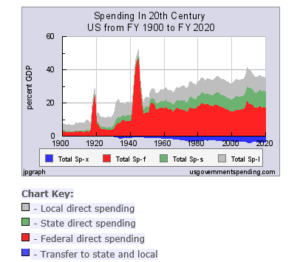
    I do wonder how many on the left would find this agreeable… I mean it removes a lot of the “humiliation” people go through the classic process. It can be made online and remove the stigma associated with being temporarily on welfare – although I am not sure of the wisdom of removing the stigma entirely. It can remove redundant bureaucracy and situations when people need welfare and are denied. You may be employed, but one month may need some extra cash, this is a way to get it. But it also a way to introduce personal responsibility and clear limits on welfare. I would say very few of our leftist brethren would agree…

    Thoughts?


  • Muh Culture!!: Conservative Values in a Libertarian Society

    10Politics is downstream from culture.

    This has become a popular turn of phrase in conservative and libertarian circles.  And, by all means, there’s certainly a lot of truth to it.  But, I think it misses an incredibly important point.  It’s a mistake to treat culture itself as an entirely exogenous variable.  Culture doesn’t happen in a vacuum.  Culture itself is shaped and altered by policy, and consequently politics.  That is to say, if politics is downstream from culture, it’s also a tributary into the culture.

    But, how do politics shape culture, you might ask.  Well, you first have to consider the nature of what is culture.  Culture is the manifestation of the social beliefs, values, conventions and tastes shared by a group of people.  But, all of those things happen in the context of the success they produce for those who practice them.  A great many, if not all, cultural traits arise because they work.  They provide a practical advantage in the conditions in which they are adopted.  In fact, they very well may become elements of the culture precisely because they provide such advantages.  Success breeds imitation and imitation breeds institutionalization.  To the point that the initial advantage may well be beside the point.  But those conditions are hugely affected by the politics prevalent in the society in which they are adopted.

    As just one example, you see longstanding reputations for a poor work ethic for certain cultures.  Why would that be?  I’m not saying that it’s not just the random interplay of luck or providence with certainty.  But, you find a remarkable correlation of those cultures regarded as having poor work ethics and those cultures with high levels of official predation.  For the libertarian, this relationship should be obvious.  If the consequence of your busting your behind is just going to be that the guy with the club bashes you over the head and takes your stuff, busting your butt is a suckers’ game.  It’s not surprising, then, that you don’t see work elevated to a particularly high status in those societies.

    All of which brings us to a point of contention between libertarians and social conservatives.  “What sort of licentious den of iniquity would a libertarian society look like,” social conservatives ask, “without laws to uphold standards of decency and public morality”.  And if their solution is an abysmal one, their concerns aren’t necessarily unreasonable.  I think it is fair to say that, at least in some ways, we’ve become a coarser, less responsible (if more “genuine”, whatever the hell that means) society over the last few generations.

    I think the point they miss is not that politics is downstream from culture, but the fact that politics is a tributary into culture.  A libertarian society would create a particular form of culture.  And in many regards, that culture would be remarkably conservative in its values, habits and behaviors.  In many regards, libertopia would look much more like Mayberry than like Mad Max.

    This notion might seem counter-intuitive at first glance.  How can a society that provides less, or even no, enforcement of traditional values have more popular adherence to traditional values?  Because traditional values, for the most part, work.  Not universally.  Not perfectly flawlessly.  And developments might make them less useful over time.  But, as a general rule, adhering to them makes for a better life.  You’re more likely to be successful, happy, and fulfilled if you work hard, don’t philander, stay in school, exercise sobriety or at least moderation, and have an active spiritual life.

    And, in a libertarian society, you’re much more responsible for ensuring your own success than you are under the status quo.  Absent the mandated, state-sponsored, safety net, the consequences of vice are more likely to fall on those engaged in that vice.  Not only does that affect incentives, that change in incentives can change the culture.  If a behavior makes you less successful, that behavior becomes less popular and that change in popularity itself makes that behavior less acceptable.

    The cost of vice, though, regularly indulged in, isn’t trivial.  You don’t have a lot of prospects in the world if you regularly show up to work hung over or coming down from a cocaine bender.  Single motherhood, absent outside help, is a major life challenge to the single mother as much as the child.  And being a “player” is a bad reputation because it’s more likely to leave his female romantic prospects in that situation.  A liar or a cheat is something that you don’t want to be because your audience has significant incentive not to trust you.  In a libertarian society, simple reality provides strong incentives to avoid vice.

    But those incentives are not in play under the status quo.  The safety net provides a floor on the consequences of vice.  You don’t have to believe the cliché of the welfare mother pumping out babies to increase her welfare check to understand that that check does reduce her downside to having sex with a guy who isn’t going to support her.  And, on the margins, that matters.  You don’t have to be a teetotaler panicking about the dangers of demon rum to recognize that some people will indulge in the nightlife more aggressively if getting fired means they’ve lost their only source of income.

    Now, living with the consequences of your vices might seem a brutal, even vicious means of punishment.  Harsher, perhaps, than the legal penalties imposed by the social conservatives.  However, the removal of the state-sponsored safety net doesn’t mean the abandonment of any safety net.  It’s not the case that, before 1932, every minor transgression in human behavior meant certain ruin.  People relied on civil society for their safety net.  They turned to their churches, the local lodge of their fraternal organizations, their unions and private charities for help when they’d fallen on hard times.

    But, unlike the government, these institutions had an ability to draw distinctions, to discriminate.  They could demand the person asking for their help change his behavior and refuse him assistance if he didn’t change.  But, the government can’t do that.  And I’m not sure I’d want it to be able to.  Not only is there a real matter of equal protection to consider, but the concentrated political demands of those demanding assistance despite their vices provide a much more powerful constituency than the diffuse expectations of those expected to pay for it.

    Unfortunately, the space of civil society has fallen dramatically.  In his 1995 essay Bowling Alone, Robert Putnam discussed the decline in American “social capital” and civil society in the post-World War II era.  One of the examples he cites is the decline in bowling league participation even as the number of bowlers has increased (hence the title of his essay).  However, this was not always the case.  Consider this quote from Alexis de Tocqueville’s Democracy in America,

    “In the United States, as soon as several inhabitants have taken an opinion or an idea they wish to promote in society, they seek each other out and unite together once they have made contact. From that moment, they are no longer isolated but have become a power seen from afar whose activities serve as an example and whose words are heeded”

    The America that de Tocqueville was describing was the America of the 1830’s.  It was an America where the government played, at most, a negligible role in the life of the country of the life of most citizens.  And what he found astonished him.  This was in contrast to his experience in the more heavily ruled and governed Europe, where such institutions were much sparser.  Huge swaths of the American civil society that remain with us to this day were formed in this era preceding the rise of the government leviathan, the SPCA, the Red Cross, the Salvation Army, various local hospitals, various colleges.

    Putnam examines and largely dismisses the notion that this phenomenon might be a result of women entering the workforce.  Instead, he suggests, the more likely cause is the rise of television.  What he misses is the explosion in the size and scope of government at all levels:

    Government grows at the expense of civil society.  There’s a crowding out effect.  And that reduced role for civil society translates to a diminished respect for traditional values.  It’s not shocking, to me at least, that the Baby Boom generation, the first to grow up with this expanded role of government as normal, was the first that turned away from both civil society and traditional values.

    “But,” a hypothetical social conservative might counter, “even if limited government will give us much the same thing, surely the right top men could institute policies that would get us there faster.”   But, that’s doubtful.  As I note before, vice will inevitably have a greater constituency than its absence.  Vice, after all, is fun, at least while you’re doing it.  And trying to tamp out others’ fun makes you, well, kind of a killjoy.  So, when you leave these decisions to the government, there’s going to be an inevitable drift toward vice.  That is unless there is an ongoing expenditure of energy on new moral crusades, which people tire of eventually, anyway, the inevitable trend is toward vice.

    So, in a world where politics is downstream from culture and where culture is downstream from politics, the sensible stand for social conservatives is actually libertarianism.  While it may not give them their ideal world, it is a world far closer to it than they can hope to achieve through ever-expanding government.

  • Après Trump, le déluge


    Despite the hopes of the Democrats, there is no one who will be able to defeat Donald Trump in the Presidential election of 2020. This observation should be incontrovertible: a Trump-killer cannot exist as he was not elected on policy, but on personality (as in “cult of”). Remember Tom Tancredo? A decade ago, he pitched what Trump is selling, but even as recently as 2018, no one was buying. In the motley collection of charlatans and mountebanks that pass for the Democratic presidential hopefuls, there is no one who can serve as a ideological banner to hoist that the living Rorschach inkblot of a man, Donald Trump, could for the white working class. Even if one wanted to, he or she could not, as the ascension of Trump was as much the product of a very specific set of circumstances as much as any charisma he may possess. Indeed, in this case, Democrats should take notes from we Libertarians in that the best they can hope for in the upcoming election is a protest vote.

    Having noted the uniqueness of Trump, the question of 2024 looms large: Who is capable of carrying Trump’s banner? Just as Hillary Clinton wasn’t able to hold together the coalition of voters that Barack Obama commanded, it is highly improbable that Mike Pence, if he chooses to run, will be able to draw the number of voters from the varied demographics that found their avatar in Trump. Again, remember that policy doesn’t come into play – whether or not we see a continuation of the Nu-GOP populist platform or a return to the quasi-free trade imperialism of the neo-conservatives, there is no one who could fill the role that Trump plays in the national epic narrative that unfolds before us with each social media post. At best, Donald Trump Jr. could perhaps pull it off – though, with the exception of the most die hard MAGA-ots, the typical American has shown a distaste for dynasty politics in the presidential arena (Jeb?). Indeed, a son being elected after his father would be unprecedented.

    Leaving aside speculation of father passing the baton to son (or daughter?), it is safe to say that Trump will be leaving a vacuum behind for Republicans in 2024 that could be filled by whichever Democratic candidate successfully gains cult status with enough of Generations X, Y, and Z. (As an aside, Alexandria Ocasio-Cortez turns 35 on Sunday, October 13th, 2024.) Regardless of who fills that role, the Republicans will eventually be forced to answer if 2016 was worth, not only their souls, but 2024 and beyond.

    The correct answer is Teanna Trump.