Category: Products You Need

  • Thirty-Something Rifle Cartridges II – The Thirty-Threes

    Thirty-Something Rifle Cartridges I:  The 33s

    I find the thirty-threes to be some of the most useful of the thirty-something calibers for the North American game fields.  Most of them are easily capable of taking the largest American big game.  There is a wealth of projectiles available.  Some of them, like Winchester’s excellent .338 Winchester Magnum, have been around for decades, and as a result there is a great deal of loading data available.

    As a result, there are a lot of .33 caliber rounds out there to discuss.  So, without further ado…

    At the End of the Black-Powder Era…

    As we saw back in the series on level guns, the famous John Browning/Winchester collaboration started with a big, tough lever gun called the Model 1886, which could handle some pretty heavy cartridges.  In 1902 Winchester made this rifle available for a new cartridge, the first commercially available thirty-three, the smokeless-powder .33 WCF.

    This was a pretty hot load for its time, launching a 200-grain cast bullet at 2,200 fps.  With more modern, jacketed bullets, it quickly gained a reputation as a hard hitter, ideal for deer, elk and bear at ranges out to about 200 yards.  Besides the Model 1886 Winchester, it was also available in the 1885 single-shot and the lever-action 1895 Marlin.

    The .33 WCF was interesting because it came at a transitional moment in American shooting.  As we’ve noted previously, the end of the Great War resulted in a lot of American shooters and hunters returning home with the memory of their issue 1903 Springfield and Pattern 17 Enfield bolt guns in mind, along with the powerful .30-06 round they fired.  The lever gun was due to lose some popularity; the age of the bolt gun was dawning.

    And the .33 WCF, while a groundbreaking round, was a rimmed lever-gun cartridge.

    The .33 WCF was offered in the Model 1886 until 1935, when Winchester replaced the 1886 with the beefier Model 71 and its .348 Winchester cartridge.  But this first of the thirty-threes had set the stage for some modern bolt-gun rounds to come, and one of those pioneering bolt-gun rounds came (in part) from the mind of someone we’ve discussed before:  Elmer Keith.

    The Mid-Century

    Early in the 20th century Elmer Keith, along with his colleagues Charles O’Neil and Don Hopkins, developed a new .33 wildcat based on the .30-06 case necked up.  The .333 OKH was intended to use the same .333 diameter bullets as the .333 Jeffries then popular in Britain, and while it delivered some good performance it was hampered by the lack of bullets, and since wildcatters live and die by the availability of suitable projectiles, this didn’t bode well for the .333.  The logical evolution was to increase the bullet size to .338, resulting in the .338-06 wildcat.

    This same trio also developed the .334 OKH, based on the .375 H&H case; this ended up being remarkably similar to the .340 Weatherby Magnum, about which we’ll talk in a moment.

    In fact, the tale of the mid-twentieth century thirty-threes is somewhat convoluted, with plenty of wildcats and experiments mixed into the developments by major gun and ammo manufacturers.  But one thing very quickly became apparent – launching a big, heavy projectile at significant velocity called for a magnum-sized case.

    Precedent was already in place.  During WW2 Roy Weatherby had introduced three standard (2 ½”) length cartridges based on the .375 H&H belted case, shortened and necked down.  These three were the .257, .270 and 7mm Weatherby magnums, and they soon gained a following among those fond of high-velocity rounds.

    In 1958, at the urging of Elmer Keith, Winchester took that precedent and applied it to Keith’s and others work with the medium bores.  They followed Weatherby’s example, took the .375 H&H case, shortened it to fit standard-length actions, straightened the case walls a tad and necked it down to take a .338 pill.

    The result of this was the great .338 Winchester Magnum, introduced along with the .264 Winchester Magnum and the .458 Winchester Magnum as a family of cartridges.

    Now the American sportsman had a real world-beater.  The big new medium-bore magnum put out a 225-grain projectile at 2,800 fps in factory loadings, and with the right slug would easily handle any North American big game, including big Alaskan grizzlies and moose.

    The .375H&H, .338 Win Mag, and a quarter for scale.

    It should come as no surprise to anyone that’s been paying attention that this round is a favorite of mine.  My .338, Thunder Speaker, is built on a 1908 DWM large-ring Mauser action with a Douglas barrel and a Bell & Carlson stock.  The .338, while delivering plenty of punch, does it on both ends, having a reputation for recoil as well as hitting power.  Thunder Speaker, in addition to the big, wide recoil pad on that B&C stock, is Mag-Na-Ported and weighs almost ten pounds loaded, which makes it very manageable – at least for me.  I’m large and not recoil-sensitive, so your mileage may vary.

    My favorite load in that big, tough Mauser action is a 225-grain Barnes TTSX boat-tail over 67 grains of IMR 4350.  This gives me about 2,800 fps for almost two tons of muzzle energy.  This load will easily lengthwise an elk or moose, and that’s what Winchester intended the round should be able to do, so I’m pretty satisfied; in Thunder Speaker, with me at the wheel, it will also put three rounds into a 3” circle at 200 yards.  The best shot I’ve ever made on a game animal was with this rifle; a fat meat mulie buck in the open sage country south of Parshall, Colorado.  The buck paused to look back on the edge of an arroyo; I tossed my cap on a flat rock, laid down in the snow, laid my rifle on the rock, took aim and sent one round down the hill.  The .338 slug hit the mulie at the base of the neck, dropping him in his tracks at 280 yards.

    She still does kick, though.  My son-in-law once got a case of Kaibab eye after asking to try out Thunder Speaker off the bench-rest; I warned him not to choke up on the scope!

    The .338 Winchester Magnum was quickly a big commercial success.  In addition to its introductory chambering in another shooting legend, the pre-64 Winchester Model 70, it was quickly picked up in the Remington and eventually, the Ruger, Savage and many other lines.  Browning made it available in the BAR, making it the most powerful semi-auto rifle available at the time.  Wildcatters quickly picked up on the usefulness of the case, bringing about among other things the .30-338 Magnum, which Winchester later legitimized as the .300 Winchester Magnum – bringing the standard-length magnum case back to America’s caliber.

    But the competition was paying attention.

    Only four years after Winchester brought out their thirty-three, Roy Weatherby upped the ante.  His entry into the field was the .340 Weatherby Magnum, on the same magnum-length case as the .378 Weatherby Magnum.  This was a real whopper, sending the same .338 225-grain slug forth at 3,100 fps.  But the .340 Weatherby suffered from the same issues as the 8mm Remington Magnum we discussed in the last installment:  It was limited to a magnum-length action.  What’s more, it was a proprietary round.  When the .340- Weatherby was introduced one could only have one in the Weatherby Mark V, with factory ammo initially only available from Weatherby.  Even today, the only company loading this round besides Weatherby is A-Square, and the ammo is pricey.

    The place of the thirty-three in the American shooting scene was now secure.  But the explosion of rounds to come was to prove an embarrassment of riches.

    Today

    In the magnum world, the .338 Winchester Magnum and the .340 Weatherby Magnum have been joined by some new contenders.  The .338 Ruger Compact Magnum came out in 2008, a 2,700fps thumper intended to be chambered in short-action rifles like the M77 Mk II Compact.

    There are a couple of newer Weatherby-level steamrollers available as well.  In 1989, A Norwegian/Finnish munitions company named NAMMO (Nordic Ammunition Company) saw a market for a powerful, long-range military sniper round; their answer was the .338 Lapua, which was adopted in civilian as well as military applications.  The Lapua is a real rocker, sending out a 250-grain slug at over 3,000 fps.

    In 2002 Remington responded with an expansion of their Ultra Magnum line, the .338 RUM (Remington Ultra Mag.)  This fell a bit short of the .338 Lapua and produces very similar ballistics.

    But both ultra-mag rounds have the same shortcomings:  They both require magnum-length actions, and they both run at very high pressures, resulting in significant barrel wear at a much lower round count than the older .338s.  Still, there’s still news in the non-magnum world.

    2006 saw the introduction of the .338 Federal, which was simply the .308 Winchester case necked up to the .338.  This introduction not only gave .33-caliber thumping to short-action bolt guns, but it also added a medium-bore alternative to the AR-10 platform that was becoming popular as the Tacticool craze accelerated.  The Federal round yielded only modest performance compared to the magnums, propelling a 210-grain slug at about 2,600 fps.  But the use of the .308 case made for a versatile round that punches well above its weight class.

    Finally, in 2009, Marlin brought the thirty-threes full circle by introducing the .338 Marlin Express, a semi-rimmed lever-gun round intended to punch up the power level of that company’s 336-series rifles well above the original .30WCF level.  In fact, at ranges up to about 200-250 yards, the Marlin Express round delivers performance in excess of most .30-06 loads, which makes the 336 rifles far more versatile on bigger, thicker-skinned game – and brings the lever-gun world back to the levels of punch known in the original 1886 Winchester.

    The thirty-threes are many, powerful and versatile. The late 20th-early 21st century proliferation of .338-caliber rounds has been interesting, but none of them have quite managed to knock the good old .338 Winchester Magnum off the top of the heap.

    In the next installment, we’ll examine a group of rifle cartridges that are a little lighter on the long-range magnum loudenboomers and a little heavier on the short-range woods rounds – so stay tuned for an in-depth look at the thirty-fives.

  • Thirty-Something Rifle Cartridges I – The Thirty-Twos

    Thirty-Something Rifle Cartridges I:  The 32s and 8mms

    Mid-caliber rifle cartridges are very useful.

    A qualifier:  I’ve said before that if you can only afford one rifle for big game in North America, buy a .30-06.  That fine old round, properly loaded, can handle any game in North America, even though it’s a tad on the light side for big Alaskan grizzlies and moose.

    But there are a whole family of rifle cartridges that are useful, solid, and versatile; these are generally known as the mid-range or mid-caliber cartridges.  I’ll refer to them in this series as the Thirty-Somethings.  These rounds launch bullets ranging from the .32 to the .375 and have a wide range of power selections for almost any eventuality.

    In this series we’ll focus mostly on rounds widely used in North America.  So, while we’ll look mostly at American cartridges, we’ll also examine some from other parts of the world that have seen a lot of use here, like the 8X57mm Mauser and the great old .375 H&H.  So, let’s start with the first group – the Thirty-Twos.

    At the End of the Black-Powder Era…

    Remember when we were talking about the history of lever guns?  In 1894 Winchester Repeating Arms Co. and the DaVinci of firearms, John Browning, brought out the great Model 1894 Winchester lever gun.  While that rifle is so intimately associated with the .30WCF cartridge that the terms “.30-30” and “94 Winchester” are damn near synonymous, it’s rather less well-known that the Model 94 wasn’t originally introduced in that caliber; instead, it was chambered in its first year for two thirty-somethings, the .32-40 and the .38-55.

    In 1894 the .32-40 Ballard was a popular round.  It had been introduced ten years earlier in the Ballard Union Hill #8 and #9 target rifles, loaded with a 165-grain cast bullet over 40 grains of black powder, resulting in a muzzle velocity of about 1,450 fps.  The long, straight-tapered case allowed for a smooth, even powder burn and resulted in a good reputation for accuracy.  Famed barrel-smith Harry Pope was fond of the round and made it the basis of his .33-40 wildcat.  This round looks somewhat odd by today’s standard but it successfully made the transition into the smokeless powder era, and was offered in a sporadic manner in Winchester lever guns through most of the twentieth century, although mostly in the commemorative editions of which Winchester was so fond.

    The .32-40 was overshadowed in 1895 when Winchester released the Model 94 in the smokeless powder .30WCF, but the New Haven gunmakers weren’t done with .32s yet.  In 1901 they released the Model 94 chambered for the .32 Winchester Special, which took the .30WCF case and expanded the neck to take a .321 bullet.

    At first glance it’s hard to see a reason for this round.  The .32 WS, in its primary load, fired a 170-grain bullet, like its smaller-bored cousin.  Ballistics were near-identical, with the .32WS having less power past 150 yards or so due to the lower sectional density of the bullet.

    But for the hand-loader who was sitting on a big supply of lead and black powder – not an uncommon thing in 1901 – the prevalent wisdom of the day claimed that the .32 had a couple of advantages.  First, its slightly larger bore was claimed to make for easier cleanup of the messy black powder residue.  Also, Winchester used a 1-16 rifling twist in the Model 94s chambered for the .32, as opposed to the 1-10 twist of the.30WCF; this, again, supposedly made for easier cleaning.

    So, the .32 Special may have been just the ticket for the guy with a lot of black powder to burn, or maybe for the occasional recalcitrant old coot who thought that smokeless powder wasn’t here to stay.

    Like the .32-40, the .32 Special hung on through most of the twentieth century, in later years mostly in commemorative Winchester models.

    Another variation came from Remington, who was determined not to be outdone by Winchester.  In 1905 Remington introduced their Model 8 autoloader, followed in 1914 by the Model 14 pump-gun.  Both rifles saw a fair amount of market, and both were chambered for (among other rounds) the .25, .30 and .32 Remington cartridges, essentially rimless versions of the .25-35, .30-30 and .32 Special.  Unlike Winchester, Remington didn’t fiddle around with different twist rates in their guns and the Model 8 auto – the famed old Remington “piano leg” – was fussy about ammo, fouling and hanging up quickly if black-powder loads were used.  It’s hard to see what Remington had in mind with this range of cartridges other than ensuring that they had an offering in every bore size to compete with Winchester.

    Winchester did have another .32 caliber round, the .32WCF, better known as the .32-20.  This was mostly a small-game round of modest power; while it’s a great old cartridge for big hares, bobcats or raccoons, I’m going to restrict this discussion to big-game rifles – in spite of the fact that I’d love to have an original Model 92 Winchester in .32-20 or .25-20 for hunting snowshoe hares and jackrabbits.

    In 1914, as we’ve seen, the shooting world saw some new influences hit, and the thirty-something rifle cartridges were affected along with everything else.

    The Mid-Century

    In 1898 the famous Mauser-Werke, down in the small town of Oberndorf in Bavaria’s Neckar River valley, introduced a world-changing bolt gun, the Model 1898.  We’ve already discussed this rifle and its significance, so now let’s look at the cartridge that was paired with this rifle for use by the German military – the 7.92x57mm, more commonly known as the 8mm Mauser.

    The 8mm Mauser predates the Mauser 98 by ten years, having been first introduced in the 1888 Commission rifle.  The original cartridge was the Patrone 88, launching a .319, 227-grain round-nose jacketed bullet at about 2,000 fps.  As a first-generation smokeless powder cartridge, the Patrone 88 carried over the heavy, round-nose bullet design common in the last generation of black-powder rounds.  In 1895 the bullet/bore size was changed slightly to reduce barrel wear and ease cleaning (supposedly) resulting in the .323 bullet diameter that would stick with the cartridge in military loadings.

    In 1904 and 1905, the cartridge got a facelift; the neck dimensions were slightly altered, and the brass thickness increased a tad.  The new round was loaded with a 153-grain spitzer bullet, producing about 2,700 fps.  This made the new round, the S Patrone, more effective at extended ranges due to the higher velocity and better bullet design.

    The 7.9×57 S Patrone was the standard German military’s rifle and machine gun cartridge in both World Wars.  Interestingly, after the Great War, the Treaty of Versailles forbade the use of the round in civilian arms, but by 1930 or so the German manufacturers were roundly ignoring the Treaty, and the cartridge again became popular in civilian hunting rifles; a rimmed version, the 7.9x57mm IRS, was even developed for single-shot and multi-barreled rifles.

    The 7.9x57mm remains a popular hunting cartridge in Europe today, at least in those jurisdictions that still allow the unwashed peasantry to own rifles.  In the United States, the round gained a significant following when surplus Mausers became widely available at bargain prices; the 8mm Mauser offers performance very similar to the .30-06, and in fact the round is still loaded by many American ammunition makers today.  In fact, the 8mm Mauser remained the only .32/8mm bolt-gun round commercially loaded in the United States until 1978.

    In the latter half of the twentieth century, Big Green had realized a commercial success with its excellent (then) Model 700 rifle and with their 7mm Remington Magnum cartridge.  I always thought the 7mm Magnum a tad overrated; an old elk-hunting friend of mine shot one and was fond of bragging about its velocity and flat trajectory with his favorite factory load, until I pointed out that in my big commercial Mauser I was shooting a .30-06 handload that ran a 165-grain Barnes bullet at only 100fps less than his factory 140-grain 7mm loads, and took to his brother’s chronograph to prove it.

    In the late Seventies, Remington determined that they wanted to compete with Winchester’s beefier .300 and .338 Winchester Magnums.  Remington’s engineers came up with the 8mm Remington Magnum, but they made one key mistake:  They used the full-length .375 H&H case as the basis for their new round, mandating its use only in Magnum-length actions.  The new 8mm round was intended to compete with the excellent .338 Winchester Magnum, but Winchester’s offering had a thirty-year head-start and could be chambered in standard-length actions.  While the 8mm Remington Magnum was a powerful round that could easily handle any game in North America, launching a 200-grain pill at a bit over 3,000 fps, it never gained much following.  The .32/8mm was generally considered a European bore size, and components (chiefly bullets) were not available in as many options as either .30 or .338 offerings.  The 8mm Remington Magnum is still in use today, but as sporting rifle cartridges go, it’s a footnote.

    Today

    Speaking of footnotes; since the new century dawned, the American shooting scene has seen only one new .32/8mm round.

    In 2000, Winchester and Browning introduced American shooters to the .300 Winchester Short Magnum, a fat round with a rebated rim that provided magnum horsepower in a short-action rifle.  The “short fat” case supposedly allowed powder to burn quicker and cleaner, and soon the WMS rounds gained a modest following.  In 2005, Winchester introduced the .325 Winchester Short Magnum, which actually fired a .323 180-grain bullet at about 3,000 fps.

    After its release, Winchester engineers allowed that the .32/8mm bullet was the largest that could be efficiently paired with the WSM case, and so no larger offerings were forthcoming.  Unlike the 8mm Remington Magnum, the .325 WSM did gain some following, and like its older brother, the .338 Win Mag, it is capable of taking any game in North America with the right load.

    The .32/8mm bore diameter has never been overly popular with American shooters.  If any caliber is America’s caliber, it’s the .30.  It doesn’t help that American manufacturers have never really gone in for this bore size in a big way, and it helps even less that one of the few major offerings was a commercial flop.

    But step up one bore size to the thirty-threes, and the picture changes quite a bit.  My own favorite hunting rifle is one of those; I’ve described my .338 Win Mag, the inestimable Thunder Speaker, in these virtual pages before.  So stay tuned for the next installment, in which will examine the Thirty-Threes.

  • Relegation/Promotion in Baseball

    Revolution

    In 1988, in his last Abstract, Bill James wrote an essay called “Revolution”.  I would link to it, but our copyright laws mean that a 31 year old essay is not yet in the public domain, nor never will be.  In it, James suggested freeing the minor leagues from their farm status and having them compete as independent leagues.  Some would accept their levels as minor leagues, some would try to build up and from a 3rd major league, some would fold.  It would allow more teams to exist as every town could have a team and compete at their proper level, with proper levels of pay (none to very little).   There was a lot of good stuff in the article but when I was reading it, in April 1988, I was struck by what he left out…relegation and promotion.  There was no way for a team not in the majors to get there, other than expansion.  It was the obvious flaw in the article.  It is one I have been thinking about ever since, and despite tinkering around, my solution keeps coming back to the same one I thought of 31 years ago.

    Ignoring the relegation/promotion question for now, why would we want free minor leagues?  Have you been to a minor league game?  The decision making is less than spectacular, but it is because the managers literally aren’t playing to win.  They are rewarded for developing players, not winning games.  If that means playing Joey Votto in left field instead of 1B, because the Reds don’t have an opening at first, then so be it (this is not a hypothetical.  And yes, he was a far worse outfielder than you can possibly imagine).   Your AAA team has made the playoffs?  Great, we will call your best player up to the majors so he can pinch hit once a week in September.

    There is no real rooting for your home team.  At best, if you are a fan of their affiliated major league team, you get to see players that you will be cheering for later one.  As a Reds fan and Cardinals hater, when Louisville was a Cards franchise, I had trouble cheering for my local team.  Fortunately, they switched to the Reds (with a brief detour thru Milwaukee).  If the teams were independent, they would be playing to win.  And attendance would go up, not down, in the post season.

    I get up, I get down

    For those not fans of European sports, what is relegation and promotion?  I will use English soccer as my example, as it is the best known to American, but I am sure Pie can fill us in on how it works differently in Romania.   At the end of the season, the worst teams from one league are relegated down to the next lowest league, and the best teams from that league come up.  For example, the bottom 3 (18th thru 20th) in the English Premier League are relegated to the Championship League, and the top 3 (actually top 2, plus a playoff winner of teams 3-6) are promoted from the Championship to the Premier League.  Below the Championship is League 1 and League 2.  Below them is the National Conference, and then it starts getting interesting.  At that point, instead of a straight 1 to 1 correspondence, we get branching, as the leagues form “The Pyramid”.  Below the Conference is Conference North and South.  Below them are 3 leagues, Northern, Southern, and Isthmian.  And below them are more and more branches.  At the lowest levels you get county leagues.  Its just neighborhood teams playing against each other, with better ones moving up and playing against the other better teams.  Think of it as like A-league vs B-league softball.

    If you really care, here is a nice image:

    https://englishsoccerguide.com/wp-content/uploads/2016/04/english_league_pyramid.gif

    Centerfield

    Now that we are all on board, what would the American system look like.  First, we have to accept that 1969-1976 had the correct setup for MLB.  Each league had 12 teams, divided into 6 eastern and 6 western teams, with 18 games played in division and 12 played out of division with no interleague play.

    Perfection!  Then it all got screwed up by letting Toronto in the AL.

    While we can’t go back, we can replicate that.  We will expand the majors by 18 teams, and form two levels of 24 teams.  The Major Leagues D1 will have 4 6-team divisions:  NL-East, NL-West, AL-East, AL-West playing the schedule they did in the 70s.  Major League D2 will also have 4 6-team divisions, but will save on travel costs.  There will be two leagues, the Eastern League and the Western League, each with a National and American division.  They will play the same 18-12 breakdown, but wont cross over to the other half of the country.

    Sixth place in each D1 division will be relegated to the appropriate division in D2.  The winners of divisions in D2 will move up.  Below is my initial layout.  I chose the 18 teams from current minor league baseball (17 of the 18 are in AAA) based on 2019 attendance and not being located within the DMA of a major league team.  The 6 MLB teams in D2 were based on geography and 2019 records.  For assigning minor league teams to National or American, I mostly went with their historical affiliations with some adjustments for balance.  Its just an example.  The west starts at Louisiana, Arkansas, Missouri, Illinois, and the UP.  And whatever that is in Canada – Albertoba or something.

    Here is your 2020 breakdown:


    NL-East NL-West AL-East AL-West
    Atlanta St Louis NY Yankees Minnesota
    Washington Milwaukee Tampa Bay Houston
    NY Mets Chi Cubs Boston Oakland
    Philadelphia LA Dodgers Cleveland Texas
    Cincinnati Arizona Toronto Chicago WS
    Pittsburgh San Fran Baltimore LA Angels
    EL-National WL-National EL-American WL-American
    Miami Colorado Detroit Kansas City
    Louisville San Diego Toledo Seattle
    Indianapolis Iowa Columbus Round Rock
    Durham Sacramento Charlotte Las Vegas
    Buffalo Paso Rochester Salt Lake City
    Scranton Albany Nashville Oklahoma City


    American Pyramid

    That is a start of the system, we could keep the rest of the minors around as farm teams, instead of each MLB team having about 6, each of the 48 would have 3.  But once we go down this path, this won’t last.  There will be more expansion off the bottom of this, We will start the American Baseball Pyramid.  I don’t know exactly how it would develop, but I think it would start with 4 regional leagues, Northeast, Southeast, Central, and West Coast.  Maybe 5, with a Midwest league also, Yeah, probably so.  I don’t know how they would decide the 4 to promote, so maybe it would be 4.  But whatever, you get the idea.  And below that would be 8 or so leagues, and below that state level leagues.  Below that city level leagues, where neighborhoods play against neighborhoods – probably much shorter seasons with a game or two thru the week and then weekend games on Friday, Saturday, Sunday.

    This would give a place for that guy you played little league with, who was a AAA all-star and then spent 2 weeks in the Majors with an ERA over 10, a place to continue to play (this is also not a hypothetical).  Now, there are two types of guys in the minors, young kids who have potential to be major leagues, and guys kept around because they help the young guys learn and may be a coach someday.  As soon as you lose that prospect status, you are generally out the door.  They don’t want a 32 year old at A ball.  But with an independent system, if that 32 year old can help the A league team win and get promoted, he is worth having around.  And they will still develop the 19 year old, so they can sell him to a Major League team and rake in the profits.


    Money

    So why hasn’t this already happened?  It might have in the 19th century.  It would have prevented all the failed competing major league attempts, like the Players League and the Federal League and the American League.  The PCL was very close to a 3rd major league and might have become one if the Dodgers and Giants hadn’t moved west.  There were a few players who refused Major League contracts to stay in the PCL.

    Now it won’t happen for the obvious reason:  $$$.  I team dropping to MLB-D2, or even lower, would lose out on lots of money.  With the cost of a team, owners can put up with being bad, they can’t put up with being in a lower league.  And the second monetary reason is leverage.  Although expansion has put a stop to most of it, teams can get shiny new stadiums out of cities by threatening to leave.  Get Las Vegas a D2 team and the threat goes away.  Vegas isn’t going to try to become the new home of the Twins, they can just spend money on players and get promoted.

    The system seems great to libertarians, the best 24 franchises will rise to the top and bad owners will watch their teams fall.  Good fan bases will support their team, providing the money for teams to rise to their appropriate level and stay there.  Bad fan bases will get what they deserve.  And we can also see why crony capitalist wouldn’t like it.

    So yet again, I end an article with a section on why my awesome idea isn’t feasible.

  • Bacon Booze, an Old-Fashioned, and a Gift Suggestion

    Bacon-Infused Booze.

    Its been too long since I brought the benighted masses a new cocktail recipe.  Given the number of enthusiastic carnivores here (sorry, Old Man and SP, this one won’t work for you), I thought Bacon-Infused Booze would be of interest.  You can also do this with rye, bourbon or other whiskies, or even theoretically Scotch, I suppose.  Since infusing your booze with bacon adds a smoky flavor, I can’t see it being very good with clear liquors, rum, or others that aren’t already smoke-friendly, but who knows?  Scotch typically already has plenty of smoke, so I can’t see infusing bacon into Scotch really adding much, but I haven’t tried it.

    Technically, infusing bacon into your booze is “fat-washing”, and it is dead easy.  You will need bacon, booze, a container, and a freezer. Based on my experience, the smokier the bacon, the better.  Because of the (very) wide variation in bacon, the proportions are also variable. You may have to make multiple batches to land on the right recipe for you.  Darn it.

    (1)        Pour your booze into a container (we’re using home barrel-aged Bulleit rye).  We’ve been doing half a fifth (call it 13 ounces) at a time as we experiment, so a pint mason jar works just fine.  The wider the mouth, the better, so a tupperware container is also a good choice.

    (2)        Cook the bacon.  I find cooking it to quite crispy in a frying pan works a little better in terms of flavor getting transferred to the booze.  Keep the cooked bacon, as it makes a dandy garnish.  I’ve had candied bacon as a garnish in fancier bars, so if that’s your bag, go for it.

    (3)        Measure ½ – 1 ounce of warm bacon grease for 13 ounces of booze, and pour into your booze.  Stir or whisk vigorously to break up and distribute the grease.

    (4)        Place in freezer, and leave for at least 12 hours.  I don’t think there’s any benefit to leaving it more than 24 hours.  The bacon grease will congeal into a nice, hard mass.

    (5)        Remove as much of the fat as you can with a slotted spoon or similar.  This is where the wide-mouthed container comes in handy.  Pour the booze through cheesecloth or a coffee filter to get out rest out.  Do this while the booze is still ice-cold so the filter catches the hard fat bits.  The end result should not have any slick of fat left on the top, or at worst a very minimal amount.

    Don’t expect a pronounced bacon flavor, but you should get some smoke and flavor, and a definite smoother/richer feel.

    An Old-Fashioned.

    Now you’ve got your Bacon Booze.  But you don’t have a cocktail yet.  May I suggest an Old-Fashioned?  Mrs. Dean’s current go-to Old Fashioned is as follows:

    3 oz. Bacon Booze.

    1/3 oz Maple Syrup (I’m liking the darker Grade B, which has more maple flavor).  As ever, adjust the proportions to your taste.

    6 dashes Angostura bitters.

    3 dashes Peychaud bitters.

    3 dashes Fee Bros. Aztec Chocolate bitters.

    Shake over ice (remember, a proper shake is 10 – 15 seconds), pour over rocks.  Or straight up.  Your call.  Garnish with bacon.  Or not.  But if not, why not?

    The bacony booze and maple syrup are a natural.  The bitters combo, which I got from a bartender, blends very nicely and add real depth to a drink which is already pretty damn interesting.  Of course, you can use whatever your preference for bitters is.

    The Gift of Ice.

    Because it’s the holidays, one’s mind naturally turns to gifts (either given or received).  Top-tier cocktailing requires top-tier ice, and I believe I have located the best home ice maker on offer.  Its pricey, but it makes glass-clear ice in a number of shapes.  We have the Wintersmiths Phantom Ice Maker.  They make a couple of smaller ones, as well, and a number of different molds for different shapes of ice.  We have the molds for large spheres (ideal for rocks glasses) and Collins “spears” (long rectangular ice “cubes”, good for tall cold ones).  They also have large cubes, and small cubes and spheres (not in stock at the moment).

    Downsides:

    • Cost (not your problem if you can convince somebody to stuff your stocking with it).
    • Size:  It takes some room in the freezer, no question.
    • Time:  24 hours for a batch of ice.

    Upsides:  Perfectly clear ice, that melts slower, dilutes your drink less, and looks uber-classy.

  • Gold Standards IV – The 1851 Colt Navy

    The Perfect Single-Action Revolver

    Resolved:  The 1851 Colt Navy is the standard by which all succeeding single-action revolvers must be judged.  Now that that’s established, let’s take a look at this ground-breaking product of the mind of Colonel Colt, how it changed forever the concept of what a revolver should be, and how it affected every single-action sixgun model that followed – including its famous offspring, the Single Action Army.

    The Forerunners

    The 1849 Colt Pocket Model

    Colt’s production of revolvers up to this point had not yielded a reliable, effective piece for belt holsters.  The Paterson guns were underpowered and had fragile folding triggers; their popularity was mostly due to their being the only effective mass-produced revolver available in the 1830s and 1840s.

    The Paterson guns had five-shot cylinders, but prudence dictated loading only four and leaving the hammer down on an empty chamber; this precaution was required for Colt revolvers up to and including the Single Action Army.  Further, the Paterson guns were loaded using a separate tool for seating bullets.  If that tool was lost, what the shooter was left with was an expensive and rather ineffective hammer.

    The later Colt Walker and First, Second and Third Model Dragoon revolvers were significant improvements.  They had a loading lever attached to the gun under the barrel.  They were also big, powerful guns, firing a .44 caliber ball propelled by a stiff charge of black powder from a six-round cylinder.  The Walker and Dragoon guns were reliable and powerful, but they were also heavy and cumbersome, so much so that many were fitted with shoulder stocks, making rather effective carbines.  But it’s important to note that these were, as named, dragoon pistols, meant to be carried in saddle holsters by mounted troops.

    Contemporaneous with the Dragoon guns were a small selection of Colt “Pocket” revolvers, .31 caliber six-shot revolvers that began with the 1847 Baby Dragoon and continuing with the 1849 and 1850 Pocket Models.  These were, effectively, scaled-down versions of the Dragoon pistols.  Barrel lengths ran from four to six inches, allowing for a decent sight radius for the small-framed guns, but the .31-caliber cylinder put them back in the Paterson level for power; most loads yielded performance roughly equivalent to a modern .32 ACP full-metal-jacket round.

    So as of 1850, your choice in Colt revolvers faced a strange dichotomy; you could either have a big, powerful, heavy horse pistol, or a pocket-sized pipsqueak.  Clearly something new was needed.  Colt decided the answer was obvious:  Split the difference.

    The New Holster Gun

    An original Colt Navy

    In 1851 Colt revealed their new gun.  The 1851 Colt Navy revolver was a scaled-up 1849 Pocket Model, but it differed in several significant ways:  It fired a .36-caliber ball, yielding power roughly equivalent to the later .38 Special 158-grain RNL standard loads; it had a 7 ½” barrel, yielding a good sight radius while maintaining portability; and it was lighter than the Dragoon models, making it easily portable in a belt holster.  It did retain the odd sighting arrangement from the earlier guns, using a small conical brass front sight and a notch on the hammer as the rear sight; despite the rather crude sighting arrangement the new gun quickly developed a reputation for accuracy.

    Another innovation, oddly, didn’t quite catch on; some early Navies were made with a “safety peg” in between chambers on the six-shot cylinder that fit into a recess on the hammer face, allowing the gun to be safely carried with all six chambers loaded.  For some reason this feature wasn’t carried over into later models, and even the famous Single Action Army is only safely carried with the hammer down on an empty chamber.

    Rooster Cogburn’s pair of Colt Navy sixguns, correctly depicted as in Charles Portis’ novel.

    The new revolver was well received, and with good reason.  It was more powerful than the Pocket Models or the Paterson guns, while still being light enough to allow easy carry in a belt holster.  Its grip frame, adapted from the earlier guns, was designed for a one-hand shooting style, making it easily usable either on horseback or on foot.  Further, the curved grip meant that, like later single-actions from Colt, revolved upwards on recoil rather than slamming into the web of the hand.  This made follow-up shots a fraction slower but was much easier on the hand and wrist in repeated shot strings.

    While the majority of Colt Navies were made in the Colt works in Hartford, Connecticut, some were also made in the London Armoury near Vauxhall Bridge; a few other copies were made in Belgium and (unlicensed) in Russia.  They say imitation is the sincerest form of flattery, and that holds true for guns as well as people.  During the war, the Confederate Army widely used the Leech & Rigdon revolver, an unlicensed copy of the 1851 Navy made in several locations throughout the war.

    Interestingly, the appellation “Navy” was not intended to denote a sidearm designed for naval use.  In fact, the production 1851 Colt revolvers cylinders were engraved with a scene of the victory of the Second Texas Navy at the Battle of Campeche on May 16, 1843; this decoration was intended to commemorate the Republic of Texas’ purchase of Paterson Colt revolvers, which was Colt’s first major commercial success.  In fact, most of the Colt Navy revolvers were sold to Army and civilian customers.

    The 1851 Navy proved a great commercial success, remaining in production until 1873, when its niche as a fast-handling holster gun was taken by the next Colt Legend:  The Single Action Army.  It’s important to note that while the SAA improved in several ways over the Colt cap-and-ball guns, it retained the grip shape introduced with the Colt 1851 Navy.  You don’t mess with success, and it was largely the shape of the grip that made the Navy handle so well.

    The Gunfighters

    Wild Bill with his pair of Colt Navy revolvers.

    During the years leading up to the Civil War, the 1851 Navy gained a strong following.  The new gun was popular among outdoorsmen and Army officers, but it also gained a powerful following amongst professional guntwists and outlaws.  Why?  The Navy Colt, even today regarded as perhaps the best-handling single-action sixgun ever made, was the ideal model at that time for the gunfighter.

    The 1851 Navy was the best sidearm yet made for the guntwist.  It was lighter than the Dragoons and thus faster to place into operation.  It was more powerful and, with a longer sight radius, more accurate than the pocket models.  It could be carried on a saddle or in a belt holster and was slim enough to be well concealed beneath a long coat or vest if one was of a mind to do so.

    Famous users of the Navy sixgun were legion, including such historic names as John Henry “Doc” Holliday, Jack Hays, Ned Kelly, John “Rip” Ford and Frank Gardiner.  And, not least, one of the West’s more notorious professional guntwists also favored the Navy Colt:  John Butler “Wild Bill” Hickok.

    Bill Hickock and the Navy Colt

    Wild Bill would be a great subject for a future Profile in Toxic Masculinity, but a lengthy discussion of his life is probably well outside the scope of this article.

    Suffice it to say that Hickock was one of the more notorious figures of the Old West; in his career he worked as a scout for the Army, a cattle drover, a wagon master, a lawman, a gambler and, not least, a gunfighter.  He was involved in several high-profile gunfights and was said to prefer the Navy Colt for its power, light weight and accuracy.

    Unlike many of his contemporaries, Hickock took shooting seriously as an art unto itself, reportedly practicing quick-draw, rapid-fire and slow fire for an hour or more each day.  This served him will on July 21, 1865, when he took part in one of the few actual, recorded instances of the kind of quick-draw duel generally only seen in movies.

    Wild Bill’s guns

    On that day Hickock was playing cards in the Lyon House Hotel in Springfield, Missouri.  Another gambler, one Davis Tutt, stood nearby.  Tutt was known to dislike Hickock and was continually lending the other gamblers money as they continued to lose to Wild Bill.

    One thing led to another and, eventually, the two repaired to the street to settle their differences.  They faced each other at the range of 25 yards; when hostilities commenced, Hickock drew his Navy Colt and promptly plugged his adversary between the fifth and sixth ribs.  Tutt shouted to his friends, “Boys, I’m killed,” and collapsed.

    Eventually Wild Bill was himself killed over a card game, yielding the famous “dead man’s hand” legend, but his death was not due to any failure of his pair of Navy Colts, who continued to serve him well until the end.

    Today

    There are a wealth of 1851 Navy replicas for sale today.  Colt themselves reintroduced the 1851 Navy in the late 1970s and made them for a while, but it was a pricey item and had difficulty competing with the many cheaper versions.  I had one for a while, a brass frame model made by an outfit called Early Modern Firearms (EMF), about which I’ve written here before.  It was a neat piece and I shot it until the brass frame deformed so badly that it wasn’t safe to operate.

    The Uberti Navy model.

    Uberti makes a great steel-frame replica.  So does Cimarron.  There is a wealth of replica guns on the market, but I’d give one precautionary note based on my own experience:  Avoid the brass-frame guns if you intend to do a lot of shooting.  A steel-frame gun will last a lot longer.

    As time goes on, I’m thinking more seriously of picking up one of the Uberti replicas.  I’ve handed a few Uberti guns and find them to be excellent pieces, and I still remember my original Navy Colt replica fondly.  As I’ve written before, it was light, accurate, fast to clear leather and slick as a snake.  Even at the age of fourteen, when I bought the gun and started practicing quick-draw and reflex shooting, I could easily see why the old gunfighters preferred this piece.

    The 1851 Colt Navy was a ground-breaking gun, one which set the pattern for all single-action sixguns that followed.  It was a seminal piece, changing the sixgun market and the expectations of sixgun shooters more than any preceding gun.  The Navy Colt also had long-lasting impact on sixgun design, not just by Colt but also Remington and later, Ruger, as well as Great American, Cimarron, Uberti and other replica makers; this qualifies it as the Gold Standard of single-action revolvers.

  • Some horror movie picks for Halloween.

    It’s that time of year to settle in and throw in a horror film.  So, which ones should you watch? You could stick with Jaws, Nightmare on Elm Street, Friday the 13th, Saw, Hellraiser (did you know they made 10 of them), Child’s Play, Scream, Halloween, or your favorite long running franchise.  Instead, I’m here with 7 of my favorite lesser known horror films, with some honorable mentions for some comedy horror films.

    HM: Zombeavers (2015)/Tucker and Dale vs. Evil (2010)/My Name is Bruce (2007)

    Yes, three honorable mentions.  My article, my rules.

    All three of these are comedy/horror films with different target audiences.  Zombeavers targets the classic horror movie fans, using the standard tropes of the tales, but turning them around.  It’s about a toxic waste spill that turns a dam of beavers into bloodthirsty killers. Anyone bitten by them will eventually get sick and turn into one as well.  Do not expect high brow cinema going into this. The ending may very well kill Swiss, as they show another toxic waste spill, this time getting into a beehive (go ahead, so what the name of that one should be).

    Tucker and Dale vs. Evil targets the more casual horror fan.  Ever hear about killer rednecks and their murder cabins in the woods?  Then you know what you need to going into this movie. In this case, the two rednecks are just trying to get to their newly purchased vacation cabin and get it fixed up.  After a terrible attempt at flirting, some local college kids get creeped out and scared by them. Misunderstandings happen, college kids keep dying, and there’s even a woodchipper scene.

    My Name is Bruce targets the fans of the one (and only) Bruce Campbell.  In a small city, some kids fooling around in a graveyard unleash an ancient Chinese demon.  One of them is the worst kind of fanboy, thinking that Bruce is exactly like Ash from the Evil Dead movies and goes to recruit him to help.  If you don’t know who Bruce Campbell is, and have never seen the Evil Dead movies, go watch them instead.

    7th: The Devil’s Backbone (2001)

    Alright, into the serious ones.  Fair warning, this is a Spanish horror film done by Guillermo del Toro, so expect subtitles.  This is set at an orphanage during the last year of the Spanish Civil War. There’s great visuals, a creepy ghost, and the question of how can a child keep their innocence in the face of a terrible war.  It’s thematically similar to Pan’s Labyrinth, but didn’t get the widespread acclaim. If you haven’t seen Pan’s Labyrinth, then see that one as well.

    6th: Cube (1997)

    This one you may have heard of, it’s a bit old at this point, but I’m still a fan.  It’s a relatively low budget film that hides it pretty well. A group of people wake up, all in different rooms, all wearing the same clothes, and not remembering how they got there.  The room is a cube, with a door in each side (top and bottom as well). As they move through the rooms, they learn that some are trapped, and work to try to figure out the pattern, and what the hell is going on.  This movie did spawn a sequel and a prequel which don’t quite match the same WTF quotient as the original (in my opinion at least).

    5th: Identity (2003)

    This one uses two familiar premises: opening in media res, and a bunch of travelers getting stranded in a hotel (including a prisoner).  People get assigned rooms, and try to settle in for the night. Someone (or something) has other plans. People start dying, and room keys are left by their bodies that don’t match the rooms the people were in.  Then the bodies start disappearing.  The two premises then get introduced to each other in a fairly novel way.

    4th: Drag Me To Hell (2009)

    Sam Raimi did this one.  If you don’t know who Sam Raimi is, I’ll direct you up towards My Name is Bruce up above.  Raimi was making cult films before he hit the big time with the first Spider Man trilogy. (fun fact: the same Delta 88 has been in almost all of his films).  Drag Me To Hell was his return to horror after the Spider Man trilogy, and he revels in it. A loan officer at the bank is forced to tell a gypsy that the bank can’t extended their mortgage again.  The gypsy curses the poor bank worker, and things start taking a turn to the dark. As they learn more about it, the curse is set to have the loan officer dragged to hell after three days. Lots of blood and gore in this one, don’t watch it if you’re squeamish.

    3rd: In the Mouth of Madness (1995)

    This is probably the best representation of Lovecraft put to cinema.  It’s about an insurance investigator who needs to find out what’s going on with a missing author.  The author is due to submit a new book to the publisher, who took out a multi-million dollar policy against him disappearing.  The insurance investigator believes it’s all a publicity stunt, and parts of it started out that way, until something from outside found a way to use the author to get into this world.  Then it becomes a reality bending story wrapping around in on itself, and managing to swallow its own tail at the end.

    2nd: The Babadook (2014)

    This is one you are the most likely to have heard of, it made a big splash when it came to Netflix.  This tells the tale of a widowed mother raising a six year old by herself. The kid in this movie is a piece of shit as only a six year old can be.  One day, he comes into his mom’s room and asks mom to read him a storybook he found called Mister Babadook. Mister Babadook tells the story of a monster (can you guess his name?) that torments people who learn of his existence.  Strange things start happening in the house, mom blames the kid, the kid blames the Babadook. From this point, things begin to escalate.

    1st: Trick ‘r Treat (2007)

    Time for my favorite cult horror film, one that’s perfect for Halloween.  Trick ‘r Treat is an anthology film telling several interwoven tales that take place in a small town (in Ohio, which seems to be a hotspot for horror movie franchises), with a little boy (known as Sam) witnessing most of the events.  Most of the stories deal with the rules and traditions of Halloween, with those violating them getting punished in some manner. There’s ghost stories, the reason for the jack-o-lanterns, poisoned candy, the proper time to take down the decorations, and what happens to those who don’t give out candy at all?  There’s been rumors of a sequel to this move for over a decade, but I wouldn’t get my hopes up.

    So there’s some of my.favorite horror films to watch.  If I left out your favorite cult film, I may not have seen it (or I may not have considered it cult enough to write it up).  I’ve tried to stay with films that you can easily find to rent, purchase, or stream (otherwise Cemetery Man would be in this list).  I also tried to stay away from the usual slasher films (Urban Legends would fit here), or ones that go too far into sci-fi (Event Horizon would go here).  Go ahead and tell me how wrong I was in the comments.

  • That awkward moment Mexico beats the United States at something.

    In the news over the past few, several articles came out speculating Mexico to be the next to legalize marijuana. While you could theoretically get it there anyways, it wasn’t exactly legal for anybody without large quantities of cash on hand to pay off Mexican cops.  So it is in this sense, they beat us at something other than fútbol.

    This is my review of Hemptails Citrus Gold

    How does this work in Mexico?  A brief rundown of how the court functions can be found here.  For those of you capable of reading Spanish above the college level (don’t look at me), here is the official webpage for Suprema Corte de Justicia de la Nación. If you want to dig up the court decision, I’m sure it’s in there somewhere.  For everyone else, it takes five repeated decisions from the Mexican Supreme Court to set enough legal precedent to compel their legislative body to act.  Do they need the court’s permission first?  Of course not.  It might be a fun thought experiment in this country if this is how that worked.

    Hopefully just as a thought experiment; I am in no way advocating this.  Can you imagine the idiotic things they could come up based on the way certain SCOTUS justices find things in the Constitution that aren’t exactly written in there?

    Those decisions came in November of last year, so it was only a matter of time before they were going to get around to it.

    “This 5th judgement means that, while the cannabis prohibition law nominally remains in place for now (and arrests remain possible), all judges nationally are now bound by the Supreme Court judgement as a defense in the (now much less likely) scenario of prosecutions being brought,” according to Transform, a think tank that was part of the effort to overturn the ban. “The legalisation of cannabis for adult personal use, possession, private cultivation and sharing is therefore currently de facto(in practical effect), rather than de jure (formalised in law/legislation).”

    It appears they will finish the job by the end of the month.

    Senator Julio Menchaca Salazar introduced a legalization bill last month that seeks to establish a comprehensive regulatory framework. Under Salazar’s bill, Mexico’s Department of Health would regulate the cultivation, processing, and transportation of cannabis.

    In Mexico’s lower house, the Chamber of Deputies, leader Mario Delgado Carillo introduced a bill that would formally set up a legalized market whereby the government would have a state monopoly on cannabis sales. Carillo’s bill envisions a great deal of the revenue from marijuana sales going to social programs.

    […]

    Both chambers of the Mexican legislature are controlled by the MORENA Party, which President López founded. MORENA is a left-of-center political party that was founded in 2014.

    Monreal says members of the Chamber of Deputies, the other half of Mexico’s legislature, will be invited to provide feedback on the legalization bill.

    Good for them.  No seriously.

    Woof. Is that a promise?

    One of the arguments for legalization of cannabis in the United States is rooted in the practical experience we can take from the 18th Amendment, which prohibited alcohol between 1920 to 1933.  I know that you are likely capable of reading in English at the 4th grade level, and coming to the basic conclusion from the article linked above,  Americans still drank alcohol during that time.  It was provided by bootleggers, distributed by rumrunners—basically people willing to be criminals to make a living.  People willing to be criminals in one sense to make a living are probably willing to be criminals in another sense, which is basically the plot to Breaking Bad.  The problem of course is nearly nobody alive today was around to see it, and schools appear to jump from the civil war, directly to the civil rights era in history class.  Given the level of violent crime in Mexico, if nothing else we’ll probably get to see this in action again….or they just switch to growing poppies and continue shooting each other.

    It probably will not mean much for those that go to Mexico from time to time.  Turns out cannabis is still mostly illegal here and Border Patrol is still actively searching for drugs at border crossings.  Unless of course you were already a mule…


    They call this a “malt beverage” but I drank this explicitly for purposes of this review.   There is little redeeming quality to this beverage and any reasonable person might be comfortable with it being made illegal.  Thankfully, nobody around here might be considered reasonable. Hemptails Citrus Gold:  1.5/5


  • The Little Things

    I am fortunate to have been born in the United States where I was able to get an education that led to a career which affords me a comfortable lifestyle.  I have traveled to some beautiful countries, eaten some amazing meals and bought some fun toys.  However, I find the enjoyment that I receive from these expensive distractions are fleeting.  What I have found leads to the most consistent feelings of happiness is focusing on the little things.  Here are a few of my favorite things.

    Every morning, after I have crawled out of bed, I make a cup of coffee.  Not just any coffee, but coffee I have roasted myself. I place the kettle to boil, deposit the beans into the grinder and fetch my Glibs-branded coffee mug.  I listen for the water to steam and smell the beans as they grind, much like being near a waterfall, listening to the water crash off the rocks and smell the bouquet of nature.  A few minutes of quiet contemplation. Once the water has come to the proper temperature, I mix the grounds and water in my French press and begin my four-minute wait. The process in entirety takes ten minutes.  Ten minutes to myself, where I’m not concerned about the problems of the world or my own.  Broken from my quiet reflection by the timer’s alarm, I eagerly pour my magical creation into my cup and deeply breathe in my latest batch.  Did my roast yield mediocre results or the finest cup of coffee on earth?  That is the most exciting partExperiencing the results of your own craft.  Really tasting the coffee and noting the uniqueness of each batch.  Learning from my mistakes and reveling in my triumphs. I eschew quick coffee methods because I enjoy the ritual and its usually superior results.  After draining my cup, I move to the bathroom. 

    Before work, like many of you, I engage in a hygiene routine.  Brushing of teeth, showering of body, combing of hair and whatnot.  The one area I may differ in is shaving. Several years ago, I decided to buy a straight razor because I thought it was cool. Probably the influence of too many gangster and cowboy movies.   I am not one to waste space on useless baubles, so I decided to learn how to use the aforementioned straight razor.  I fill the sink with scalding water and douse my face.  I use my silver tip badger fur brush to whip up shaving cream in my little steel bowls.  I strop my razor on fine leather and listen to the blade sing. With razor sharp and water hot, I apply the rich lather to my face.  I will confess this, when shaving with a straight razor, your mind can be on no other task, or you will pay a blood price.  Scraping and contorting my face, I shear my face in the grain of the growth. Another application of lather and I reverse the process.  Rinsing, I inspect the results of my efforts and feel pride when no errant hairs are left or blood my blade.  A quick application of aftershave and a ritual that requires absolute attention is done. I dress and leave for work refreshed and focused.  

    Having done yeoman’s work commenting on Glibertarians, I usually arrive home before midnight.  I give my wife a hello kiss and a pat on the bottom, then steal away to the kitchen for my own heaven on earth: the liquor cabinet.  I enjoy trying new spirits, but rye whiskey is a common companion.  I take my crystal tumbler from its place and place two ice cubes inside.  I love the sound of ice clinking against the crystal.  The high tinkle contrasts perfectly with the dull thunk when I pull the stopper from the bottle of Whistle Pig.  The Pig mascot in his top hat looks approvingly at me as I pour myself two fingers of that golden brown elixir and retire to the sofa to unwind.  Swirling the glass to chill and dilute the whiskey, I deeply inhale the spicy sweet scent, recounting the day’s events.  The first sip lovingly burns my throat and warms my belly.  A pricey bottle to be sure, but well worth the expense. Another day finished.  Another ritual complete. 

    These are my half-hour rituals that give me joy and keeps me sane.  I spend money to enjoy quality whiskey, coffee and razors, but that small investment pays dividends that more than offset the cost.  In fact, your small things need not cost money at all.  You could take a morning walk, play with your pet, read to your children or any number of free activities.  The key to happiness is being mindful and present and really focusing on what makes you happy. I invite everyone to share their “Little Things” in the comments section.


  • How to Win Arguments and Irritate People


    Debate requires a form of awarnes not found in politicians
    This is not debate

    I spent a few years in high school on the debate team. My event of choice was Mock Congress, and I was never particularly any good. You see, in mock congress, the style of the event is much less about debate and more about your ability to confidently give speeches (factual or otherwise), and politically maneuver to be elected to chairmanship so that you could run the meeting. These concepts sailed over my very naive and idealistic teenage mind. It was this, in part, that caused me to become disaffected and quit the team. However I’m older now, and a bit more cynical and perceptive. Luckily in my crotchety age I’ve been able to apply the things I learned in high-school, to my professional career in order to push my opinions and influence decisions. I hope to impart what little knowledge I have to you my glib friends, in this and possibly more articles. Why? Because weather you like them or not, decisions will be made around you that impact you. What color to paint the house. What language to implement the newest management request. Whether to leave a website and form your own libertarian website. Decisions will be made, and if you care about them, then having the best tools to ensure a favorable outcome will always be helpful.


    The most effective tool for winning a debate

    First thing you need to know is that a true debate is not about convincing the person you are arguing against to agree with you. It’s about convincing the spectators that you have the better argument. So the key to winning a debate is remembering your audience, and gearing any argument, logic or rhetorical tool towards your audience. That being said, that is not what I want to talk about today. Today I want to disucss a trick that you can use that will help you be a better debater (perhaps even a master debater?). That tool keeping a record of the flow of a debate.

    Rapid fire of incoherent points is only a valid rhetorical strategy because most Americans are morons
    The gaze of a man who knows his audience

    When I go to meetings, especially those where I know, or expect there will be some debate about a decision, I make sure to have a notebook and a pen. I’ll keenly listen to any points people will make and jot down what I understand as their key arguments. Rather than trying to come up with rebuttals in the moment, I try to keep attention to the arguments being laid out. If something jumps out at me as a weakness in the argument or a counter-point, I’ll jot it down next where i wrote down their initial point. Then when i have the opportunity to speak, I use my notes to make sure i hit on the key points that respond to those presented by the opposition.

    Keeping the flow of the debate is just what it might sound like. It means listening to your opponents arguments, understanding them and recording them. This allows you to quickly understand what your opponent is putting up as his defense and serves as a tool to help collect your rebuttals. It makes sure you don’t let your opponent get away with a stolen base, and finally it helps you keep the debate on track, and keep your opponent from pivoting without you realizing it. But perhaps most importantly it helps you recognize that the other side has a point, and that you understand where they are coming from, but then explain why they are wrong/misguided/misunderstanding what the situation is. This does a lot to endear you and your point to the audience. No one likes a pig headed know-it-all who ignores any argument or data point that is in contrast to their views. By actually listening to your opponent, you are better able to control the debate, and ensure that your views are given the best visibility.

    And That’s it. It’s a really simple technique, but I’ve had an incredible amount of success when employing it. Mostly because it helps keep you organized and lets you be above the rush of the debate, and not carried away in the currents of it.

    Still, the best debator pictured in this article.
    Not that Flo

    Of course, maybe I’m wrong. And this isn’t an important tool or even one anyone should use. Feel free to debate me about it in the comments. And let me know if you would like any more possible articles.

  • Movies You Need: Old Man Edition

    My dad raised us to be fans of classic movies. He observed that he knew he had raised us right because I could pick out Spring Byington. We were fed a steady diet of Frank Capra, the Marx Brothers, WC Fields, Howard Hawks, John Huston… you get the idea. Indeed, this shaped many of my sensibilities.

    The world is lousy with Top 50 or whatever lists, but this post is a bit different. Rather than rehash great movies that everyone knows, I wanted to throw out a few of my favorites that for whatever reason never achieved the fame that they deserved, but were influential on later films that you probably have seen. In some cases, there’s even a bit of a libertarian twist. Admittedly, this will be skewed toward older movies, but I’ll toss in a couple more contemporary efforts. If there’s one or two that you didn’t know and this inspires you to give them a watch, my work is done.


    Six of a Kind (1934):

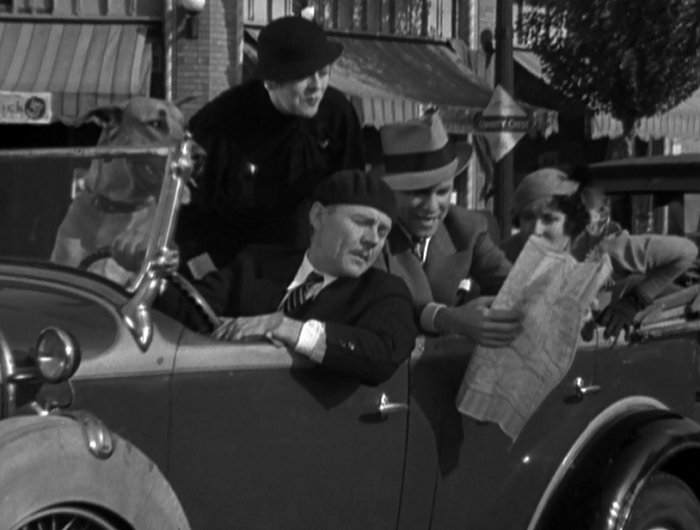
    This was a noble experiment (and immediately following the end of Prohibition): take several great comedy teams with vastly different styles, set up a loose plot, then watch the fun. Although Charlie Ruggles and Mary Boland are nominally the stars, and they do yeoman work tying everything together, George Burns and Gracie Allen are the real comedy focus. And indeed, they’re at their peak, and they presaged just about every smart guy-dumb guy comedy team that followed. The sequences with WC Fields feel tacked on, but if you’re going to tack something on, you couldn’t do better. The thing that will immediately grab your attention is how much of this movie was stolen by the hilarious National Lampoon’s Vacation. Well, if you’re gonna steal, steal from the best.


    O. Henry’s Full House (1952):

    This is actually a collection of five short films, each with a different director and screenplay writer, and all based on O. Henry short stories. OK, I’m a sucker because I absolutely love O. Henry’s writing and storytelling. And what delightful stories these are! Most of them will be familiar to anyone literate, and the screenplays hew close to the originals.

    Interestingly, the Ransom of Red Chief filmlet was badly received and was apparently dropped from earlier versions. In my view, it’s the best one of the group, and this is a group with no clinkers. Fred Allen and Oscar Levant are perfectly cast as the kidnappers and it leaves one to wonder why Hollywood didn’t use them more. The rest of the cast is also an amazing collection: Charles Laughton, Marilyn Monroe, Ann Baxter, Jean Peters, Dale Robertson, Richard Widmark, and narration by John Steinbeck.

    Other fun bits: I believe this may have been one of Marilyn Monroe’s first credited screen appearances. She was great as a hooker. Levant is best known for one liners like, “I knew Doris Day before she was a virgin.”


     Million Dollar Legs (1932) may be the most libertarian movie ever made and possibly the most surreal. The setting is the fictional country of Klopstokia. In Klopstokia, every woman is named Angela, every man is named George, which certainly can be an aid to memory. The citizens are all superb athletes, and the leader of the country (played by WC Fields) is chosen via arm wrestling. George survives several challenges, with very little effort in fending them off. The country is dead broke, but sees a way to recover by leveraging the athletic ability of its citizens (notably the president’s daughter, Angela, and his personal messenger, played by Ben Turpin, who can outrun The Flash) to win the 1932 Olympics. There’s a romantic subplot, naturally, involving a visiting reporter (Jack Oakie) and Angela that somehow manages not to ruin the fun, and the official way of wooing Klopstokian women is revealed- singing a traditional song, set to the tune of Eddie Cantor’s I’d Love To Spend Each Sunday With You, but with, ahem, different lyrics.

    Typical dialog:

    Reporter: What a marvelous country. Say, I’ll bet you if they laid all the athletes end-to-end here, why, they reach…

    Angela: Four hundred and eight-four miles.

    Reporter: How do you know?

    Angela: We did it once.

    I think this is the funniest movie I’ve ever seen. You’ll immediately see parallels to Duck Soup and The Mouse That Roared.


    The History of Future Folk (2012) is a “small” film, but absolutely delightful. Imagine a mash-up of kids’ stories, sci-fi invasions of Earth, and a bluegrass musical. OK, hard to imagine, but somehow it works. SP and I kept looking at each other and saying, “Charming!” which is the best one word descriptor I can think of. Of course, for days afterward, we kept saying, Hondo!” which was the aliens’ greeting. The alien plans to conquer Earth are sidetracked when they discover an amazing invention of humans- music- and once they discover it, they immediately take it up with great skill. Best song: I Cannot Breathe In Your Atmosphere.


    Here’s one that is almost impossible to find, a great tragedy. Dadetown is a 1995 mockumentary that you won’t realize is a mockumentary until someone spoils it. More realistic than reality. It’s a wonderful look at Schumpeter in action as a Rust Belt town, whose economy is dependent on a paper clip factory, suffers from a technology company moving in; in true creative destruction, the tech company specializes in document imaging, displacing paper and the requisite clips. The paper clip factory, in an interesting twist, was originally a WW2 aviation parts plant which had been converted to the new civilian use. The tech company, of course, uses essentially no blue collar labor and mostly brings in tech workers with urban sensibilities who start transforming the town. The culture clash between the tech workers and the old time residents is explored in a deep and meaningful way without the dime store moralizing of someone like Michael Moore. This is the pic that Moore would have made if he were a lot more creative and intelligent. It’s a crime that it’s so difficult to see. The auteur, Russ Hexter, died shortly after this was made, and the world is poorer for this loss. Roger Ebert hated it, which is what attracted me to it in the first place.