Category: Society

  • Just So You Know Where Your Money Is Going…

    As OFFICIAL COMPTROLLER for this insane asylum I’m pleased to report that we held a meeting of the Supreme Council of Masters of the Universe and decided this year to disburse our excess funds to a pair of charities that we believe you, the filthy lumpen-proletariat, will really approve of.

    Minutes ago (as of my writing this; God only knows when it will be published) we donated $500 to FIRE (the Foundation for Individual Rights in Education), which dedicates itself to fighting off the worst excesses of the Kampus Kommunist Kids and their lackey administrators. We also donated $1,000 to the Institute for Justice, which has done so much to fight the army of radioactive bears that have overrun the western 1/3 of our once beautiful continent.

    Thank you all for continuing your generous donations, which makes all this possible.

  • Hey Tree Man!!! – Tales of the Big City and of Time’s, Past Part 3: Oh the Humanity

    Previously: Part 1, Part 2


    The People that You Meet Each Day

    I don’t want to spend time creating and describing stereotypes of New Yorkers to everyone. This has been done ad nauseam in TV, Movies, and books. I’ll stick with some observations and unique people I met during this time.

    One year I worked at the high rent East Side stand at 66th and 67th and Lexington. This introduced me to a new type of customer the entitled New York upper class twit. The upper class twit has a lot of money and doesn’t consider the workers and staff around them as intelligent or worthy of respect. I sold trees to many of this type and delivered them to their homes. This was an amazing opportunity for me to experience some posh apartments, incredible art, and to get called a moron. One such couple of twits walked up to the stand and began verbally pissing all over the wreaths that we had for sale, then made fun of the dress and general condition of our staff. I heard this in passing but decided that I’ll try to make a sale. The couple was wearing flashy clothes and jewelry. They were not gaudy, but the gems and watches were very expensive looking.

    I approached them and introduced myself, “Hello, I’m Time, what can I help you with today.”

    The man responded, “We need a tree that doesn’t look like it came from the side of the LIE.”

    I started my pitch, “Well sir these trees were all cut within the last few days and are very fresh, I can pull a few out so you can see them better. What size are you looking for?”

    The woman replied, “We need the biggest tree you have, we have a very high ceiling. It’s a very spacious home.”

    “OK,” I countered. “Just so you know we have up to twenty five foot trees. They will take quite the effort to show you. So I would like you to be very sure of the height before we pull them out.”

    The man replied with a snotty tone, “Ohhh we are sure what will and will not fit in OUR apartment. Show us the biggest tree you have.”

    “Ok then,” I said stifling my distain, “Let me get some help and we will open the twenty-five footer.”

    I talked to the boss and got his permission to move and open the big Fir tree. We had to close off most of the sidewalk as we unbound the monster. As we unfurred the tree I watched the couple’s eye widen. They walked around it while maintaining their distance from the branches and especially the folks trying to hold it up.

    “So what do you think, is it big enough for you?” I asked. “Do you want us to bind it up and deliver it for you?” It’ll be Three hundred and fifty dollars with another fifty for the installation and stand.”

    She responded, “Well do you have something else for us to look at?”

    I commented, “We do, but they are quite a bit smaller and less impressive.”

    The couple walked aside and began to deliberate. I went back to the poor schlubs holding up the monstrosity and told them to relax and try to get it out of the way. The couple argued, with the woman seemingly pouting for a bit.

    Finally they returned and the woman spoke. “We’ll take it, we need to move a few things to prepare, but we want it delivered this afternoon so we can decorate it before our party.”

    “Ok, please pay the stand manager, tell him your information, and I’ll begin getting your tree ready for transport and delivery.”

    The tree was funneled into the special large bailer that we had at this stand and eventually loaded onto the truck. We had to get our delivery guy with the big truck and three guys to move the beast. I went on the delivery to help with the logistics and set up. I was sure to bring a saw, tools, a broom, trash bags, and a forty-foot tape measure.

    We approached the building and had to double park the truck while unloading the tree. The home entrance was thankfully on the first floor. We met the help at the door, the couple was nowhere to be seen. We were able to get the thing into the door around the furniture, pieces of art and pictures on the white walls. The living room did have a big ceiling, but it sure didn’t look like it was over twenty five feet. The walls were lined from chest high to ceiling with built in book shelves. There had to be several hundred books lining the walls. The couple arrived and I told them the tree was too big for the ceiling. I measured it and showed it to them. They stood in disbelief, but couldn’t deny the number I showed them. Twenty four feet was the ceiling-to-floor height, if I added the stand then the tree was two feet too tall. The only options were to take it back, cut it, or cut a hole in the ceiling. I relayed these options to the couple and they began whining and complaining to me.

    I reminded them that the stand manager would not take a return without keeping half of the money and they would not have a tree for their party tonight. So they decided to have us cut it. I informed them that once we cut the trunk it’ll be a much different tree. It will lose most of the fullest branches. They agreed and then the work began.

    As the men cut the trunk I started making small talk with my customers.

    “You have a beautiful home I really love all of the books you have. What types of books do you collect? Who is the big reader you or your partner?”

    The man responded, “They were picked for their colors, I don’t know where they came from.”

    “Well…,” I responded with even less respect than I thought possible, “they sure do look wonderful.”

    The tree was cut down to size and stood up after about forty-five minutes, it looked quite ugly now with big open spots. We cleaned up and I started to leave. The man of the house gave his maid a fifty dollar bill and she gave it to me. I was done wasting our collective time, I thanked the maid and turned to the couple who had a confused and disappointed look on their face.

    I ended our interaction with a snarky pitch, “Well, thank you for your business. I look forward to seeing you next year, however I would recommend a twenty foot tree. It would be perfect in your space.”

    Yorkers could surprise you. I was becoming hardened and disenchanted with people in general after several days in the city. One evening an older couple I had seen walking to the store every other day stopped at the stand. They wanted a Douglas fir that needed to be a certain size and shape. They had a picture with them and a tape measure. They were enthusiastic, respectful, and seemed to be having a great time with the process. They had a strong German accent but kept talking to me and each other in English. They picked out the tree that met their requirements and I packed it up and delivered it. Turns out they lived right across from the stand. As we were walking to their apartment I asked them why they had such a specific tree in mind. The gentleman indicated that they were from Germany and left for New York after the war. Every year they would try to find a tree that matched the one they left behind on their farm and recreate the same look of the picture they had. I stayed for a schnapps and chocolate as they showed me the other trees they had already decorated, this was their third. They let me know that the tree I sold them was the closed they had found to the tree they left behind.

    We Tree Men also experienced kindness that could thaw our freezing hearts as the holiday got closer. We had people bring us hot cocoa, eggnog, cookies, food, and brandy. It was those people that made me forget the others for a time.


    The People that You Don’t Meet Each Day

    There are some people I met that blew my mind. They were different in one way or another from the others I’ve outlined previously.

    The first encounter of an exceptional person was one of beauty. I saw many an attractive person, male and female, but one just took my breath away. I was working the ritzy stand at the time and was shooting the shit with one of my coworkers. Then I saw her. She was at the far end if the Armory and approaching the stand of trees. She was six foot tall or more with brown knee high boots. She had brown or tan leggings that seemed to go on forever like the legs inside. My eyes traveled up to a most impressive and proportional waist and chest surrounded by a sweater and leather jacket. I saw her face and it was perfect in the furry hat she was sporting. I immediately pushed a co-worker out of my way and approached the woman and some dude that was with her. I didn’t know he existed and completely ignored him. She was looking at a ten foot Fraser fir and I immediately pulled it out for her to get a better look. The tree that is.

    “Hello miss, how can I help you!!” I sang.

    She responded in sweet Australian accent, “I’m looking for a tree for my apartment.”

    “Well you came to the right place,” I responded stupidly.

    She repled, “I want this one and I want it delivered this afternoon to my apartment.”

    I told her way too quickly, “I’ll be sure to deliver it personally.”

    She gave the stand manager her delivery info and the money. I told him there was no way I wasn’t going to deliver this tree.

    He saw my eyes and said, “Keep it in your pants, Time.”

    I proceeded to wrap and carry the tree to the customer’s apartment with extreme urgency. I didn’t want to miss her and deal with whomever the dude was. I arrived at the Park Avenue and 68th street apartment slightly out of breath. I entered and told the doorman where I was going and took the elevator up a few floors.

    I ring the doorbell and instead of the beauty I met earlier an older Puerto Rican woman answers the door with a Que?

    I responded, “I’m here to deliver and set up a Christmas tree.”

    In a Rosie Perez like accent she responded with, “Meez Mak Fearsom wants it set up over there in the corner by her picture.”

    Recognition of the photo on the wall was instantaneous and the previous interaction and reaction of mine flooded back with new insight.

    I was mentally kicking myself, “You were talking to supermodel fool, one you have lusted over since you were fourteen.”

    Inset Elles apartment pic.

    There was no sign of Elle MacPherson or her Australian accent. Only the picture on the wall and an old Puerto Rican woman. I received a twenty dollar tip from the housekeeper and went on my way.

    The second person that stuck with me was exceptionally shocking for a very different reason. I was working a typical day on a new stand. This one was on the Upper East Side just shy of Spanish Harlem. It was an area in transition. There was a ton of bars in the area and a distinct border between new and old housing. Gentrification was occurring and they were knocking down projects and putting up a new high rise apartment building. There were complaints from half of the people in the area that our prices were too high. This was likely the new and old residents’ different demographics.

    An old woman in her early seventies approached the stand. She was wearing a babushka, a blue coat, and was towing a shopping basket. She looked just like my beloved grandmother. My grandmother is one of the sweetest and most caring persons I have met. Every word from her comes from the heart. I smiled as I approached the old woman.

    I said sweetly, “Hello ma’am, how are you this beautiful day? How can I help you?”

    She started to respond before the word day left my lips with, “You rotten cocksuckers should be ashamed of yourselves. How can you sell these fuckin trees for this much? Who do you think you are? Who’s going to buy this shit?”


    I had no response and the look of shock, disappointment and sadness on my face must have rattled her. She turned away and kept walking while she muttered more of the same vile stuff.


    Crack, Crime, and Co-Workers

    So it was hinted at earlier that crack and crime were ever present in New York at the time. There were good reasons why the guys at the stands were doing transactions in the huts. Strong armed robbery, muggings, stick ups, and theft were everywhere. There were shards of glass vials and pipes all over most alcoves and alleys.

    Crack heads were always looking for a buck to feed the pipe. They did this by various methods. There was the straight forward begging in front of a place of business, volunteering to help a passerby or customer in exchange for a small fee, theft, mugging, and selling of random ill-gotten goods. The stand was a natural place for all of these approaches. These folks are always around you like seagulls following a fishing boat. Pedestrians needed or wanted to slow down from their brisk city walk to look at or buy the trees, there was cash being exchanged in the street, there were distracted people both working and patronizing the stand, and finally there was stuff to steal and people at the stand to buy.

    You needed to sell while still keeping your eye on the crackhead skulking around the stand. This was very nerve racking and wore you out. A poorly placed fuck off to the crackhead could kill your sale as could the crackhead annoying or scaring the customer. We were on a city street not on private property, so there was no legal recourse for us to tell the crackhead, beggar, or crazy transvestite to leave. There were a few ways we dealt with this. One way was to have a blocker on your stand. One of the bigger and less sales savvy employees would be on one or each end of the stand to intimidate the street person. They would stop them, confront them, and most importantly let them know they were noticed. This would encourage the unwanted person to move on to the next spot for the day.

    I walked home from the stand with several hundred dollars in my pocket every night. The seagulls kept an eye out for the guys leaving the stands because they knew we had cash. Some of us walked together or took cabs. I refused cabs because I needed my money and I had two legs. When I left the stands I kept vigilant, mumbled a lot, and in general acted crazy. I also had a very illegal six-inch hunting knife strapped to my hip. My appearance and awareness kept the random crackhead from bothering me. I passed rocks being smoked in and around the dark places on my walk to the hotel. It seemed to be everywhere especially around the dicier stands like the East Village. I would take the bus or subway when necessary because they were only a dollar twenty-five for a token at the time.

    Working at the stand at night, or even worse overnight, meant guard duty. You were by yourself against the neighborhood. This meant keeping aware of your surroundings, setting up and consolidating the stand for security, creating sight lines, and staying awake. I had to regularly chase dudes trying to run away with a tree or trying to hide, piss, or sleep behind the piles. I started a habit of juggling or throwing a hatchet or knife into a cut log every time an unsavory looking person would come into my awareness. This kept the crazies away better than more lights or additional people.

    With all of the crack related chaos out on the streets, Hotel Hell should have been a refuge for me. This was not always the case.

    My second year I decided to go to the city early before my final exams. I needed the extra money and I had the idiotic expectation of being able to study during my time in the Hotel or at the stand during slow periods. After four days I would need to travel back home and take my chemistry, engineering dynamics and differential equations final. Then Dean was going to take be back to the city with a load of fresh trees.

    Don agreed to my plan and asked me to take cash back to his wife during my travels back with the company van. I had to work at whatever stands needed me and stay in whatever rooms were available at the Windermere.

    I arrived the day after Thanksgiving and was put on Milt’s stand with his brother and some other Hilljack nutcase. They appeared to be in good spirits as I approached and informed me that I would be staying in their room this week.

    We worked the full day and got along relatively well. As the night guard got there Milt had to go meet Don and the rest of the managers, Matt and the Hilljack told me they were going to grab some food and drinks at a bar. I went to the corner and picked up iced tea and pizza prior to studying at the hotel. No forty bombs for this college guy. They gave me the room key and told me to let them in once they returned from dinner.

    I ate my food while studying for two hours. About this time Matt and the Hilljack were knocking on the door like a drug raid was underway. I checked the peephole and let them in. They passed me without a word carrying bags of beer and entered the bedroom which I assumed was Milt’s. The bedroom had a table and chairs with deck of cards and a very full ashtray on it. They closed the door and I forgot about them for a bit as I tried to study in the living room on my cot. I ignored the sound of clanging beer bottles, laughter and coughing, the strong whiff of weed coming from the bedroom, and something else I couldn’t put my finger on.

    Milt arrived back from the stand managers meeting and aggressively knocked on the door for me to let him in. I stood up from my cot as the bedroom door shot open. Matt hurried to the front door and let his brother in. From my view of the bedroom I could see the Hilljack sucking on a crack stem with a butane lighter at the other end. There were four vials of crack on the table and two were empty.

    Matt hurried in to the bedroom ignoring me, Milt did the same except for a quick back and forth look to the bedroom then to me. The door was slammed and I considered my situation.

    I said to myself, “I’m working with a bunch of goddammed crackheads, I’ve got finals to study for, and now I have to worry about getting rolled in my sleep.”

    As I was contemplating my fate there was arguing in the bedroom. I couldn’t make out most of it, but it included Milt and the Hilljack going back and forth about not wanting to go to 42 Street again. Just then the door shot open and the Hilljack trotted out the door with Matt. Milt came out of the bedroom with the look in his eyes I had become familiar with dealing with the street crackheads. I was a hyper aware that he was staring at me.

    Milt came out of the bed room toward me, I stood up to face him. He then pulled a folding pocket knife out of his pocket opened it and confronted me. My knife was in my work pants under my cot. Milt stopped half way between me and the door to the hotel room.

    Milt wildly spat, “You tell anyone about what you see in this room or on the stand and I’ll cut your motherfucking throat in your sleep.”

    I stuttered and said, “Milt buddy, I don’t give a flying shit about what you guys do as long as you chill the fuck out. What you do is your business, now put the godammed knife away.”

    Milt smiled at me like the first day at the stand and said, “I’m just fuckin with ya, Time. Come have a beer and some weed and relax. You work too hard.”

    I drank a beer, took a toke or two from a joint, and went back to my cot. This must have convinced him that I wasn’t a rat, so Milt relaxed and smoked the rest of the rocks. He told me Matt and the Hilljack fucked up and only got a few rocks. He sent them to 42nd street to score more so it could last for the rest of the night. They returned at midnight with more crack. I kept on trying to study while they continued to smoke and play cards. Milt and the Hilljack spent twenty minutes looking for rocks on the scummy floor prior to deciding to go for another run. They went back out to score again at four o’clock. This was repeated every night as well at the stand.

    I was relieved after the four days were over. I was going to another room and stand when I returned. I never wanted to take a final more in my life.


    The End Game

    “So Time, you’re out, you’re free, you’re rehabilitated. What’s next? What’s happenin’? What you gonna do? You got the money you owe us?”

    I usually returned from the city on the night of the twenty third. The next day I travel to the farm to get paid. I was able to make enough to get presents on Christmas Eve, pay for my next semester of college, and have some spending money. It was well worth it in the end.

    So after an adventure like this you are a mess, tired, usually sick, and wanting a clean cockroach-free bed. Most importantly you need sensory isolation. I arrived home to my parents’ house and couldn’t believe the utter silence and serenity. I hugged and kiss my mom and sisters, hugged my dad, and greeted my family warmly. Mom was in the kitchen getting ready for dinner on Christmas Eve, dad was watching football, my sisters were asking me about my adventures. I was numb but content because I was home. Home where it was noise free, warm, roach free, crack free, Milt free, and chaos free.

    Merry Christmas Everyone and thanks for reading.

    Sincerely,

    Timeloose


    The City Then and Now

    The city was a different place than it is today. This is obvious from my story. There was a lot of negative aspects to the job, but there was much to enjoy as well. So much of what made the place enjoyable and tolerable were the people we met and places we frequented when we had time for a break. These were usually food establishments, stores nearby with stuff I could never find at home, and the excitement and flavor of the city itself. I feel this has been diminished over the years. The same things that make the city exciting to nineteen year old time are the same things that were getting routed out by gentrification and growth. They city is thriving, but along the way that flavor is lost. Most of the great places we ate at are now banks or chain restaurants. Several of the grocery’s we sold in from of are closed including the 110th street store. Below were some of my favorite places, some are no more.

    Fowad: Not a restaurant but a strange clothing store with crazy outfits. The window displays were fun to look at.

    Happy Burger: I hit this place up for a burger and calendar for many years after I stopped doing tree sales.

    Columbia Hot Bagels: The best Bagel I ever had. Chewy and soft at the same time. More Cream cheese than I thought possible.

    Mikes Papaya: A great place for a cheap meal. The papaya drinks were good and refreshing. This place has gone away as have many of the papaya hot dog places.

    Hotel Windermere: Hotel Hell was renovated and now has apartments for six to fifteen grand a month. WTF? How did they get all of the glass out of the lobby roof?

    Dive Bar: Still the same as I remembered

    Koronet Pizza: Giant slices of pizza that kept me full while saving money.

  • Hey Tree Man!!! – Tales of the Big City and of Time’s, Past Part 2: It’s Good Work If You Can Get It

    Previously…


    The Job

    If you read my previous post I had just accepted a short term job in New York City to sell Christmas trees. I walked to my work site after an impromptu meeting with the big boss man. As I walked back I tried to remember my basic knowledge of Christmas trees. Most of this knowledge was from my own experiences as a kid climbing trees and living through a Christmas with live trees. My family liked blue spruce trees, I was familiar with white and scotch pines, and I remembered Douglass fir trees were a bit wimpy at holding heavy ornaments. That was the entirety of my knowledge of the subject. I soon found out that my immediate job had little to do with selling trees.

    I entered the stand at 110th and Broadway and noticed details I missed earlier in the morning. The stand was on the side of a fairly large grocery store called Gristedes. This store was allowing us to use their power, toilets, and part of their frontage on Broadway. As I passed the front window of the store I saw a fully decorated tree near the manager’s office.

    Dean and I said our goodbyes and made plans to meet back up when he returned tomorrow night with another load of trees.

    I walked up to the hut that Jerry had been sleeping in earlier and knocked on the frame with much less vigor than Dean had applied.

    “Hello” I called out, “I’m here to start working. Bill told me to get started as soon as possible.”

    As the tarp to the hut opened I saw a skinny big nosed guy a few years older than me get up.

    “Don’t come knocking like that when I’m countin’ money,” he spat in a Scranton accent that I was all too familiar with.

    “Sorry,” I said, “I just started about 15 minutes ago and I need to know what to do. I’m Time, Don and Bill sent me here to replace the guy that got sent home.”

    “No praahblem, I’m Tony and I run the stand while Bill sits in the hut. Get over to the bench and start setting up trees with Lumpy.”

    So I walked over to the green bench that was essentially a table with a two v-cuts added to the top to act as a saw horse. A guy, who I assume was Lumpy, was using the bench to attach the bases to the trees. He used the table to hold the bound trees while he sawed the trunks straight then hammered bases to the trees using a claw hammer and three eight-penny nails.

    I introduced myself to Lumpy, then I grabbed trees off the pile I created that morning, before feeding them to the table. Lumpy was able to attach a base as fast as I could retrieve a bound tree. I then took the upright tree with the base attached to a holding area. We did this for about an hour before we really talked at all. I jumped in and allowed us both to be as productive as we could. Another guy who I hadn’t met started taking the trees we stood up and moved them into the forest on the sidewalk I noted earlier. He cut the twine binding them then gently spread out the branches.

    After we stood all of the trees up, Lumpy and I stopped to clean up and talk a bit. I wanted to know more about the stand and what else we needed to do.

    I lit up a smoke and turned to Lumpy and asked him, ”So what is the job like, what else do we have to do?”

    Lumpy responded, “They tell me to stand up trees, sweep, and then I do it.”

    I responded, ”Yea, I get that, but what else do you do?”

    Lumpy repeated what he said earlier but added, “If you mess up they send you to work at the other stands, guard for the night, or if you really mess up you get put on a bus.”

    “What happened to the last guy,” I asked, “the one who went home yesterday?”

    Lumpy look around before he responded, “He got robbed too many times.”

    “So he got robbed at the stand? Were trees stolen or money?” I asked.

    Lumpy shot back, “No heee got robbed too many times.” He got robbed on the way home from work every day this week by the same couple of….black guys.” He whispered the last bit.

    I soon found out that this conversation was going nowhere fast. Lumpy was a nice enough guy, but he was not given a lot of responsibility at the stand. He seemed a bit slow and was given pure grunt work. I needed to ask Tony or one of the other guys working the stand on what else to do.

    By this time Bill was back from breakfast and was talking to Tony and a few others working there. I inquired about the rest of my responsibilities and received some better feedback.

    Our main job of course was selling trees. We were to help any potential customers by answering questions about the trees, showing them trees that matched what they were looking for, and whenever possible upsell them on wreaths and stands we also sold. I asked about the tree varieties we sold and what makes them different, special, or more expensive. I picked up the gig quickly and learned about prepping, selling, packaging, and the delivery process.

    Once a sale has been made you pulled off the bottom of the tag with the price and type of tree written on it in sharpie. The top of the tag remained on the tree as a receipt for the customer. You handed the tag bottom and the money to the stand manager so he could keep inventory at the end of the day. Then you had to remove the base with a rap of the hammer or hatchet hammer, shove the tree in the bailing funnel, put a fresh cut on the trunk with a bow saw, and then bail the tree for transport with a plastic mesh.

    The competitive advantage of Don’s stands over the many others in the city were the types and freshness of the trees we sold. The locations of our stands allowed us to display the trees like a forest and our ability to get and deliver large trees was a big draw.

    We were the only company at the time selling Fraser fir trees as well as the other more common trees I mentioned earlier. At the time Frasers were not available in most of the north east. Most of what were called Fraser firs were actually Canadian Balsam. Don traveled to North Carolina every summer and tagged thousands of Fraser firs, then had them delivered in late November. These trees cost us quite a bit more than the others and were sold at a forty to fifty percent premium. The other trees came from the local farm back in Pennsylvania and were comparatively free. We offered delivery as a free service within Manhattan. Doing a delivery was a great option for the tree man to make extra money. You offered to carry the tree for the customer or arrange for future delivery and then set the tree up for them. You could expect five to twenty bucks depending on the tree. This is usually worth the money to the customer as most don’t want to get tree sap and needles all over their clothes. I was already a filthy mess, so that wasn’t a problem.

    The problem was my outfit was chosen to keep me warm for twelve hours or more in sub-freezing weather. My typical garb was a pair of long johns under a t-shirt and jeans, under a sweatshirt covered by a Carhart or ski jacket. I also wore a stocking cap, thermal socks, leather work gloves, and work boots.

    On a typical delivery I would likely need to walk five blocks, up five flights of stairs, then spend fifteen minutes setting up the tree. Apartments in many parts of New York at the time were heated by central steam heat and were usually way too hot. By the time of my walk back to the stand from a delivery I was sweating profusely and freezing cold at the same time.

    We had trucks for delivery for our bigger trees, this was typically a two man job and the truck guys could clean up in tips. Tips were my way to keep from asking Don for an additional advance for food and drinks, but more on those two topics later.

    Selling the trees came easy to me. I found that few New Yorkers knew even less than I did about trees, so they believed anything I told them. I didn’t lie to them to sell the trees, but if they had any questions and I didn’t know the answer I just faked it.

    The New York customer, however, was very willing to shop around if they felt they might get the tree for a cheaper price elsewhere. So we often had people tell us that our trees were way too much and that they would just wait till we were packing up to get them at a discount. Many came back when they wanted a fresh high quality tree that wouldn’t die the moment it hit their steam heated, dry as the Sahara, ten-story walk up. We also had many repeat customers from previous years. Most remember the place they got their tree last year and where they got a good or bad one.

    There were the yearly bargain hunters that came by every day and commented that we were never going to sell out so we should sell to them at a substantial discount.

    “Hey Tree Man, you’re going to get stuck with all of those trees if you don’t lower your prices!” was shouted by every tenth passerby.

    “I’ll see you on the twenty first, then we’ll see what your prices will be,” one persistent passer by piped up every day.

    He finally came to buy on the twentieth of December and said he was ready to deal. I told him the price and offered to knock off 5 bucks because we talked so many times. He offered me twenty bucks for a fifty five dollar tree which I rejected.

    He countered with, “How much is it going to cost you to pack it up, put it on the truck and take it back to bumfuck with you.”

    I responded, “Less than reducing all of our prices earlier and earlier each year because our customers know if they wait long enough we’ll give it to them for free.”

    “Well what are you going to do with them all if you don’t sell em?” He shot back.

    “Bill,” I yelled out to the stand manager “This guy wants to know what we are going to do with all of the trees we don’t sell,”

    Bill responded instantly “We will just truck them back to the farm and burn them all. Crackle crackle, crackle”

    I then informed him that the tree he thinks we couldn’t sell from yesterday was sold and turned over with fresh cut trees from our farm this morning. So this tree was cut fresh yesterday and brought to him so he could have the best tree possible. I wasn’t lying exactly, because we did get a delivery of new trees in that morning, I just don’t know that the one I tried to sell him was one of them. Lumpy might have known.

    I eventually sold him the tree at a ten percent discount. He came back the next year and bought another tree, but this time a week earlier.


    My Co-Workers

    The job of selling trees was hard work followed by lots of clean up and then boredom. During the work day, early mornings, or late nights there were few people looking to buy a tree. This changed the closer you got to Christmas or on weekends. Most of the day you spent shooting the shit with your crew and watching the people, places, and things you see. You were on the street for more hours than most of the beggars and crack heads.

    Here are a few of the types of people I worked and spent time with.

    The farmer’s kid who never got out of the county he lived in. These guys went one of two ways, they kept their heads down and worked like animals or they went nuts. The nuts would spend all night getting drunk in the hotel, trying to get hookers, and or buy all of the porn they could find. They weren’t dangerous or troublesome.

    The college kid who doesn’t want to get his hands dirty and only wants to work the safe stands. These guys were ok, if a bit too lazy, they were usually good in the high rent districts as they didn’t scare the rich folks.

    The older seasonal worker who needs the job for additional money for the holidays. Most of these folks were managers of the stands or temp workers. With a few notable exceptions they were there for the money and worked hard.

    People that Don knew from his past that he trusted with big clients. This group was very eclectic and included college professors, truck drivers, and an artist.

    Lifers from the nursery that need the extra money and want to get away from the wife and kids. These guys were people like Lumpy, they worked hard but were not very good at solving problems or dealing with the city. The guy who I replaced kept getting mugged for a reason. He showed up to the gig wearing a high school t-shirt, his hunting jacket with the license still attached, and a blaze orange hat. He got mugged because he acted like a tourist and stood out like a blaze orange mark.

    Random strangers who might have answered a want-ad or were a friend of a friend who did this last year. This was the wild card group. I knew a few of these guys from high school and they could be ok. Others were complete nightmares. The nightmares had drug habits, looked to buy hot items from the crackheads, and usually spent all of their pay each night at bars, strip clubs, or on the crack.

    People like me who ended up there and wanted to make the most of it while dealing with and loving the chaos.

    My first week at the stand allowed me to meet and work with several of the types of people I just described. We would spend a lot of time observing the chaos on Broadway at night. There was a constant flow of beggars and crack heads that were hanging around the stand. We were always on the lookout for tree or tool theft, muggings, and people bothering our customers. We eventually built a relationship of sorts with many of the local drug dealers, beggars, and hookers. We occasionally shared a cigarette or shot the shit. Once they knew we would not give them any money or buy any wares from them they backed off. However, every time a new guy arrived to work at the stand he got taken for money or scammed by the same crew of street folks.

    The work day at the stand very much depended on where the stand was located and who managed it. The location determined the clientele and the manager determined everything else. I was put on the 110th Street stand for a reason. Dean was and is my best friend and wanted to look out for me. He did this gig for many years before I got involved and this was his stand. Bill the manager was a good guy who wanted the stand to run well. He was chosen because the stand needed a responsible and mature person to deal with the store manager, police, and various city bureaucrats. This location as well as many of the others were won by years or relationship building and could be lost to the competition if any major issues occurred. So the flagship stand was a base of operations on the West side, storage location, and show place for the brand.

    The second flagship was on the East side and was a location only someone like Don could have obtained. The stand was in front of the Armory between 66th and 67th and Lexington. This area was extremely wealthy and only a block from Park Avenue. This stand specialized in really large trees, high service levels from the staff, and lots of inventory to choose from. The manager was smart, well organized, and an-Army veteran. His staff were all safe looking college kids and a few grunts that stayed away from the customers. This stand was the money maker and could generate eight thousand dollars a day or more.

    The other stands were a mixed bag. There were several stands that were test cases to see if they could generate revenue. These stands became regulars if they made money or were closed if they failed to. Other stands were smaller and leaner because of the layout of the site and required a smaller work force. They could still make a lot of money and were usually retained each year. Overall there were around six stands in the city depending on the year.

    I had the opportunity during my first year to float to several stands. At the time I assumed this was because I was such a hard worker, but in reality I discovered that I was sent in by Don to monitor and curtail bad behaviors by the managers or staff.

    Don would patrol the stands day and night during the season. Don would enforce cleanliness, customer courtesy, safety, and work ethic issues he saw with an immediate and brutal response. He was notorious for sneaking upon the stands and addressing any issues he saw on whomever was closest to the problem. If the person was the problem then it was even more brutal. Each stand kept a lookout for the Ford F-150 that Don patrolled in.

    One morning Don was on such a patrol to the 110th street stand. Thankfully I was pretty busy at the time and not playing catch the hammer with Jerry. I was selling away and then standing up new trees as space opened up. Bill was in the hut keeping warm and watching the money. Jerry and Lumpy were taking turns going to lunch and helping me sell. Don snuck up behind me as I was talking to a customer about a blue spruce. I heard a clicking of ice inside a plastic handled coffee mug as he stood behind me.

    Don asked the customer, “So is Timey taking care of you today?”

    “Yes he has been very helpful, are these your trees?” the customer asked.

    Don said, laying it on thick, “Why yes they are, they were cut down just yesterday from my little farm in Pennsylvania.”

    “Timey”, Don said, “Once you are done with this customer come see me in the hut.”

    I finished up the sale and met Don and Bill in the hut. He was in the middle of a conversation with Bill while sipping on the coffee mug every few seconds. Bill was arguing mildly with Don about needing another person.

    I interjected, “Hello Don, what did you want to see me about?”

    Don responded, ”Well fella, I’m going to have you help out a few of our other stands this week before the big weekend coming up. We will have more people coming in on Friday, so you can come back to Billy’s stand.”

    I quickly replied, “Ok Don, whatever you want, you’re the boss.”

    “Splendid Fella, come to the truck with me and I’ll drive you to Milt’s stand.”

    Don and I entered the truck double parked on 110th. He sat down, opened the top of the coffee mug an reached under the seat and pulled out a bottle of Passport scotch, filled the cup to about one half full, filled the rest with diet Coke from a can in the cupholder, and replaced the mug lid. He then lit up a Kool and turned to me.

    “Would you like a Menthol fella?” Don asked.

    “Sure Don,” I responded. “Why does Milt’s stand need more help?”

    “You’ll see Timey,” Don grumbled.


    We arrived at Milt’s stand on Columbus Circle. The stand was a quarter the size of the stand I left. Don drove past the stand then double parked a street away. There was one worker visible sitting on the cutting box smoking a cigarette. He was surrounded by a few trees standing on bases, with several laying on the ground, there was a large pile of bound trees leaning against the back of the hut. There was a mess of branches, trunk stubs, and bailing netting around the stand and across the sidewalk way. Don briskly walked over to the stand approaching the lone worker from behind.

    Don loudly asked the worker through clenched teeth, “Terry, where is Milt and why the hell are you fucking lollygagging while the stand is a godawful mess?”

    Terry stammered, “Milt and Matt is getting a coffee, I was gonna clean up once they got back.”

    Don grabbed Terry’s long greasy mullet and pulled it like he was teasing a girl on the playground.

    He growled, “Clean it up now, you pissant. Don’t let me see this stand like this again or you’re going to be on the next bus home.”

    Terry quickly got up and started sweeping the stand, shook his head, then straightened his hat.

    Right around this time two guys I assume are Milt and Matt arrive at the stand. Milt looks like a six foot four beefy redneck version of Rob Zombie wearing full coveralls and a dirty ball cap. Matt is a lanky and greasy looking redneck with a weird limp. There was no coffee to be seen.

    Milt looks nervous and twitchy as he approaches, Matt is a bit bleary eyed.

    Milt started speaking as he approached the stand, “Hey Don, sorry I was going to the bathroom and calling my wife.”

    Don responded, “Milton, this stand looks unacceptable and the sales won’t improve if you’re not here keeping the display looking good. I’m leaving Timey here to help you get the stand set back up and presentable. I’ll be back tonight and things better be up to our standards. Timey, I’ll see you later fella.”

    Don walked back to his truck and left me at the stand with Milt, Matt, and Terry.

    I walked up to Milt and introduced myself.

    “Hi Milt, I’m Timeloose, what do you want me to do to help.”

    Milt walked up to me and got in my face. I could smell the strong odor of trees, weed, and something acrid.

    Milt softly answered, “I want you to go help Don suck his own dick and get the fuck out of my shit.”

    He then laughed loudly showing his tobacco stained teeth. It was not a sane looking laugh.

    He then said, “Go get working setup with Terry and we’ll be by to help later.”


    I did what Milt asked of me and he and Matt walked back into the tent.

    Milt did help us get the stand back into shape and we made quite a few sales after the locals got off of work. Milt and I seemed to be getting along better, he was obviously smoking weed in the tent with Matt who ended up being his brother. I had no issues with this or anything else I saw there that day. I imagine that was Don’s point of dropping me off there. I was in effect a watchdog. Milt had started getting antsy as Don arrived to inspect the stand about eight hours later. I was sent to another stand on the East Side the next day, but Milt and my story was not over.

    One could and did get a bit crazy and short tempered after a day of dealing with the constant stress of asshole customers, street people, the long hours, and the sheer noise. Most of the folks working at the stands previously never spent more than a day in a city. The constant flow of people and noises could be overwhelming. Our only refuge was the fine hotel we slept in.


    Hotel Living at its Finest or Alternatively Welcome to Hell

    Don promise me a very nice hotel.

    I walked back to the hotel from my first day on the job at eleven at night. I was working on being up for over thirty hours. I needed to grab some junk food, smokes, and see if I could get a beer from one of the corner bodegas. I was told earlier in the day that no one would ask for ID. Tony and I walked back together as I would be staying in his room this first night. We walked into the Korean grocery and I went right to the beer case. That was the night I discovered the magic of Old English 800. I picked up one forty ounce bottle.

    “Time,” Tony said, “You’re going to need another bottle if you want to be able to sleep tonight.”

    “What the hell do you mean by that?” I responded. “I’m beat and one bottle should get me a nice buzz going.”

    “You’ll see, just get the extra bottle bud.” He replied back.

    I quickly answered. “Whatever, it’s my first night in the city so I’ll spurge a bit.”


    I walked apprehensively to the counter, I was 19 and not expecting the Korean gentleman at the counter to just ring me up without an ID check.

    “You want more forty?” The clerk asked.

    “No, two is good,” I responded.

    “Tree guys all get lots of forty. Try Crazy Horse like your friend.” The clerk motioned to Tony.

    I was now getting a bit worried. Why were are all of the tree guys buying up all of the malt liquor in town.

    Tony and I paid for our beer and snacks and walked the rest of the way to the hotel. We arrived at the hotel about 5 minutes later.

    The hotel was called the Windermere and was at 666 West End Drive.

    Tony turned to me and smiled, “Welcome to Hell, Time.”


    The Hotel Windermere was a big old building that appeared to have seen better days. The lobby was shabby and covered in what looked like years of filth and cigarette smoke. Everything seemed to have a coating of a tan scummy film. The lighting didn’t help as there was several half lit yellowed fixtures on the ceiling bathing the lobby in a dim shadowy tint.


    As Tony and I approached the front desk a man with a “Habib” name tag grumbled as we approached with bags of beer.

    Habib commented with a strong Indian accent as we walked by, “You Tree man need to keep it down, no more complaints this year from my tenants.”

    Tony ignored Habib, turned to me and said, “He can go fuck himself, the tenants are louder than we are and half of them are hookers and junkies.”

    We approached the lobby elevator and I noted there were twenty-two floors. We got in and Tony told me we were on the sixteenth floor Room 9. All of the rooms nearby were all tree men. Don’s room was on the eighteenth floor, Room 22. We exited the ancient elevator that still had the old operator lever attached with a set of buttons above it. The hallway was as clean as the lobby, but with less lighting and a funk of bad cooking and stale cigarette smoke.

    As we approached the room there was a roar of voices and laughter coming from the surrounding rooms. We got to Room 9, Tony got out a key, and opened the door. As the door opened there were about ten people sitting in various states of dress eating takeout food, smoking cigarettes, and drinking forties of malt liquor. All of the windows were wide open with no screens in them.

    I asked Tony with concern, “How many of us are in here?”

    Tony responded, “Twelve or so, two in each bedroom, and eight in the living room.” Two guys are working guard duty.”

    I asked, “Who gets the bedrooms?”

    He responded, “Managers and people like me who’ve been doing this for a bunch. Take one of them empty cots.”

    I laughed a bit and said, “I’m glad I got the second forty Tony, it’ll be tough sleeping in a room with all these assholes snoring and farting.”

    Tony laughed back and said, “Bud, the second or third bottle is so you can ignore the roaches and rats crawling around once the lights go off. Once your shit gets here, keep it closed or you’ll bring some of those cocksuckers back with you.”

    As I adjusted to being inside I started noticing the smell of twelve hardworking people in a small space. I also started to realize why the windows were open. It had to be ninety degrees in there. I introduced myself to the drunk and getting drunker roommates. We all shared tales of the city that day. As we all got drunker and more rowdy. We started talking about Don, the stand managers, and some of the more fucked up people in the crew. I came to find out Don drinks all day every day while he is here and never really sleeps. There are rumors of him taking crank or pills to keep himself awake.

    As I finished the second forty I realized I had no covers, sleeping bag, or pillow. The others around me started passing out one at a time. I decided to try to do the same. I balled up my coat and used it as a pillow, but as I laid down on the cot a brisk wind blew over me from the open window. I put the coat back on but as soon as the wind stopped it became hot as hell. Thankfully the second forty kicked in fully and I passed out.

    I awoke from my drunken slumber every hour or so as I heard a car alarm, squealing brakes on a bus, or someone yelling outside. At some point I looked out the window as the sun was rising and I noticed that the hotel was a big tube, with rooms on the inside of the hall looking at the other side of the hotel. There was a roof above the first floor lobby with a ton of garbage on it.

    Dean arrived the next day and met me at the hotel with my stuff. He included a towel, sleeping bag, and clothes. He stayed for the rest of the week as it was getting close to crunch time for the stands. It was good to get a change of clothes and I looked forward to a shower.

    I entered the shower after peeling off the ratty cloths I had on. I was worried I might not have any hot water, I was wrong. The faucet seemed to produce live steam even with the cold water on full. After creating a few first degree burns I thought I figured out the right mixture. I quickly hopped in and started hosing off. I found that most of my face, hands and arms were covered with pine pitch that would not come off with the soap and water. After this realization, I discovered that nothing in this world is constant, especially this fucking shower. The raw steam returned and scorched my junk then became ice cold. I was done being thermally shocked and gave up on getting any cleaner.

    Each day I would repeat the same ritual of work, fortyies, drunken madness with my co-workers, followed by shock showers. The weekend after Deaner returned we got into our third forty of the night, we were now drinking the Crazy Horse as recommended by the Korean shop owner. The room was littered with empties and takeout containers. Dean thought it would be funny if he tossed an empty from the sixteenth floor. He and I turned the light off trying to keep the locals from suspecting where the bottle came from. He and I looked out the window and down into the black pit of the hotel center. We each grabbed an empty and tossed it towards the center to be sure it didn’t go through someone’s window below.

    The bottles sounded like a double barrel shotgun blast that reverberated for way too long. We both pissed ourselves laughing while hiding like children. This became a ritual as well, we limited our fun to one bottle a night. Others heard of our “Forty Bomb” idea and unfortunately it spread and escalated.

    A few nights later Dean and I were drinking with another group in their room on the eighteenth floor. Two guys, Brian and Greg, were staying in a much smaller room with another four guys. One of these guys was named Lenny. Lenny was a partier that was drinking himself out of college. Brian, Greg, and Lenny worked at the high end stand on the East Side and were clearing hundreds a day in tips. They were also spending their money as fast as they could make it at strip clubs and bars. Lenny was out at the Dive Bar on Amsterdam this night and every night. Greg and Brian had a few with Lenny then came back to the hotel to drink some forties with Dean and I.

    We told them about the forty bomb idea a few days earlier, they started throwing all garbage out the windows on to the roof of the lobby. We were shooting the shit for an hour or so, when we brought up our bomb from last night.

    “Hey Brian,” I asked, “Did you hear our Forty Bomb last night? It dropped around two thirty.”

    He shot back, “You’re all a bunch of pussies, we perfected the bomb.” “We call ours the airstrike. Three precision bottles, one from each window.”

    I was about to ask for more details, but then Lenny came back from the Dive Bar. Lenny was wearing a thick puffy ski jacket and a stocking cap that he violently whipped off as soon as he got inside the room. Lenny was plowed drunk, he stumbled into the living room where we were discussing the bomb and airstrike with Dean, Brian, and Greg. Lenny gathered about six empties from the table and hugged them like they were his long lost mother, arched his back, walked them over to the window, stumbled, then dropped them all at once out into the night. The noise was a tremendous series of shots that seem to last for minutes. It was followed by yells and screams from the rest of the hotel.

    Lenny turned to the group and slurred, “Nucleeer Baahms.”

    We stopped dropping bombs after the Nucleeer option was executed by Lenny, this is why we can’t have nice things.


    Next: Part 3…

  • Hey, Tree Man!!! — Tales of the Big City and of Time’s Past, Part 1: Arrival


    In the early nineteen nineties I had the opportunity to make money for college, experience the thrills of the big city, and learn lessons of free market capitalism. All it required from me was twelve to twenty-four hour workdays laboring outside in the elements, dealing with muggers, crack heads, hookers, pimps, petty thieves, and worst of all the New York City consumer during the holidays. I experienced the best and worst of the city, my co-workers, managers, and citizens during the weeks between Thanksgiving and Christmas Eve. This is a memoir with stories across three years consolidated into one narrative.


    The Pitch and the Gig

    My buddy Dean worked at a family-owned landscaping business that had a nursery and tree farm. One Friday we were hanging out drinking some vile beverages, smoking cigs, and shooting the shit.

    Dean said to me, “Time, do you want to make some money this weekend? It’ll be a blast and we can drink when we get done.”

    “Well”, I said, “twenty bucks is twenty bucks…So what’s the gig?”

    For some context — Time is habitually poor, a freshman in college, and working multiple part-time jobs under the table. Dean told me they needed someone at his job to help drive and unload a truck of Christmas trees from the nursery to a bunch of tree stands in New York City. Dean began the sales pitch.

    “The job pays seven dollars an hour, my boss will buy us a bunch of drinks and food when we get there, then we drive home the next day with all the cash and receipts from the stands.”

    I responded, “I’m in Deaner, I’m free this weekend and I’ve never been to New York City unsupervised”.

    Over the next several weeks I went from being hired labor for the weekend, to staying for the rest of the holiday season selling and delivering trees at several of the stands. Over the next three years I was managing a stand, delivering and setting up decorations at a few really wealthy clients’ homes, and trying to study for midterms during the chaos.


    Arrival and First Impressions

    My first tree gig had Deaner and me taking a stake-body truck full of trees from the farm in rural Pennsylvania to New York. We had an uneventful two-hour drive and arrived at three in the morning. We drove into upper Manhattan across the George Washington Bridge, down the Westside highway, and promptly double parked on 110th Street between Riverside Drive and Broadway.

    As we exited the truck I was hit with a brisk wind blowing off the Hudson cutting through the large buildings. It’s was about thirty degrees but the wind chill was substantial. I felt apprehension and excitement as I walked into the street and on to the sidewalk. Till now I’ve only visited New York as a teen during school field trips.

    In my head I’m saying to myself, “I’m in the big city at three in the morning, woohoo!”

    There was still quite a lot of activity and lights from businesses on Broadway even at this late of an hour. As I looked down 110th street it was comparatively dark, but I could see the yellow glow of a cathedral in the distance with an outline of dim street lights.

    The tree stand was halfway down the long city block on the right side of the street, the sidewalk was now a narrow walkway surrounded on both sides by upright Christmas trees each with an X-shaped, two-by-four base that was nailed to the trunk. There was also a short pile of twenty twine-bound trees near the back of the stand. Each tree had a two-part tag with a price and description of the type of tree on both halves. There was a hut near the middle of the stand made of two-by-fours and opaque plastic sheeting with a single bulb inside. Near the hut was a green wooden table with a red tree funnel and bailing netting. As Deaner and I walked up to the hut, he and I noted that there was a person inside and he was not moving.

    Deaner gave me the fingers to the lips “shush” gesture, he grabbed a base from the pile, snuck up to the hut, and then violently pounded the base against the frame of the hut and screamed.

    “Give me all your money, Mutha Fucka!”

    We saw the obviously sleeping figure bolt upright and start to stumble around the hut while stammering.

    “Whuuut… nooo,” followed meekly by, “go away man I got an axe.”

    Deaner yelled out, “relax Jerry, it’s Dean, you need to stay the fuck awake or you’re going get rolled and cleaned out.”

    Jerry popped his head out of the hut and put on a goofy smile.

    “Hey Dean,” he responded.

    Shortly thereafter, recognition pushed through the resin in his brain.

    Jerry turned towards me and said, “Time, woooww man, how’d you get here?”

    Jerry and I were acquaintances from high school. He’s one of those permanently stoned, even when he’s not, Grateful Dead loving, harmless hippies that everyone of a certain age had in their high school.

    We collectively tried to wake up by grabbing a smoke and a cup of instant coffee from the hut. We then unloaded forty or so trees from the truck.

    We drove to and unloaded trees at two additional stands on the West Side of Manhattan with the help of the night guards in various states of consciousness. Deaner and I got in to the truck after the third stand was resupplied.

    I asked him, “where to now, Deaner?”

    Deaner responded back, “we gotta get to the other two stands but they’re on the East Side.”

    Neither I nor Deaner knew this at the time, but there were only a few ways across Central Park from the West Side to the East Side, you could go around it or take two or three cross streets. I read from an Exxon map that there was a crossing at 65th street that seemed convenient since our next stand was on 66th and Lexington.

    I bellowed over the stake body truck engine and wind noise, “Take 65th Deaner”

    Deaner responded, “will do, Time” as he turned into the park.


    We were accelerating as we plunged into the relatively dark park in the middle of the bright city center. Everything was going well until we saw a stone tunnel under an overpass fast approaching. We were going way too fast and ignoring signs of clearances and no commercial traffic warnings. Dean and I looked at each other for a split second in shared horror.

    Deaner shouted out, “Fuck It!” Then he hit the gas.

    The two by four stakes sticking up out of the top of the truck hit and sheared off one at a time as we shot through the tunnel. We stopped for a quick second after exiting the tunnel and I checked the load. The trees were still in the bed of the stake body but all of the stakes were broken off the truck and laying in the tunnel. There was no sense in waiting to be arrested or having the truck impounded.

    I turned to Deaner and yelled, “Let’s get the fuck out of here!”

    So we got back in the truck and continued on our way.

    We arrived at the last two stands, unloaded the last of the trees, and drove back to the first stand on 110th street to park it for the rest of the morning. We then walked to meet the boss for breakfast to provide an inventory of the deliveries at each stand. Before we arrived at the restaurant we both agreed that the tunnel incident never happened.


    The Big Boss

    Dean and I walked a few blocks down Broadway to Happy Burger on 93rd to meet the boss, Don, or as Dean called him, Uncle Donny. He was not his actual uncle but he saw him as a bit of a mentor and comic figure. Happy Burger was a greasy spoon restaurant that served huge burgers and great breakfasts. We walked into the dim back of the restaurant and I see a skinny older man dressed in clean work clothes, wearing a stocking cap, smoking a Kool, and holding a thermos mug. He had wispy gray hair, glasses, and a stern look on his face. He was surrounded by several grubby looking tired guys eating breakfast and talking. As we approached the table, Donny’s face changed to a smile as he called out to us.

    “Well hello Deany my boy, is this your man Time you told me about?”

    Dean introduced me to Don and the table of stand managers. Don invited us to sit down as he began talking to me.

    “So Timey how was your drive in, do you like the city, are you busy the next several days or weeks?”

    After each of my responses Donny would respond, “splendid, splendid.”

    Don was surly when we arrived because he had just fired two guys that morning and sent them packing to the Port Authority.

    Don turned to me and asked in a cultured and intelligent sounding tone, “So Timey how would you like to make some money this week and experience the wonders of New York culture during the best time of the year?”

    Deaner turned to me and said he could go to my house, pick up some clothes, and then bring them back on his next trip in.

    I turned to Don and responded, “I appreciate the opportunity, but what’s the pay, and where will I be sleeping?”


    Don responded that the job paid seven dollars an hour excluding tips and that he had paid for a very nice hotel for his people to stay in while they worked in the city. I would also be given a forty dollar advance for expenses and food.

    I though it over and decided I would stay the week and try it out.

    “I’m in Don, thanks for the opportunity.”

    Don smiled again, stood up, shook my hand, and responded in a soft-spoken voice, “Splendid, splendid Timey.”

    As I shook his hand I got a strong whiff of Scotch and Kools.

    “So when do I start, Don?” I responded back.

    “Well Timey”, he sang, “better three hours too soon than a minute too late.”

    One of the stand managers, Bill, then spoke up.

    “He means you need to get your sorry ass over to 110th and Broadway because your shift started thirty minutes ago.”

    Deaner and I left the Happy Burger and walked back to the stand at 110th street.

    I turned to him and said, “Well…twenty bucks is twenty bucks”

    Deaner responded, “You’ll remember this for the rest of your life and if you hustle you’ll make lots of money. So work hard, have fun, but don’t get yourself killed, fuckface.”


    Part 2: It’s Good Work If You Can Get It — The Job; My Co-Workers; Hotel Living at its Finest, or Alternatively, Welcome to Hell.

    Part 3: Oh the Humanity — The People that You Meet Each Day; The People that You Don’t Meet Each Day; Crack, Crime, and Co-Workers; The End Game; The City Then and Now

  • Poll: Holiday Shopping

    So, holiday spending is in full swing. Assuming you purchase gifts for family/friends/Secret Santa/whatever this time of year, what kind of holiday shopper are you?

    I dislike going to brick-and-mortar stores anytime during the year, but especially now. The constant Christmas music, the horrendously gaudy displays, the crowds of humans, the bad parking situations, the fake-cheerful employees…all of it bugs me and makes me more depressed than I already am.

    I do nearly all my shopping all year online, including using grocery delivery services, so why would I change now? Right, I wouldn’t. Also, online shopping fits nicely with the fact that nearly everyone to whom I would give something lives far removed from me, so add in that shipping when I have purchased something in person is a hassle.

    Of course, I do acknowledge that there are some people who love holiday shopping out in the wild. I don’t understand them, but I know they exist.

    How about you? What kind of holiday shopper are you?


  • On the Composition of the US Military and Being a World Power

    In the comments on Pie’s article about the Internet (Thursday, 5 Dec Noon Post), I saw some comments in a subthread about the size and composition of the military that sparked some thoughts I decided to share because I find it a fascinating discussion topic for libertarians. I hope it hasn’t already been covered before, but even if it does, I hope I can offer something new on the subject for the Glibertariat.

    I first must ‘confess’ that I subscribe to agreeing (generally) with George Nash’s configuration of where libertarians fall in the political taxonomy in his seminal work “The Conservative Intellectual Movement in America since 1945.” First published in 1976 as a graduate thesis, it’s been reprinted and I’ve read a more recent, updated edition. Some of you may disagree and that’s fair enough, but in any serious consideration of the size and scope of the military, undergirding has to be some coherent theory of valid political action of the government in the area of foreign affairs, trade, and immigration, all of which impact what specie of military you think is valid to have. As a concrete example, do you think the US military should protect US commercial shipping the world over? The Founding Fathers themselves certainly did, and since I consider myself a ‘constitutional libertarian,’ I note that even President ‘Mr. Yeoman Farmer’ Jefferson was willing to “send in the Marines!” to “the Shores of Tripoli” to stop the Barbary pirates from playing around with US shipping. It was an issue that Jefferson explicitly ran on against John Adams – the payment of US tribute of to the “petty tyrant of Algiers.” This dated to the Founding of the republic, by the way, and so it can’t be claimed this didn’t inform the creation of the Constitution itself. From the wiki:

    The United States had signed treaties with all of the Barbary states after its independence was recognized between 1786-1794 to pay tribute in exchange for leaving American merchantmen alone, and by 1797, the United States had paid out $1.25 million or a fifth of the government’s annual budget then in tribute.[12] These demands for tribute had imposed a heavy financial drain and by 1799 the U.S. was in arrears of $140,000 to Algiers and some $150,000 to Tripoli.[13] Many Americans resented these payments, arguing that the money would be better spent on a navy that would protect American ships from the attacks of the Barbary pirates, and in the 1800 Presidential Election, Thomas Jefferson won against incumbent second President John Adams, in part by noting that the United States was “subjected to the spoliations of foreign cruisers” and was humiliated by paying “an enormous tribute to the petty tyrant of Algiers”.[14]

    Washington himself as the very first President asked Congress in 1794 – at the urging of the people – to appropriate money for a Navy to deal with the problem as the US tried to grow its economy by participating in international commerce.

    Which brings us back again to a serious question about the size and scope of the military and what capabilities should the US military have. Should the US have some capability to do Non-Combatant Evacuation Operations (NEOs, in military acronymese) from places like US Embassies around the globe? If so, what does that imply about the capability required to operate in the environments where embassies are found: from mountains, to jungles, to deserts, to large cities, to coastlines, in all weather conditions, in extremis, day or night? What about places from which one must be able to launch those operations if you don’t have bases around the world? Should this capability be expanded enough to cover the ability to pull out a large US expat population living abroad in a country that suddenly turns shitty in a short time? Or is your foreign policy one that includes the ability to tell the American people: “Meh. Tough shit. Shouldn’t live in those kinds of places.” Or does your foreign policy include only an economic response to such provocations? How about if someone shoots down/blows up a US commercial passenger jet in foreign airspace, for example, like the one over Locherbie, Scotland. As an interesting footnote, a high school classmate and friend of mine, Rob “Shaggy” Schlageter (with a pair of burgundy corduroys and green shirt, he would was a dead ringer for Sccoby’s partner!) was killed aboard that plane.

    Which brings us to a much more interesting question, I think, about the size and scope of the US military and its capability. Most of us have grown up for most, if not all, of our lives with the US as an (or THE) unquestioned military superpower. It isn’t just the nukes, either. We can put a missile in your bedroom window or men with guns over your bed while you sleep anywhere in the world on relatively short notice. It is a truly awesome capability and I give you my solemn vow it is true as someone who has seen and been a part of what we can do at the very, very pointy tip of that spear. But it has always been an article of faith for me that the most powerful military in the world should be commanded, led by, and serve the most moral/ethical people. And I can’t envision any sane theory of morals or ethics in which it is any other way. That is to say, I would like to hear Sam Harris, or Zombie Hitchens, or any moral relativist defend the notion that it makes no difference whether the US had the stronger military or Imperial Japan did. Or Nazi Germany. Now if this all seems a bit farfetched or Ivory Tower, let me offer up the thought experiment that really has formed the basis for this entire piece:

    Close your eyes and try imagine that the United States is NOT the world’s pre-eminent military. Imagine instead that Jane’s and all of the other publications that track such things consider the U.S. to be the 6th strongest/most capable military in the world. Once you have really got that in your head, the first thing that pops into my mind is ‘who are numbers 1 through 5?’ And if you can’t imagine five countries above you that make your blood run cold, I hope you will take my word and know it comes from a place of love when I say that you haven’t traveled enough to have an informed opinion on the debate about the size and scope of the U.S. military. Because I can sure imagine 5 countries I wouldn’t want to see above us on that list; and I can also imagine what it might mean if the list ever looked like that in some dystopian future, and what that would mean for human suffering the world over, much less right in our own backyards.

    I am staunchly against military adventurism the world over because it costs lives and for over two decades a good chunk of those were my friends. Or at least it sure does seem like it because I have and know of a fair number of dead guys and gals, including some by their own hand. I have also seen the horrors of what people are capable of doing to each other the world over and I know that the US military acts as some kind of brake on those horrors, even if it’s just in an ancillary way by protecting sea lanes of commerce, for example. Piracy still claims a measurable chunk of the world’s commerce every year. I believe I’ve read that rust destroys 10% of the world’s (steel) infrastructure every year in a book called, boringly, “Rust.” It’s the bane of any salt-water Navy. For perspective, in the mid-1980’s Ronald Reagan’s Secretary of the Navy James Webb – yes, later Senator Webb (D. Va) and Dem. Presidential-candidate – quit in protest over the refusal of Congress to fund a 600-ship Navy. We are currently at 430 ships.

    I want to add one final coda to this piece and that is to state that even in the principle of self-defense you can’t escape the costs necessary to engage in it. Thus, I believe any discussion about the Nation’s military should also include a discussion of how much GDP (as a percentage) one is willing to spend on it. The budget need not be anywhere near as complicated as it is if we simply allocated as a percentage of prior year’s GDP. It’s how NATO allocates its member funding requirements. Trump has made the point recently that we spend “4.2% GDP in real numbers” for our military. Google claims it is 3.145%. Whatever the number is, we could likely agree that some % is sufficient for our needs, set it there as a matter of statute or even Amendment,  and allow for additional spending only in the event of a Congressional Declaration of War or contingency for 60 days or less (tie the Amendment to the War Powers Act for all I care). I will also set aside for the moment the notion that these kinds of discussions

    The point is that if there is a justification for having a military then we, as a Nation, should have a conception of what that is in both a philosophical and a practical sense, which informs its missions and capabilities, as well as its costs. Clausewitz said famously: “We see, therefore, that War is not merely a political act, but also a real political instrument, a continuation of political commerce, a carrying out of the same by other means. War is the continuation of politics by other means.” While one can argue about definitions enough to perhaps find some kinds of violence between people that doesn’t quite fit the definitions, for my purposes and those of this article it suffices to describe the relationship between a military and the political institutions of a modern nation-state. The Founding Fathers found out quite early on that the world would not simply let us ply our trade and mind our own isolationist business. The realities of modern shipping and aviation, along with the number of Americans living abroad, suggest that we must have some kind of military with some kind and level of capability, which implies training, equipment, etc. (It also implies a certain level of economy to produce material in peacetime sufficient to support those military capabilities, a place for them to be stationed, places to train, etc.)

    Could it and should it cost less? Absolutely. I could tell stories to make you blush from my friends at the Pentagon in procurement. My own experiences in the military validate the notion of September splurging in order to maintain at least last year’s funding, as just one example. But I think sweeping statements about wiping out entire branches of the military need to be considered in light of both the needs and the capabilities of a military and what that really means. In my opinion, too many libertarians (at least that I’ve seen) simply wave this all away or argue for absolutes with nary a word turned toward what I see as essential considerations that any serious person would at least mention in broad discussion of these subjects.

    Wanting to end the military adventurism abroad is a laudable goal, towards which we should all be working, but we undermine its cause with simplistic screeds. The people who wrote the Constitution were rightfully leery about standing armies, having just expelled one. They also conceived of – and led – a nation of independent-minded citizens who could and would defend themselves by force of arms on their own account and believed, as a people of commerce, that they would rather pay for a military than pay tributes to warlords attacking and kidnapping US citizens abroad.

    I’ll let the Glibertariat hash out the details and point out the flaws in my thinking in the comments.

    Ozy

  • Liberty and the invention of the Internet


    Hello and welcome to Pie Ponders, in which Pie – that is me for those who destroyed too many neurons with alcohol– raises questions on various topics of great importance. As usual, this is not a fully refined post, but just some thoughts and ideas I throw to the commentariat, in the hopes of better arguments through crowdsourcing. On to it, then!

    There is a major issue with most human’s views of the world. This was very well described by the Bastiat phrase “what is seen and what is unseen”. This has to do a lot with opportunity cost and a lot with much else. In general, it is easy to see things on the surface. It is harder to go a bit deeper, a few layers down. I would say it is easy to see the obvious, but the obvious is not always that clear. If you go down a road, you may not think enough of the road not taken. Except when the traffic is really bad and you wish you took another route, but that is not the point.

    What brings these musings, you ask? Just a couple of stray thoughts… A popular thing among our friends on the left (yes, meaningless designation left wing, but generally sufficiently fit for purpose) is to claim that well why do libertarians complain of big government on the internet, if big government invented the internet. Or the smartphone. Or, in the end, whatever. Like most things these people say, this is stupid on multiple levels and I shall briefly go into it.

    Let’s start with the easier levels. Let us assume the premise, which is wrong and dumb, but let’s assume it. The government “invented” the internet. First, the government did not do shit, it took tax money and financed some scientist. Second, just because the government financed some things that work, does not mean most things governments do also work. Third, most of the R&D by government that is praised by the various lefties was done as part of military & defense research, one of the few areas where conservatives and non-anarchist libertarians see a clear role for the state. And probably one of the last areas they would seek cuts from.

    Let’s go to the next level. Did the government really make the internet? No. Anyone with half a rational though on the issue realizes this. This excludes all left wing and some of the right.  What is the internet? Spoiler alert: it is not a network or a communications protocol. The communications protocol is just one of many possible. The internet is every single website and piece of content created. This was not done by state agents. Tax financed researchers developed various networks and communications protocols. And most were unused and did not account to anything. The internet, like soilent green, is people.

    Should we go to another level? Okay, okay, the internet is many things, but without that government funded research it would be a nonstarter. Ehm no. Was there no R&D before massive government involvement? Yes there was, most of the industrial revolution, early electricity and its applications, lights telephone, radio, airplanes and much more. At some point, the state increased its involvement, due to mostly war, and manage to crowd out some of the private sector. Would things discovered by tax funded R&D not exist without it? Off course they would. Those people innovating when working for state research facilities would have done so anyway. A lot less in taxes would mean a lot more private investments.  Would private innovations stop suddenly in 1950? Why would things not be invented anymore? There was plenty of research in networking besides ARPANET.

    Another stupid meme is one of showing a smartphone with components originating in government research like touchscreen and such. This is equally irrelevant. Sooner or later, those things would be invented outside government and there is no reason to think otherwise. Many things through history were invented independently, by various people in various places. If something that is a generally useful technology was not invented in a certain research facility in a certain year, are we to believe it would never again be invented?

    To go back a bit, making a chip or a touch screen is not really what makes the modern smartphone. Making these things cost effective and widely available is. Making a phone for 1 million, why even government can do that. Soviet Russia had itself some discoveries in government labs – after all everything was government, but those ended up nothing or bad products.

    So no, the government did not create the internet, the internet uses some things researched under a government program. Those things would have been researched anyway – maybe in slightly different forms, maybe worse, maybe better. But the internet is not a network or a communications protocol. The smartphone would be just fine without government, because researching a touchscreen is not what makes a smartphone and there is zero reason to believe it would not have been discovered anyway.

    One can say war accelerated innovation, but one can also say government secrecy due to war slowed it down some. Also the massive cost and destruction of war, the lives – and potential inventors – lost in it, all these things surely put a damper on invention. In a more libertarian world maybe we would not have the exact same tech as today in all respects, but we would have something comparable. I think even better.

    But my main curiosity is how do people end up thinking like this? Can anyone, looking at the history of private innovation, at independent discovery, at general human endeavor, think well this particular thing would not have been innovated without government? I do not see the logic of it. Are people so incapable of thinking that without government involved in X, something would be different but not inexistent? The US government financed some early airplanes. If the government financed ones would have been successful a bit earlier than the Wright brothers, would we say we would have no airplanes without government? Can anyone think that if Newton would not have formulated his theorems, no one would have until this day?

    These are the things that make me believe there is no real way to get common ground among people. If they truly believe that without government touchscreens would not exist. And this, off course, extends to any area of government intervention, healthcare, education and, probably everything these days. And if they think this, it means they do not understand that for everything government did that they see, there are unseen opportunity costs. While you can never truly know how things would have been if some factor or other was different, you can speculate. And you need to. Otherwise there is no critical judgement possible to things done. We don’t know what would have happened if the US pulled out of Afghanistan after 6 months, let’s say. But that does not mean one can never criticize the never-ending war.
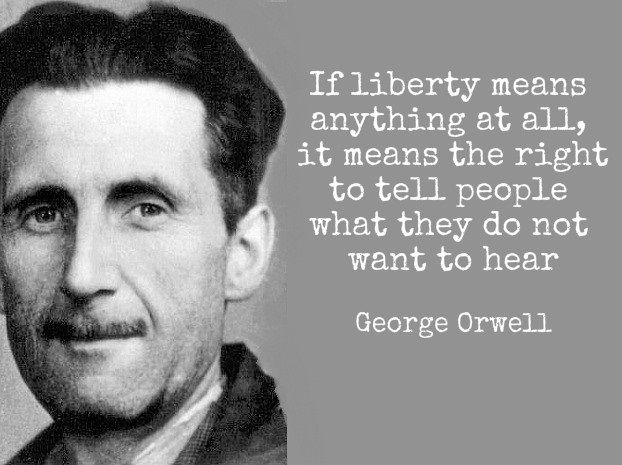
  • Term Limits, Part I

    Freedom's just another word for...?
    Imagine being arrested and thrown in jail merely for expressing an unpopular opinion. Okay, now analyze and explain “hate speech.”

    Campaign Finance Reform – A Primer

    All attempts at Campaign Finance Reform in these United States have failed. ALL. Every single one of them.

    If that sounds like exaggeration, just consider that attempts to limit the influence of money in politics is typically taught in history or civics classes as beginning (in earnest) shortly after the presidency of Andrew Jackson, the pro-slavery founder of the Democratic party whose administration ultimately produced the political “spoils system.” That would put us back to the mid- to late- 1830’s. Good ol’ “Honest Abe” himself was bankrupted trying to personally finance his first Senatorial campaign in 1858, so he had to rely upon businessman from Philadelphia and New York to finance his Presidential campaign in 1860. According to some historians, however, money was in politics from the beginning of the Republic.

    In the United States, concerns over financing campaigns for public office have been around since before the writing of the Constitution. Candidates traded influence, power, and gifts, for constituents’ money and votes even before the dawn of the Republic. George Washington – later President, but at the time, a candidate for the Virginia House of Burgesses – bestowed upon the 391 voters in his district the “customary means” of winning votes: “28 gallons of rum, 50 gallons of rum punch, 34 gallons of wine, 46 gallons of beer, and 2 gallons of cider royal.” James Madison lost his reelection campaign to the Virginia legislature 20 years later because he refused to provide voters with the customary whiskey.

    Gardner and Charles, “Election Law in the American Political System,” p. 637.

    In 1867, just two years after the Civil War, the first legislative attempt at campaign finance reform appeared in a Naval Appropriations bill. It forbade government officials from soliciting (i.e. “shaking down”) Navy Yard workers for money to finance the ruling party’s election campaigns. This had become a routine practice in prior years. So routine was it that federal employees would have some portion of their pay directly “assessed” by the government to the Party’s re-election fund. The protections of the 1867 Navy yard workers were eventually extended to all civil service workers… (But not the rest of us, evidently.) The Presidential campaign of 1896 was so openly a case of dueling donors obtaining political promises from each Parties’ respectively well-financed candidates – William Jennings Bryan for Team Blue and William McKinley for Team Red – that the public began yelling for campaign finance reform… and here we are 120 years later. This brief timeline of attempts at reform shows just how fruitless they all have been.

    Modern, seemingly sophisticated attempts at campaign finance reform, by people from both political parties in Congress, have ultimately been set aside by Supreme Court decisions. While it may be unpalatable or politically inexpedient to say this, the Supreme Court’s rulings in these cases are very solid reads of the First Amendment… proving yet again the old adage that “sometimes even a blind squirrel finds a nut” or  that “even a broken clock is right twice a day.” Lawsuits by public interest groups have ultimately failed to produce anything even close to a good result. Now the public feels so desperate for something to happen that they’ll embrace even nonsensical calls for reform by (of all people!!) Hilary Clinton. The much-ballyhooed, and almost totally misunderstood, case of Citizens United, 558 U.S. 310 (210) was about a non-profit movie company that made a film about then Senator Clinton. The Federal Election Commission agreed that the movie would be subject to a federal campaign finance law that would have imposed criminal and civil penalties on the movie company. That is to say, the law as it was made it a crime for a collection of people – using a corporate form – from expressing their political opinions, quintessential First Amendment conduct. Hard to imagine that the words “Congress shall make NO LAW” are ambiguous, but here we are, with a mountain of laws collectively regarding each and every one of the subjects specifically listed as exempt from regulation in the First Amendment.

    Either We Are a Republic With a Charter To Be Faithfully Followed, or We Are Not.

    Understanding How the (Legislative) Sausage Gets Made

    To understand why campaign finance reform doesn’t work – and what simple fix would work – you have to understand some basic economics around how the political sausage gets made, so to speak.

    First, you must know what politicians all know: there has only been one time in the last 42 years that the rate of re-election for Congressional incumbents dipped below 90% – that was 1974, when it was only 89.7%, a rounding of tenths away from being 90%. Muse on that for minute – Congress has had historically bad approval ratings – like below 20%, for decades, by any polling company. Everyone thinks Congress sucks; yet Congressional incumbents get re-elected over 90% of the time. It’s a near-certainty. Many people have speculated or offered reasoned opinions about this phenomenon, but I don’t really care about the “why” because the mere statistical truth of it is all that matters for my argument.

    Second, we must make the rather short “hop” of faith and assume that politicians are at least as self-interested as the rest of us… one might humbly suggest that they are (perhaps) even a bit more self-interested than the rest of us, or make the claim that the job attracts the type, but I don’t need to prove that as crucial to my theory. Suffice it that my claim rests on what I believe to be a rather well-observed phenomenon about the self-interest of politicians. Lord Acton wrote an entire tract explaining this, but unfortunately no one reads it and all that we remember (if at all) is this quote: “Power corrupts, and absolute power corrupts absolutely.” My own observation from many years of government service and being an American is simply that the government does not choose its prospective employees from some magical pool of magnanimous, morally benevolent, and personally-disinterested human beings. If you think I am incorrect, you’ve obviously never been to the Department of Motor Vehicles to register your car, or change the title, or correct a typo on a Vehicle Identification Number (VIN). Try to manage that over your lunch break and let me know how it goes; and ask yourself about how good the customer service is while you’re there.

    The Currency of the Politician is Law – Legislation For Some and Against Others

    He's Lying!
    Rep. Chuck Schumer (D, NY) explains how he can’t read, doesn’t understand, and doesn’t care about the 1st Amendment.

    To the above facts we have to add some economics. In my opinion, the best way to begin to understand this is to ask a very simple question: if you were a legislator looking to raise some cash, what would you have to sell? (Think about it seriously for a moment).

    ANS: Legislation. i.e. Laws.

    Legislation is the only thing that a lawmaker can offer any prospective “buyer.” It is the medium of exchange (i.e. the currency) of the political class and a specific instance of the more general “Law of the Instrument.”* In return for a piece of favorable legislation, or a clause in the next omnibus bill – or exemption from cuts or regulation – political donors deposit sums into re-elections campaigns, or exchange different favors with lobbyists – the “middlemen” of the entire Money-for-Favor-for-Reelection Triangle.

    If this seems unduly cynical, it shouldn’t be. If you have a friend who is a cop, who hasn’t heard of, or considered, asking him or her to “look into” a ticket…? Now magnify that onto a scale where instead of your hundred-fifty bucks plus court costs being at stake, it’s someone else’s multi-million dollar, multinational business and a piece of legislation that would ensure government contracts flowing that direction for the next 10 years. Or a promise to keep government regulators out of your business for at least your friendly Senator’s next 6 years of office. If all of this seems speculative or just too much to swallow at once, consider this quote right from the horse’s mouth, as it were:

    You send us to Congress; we pass laws under which you make money…and out of your profits, you further contribute to our campaign funds to send us back again to pass more laws to enable you to make more money.

    — Senator Boies Penrose, (R, PA) 1896 (quoted in Id., Gardner and Charles, p. 638.)

    I always hear people complain about the influence of “corporate money” in politics and yet no one ever seems to consider that if their Senator wasn’t offering legislation for sale, the corporation wouldn’t be able to make a purchase. And it is in no way solely corporations buying-off politicians. Unions are at least as powerful and well-off as any corporation and billionaires with agendas sit on both the left and the right of the political spectrum. In fact, if we’re dealing in generalities, it is worth wondering: if corporations are filled with greedy, capital-obsessed Scrooges, why would any of those money-grubbers ever voluntarily give their money to a politician in the first place? To ask the question is to destroy the premise.

    When you’re starting a company in your garage you don’t start by setting aside your political lobbying budget, then make whatever widget, software, computer, or other item that is the money-making aspect of your new venture. You first have to make something that a large enough number of people are willing to voluntarily pay you such that you have a growing enterprise, be it a successful song, an iPhone, the personal computer, or a rubber tire. Legislators don’t enter your mind until well down the road in the business cycle. Thus, perhaps it is enough to agree that legislators aren’t the unfortunate victims of a “system” that is foisted upon them. What Senators and Congressman do to fill the coffers of their re-elections campaigns is a perfectly natural, foreseeable byproduct of the funding of the political system.

    Part Two explains how it works in greater detail.

  • The Loss of American Social Power – Homelessness (with an aside on the racist origins of gun control)


    Asks a man for what he can spare with shame in his eyes...


    I have to confess to being interested in politics, perhaps unhealthily so. I wasn’t always. It wasn’t like I had some childhood fascination with my local senator. In truth, I think I’ve only ever voted in one Presidential election. (I may have voted for Perot, but I can’t honestly say for sure). Which is a nice way of saying that the current election cycle is a nightmare for me,* as it is for many thinking and principled Americans. It feels like the devolution of our country. To those who see politics as the public barometer of the state of a Nation, it feels like a forceful bellwether of decline, the dying gasp of a once great and moral Country.

    We’ve all seen the man at the liquor store beggin’ for your change
    The hair on his face is dirty, dreadlocked and full of mange
    He asked a man for what he could spare with shame in his eyes
    “Get a job, you fuckin’ slob” ‘s all he replied

    [CHORUS]
    God forbid you ever had to walk a mile in his shoes
    ‘Cause then you really might know what it’s like to sing the blues
    Then you really might know what it’s like…

    I had occasion to find myself in South Bend, Indiana, (yes, the one where Notre Dame is) for work. Driving up and down a particular main avenue running some errands, I noticed a man standing on the corner near the onramp to a highway. He was disheveled, though not too badly, and holding the ubiquitous sign that told his (alleged) story: “Homeless and I need to feed my family” read the message in red paint on the cardboard. I passed him in the afternoon without too much thought, though the prevalence of veterans among the homeless always makes me hesitate and ponder long after I’ve passed. Sometimes, if the timing is right, I’ll give what I can or have on me, though not always. I would imagine I’m like most people in both my thoughts and deeds with regard to the homeless. Perhaps better than some, certainly worse than some others. I’ve worked the odd soup kitchen or two for a church function or for a community service project that my kids had to and I rolled along.

    Albert Jay Nock was a brilliant and radical philosopher of the early 20th century. Born in 1870, he lived to see the First World War and died just as the Second one ended in 1945. One of his more well-known and seminal works was “Our Enemy, The State.” Finished and published during the height of FDR’s “New Deal” in 1935, Nock believed that the most effective form of government, and protective of individual rights, was the tribal “anarchism” of the early Native Americans. In an earlier work, titled simply, Jefferson, Nock argued that Thomas Jefferson was a firm believer that the smallest possible governmental units, or wards, allowed the people to, in Jefferson’s own words, “crush regularly and peaceably the usurpations of their unfaithful agents.”

    Nock’s later work in Our Enemy, The State focused on the difference between the spontaneous “social power” of individuals coming together for common cause and the forceful usurpation of social power by “State power.” His central thesis was set forth very clearly in the early part of the book and, in three short pages, Nock compels even the casual, disinterested, or even adverse reader to reconsider their entire understanding of State intervention in human affairs.

    One might wonder just what the hell all of this has to do with an (apparently) homeless guy standing on a corner in South Bend, Indiana, in mid-October, as I drove by him more than once over the course of several hours. Fair question. Let me convince you by pointing to one of the most trenchant parts of Nock’s argument that stuck with me:

    …just as the State has no money of its own, so it has no power of its own. All the power it has is what society gives it, plus what it confiscates from time to time on one pretext or another; there is no other source from which State power can be drawn. Therefore every assumption of State power, whether by gift or seizure, leaves society with so much less power. There is never, nor can there be, any strengthening of State power without a corresponding and roughly equivalent depletion of social power.

    Our Enemy, The State, p. 5 (emphasis added).

    The thesis seemed interesting to me, but I wasn’t quite sure what Nock meant by “social power” versus “State power.” I thought I quite understood the latter, but I wasn’t quite sure what the former was. Nock’s examples left me with a permanently-altered view of government attempts to intercede to “help” the citizenry. Nock provided two (then)-contemporary examples to illustrate his point more clearly.

    …it follows that with any exercise of State power, not only the exercise of social power in the same direction, but the disposition to exercise it in that direction, tends to dwindle. Mayor Gaynor astonished the whole of New York when he pointed out to a correspondent who had been complaining about the inefficiency of the police, that any citizen has the right to arrest a malefactor and bring him before a magistrate. ‘The law of England and of this country,’ he wrote, ‘has been very careful to confer no more right in that respect upon policemen and constables than it confers on every citizen.’ State exercise of that right through a police force had gone on so steadily that not only were citizens indisposed to exercise it, but probably not one in ten thousand knew he had it.

    (emphasis mine). We discussed the idea of a citizen’s arrest in law school, but I couldn’t and can’t recall much of what was said. My initial reaction reading Nock was to recoil at the thought that we all had the same powers of arrest as against each other as any officer of the law does, but then again, how much of the current problems in troubled neighborhoods stems from the fact that the local citizens who live there have abandoned even the most modest attempts at reducing the crime, violence, poverty, homelessness, drug abuse, etc., in their neighborhoods? The rejoinder is that the people are not armed and the drug dealers and gangs are and thus the people are at a distinct disadvantage, and hence comes the justification for military-grade police forces armed as well as or better than combat troops for the national defense; yet aren’t their some fundamental factors missing from that analysis? If the drug dealers and gang members inhabit those self-same neighborhoods, who is giving them succor? How do they put their heads on their pillows at night and feel secure in these same neighborhoods where they prowl and prey? These are, perhaps not coincidentally, the very same issues that confronted me while I was in Afghanistan, attempting to “police” a particular area that was rife with terrorism (and narco-traffickers, as well). I’ve watched many a frustrated military member talking to village elders asking, “Why are there rockets being launched from this area at our base every week? How is that happening?? Where do these people come from and sleep??”

    Upon careful inspection, what one finds is: first, the police do not actually live in the same neighborhoods that they patrol. In point of fact, they live in suburban outposts, miles and miles from the streets they pass through in their cars, as distant from the citizenry they supposedly serve and protect as they are from the gangs they are supposed to be interdicting. A lot of that is economics and has to do with the pay disparity between cops and the average inner city neighborhood they’re patrolling. Second, the people are at an “arms disadvantage” specifically because the State has disarmed them! It is a well-established historical fact that modern gun control suddenly became vogue during the late-1960s after armed blacks showed up to the California State Capitol armed with – (gasp) – “assault rifles!” (and shotguns, and pistols, as the above-linked article notes). As an aside, Clayton Cramer, a software engineer, does about as good a job as a law professor could in explaining that virtually ALL gun control laws have been racist in their origins and intent. This might seem self-evident when one considers that the right of a freeman to own weapons goes back to the days of sword ownership in England. If not still convinced, the Supreme Court made this explicitly clear in Dred Scott v. Sanford, 60 U.S. 393 (1857). Yes, that Dred Scott. The case itself should be required reading as a part of any basic civics course because of just how many incredible statements of historical significance for Constitutional law are in it – including statements by the Court about what defines a “citizen” and the Congressional power to “naturalize;” the right of states to admit immigrants, the status of descendants of slaves in free states vs. those of native Americans, the limits of judicial construction, and more – but of paramount importance for this discussion is what the Supreme Court used as one of its Constitutional justifications for finding Dred Scott could not sue for his freedom:

    More especially, it cannot be believed that the large slaveholding States regarded them as included in the word citizens, or would have consented to a Constitution which might compel them to receive them in that character from another State. For if they were so received, and entitled to the privileges and immunities of citizens, it would exempt them from the operation of the special laws and from the police regulations which they considered to be necessary for their own safety. It would give to persons of the negro race, who were recognised as citizens in any one State of the Union, the right to enter every other State whenever they pleased, singly or in companies, without pass or passport, and without obstruction, to sojourn there as long as they pleased, to go where they pleased at every hour of the day or night without molestation, unless they committed some violation of law for which a white man would be punished; and it would give them the full liberty of speech in public and in private upon all subjects upon which its own citizens might speak; to hold public meetings upon political affairs, and to keep and carry arms wherever they went.

    Dred Scott, 60 U. S., 416-17.

    To return to Nock’s point about social power and state power, what has happened in inner city black, and other minority, neighborhoods more broadly, is that the state has systematically usurped the “social power” – and the ability to wield it – that was originally resident in most neighborhoods and replaced with state power, which is only intermittently there “on patrol,” but not resident in that area.

    If you’re still not sure about Nock’s thesis, he provides many more examples that will shock the modern sensibility about how this country used to work.

    Heretofore in this country sudden crises of misfortune have been met by a mobilization of social power. In fact — except for certain institutional enterprises like the home for the aged, the lunatic asylum, city hospital, and county poorhouse — destitution, unemployment, “depression,” and similar ills, have been no concern of the State, but have been relieved by the application of social power. Under Mr. Roosevelt, however, the State assumed this function, publicly announcing the doctrine, brand new in our history, that the State owes its citizens a living.

    Students of politics, of course, saw in this merely an astute proposal for a prodigious enhancement of State power; merely what, as long ago as 1794, James Madison called “the old trick of turning every contingency into a resource for accumulating force in the government”; and the passage of time has proved that they were right. The effect of this upon the balance between State power and social power is clear, and also its effect of a general indoctrination with the idea that an exercise of social power upon such matters is no longer called for.

    Our Enemy, p. 5.

    Nock’s second example involved natural disasters and this is a matter I have given some thought, particularly in light of the revelations regarding the Clinton Foundation’s actions in Haiti.

    It is largely in this way that the progressive conversion of social power into State power becomes acceptable and gets itself accepted. When the Johnstown flood occurred, social power was immediately mobilized and applied with intelligence and vigor. Its abundance, measured by money alone, was so great that when everything was finally put in order, something like a million dollars remained.

    If such a catastrophe happened now, not only is social power perhaps too depleted for the like exercise, but the general instinct would be to let the State see to it. Not only has social power atrophied to that extent, but the disposition to exercise it in that particular direction has atrophied with it. If the State has made such matters its business, and has confiscated the social power necessary to deal with them, why, let it deal with them[!]

    Id.(emphasis added)

    I think the power of this example is that it has been repeatedly demonstrated through the modern era, considering the string of well-publicized failed federal disaster relief efforts through FEMA. A fairly comprehensive history of US disaster relief efforts proves the exact point that Nock was trying to make. Over time, as the federal government has increasingly intervened, local disaster relief efforts have tailed off and, in the ultimate slap-in-the-face, have even been prohibited and physically turned away by FEMA, most notably during the Katrina debacle in New Orleans.

    Nock’s final example of this diminution of social power was the one that stuck with me, though. Writing during the horrors of the Depression, Nock opined:

    We can get some kind of rough measure of this general atrophy by our own disposition when approached by a beggar. Two years ago we might have been moved to give him something; today we are moved to refer him to the State’s relief agency. The State has said to society, “You are either not exercising enough power to meet the emergency, or are exercising it in what I think is an incompetent way, so I shall confiscate your power, and exercise it to suit myself.” Hence when a beggar asks us for a quarter, our instinct is to say that the State has already confiscated our quarter for his benefit, and he should go to the State about it.

    Id.

    Guilt-free?
    Humor works best as a vector for Truth.

    And NOW we come back around to our homeless man on the street in South Bend, Indiana. (And Thanks! for sticking around).

    As I drove by him for the final time, it was past sunset, but not quite fully dark yet. He stood there in the same place holding the same sign. I couldn’t even tell if he had moved. I started to reach for my wallet but then the light turned green, so I accelerated away, leaving the man dwindling in my rearview mirror.

    “Aaaaahhhh….” I looked in the mirror as I went under the overpass, headed toward the comfort and warmth of my hotel. It was a rather warm October night, one of those last gasps of Summer before Fall fully settles in, he’d be alright… I thought of Nock’s words. “Fuuuuuck….” I muttered, rubbing my chin.

    I made an abrupt U-turn like any person who learned to drive in Rhode Island would, went past him, “banged another U-ee,” and there I was – and there he was – still holding his sign. It wasn’t the nicest part of town, but it wasn’t the worst, either. All I had was a ten and twenty dollar bill in my wallet.

    While stopped at the light, I looked left quickly where another car had pulled up to the light. There were three young black kids, all teenagers, ranging from perhaps thirteen to seventeen. The car was a bit dented up and they were watching me as I fumbled with my money, then tried to find the window unlock button in my rental car. I finally managed it all and motioned the man on the corner over; I handed him the ten as he leaned in my passenger window. He didn’t see it at first in the dark, but as he stepped back he said, “Oh My God, thank you. Thank you!” He started to walk away and I could hear his voice crack as he said: “I’ve been standing here for hours…”

    “I know,” I started to say, but it died on my lips. I’d driven by him all those times…

    I looked left and the three black kids were holding their thumbs up. The young kid in back was clapping. I just shrugged sheepishly. Then the car door opened and for a moment I thought, “Aw, fuck. Here we go. He’s going to ask for what I have left.” Then it became clear as I looked at the car it was because the window wouldn’t roll down. The teen leaned out and yelled: “I wanted to give him something, but I don’t have any money!”

    “Well…good on ya.” I said back. I couldn’t think of anything clever to say. “He needed that more than I did,” I yelled. “And I had it, so…” They smiled, waved, honked, and drove away as the light changed.

    And that was it.

    At a time when our country is rife with divisions over political parties, where we are told which lives matter, where we are no longer allowed to speak without fear of retribution if someone should be offended, where “hate speech” is now all the rage, and where I am told a car full of black teens should concern me because they are “superpredators,” where statisticians write papers claiming that abortions of black kids have helped drive down crime rates, where 1 in 4 or 5 or 7 homeless folks are military veterans, I think the “soft revolution” is what I now hope for…

    I hope that people will recognize that we all could and would be far more inclined to be charitable to our fellow man if we got to keep a little  more of our hard earned money, if our government wouldn’t tell us that IT is the ONLY possible solution to our problems, and if we all decided to simply act more charitably toward our fellow man – to take back our “social power” instead of waiting for the State to fix whatever the need is of the moment. Individual US citizens gave $258 Billion (yep, with a “B”) in 2014 – a record. At a time when the economy isn’t exactly humming. We should be proud of that, but how much better could we do if we got to keep more and decided to “just do it” ourselves, locally?

    Regardless of which shitheel gets elected, we should ignore their grand plans to “cure” _______ (drug use, poverty, racism, school shootings, or whatever the issue du jour is) and start exercising our social power. We don’t need to be told what the right thing to do is. We don’t need government to tell us to be kind to one another.

    We need to realize that we have to be the change we seek in the world and start doing it in the small ways that we can. Maybe eventually we’ll figure out we don’t need a three or four or five-letter federal agency to fake like it’s doing something while it hands out contracts to favored political donors and the people who really need help go wanting. Else I fear we risk continuing to ignore those in need among us because we have the excuse that “someone else” – like some bureaucratic agency or even the police – is going to do it. They’re not and they never have – and even if they did solve a problem, when was the last time you heard of some federal agency announcing that it had accomplished its purpose and thus was folding up so as not to waste taxpayer money? I won’t hold my breath waiting for the numerous examples…I’ll just try to exercise Nock’s social power to make the world around me a little bit better.


    *This post was originally written in the lead-up to the 2016 election.


    _____________

    Liked it? Take a second to visit www.theabjectlesson.com and support The Abject Lesson via Patreon.

  • A Tour of Pie’s Place Part Deux: New and Old in Bucharest

    Yes, as the title says this is part 2 of the series. Yes, there was a part 1, not that anyone remembers… I blame excessive alcohol consumption round these parts.  No, reading part 1 is not required, the content is independent, being mostly a picture thing. Originally it was just one post, but it seemed a bit big, so I decided to split it. So let’s get to it. 

    Bucharest can be a city of contrasts, like every other large city to be fair. New and old, rich and poor, pretty and ugly – mostly ugly, all mingle. The jumble can be more pronounced than in other places as the development was a bit haphazard, although I am not one who likes uniformity and dreams of streets where all buildings are almost identical. I like a bit of mishmash, or eclectic as I like to say.


    Bucharest is split in 6 sectors, some better than others. I live in Sector 1, aka the best sector. It has most of the older and nicer areas of the city, has by far the most parks and green spaces and fewest brutalist apartment buildings. Plus the most tax money per capita in the budget, which meant a lot was stolen as it was easy to make the sector look better than the others and still have plenty left over for the old Swiss bank account.


    You can see a good part of the history of the city if you know where to look. But it is not always easy, it was so thoroughly changed during the glorious years of communism that not much remain. You do not get the same sense of age like in other old cities, like Rome or Paris. Of course, being from the 1500s it is overall a lot younger. Just not that young.


    Back in the day, the day being 1900, some people called it Little Paris, and some locals still do. I mean… whatever you need to tell yourself to sleep at night I guess. This, of course, was not due necessarily to significant resemblance between the cities, although we have an Arc de Triumph and late 19th century architecture was French inspired. It had more to do with the local economically successful crowd being great fans of French culture. This started after the revolution of 1848, when a bunch went to Paris into exile, and continued, to the point that French was the default language in polite society. Romanian was for the hoi polloi. Romania considered itself a “francophone country”. While the local higher education was burgeoning, a lot of people still went abroad for education, Germany for technical stuff and France for the liberal arts. But most of the old Bucharest is gone or rundown and swallowed by the ugly new.


    Many of the Paris educated gentry often came back after a few years having conveniently forgot the Romanian language. The satirists of the day called it going to Paris an ox and returning a cow. Some of the uneducated tried to emulate the French speakers, but ended up altering Romanian words to what they though sounded French – a phrase was coined for this in Romanian – furculision – based on the Romanian word for table fork – furculița, frenchiefied.


    This was somewhat paralleled in post-communist Romania by people who left to work – often menial jobs – abroad and returned with similar language amnesia. As many early leavers went to Italy – it was easier for them there, as Romanians did not have work permits for EU countries, but Italians can be a bit… flexible in the application of the law and there was plenty of work to be found “under the table”, cash money no taxes. The language was easy to pick up for Romanians, who before that only spoke bad Romanian. So after a few years of back breaking work in old Italy, people came back with some cash – by local standards – and a degree of snobbishness which led to similar forgetfulness of Romanian words, to the point in which the Italian phrase “come si dice” entered Romanian vernacular as irony and/or sarcasm.

    The turning the words French bit was transformed in turning words English, the new lingua franca if you will. The most famous example of this was a former president who tried to say in English that the Dacians were a branch of the Thracians. In order to pluralize the Romanian words for Dacian, dac and Thracian, trac he simply added an s to the end and said “the dacs come from the tracs”, which came out as “the ducks come from the trucks” and much hilarity ensued, mainly due to the fact that he was the worst thing that could happen to post-communist Romania and people had little else to do than laugh.


    Bucharest was rapidly industrialized and populated with the worker necessary to build to socialist multi-laterally developed utopia during communism. The building took the form of hideous brutalist architecture, in endless apartment blocks, crowded, badly insulated, and overall quite unpleasant. There are boulevards where there is a wall of buildings without any gaps between, probably made to channel crowds in controllable fashion. These were the houses of the factory workers. The communist apparatchiks, of course, did not live there. They took over the villas of the previously wealthy or middle class. It is hard work building equality, they deserved a better living standard then the masses. Some animals more equal than others, you see.


    The previous rich and middle class were unceremoniously kicked out of their homes, along with many of the poor. Because, besides the party bigwig homes, there needed to be space for the shitty apartment buildings. The proles needed abodes as well. And to do that you needed to tear down the old buildings. Quite indiscriminately.


    The neighborhood I live in is what I like to call liminal, because it is on the border between two different areas and also I like using the word liminal. Liminal… It does not even matter if I am using it correctly, so don’t bother commenting. If you were to build a triangle around my building, on one side is the beginning of an old wealthy area. This was one of the wealthiest since before communism, where the well off lived in nice and quite large houses on leafy streets. A lot of these were preserved to this day.


    On the second side of the triangle is a front of communist apartment blocks, rising like a huge wall. Since communism, they had some polystyrene insulation added and a usually bad paint job.


    On the third there are the old style, not too fancy houses that the pre-communist lower middle class lived in. These are generally single story or at most a couple of levels. Some still have the look of rural Romanian houses. These were the ones that were to be torn down should the communist dream have continued.


    Now I have the chance to see what modern society alters. The expensive old villas and the communist blocks will not change any time soon, although every piece of land in those neighborhoods is being built with deluxe apartments.


    What is changing is the area of the old not-so-fancy houses that escaped communist building schemes. They are, one by one, bit by bit, torn down and rebuilt. I assume it would also be accurate to say funeral by funeral, as many inhabitants are elderly who do not want to sell the house, or tear it down to rebuild, as they lived their entire life in it. So, mostly after they die, the heirs do something about it. Sell or rebuild or whatever.


    The result of the modern building spurt is, to be diplomatic about it, quite eclectic. A lot of houses and building were built in Bucharest in the last 10-15 years, for people who became wealthy enough to escape the communist apartments. The plots of land were generally small and everyone built whatever they felt like, so there is no coherent model. This is good and bad, depending on whether you like uniformity.


    Haphazard building led to a great contrast. Old houses, some up kept some not, with a random new house or small apartment building, stuck in the tiny spaces. The future … it remains to be seen. Or not, depending on the breaks. Also for some reason there seem to be a lot of magnolias in this city… And on that note