My oldest kid is sick, which is really not surprising given the other little plague vectors he interacts with on a daily basis. Still, he’s getting to that age where he can be put on a couch with a bucket, a big container of Gatorade, and the remote and whoever is nominally watching him can get things done. So that’s nice.
Makers of liquor sued for… encouraging a drinking culture at work. Next you’ll tell me that dental hygienists are encouraged to keep their teeth clean.
I don’t know exactly what I’d call this, but not suspended animation. It cools you down to slow the rate at which your cells consume oxygen to increase the time surgeons have to get your blood pressure up.
I’m really interested to find out what the standard is for “corrupting labor talks” with the UAW is. Did Fiat-Chrysler bring bigger suitcases full of cash or just more of them?
Will the Democratic presidential nomination go to a centrist or a progressive? Which choice would give the party the best chance in next year’s election? Honestly, I have no idea.
This is good tack to take, given your inability to predict anything, including things you are purported to be an expert.
One thing I can say, however, is that neither centrism nor progressivism is what it used to be.
There was a time when arguments between centrists and progressives were framed as debates between realism and idealism. These days, however, it often seems as if the centrists, not the progressives, are out of touch with reality. Indeed, sometimes it feels as if centrists are Rip Van Winkles who spent the last 20 years in a cave and missed everything that has happened to America and the world since the 1990s.
You can see this in politics, where Joe Biden has repeatedly declared that Republicans will have an “epiphany” once Donald Trump is gone, and once again become reasonable people Democrats can deal with. Given the GOP’s scorched-earth politics during the Obama years, that’s a bizarre claim.
Turnabout is fair play asshole, team cuck simply decided to start playing by the same rules team cunt played by–since forever, really. Which is par for the course for team cuck, it takes them 20 years or more to come around to anything.
You can also see it in economics. There are many reasonable criticisms you could offer of Elizabeth Warren’s economic proposals. But the one I keep seeing is that Warren would turn America into (cue scary music) Europe, maybe even (cue even scarier music) France. And you have to wonder whether people who say such things have paid any attention to either Europe or America over the past few decades.
We know where France is located dumbass.
Just to be clear, Europe does have big economic problems. But they’re not the ones such people seem to imagine.
When people say such things, they seem to have in mind a picture of the U.S.-Europe comparison that did seem to have some validity in the 1990s. In that picture, nations with large social spending and extensive government regulation of markets suffered from “Eurosclerosis,” persistent lack of jobs.
Employers, the story went, were reluctant to expand both because of high taxes and because they feared not being able to fire workers once hired. At the same time, workers had little incentive to accept jobs because they could live off generous social programs.
Europe also seemed to be lagging in the adoption of new technology: For a while, the U.S. surged ahead in making use of the internet and information technology in general, leading to arguments that Europe’s high taxes and regulation were discouraging innovation.
But all of that was a long time ago. The jobs gap has largely vanished; adults in their prime working years are actually more likely to be employed in Europe, France included, than they are in America.
Any gap in the adoption of information technology has also long since vanished; households in much of Europe are as or more likely to have broadband than their U.S. counterparts, partly because the U.S. failure to limit providers’ monopoly power has led to much higher prices for internet access.
Then again the price of anything is determined by it’s demand, and is influenced by a variety of factors. It seems silly to pick one product and simply declare one country is doing something better than the other. The fact of the matter it is often much more complicated than that, but since your average reader probably cunt count to 12 without the physical deformity of a sixth digit on each hand, you can get away with cherry-picking.
It’s true that European nations have lower GDP per capita than we do, but that’s largely because, unlike most Americans, most Europeans actually have significant vacation time and hence work fewer hours per year. This sounds like a choice about work-life balance, not an economic problem.
And on that most fundamental of indicators, life expectancy, the U.S. has fallen far behind: French residents can expect, on average, to live more than four years longer than Americans. Why? Universal health care and policies that mitigate extreme inequality are the most likely explanations.
Now, I don’t want this to sound like praise of all things European. The nations on the euro remain terribly vulnerable to financial crises, because they’ve adopted a shared currency without a shared banking safety net; only the heroic leadership of Mario Draghi, the former president of the European Central Bank, avoided a catastrophic collapse of the euro in 2012.
Europe also suffers from persistent weakness in demand because key players, Germany in particular, have an obsessive fear of deficits, even when the European economy desperately needs stimulus.
They’re right to fear it. The cost of them ruling over the continent now appears to be paying for Spain and Italy to take naps in the afternoon, the Turks to commit atrocities against the Kurds, the French to go on vacation, and for the Greeks to do…whatever it is they do, rather than be productive.
These are big problems, severe enough that I wouldn’t be surprised if Europe is the epicenter of the next global crisis. But the problem with Europe is not that its social programs are too generous and its governments too intrusive. If anything, it’s almost the opposite: Europe’s economy is vulnerable because a combination of political fragmentation and ideological rigidity has left its politicians unwilling to be Keynesian enough.
When all else fails–PROG HARDER.
The point is that centrists who point to Europe as an illustration of the bad things that happen when you’re too enthusiastic about pursuing social justice are stuck decades in the past. Modern European experience actually vindicates progressive claims that we can do a lot to make America fairer without destroying incentives. And even Europe’s problems make the case for more government intervention, not less.
By all means, let’s talk about whether “Medicare for all,” wealth taxes and other progressive proposals are actually good ideas. But trying to shoot them down by going on about how terrible things are in France is a sure sign that you have no idea what you’re talking about.
That’s fair. Medicare for all, is a fucking retarded idea that will bankrupt the country, let alone multiple hospitals and health care providers that will suddenly find their profit margins have gone to hell. Wealth taxes will result in people fleeing the country, or holding their wealth offshore–like what happened when they tried it in France. Except nobody is shooting is down because of how much a shithole France is, they’re shooting it down because we have practical experience from experiments with these progressive proposals BECAUSE THEY WAS TRIED IN FRANCE YOU DUMBASS.
Buenos días Gliberinos! Sloopy is currently sweating off 4 pints of pickle juice from his bender last night outside of Dundee, TX. Have any idea where that is? Me neither but it explains why he has no wifi.
I’m having chilaquiles for breakfast this morning. How about you, half a beer from last night? You know what, lets just discuss the links from south of the border….
The big news is the Spanish government is extraditing a Venezuelan diplomat, and by diplomat I mean guy affiliated with Chavez that also trafficked cocaine.
Hugo Carvajal, an ally of Venezuela’s late Socialist leader Hugo Chavez, is wanted by U.S. authorities on allegations of drug trafficking. He has previously denied accusations that he collaborated with the Revolutionary Armed Forces of Colombia to help smuggle cocaine into the United States.
Don Brett is the big winner.
Brazil is still on fire. Note the data cited is “since 2008.” Which this fun infographic from the right wing nut jobs at New York Times might give us a clue as to why they picked “since 2008.”
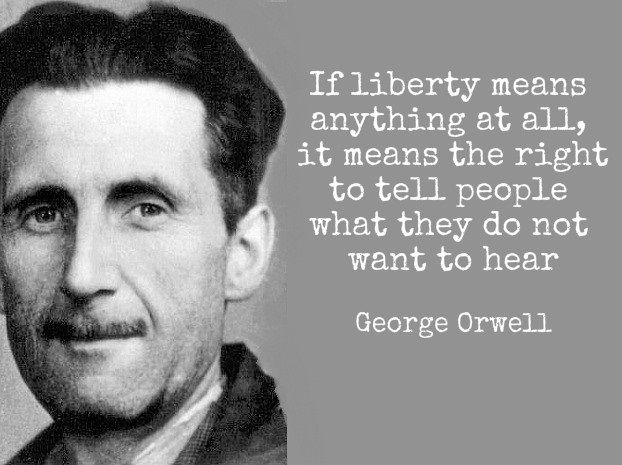
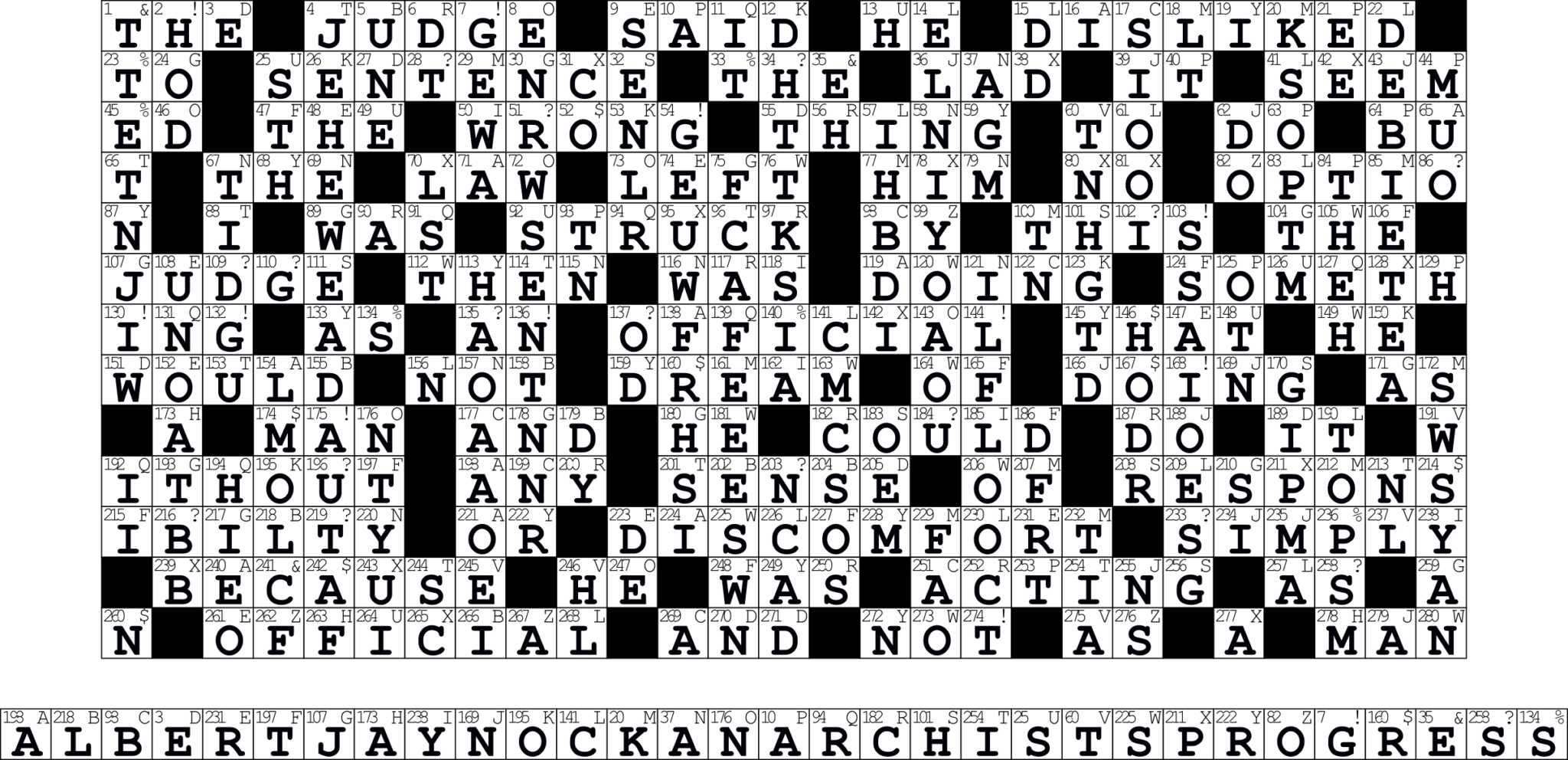
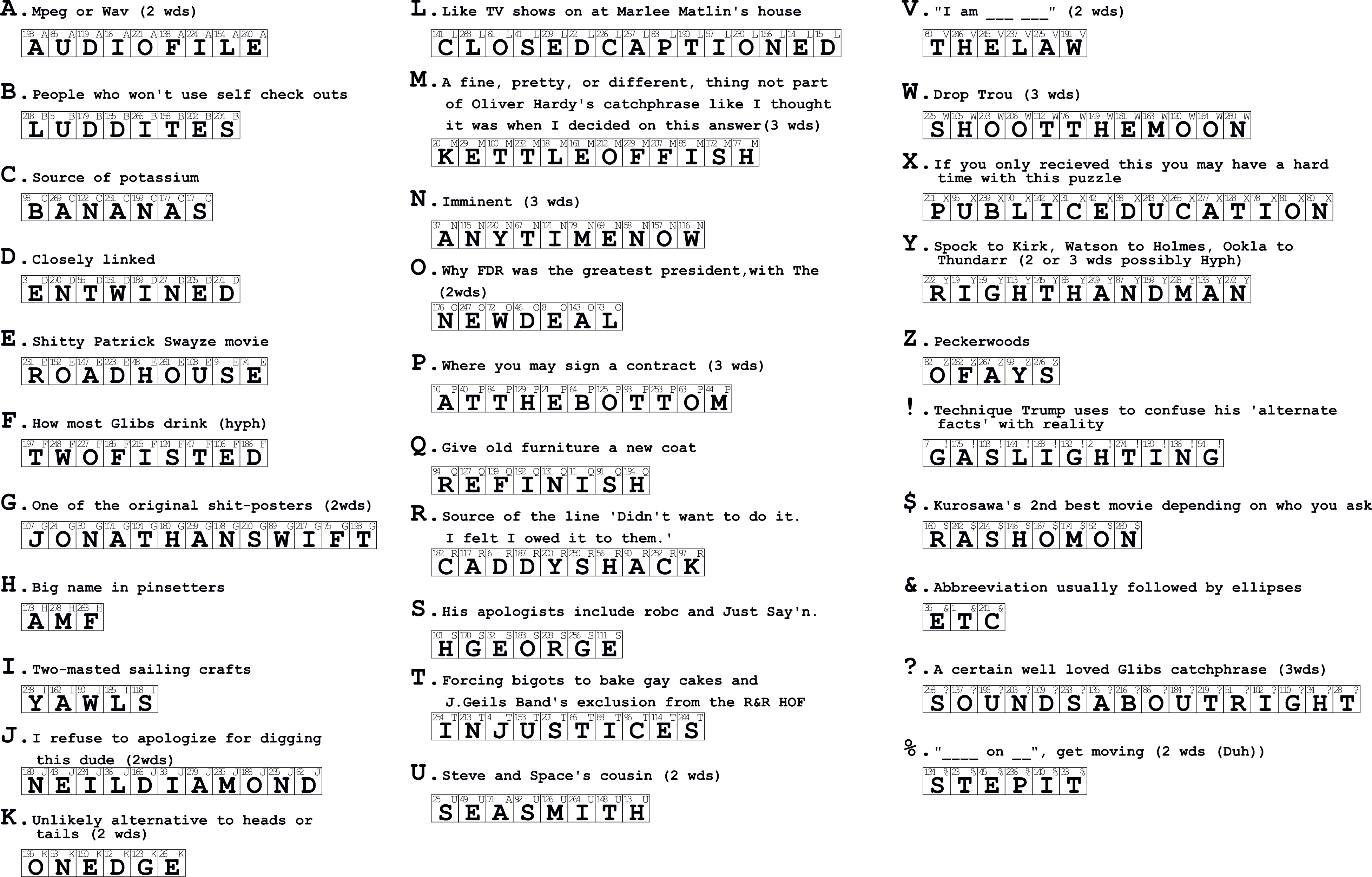
There are a lot of long answers in this one, that’s because to get the letters I needed to spell out the author and title I had to use a longer quote than is usual for acrostics, I also tried to limit the number of clues to under 26 but that proved to difficult and I ended up using the authors full name to make everything jibe. That’s why there are symbol not letter designations for the last 5 clues. Also during final assembly I realized that I had made an almost fatal error, I managed to salvage the puzzle, but the last clue is fugly and Clue S is a name that is usually not initialized, unlike H.G. Wells or R.L. Burnside, but to make it work I had to go that route. It’s only one initial then the full last name. Gender Traitor graciously offered to beta test this one but since she may be the only person who worked the last one I figured I’d go it alone again, I’m still going to blame her for any errors however. And lastly, to keep these from just being vanity projects I have used a Liberty related quote I expect all of you to discuss the meaning and implications of the quote down in the comments. Entertainment only…no gambling…have fun…we’re all counting on you…across all obstacles…
Holy crap. I’ve been in meetings all damn day. My to-do list has grown and my to-done list has nothing on it. Because no, I don’t think that meetings materially advance the product. They are indispensable in the process of making decisions (where one party has authority and another information) about what should be on a to-do list, but meetings don’t make software, damn what your Agile coach says.
Feds file criminal charges against Epstein guards. I’ll bet those guys shut the fuck up and take the plea. They know what happens to squealers.
Why is the identity of the “whistleblower” a more closely guarded secret than Hillary Clinton’s State Department emails?
India asks men to take a shot in the dick to protect against pregnancy (of their sexual partners in 99.995% of cases). Would. Well, maybe not in India, or in some sketchy clinic in Florida that also promises butt injections.
Imagine being arrested and thrown in jail merely for expressing an unpopular opinion. Okay, now analyze and explain “hate speech.”
Campaign Finance Reform – A Primer
All attempts at Campaign Finance Reform in these United States have failed. ALL. Every single one of them.
If that sounds like exaggeration, just consider that attempts to limit the influence of money in politics is typically taught in history or civics classes as beginning (in earnest) shortly after the presidency of Andrew Jackson, the pro-slavery founder of the Democratic party whose administration ultimately produced the political “spoils system.” That would put us back to the mid- to late- 1830’s. Good ol’ “Honest Abe” himself was bankrupted trying to personally finance his first Senatorial campaign in 1858, so he had to rely upon businessman from Philadelphia and New York to finance his Presidential campaign in 1860. According to some historians, however, money was in politics from the beginning of the Republic.
In the United States, concerns over financing campaigns for public office have been around since before the writing of the Constitution. Candidates traded influence, power, and gifts, for constituents’ money and votes even before the dawn of the Republic. George Washington – later President, but at the time, a candidate for the Virginia House of Burgesses – bestowed upon the 391 voters in his district the “customary means” of winning votes: “28 gallons of rum, 50 gallons of rum punch, 34 gallons of wine, 46 gallons of beer, and 2 gallons of cider royal.” James Madison lost his reelection campaign to the Virginia legislature 20 years later because he refused to provide voters with the customary whiskey.
Gardner and Charles, “Election Law in the American Political System,” p. 637.
In 1867, just two years after the Civil War, the first legislative attempt at campaign finance reform appeared in a Naval Appropriations bill. It forbade government officials from soliciting (i.e. “shaking down”) Navy Yard workers for money to finance the ruling party’s election campaigns. This had become a routine practice in prior years. So routine was it that federal employees would have some portion of their pay directly “assessed” by the government to the Party’s re-election fund. The protections of the 1867 Navy yard workers were eventually extended to all civil service workers… (But not the rest of us, evidently.) The Presidential campaign of 1896 was so openly a case of dueling donors obtaining political promises from each Parties’ respectively well-financed candidates – William Jennings Bryan for Team Blue and William McKinley for Team Red – that the public began yelling for campaign finance reform… and here we are 120 years later. This brief timeline of attempts at reform shows just how fruitless they all have been.
Modern, seemingly sophisticated attempts at campaign finance reform, by people from both political parties in Congress, have ultimately been set aside by Supreme Court decisions. While it may be unpalatable or politically inexpedient to say this, the Supreme Court’s rulings in these cases are very solid reads of the First Amendment… proving yet again the old adage that “sometimes even a blind squirrel finds a nut” or that “even a broken clock is right twice a day.” Lawsuits by public interest groups have ultimately failed to produce anything even close to a good result. Now the public feels so desperate for something to happen that they’ll embrace even nonsensical calls for reform by (of all people!!) Hilary Clinton. The much-ballyhooed, and almost totally misunderstood, case of Citizens United, 558 U.S. 310 (210) was about a non-profit movie company that made a film about then Senator Clinton. The Federal Election Commission agreed that the movie would be subject to a federal campaign finance law that would have imposed criminal and civil penalties on the movie company. That is to say, the law as it was made it a crime for a collection of people – using a corporate form – from expressing their political opinions, quintessential First Amendment conduct. Hard to imagine that the words “Congress shall make NO LAW” are ambiguous, but here we are, with a mountain of laws collectively regarding each and every one of the subjects specifically listed as exempt from regulation in the First Amendment.
Either We Are a Republic With a Charter To Be Faithfully Followed, or We Are Not.
Understanding How the (Legislative) Sausage Gets Made
To understand why campaign finance reform doesn’t work – and what simple fix would work – you have to understand some basic economics around how the political sausage gets made, so to speak.
First, you must know what politicians all know: there has only been one time in the last 42 years that the rate of re-election for Congressional incumbents dipped below 90% – that was 1974, when it was only 89.7%, a rounding of tenths away from being 90%. Muse on that for minute – Congress has had historically bad approval ratings – like below 20%, for decades, by any polling company. Everyone thinks Congress sucks; yet Congressional incumbents get re-elected over 90% of the time. It’s a near-certainty. Many people have speculated or offered reasoned opinions about this phenomenon, but I don’t really care about the “why” because the mere statistical truth of it is all that matters for my argument.
Second, we must make the rather short “hop” of faith and assume that politicians are at least as self-interested as the rest of us… one might humbly suggest that they are (perhaps) even a bit more self-interested than the rest of us, or make the claim that the job attracts the type, but I don’t need to prove that as crucial to my theory. Suffice it that my claim rests on what I believe to be a rather well-observed phenomenon about the self-interest of politicians. Lord Acton wrote an entire tract explaining this, but unfortunately no one reads it and all that we remember (if at all) is this quote: “Power corrupts, and absolute power corrupts absolutely.” My own observation from many years of government service and being an American is simply that the government does not choose its prospective employees from some magical pool of magnanimous, morally benevolent, and personally-disinterested human beings. If you think I am incorrect, you’ve obviously never been to the Department of Motor Vehicles to register your car, or change the title, or correct a typo on a Vehicle Identification Number (VIN). Try to manage that over your lunch break and let me know how it goes; and ask yourself about how good the customer service is while you’re there.
The Currency of the Politician is Law – Legislation For Some and Against Others
Rep. Chuck Schumer (D, NY) explains how he can’t read, doesn’t understand, and doesn’t care about the 1st Amendment.
To the above facts we have to add some economics. In my opinion, the best way to begin to understand this is to ask a very simple question: if you were a legislator looking to raise some cash, what would you have to sell? (Think about it seriously for a moment).
ANS: Legislation. i.e. Laws.
Legislation is the only thing that a lawmaker can offer any prospective “buyer.” It is the medium of exchange (i.e. the currency) of the political class and a specific instance of the more general “Law of the Instrument.”* In return for a piece of favorable legislation, or a clause in the next omnibus bill – or exemption from cuts or regulation – political donors deposit sums into re-elections campaigns, or exchange different favors with lobbyists – the “middlemen” of the entire Money-for-Favor-for-Reelection Triangle.
If this seems unduly cynical, it shouldn’t be. If you have a friend who is a cop, who hasn’t heard of, or considered, asking him or her to “look into” a ticket…? Now magnify that onto a scale where instead of your hundred-fifty bucks plus court costs being at stake, it’s someone else’s multi-million dollar, multinational business and a piece of legislation that would ensure government contracts flowing that direction for the next 10 years. Or a promise to keep government regulators out of your business for at least your friendly Senator’s next 6 years of office. If all of this seems speculative or just too much to swallow at once, consider this quote right from the horse’s mouth, as it were:
You send us to Congress; we pass laws under which you make money…and out of your profits, you further contribute to our campaign funds to send us back again to pass more laws to enable you to make more money.
— Senator Boies Penrose, (R, PA) 1896 (quoted in Id., Gardner and Charles, p. 638.)
I always hear people complain about the influence of “corporate money” in politics and yet no one ever seems to consider that if their Senator wasn’t offering legislation for sale, the corporation wouldn’t be able to make a purchase. And it is in no way solely corporations buying-off politicians. Unions are at least as powerful and well-off as any corporation and billionaires with agendas sit on both the left and the right of the political spectrum. In fact, if we’re dealing in generalities, it is worth wondering: if corporations are filled with greedy, capital-obsessed Scrooges, why would any of those money-grubbers ever voluntarily give their money to a politician in the first place? To ask the question is to destroy the premise.
When you’re starting a company in your garage you don’t start by setting aside your political lobbying budget, then make whatever widget, software, computer, or other item that is the money-making aspect of your new venture. You first have to make something that a large enough number of people are willing to voluntarily pay you such that you have a growing enterprise, be it a successful song, an iPhone, the personal computer, or a rubber tire. Legislators don’t enter your mind until well down the road in the business cycle. Thus, perhaps it is enough to agree that legislators aren’t the unfortunate victims of a “system” that is foisted upon them. What Senators and Congressman do to fill the coffers of their re-elections campaigns is a perfectly natural, foreseeable byproduct of the funding of the political system.
Sloopy is at some sleazebag motel (a step down from Motel 6) that doesn’t have wifi. Or so he says. I’m thinking he’s celebrating a sale with four crack ho residents. I mean, really, isn’t a celebration worth $20? So I am generously stepping in, even though I have to get going to drive to work shortly, adding to the ever-spiraling pollution of Mother Earth.
Speaking of which, dialog with Mom last night. SP always urges her to drink water by demanding, “Do you know what the #1 cause of ER visits by old people is???” to which Mom sheepishly responds, “Not drinking enough water.” So last night, Mom was neglecting her water, SP exhorted, “Do you know what the #1 cause of ER visits by old people is???” to which Mom replied, “Because they don’t have anything better to do.”
I can’t believe I have waited until now to talk about Minnesota’s state dish! Hot dish (or casserole for those unfortunate enough not to be from Minnesota) is a great canvas for experimentation. It’s easy, generally inexpensive, and good for weeks when you won’t have time to cook.
Back in the day, I subscribed to The Tightwad Gazette by Amy Dacycyzyn. In one issue, she presented a universal hot dish recipe. This was the first time I learned about universal recipes. It was a revelation and changed the way I cook. Ever since, when I want to make something, I read lots of recipes and look for the commonalities, then make my own recipe.
My version of a universal hot dish varies slightly from Dacycyzyn’s, and is as follows:
Starch: pasta, rice, tater tots – usually cooked
Aromatics: onions, garlic, celery – generally sauteed.
Protein: usually ground meat or leftover meat, can also be beans
Vegetables: additional veggies – usually cooked.
Binder: often a ‘cream of’ soup like cream of mushroom or cream of celery, but you can make your own bechamel sauce or use canned tomatoes
Topping: cheese,nuts, or potato chips. added to give the dish a little zing
In general, the meat is browned (if not cooked leftovers) and mixed with everything but the topping. Put the mixture is put into a casserole pan, sprinkle the topping on it, and bake at 350 for about one hour.
Universal recipes like this let you think about flavors you like and make a hot dish incorporating those flavors. For example, if you have leftover chicken, you could saute onions and garlic, add bell peppers as the additional vegetable and mix with pasta. Add basil and thyme and use canned tomatoes for the binder and top with Parmesan. It’s not chicken cacciatore, but it’ll be tasty.
If you prefer TexMex flavors you could season ground beef with taco seasoning, saute onions with garlic and jalapenos. Use rice for the starch and add black beans and corn as additional vegetables. Top with crushed tortilla chips and cheese.
I rarely make hot dish these days because I like to cook everyday (kitchen therapy) and I find it easier to control my portion sizes when I cook single meals. But at least once a year I make Wild Rice Hot Dish (the most Minnesota of hot dishes) and freeze portions for nights when I need comfort food.
I live in an area where wild rice is considered exotic and is thus crazy expensive.
On sale, they want $3 for a four oz package. Whenever I visit Minnesota, I seriously stock up.
This package cost me about $7.
I use wild rice as gifts for my book club or a neighbor that watches my cat occasionally. My brother is a college professor at St. Cloud State and has done the year abroad program several times. They take students to Alnwick, England (the professor apartment he uses is in the barbican of Alnwick castle which was used as Hogwarts in the first Harry Potter movie.) The students and professors bring wild rice to use as hostess gifts. And that’s how Alnwick became the wild rice capital of England.
Feeling Minnesota Wild Rice Hot Dish
4 C boiling water
1 cup wild rice
1 ½ pounds of ground beef – browned and drained.
I medium onion, chopped
1 cup chopped celery.
2 cloves garlic, minced
8 oz fresh mushrooms, sliced
1 can sliced water chestnuts, drained
1 can cream of mushroom soup
1 cup beef stock
1 tsp salt,
¼ tsp garlic powder
¼ tsp onion powder
½ tsp paprika
sliced almonds for the top
Pour the boiling water over the rice and let sit for 15 minutes, drain. Saute the onion, garlic and celery until translucent, then add the mushrooms and saute until softened. Mix the beef, wild rice, and vegetables together and pour into a casserole. Sprinkle the almonds on top and bake at 350 for 1 ½ hours. Serves half an army.
People on here always give me crap about how… spare… my links are, but really, given the extremely high quality of the articles that precede it, why try to measure up? I do a little rap up front sometimes, give you guys a bunch of links to ignore, and go on with my life so you can get to socializing.
SP has politely asked me (if I want to keep posting here) to remind you hooligans that if you want to share a recipe for the Glibs Family Thanksgiving Recipe Special that you need to get it to her by noon on Wednesday, Glib Standard Time. Email her at sp@[this website]. (And no, how to tenderize your mother-in-law so she’s no longer such a tough old bird isn’t going in there, but I suggest liquor)
Note: A preview from my upcoming autobiography, Life’s Too Short to Smoke Cheap Cigars (Or to Drink Cheap Whiskey.)
Daughters
I’m the father of four daughters.
A wise man once said that daughters are God’s way of punishing us for being men. That may well be the case; I look at what passes for teenage boys today with a mixture of incomprehension and puzzlement. Fortunately, my daughters are now all grown, with three of the four married or on the way to becoming so, so these days I’m thinking of these things in a happy past tense.
But back in the day, I only had two simple rules for any would-be suitors of my daughters:
Our house has a front door, beside which is a doorbell. If you are taking my daughter anywhere, you will park your car, walk up to the door, ring the bell, and come in to talk to me before I do you the great personal favor of letting you take my baby girl anywhere. If you pull into my driveway and honk the horn, you’d better be delivering a pizza or something, because you’re sure as hell not picking anything up. You will be sent away to try again later.
If you attempt to put your hands anywhere on my baby girl’s body, I will remove them, slowly and messily. This is not a threat, it is a promise, and I keep a large axe sharpened and handy for precisely this purpose.
Those two rules worked out rather well. It doesn’t hurt that I’m not a small man, and that twelve years in the Army taught me indelible lessons in intimidating young men.
Years ago, there was nevertheless a time when the shoe was on another foot.
Back Then…
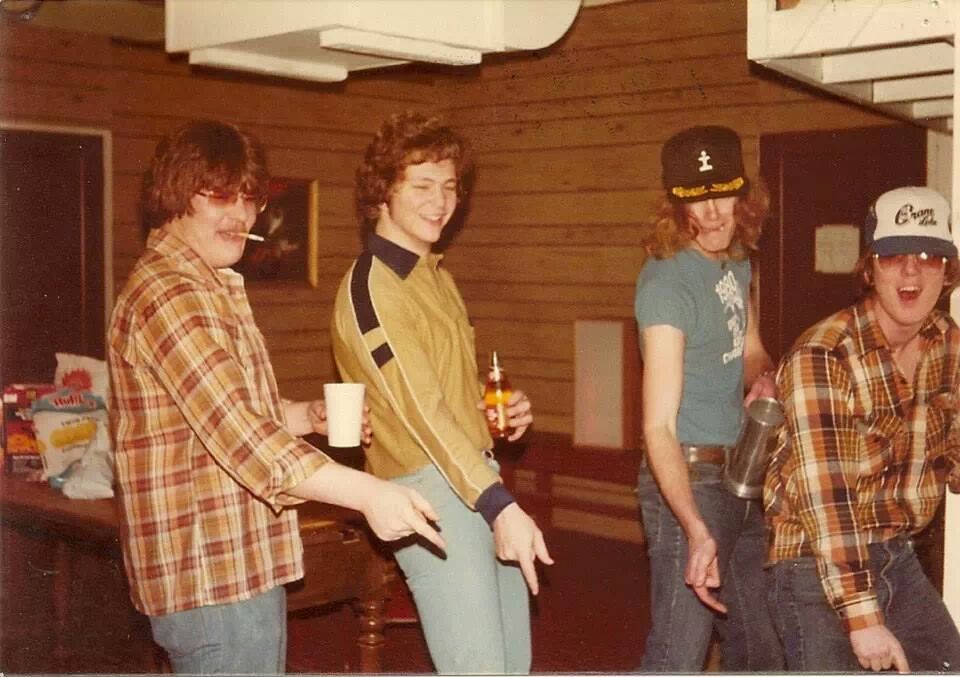
Me and my buddies, 1979
Picture if you will a raffish young fellow. A tall lad, long hair well past his shoulders, mirrored sunglasses, blue jeans with the knees worn through, worn long enough that the excess drags on the ground behind steel-toed engineer boots. A Buck knife in a sheath on the belt, and a well-worn black pocket t-shirt complete the picture of a young man who would not look at all out of place waiting in line for tickets to a Kiss concert.
That was me at 17. The embodiment of every father’s nightmares, standing there in size 11 black engineer boots.
Unfortunately for my friends and me, we were teenagers in an era when the typical father of a teenage daughter was well up to the challenge we posed. Take Mr. Walters.
Rhonda Walters was from a family with money, and Mr. Walters expected more of his daughter than a liaison with a longhaired woods bum. Still, Rhonda seemed to find me interesting; I certainly found her interesting. (Of course, being 17 and male, it’s more than likely I’d find something interesting about almost any female between the ages of 16 and 50.) Rhonda was cute, pert, leggy, had dark hair, dark eyes, and a tendency to dress in tantalizingly short cut-offs and tight T-shirts. Rhonda also showed every indication of interest in certain longhaired, raffish woods bum types. Namely, me.
The fly in the ointment was this: To get to take Rhonda out on a date, I had to be introduced to and interviewed by Rhonda’s father.
Mr. Walters had the kind of urban sophistication that I was totally unprepared to deal with. He also had a short fuse, a voice that sounded much like breaking boulders in the deepest recesses of a cave and fists the size of babies. What’s more, he had a deep, profound and abiding distrust and dislike for certain longhaired, raffish woods bum types. Namely, me. And that was only the beginning.
How It Started
It all started one Friday afternoon, as I was leaning against my locker in the high school hallway, shooting the breeze with my hunting partner Dave.
“So, man, what’re we doing tonight?” Dave asked. “Want to go out to the river and catch some catfish? I’ve got a quart jar of chicken livers I’ve been leaving out in the sun all week.”
Tempting as that offer was, I had to demur. “Sorry, pal. Got a date.” I responded, with a knowing leer for emphasis. At that moment, Rhonda wiggled down the hallway, shooting me a big grin. “See you at seven!” She practically sang the words to me.
Dave gave me an incredulous look, once he tore his eyes away from the aft portion of Rhonda’s blue jeans. “Rhonda Walters? Oh, man, how did you ever get her to go out with you? She’s got class!”
The nerve! “You asshole! I’ve got class!”
“Slow class, maybe.” Dave said. “Low class, for sure! No way have you got enough class for Rhonda Walters. You taking her out in your car?”
“Figured on it.” I replied, uncertain now. I hadn’t thought of that one. My old Ford was somewhat on the shy side of respectable.
A great classic, the 1966 Galaxie 500 2-door hardtop. This one’s in better shape than mine was.
“Better try to borrow your old man’s pickup, bud. Rhonda’s used to nice stuff. That Galaxie of yours got rust holes you could drop a good-sized dog through, and you never did get the skunk smell outta the back seat. And you’d have to take all your fishing gear out of the back.”
Dave wasn’t a genius by any stretch, but he had me there. I suddenly remembered a can of catfish bait, my Grandpa’s own special recipe, which I had been fermenting on my dashboard for several days. And Dave wasn’t finished yet.
“Another thing, bud. You ever seen her Dad? Old man Walters’ got a lot of money, and he’s mean as the Devil hisself. He ain’t gonna like seeing someone like you showin’ up at the door.”
Crap. Dave was right. Much as I hated to admit it, Dave was right. My old Ford was out. On everything else, he had to be wrong. What father could resist someone of my wit and winning charm? I figured if I could solve the vehicle problem, I was in like Flint.
Funny how our illusions can be shattered so quickly.
Later that afternoon, at my folks’ place, my old ’66 Galaxie 500 “unexpectedly” suffered a breakdown – a breakdown facilitated by the simple expedient of yanking a couple of plug wires.
I burst into the house with the news. “DAD!” I shouted, trying to get a desperate edge in my voice. “The Galaxie is dead as a doornail, and I’ve got a date in two hours! You gotta let me use your truck!”
Dad’s pickup wasn’t the typical battered farm utility wagon common in Northeast Iowa in those days. A year earlier, Dad had found a newly rebuilt 1970 Chevy pickup, bright orange with a hand-made wooden bed, reworked ground-up by a particularly talented body shop. It was shiny, smooth, and clean, and Dad’s pride and joy. Dad reluctantly agreed. I imagine he was unwilling to stand in the way of true romance.
That’s how I came to be driving Dad’s bright orange pickup when I pulled into the Walters’ driveway that Friday evening. Visions of Rhonda in tight blue jeans assailed me; little did I know what was in store for me inside the front door of the expansive Walters residence.
And Then This Happened
A long driveway greeted me, followed by an equally long sidewalk leading to the massive, double door of white oak at the front of the Walters estate. A doorbell button loomed; this was surely the moment of truth.
I figured I was as ready as I’d ever be. I rang the bell. I wasn’t even remotely prepared for what happened next.
There were, in those days, certain conventions to be expected when a young man came calling on a family’s daughter. Those conventions involved the father meeting the young man at the door, upon which the intimidation and subtle threats began immediately. The Walters family broke with that tradition in a very significant manner.
Not really the Walters house, but close.
Rhonda’s mother answered the door.
In that moment, I realized where Rhonda got her charm and good looks. Mrs. Walters was still on the sunny side of forty, tall, willowy, shining dark hair and a smile that doubtlessly brought many a man to his knees.
“Hello!” She breathed, beaming stunningly on me, bringing me metaphorically and immediately to my knees. “You must be here for our daughter! We’ve been expecting you. Come on in, Rhonda’s getting ready.”
At this tender age, I was still possessed of some instinctual knowledge that a teenage girl “getting ready” could take at least an Ice Age, I was prepared to wait; the late show of Animal House wasn’t for two hours yet anyway. I had planned for that, you see.
What happened next brought my euphoria crashing to earth. Mrs. Walters had ushered me through the living room, and her glowing smile turned on me again as she raised a perfectly groomed, graceful hand to indicate an open door. “If you want to wait in the study,” she purred, “You can chat with Rhonda’s Dad while you’re waiting.”
Well, I’d expected this, and had been through a few fairly uncomfortable interviews in living rooms, farm kitchens and barnyards before this. The normal process was a moment or two of more or less friendly intimidation, a required recitation of plans for the evening, of which we boys generally left out a few hoped-for details. I knew what to expect.
Or so I thought.
Mr. Walters was ensconced in his expansive study, behind a large oak desk. Reading glasses were perched on his nose; he was looking over some papers. Without looking up he motioned to a wooden chair drawn up to the desk. “Sit down.” He growled.
I sat uncomfortably for a few silent moments. Then Mr. Walters, finally, looked up at me.
It was amazing; at first, Mr. Walters had the usual expression, the usual frown of a loving father about to shrivel his daughter’s date. Then, as he took in my long hair, black t-shirt, the Buck knife at the belt of my badly worn jeans, his frown turned to a disgusted scowl. He dropped his reading glasses on the desk and leaned back in his chair.
“So,” he snarled at me, “You sure don’t look like much of a catch. Why in the world do you think you should be taking my daughter out?”
“Uh, well sir, I asked her, and she said yes?” I ventured.
Mr. Walters balled up a fist the size of a basketball and tapped it gently on the desktop. “She did, did she?” Suddenly he stood up and leaned over the desk.
“Listen, boy, you didn’t come to MY house to take my daughter out on a date. You came here to ask ME a great personal favor. That favor is taking my baby girl out in YOUR car, to God knows where, until God knows when, to do God knows what, and frankly you don’t look like someone I’d trust to find his way out of a shithouse. So, once again, why in the world do you think you should be taking my daughter out?” My pulse started to hammer in my temples.
“Sir,” I replied, having been taught from an earlier age how to address an older man not related to me, especially when asking a favor, “I may not look like much, but I’m a stand-up guy. I’ve got my Dad’s truck, and if I have it out late, he’ll kill me. I’m figuring I’ll take Rhonda to the Burger Five and to the movies, and we’ll be back by eleven-thirty, and you got my word on that.”
He regarded me with bloodshot eyes. My blood pressure was edging towards the redline.
“Eleven-thirty, eh?” He finally growled. “Well, boy, this is against my better judgment. You look pretty worthless, and I hear you spend most of your time bumming around in the woods with your delinquent buddies. The only reason I’m giving you a chance is because I know your Dad, and he’s as good a man as they come.”
Way to go, Dad! I was in!
The fist slammed down on the desk, rattling the windows and knocking several knick-knacks off the bookshelves behind me.
“But if you’re ONE MINUTE past eleven-thirty, or if I’ve got ONE REASON to think you’ve laid one finger on my girl, I’ll HAVE YOUR HIDE, boy, YOU UNDERSTAND THAT?”
“Uh, yes, sir…” I stammered.
He leaned closer, and snarled, “I mean it, boy, you better not be even a minute late, or so help me…”
At that moment Rhonda came in, a vision in a white silk blouse and tight black pants. “Oh, Daddy, are you giving him your mean act? Don’t worry about it, Daddy’s a big softie. He wouldn’t hurt a fly.”
I wasn’t convinced; if I’d been a fly, I would certainly have feared for my life. Mr. Walters continued to spike me into my chair with an angry glare.
“Well, go on. Eleven-thirty. Rhonda, eleven-thirty, not a minute later, you hear?” By this point, I had a fine sheen of sweat on my forehead, and at these words I bounded out of the chair. “Thanks, sir, we’ll be on time!” I assured Mr. Walters, with what I hoped was a calm, confident demeanor. Rhonda walked over to kiss her father on the cheek. I caught his sotto voce comment to her as she bent down:
“He’s worthless, Rhonda, I don’t know what you’re thinking.”
“Oh, Daddy, don’t worry.”
Mr. Walters wasn’t worried. I was worried. I was, in fact, feeling more like a fly every moment I spent in Mr. Walter’s presence.
We walked down the long front sidewalk, Rhonda happily describing something that had happened at school that afternoon; behind us, Rhonda’s Mom smiled and waved, and Mr. Walters glared, his eyes stabbing into my back like twin laser beams.
The rest of the evening went wonderfully. Dad’s pampered pickup purred like a kitten, and so did Rhonda; the local burger joint was up to standard, turning out piping-hot pizza burgers and fries; and we laughed all the way through Animal House. And, during the movie, Rhonda’s hand stole over and took hold of mine – and didn’t let go. Bliss! We even had time for half an hour of hanging out in the Safeway parking lot with the other kids. I even ended up leaning back against the bright orange side of the pickup, with Dave and the other guys glaring enviously at my arm draped comfortably around Rhonda’s shoulders as she leaned against me, laughing at all my horrible jokes.
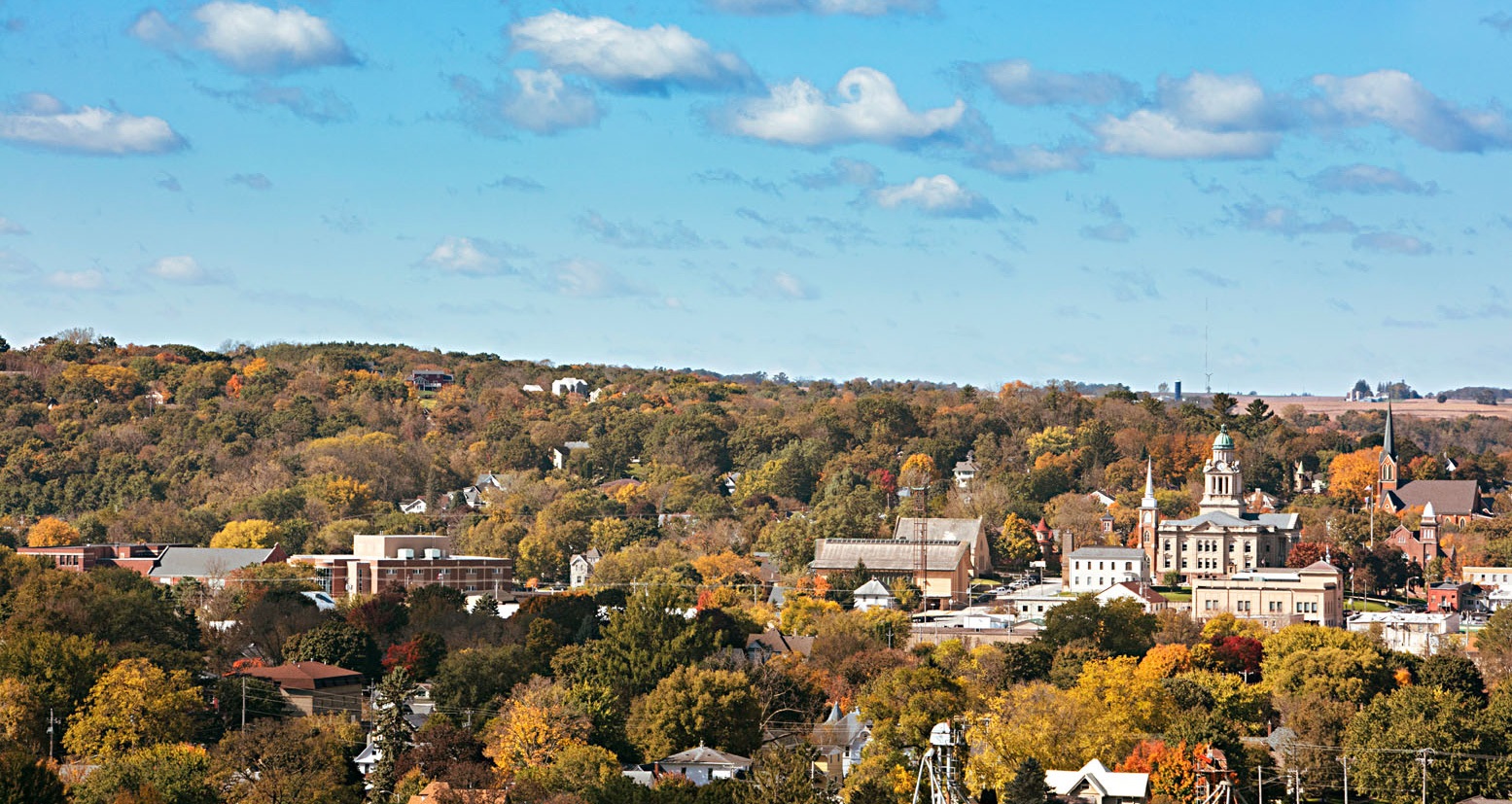
The actual by-gosh Decorah, Iowa.
There’s a moment in each teenage relationship where a line is crossed, a line between friends and boyfriend/girlfriend. Years later the two kids involved will still recall that moment, that first time that line is crossed; that happened on this night, right on Rhonda’s doorstep. Promptly at eleven-twenty-eight, I walked Rhonda up the long sidewalk to her parent’s house. She turned to me in the light from the bulb above the door.
“This was so much fun! I think we should do it again next week, don’t you?”
YOU BET! I thought in a loud internal shout, but instead suavely replied, “Yeah, I think we probably should.” I was slowly becoming aware of two glaring eyes peering through the front window curtains.
Rhonda leaned close, grabbing my shoulders and planting a warm kiss on my cheek. “I can’t wait. I’ll be looking forward to it all week.” The door suddenly popped open, and Mr. Walters stood imposingly framed in the light from the front room. He growled ominously, “Eleven-thirty.” Rhonda smiled sweetly at me as I stood, grinning like an ape, and then she turned and went inside. Her father shot me one last murderous look before he slammed the door.
As I walked away, one thought came to mind.
It was worth it.
Shoe on The Other Foot
Sadly, the relationship came to an end, as most teenage affairs do; in fact, the whole thing ended rather spectacularly, but that’s another story (and one I’ve already told here.) The lesson of Rhonda’s father wasn’t lost on me, though, and has served me well in later years, as the father of daughters of my own. In fact, it served me well the first time I faced a fidgeting, grungy young potential boyfriend in my own home.
I glared at the young man, as he stood there in his backwards-facing cap and baggy pants. Finally, after letting him stew a moment, I snarled at him:
“Listen, boy, you didn’t come to MY house to take my daughter out on a date. You came here to ask ME a great personal favor. That favor is taking my baby girl out in YOUR car, to God knows where, until God knows when, to do God knows what, and frankly you don’t look like someone I’d trust to find his way out of a shithouse. So, now, tell me why in the world you think you should be taking my daughter out?” I struggled to suppress a grin as the boy shriveled before my eyes.

 Buenos días Gliberinos! Sloopy is currently sweating off 4 pints of pickle juice from his bender last night outside of Dundee, TX. Have any idea where that is? Me neither but it explains why he has no wifi.